Sustainable Energy
India Wants 100 GW of Nuclear Power. Can Opening the Sector Deliver It?
India wants to expand nuclear power from 8.78 GW to 100 GW by 2047, with private participation expected to provide a significant share. But financing, construction risks, safety, liability and long-term environmental concerns could determine whether the ambitious target is achievable.

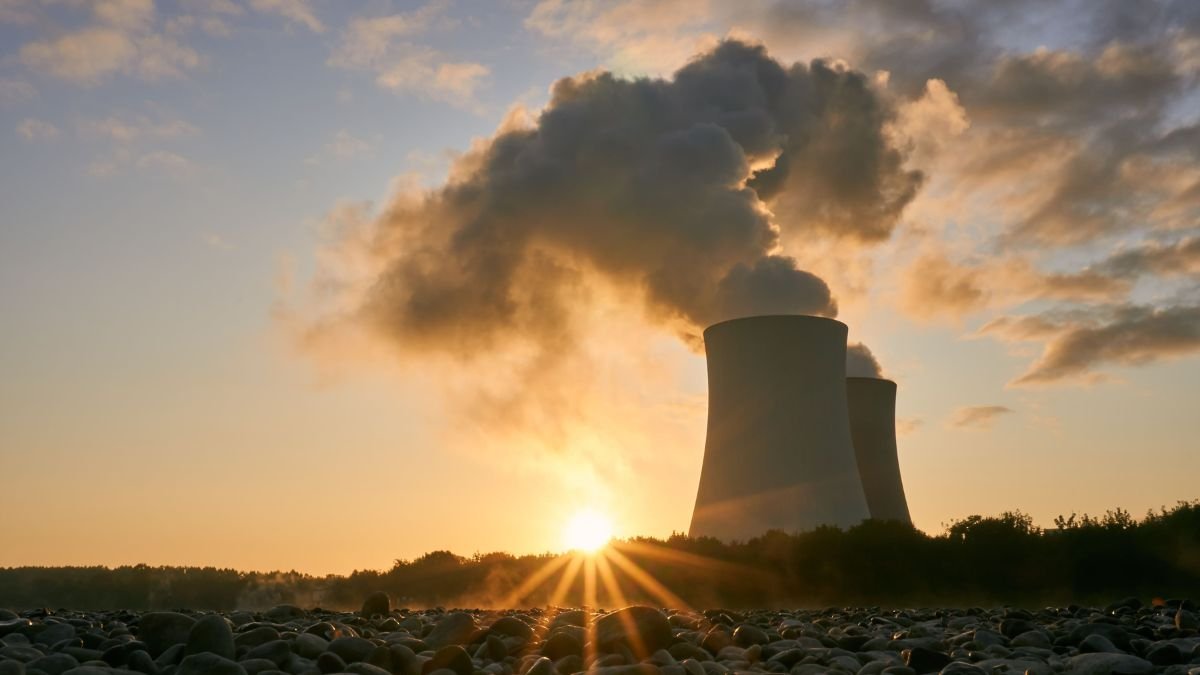
India is preparing to open its civilian nuclear power sector to wider private participation as it attempts to increase nuclear capacity more than elevenfold by 2047. The country currently has 8.78 GW of installed nuclear capacity across 24 reactors, contributing about 3.1% of electricity generation. The government wants to raise this to 100 GW by 2047.
That means adding more than 91 GW in two decades.
The scale of the ambition explains the policy shift. The government expects nuclear capacity to reach around 22 GW by 2031–32. Beyond that, NPCIL is expected to account for about 54 GW by 2047, while the remaining 46 GW is expected to come from other public-sector enterprises, state governments, private companies and joint ventures. The 46-GW figure is crucial. Private participation is not simply an experiment in changing ownership. It has become part of the government’s arithmetic for reaching 100 GW.
But opening the sector does not guarantee that the reactors will be built. The harder questions concern finance, construction, technology, safety, liability and who ultimately bears the risks of nuclear power.
Why Nuclear Power When Renewables are Expanding?
India’s nuclear power expansion is taking place alongside a much larger renewable-energy programme. By June 2026, renewable-energy capacity had reached 288.58 GW, including 162.15 GW of solar, 57.44 GW of wind and 57.24 GW of hydropower. So why invest heavily in nuclear?
The government’s argument is that the two technologies perform different functions. Solar and wind generation varies with weather and time of day, while nuclear reactors are designed to provide continuous generation.
Nuclear power is therefore being positioned as a source of firm, low-carbon electricity alongside renewables, rather than as a replacement for them. That distinction matters as electricity demand rises. Government projections put India’s peak demand at around 446 GW in 2034–35, with electricity requirements of about 3,215 billion units.
The projected power mix for that year includes 22 GW of nuclear, 679 GW of renewable and 327 GW of thermal capacity. The question, then, is not whether India needs electricity. It clearly does. The question is how much nuclear capacity makes economic sense within an electricity system increasingly dominated by renewables and supported by storage and other technologies.
What Actually Changes Under the New Framework?
The SHANTI Act, 2025 provides the legal framework for wider participation in specified civilian nuclear activities. This is not unrestricted privatisation. Private entities remain subject to government licensing and nuclear-safety requirements.
The significance is that the pool of potential participants can now extend beyond the traditional state-controlled nuclear establishment. The government expects this to create opportunities for private investment, manufacturing, technology development and new project structures. But permission to participate is not the same as willingness to invest.
Nuclear power projects are expensive, technically complex and slow to build. Investors have to commit large amounts of capital long before a plant begins generating revenue. That is why the success of the reform will depend less on how many companies enter the sector and more on whether they are willing to put substantial capital behind actual projects.
Can Private Capital Solve the Financing Problem?
The strongest case for private participation is that it could broaden the pool of capital available for nuclear construction. The government’s own roadmap makes clear that NPCIL is not expected to deliver the entire 100-GW target. About 46 GW must come from other public-sector entities, states, private companies and joint ventures.
But private participation should not automatically be equated with lower costs. Globally, nuclear projects have faced problems with construction delays, cost overruns and high financing requirements. The International Energy Agency has identified these as major challenges for nuclear investment.
For India, the critical questions will therefore be whether private investors can secure affordable financing, whether projects can be completed on schedule and whether the electricity generated can remain competitive with other sources. The reform changes who can invest. It does not remove the underlying economics of nuclear construction.
The SMR Bet
India is also placing considerable emphasis on small modular reactors. The government has allocated INR 20,000 crore to research, development and deployment of indigenous SMRs and aims to have at least five operational by 2033. BARC is developing the 220-MWe BSMR-200 and 55-MWe SMR-55, among other designs. The government sees potential applications in captive industrial power, replacing retiring fossil-fuel capacity and locations where conventional large reactors may be less suitable.
But India’s indigenous SMR designs are still under development. Their eventual contribution to the 100-GW target will depend on whether they can move from demonstration to commercially viable deployment. For now, SMRs are an important part of India’s nuclear power strategy, not a guaranteed solution to its capacity challenge.
The Liability Question
The most consequential issue for private investors may be nuclear liability. The SHANTI framework retains no-fault liability for nuclear operators while establishing graded limits depending on the category and size of a nuclear installation. The draft rules propose operator liability ranging from INR 100 crore to INR 3,000 crore.
The government argues that a clearer liability structure will make investment and insurance more predictable. But there is another side to the question: is the statutory compensation framework sufficient if an accident causes losses far beyond the operator’s liability?
That issue is now before the Supreme Court. On 17 August 2026, the court sought clarification from the Union government on whether constitutional courts would remain able to determine fair and just compensation following a nuclear power accident under the new framework. The court has not struck down the liability provisions. But the proceedings highlight an important tension in the reform: making risk predictable for investors while ensuring that victims are adequately protected.
Nuclear Power: Who Bears the Long-term Risks?
Nuclear power also raises questions that cannot be reduced to the cost of electricity. A major accident could affect workers, nearby communities, livelihoods and ecosystems far beyond the balance sheet of the company operating the facility.
Radioactive waste presents a different challenge. Electricity generated today can create waste that requires management over much longer periods. The government retains responsibility for certain aspects of spent-fuel management, while licensed entities are responsible for managing radioactive waste generated through their activities.

This raises an intergenerational question: How should today’s electricity consumers ensure that future generations are not left with the financial and environmental burden of today’s nuclear expansion?
There is also a question of distribution. Nuclear power facilities require land, water and supporting infrastructure. Communities near proposed projects can therefore bear costs that are spread much more widely across the country than the benefits and electricity generated by the plant.
A larger nuclear power programme will need credible mechanisms for land acquisition, rehabilitation, emergency preparedness, compensation and public participation. Safety cannot become secondary to speed The government maintains that expanding private participation will not mean lowering safety standards.
Does the regulatory system has enough independence, technical capacity and enforcement power to oversee a larger and more commercially diverse nuclear power industry? That becomes particularly important when project developers have strong financial incentives to control costs and meet construction schedules.
A successful private nuclear power model therefore requires more than investment rules. It requires strong regulation that can remain independent of both political and commercial pressure.
The Real Test is Beyond the 100-GW Target
India’s nuclear power ambition is clear: 8.78 GW today, 22 GW by 2031–32, 100 GW by 2047. The government expects NPCIL to deliver roughly 54 GW of that eventual capacity and other public and private entities to account for the remaining 46 GW.
The SHANTI Act makes that wider participation possible. But it does not guarantee that private companies will invest, that projects will be financed cheaply, that reactors will be built on time or that nuclear power will remain economically attractive as renewables and storage expand.
Nor does it settle the ethical questions around liability, waste, community impacts and long-term risk. That is why the success of the reform should not be measured simply by the number of companies that enter the nuclear sector. The real test will be whether India can build enough nuclear capacity at a reasonable cost while maintaining strong safety oversight and ensuring that the risks are not disproportionately transferred to communities, taxpayers or future generations.












Sustainable Energy
India’s Clean Energy Research May Not Be Keeping Pace with Its Manufacturing Ambitions, Finds Study
A study of India’s publicly funded clean-energy research examines whether investments in solar power, batteries and other technologies are aligned with the country’s ambitions for domestic manufacturing and technological development.
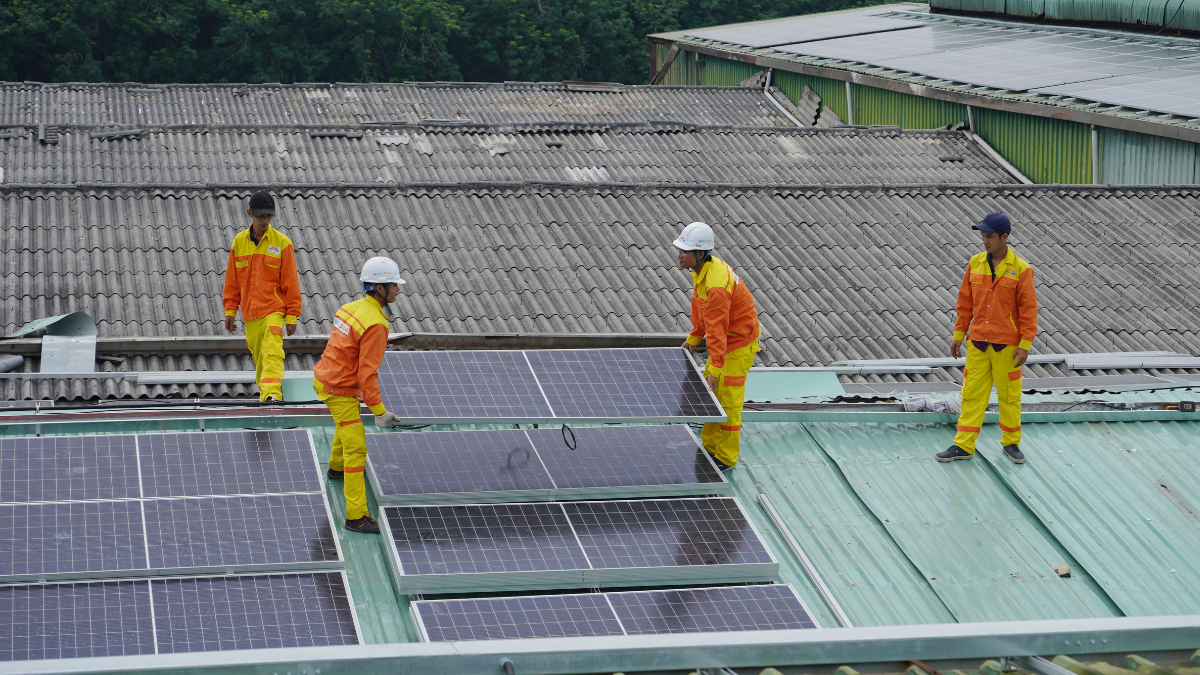
India’s public investment in clean-energy research is concentrated in established technologies, while funding for manufacturing innovation and large-scale technology development remains a challenge, according to a new study examining the country’s publicly funded research, development and demonstration (RD&D) activities.
The report, How Can India Align Its Clean Energy Innovations with Its Ambitions? An Assessment of Public RD&D Investments and Activities, by the Sustainable Futures Collaborative (SFC) and the Climate Policy Lab at Tufts University, maps 1,359 publicly funded clean-energy projects active or initiated between the financial years 2019 and 2024.
The projects span more than 90 institutions and account for approximately ₹1,443 crore in declared funding. The study finds that India has developed a substantial public research portfolio, but raises questions about whether its funding structures and research priorities are sufficiently aligned with the country’s ambitions for domestic manufacturing and technological leadership.
The findings echo concerns raised in other research on India’s clean-energy supply chains and innovation financing. Together, these studies highlight a challenge that extends beyond funding scientific research: ensuring that promising technologies can progress from laboratory development to demonstration, competitive manufacturing and commercial deployment.
Solar and storage dominate the research landscape
Renewable energy accounts for a substantial share of the mapped research portfolio. The SFC–Tufts study identifies 421 renewable-energy projects receiving approximately ₹580 crore, while another 333 projects in other power and energy-storage technologies account for around ₹492 crore.
Solar photovoltaic technology alone received approximately ₹401 crore across 234 projects, making it a major focus of public clean-energy research.
The portfolio also includes research on batteries, hydrogen, electric mobility, energy efficiency and carbon capture, utilisation and storage. However, the distribution of projects and funding varies across these areas, with electric mobility receiving less attention than solar energy, batteries and hydrogen.
The concentration of research in established technologies reflects India’s immediate clean-energy priorities. Solar power and battery storage are central to expanding renewable electricity and managing its intermittency. Research that improves the performance, reliability and affordability of these technologies can contribute directly to deployment.
India’s operating conditions also create specific research requirements. High temperatures, dust, humidity, price-sensitive demand and constraints in accessing materials and equipment can make technologies developed elsewhere less suitable without adaptation. Research into battery thermal management, solar-module degradation and affordable charging infrastructure can help technologies perform more effectively under Indian conditions.
However, the report argues that research addressing immediate deployment needs must also be considered alongside the longer-term development of domestic manufacturing capabilities and new technological solutions.
Incremental innovation dominates public funding
One of the study’s central findings is that approximately 81 per cent of the mapped projects can be classified as incremental innovations. These projects primarily seek to improve or adapt technologies that are already commercially established.
Such research is not necessarily a weakness. Incremental improvements can reduce costs, improve efficiency and make technologies more reliable in local conditions. The concern is whether the existing portfolio provides sufficient support for other forms of innovation needed to strengthen manufacturing and develop technological leadership.
The report finds that deployment-and-diffusion projects account for approximately 53 per cent of projects and 64 per cent of declared funding. Technology-leadership projects represent around 14 per cent of projects and 15 per cent of funding.

Solar panels under the backdrop of a clear sky.Image credit:Pexels
Process-oriented research receives a smaller share. Projects classified under manufacturing competitiveness account for approximately 28 per cent of projects and 18 per cent of funding, while projects targeting major changes in production processes represent around 5 per cent of projects and 3 per cent of funding.
A 2024 report by the Council on Energy, Environment and Water (CEEW), Strengthening India’s Clean Energy Supply Chains, examines manufacturing competitiveness across solar photovoltaics, wind turbines and lithium-ion batteries. It explores the supply-chain segments that matter for developing domestic industrial capabilities.
Read alongside the SFC–Tufts assessment, the CEEW report provides a broader perspective on the challenge of connecting research priorities with the industrial capabilities needed to manufacture clean-energy technologies in India.
Small grants and fragmented funding pose challenges
The SFC–Tufts study also highlights the size and distribution of research grants.Around 68 per cent of projects with declared budgets receive less than ₹50 lakh each. The median project size across technology categories ranges from approximately ₹33 lakh to ₹39 lakh.
These grants can support investigator-led research, early-stage experiments and improvements to existing technologies. However, projects involving pilot manufacturing, demonstration facilities, process development and commercial-scale validation may require different funding arrangements and substantially larger investments.
The report identifies differences in the funding approaches of government institutions. The Department of Science and Technology accounts for more than half of the mapped projects, reflecting its support for a large number of investigator-led grants. The Ministry of New and Renewable Energy supports fewer projects through comparatively larger programmes.
The study also finds that the 20 leading institutions account for close to 70 per cent of mapped projects.
These patterns matter because clean-energy innovation involves several stages, from scientific research and engineering to manufacturing, testing and commercial deployment. A funding structure suited to an early-stage research project may not be sufficient for a technology approaching industrial use.
An earlier CEEW study, Financing Clean Energy Innovation, examined the financing challenges associated with advancing clean-energy innovations. Its focus on financing complements the SFC–Tufts report’s emphasis on funding structures and the need to support different stages of technological development.
Technologies may require continued support after the initial research phase, particularly when they need to be demonstrated, tested and refined before becoming commercially viable. If funding does not adequately cover these stages, innovations can struggle to move from technical promise to market adoption.
Aligning research with industrial priorities
India already has policy mechanisms intended to promote clean-energy research and technology development. The Ministry of New and Renewable Energy’s Renewable Energy Research and Technology Development Programme includes objectives related to indigenous technology development, cost reduction, demonstration and collaboration with industry.
The question, therefore, is not simply whether India funds clean-energy research, but whether its research portfolio and funding mechanisms are appropriately structured to meet different objectives.
The SFC–Tufts report recommends clearer priorities across three broad goals: accelerating the deployment of existing technologies, strengthening domestic manufacturing competitiveness and developing technological leadership in emerging areas.
The study has limitations. Budget information was unavailable for around 16 per cent of mapped projects, while start-year information was missing for approximately 39 per cent. Private-sector innovation also falls outside its scope. Its findings therefore reflect the publicly documented research portfolio, rather than the entirety of India’s clean-energy innovation ecosystem.
Nevertheless, the findings raise an important policy question as India pursues both clean-energy deployment and domestic manufacturing: whether public research investment is supporting the entire journey from scientific discovery and technological improvement to competitive production and commercial scale.
The challenge is not simply to fund more research. It is to ensure that promising research can progress into technologies that India can manufacture, improve and deploy at scale.
Sustainable Energy
India Tightens CAFE Norms as Fuel Demand and Car Sales Rise
India’s new CAFE norms tighten fleet fuel-efficiency targets from 2027, with implications for petrol cars, hybrids, EVs and the country’s oil demand.

India will make carmakers meet stricter fuel-efficiency targets from April 2027, as the country tries to contain fuel consumption from a growing passenger-vehicle market. The new Corporate Average Fuel Economy (CAFE) norms will apply from April 1, 2027, to March 31, 2032. The fleet-average fuel-consumption target will fall from 3.996 litres per 100 km in 2027–28 to 3.3273 litres per 100 km in 2031–32.
That is a 16.7% improvement in the regulatory benchmark over the five-year period. The change matters because India’s demand for road fuel is rising while the country continues to import more than 90% of the crude oil it uses. Cars that consume less fuel can reduce the amount of petrol and diesel needed to keep the growing vehicle fleet on the road.
The new rules also give manufacturers more room to use electric vehicles, hybrids, alternative fuels and other efficiency technologies to meet their targets.
CAFE Norms: Why India Needs to Use Less Fuel
India’s passenger-vehicle market has changed considerably over the past decade. SUVs and larger cars have become more common, while overall vehicle ownership continues to rise. Every additional petrol or diesel vehicle adds to fuel demand. A more fuel-efficient fleet can slow that increase, even when the number of vehicles continues to grow.
The country’s dependence on imported crude makes this particularly relevant. India imports more than 90% of its crude oil, so higher oil consumption also means greater exposure to international oil prices and supply disruptions. The Bureau of Energy Efficiency introduced CAFE standards in 2017 with three objectives: reduce fuel consumption, lower carbon dioxide emissions and reduce dependence on imported oil. The latest notification tightens those requirements for the next five years.
CAFE: Not Same Mileage Target for Every Car
CAFE works differently from a rule that says every vehicle must deliver a particular number of kilometres per litre. It measures the average fuel consumption of a manufacturer’s passenger-vehicle fleet. The calculation takes sales volumes and vehicle weight into account. A company selling fuel-hungry SUVs, for instance, can improve its fleet average by selling more efficient cars, hybrids or electric vehicles.
That gives manufacturers several ways to meet the requirement. They can improve engines and transmissions, reduce energy losses, introduce hybrid systems, sell more EVs or use technologies that receive concessions under the CAFE framework.
What does the 16.7% Improvement Mean?
The 16.7% figure refers to the regulatory fleet benchmark. It does not mean that every new car will use 16.7% less petrol or diesel. Actual fuel consumption depends on the vehicle and how it is driven. Traffic, road conditions, speed, air-conditioning use and driving behaviour all affect mileage. The target applies to the manufacturer’s fleet as a whole.
The new framework also changes the vehicle-weight calculation. The reference weight will rise from 1,082 kg to 1,229 kg. The target curve has been revised so that heavier vehicles face greater efficiency requirements than lighter ones. That change is relevant to India’s passenger-vehicle market, where larger SUVs now account for a substantial share of sales.
Why EVs can Help Manufacturers Meet CAFE Targets
Electric vehicles have a direct advantage under a fuel-economy regulation because they do not consume petrol or diesel.
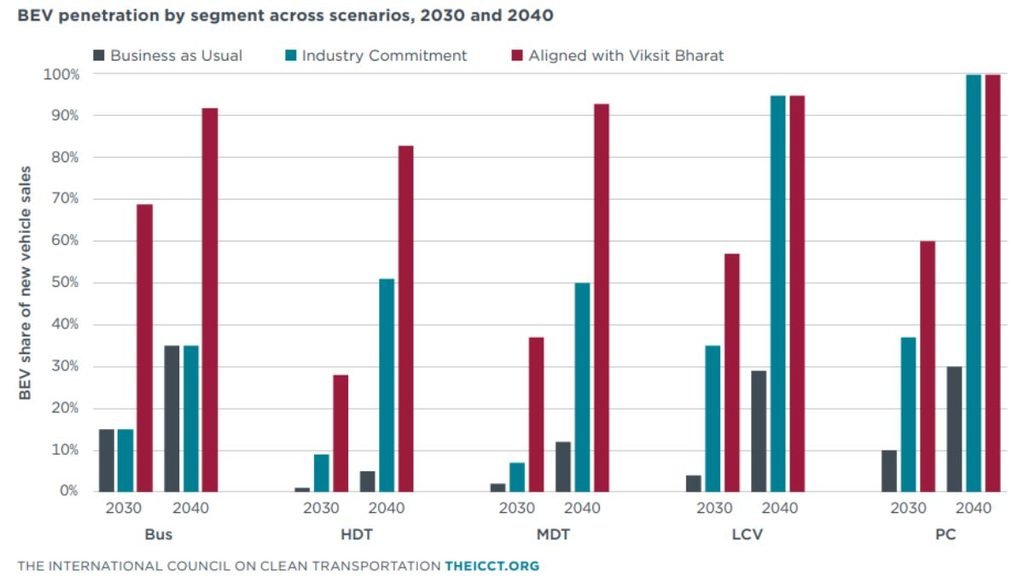
A manufacturer can therefore improve its fleet-average performance by increasing the share of EVs it sells. Hybrids can also reduce the average fuel consumption of a fleet.
The International Council on Clean Transportation (ICCT) has examined this relationship in its latest study of India’s vehicle market. Its 2026 analysis finds that stronger fuel-economy standards can support faster EV adoption and reduce oil consumption when the two policies move together. There is some evidence from India’s earlier CAFE rules as well.
An ICCT assessment of CAFE Phase II found that manufacturers relying on conventional efficiency improvements or CNG had difficulty meeting the targets. Manufacturers with significant EV sales, including Tata and MG, were able to meet the requirements with larger margins. The experience shows how a fleet standard can influence the technology choices made by manufacturers.
Stronger Standards Could Reduce Oil Demand
ICCT’s latest study models India’s road-transport oil demand under several policy pathways through 2040. In its business-as-usual scenario, road-transport oil consumption reaches about 197 million tonnes of oil equivalent (Mtoe) in 2040. An alternative scenario combines stronger fuel-efficiency standards with faster EV adoption. Under that pathway, oil consumption is about 146 Mtoe in 2040.
The difference is roughly 51 Mtoe. These are modelled scenarios, not forecasts. They show the scale of the difference that could emerge if India combines tighter efficiency rules with faster electrification. For India, lower oil demand would also reduce the amount of crude that has to be imported to supply road transport.
Technologies Beyond EVs
Electric vehicles are only one part of the new framework. The norms recognise 12 fuel-conservation technologies, compared with four under the earlier framework. These include technologies such as high-efficiency air-conditioning systems, advanced glazing and solar-reflective paints.
Each eligible technology can receive a concession of 1 gram of CO₂ per kilometre, subject to a maximum of 9 grams of CO₂ per kilometre. The framework also includes a Carbon Neutrality Factor for ethanol-blended petrol, biofuels and compressed biogas. This allows manufacturers to use a wider combination of technologies and fuels when working towards their fleet targets.
Super Credits Could Shape How Manufacturers Respond
The rules provide additional regulatory benefits for battery-electric vehicles, range-extended EVs, plug-in hybrids, strong hybrids and flex-fuel vehicles through volume derogation factors and super credits. These mechanisms give low-emission vehicles greater weight in the compliance calculation.
There is a trade-off, however. ICCT’s latest analysis points out that generous super credits can allow manufacturers to meet fleet targets with a relatively small share of EVs while continuing to sell less-efficient combustion-engine vehicles. That makes the treatment of these credits important as EV sales increase.
What Manufacturer Misses the Target?
The rules give companies several ways to manage compliance. Manufacturers can operate within two- or three-year compliance blocks. Credits can be carried forward, traded or exchanged. The Bureau of Energy Efficiency will also operate a buyout mechanism.
The system therefore gives manufacturers some flexibility in how they meet the target. It also means the effect of the regulation may not be visible in a single year’s sales figures.
Will Consumers Notice the Change?
Some changes could be visible in the showroom. Manufacturers may introduce more efficient petrol engines, expand hybrid offerings or increase the number of EVs in their portfolios. Other changes, such as improvements to air-conditioning systems or vehicle design, may be harder for buyers to notice.
The immediate effect on fuel bills is less straightforward. A regulatory improvement of 16.7% cannot be translated directly into a 16.7% saving for a driver. CAFE is calculated across a manufacturer’s fleet, while real-world mileage varies from one vehicle and driver to another. Its effect is likely to appear gradually as new vehicles replace older ones.
CAFE: One Part Larger Transport Shift
Tighter fuel-efficiency standards can reduce the amount of fuel consumed by each vehicle. They do not determine how many vehicles people buy or how much they drive. Public transport, urban planning, vehicle electrification and the availability of alternative fuels will also influence India’s future oil demand.
For the automobile industry, however, the direction is clear. The average efficiency of the vehicles sold in India will have to improve over the next five years. The new CAFE norms give manufacturers several routes to get there. They can make combustion engines more efficient, sell more hybrids and EVs, use recognised fuel-saving technologies or combine these approaches. For India, the reason for tightening the rules is straightforward. More vehicles on the road do not have to mean a matching increase in fuel consumption. The next five years will show how much the industry can narrow that gap.
Sustainable Energy
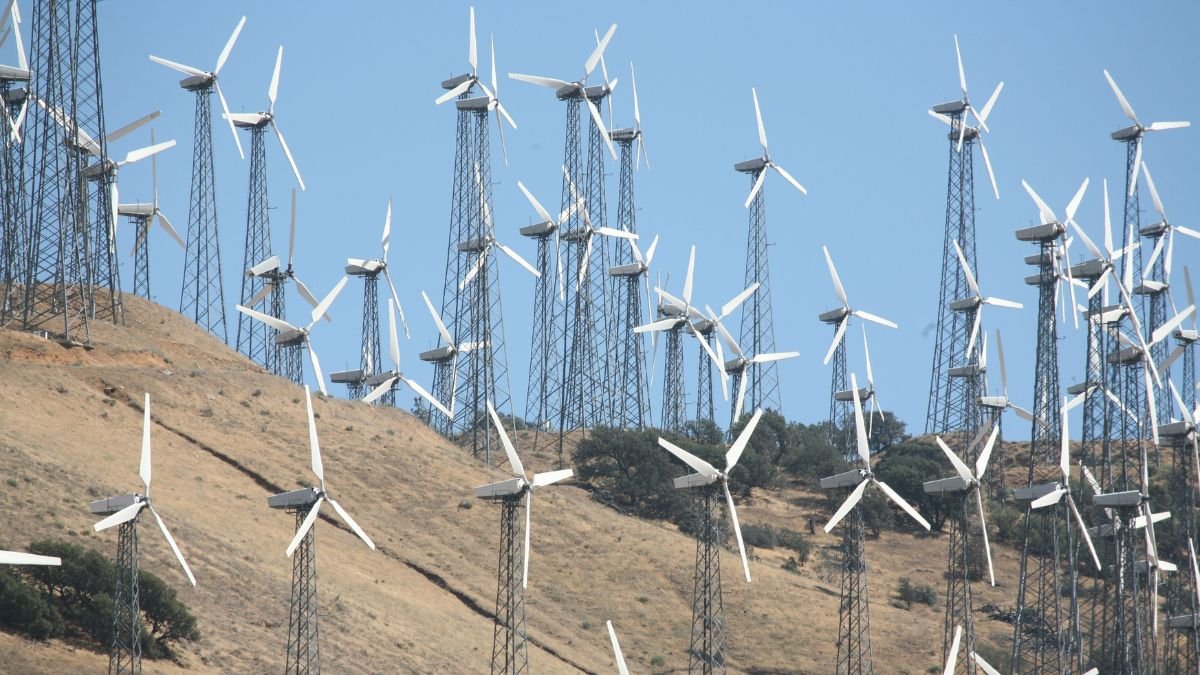
How Wind Turbines Could Produce More Power From the Same Wind
Researchers find that adjusting wind turbine blade speed when machines are misaligned with the wind could help increase power output from existing turbines.


How Scientists Traced the Flow of Matter Around a Dead Star Using X-rays

India Scores Just 2 Out of 32 for Integrating Health into Climate Commitments

Global Job Market Faces a Growing Inclusion Gap as AI and Digitalisation Reshape Work

FSSAI Moves to Restrict Added Sugars in Infant Foods, Citing Need for Stronger Nutritional Safeguards

NMC Directs Medical Colleges to Set Up Patient Safety Committees

From Scams to Screens: How the National Stock Exchange Rewrote India’s Equity Story

Knowing When to Think for Ourselves: AI, Intuition and the Education of Discernment

After a Scorching Summer, Delhi’s Children Are Slow to Return Outdoors

Two Chemists Win Nobel Prize for Solving a Century-Old Puzzle: Why Life Picks One Hand Over the Other

Marshall Islands: Why the US Nuclear Legacy Is Back Before the UN

-

 Math3 months ago
The 2026 Fields Medals: Four Proofs, Four Decades-Old Problems Solved
-
EP Deep Dive: Data & Solutions3 months ago
After Kerala’s Deadliest Landslide, the Hardest Thing to Rebuild Was Childhood
-
EP Deep Dive: Data & Solutions4 months ago
West Asia Crisis: Can Kerala’s Returning Gulf Migrants Find a Future in the Green Economy?
-
Space & Physics5 months ago
India Semiconductor Mission: ‘It’s Not About Fabs. It’s About Building An Entire Ecosystem’
-
Interviews4 weeks ago
From Scams to Screens: How the National Stock Exchange Rewrote India’s Equity Story
-
Climate5 months ago
The Climate World Cup? How Climate Change Could Affect Player Performance at the 2026 World Cup
-
Society3 months ago
What Is Civilisational Diplomacy? Understanding India’s Newest Foreign Policy Tool
-
Society4 months ago
From Bell Labs to the Classroom: A Second Career in Teaching