
Biodiversity
96% of the World’s Coral Reef Ecosystems Face Collapse Risk by 2075, IUCN Warns
A global IUCN assessment finds that 122 of 127 shallow-water coral reef regions face a critical risk of collapse by 2075, with rising ocean temperatures posing the greatest threat.

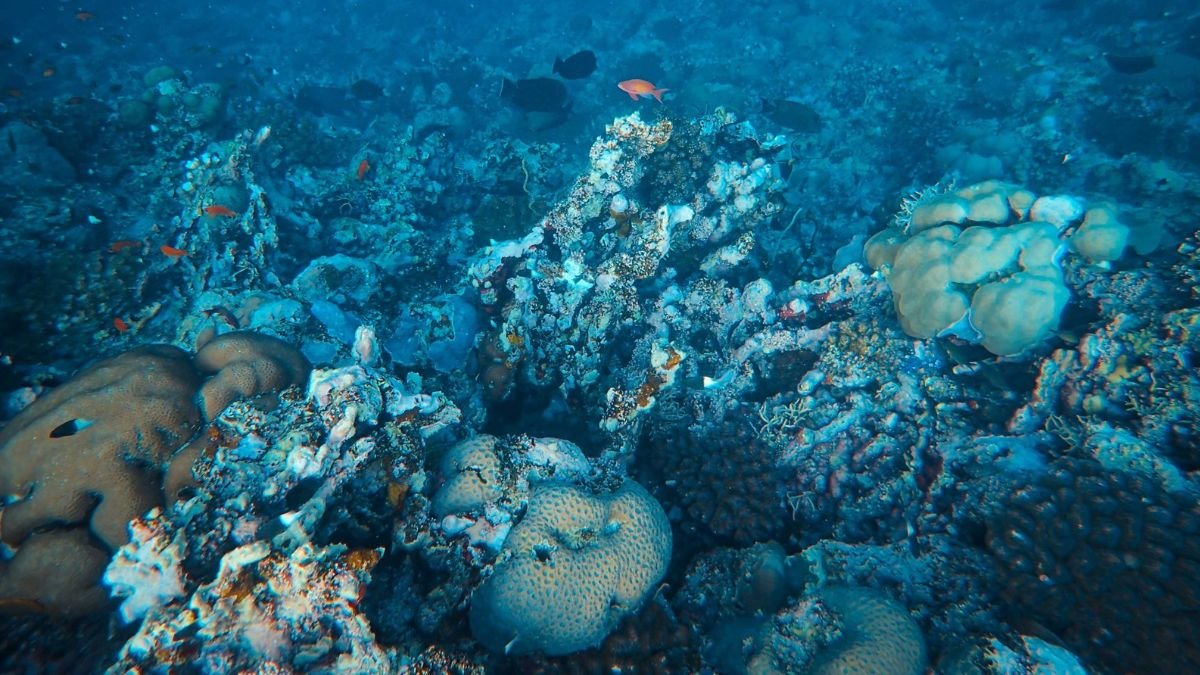
Coral reefs can recover from bleaching and rebuild after damage, but repeated marine heatwaves are giving them less time to recover. A new global assessment by the International Union for Conservation of Nature (IUCN) warns that 122 of the 127 shallow-water coral reef regions studied face a critical risk of collapse by 2075.
Published on October 22, 2026, the assessment is the first global study of coral reefs under the IUCN Red List of Ecosystems. It covers 188,362 square kilometres of reefs across tropical and subtropical waters in more than 80 countries and territories.
The finding that 96% of the assessed ecosystems are Critically Endangered does not mean that nearly all the world’s coral reefs have already died. It means they face a very high risk of losing the natural features and processes that allow them to function. The outcome will depend partly on future global warming and how well other threats to reefs are managed.
Heat Stress Leaves Corals Less Time to Recover
Corals live alongside tiny algae that provide much of their food through photosynthesis. When seawater becomes too warm, corals expel these algae and turn white. This process is called coral bleaching. If the heat continues, corals can lose their main source of energy and die.
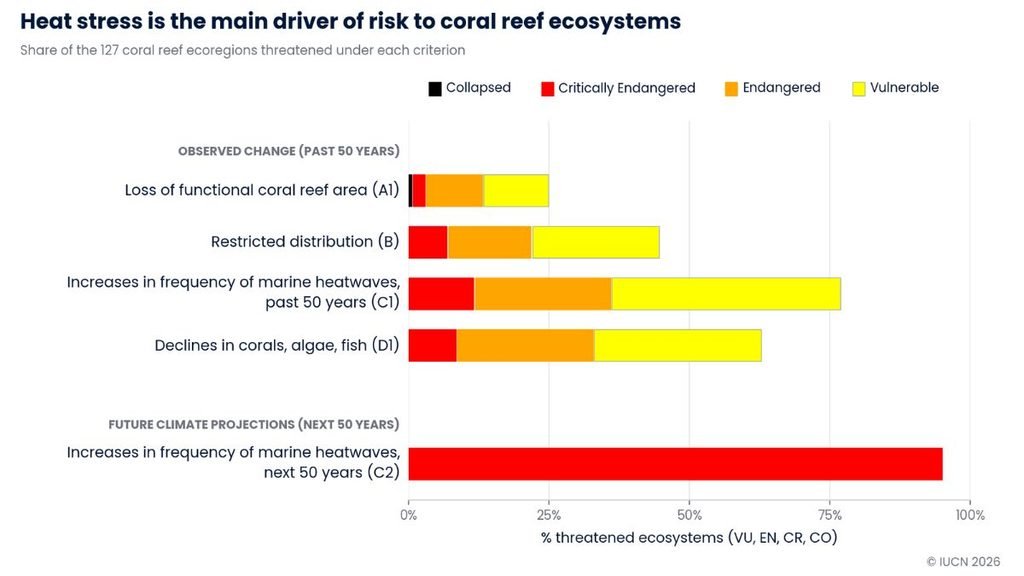
Bleaching does not always mean a coral is dead. If the water cools in time, corals can recover and regain their algae. However, when marine heatwaves occur repeatedly, corals may not have enough time to recover between events. The IUCN assessment found that marine heat stress had threatened 77% of the reef regions studied over the past 50 years. Under the future warming scenario used in the study, heat stress alone puts 95% of the assessed ecosystems in the Critically Endangered category.
The projections are based on an intermediate emissions pathway under which global temperatures rise by about 2.7°C above pre-industrial levels by the end of this century. The year 2075 is therefore part of a risk projection, not a deadline by which all threatened reefs will disappear.
What Does Coral Reef Collapse Mean?
A coral reef is much more than a group of living corals. It provides shelter, feeding grounds and breeding areas for many marine species. Reef-building corals also create the hard structures that support this underwater habitat.
“Corals carry a deep evolutionary record of coping with environmental change, yet the reef ecosystems we see today are remarkably young, shaped over only the last 5,000 to 7,000 years of stable climate. Ocean warming is now outpacing anything in their history, and recurring heatwaves are causing mass bleaching faster than reefs can recover or adapt,” said Marcos Valderrábano, Programme Manager at IUCN, Red List of Ecosystems.
When coral populations decline severely, the reef can change. Algae, broken coral pieces and sponges may become more common, leaving less suitable habitat for many of the species that once lived there. This is what scientists mean by ecosystem collapse. It does not necessarily mean that every living organism in the area has died.
The assessment identifies a reef region in the western Galápagos Islands as already collapsed following the severe El Niño event of 1982–83. This shows how extreme heat can damage an entire reef system, although the effects and chances of recovery vary between locations.
Local Pressures Add to the Threat
Climate change is the main concern, but human activities also affect how well reefs withstand and recover from damage. The IUCN assessment found that overfishing and the depletion of important fish populations threaten 63% of the reef regions studied.
Some fish, including parrotfish, feed on algae that compete with corals for space. When their numbers fall, algae can spread over damaged reefs and make it harder for young corals to grow. Pollution, sediment flowing into coastal waters and poorly managed development can add further pressure.
These threats need different solutions. Better fisheries management and cleaner coastal waters cannot prevent marine heatwaves caused by global warming. However, reducing these local pressures can improve the chances of coral recovery when sea temperatures return to suitable levels.
Why Coral Reef Loss Matters to Humans
Coral reefs support marine life, provide food and income, attract tourists and help protect coastlines from waves. Fisheries in reef areas support local food supplies and jobs, while tourism businesses depend on healthy marine environments.
The hard structures formed by corals also reduce wave energy before it reaches the shore. As reefs deteriorate, coastal communities may face declining fish catches, losses in tourism income and greater exposure to coastal erosion and wave damage. The extent of these effects depends on local conditions and how strongly people rely on reef resources.
These risks are particularly important for island nations and countries with large reef systems. In India, coral reefs are found in the Gulf of Mannar, the Gulf of Kachchh, the Andaman and Nicobar Islands, and Lakshadweep. Their health is important for marine biodiversity and the communities that depend on these waters.
However, the global finding that 96% of assessed reef ecosystems face a critical risk of collapse cannot be applied directly to Indian reefs. A separate regional assessment would be needed to establish the level of risk in India.
The assessment also compares reef conditions over the past 50 years with projections that include future climate change. Based on changes observed over the past five decades, 24% of the assessed reef ecosystems would fall into the Critically Endangered category. When projected climate warming is included, that share rises to 96%.
This difference shows how strongly the future of coral reefs depends on the amount of warming the world allows. Many of the assessed reefs still have living corals, and some have shown a greater ability to withstand heat stress than others. This offers opportunities for conservation, although past resilience does not guarantee survival under continued warming.
Reducing greenhouse gas emissions is essential to limit the heat stress reefs face. Protecting fish populations, controlling pollution and managing coastal development can also reduce the pressures that make recovery harder. The IUCN assessment warns that almost all the reef ecosystems studied face a high risk of collapse under the projected conditions. How much of that risk becomes reality will depend largely on future global warming and the steps taken to protect these ecosystems.










EP Deep Dive: Data & Solutions
Kerala’s Pink Water Lily Paradise is in an Ecological Question
How Malarikkal’s spectacular water lily bloom has created a tourism economy while raising concerns about invasive plants, native biodiversity and the ecological future of Kuttanad’s wetlands.

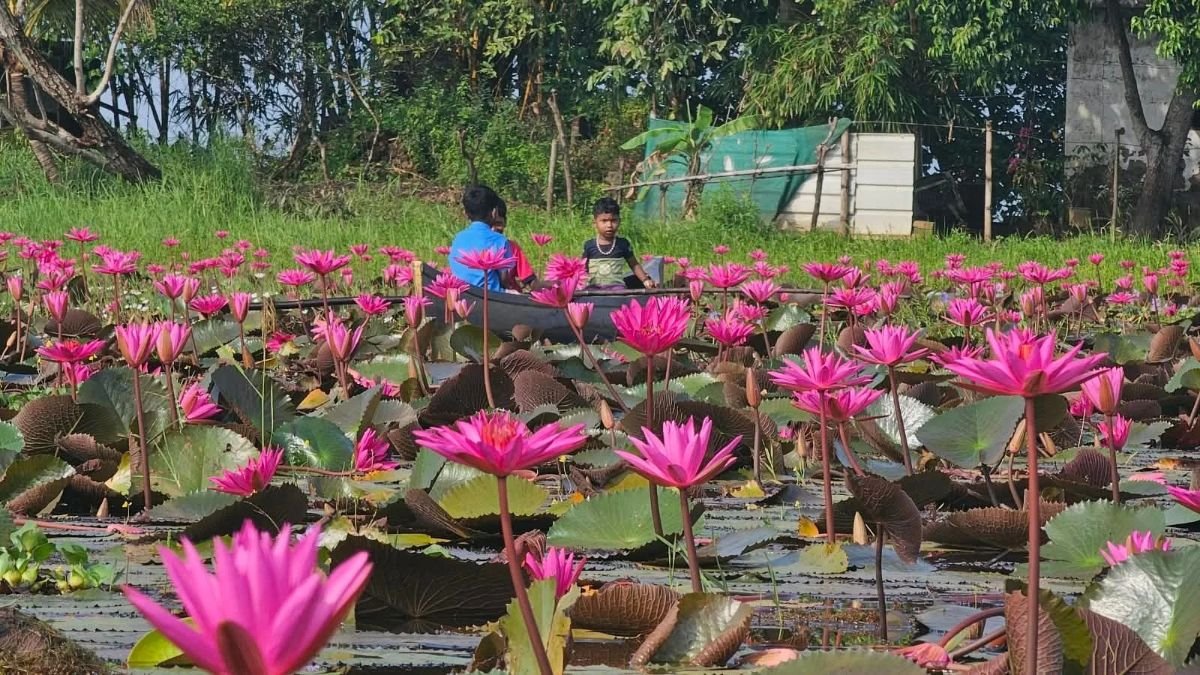
In 2018, a dance video featuring two young girls against a backdrop of pink water lilies went viral on TikTok. Captioned ‘Malarikkal Ambal Padam’, the video brought unexpected attention to a village in Kerala’s Kottayam district. What was once primarily an agricultural landscape soon began attracting visitors eager to see the seasonal flowering for themselves, recalls Lijo John, a resident of Malarikkal.
The spot, locally known as J Block 9000, gradually emerged as a tourist destination. Visitors from across Kerala, followed by tourists from other states, began arriving to see the pink flowers covering the flooded paddy fields. Over the years, the annual bloom has become an important source of seasonal income for the village.
The economic impact has been considerable. Local estimates suggest that Malarikkal generated around 6 crore rupees in tourism revenue over four months in 2026. Nearly 200 boat operators offer rides through the flowering fields, while shopkeepers and flower sellers also benefit from the seasonal rush. One boat operator reportedly earned around 3 lakh rupees from boat services during the season, while local accounts indicate that several others made at least 2 lakh rupees. Land prices have also increased, with an acre reportedly valued at around 15 lakh rupees.
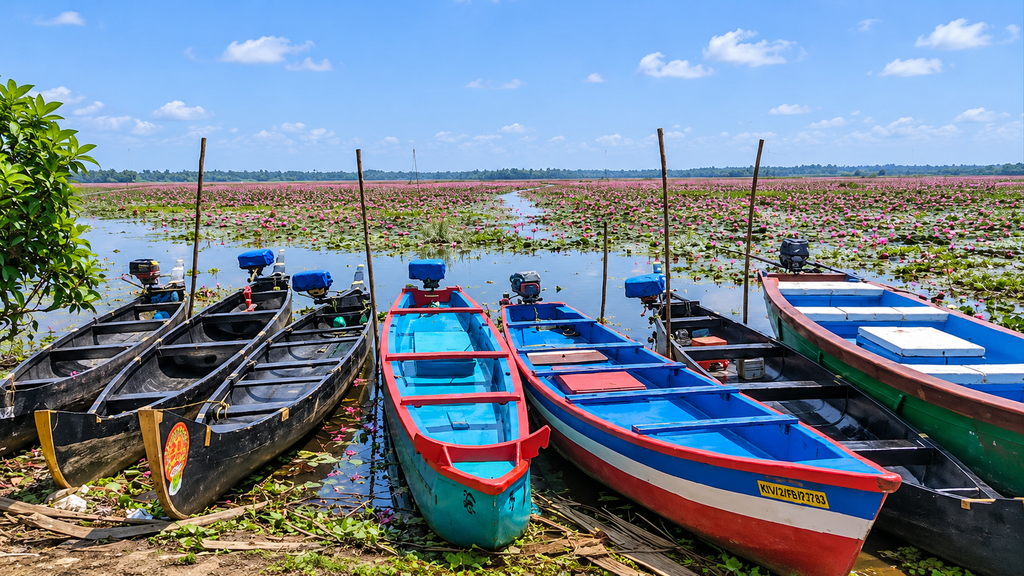
The annual flowering season has grown into a major local attraction, prompting the organisation of a dedicated tourism festival. The Malarikkal Water Lily Fest was inaugurated on August 8, 2023, by Kottayam District Police Chief K. Karthik. It was organised by Thiruvarppu Grama Panchayat, the Malarikkal Tourism Council and other local stakeholders.
Key numbers
₹6 crore
Estimated tourism revenue generated in Malarikkal over four months in 2026
1,850
Acres of paddy fields in Malarikkal
65,300 kg
Estimated fresh water lily biomass produced per hectare
200
Boat operators offering rides through the flowering fields
Source: EdPublica reporting; Plant Science Today (2026 study). Tourism revenue and boat operator figures are local estimates.
The flowers are best viewed between 6 am and 9 am, when they are fully open. The flowering season generally lasts from July to October, when the paddy fields remain flooded between cultivation cycles. But the flowers that have brought Malarikkal economic recognition have also raised ecological concerns. A study published in Plant Science Today identifies the pink-flowered water lily spreading across Malarikkal as Nymphaea rubra Roxb. ex Andrews. Researchers have examined its growth, reproduction and spread across the region’s paddy fields.
An earlier ecological investigation by the Jawaharlal Nehru Tropical Botanic Garden and Research Institute (JNTBGRI), however, examined a different pink water lily in another part of Kuttanad. It identified the plant as Nymphaea × omarana, a hybrid water lily. Although both plants belong to the water lily group and produce pink flowers, they have different scientific identities.
An agricultural landscape under pressure
According to Lijo John, one of the landowners of the area, Malarikkal’s 1,850 acres of paddy fields are owned by around 650 individuals. Water lilies grow during the interval between paddy cultivation cycles, spreading across the flooded fields when rice is not being cultivated. Once the flowering season ends, the fields must be prepared for the next agricultural cycle. This creates a practical challenge for landowners and those involved in tourism. Boat rides, for instance, are not permitted in every field.
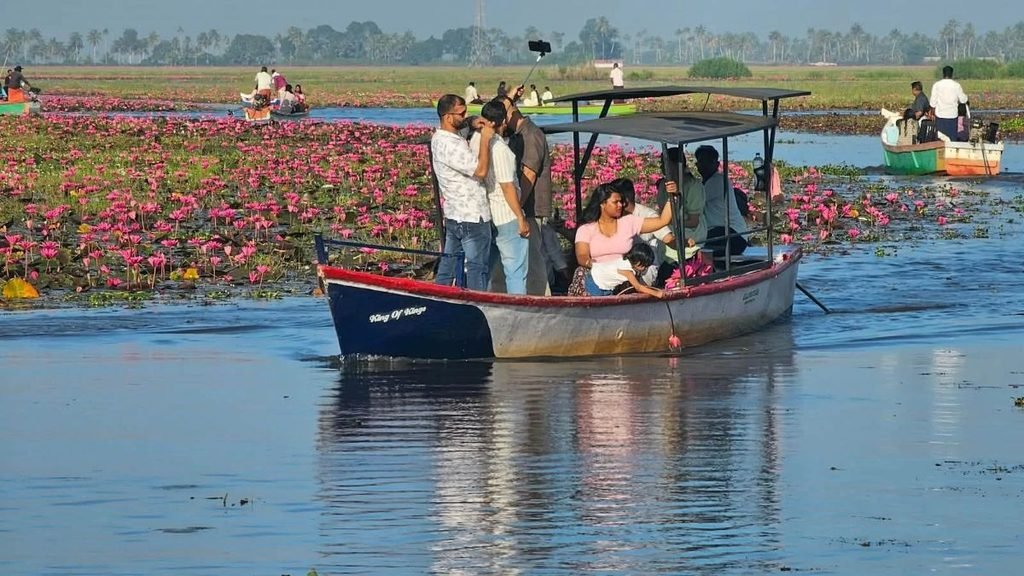
“There is a field nearby called Thiruvaikkiri. Boats are not allowed there now. Once the water in the field is drained, riding a boat through the field is harmful for the plot,” says Restin K Mathew, a boat operator and Malarikkal resident.
Such restrictions reflect the continuing agricultural importance of these fields. Even as tourism provides seasonal income, the land must remain suitable for paddy cultivation. Tourist activities therefore have to accommodate the requirements of farming. The ecological concerns extend beyond the immediate effects of tourism. The 2026 study, titled Drivers of invasion: The spread of pink-flowered Nymphaea rubra Roxb. ex Andrews in paddy ecosystems of Kuttanad, South India, examines the growth and spread of Nymphaea rubra in Malarikkal.
Published in Plant Science Today, the research examines the plant’s growth patterns and reproductive behaviour in the region’s paddy fields. Field observations conducted in J Block 9000 between June and September 2024 helped researchers study its growth under different water conditions.
The study estimates that the plant produces approximately 65,300 kg of fresh biomass per hectare. It also identifies seeds as the primary means of propagation in the fields, with water helping disperse them. The researchers found that water depth influenced the plant’s growth and flowering, with shallow conditions favouring greater leaf and flower production.
Native aquatic plants face competition
Titled The Pink Bloom of Kuttanadu: An Ecological Investigation, the study was undertaken with support from the Kerala State Biodiversity Board. It identified N. × omarana as an introduced horticultural hybrid suspected to have escaped from nurseries into natural wetlands. Field surveys found it widely distributed across Kuttanad, particularly in inland waterways and paddy fields. The study also recorded reports of the plant in Kozhikode.
One of the major concerns identified by the investigation is the displacement of native aquatic vegetation. The study identifies two native water lily species in the region, Nymphaea pubescens and Nymphaea nouchali, whose survival could be threatened by the spread of N. × omarana.
Lotus (Nelumbo nucifera), once common in Kuttanad, has also become increasingly restricted. According to the investigation, it is now almost confined to certain cultivated ponds. The large leaves of N. × omarana form dense layers across water bodies, limiting the amount of sunlight reaching the water. This can alter conditions for algae and other aquatic organisms that depend on these habitats.
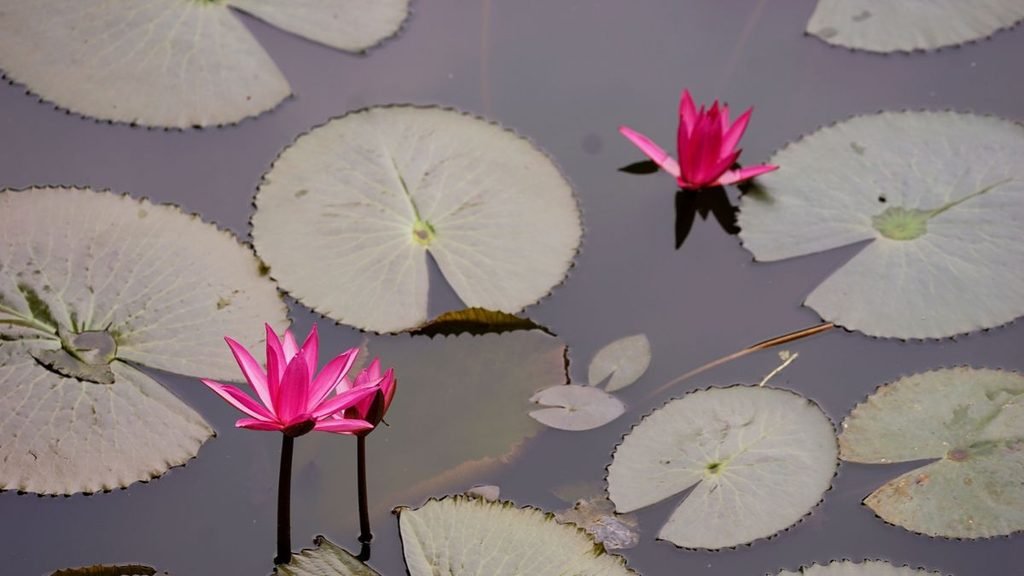
The investigation also records reduced natural water flow in affected parts of Kuttanad. Interactions with local residents revealed that the spread of the hybrid water lily had coincided with the accumulation of sludge and decaying plant material, contributing to deteriorating water quality. Traditional water transportation has also reportedly been affected.
The researchers raise concerns about methane production from accumulated decaying vegetation. The extensive foliage is also reported to reduce evaporation, potentially influencing local humidity. These effects require further field measurements to establish their extent. The plant’s resistance to eradication efforts adds to the challenge of controlling its spread. These findings relate to the hybrid water lily examined in the JNTBGRI investigation.
The Ecological Questions Surrounding Its Removal
At Malarikkal, the water lilies are cleared after the flowering season to prepare the fields for the next paddy cycle. According to landowner Lijo John, herbicides are used to eliminate the plants. This raises another set of environmental questions. The ecological impact of the plant’s growth needs to be considered alongside the possible consequences of the methods used to remove it.
The chemicals involved, their concentrations, application methods and the possibility of residues entering the water require further investigation. Their potential effects on fish, aquatic insects, other plants and water quality are particularly relevant in a landscape where agricultural activity and aquatic life share the same water bodies.
Local fish varieties include cheru meen, varaal, vaala and kaari. Whether the seasonal growth of the lilies or the herbicides used to remove them affects these fish populations remains unknown. The available research does not provide measurements of pesticide residues, dissolved oxygen levels or changes in fish populations in Malarikkal.
A site-specific assessment would help establish these effects. Monitoring water quality and aquatic biodiversity during the flowering, plant-removal and cultivation periods could provide a clearer picture of the changes taking place in the fields.
Exploring Alternative Uses For the Water Lily
The economic value of the flowering season makes the management of the water lilies more complicated. The plants now support a tourism economy that provides income to boat operators, shopkeepers and other local businesses. Finding ways to manage their spread while accounting for these livelihoods is an important part of the challenge.
Dr E. A. Siril, Professor and Head of the Department of Botany at the University of Kerala’s Kariavattom campus, is exploring the possibility of developing value-added products from water lilies. The research examines the use of the plant in products such as herbal tea, face wash, incense sticks, leaf plates and soap. Samples have been collected from Attingal and nearby locations to assess their suitability.
“Our study is about making value-added products from water lilies. Herbal tea, facewash etc. As far as we have considered it is economically viable as well. We collected samples from Attingal and nearby places. So far they are going good,” says Siril.
The plant’s seasonal availability, however, poses a challenge for commercial production. “The only problem regarding its economic viability is that it is a seasonal plant. Its unavailability in other seasons can affect the production,” he says. Siril believes that alternative uses could help derive economic value from the plant while addressing concerns about its invasive growth.
“As this is an invasive species, and they generate a lot of income through tourism, what we need to look at is other such alternative methods where we can put them into use,” he says.
The product-development work is still at an exploratory stage. Its commercial viability, production capacity and ability to utilise substantial quantities of harvested plant material will need to be established before it can contribute meaningfully to managing the plants’ spread.
Protecting the Wetland Without Overlooking Livelihoods
Malarikkal’s landowners have reservations about greater government intervention in the fields. Some consider the land private property and are concerned that additional regulations could interfere with how they manage cultivation and tourism.
This presents a challenge for wetland conservation. The fields support agricultural activity, provide seasonal tourism income and form part of the wider Kuttanad wetland ecosystem. Any effort to manage the spread of the water lilies must account for all three. The ecological investigations highlight the need for a better understanding of the plants’ spread and their effects on Kuttanad’s wetlands. For Malarikkal, this would involve examining seasonal changes in native aquatic vegetation, water quality and biodiversity, alongside the effects of clearing the plants before cultivation resumes.
The pink bloom has given Malarikkal a new economic identity. Its future, however, remains closely tied to the health of the paddy fields and the wetland ecosystem that sustains them. Understanding the ecological consequences of the flowering, tourism activities and plant-removal practices will be essential to managing this landscape without undermining the livelihoods it now supports.
Climate & Environment
India’s Wildlife Reserves Face Changing Fire Patterns, 21-Year Study Finds
A 21-year study of 13 Indian wildlife reserves reveals contrasting wildfire trends, with fire activity increasing in the Eastern Ghats and Central India while declining in the Western Ghats. The findings highlight the implications for forest biodiversity, ecosystem regeneration and conservation strategies.
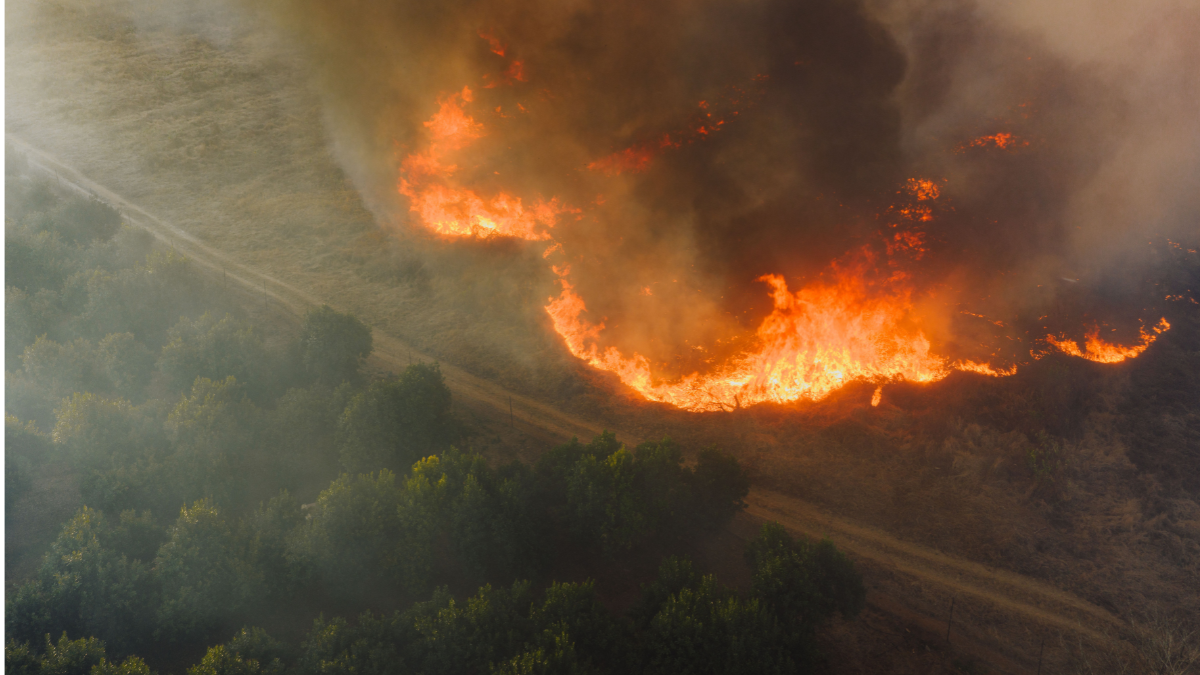
Wildfire activity increased by 9.3% annually in the Eastern Ghats and 4.6% in Central India between 2002 and 2022, while the Western Ghats recorded a significant decline. Supporting research shows how repeated fires can alter forest composition, reduce biodiversity and disrupt natural regeneration.
Wildfires are becoming an increasingly complex conservation challenge across India’s wildlife reserves, with some forest regions experiencing rising fire activity while others record a significant decline. A 21-year study across 13 wildlife reserves has identified sharply contrasting patterns in Central India, the Eastern Ghats and the Western Ghats, highlighting the need for region-specific approaches to forest fire management.
Published in Ecosphere on October 19, 2026, the study, titled Changing fire regimes in wildlife reserves of southern India: Trends, drivers, and conservation challenges, analysed satellite-derived fire data across approximately 20,000 square kilometres of protected landscapes between 2002 and 2022.
The researchers recorded approximately 16,667 square kilometres of cumulative burned area during the study period. The Eastern Ghats accounted for 59% of the total, followed by Central India at 16.6% and the Western Ghats at 8.4%.
Annual burned area increased by 9.3% per year in the Eastern Ghats and 4.6% in Central India. In contrast, the Western Ghats recorded an annual decline of 10.8%.
The researchers used data from NASA’s Moderate Resolution Imaging Spectroradiometer (MODIS), alongside climatic records, forest-cover loss data and human population estimates, to investigate the factors influencing fire activity.
Their analysis found that climate and human-related variables explained between 21% and 77% of annual fire activity across individual reserves. However, the strength and direction of these relationships varied geographically.
Climate and Human Activities Shape Fire Patterns
Drought, high temperatures and declining soil moisture emerged as important factors influencing fire activity. Eleven of the 13 reserves showed evidence of increasing fire activity during hotter and drier conditions.
Reduced soil moisture and higher atmospheric dryness can dry vegetation, making it more susceptible to burning. However, rainfall can also influence fire patterns by encouraging vegetation growth and increasing the accumulation of combustible material during subsequent dry periods.
Human activities also contributed to differences between landscapes. In Kawal Wildlife Sanctuary, population density was positively associated with fire activity. Local communities use fire in connection with collecting non-timber forest products, including mahua flowers and tendu leaves.
In Nagarjunasagar Srisailam Tiger Reserve, pastoralists use fire to encourage fresh grass growth for livestock grazing. However, human presence does not always increase burning. In Nagarhole National Park and Wayanad Wildlife Sanctuary, population density was negatively associated with burned area.
These findings suggest that local livelihood practices, vegetation conditions and forest management influence how fires originate and spread.
Earlier research provides additional evidence of the relationship between climatic conditions and fire activity. A study published in Geophysical Research Letters in 2021, titled Investigation of Forest Fire Activity Changes Over the Central India Domain Using Satellite Observations During 2001–2020, examined satellite observations across Central India.
The researchers found that approximately 70% of annual forest fires occurred during March and April. Comparing 2006–2020 with 2001–2005, they reported a doubling of fire activity during the February–June fire season and a tripling during the remaining months.
The study associated increased fire activity with persistent warmer temperatures and climate extremes, including drought and El Niño conditions. It also identified the Jagdalpur–Gadchiroli region and Indravati National Park in Chhattisgarh as particularly fire-prone landscapes.
Together, these findings highlight how climatic stress can interact with local land-use practices to influence fire regimes across Indian forests.
Repeated Fires Can Alter Forest Biodiversity
Beyond the extent of burned areas, the ecological consequences of repeated fires are an important concern. Frequent burning can affect seedling survival, tree regeneration and the composition of forest communities, potentially favouring species that are more resistant to fire.
A 2021 study published in Ecology and Evolution, titled Fire alters diversity, composition, and structure of dry tropical forests in the Eastern Ghats, examined burned and unburned plots in Eswaramala Reserve Forest in Andhra Pradesh.
Researchers compared vegetation observations from 2008 and 2018 and found that recently burned plots had higher stem density but lower tree species richness. Forest communities became dominated by a smaller number of fire-tolerant species with characteristics such as thick bark and the ability to regenerate through clonal sprouting.
The study also found that repeated fire exposure shifted the size structure of these species towards smaller, resprouting individuals. The findings indicate that higher tree density does not necessarily translate into greater biodiversity or healthier forest regeneration.
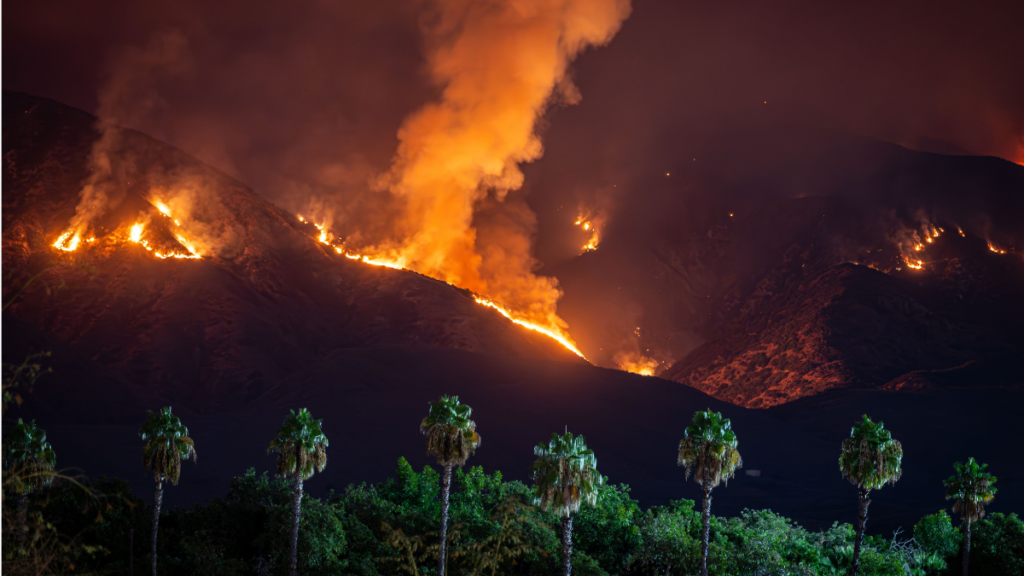
Forest fire spreading across a hillside at night, with flames and thick smoke rising above the surrounding vegetation.Image credit:Pexels
Research in the Western Ghats has reported similar concerns. A 2015 study published in Forest Ecology and Management, examined fire frequency and vegetation recovery in Mudumalai Tiger Reserve.
Using fire-frequency maps from 1999 to 2013, the researchers found that tree diversity declined as fire frequency increased. Low fire frequencies supported greater seedling density, while frequently burned areas showed changes in species composition and forest structure.
These studies provide ecological context to the latest findings by demonstrating that the consequences of fire extend beyond the immediate loss of vegetation.
Why Fire Management Needs a Regional Approach
The relationship between fire and biodiversity is not uniform across ecosystems. While repeated and intense fires can degrade forests, some grassland and savanna ecosystems depend on periodic burning to maintain their ecological characteristics.
A 2024 study in Biotropica, examined management interventions in savanna ecosystems dominated by native Cymbopogon grasses.
The researchers compared areas where fire and grasses were present with areas where fire was excluded, as well as areas where grasses were manually removed alongside fire exclusion.
They found that combining grass removal with fire exclusion was necessary to significantly improve palatable herbaceous plant biomass and plant species diversity. Fire exclusion alone was insufficient to achieve the same ecological improvements.
The research highlights the importance of combining fire management with vegetation restoration and community participation.
The authors of the 2026 Ecosphere study similarly caution against applying uniform fire-suppression policies across all protected landscapes. They recommend management strategies that account for local vegetation, climate conditions, biodiversity requirements and the traditional practices of forest-dependent communities.
The study also acknowledges limitations, including the 21-year observation period and the inability of satellite products with a 500-metre spatial resolution to detect every small fire.
As climate variability and human pressures continue to influence forest landscapes, understanding both increasing and declining fire activity will be essential. The findings suggest that effective conservation requires not simply preventing fires, but understanding when, where and how burning affects the ecological balance of India’s wildlife reserves.
Biodiversity
Lesser Florican, Bengal Florican Top India’s Priority List for Bird Conservation, Study Finds
A new study identifies the lesser florican and Bengal florican as India’s highest-priority birds for conservation, highlighting the importance of protecting evolutionarily distinct species and their threatened grassland habitats.
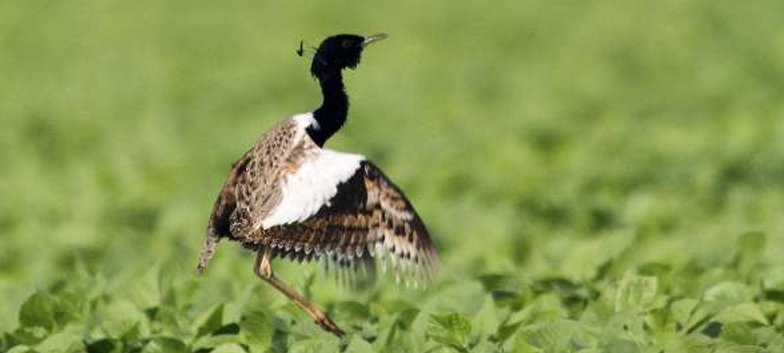
India’s lesser florican and Bengal florican stand out as the country’s highest-priority birds when extinction risk is assessed alongside evolutionary distinctiveness, according to a new study published in Global Ecology and Conservation in October 2026.
The research, titled “Using phylogenetic relationships to assess conservation priorities for birds in India”, applies an approach known as Evolutionarily Distinct and Globally Endangered (EDGE) to identify bird species whose loss would represent a particularly significant loss of evolutionary history. The lesser florican (Sypheotides indicus) recorded a median EDGE score of 19.3 million years, while the Bengal florican (Houbaropsis bengalensis) scored 18.95 million years.
The findings highlight a conservation challenge that extends beyond counting threatened species. Some birds represent evolutionary lineages that have few close living relatives. Their extinction could therefore eliminate a disproportionately large amount of evolutionary history.
For India, one of the world’s most biodiverse countries, the researchers argue that incorporating evolutionary distinctiveness into conservation decisions could help direct limited resources towards species facing particularly high risks of extinction.
Why evolutionary history matters
Conservation programmes frequently prioritise species according to population decline, habitat loss and extinction risk. Although these measures remain essential, they do not always capture how much evolutionary history a species represents.
The EDGE approach combines a species’ evolutionary distinctiveness with its extinction risk. Evolutionary distinctiveness measures how isolated a species is on the evolutionary tree, based on its relationships with other living species. A bird with few close relatives may therefore receive a higher distinctiveness score than one belonging to a group with many closely related species.
Combining these measures helps researchers identify species that are both evolutionarily unusual and threatened. The approach can also support decisions about where conservation funding, habitat protection and monitoring efforts may deliver the greatest benefits.
The October study identifies species and regions in India with high avian EDGE scores. Its findings suggest that conservation assessments could benefit from looking beyond the number of species present in a particular landscape to consider the evolutionary history represented by those species.
Grassland loss threatens two distinctive birds
The lesser florican and Bengal florican are closely associated with grassland habitats, ecosystems increasingly affected by changes in land use.
The lesser florican is a critically endangered bird endemic to the Indian subcontinent. It depends on open grasslands for breeding, where males perform distinctive courtship displays during the monsoon. Agricultural intensification, habitat fragmentation and the conversion of grasslands have contributed to the species’ decline.
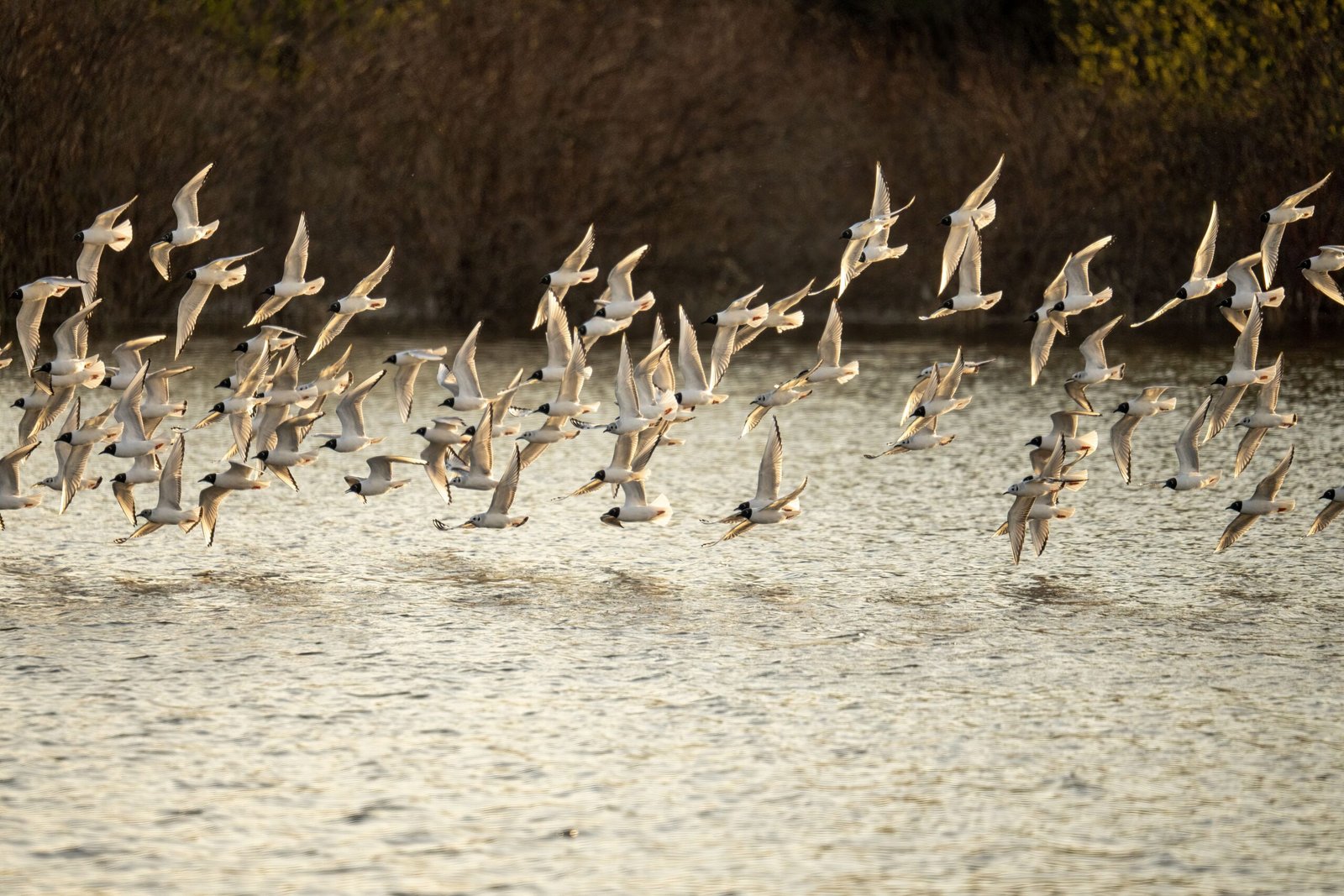
Wetland and grassland ecosystems provide essential habitats for India’s diverse birdlife.Image credit:Pexels
A separate study published in Frontiers in Conservation Science in August 2026 examined the movements and habitat preferences of lesser floricans in Gujarat. Researchers tracked 12 individuals using satellite telemetry and analysed more than 150,000 GPS locations. The findings showed that grasslands remained the birds’ most strongly selected habitat during both breeding and non-breeding seasons, despite some seasonal use of agricultural land.
The researchers also highlighted the importance of connected grassland landscapes, community-managed grazing areas and the protection of habitat beyond formally designated reserves.
The Bengal florican faces similar challenges. It inhabits grasslands and floodplain habitats in South and Southeast Asia, where changes in land use and degradation of suitable vegetation threaten its survival.
For both species, protecting remaining grasslands is therefore essential not only for maintaining current populations but also for preserving evolutionary lineages that could otherwise disappear.
Conservation planning beyond species numbers
The findings strengthen the case for integrating evolutionary information into India’s biodiversity policies. Protecting areas with high concentrations of threatened and evolutionarily distinctive species could help conservation agencies maximise the benefits of limited resources.
However, evolutionary distinctiveness should complement, rather than replace, other conservation measures. Species with high EDGE scores may require targeted interventions, while habitat protection must also account for wider ecological communities and the needs of local people.
For grassland birds, this means safeguarding breeding grounds, maintaining habitat connectivity and working with communities that depend on these landscapes for grazing and livelihoods.
The study also highlights a broader challenge: biodiversity protection cannot rely exclusively on forests and established protected areas. Grasslands, wetlands and other often-overlooked ecosystems can support species of exceptional conservation importance.

IIT Delhi Returns to Global Top 200 in QS Sustainability Rankings 2027; 38 Indian Universities Improve

India’s Clean-Energy Transition: Will It Replace Oil Dependence With Mineral Dependence?

Six months on, Ebola outbreak in DR Congo remains uncontrolled, with over 5,500 deaths

Why Does the Brain’s Waste-Clearance Process Slow Down During Sleep As We Age?

India’s Farm Subsidies Fail to Offset Price Pressures on Farmers, OECD Report Finds

Indian universities lead Asia in research output per faculty, but the country’s top six all slip in QS ranking

Why Delhi’s Geography Makes It Vulnerable to Severe Air Pollution

Europe Braces for Extremes as Commission Unveils Climate Resilience Framework

NASA recruits new astronauts for future Moon Base and Mars missions

Between Lectures and Lyrics: Kabeer Is Building a Malayalam Hip-Hop Career One Self-Taught Skill at a Time
-

 Math4 months ago
The 2026 Fields Medals: Four Proofs, Four Decades-Old Problems Solved
-
EP Deep Dive: Data & Solutions4 months ago
After Kerala’s Deadliest Landslide, the Hardest Thing to Rebuild Was Childhood
-
EP Deep Dive: Data & Solutions4 months ago
West Asia Crisis: Can Kerala’s Returning Gulf Migrants Find a Future in the Green Economy?
-
Space & Physics6 months ago
India Semiconductor Mission: ‘It’s Not About Fabs. It’s About Building An Entire Ecosystem’
-
Interviews2 months ago
From Scams to Screens: How the National Stock Exchange Rewrote India’s Equity Story
-
Climate & Environment6 months ago
The Climate World Cup? How Climate Change Could Affect Player Performance at the 2026 World Cup
-
Society4 months ago
What Is Civilisational Diplomacy? Understanding India’s Newest Foreign Policy Tool
-
Society5 months ago
From Bell Labs to the Classroom: A Second Career in Teaching