
Biodiversity
Lesser Florican, Bengal Florican Top India’s Priority List for Bird Conservation, Study Finds
A new study identifies the lesser florican and Bengal florican as India’s highest-priority birds for conservation, highlighting the importance of protecting evolutionarily distinct species and their threatened grassland habitats.

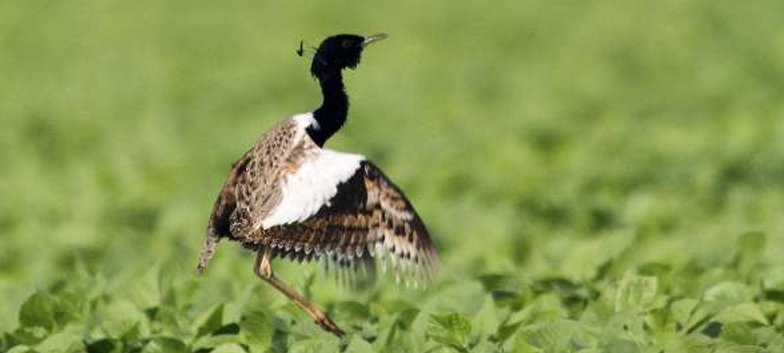
India’s lesser florican and Bengal florican stand out as the country’s highest-priority birds when extinction risk is assessed alongside evolutionary distinctiveness, according to a new study published in Global Ecology and Conservation in October 2026.
The research, titled “Using phylogenetic relationships to assess conservation priorities for birds in India”, applies an approach known as Evolutionarily Distinct and Globally Endangered (EDGE) to identify bird species whose loss would represent a particularly significant loss of evolutionary history. The lesser florican (Sypheotides indicus) recorded a median EDGE score of 19.3 million years, while the Bengal florican (Houbaropsis bengalensis) scored 18.95 million years.
The findings highlight a conservation challenge that extends beyond counting threatened species. Some birds represent evolutionary lineages that have few close living relatives. Their extinction could therefore eliminate a disproportionately large amount of evolutionary history.
For India, one of the world’s most biodiverse countries, the researchers argue that incorporating evolutionary distinctiveness into conservation decisions could help direct limited resources towards species facing particularly high risks of extinction.
Why evolutionary history matters
Conservation programmes frequently prioritise species according to population decline, habitat loss and extinction risk. Although these measures remain essential, they do not always capture how much evolutionary history a species represents.
The EDGE approach combines a species’ evolutionary distinctiveness with its extinction risk. Evolutionary distinctiveness measures how isolated a species is on the evolutionary tree, based on its relationships with other living species. A bird with few close relatives may therefore receive a higher distinctiveness score than one belonging to a group with many closely related species.
Combining these measures helps researchers identify species that are both evolutionarily unusual and threatened. The approach can also support decisions about where conservation funding, habitat protection and monitoring efforts may deliver the greatest benefits.
The October study identifies species and regions in India with high avian EDGE scores. Its findings suggest that conservation assessments could benefit from looking beyond the number of species present in a particular landscape to consider the evolutionary history represented by those species.
Grassland loss threatens two distinctive birds
The lesser florican and Bengal florican are closely associated with grassland habitats, ecosystems increasingly affected by changes in land use.
The lesser florican is a critically endangered bird endemic to the Indian subcontinent. It depends on open grasslands for breeding, where males perform distinctive courtship displays during the monsoon. Agricultural intensification, habitat fragmentation and the conversion of grasslands have contributed to the species’ decline.
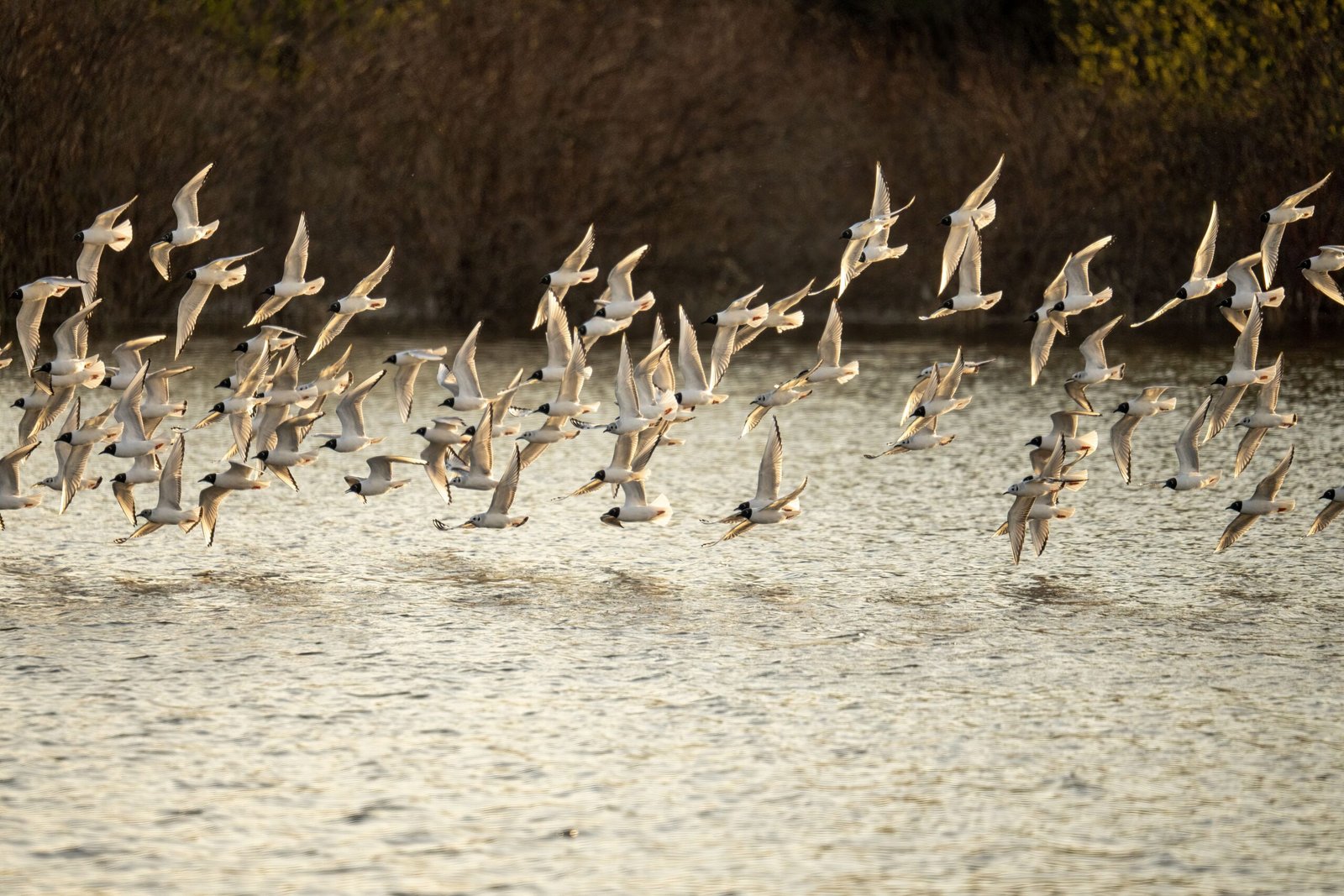
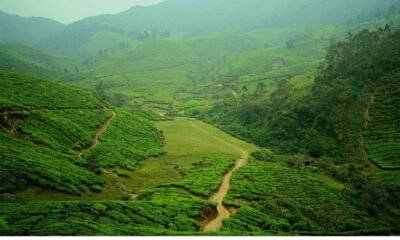
Wetland and grassland ecosystems provide essential habitats for India’s diverse birdlife.Image credit:Pexels
A separate study published in Frontiers in Conservation Science in August 2026 examined the movements and habitat preferences of lesser floricans in Gujarat. Researchers tracked 12 individuals using satellite telemetry and analysed more than 150,000 GPS locations. The findings showed that grasslands remained the birds’ most strongly selected habitat during both breeding and non-breeding seasons, despite some seasonal use of agricultural land.
The researchers also highlighted the importance of connected grassland landscapes, community-managed grazing areas and the protection of habitat beyond formally designated reserves.
The Bengal florican faces similar challenges. It inhabits grasslands and floodplain habitats in South and Southeast Asia, where changes in land use and degradation of suitable vegetation threaten its survival.
For both species, protecting remaining grasslands is therefore essential not only for maintaining current populations but also for preserving evolutionary lineages that could otherwise disappear.
Conservation planning beyond species numbers
The findings strengthen the case for integrating evolutionary information into India’s biodiversity policies. Protecting areas with high concentrations of threatened and evolutionarily distinctive species could help conservation agencies maximise the benefits of limited resources.
However, evolutionary distinctiveness should complement, rather than replace, other conservation measures. Species with high EDGE scores may require targeted interventions, while habitat protection must also account for wider ecological communities and the needs of local people.
For grassland birds, this means safeguarding breeding grounds, maintaining habitat connectivity and working with communities that depend on these landscapes for grazing and livelihoods.
The study also highlights a broader challenge: biodiversity protection cannot rely exclusively on forests and established protected areas. Grasslands, wetlands and other often-overlooked ecosystems can support species of exceptional conservation importance.










Earth
252 Million Hectares Under Restoration Across 149 Countries, but UN Warns of 2030 Target Gap
A UN report finds that 252 million hectares across 149 countries are under ecosystem restoration. However, increased investment and accelerated action are needed to meet global restoration targets by 2030.
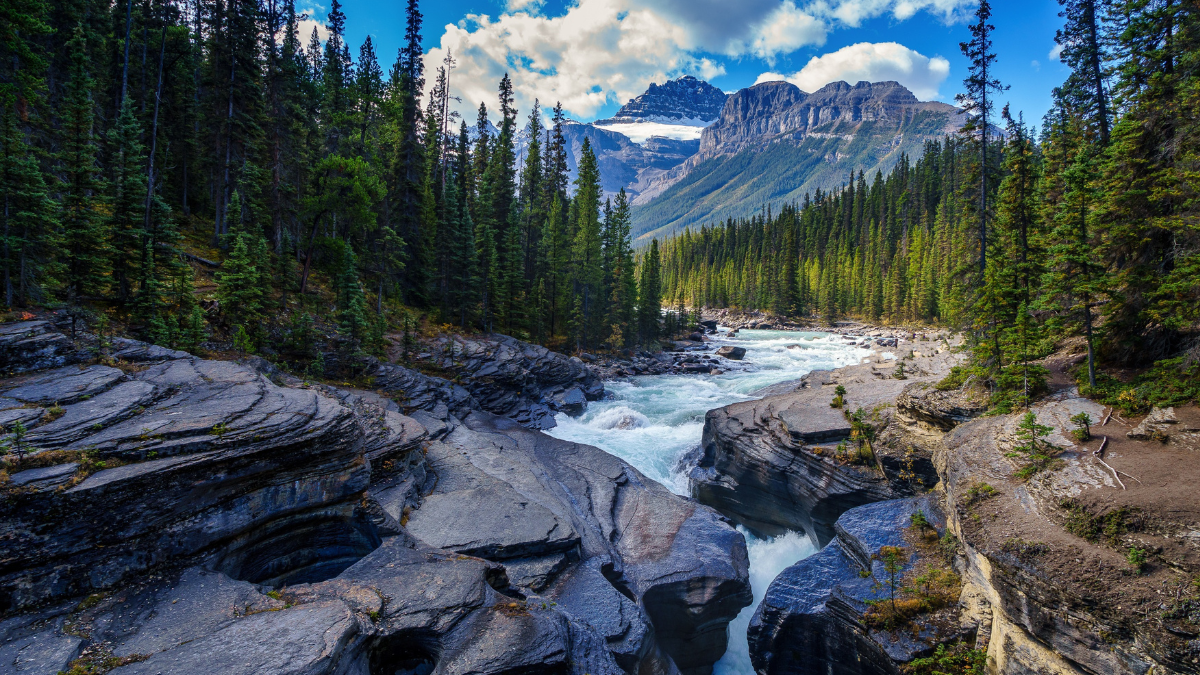
Global efforts to restore degraded ecosystems have reached 252 million hectares across 149 countries, generating more than one million green jobs. However, a new United Nations assessment warns that restoration efforts remain insufficient to meet international biodiversity targets by 2030, calling for a more than fourfold increase in annual investment.
The findings are presented in the Restoration Progress Report: Nature’s Comeback – Scaling Ecosystem Restoration for People and Planet, released on October 29, 2026, by the United Nations Environment Programme (UNEP), the Food and Agriculture Organization (FAO) and the Secretariat of the Convention on Biological Diversity (CBD).
The report provides the first comprehensive global assessment of progress towards commitments to restore approximately one billion hectares of degraded ecosystems. These commitments are linked to the UN Decade on Ecosystem Restoration (2021–2030) and the Kunming-Montreal Global Biodiversity Framework, which calls for at least 30 per cent of degraded terrestrial, freshwater, marine and coastal ecosystems to be under effective restoration by 2030.
According to the assessment, the 252 million hectares currently documented under restoration represent the largest recorded global restoration effort. However, this accounts for only 34 per cent of the indicative global benchmark associated with the 2030 target.
Freshwater and marine ecosystems lag behind
The report identifies considerable differences in restoration progress across regions and ecosystem types. Asia accounts for the largest share of documented restoration, with 192.2 million hectares, followed by Africa with 36.3 million hectares and Europe with 9.1 million hectares. North and Central America account for 5.8 million hectares, South America 5.4 million hectares and Oceania 3.2 million hectares.
However, the report cautions that these figures should not be interpreted as a ranking of restoration performance, as they also reflect differences in regional land area and monitoring and reporting capacities.
Restoration of terrestrial ecosystems has reached nearly half of the global 2030 target. China reports the largest terrestrial restoration area, with 127.4 million hectares, while substantial restoration activities have also been documented in Mongolia and Kazakhstan.
Progress remains considerably slower in freshwater, marine and coastal ecosystems, despite these environments experiencing rapid degradation.
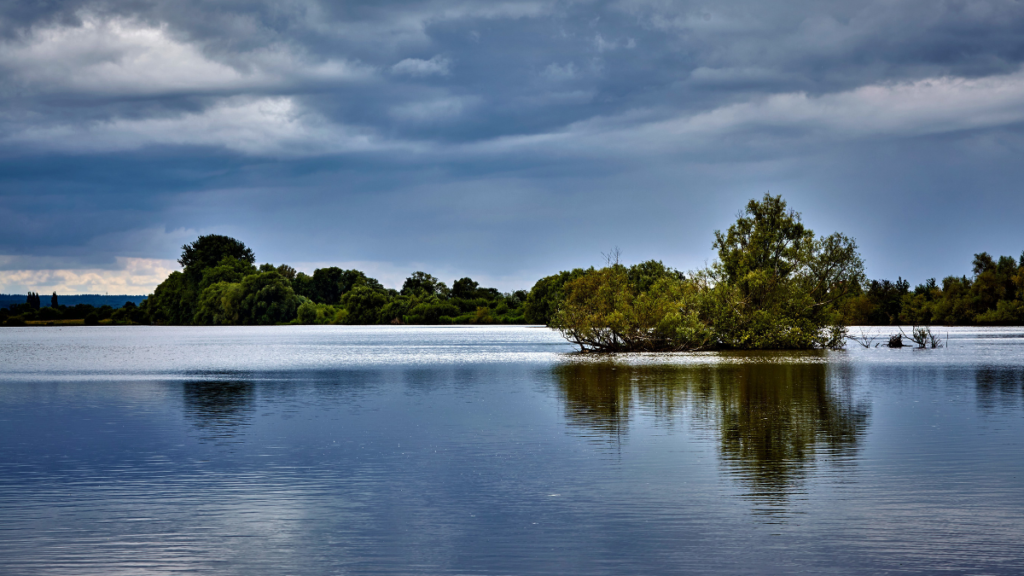
A river along the side of a dense forest. Image credit: Pexels
The assessment documents 11 million hectares of freshwater ecosystems under restoration across 62 countries and 5.7 million hectares of marine and coastal ecosystems across 46 countries. The report also notes that limited monitoring and reporting may mean that actual restoration activities in these ecosystems are higher than the documented figures.
Meanwhile, the share of countries reporting implemented wetland restoration or rehabilitation programmes has increased from 8 per cent in 2022 to 54 per cent.
Restoration financing needs to increase fourfold
Insufficient investment remains a major obstacle to achieving global restoration commitments. The report estimates that annual restoration financing must increase from US$64 billion to US$296 billion by 2030, representing more than a fourfold rise.
Agroforestry requires the largest estimated annual investment, at US$87 billion, followed by restorative reforestation at US$52 billion, peatland restoration at US$44 billion and seagrass restoration at US$28 billion.
The report identifies employment generation as another potential benefit of scaling up restoration. While more than one million green jobs have already been associated with restoration initiatives, increased global investment could generate up to 32 million additional jobs by 2030.
It also highlights the potential contribution of ecosystem restoration to climate mitigation and biodiversity protection. Research cited in the assessment indicates that restoring just 15 per cent of global priority areas could capture and store 30 per cent of carbon dioxide-equivalent emissions released since the Industrial Revolution and help prevent 60 per cent of projected species extinctions.
The report further identifies the participation and leadership of Indigenous Peoples and local communities as essential to ensuring long-term restoration outcomes. Secure land rights, stronger monitoring systems and sustained political commitment are among the priorities identified.
With five years remaining in the UN Decade on Ecosystem Restoration, the assessment calls on governments to move beyond isolated restoration projects towards coordinated, long-term programmes that address the underlying causes of ecosystem degradation.
It emphasises that the 2030 targets should serve as a milestone in the restoration process rather than its conclusion, as ecological recovery requires sustained action and investment beyond the end of the decade.
Biodiversity
96% of the World’s Coral Reef Ecosystems Face Collapse Risk by 2075, IUCN Warns
A global IUCN assessment finds that 122 of 127 shallow-water coral reef regions face a critical risk of collapse by 2075, with rising ocean temperatures posing the greatest threat.
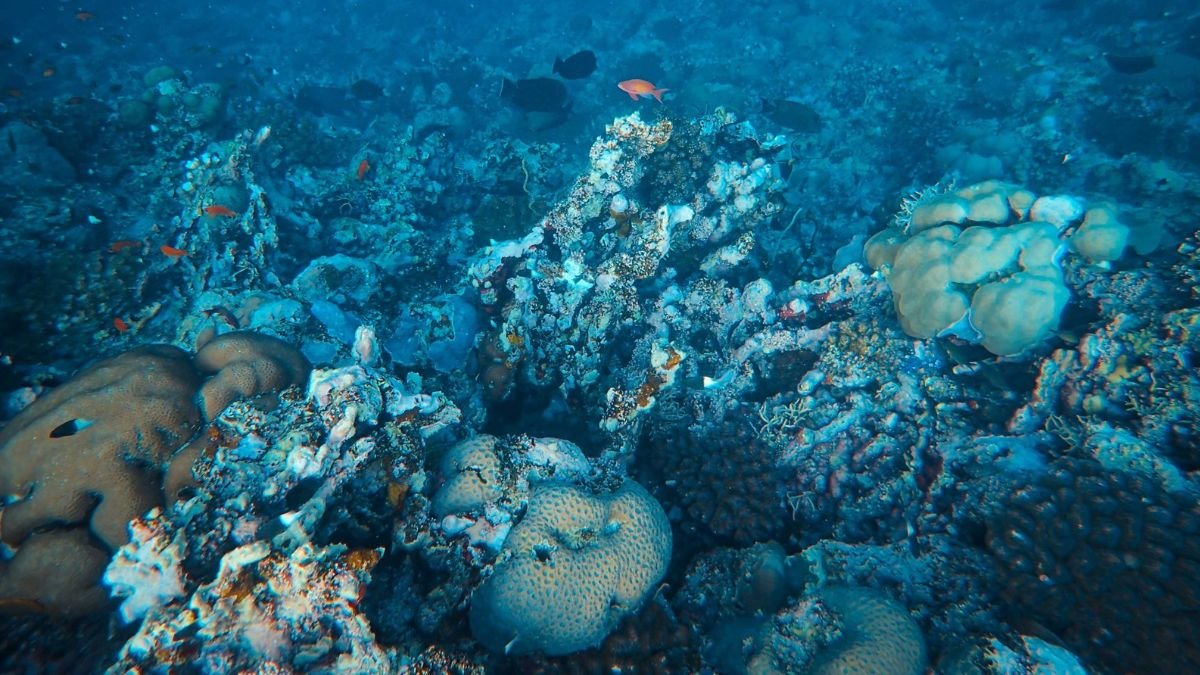
Coral reefs can recover from bleaching and rebuild after damage, but repeated marine heatwaves are giving them less time to recover. A new global assessment by the International Union for Conservation of Nature (IUCN) warns that 122 of the 127 shallow-water coral reef regions studied face a critical risk of collapse by 2075.
Published on October 22, 2026, the assessment is the first global study of coral reefs under the IUCN Red List of Ecosystems. It covers 188,362 square kilometres of reefs across tropical and subtropical waters in more than 80 countries and territories.
The finding that 96% of the assessed ecosystems are Critically Endangered does not mean that nearly all the world’s coral reefs have already died. It means they face a very high risk of losing the natural features and processes that allow them to function. The outcome will depend partly on future global warming and how well other threats to reefs are managed.
Heat Stress Leaves Corals Less Time to Recover
Corals live alongside tiny algae that provide much of their food through photosynthesis. When seawater becomes too warm, corals expel these algae and turn white. This process is called coral bleaching. If the heat continues, corals can lose their main source of energy and die.
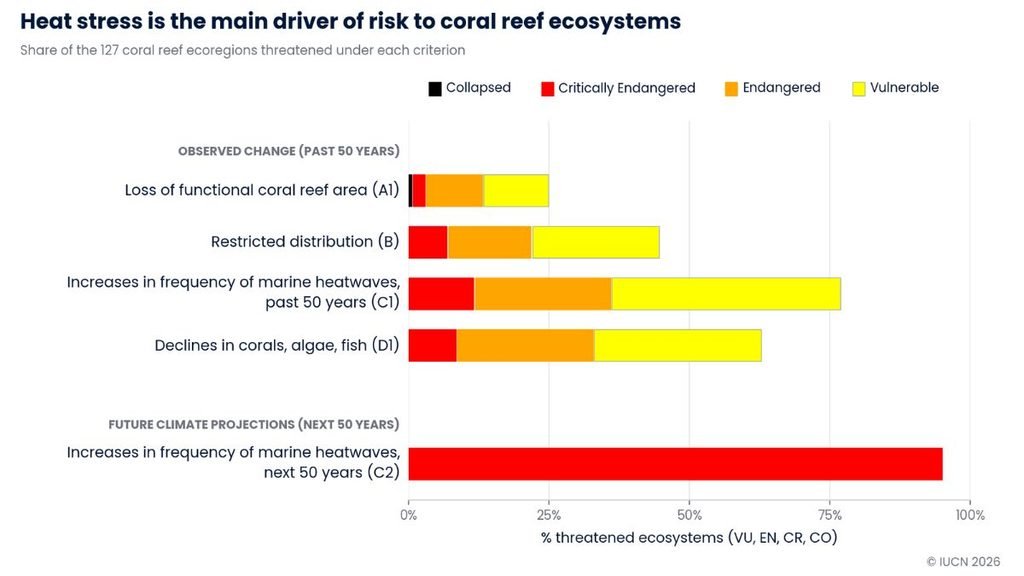
Bleaching does not always mean a coral is dead. If the water cools in time, corals can recover and regain their algae. However, when marine heatwaves occur repeatedly, corals may not have enough time to recover between events. The IUCN assessment found that marine heat stress had threatened 77% of the reef regions studied over the past 50 years. Under the future warming scenario used in the study, heat stress alone puts 95% of the assessed ecosystems in the Critically Endangered category.
The projections are based on an intermediate emissions pathway under which global temperatures rise by about 2.7°C above pre-industrial levels by the end of this century. The year 2075 is therefore part of a risk projection, not a deadline by which all threatened reefs will disappear.
What Does Coral Reef Collapse Mean?
A coral reef is much more than a group of living corals. It provides shelter, feeding grounds and breeding areas for many marine species. Reef-building corals also create the hard structures that support this underwater habitat.
“Corals carry a deep evolutionary record of coping with environmental change, yet the reef ecosystems we see today are remarkably young, shaped over only the last 5,000 to 7,000 years of stable climate. Ocean warming is now outpacing anything in their history, and recurring heatwaves are causing mass bleaching faster than reefs can recover or adapt,” said Marcos Valderrábano, Programme Manager at IUCN, Red List of Ecosystems.
When coral populations decline severely, the reef can change. Algae, broken coral pieces and sponges may become more common, leaving less suitable habitat for many of the species that once lived there. This is what scientists mean by ecosystem collapse. It does not necessarily mean that every living organism in the area has died.
The assessment identifies a reef region in the western Galápagos Islands as already collapsed following the severe El Niño event of 1982–83. This shows how extreme heat can damage an entire reef system, although the effects and chances of recovery vary between locations.
Local Pressures Add to the Threat
Climate change is the main concern, but human activities also affect how well reefs withstand and recover from damage. The IUCN assessment found that overfishing and the depletion of important fish populations threaten 63% of the reef regions studied.
Some fish, including parrotfish, feed on algae that compete with corals for space. When their numbers fall, algae can spread over damaged reefs and make it harder for young corals to grow. Pollution, sediment flowing into coastal waters and poorly managed development can add further pressure.
These threats need different solutions. Better fisheries management and cleaner coastal waters cannot prevent marine heatwaves caused by global warming. However, reducing these local pressures can improve the chances of coral recovery when sea temperatures return to suitable levels.
Why Coral Reef Loss Matters to Humans
Coral reefs support marine life, provide food and income, attract tourists and help protect coastlines from waves. Fisheries in reef areas support local food supplies and jobs, while tourism businesses depend on healthy marine environments.
The hard structures formed by corals also reduce wave energy before it reaches the shore. As reefs deteriorate, coastal communities may face declining fish catches, losses in tourism income and greater exposure to coastal erosion and wave damage. The extent of these effects depends on local conditions and how strongly people rely on reef resources.
These risks are particularly important for island nations and countries with large reef systems. In India, coral reefs are found in the Gulf of Mannar, the Gulf of Kachchh, the Andaman and Nicobar Islands, and Lakshadweep. Their health is important for marine biodiversity and the communities that depend on these waters.
However, the global finding that 96% of assessed reef ecosystems face a critical risk of collapse cannot be applied directly to Indian reefs. A separate regional assessment would be needed to establish the level of risk in India.
The assessment also compares reef conditions over the past 50 years with projections that include future climate change. Based on changes observed over the past five decades, 24% of the assessed reef ecosystems would fall into the Critically Endangered category. When projected climate warming is included, that share rises to 96%.
This difference shows how strongly the future of coral reefs depends on the amount of warming the world allows. Many of the assessed reefs still have living corals, and some have shown a greater ability to withstand heat stress than others. This offers opportunities for conservation, although past resilience does not guarantee survival under continued warming.
Reducing greenhouse gas emissions is essential to limit the heat stress reefs face. Protecting fish populations, controlling pollution and managing coastal development can also reduce the pressures that make recovery harder. The IUCN assessment warns that almost all the reef ecosystems studied face a high risk of collapse under the projected conditions. How much of that risk becomes reality will depend largely on future global warming and the steps taken to protect these ecosystems.
Biodiversity
Project Cheetah: A Young Big Cat Killed by Gunfire Outside Kuno National Park
The death of a 19-month-old cheetah from firearm pellet injuries outside Kuno National Park raises fresh questions about wildlife protection under Project Cheetah, which began in September 2022.


Lesser Florican, Bengal Florican Top India’s Priority List for Bird Conservation, Study Finds

252 Million Hectares Under Restoration Across 149 Countries, but UN Warns of 2030 Target Gap

El Niño Could Help Forecast India’s Humid-Heat Risks Six Months Ahead, Study Finds

MIT Researchers Develop Origami-Based Method for Lightweight, Load-Bearing Structures

96% of the World’s Coral Reef Ecosystems Face Collapse Risk by 2075, IUCN Warns

Knowing When to Think for Ourselves: AI, Intuition and the Education of Discernment

After a Scorching Summer, Delhi’s Children Are Slow to Return Outdoors

Two Chemists Win Nobel Prize for Solving a Century-Old Puzzle: Why Life Picks One Hand Over the Other

Marshall Islands: Why the US Nuclear Legacy Is Back Before the UN

Climate Change, Overfishing and the Uncertain Future of Bangladesh’s Hilsa Fishermen

-

 Math3 months ago
The 2026 Fields Medals: Four Proofs, Four Decades-Old Problems Solved
-
EP Deep Dive: Data & Solutions3 months ago
After Kerala’s Deadliest Landslide, the Hardest Thing to Rebuild Was Childhood
-
EP Deep Dive: Data & Solutions4 months ago
West Asia Crisis: Can Kerala’s Returning Gulf Migrants Find a Future in the Green Economy?
-
Space & Physics5 months ago
India Semiconductor Mission: ‘It’s Not About Fabs. It’s About Building An Entire Ecosystem’
-
Interviews1 month ago
From Scams to Screens: How the National Stock Exchange Rewrote India’s Equity Story
-
Climate5 months ago
The Climate World Cup? How Climate Change Could Affect Player Performance at the 2026 World Cup
-
Society4 months ago
What Is Civilisational Diplomacy? Understanding India’s Newest Foreign Policy Tool
-
Society5 months ago
From Bell Labs to the Classroom: A Second Career in Teaching