India’s water security depends on more than monsoon rainfall. Declining groundwater reserves, regional water scarcity and changing freshwater storage raise concerns about the country’s long-term water...
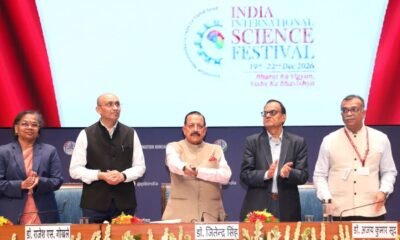
From 3D cell models and space technology exhibitions to student–scientist interactions, the India International Science Festival 2026 will bring science closer to the public in Pune.
What can animal droppings reveal about climate change? Scientists are studying pollen and fungal spores in Himalayan marmot faeces to uncover clues about the vegetation and...
A new report on the Paris Agreement's Article 6 carbon market estimates that potential carbon credit supply could reach 2.364 billion tonnes by 2030, with a...
CERT-In has warned that AI agents are accessing live systems of Indian organisations without authorisation. A separate AI-assisted cyber campaign targeting financial institutions has raised concerns...
India’s shift to efficient ACs, electric three-wheelers and LED bulbs shows how policy can change everyday energy choices. A new RMI report examines what these changes...
Scientists have discovered egoviruses, a previously unknown group of gut viruses potentially present in 180 million people worldwide. Their genetic connection to poxviruses could offer new...
A new review highlights the barriers facing Indian medical students pursuing research, including inadequate mentorship, limited funding and insufficient institutional support, despite strong student interest.
CUSAT has secured the 849th position globally and 37th place in India in the QS World University Rankings: Sustainability 2027. It is the only Kerala institution...
A new FICCI-EY report finds that 66% of surveyed Indian students use AI daily or several times a week, highlighting gaps in university preparedness, faculty training...