Books
The Science of Selling: How Sudheer Babu Decodes Buyer Psychology in ‘The Revenue Multiplier’
A review of Sudheer Babu’s The Revenue Multiplier, exploring how behavioural science and buyer psychology can shape smarter, ethical sales.

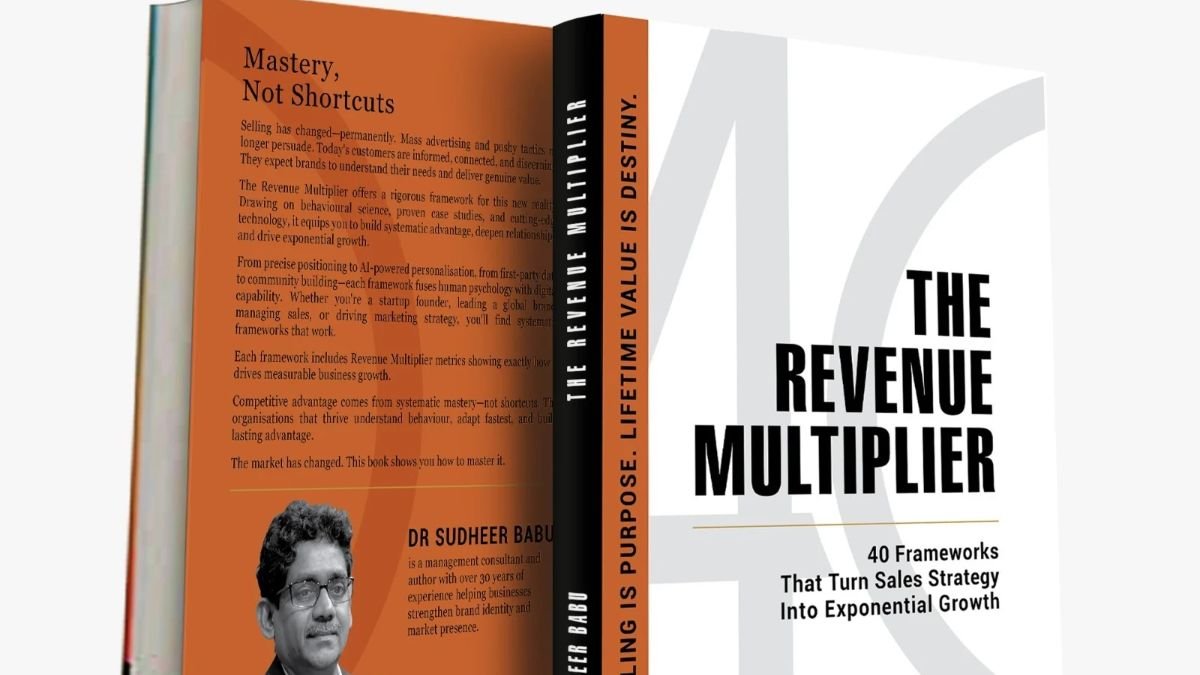
The Revenue Multiplier, by Dr. Sudheer Babu, is a book about why people buy and how a business can sell with that in mind. Its premise is that behavioural science should be the foundation of growth, not an afterthought. In each chapter, Babu starts with a psychological mechanism, explains how it shapes a buyer’s decision, and then turns that insight into a commercial action. He applies this method consistently, and that consistency is the book’s main strength.
The Revenue Multiplier: How Behavioural Science Shapes Sales
The book’s opening case shows the approach. Using BJ Fogg’s Behaviour Model, Babu explains that a behaviour occurs when motivation, ability and a prompt converge. In Babu’s telling, Maggi’s two-minute cooking time raised the ability to act enough to offset a family’s low motivation to abandon traditional food habits. The child’s hunger, he says, was the prompt. Babu then notes that the vegetables added to the packet let families see the snack as a proper meal. This is the compensatory principle at work: simplicity can outweigh reluctance.
Framing comes next. Babu draws on the framing effect, which shows that the way information is presented changes what people perceive and decide. He contrasts fear-based safety messages with affirmative ones, and he shows how a brand can shape the picture a buyer carries into a decision.
The chapter on the Reactance Trap shows the method most clearly. Drawing on Jack W. Brehm’s 1966 work, Babu argues that a buyer who feels pressured resists in order to protect their freedom to choose. His remedy is respectful: tell the customer plainly that the final decision is theirs. He also reminds readers that resistance can appear in different forms across cultures, as delayed decisions or silence, so the approach must be adapted to local norms.
The chapters on decision architecture build on this. Babu applies the primacy and recency effects to the order of presentations and uses anchoring, a finding documented by Amos Tversky and Daniel Kahneman, to show how the first price a buyer sees shapes every price that follows. His decoy example, which uses a plan priced close to a premium option but with fewer features, illustrates asymmetric dominance. These are familiar tools of behavioural economics. Babu presents them as design choices, not tricks.
Loss aversion and scarcity work on the same logic. A limited-time offer can work because the fear of losing an opportunity can outweigh the gain. The endowment effect explains why a virtual try-on or a personalised summary can raise the perceived value of a product before purchase.
The book also covers choice overload, in which more options make a decision harder. It treats positioning as a question of processing fluency: a brand that is easy to understand is easier to remember and trust. Babu’s baker who tries to sell everything, and so becomes known for nothing, makes the point well.
Influence principles from Robert Cialdini run through the sales chapters. A two-step lead funnel uses reciprocity, offering a small gift after a simple first response. Authority and liking explain why endorsements by admired figures carry weight, and social proof explains how that trust spreads through a network.

The book also leaves some questions for the reader. Behavioural effects such as choice overload, decoy pricing and scarcity do not work the same way in every market or with every kind of buyer, and a review of this length cannot test Babu’s commercial claims. His examples, Maggi included, are best read as a source of hypotheses to try with real customers rather than as guaranteed levers.
Babu is careful about how these tools should be used. The book calls his approach ‘smart design, not manipulation’, and it warns that artificial scarcity damages trust once it is exposed. Readers who want to understand buyers, rather than simply pressure them, will find it a clear, practical and humane guide.
The book is available in Kindle and print editions through Amazon. The print edition is also distributed internationally through IngramSpark and available from Kerala Bookstore.





Books
Artificial Intimacy: Sherry Turkle’s Warning About the Chatbot Age
Artificial Intimacy by Sherry Turkle examines how chatbots may reshape empathy, attachment and human relationships, from childhood to old age.

The MIT sociologist’s new book argues that talking to machines wears down the skills we need to live with each other, and that this starts in the nursery.
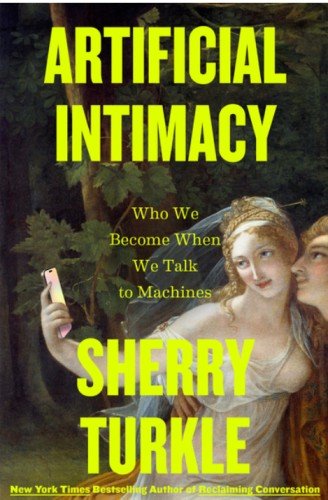
Sherry Turkle asked ChatGPT to play her mother. She had already fed it her own memoir, which describes a strained relationship with a woman who died in 1968. The chatbot obliged. Turkle describes the result in her new book as seductive and disturbing, and she comes away convinced that bringing the dead back as chatbots is dangerous: “playing with fire”, she writes.
The episode sits in Artificial Intimacy: Who We Become When We Talk to Machines, published by Little, Brown, which runs to 288 pages and sells in the US at $32. It is the fullest statement yet from one of the best-known critics of digital life. Turkle holds the Abby Rockefeller Mauzé chair in the social studies of science and technology at MIT. She trained as a sociologist and as a clinical psychologist. Her view is that heavy chatbot use does harm at every stage of life, from toddlerhood to old age and bereavement.
A career spent on one question
Turkle has been asking what machines do to the people who use them for four decades. The Second Self (1984) and Life on the Screen were early studies of how computers shape identity. Alone Together (2011) looked at social media and social robots, and Reclaiming Conversation (2015) at what phones and texting have done to talk. In 2021 she published a memoir, The Empathy Diaries, which is where the material about her mother comes from.
According to MIT News, she describes her subject as the inner history of technology, meaning not only what a device does but what it does to the person using it. This book applies that approach to chatbots, and it is her most alarmed.
The argument, stage by stage
Unless stated otherwise, Turkle’s remarks and the accounts of the people she interviewed come from material released by MIT. EdPublica did not interview her for this article.
The book is built around the stages of a life, and each section is driven by interviews.
Artificial intimacy, children and attachment
With children, Turkle reports a blurring of categories. One eight-year-old uses the same phone to speak to grandparents and to ChatGPT and files both as things you reach on a phone. A graduate student who uses a chatbot to tell her young daughter bedtime stories says the girl believes there is a person inside the phone. Turkle’s worry is partly about trust, since a device that can state falsehoods without knowing it cannot teach a child what trust is. It is also about solitude. Time alone, she argues, is where children build imagination and a sense of self, and a companion that is always available takes that time away. She calls the stakes for child development existential.
Adults appear as people who started with a practical use and drifted. They include people going through divorce or estrangement who want someone to talk to, students asking for advice on applying to university, and workers who hand assignments to a chatbot. One of her subjects, a middle-aged financial consultant she calls Brian (not his real name), keeps a chatbot with a woman’s name open on a third screen. After a partner ended their relationship, saying he was emotionally unavailable, he put the accusation to the chatbot and asked whether she was right. Turkle’s reading is that he was asking a program with no feelings to rule on feelings.
Her objection is simple to state. A chatbot, she says, produces a performance of empathy. It will tell you it loves you, and it has no stake in whether you hurt yourself or make dinner. People who mistake that performance for the real thing, she argues, begin to find actual people disappointing. Spouses and friends make demands, and the machine only flatters. “We’re starting to define being human as not doing the work,” Turkle said in the MIT material.
On grief, she is blunt. Rebuilding a dead parent or partner as a chatbot, which several people in her book have tried, risks weakening the ability to mourn.
Why people turn to chatbots
Reviewers have noted that Turkle does not treat users as fools. A good part of the book is spent on why the appeal is real. A chatbot gives full attention, never tires, and agrees with you. It spares you the risk of asking someone out or finding the words for a condolence. In her telling, the technology keeps offering to make the harder thing unnecessary, and people keep accepting.
She also admits that some of the demand is a result of a failed supply. Mental health care is hard to reach in the US, and the MIT material says she cites a federal study suggesting only about half of people have access to it. Chatbots are filling the gap, she says, for better or worse. She adds a pointed observation about the industry’s logic: social media thinned out people’s friendships, and chatbots are now sold as the remedy.
The book does not avoid the worst outcomes. Chatbots have been linked to teenagers’ deaths by suicide, in cases that followed long exchanges with chat tools, and Turkle treats these as part of the evidence.
What she wants instead
Her remedy is more cultural than technical. She wants readers to accept that life contains friction and that this is fine. Disagreement, embarrassment and waiting are, in her account, how people learn to cope, and an environment built to remove them leaves people less able to cope. She hopes for a social movement along the lines of the ones against phones in schools and unrestricted social media for the young, and says she would like to be part of it, not alone in it.
She is explicit about her readership. She wanted something that college students and high school seniors could read, and that parents and teachers would not find intimidating. The line she keeps returning to is a question: if the alternative to a richer life in the real world is not clear, what is the point of the exercise?
For the youngest children she is at her most severe. A parent worried that a teenager texts too much is in one kind of conversation, she says. A toddler who thinks a plush toy with a chatbot inside is their best friend is in another, because that touches the foundations of how a person learns to attach. Social media, in her phrase, came for attention, and chatbots come for attachment.
How the book has been received
Publishers’ blurbs have come from Jonathan Haidt, the psychologist behind The Anxious Generation, from former US Surgeon General Vivek Murthy, the author Esther Perel and the philosopher Michael Sandel, among others. Trade reviews have been favourable. Publishers Weekly called it a pointed critique and said it deserved a wide readership, and Kirkus described it as a strong case for resisting the urge to substitute AI for human bonds.
The reservations are of a different kind. Some readers say the book leans on anecdote, and a reviewer for a Christian publication, otherwise admiring, felt a dimension was missing. The method matters here. Turkle is a clinician and an interviewer, and her evidence is case studies and conversations, not controlled trials. That makes the book vivid and persuasive in its details. It also means the question of how common these outcomes are, and whether any chatbot use is benign or helpful, is left largely open. Readers who want the other side of the argument, including from the companies that make these products, will not find it here.
Technology
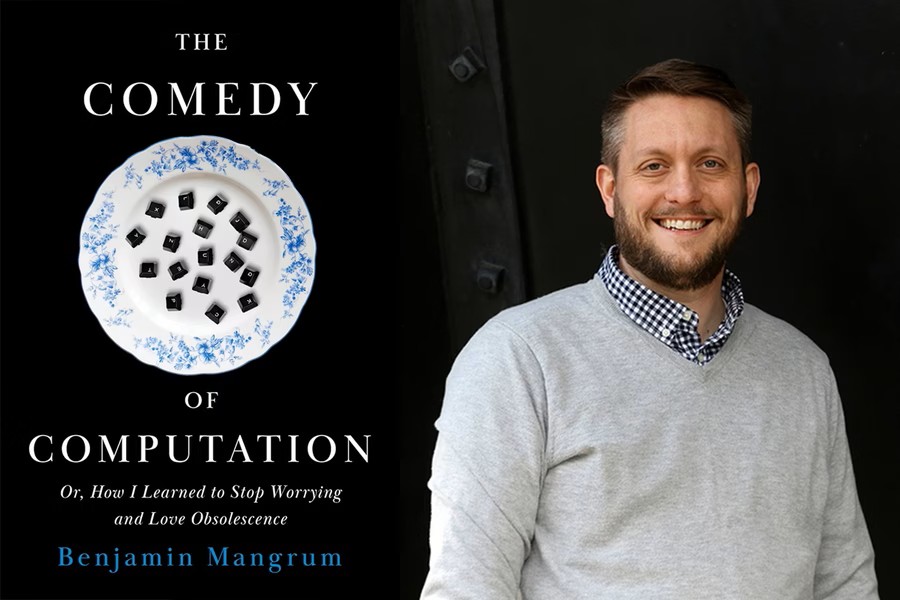
Humour, Humanity, and the Machine: A New Book Explores Our Comic Relationship with Technology
MIT scholar Benjamin Mangrum examines how comedy helps us cope with, critique, and embrace computing.

Society
The Rise of U.S. Retail Giants: A Century of Political and Economic Shaping
Currently, 90% of Americans live within 10 miles of a Walmart, and five of the top 10 U.S. employers—Walmart, Amazon, Home Depot, Kroger, and Target—are retailers


The Science of Selling: How Sudheer Babu Decodes Buyer Psychology in ‘The Revenue Multiplier’

What Declining Freshwater Storage Means For India?

Pune to Host India International Science Festival 2026, With Focus on Students, Startups and Public Engagement

What Can Himalayan Marmot Droppings Tell Us About Climate Change?

$71 Billion Carbon Market, but Only $1.6 Billion in Government Deals: COP31 Exposes Gap Between Carbon Credit Supply and Demand

Indian universities lead Asia in research output per faculty, but the country’s top six all slip in QS ranking

Why Delhi’s Geography Makes It Vulnerable to Severe Air Pollution

India’s Richest Agree on One Cause Above All Others: Education

Europe Braces for Extremes as Commission Unveils Climate Resilience Framework

NASA recruits new astronauts for future Moon Base and Mars missions
-

 Math4 months ago
The 2026 Fields Medals: Four Proofs, Four Decades-Old Problems Solved
-
EP Deep Dive: Data & Solutions4 months ago
After Kerala’s Deadliest Landslide, the Hardest Thing to Rebuild Was Childhood
-
EP Deep Dive: Data & Solutions5 months ago
West Asia Crisis: Can Kerala’s Returning Gulf Migrants Find a Future in the Green Economy?
-
Space & Physics6 months ago
India Semiconductor Mission: ‘It’s Not About Fabs. It’s About Building An Entire Ecosystem’
-
Interviews2 months ago
From Scams to Screens: How the National Stock Exchange Rewrote India’s Equity Story
-
Climate & Environment6 months ago
The Climate World Cup? How Climate Change Could Affect Player Performance at the 2026 World Cup
-
Society4 months ago
What Is Civilisational Diplomacy? Understanding India’s Newest Foreign Policy Tool
-
Society5 months ago
From Bell Labs to the Classroom: A Second Career in Teaching