Society
Artificial Intimacy: Sherry Turkle’s Warning About the Chatbot Age
Artificial Intimacy by Sherry Turkle examines how chatbots may reshape empathy, attachment and human relationships, from childhood to old age.


The MIT sociologist’s new book argues that talking to machines wears down the skills we need to live with each other, and that this starts in the nursery.
Sherry Turkle asked ChatGPT to play her mother. She had already fed it her own memoir, which describes a strained relationship with a woman who died in 1968. The chatbot obliged. Turkle describes the result in her new book as seductive and disturbing, and she comes away convinced that bringing the dead back as chatbots is dangerous: “playing with fire”, she writes.
The episode sits in Artificial Intimacy: Who We Become When We Talk to Machines, published by Little, Brown, which runs to 288 pages and sells in the US at $32. It is the fullest statement yet from one of the best-known critics of digital life. Turkle holds the Abby Rockefeller Mauzé chair in the social studies of science and technology at MIT. She trained as a sociologist and as a clinical psychologist. Her view is that heavy chatbot use does harm at every stage of life, from toddlerhood to old age and bereavement.
A career spent on one question
Turkle has been asking what machines do to the people who use them for four decades. The Second Self (1984) and Life on the Screen were early studies of how computers shape identity. Alone Together (2011) looked at social media and social robots, and Reclaiming Conversation (2015) at what phones and texting have done to talk. In 2021 she published a memoir, The Empathy Diaries, which is where the material about her mother comes from.

According to MIT News, she describes her subject as the inner history of technology, meaning not only what a device does but what it does to the person using it. This book applies that approach to chatbots, and it is her most alarmed.
The argument, stage by stage
Unless stated otherwise, Turkle’s remarks and the accounts of the people she interviewed come from material released by MIT. EdPublica did not interview her for this article.
The book is built around the stages of a life, and each section is driven by interviews.
Artificial intimacy, children and attachment
With children, Turkle reports a blurring of categories. One eight-year-old uses the same phone to speak to grandparents and to ChatGPT and files both as things you reach on a phone. A graduate student who uses a chatbot to tell her young daughter bedtime stories says the girl believes there is a person inside the phone. Turkle’s worry is partly about trust, since a device that can state falsehoods without knowing it cannot teach a child what trust is. It is also about solitude. Time alone, she argues, is where children build imagination and a sense of self, and a companion that is always available takes that time away. She calls the stakes for child development existential.
Adults appear as people who started with a practical use and drifted. They include people going through divorce or estrangement who want someone to talk to, students asking for advice on applying to university, and workers who hand assignments to a chatbot. One of her subjects, a middle-aged financial consultant she calls Brian (not his real name), keeps a chatbot with a woman’s name open on a third screen. After a partner ended their relationship, saying he was emotionally unavailable, he put the accusation to the chatbot and asked whether she was right. Turkle’s reading is that he was asking a program with no feelings to rule on feelings.
Her objection is simple to state. A chatbot, she says, produces a performance of empathy. It will tell you it loves you, and it has no stake in whether you hurt yourself or make dinner. People who mistake that performance for the real thing, she argues, begin to find actual people disappointing. Spouses and friends make demands, and the machine only flatters. “We’re starting to define being human as not doing the work,” Turkle said in the MIT material.
On grief, she is blunt. Rebuilding a dead parent or partner as a chatbot, which several people in her book have tried, risks weakening the ability to mourn.
Why people turn to chatbots
Reviewers have noted that Turkle does not treat users as fools. A good part of the book is spent on why the appeal is real. A chatbot gives full attention, never tires, and agrees with you. It spares you the risk of asking someone out or finding the words for a condolence. In her telling, the technology keeps offering to make the harder thing unnecessary, and people keep accepting.
She also admits that some of the demand is a result of a failed supply. Mental health care is hard to reach in the US, and the MIT material says she cites a federal study suggesting only about half of people have access to it. Chatbots are filling the gap, she says, for better or worse. She adds a pointed observation about the industry’s logic: social media thinned out people’s friendships, and chatbots are now sold as the remedy.
The book does not avoid the worst outcomes. Chatbots have been linked to teenagers’ deaths by suicide, in cases that followed long exchanges with chat tools, and Turkle treats these as part of the evidence.
What she wants instead
Her remedy is more cultural than technical. She wants readers to accept that life contains friction and that this is fine. Disagreement, embarrassment and waiting are, in her account, how people learn to cope, and an environment built to remove them leaves people less able to cope. She hopes for a social movement along the lines of the ones against phones in schools and unrestricted social media for the young, and says she would like to be part of it, not alone in it.
She is explicit about her readership. She wanted something that college students and high school seniors could read, and that parents and teachers would not find intimidating. The line she keeps returning to is a question: if the alternative to a richer life in the real world is not clear, what is the point of the exercise?
For the youngest children she is at her most severe. A parent worried that a teenager texts too much is in one kind of conversation, she says. A toddler who thinks a plush toy with a chatbot inside is their best friend is in another, because that touches the foundations of how a person learns to attach. Social media, in her phrase, came for attention, and chatbots come for attachment.
How the book has been received
Publishers’ blurbs have come from Jonathan Haidt, the psychologist behind The Anxious Generation, from former US Surgeon General Vivek Murthy, the author Esther Perel and the philosopher Michael Sandel, among others. Trade reviews have been favourable. Publishers Weekly called it a pointed critique and said it deserved a wide readership, and Kirkus described it as a strong case for resisting the urge to substitute AI for human bonds.
The reservations are of a different kind. Some readers say the book leans on anecdote, and a reviewer for a Christian publication, otherwise admiring, felt a dimension was missing. The method matters here. Turkle is a clinician and an interviewer, and her evidence is case studies and conversations, not controlled trials. That makes the book vivid and persuasive in its details. It also means the question of how common these outcomes are, and whether any chatbot use is benign or helpful, is left largely open. Readers who want the other side of the argument, including from the companies that make these products, will not find it here.










Society
India’s Farm Subsidies Fail to Offset Price Pressures on Farmers, OECD Report Finds
India’s agricultural support system faces scrutiny after a new OECD report found that market regulations and trade restrictions continue to depress prices received by farmers, despite substantial government subsidies. The findings raise questions about the effectiveness of farm support policies, public investment and the sustainability of agricultural growth.

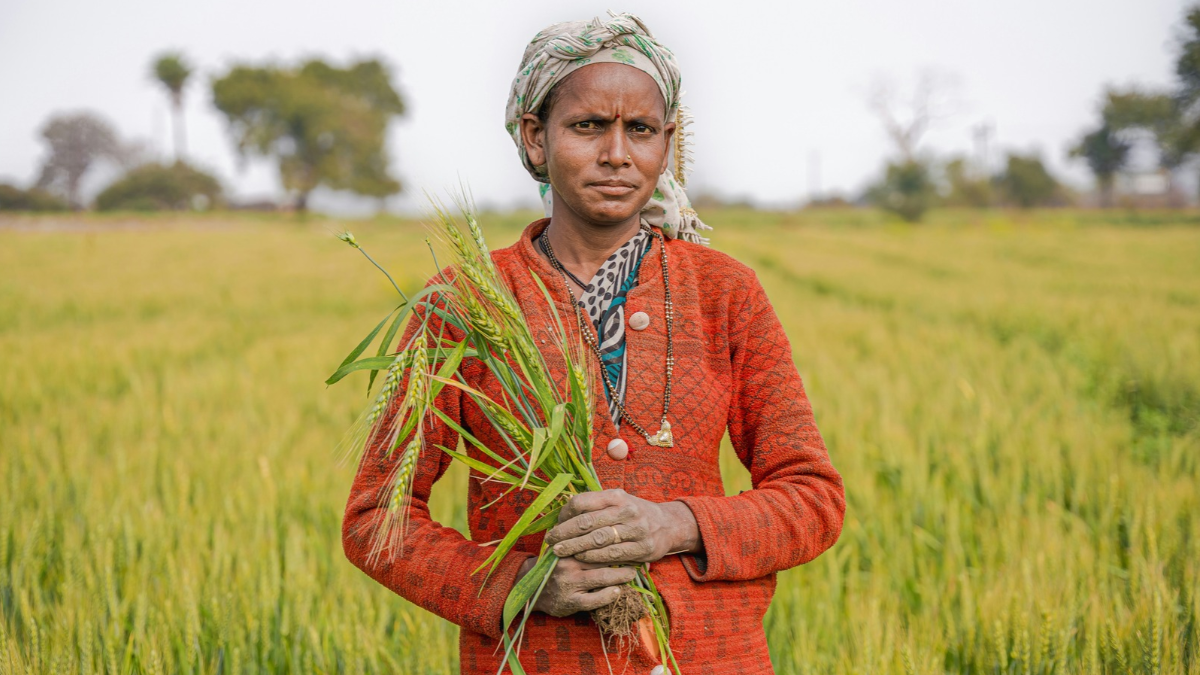
India’s agricultural support system presents a striking contradiction: the government spends substantial sums on subsidies and income-support programmes, yet its policies continue to impose an implicit financial burden on farmers. A new assessment by the Organisation for Economic Co-operation and Development (OECD) finds that India’s net support to agricultural producers remained negative during 2023–25, suggesting that budgetary payments did not compensate for the price-depressing effects of domestic marketing regulations and trade policies.
The Agricultural Policy Monitoring and Evaluation 2026, released on November 2, estimates India’s Producer Support Estimate (PSE) at an average of -9.2% of gross farm receipts during 2023–25. The negative figure indicates that agricultural policies, taken together, reduced the prices producers received compared with international reference prices, even after accounting for direct government support.
The finding draws attention to a structural problem in India’s agricultural policy: support delivered through subsidies can be undermined by policies that influence how crops are marketed, priced and traded.
The gap between subsidies and prices
The OECD’s PSE is not a measure of the amount of money farmers receive from the government. It estimates the annual value of transfers to agricultural producers arising from policy measures, including direct payments and the difference between domestic and international market prices.
In India’s case, the report identifies both positive and negative market price support. Commodities receiving positive support recorded an average of 3.5% of gross farm receipts, while those facing negative support experienced price effects of as much as -23.4% during 2023–25.
The report attributes the overall negative estimate to a combination of domestic marketing regulations and trade policy measures. Restrictions on the export of rice, wheat, sugar, onions and related products during the assessment period are among the measures identified. Such interventions are often introduced to contain domestic food prices and protect consumers from inflation. However, when they restrict access to higher-priced international markets, they can also limit the prices producers receive.
India gradually relaxed several restrictions during 2025, including measures affecting rice exports. Nevertheless, the OECD argues that unpredictable restrictions make agricultural markets less certain and can discourage farmers, traders and businesses from investing in production and supply chains.
This presents a difficult policy balance. Governments need to protect consumers from sudden food-price increases, particularly low-income households, but interventions that repeatedly change market conditions can undermine price incentives for producers.
Agriculture’s economic importance
The implications extend beyond farm incomes. According to the OECD, agriculture accounted for 16.3% of India’s GDP in 2024 but employed 42.4% of the workforce. The disparity points to a significant productivity gap between agriculture and the rest of the economy.
The report also notes that farm incomes have grown at less than one-third the rate of non-agricultural incomes in recent years. Although agricultural output has expanded, a large share of the workforce continues to depend on a sector that contributes a considerably smaller share of national economic output.
India’s agricultural output grew at an average annual rate of 3.9% between 2014 and 2023, exceeding the global average. Total factor productivity grew by 1.5% annually during the period, supported by technological progress, improved seeds and infrastructure, including irrigation and roads.
However, output growth alone does not guarantee that gains reach farmers. The prices received for produce, the cost of inputs, access to markets and the distribution of value along supply chains all influence farm incomes.
The OECD’s findings therefore raise a question about whether India’s existing support mechanisms are sufficiently addressing the conditions that determine what farmers earn.
Where does government support go?
The report does not suggest that India has withdrawn financial support from agriculture. Budgetary transfers to producers averaged 10.7% of gross farm receipts during 2023–25. Much of this support, however, was directed towards variable input subsidies, particularly fertilisers, electricity and irrigation water.
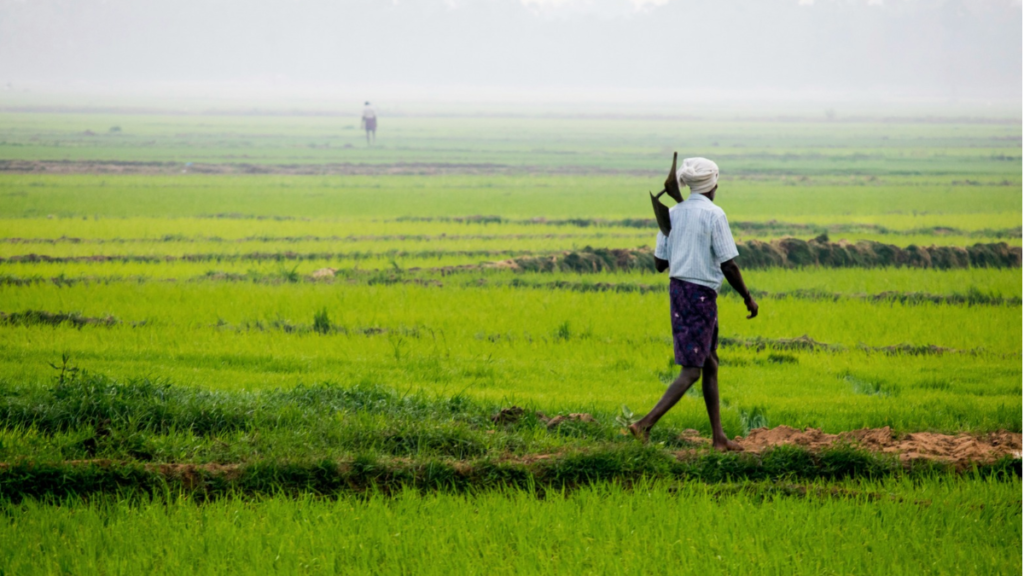
A farmer walking in a paddy field at early morning.Image credit:Pexels
These subsidies help farmers manage production costs and are politically significant, especially when input prices rise. The government continues to rely on them to maintain affordability and support agricultural production.
The scale of fertiliser assistance illustrates this dependence. On November 11, 2026, the Union Cabinet approved a nutrient-based subsidy allocation of ₹62,370 crore for phosphatic and potassic fertilisers for the October 2026–March 2027 winter cropping season. The allocation was approximately 64% higher than that for the previous winter season, reflecting pressures from international fertiliser prices and supply disruptions.
But input subsidies are not a substitute for investments that improve productivity over the long term. The OECD recommends gradually reducing inefficient fertiliser, electricity and irrigation-water subsidies and redirecting resources towards agricultural research, education, rural infrastructure, financial services, sustainable input use and climate resilience.
The distinction is important. Subsidising electricity or water consumption can provide immediate relief, but poorly designed subsidies may also encourage excessive use of resources. A transition towards more efficient support would need to protect small and vulnerable farmers while reducing incentives for wasteful consumption.
The environmental cost of agricultural growth
India’s productivity gains have also come with mounting pressure on natural resources. The OECD records an increase in the country’s nitrogen balance from 90.7 kg per hectare in 2000 to 133.4 kg per hectare in 2024. The phosphorus balance rose from 20.8 to 28.1 kg per hectare over the same period.
These indicators measure the difference between nutrients entering agricultural systems and those removed through harvested crops and other processes. Persistent surpluses can indicate inefficient fertiliser use and increase the risk of nutrient pollution in soil and water.
The report links rising fertiliser use and agricultural output to growing pressure on land and water resources. It argues that support policies should encourage more sustainable production rather than simply increase the volume of inputs used.
This is particularly relevant for India, where irrigation, fertiliser affordability and electricity subsidies are closely connected to agricultural production. Reforming these systems without adequate alternatives could increase costs for farmers. The challenge is therefore to improve efficiency without shifting the burden of transition onto those with the least capacity to absorb it.
Rethinking agricultural policy
The OECD recommends making agricultural trade more predictable by limiting ad hoc export restrictions and extending the Agricultural Export Policy framework to more products. It also calls for domestic marketing reforms that allow farmers and traders to respond more effectively to market demand.
Its broader recommendation is to shift public spending away from measures that distort production and trade towards investments in productivity, sustainability and resilience. Research, extension services, infrastructure and digital skills are identified as areas requiring greater attention.
The Economic Survey 2025–26 also identifies fragmented landholdings, limited access to irrigation and quality inputs, low mechanisation and insufficient investment as continuing constraints on Indian agriculture. It points to initiatives in agricultural extension, digital agriculture, farmer-producer organisations and market infrastructure as part of the policy response.
The OECD’s assessment should not be read as an argument against all subsidies or government intervention. Price stabilisation and food security remain important objectives in a country where millions of households depend on affordable food. But the report highlights the limitations of a system that supports farmers through input subsidies while simultaneously using market and trade controls that can depress the value of their produce.
The central policy question is no longer simply how much the government spends on agriculture, but whether that spending improves farmers’ capacity to earn, invest and adapt. For India, a more durable agricultural support system will require aligning price policy, market access, public investment and environmental sustainability rather than treating them as separate concerns.
Society
Intellectual disabilities linked to severe educational disadvantage in India, study finds
A new study published in Scientific Reports highlights significant educational disadvantages among people with intellectual and developmental disabilities and mental illness in India. Alongside school enrolment and infrastructure data, the findings underline persistent gaps in inclusive education, gender equality and access to learning support.

New Delhi: People with intellectual and developmental disabilities (IDD) in India face substantially greater educational disadvantages than those without disabilities, with gender and economic inequalities further widening the gap, according to a study published in Scientific Reports on October 15, 2026.
The research, analysed data from 402,994 adults using the 76th round of the National Sample Survey (NSS), conducted in 2018.
Researchers found that individuals with intellectual and developmental disabilities had a 71.3% predicted probability of receiving no formal education. The corresponding probability among people reporting mental illness was 48.3%.
The study also found that individuals with IDD had 28.9 times higher odds of receiving no formal education than those without disabilities. For individuals with mental illness, the odds were 3.3 times higher.
The findings highlight how disability-related barriers can translate into long-term educational exclusion, particularly when combined with poverty and gender discrimination.
Gender and economic inequalities compound exclusion
The researchers examined how educational disadvantages varied across gender and household economic groups.
Women with mental illness faced a particularly pronounced disadvantage. They were 18.7 percentage points more likely than men with mental illness to have received no formal education.
Economic circumstances also influenced educational outcomes. Among individuals with IDD, the predicted probability of receiving no formal education declined from approximately 79.9% in the poorest household group to 62.9% in the richest group.
For individuals with mental illness, the corresponding probability declined from approximately 59.9% to 33.5%.
However, economic advantage did not eliminate gender disparities. The researchers found that women with mental illness continued to experience educational disadvantages even in the wealthiest household category.
The study distinguishes between intellectual and developmental disabilities and mental illness, highlighting the importance of addressing their different educational and support requirements rather than treating them as a single category.
Enrolment figures reveal the scale of the challenge
The research findings gain significance when considered alongside India’s school-enrolment figures.
According to the Unified District Information System for Education Plus (UDISE+) data cited in a Lok Sabha response on March 30, 2026, approximately 1.91 million children with special needs were enrolled in government, government-aided and local-body schools during 2024–25.
The corresponding figure was approximately 1.93 million in 2023–24. Girls accounted for 827,521 of the enrolled children in 2024–25, representing approximately 43.4% of the total.
The figures indicate the scale of the population requiring inclusive educational support. However, enrolment alone does not establish whether children are receiving appropriate learning assistance, participating fully in classrooms or progressing through different levels of education.

Representational image.Image credit:Unsplash
Infrastructure and specialist support remain important components of inclusive schooling. The Ministry of Education’s Annual Report 2024–25 recorded that 11.34 lakh schools had ramps, 7.69 lakh had ramps with handrails and 5.06 lakh had children-with-special-needs-friendly toilets during 2023–24.
The government also reported 52,274 government, government-aided and local-body schools with special educators in 2024–25. These figures point to the need to assess not only school access but also the availability and distribution of trained personnel and accessible facilities.
Strengthening inclusive education
India’s Right of Children to Free and Compulsory Education Act, 2009, and the Rights of Persons with Disabilities Act, 2016, provide the legal framework for improving educational access for children with disabilities.
Under the Samagra Shiksha scheme, the government provides support through early identification, assessment, assistive devices, therapeutic interventions, transport allowances, resource support and individualised learning assistance.
The scheme also provides a stipend of Rs 200 per month for ten months to eligible girls with special needs to encourage school participation.
However, the research highlights the importance of addressing barriers that extend beyond school infrastructure and financial assistance. Teacher preparedness, social stigma, gender discrimination and inadequate access to specialised support can influence educational participation and attainment.
The researchers emphasise the need for gender-sensitive and income-sensitive interventions, including school-based mental-health support, community awareness programmes and stronger access to healthcare services.
The study also acknowledges limitations arising from its reliance on cross-sectional and self-reported data. Its findings establish associations rather than proving that disability alone causes educational exclusion. Moreover, because the analysis covers adults, it cannot directly measure the present-day enrolment or dropout rates of children with disabilities.
Nevertheless, the findings offer an important indication of how educational inequalities can persist into adulthood. They underline the need to strengthen inclusive education systems so that children with disabilities are not merely enrolled in schools but are also supported in completing their education and accessing further opportunities.
Society
Can Storytelling, Singing and Playing Help Children Reach Developmental Milestones? An Indian Study Explores the Link
Can storytelling, singing and playing support children’s development? An Indian study of 2,170 children examines the role of parental engagement and home-learning environments.

A picture book at bedtime, a song sung by a parent or a game played together may seem like ordinary parts of childhood. Yet, these everyday experiences can contribute to how young children develop language, communication and other essential skills. Research involving more than 2,000 children in rural India has drawn attention to the role of such interactions in early childhood development.
A study of 2,170 children aged 2–5 years in West Bengal found that children who were developmentally on track were more likely to have parents who played, sang, read and told stories to them. Access to age-appropriate toys and picture books at home was also associated with better developmental outcomes.
Published in Indian Pediatrics, the study found that 85.25% of the children were developmentally on track, while 14.75% were not. The research examined children in Purulia and South 24 Parganas districts, looking at how family circumstances, social conditions and home environments were associated with their development.
Learning That Happens Outside Classrooms
Early childhood development involves much more than acquiring basic academic skills. During the first five years, children develop abilities related to language, problem-solving, social interaction and emotional understanding. Their everyday surroundings and interactions with caregivers provide opportunities to practise these skills.

Storytelling, for instance, exposes children to new words, sounds and ways of expressing ideas. Singing introduces patterns, rhythm and language, while play allows children to explore objects, respond to situations and interact with others. The study found that these activities were more commonly reported in the homes of children who were developmentally on track. The availability of picture books and age-appropriate toys also featured among the factors associated with developmental progress.
The findings bring attention to the importance of a child’s home-learning environment, particularly in the years before formal schooling begins. Access to early learning opportunities is not determined by what happens in a classroom alone. The time, attention and opportunities for interaction that children receive at home also form part of their developmental environment.
Why Fathers’ Involvement Matters
The study also identified an association between fathers’ involvement in childcare and children’s developmental progress. Maternal education was another factor associated with whether children were developmentally on track. These findings add to the discussion on shared caregiving responsibilities during early childhood. Children’s development involves interactions with different family members, and the involvement of fathers can expand the opportunities children have for communication, play and learning.
Interestingly, the researchers found minimal differences in preschool attendance and family income between children who were developmentally on track and those who were not. This suggests that factors beyond school participation and household economic circumstances also deserve attention when examining early childhood development.
However, the study does not establish that parental engagement alone leads to better developmental outcomes. Its findings show associations between family interactions, home environments and children’s developmental status.
Recognising Development Beyond Academic Readiness
The researchers used UNICEF’s Early Childhood Development Index 2030 (ECDI2030) to assess children’s developmental progress. The tool examines whether children are meeting developmental expectations across areas such as literacy-numeracy, physical development, social-emotional development and learning.
The findings offer an opportunity to look at early childhood development beyond school readiness or academic performance. A child’s ability to communicate, interact, explore and respond to their surroundings is also part of the foundation for later learning. For parents and caregivers, the research draws attention to activities that do not necessarily require expensive learning materials or specialised programmes. Reading a picture book, telling a story, singing together or making time for play can create opportunities for children to develop through interaction.
On Children’s Day, the findings offer a reminder that childhood learning does not begin with a school textbook. Some of its earliest foundations are built through the conversations, stories, songs and games that children share with the people around them.

Challenge AI on Climate Science, and It May Abandon the Facts

India Records 436 Extreme Weather Events in 30 Years, Loss of 170 billion USD

Woxsen University Ranks 12th Globally in MBA Entrepreneurship Ranking, Fourth in Startup Launches

IIT Delhi Returns to Global Top 200 in QS Sustainability Rankings 2027; 38 Indian Universities Improve

India’s Clean-Energy Transition: Will It Replace Oil Dependence With Mineral Dependence?

Indian universities lead Asia in research output per faculty, but the country’s top six all slip in QS ranking

Why Delhi’s Geography Makes It Vulnerable to Severe Air Pollution

Europe Braces for Extremes as Commission Unveils Climate Resilience Framework

NASA recruits new astronauts for future Moon Base and Mars missions

Between Lectures and Lyrics: Kabeer Is Building a Malayalam Hip-Hop Career One Self-Taught Skill at a Time
-

 Math4 months ago
The 2026 Fields Medals: Four Proofs, Four Decades-Old Problems Solved
-
EP Deep Dive: Data & Solutions4 months ago
After Kerala’s Deadliest Landslide, the Hardest Thing to Rebuild Was Childhood
-
EP Deep Dive: Data & Solutions4 months ago
West Asia Crisis: Can Kerala’s Returning Gulf Migrants Find a Future in the Green Economy?
-
Space & Physics6 months ago
India Semiconductor Mission: ‘It’s Not About Fabs. It’s About Building An Entire Ecosystem’
-
Interviews2 months ago
From Scams to Screens: How the National Stock Exchange Rewrote India’s Equity Story
-
Climate & Environment6 months ago
The Climate World Cup? How Climate Change Could Affect Player Performance at the 2026 World Cup
-
Society4 months ago
What Is Civilisational Diplomacy? Understanding India’s Newest Foreign Policy Tool
-
Society5 months ago
From Bell Labs to the Classroom: A Second Career in Teaching