
Education
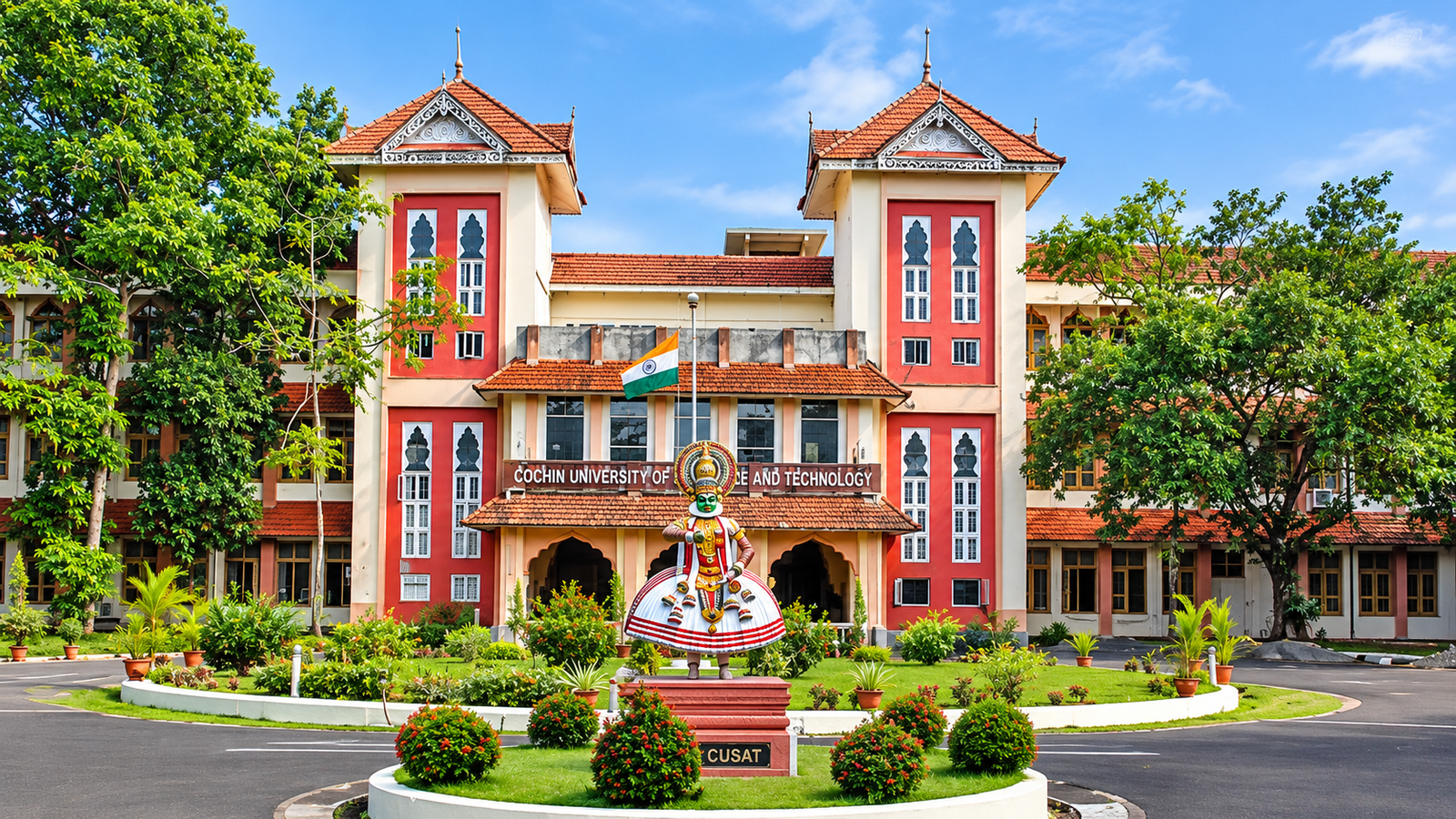
CUSAT ranks 849th globally in sustainability, tops Kerala universities
CUSAT has secured the 849th position globally and 37th place in India in the QS World University Rankings: Sustainability 2027. It is the only Kerala institution among the global top 1,000.













EduNews & Views
Global Patent Applications Hit Record 3.9 Million in 2025; India Sees 37.5% Growth
Global patent applications reached a record 3.9 million in 2025, with China accounting for more than half the increase. India recorded a 37.5% rise, crossing 100,000 applications for the first time.

Global patent applications crossed 3.9 million in 2025, registering a 6% increase over the previous year and the fastest annual growth since 2016. According to the World Intellectual Property Organization (WIPO), China accounted for more than half of the additional applications. India recorded a 37.5% rise, crossing 100,000 filings for the first time.
Patent applications are formal requests for legal protection of inventions. They allow individuals, companies and research institutions to seek exclusive rights over their innovations, preventing others from commercially using them without permission if a patent is granted. The number of applications therefore offers an indication of innovation and research activity, although not every application results in a granted patent or a marketable technology.
The increase of approximately 224,000 applications worldwide was concentrated largely in four countries: China, Japan, India and South Korea. Together, they accounted for about 94% of the net global increase, according to WIPO’s World Intellectual Property Indicators 2026 report.
China Accounts for More Than Half of Global Patent Application Increase
China contributed 113,693 additional patent applications in 2025, accounting for more than half of the worldwide increase. Inventors and applicants residing in China filed approximately 1.9 million applications globally, retaining the country’s position as the largest source of patent filings.
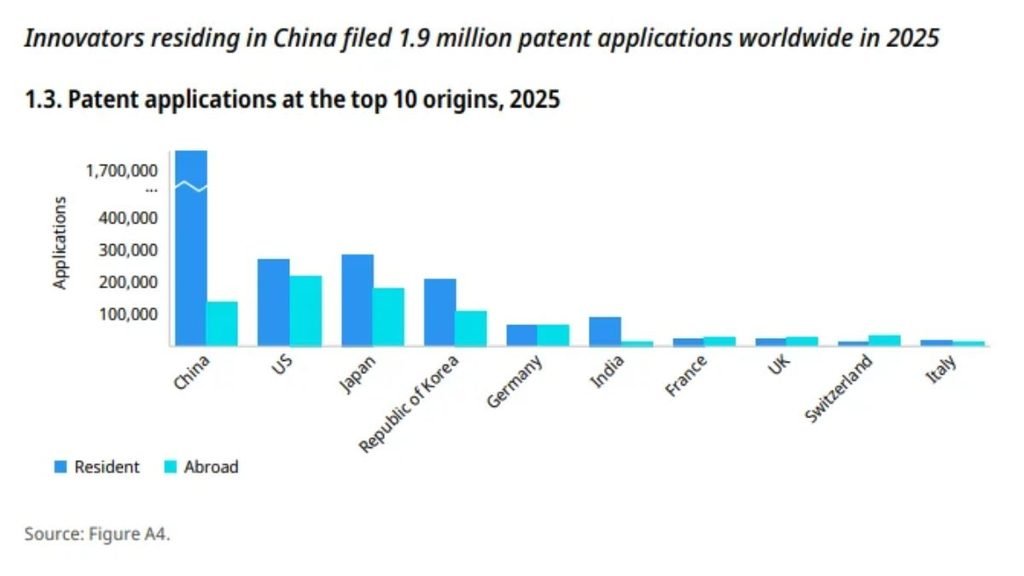
The United States followed with 489,766 applications, while Japan recorded 466,301. These figures include applications filed both within the respective countries and abroad. Japan added 45,310 applications during the year, making it the second-largest contributor to global growth. India followed with an additional 28,690 applications, while South Korea contributed 23,169.
India Crosses 100,000 Patent Applications
India recorded 105,163 patent applications in 2025, marking the first time the country crossed the 100,000 threshold. The 37.5% increase also marked its seventh consecutive year of double-digit growth. The rise was driven primarily by an increase in applications filed by Indian residents, indicating growing domestic participation in patent activity. India was the third-largest contributor to the global increase, after China and Japan.
WIPO’s figures also show that applications received by India’s patent office increased by 27.8% in 2025. This marks the ninth consecutive year of growth at the office and the fourth successive year of double-digit increases. Kerala recorded 827 patent applications in 2024–25, up from 637 in the previous financial year, according to the Indian Patent Office.
However, a separate analysis by the Gulati Institute of Finance and Taxation has pointed to a gap between the state’s research spending and patent generation, raising questions about how effectively research investments are translating into intellectual property. The study also highlighted a gap between government research funding and patent output. Educational institutions received 44.81% of the state’s R&D allocation but accounted for only 7.29% of its patents.
Asia Accounts for 71.2% of Global Patent Filings
Intellectual property offices located in Asia received approximately 2.8 million patent applications in 2025, accounting for 71.2% of the global total. The region’s share has increased from 61.9% in 2015, reflecting a steady shift in global patent activity over the past decade.
China accounted for approximately 68.5% of the applications received across Asian offices. Africa was the other region, besides Asia, to record an average annual growth rate above the global average over the past decade.
Computer Technology Leads Patent Filings
Computer technology remained the largest field of patenting, accounting for 13.6% of global patent filings, according to WIPO’s technology-sector analysis. The field’s share has grown over the past decade, reflecting its expanding role in technological development.
WIPO’s report also tracks patent activity across fields such as digital communication, medical technology and electrical machinery, offering insights into areas attracting research and development activity.
EduNews & Views
Woxsen University Ranks 12th Globally in MBA Entrepreneurship Ranking, Fourth in Startup Launches
Woxsen University has secured 12th place in the 2027 Poets&Quants MBA entrepreneurship ranking, with 15% of its MBA graduates from the 2021–2025 cohorts reportedly launching ventures within three months of graduation.
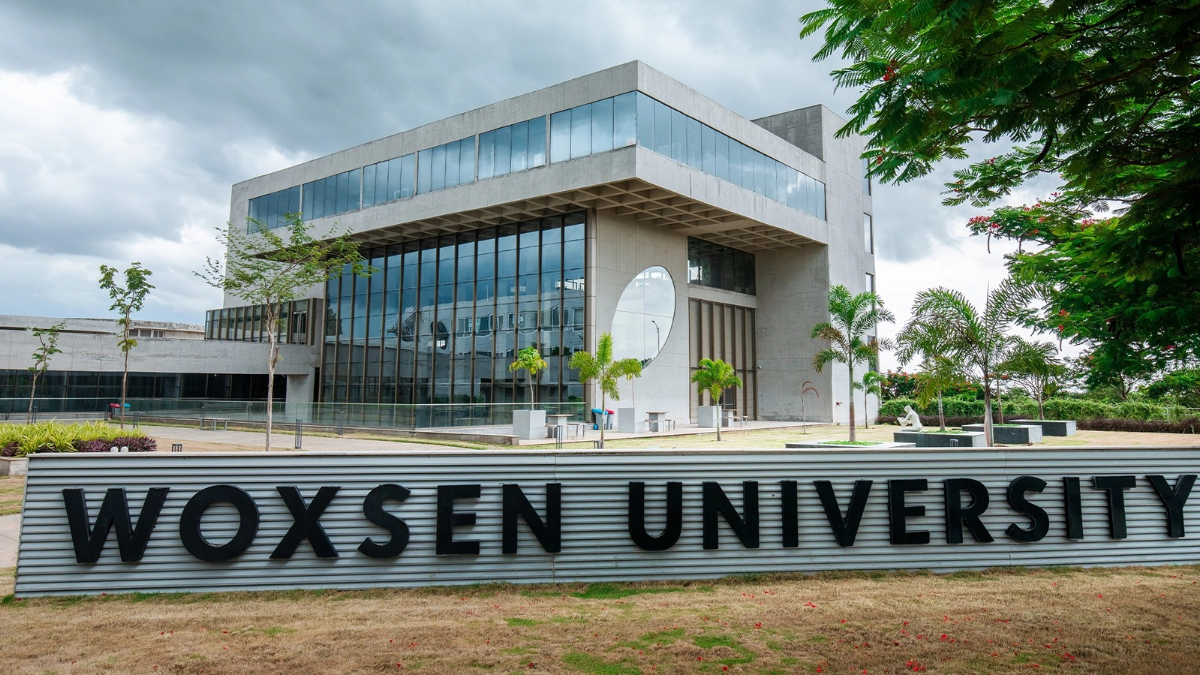
Woxsen University in Hyderabad has been ranked 12th globally in the 2027 Best MBA Programs for Entrepreneurship ranking released by Poets&Quants, with the institution placing fourth worldwide in the category measuring startup launches by MBA graduates.
According to the university’s press release, an average of 15% of its MBA graduates from the Classes of 2021–2025 launched ventures within three months of completing their degrees. The figure contributed to the institution’s performance in a ranking that places considerable emphasis on entrepreneurial outcomes rather than relying solely on academic reputation or programme structure.
Woxsen’s overall position puts it ahead of several established business schools, including Arizona State University’s W. P. Carey School of Business, Brigham Young University’s Marriott School of Business, London Business School and Carnegie Mellon University’s Tepper School of Business.
The 2027 ranking assigns 25% weightage to the proportion of MBA graduates pursuing entrepreneurial ownership within three months of graduation. It also recognises business acquisitions as a form of entrepreneurship, broadening the scope beyond graduates establishing new ventures.

Students attend a classroom session at a business school.Image credit:Woxsen university
The university’s fourth-place position in the startup-launch category indicates the reported proportion of graduates moving into venture creation. However, the 15% figure represents an average across five graduating cohorts and does not, by itself, establish the long-term survival, revenue generation or employment impact of these ventures.
Woxsen first entered the Poets&Quants entrepreneurship ranking in 2026, when it featured among the global top 12 and was identified by the university as the only Asian business school in that group. Its position in the 2027 edition marks a continuation of that presence.
The ranking draws attention to a broader question facing MBA programmes: how effectively do business schools translate entrepreneurship education into actual venture creation? While business schools increasingly incorporate startup development, business planning and experiential learning into their curricula, graduate venture formation offers one measurable indicator of their outcomes.
Woxsen’s latest ranking provides one such indicator, although further information on the ventures launched, their subsequent performance and the methodology used to verify startup activity would offer a more comprehensive picture of the programme’s entrepreneurial impact.
Education
IIT Delhi Returns to Global Top 200 in QS Sustainability Rankings 2027; 38 Indian Universities Improve
IIT Delhi has returned to the global top 200 in the QS Sustainability Rankings 2027. While 38 Indian institutions improved their positions, governance, educational impact and student wellbeing remain areas of concern.
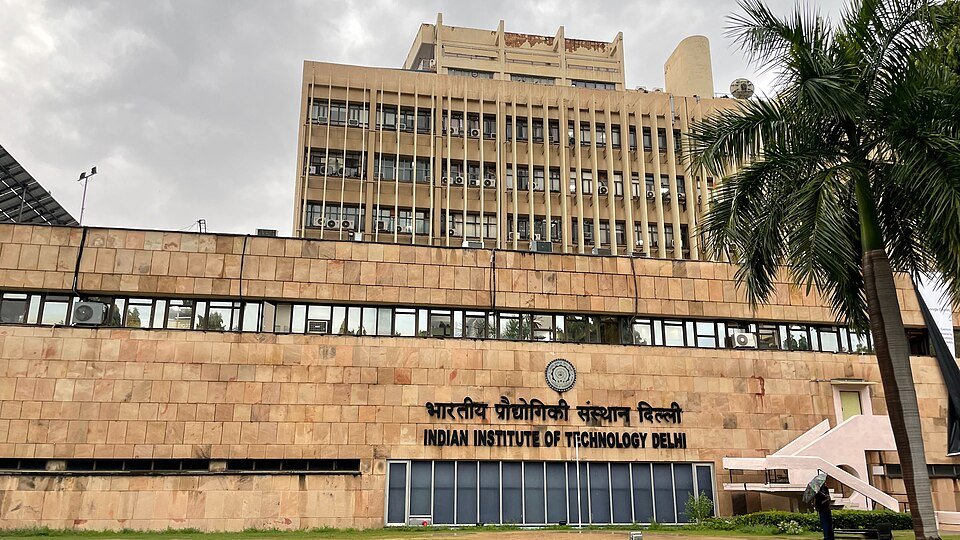
India records its strongest representation in the QS Sustainability Rankings since their launch in 2023, with 13 institutions entering the top 500. However, the latest assessment identifies persistent weaknesses in how universities translate education, research and institutional practices into measurable social outcomes. The contrast is evident in the QS World University Rankings: Sustainability 2027, which places IIT Delhi among the world’s 200 highest-ranked institutions while identifying persistent weaknesses across India’s higher education system.
The rankings place IIT Delhi at 194th globally, an improvement of 11 positions from the previous edition. The institute, which ranked 171st in 2025, is once again India’s highest-ranked university in the assessment. IIT Kharagpur follows at 224th and the University of Delhi at 237th.
But the more significant finding is the uneven distribution of India’s progress. Of the 99 Indian institutions included in the 2027 rankings, 38 improved their positions, 19 remained unchanged, and 34 dropped. Eight institutions entered the assessment for the first time. India’s overall net improvement was 4%, making it the most improved among the five higher education systems with the largest representation.
The number of Indian institutions in the global top 500 has increased from five in 2023, when the sustainability rankings were first introduced, to 13 this year. Vellore Institute of Technology entered the top 300 for the first time at 293rd, while Manipal Academy of Higher Education moved into the top 400 at 384th. Jawaharlal Nehru University also returned to the top 500 at 432nd. Yet a higher position in the overall ranking does not necessarily translate into stronger performance across every measure of sustainability.
The Gap Between Employability and Educational Impact
One of the clearest differences emerges within the Social Impact category, which accounts for 45% of the overall score. Indian institutions have performed relatively well in employability and knowledge exchange, but the results for educational impact and health and wellbeing are considerably weaker. IIT Delhi and IIT Kharagpur rank 66th and 93rd globally, respectively, in Employability and Outcomes. In Knowledge Exchange, the University of Delhi ranks 66th and IIT Kharagpur 96th.

However, India remains among the 18 lowest-scoring higher education systems on average in Impact of Education. Even though 56 Indian institutions improved their positions in this indicator, the University of Delhi, the country’s highest-ranked institution, stands at 674th globally. The QS assessment considers universities’ contributions beyond graduate employment and research activity. Educational impact is one of the measures used to assess the wider contribution of higher education to society.
Health and Wellbeing presents another weakness. IIT Kharagpur, India’s highest-ranked institution in this indicator, is placed 586th globally.
QS Sustainability Ranking: Environmental Performance is not Uniform
The environmental results also reveal a divide between individual institutional achievements and the overall performance of Indian universities. IIT Delhi is the only Indian institution among the global top 100 in the overall Environmental Impact category, with a rank of 89. However, in the more specific Environmental Sustainability indicator, IIT Kharagpur ranks 41st, VIT 43rd and IIT Delhi 74th.
These results suggest that Indian institutions have developed stronger positions in certain areas of environmental sustainability than in the broader assessment of environmental impact.
Nevertheless, 57% of Indian institutions recorded declines in their Environmental Impact rankings. QS cautions that a fall in position does not necessarily mean an institution has performed worse. Some universities have improved their scores but have been overtaken by institutions progressing at a faster rate.
Governance Remains a Significant Weakness
The most pronounced gap appears in Governance, which accounts for 10% of the overall ranking. No Indian institution features among the global top 200 in this category. The University of Delhi, India’s highest-ranked institution, fell 68 places to 255th. Across the country, 61% of Indian institutions recorded a decline in their governance rankings.
The category considers institutional practices relating to ethics, transparency, hiring, decision-making and accountability. It also examines aspects such as student representation, financial reporting and institutional openness. Although more than 70 Indian institutions recorded improvements in their governance scores, their relative positions declined. This suggests that improvements within Indian universities have not kept pace with those of institutions elsewhere.
QS CEO Jessica Turner said India’s average institutional score had increased from 26.9 in 2023 to 55 in 2027, while the number of participating Indian institutions grew from 14 to 99. She nevertheless identified Impact of Education and Health and Wellbeing as areas where Indian institutions continue to trail international peers. The rankings assess universities across Social Impact (45%), Environmental Impact (45%) and Governance (10%), using institutional submissions, public data and other indicators.
For Indian universities, the latest results bring recognition for improvements in employability, knowledge exchange and environmental sustainability. But the weaker results in educational impact, wellbeing and governance raise a different question: how effectively are institutions translating their academic and environmental commitments into wider institutional and social outcomes?

CUSAT ranks 849th globally in sustainability, tops Kerala universities

AI adoption outpaces university preparedness as Indian students turn to generative tools, FICCI-EY report finds

Global Patent Applications Hit Record 3.9 Million in 2025; India Sees 37.5% Growth

Challenge AI on Climate Science, and It May Abandon the Facts

India Records 436 Extreme Weather Events in 30 Years, Loss of 170 billion USD

Indian universities lead Asia in research output per faculty, but the country’s top six all slip in QS ranking

Why Delhi’s Geography Makes It Vulnerable to Severe Air Pollution

Europe Braces for Extremes as Commission Unveils Climate Resilience Framework

NASA recruits new astronauts for future Moon Base and Mars missions

Between Lectures and Lyrics: Kabeer Is Building a Malayalam Hip-Hop Career One Self-Taught Skill at a Time
-

 Math4 months ago
The 2026 Fields Medals: Four Proofs, Four Decades-Old Problems Solved
-
EP Deep Dive: Data & Solutions4 months ago
After Kerala’s Deadliest Landslide, the Hardest Thing to Rebuild Was Childhood
-
EP Deep Dive: Data & Solutions5 months ago
West Asia Crisis: Can Kerala’s Returning Gulf Migrants Find a Future in the Green Economy?
-
Space & Physics6 months ago
India Semiconductor Mission: ‘It’s Not About Fabs. It’s About Building An Entire Ecosystem’
-
Interviews2 months ago
From Scams to Screens: How the National Stock Exchange Rewrote India’s Equity Story
-
Climate & Environment6 months ago
The Climate World Cup? How Climate Change Could Affect Player Performance at the 2026 World Cup
-
Society4 months ago
What Is Civilisational Diplomacy? Understanding India’s Newest Foreign Policy Tool
-
Society5 months ago
From Bell Labs to the Classroom: A Second Career in Teaching