Space & Physics
Can India Turn Quantum Research Into a Global Deep-Tech Industry?
Quantum innovation in India is accelerating through IISc, startups and new partnerships aimed at turning research into market-ready technologies
Quantum innovation in India is gaining momentum as research institutions, startups and investors work to transform scientific breakthroughs into commercially viable technologies. The launch of new initiatives at IISc highlights the country’s growing ambition to become a global leader in deep-tech and quantum entrepreneurship.
India’s ambitions in quantum technology received a fresh boost this month with the launch of the Wadhwani-IISc Innovation Centre and a new startup acceleration platform aimed at supporting quantum entrepreneurs. While the announcements themselves may appear institutional, they point to a much larger question: Can India convert its growing scientific capabilities in quantum technologies into globally competitive companies and products?
The answer could shape the country’s future position in one of the most strategically important technological fields of the coming decades.
Quantum technologies, which include quantum computing, quantum communication and quantum sensing, are expected to transform sectors ranging from cybersecurity and healthcare to finance, defence and advanced manufacturing. Governments across the world are investing billions of dollars to secure leadership in the field, viewing quantum technologies not only as economic opportunities but also as matters of national security.
Quantum Innovation in India Enters a New Phase
India has recognised this potential. In recent years, the government launched the National Quantum Mission, committing significant resources to strengthen research and build indigenous capabilities. Academic institutions such as the Indian Institute of Science (IISc), IITs and specialised research centres have expanded their work in quantum science, while a small but growing ecosystem of startups has begun exploring commercial applications.
Yet the challenge extends beyond scientific research.
India has traditionally been strong in producing scientific talent but less successful in translating laboratory discoveries into scalable products and globally recognised technology companies. Bridging that gap requires a combination of research infrastructure, risk capital, industry partnerships and entrepreneurship support.
Bridging the Gap Between Research and Industry
This is where initiatives such as the newly launched Wadhwani-IISc Innovation Centre seek to make a difference. The centre aims to connect researchers, entrepreneurs and industry partners, creating pathways for technologies developed in laboratories to reach markets. It forms part of the broader Wadhwani Innovation Network, which seeks to strengthen deep-tech commercialisation across Indian institutions.
“Quantum technologies represent one of the most transformative frontiers of science and innovation. Through the Wadhwani-IISc Innovation Centre, Quantum Pitch Fest, and the InQubate platform, IISc is creating a collaborative ecosystem to help researchers and entrepreneurs translate cutting-edge quantum research into scalable technologies and globally competitive ventures,” said B Gurumoorthy, Director of the Foundation for Science, Innovation and Development (FSID), IISc.
The launch coincided with Quantum Pitch Fest 2026, where researchers and startups presented ideas spanning quantum computing, communication and sensing. Such forums are increasingly important because quantum innovation often requires long development cycles, specialised expertise and sustained investment before commercial returns become visible.
For India, the opportunity lies not only in producing scientific publications but also in building intellectual property, manufacturing capabilities and globally relevant enterprises. Countries that succeed in commercialising quantum technologies could gain advantages in secure communications, advanced computing and next-generation sensing systems.
Dr Ajay Kela, CEO and Board Member of the Wadhwani Foundation, highlighted the importance of accelerating this transition from research to impact.
“India has world-class research talent and scientific capability. The next frontier is accelerating the translation of research into scalable products, startups, and societal impact. Through the Wadhwani Innovation Network, we are working closely with leading institutions like IISc to help build stronger innovation ecosystems that can take breakthrough ideas from lab to market faster.”
Former ISRO Chair A.S. Kiran Kumar also stressed that technological progress must ultimately serve societal needs.
“Technology alone is not important; how these technological capabilities are used for developing society and country matters more.”
His remarks reflect a recurring lesson from India’s scientific history. Success stories such as the space programme and nuclear energy initiatives were built not only on scientific excellence but also on long-term institutional support, strategic vision and sustained investment.
Quantum technology may now represent the next chapter in that story.
Whether India emerges as a global leader in the field will depend on how effectively it can connect research laboratories with entrepreneurs, investors and industry. The launch of new innovation platforms at IISc suggests that the country is beginning to build those bridges. The real test, however, will be measured not by the number of research papers published, but by the technologies, startups and industries that emerge from them.
Space & Physics
India’s New Satellite Will Be Tested During Disasters
India’s latest Earth-observation satellite, EOS-05, could give disaster agencies a broader and more frequent view of floods, landslides and other hazards. But its real value will depend on how quickly satellite data can be turned into information that helps authorities act on the ground.
When a flood spreads or a landslide cuts off a village, one of the first things authorities need is a clear picture of what has happened. India’s newest Earth-observation satellite could help close part of that information gap. Which areas are under water? Which roads are still open? Where are people stranded? Ground teams may be unable to reach affected areas, while conditions can change faster than assessments can be completed.
On September 4, the Indian Space Research Organisation (ISRO) successfully launched GSLV-F17 carrying EOS-05, which ISRO describes as India’s first imaging satellite designed for geosynchronous orbit. The satellite was placed into a sub-geosynchronous transfer orbit before its subsequent orbital operations.
The launch is a technological milestone. But its larger significance may be in how India uses the satellite once it is in operation.
Seeing a Disaster From Above
Earth-observation data already play a role in India’s disaster management. ISRO’s systems are used for applications including flood mapping, damage assessment and emergency management, while the National Database for Emergency Management brings together geospatial information for disaster agencies.
EOS-05 adds a different capability because of its orbit. A geosynchronous satellite can repeatedly observe a broad region as the Earth rotates. That makes it possible to monitor large areas without relying entirely on a satellite making another pass over the location.
During a flood, that could help authorities understand the extent of inundation. After a landslide, imagery could contribute to assessing affected terrain. The same Earth-observation infrastructure has applications in agriculture, water resources, forestry and urban planning. But the satellite itself is not the solution.
The Real Test is Speed
There is a long distance between an image captured in space and a decision made in a district control room. Data have to be received, processed and interpreted. The resulting information has to reach officials and emergency teams quickly enough to matter. That is particularly important when disasters are unfolding by the hour.
A satellite cannot rescue people or reopen a blocked road. What it can do is help authorities decide where those efforts are most urgently needed.
That distinction is important. The value of space technology in disaster management is not simply that it produces better images. It is that those images can potentially reduce the time needed to understand what is happening on the ground.
From Mapping Damage to Managing Risk
India’s disaster landscape makes that capability increasingly relevant. Floods can spread across districts, while landslides can isolate mountain communities with little warning. Cyclones, forest fires and extreme rainfall can also leave authorities trying to assess large areas at once.
Satellite observation cannot predict every such event. But combined with weather forecasts, river-level data, ground reports and geographic information, it can provide a fuller picture of how a disaster is unfolding. That is where EOS-05 could become more than another addition to India’s satellite fleet.
The real measure of its success will not be the launch itself, or even the quality of the images it produces. It will be whether those images reach the right people quickly enough to change what happens on the ground. Because in a disaster, seeing more is useful only if it helps authorities act faster and act in the right place.
Space & Physics
India’s Moonshot Moment: Can New Delhi Turn Orbit Into Influence
India’s space mission is entering a new era, from Gaganyaan and space stations to private startups, space diplomacy and national security.
Gaganyaan is only the beginning. India’s space mission faces new opportunities and challenges as human spaceflight, diplomacy, private industry and security reshape its ambitions beyond Earth.
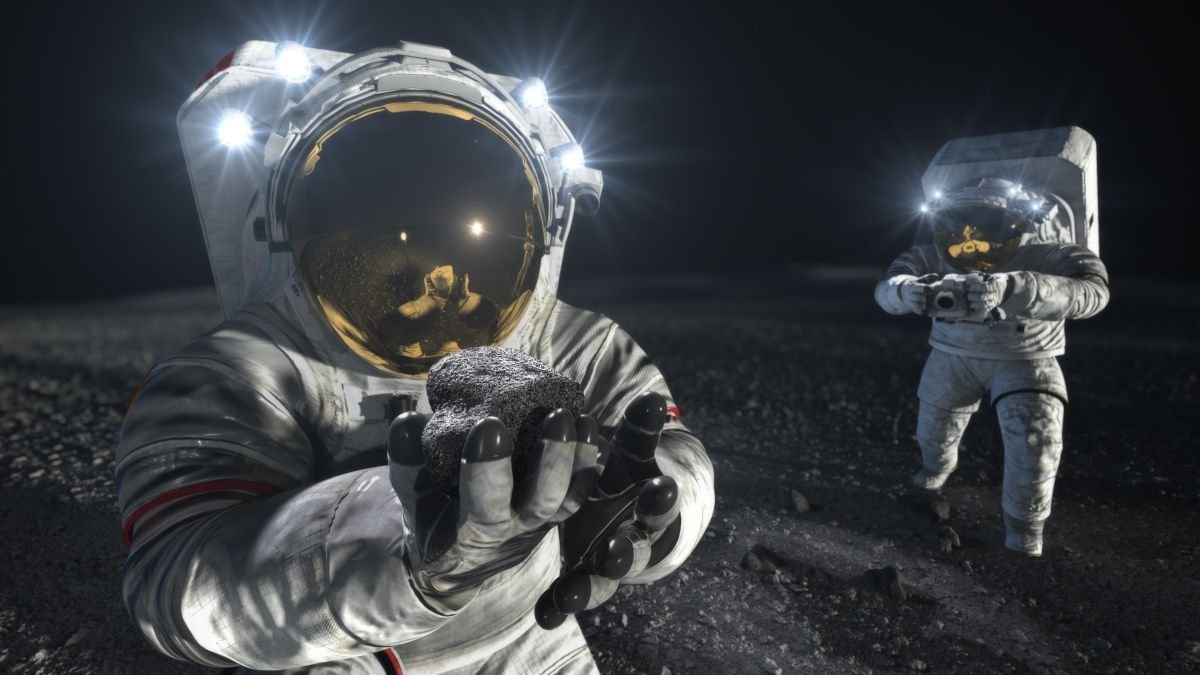
Indian human space programme Gaganyaan is mooted by Indian Space Research Organisation. This ambitious space mission aims to send Indian astronauts in Outer Space indigenously by the proactive leadership of the Indian government. India as a leading space power of the world aims to demonstrate her space capabilities and research in the final frontier. The Gaganyaan mission is the dream of 1.4 billion Indians. The programme will be initiated in 2027 creating a historic mark in the collective space exploration journeys. This is a stepping stone as NASA is envisioning to make Moon as the next base for active space programmes by 2030.
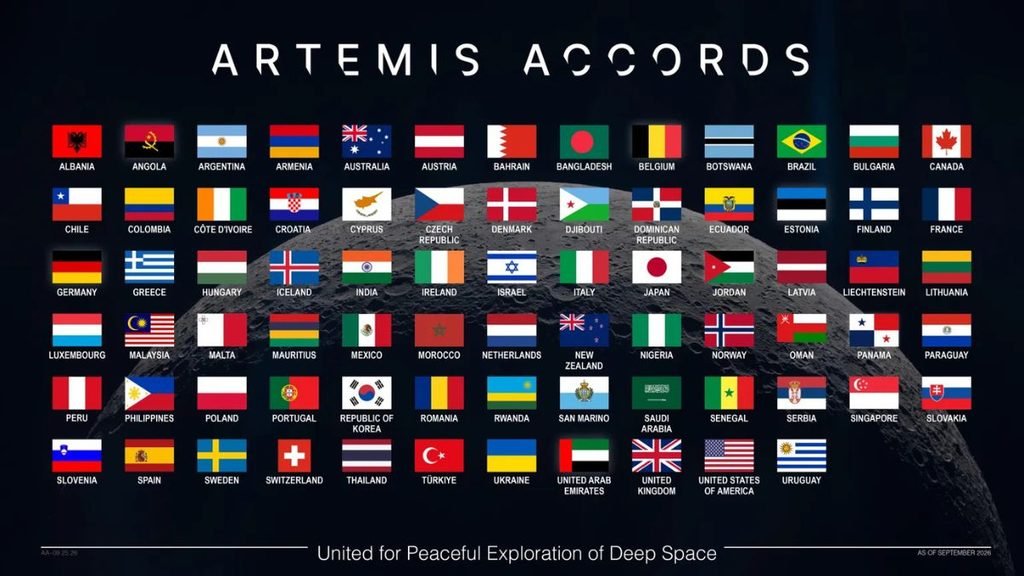
According to NASA this spectacular feat will be achieved soon within 3 years. NASA has asked India’s ISRO to join for the permanent Lunar base in the south pole of Moon. Here comes the significance of Indo-US space partnership and how India will navigate through the space diplomacy keeping in mind of Indian dream of Bharatiya Antariksh Station and the long lasting commitment to strategic autonomy and an independent foreign policy. India already signed the Artemis accords in June 2023. If India is ready to be part of this initiative, it will mark the beginning of a new era in India-United States space cooperation. The question is how India will navigate this process, protecting its sovereignty and national interest while engaging with NASA to help build a new civilisation of space travellers on the lunar surface. According to media reports India’s spectacular success with the Chandrayaan missions has led the United States to choose India as a natural partner, inviting it to join space exploration programmes on the Moon.
India’s Space Mission: The Next Frontier of Global Power

The Gaganyaan mission is significant for strengthening Indian space station’s vision. The Bharatiya Antariksh Station is an Indian space station which is a symbol of Indian space nationalism and a centre for joint research with friendly nations. India is actively pushing for space diplomacy and it is evident from the trainings received by Gaganyaan crew members. They have trained in Russia and the United States, continuing India’s commitment to strong bilateral ties with both Cold War-era rivals. Space exploration and travel are combined with diplomacy, as Indian foreign policy in a multipolar world order pushes for strong partnerships with both Russia and the United States.
Indian Air Force veteran Wing Commander Rakesh Sharma was the first Indian cosmonaut to reach the final frontier, in a Soviet space mission. Following this historic feat, Kalpana Chawla and Sunita Williams travelled to outer space on American missions. Recently, Group Captain Shubhanshu Shukla represented India in the Axiom mission successfully travelling to International Space Station and returned safely as a national hero. He is also part of the Gaganyaan mission. Colonel Anil Menon, who is part of the US Space Force, is also now in outer space. He has strong Indian connections, making him the first astronaut with roots in Kerala to explore the domain of outer space.
With privatisation in outer space in India, Skyroot Aerospace, a private company based in Hyderabad, successfully launched Vikram-1 rocket to low Earth orbit. Thus India is taking leverage of the infinite possibilities chasing stars and galaxies. Indian space ambitions are at a historic juncture now, with over 400 private Space startups. Another mission is aiming for a reusable re-entry vehicle, targeted for launch in 2027, building on ISRO’s success with the Pushpak mission, the Reusable Launch Vehicle Landing Experiment, in 2024.

However, there are concerns in India’s space sector, with many ISRO scientists seeking early retirement. The efficiency of major projects like Aditya and Gaganyaan should not be affected by this. Former ISRO Chairman G Madhavan Nair shared his concerns with the media about bureaucratisation within the organisation. ISRO is a symbol of India’s space story which is filled with resilience and strength of great visionary leaders like Dr Vikram Sarabhai and Dr APJ Abdul Kalam. Unfortunately, there have been budgetary cuts to major ISRO space projects. The government’s focus on Viksit Bharat, a holistically developed India, is only possible with investment in science and technology, and in-depth research in the domain of outer space.
Outer space is militarised, and the race for resource nationalism is a reality. For India to emerge as a global power, investment in space exploration is inevitable. Nations are increasingly aware of the strategic use of outer space for securing national interests. Satellites with civilian and national security purposes are critical assets of any nation. India too has many civilian and strategic assets in outer space, and protecting these is the responsibility of the government. The anti-satellite test Mission Shakti is a milestone demonstrating India’s hard-power capabilities in outer space. Some nations have capabilities such as laser-guided weapons, which can disable or destroy an enemy’s assets during conflict. Space is a key domain for ensuring seamless communication and intelligence-sharing during both war and peace.
Intelligence and surveillance are key factors in winning the wars of the present and future. The dominance in space technology and information superiority will determine the victories of nations fighting for their national interest.
In India, the share of higher education in the annual budgetary allocation remains low. A young generation passionate to explore arenas of space science is to be inculcated with the right mindset. Allocation of funds in education sector is a key requirement for building a strong India with educated and skilled youth. ISRO’s active collaboration with 100 Atal Tinkering Labs is a positive step in inculcating the spirit of scientific enquiry at the grassroots level. Support and encouragement for students in the creative arts and sciences is the need of the hour. Atal Tinkering Labs and India’s startup ecosystem can achieve greater synergy, ensuring a seamless transition from school life to entrepreneurship, from plan to execution.
Human activity has actively degraded the ecosystem, impacting life on both land and water. Now, with active competition in the arena of outer space, space debris is a serious global security challenge. This debris travels swiftly in outer space, damaging active space assets including civilian and defence satellites. The young budding scientists of India need to re-invent and discover practical solutions to the pressing global challenge of space debris and work with relentless passion for making a strong and stable India.
Space & Physics
Meteorite Dust Reveals Evidence of Magnetic Field in the Young Solar System
A magnetic field in the early solar system has been detected in ancient meteorite grains, offering evidence that magnetism helped shape the young sun.
Ancient grains in an Antarctic meteorite reveal evidence of a magnetic field in early solar system, suggesting magnetism helped shape the young sun
Tiny mineral grains preserved inside an ancient meteorite have recorded evidence of a magnetic field that existed during the earliest stages of the solar system, suggesting that magnetism, alongside gravity, helped shape the young sun and its surrounding disk of gas and dust.
Ancient Meteorite Records Reveal a Magnetic Field in the Early Solar System
Scientists at the Massachusetts Institute of Technology (MIT) examined microscopic grains in a meteorite recovered from Antarctica and found traces of ancient magnetism dating to the first 200,000 years of solar system history. The findings provide what researchers describe as the earliest known evidence of a magnetic field in the infant solar system.
The study, published in the Proceedings of the National Academy of Sciences, challenges the view that gravity alone drove the transformation of the early solar system from a cloud of gas and dust into a flattened disk that eventually produced the sun and planets.
“This transition, from a spherical cloud to a protoplanetary disk, is one of the most significant events in all of solar system history,” said Benjamin Weiss, professor of Earth and Planetary Sciences at MIT, in a statement issued. Measurements from the study, he said, indicate that magnetism likely played a role.
Magnetic records preserved in meteorite grains
The researchers studied DOM 08006, a primitive meteorite discovered in 2008 in the Dominion Range of Antarctica. The meteorite contains calcium-aluminum-rich inclusions, or CAIs, which formed during the earliest period of solar system development.
CAIs are among the oldest known solid materials from the solar system. Some of the grains contain magnetic minerals that can preserve the imprint of a magnetic field present when they formed.
The team isolated tiny grains from the meteorite and subjected them to a series of tests to determine whether they retained remanent magnetisation — a lasting record of an earlier magnetic field.
The researchers found evidence of a magnetic field with an estimated strength of about 150 to 600 microteslas. That is roughly three to 12 times stronger than Earth’s magnetic field today.
The preservation of these records was possible because DOM 08006 appears to have undergone relatively little alteration during its long history.
“Other meteorites went through many different processes over this 4.5 billion year history,” Weiss said. “But somehow, DOM has experienced less alteration than any other meteorite.”
Magnetism before the planets
Scientists already had evidence of magnetic fields in the solar system several million years after its formation, when the sun had formed and the planets were beginning to take shape.
The new measurements push that evidence much further back — to a period when the solar system was still a collapsing cloud of gas and dust and the sun itself was beginning to form.
In the early solar system, electrically charged particles moving through the developing disk could have generated a magnetic field. That field may then have influenced the movement of gas and material towards the central star.
The researchers argue that magnetism therefore needs to be considered alongside gravity when reconstructing how the early solar system evolved.
“We think these kinds of magnetic fields were helping to move gas from the protoplanetary disk, in toward this central star, the sun,” said Cauê Borlina, the study’s first author and now an assistant professor at Purdue University.
The findings do not replace gravity as the main force shaping the early solar system. Instead, they suggest that magnetic fields were another important part of the physical processes that brought material together and helped the young sun grow.
The study was led by Borlina, with Weiss, Elias Mansbach and Nilanjan Chatterjee of MIT, along with researchers from Tsinghua University, the University of Cambridge, Caltech and the University of California, Los Angeles
-
Math2 months agoThe 2026 Fields Medals: Four Proofs, Four Decades-Old Problems Solved
-
Climate1 month agoAfter Kerala’s Deadliest Landslide, the Hardest Thing to Rebuild Was Childhood
-
Society2 months agoWest Asia Crisis: Can Kerala’s Returning Gulf Migrants Find a Future in the Green Economy?
-
Space & Physics3 months agoIndia Semiconductor Mission: ‘It’s Not About Fabs. It’s About Building An Entire Ecosystem’
-
Climate3 months agoThe Climate World Cup? How Climate Change Could Affect Player Performance at the 2026 World Cup
-
Society2 months agoWhat Is Civilisational Diplomacy? Understanding India’s Newest Foreign Policy Tool
-
Society3 months agoFrom Bell Labs to the Classroom: A Second Career in Teaching

-
Space & Physics3 months agoEngineers Develop Dual-Mode Propulsion System for Next-Generation Small Satellites