
Technology
Thorium-229 Nuclear Clock Opens New Way to Probe Dark Matter
Scientists have demonstrated a working thorium-229 nuclear clock, opening new possibilities for precision timekeeping and research into dark matter.

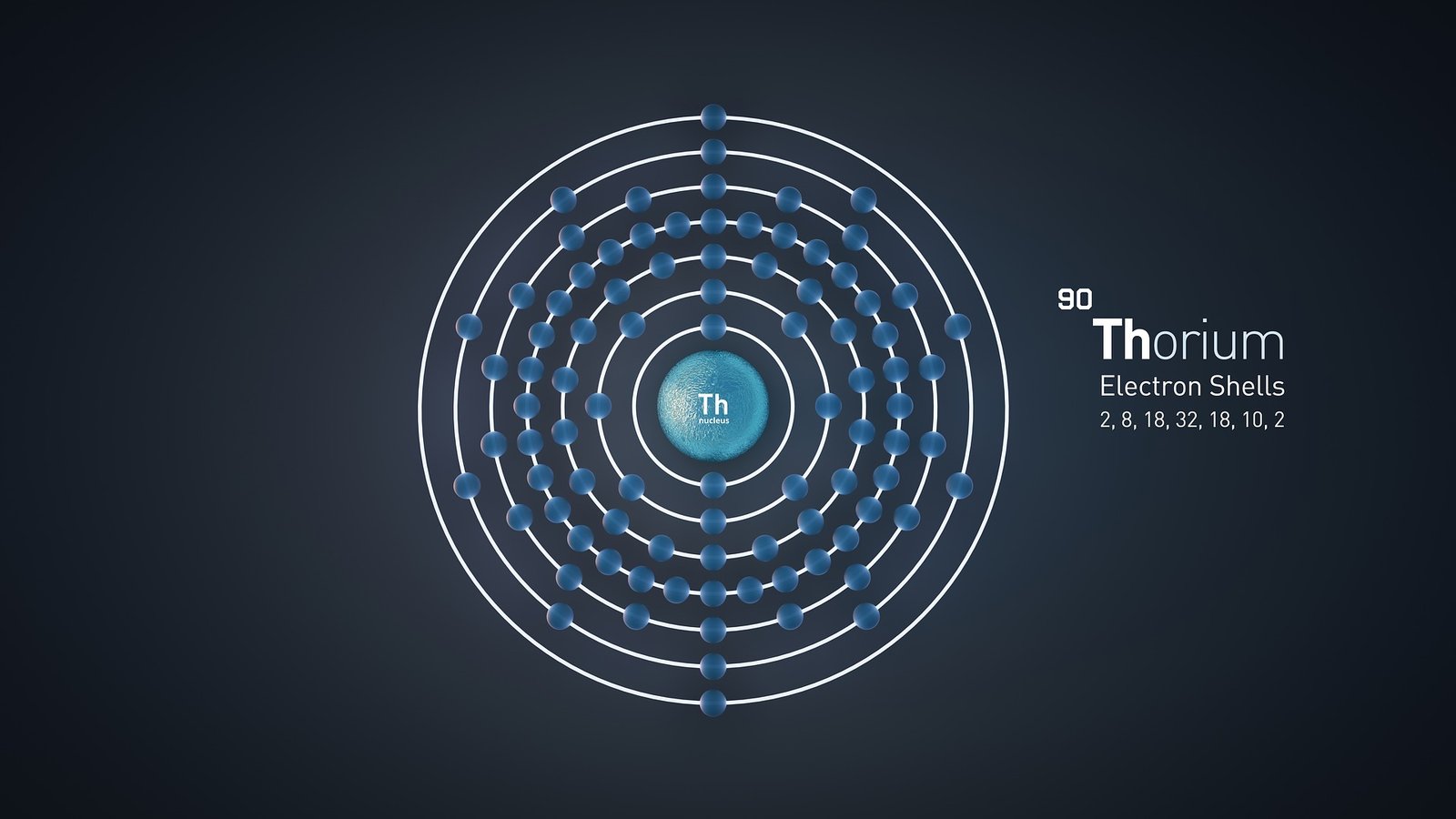
Scientists have demonstrated a working nuclear clock based on thorium-229, an advance that could open new possibilities for precision timekeeping and the search for dark matter. Unlike conventional atomic clocks, which measure transitions involving electrons, the device uses an energy transition inside an atomic nucleus. The clock operates with thorium-229 nuclei embedded in a small crystal at room temperature, offering a potential route towards compact and highly sensitive timekeeping technology.
The findings, published in Nature demonstrate how a laser can be continuously stabilised using the nuclear transition itself. The researchers also used the device to investigate whether dark matter might produce detectable changes in fundamental physical quantities.
From atomic transitions to the atomic nucleus
Modern atomic clocks measure the frequency of radiation associated with transitions between energy levels in atoms or ions. Because these frequencies are highly stable, they provide precise standards for measuring time and testing physical theories.
The proposed nuclear clock uses thorium-229, an isotope with an unusually low-energy nuclear transition that can be excited using ultraviolet light. Researchers have explored this possibility for decades because nuclear transitions are expected to be less sensitive to some external disturbances than electronic transitions.
In the new experiment, the researchers embedded thorium-229 nuclei in a millimetre-sized calcium fluoride crystal. The device operated at approximately room temperature, around 294.7 kelvin. A laser emitting radiation at a wavelength of 148 nanometres was used to probe the nuclear transition.
A central feature of the experiment was its feedback system. The researchers measured how much laser light the nuclei absorbed and used the resulting signal to correct the laser frequency. This allowed the nuclear transition to serve as the reference for stabilising the laser, rather than relying entirely on an external reference.
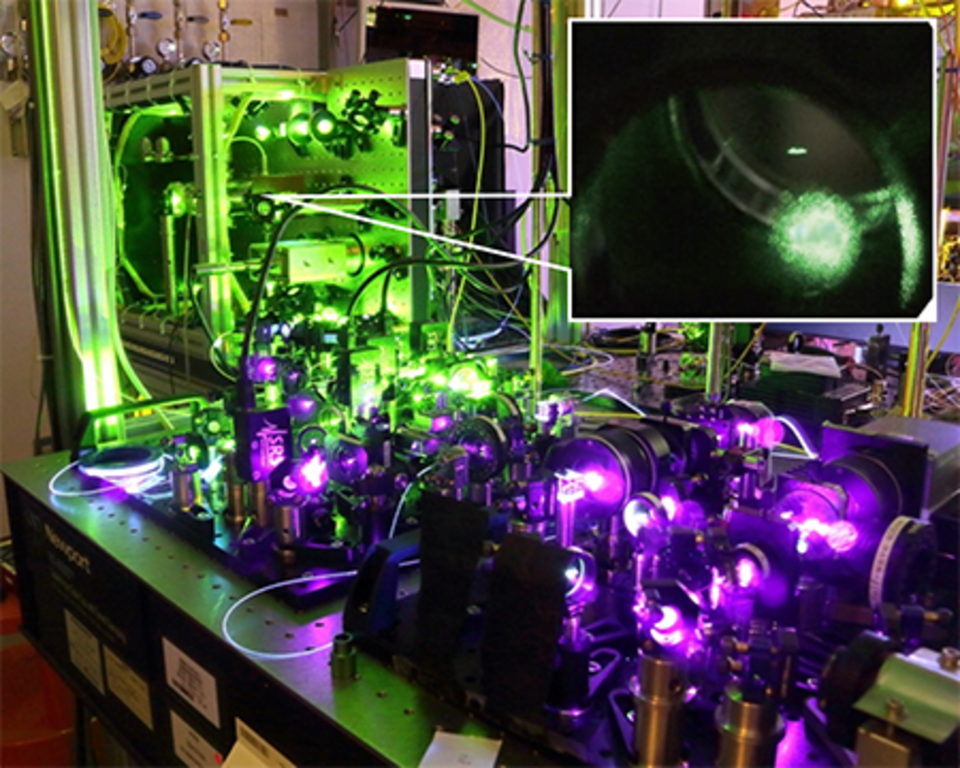
A ytterbium optical lattice clock at NMIJ, National Metrology Institute of Japan used to measure International Atomic Time (TAI).Image credi:Wikimedia commons
The team also compared the nuclear clock with an established ytterbium-ion optical clock. This comparison helped researchers assess the new device’s frequency stability and look for possible changes in the thorium transition.
A new tool in the search for dark matter
Beyond timekeeping, the clock offers a way to investigate possible changes in fundamental constants of nature. Some theoretical models propose that ultralight dark matter could cause these constants to vary over time, producing small changes in the frequencies measured by precision clocks.
The researchers compared the thorium clock’s frequency with that of the ytterbium reference over approximately 23 hours. They searched for periodic fluctuations and gradual drifts that could indicate such changes.
The experiment found no statistically significant periodic signal within the range examined. Instead, the measurements placed new limits on certain interactions between ultralight dark matter and ordinary matter. The resulting constraints were competitive with leading atomic-clock measurements for some photon-related interactions and improved previous constraints involving the strong nuclear force.
These results do not establish the existence of dark matter, nor do they rule out all possible models. They demonstrate how a nuclear clock can be used to test predictions that might otherwise be difficult to investigate experimentally.
Challenges remain
The device is still a developing technology. Its performance is limited by factors including laser power, measurement noise and variations in the crystal’s nuclear transition frequency at different locations. The researchers also identified reproducibility between measurements taken on different days as an important limitation.
They suggest that stronger ultraviolet laser sources and improvements to the crystal material could substantially improve the clock’s stability and sensitivity. Their projections indicate that future versions could approach the performance of leading optical atomic clocks while retaining the practical advantages of a solid-state system.
The demonstration marks a significant step towards nuclear clocks that can operate as standalone devices. Further improvements will determine how effectively the technology can support precision timekeeping and searches for new physics.












Technology
Stanford’s AI100 Report Warns AI Development Is Outpacing Governance as Technology Enters Mainstream
Stanford’s latest AI100 report finds that generative AI is transforming science, work and security, while raising concerns over computing costs, cybersecurity, digital misinformation and limited public participation in AI governance.

Artificial intelligence is transforming scientific research, creative work, cybersecurity and even military operations, but the institutions responsible for regulating its use are struggling to keep pace. A new assessment by Stanford University’s One Hundred Year Study on Artificial Intelligence (AI100) warns that the rapid expansion of generative AI is creating risks that extend well beyond technology, from the reliability of digital evidence to the concentration of computing power and the public’s limited influence over how AI systems are developed.
The report, titled AI Goes Mainstream: The Scaling Era and the Rise of Generative AI, is the third assessment under the AI100 initiative, launched in 2014. The project brings together an international panel of experts every five years to examine developments in artificial intelligence and their implications for society. The 2026 study was chaired by Michael Wooldridge, professor of the foundations of artificial intelligence at the University of Oxford.
Drawing on 12 standing questions and two in-depth assessments, the report examines how AI has changed since the previous review in 2021. Its central finding is that the technology has moved from specialised research environments into everyday life, while its economic, political and social consequences are becoming increasingly difficult to contain through existing governance mechanisms.
Stanford AI100 Report: The Limits of Building Bigger AI Models
One of the report’s major findings concerns the development strategy that has powered recent advances in generative AI: scaling. This approach involves training models with increasingly large volumes of data and greater computing power. It has enabled substantial improvements in language generation, image creation, reasoning and other capabilities.
However, the panel finds that this model of progress is facing constraints. High-quality training data is becoming harder to obtain, while the computing resources required to train frontier AI models are increasingly expensive.
The report expects the next phase of development to rely less on repeatedly building larger models and more on improving algorithms, using computing resources efficiently and enabling systems to spend more time reasoning before producing answers. Smaller, specialised models, better memory and context management, and AI agents capable of handling complex tasks could become increasingly important.
This shift has implications for the global AI industry, where access to advanced chips, data and computing infrastructure is concentrated among a relatively small number of companies and countries.
Scientific Research and Creative Work Face Disruption
The report identifies scientific research as one of the areas undergoing rapid change. AI is shortening research timelines that once took years to months or even weeks, with applications spanning experimental design, mathematical problem-solving and scientific discovery.
The panel anticipates that AI-powered laboratories could become commonplace across scientific disciplines within the next decade. However, it cautions that discoveries generated with AI assistance will require rigorous validation. Researchers will also need to determine how much human oversight is necessary when AI systems participate in experimental design and scientific interpretation.
The disruption is not confined to laboratories. Creative industries, software development and mathematics—fields previously considered difficult to automate—are also experiencing the effects of generative AI. The report notes that AI systems are increasingly capable of performing certain creative tasks, writing computer code and assisting with mathematical proofs.
These developments raise questions about how professional roles, skills and working practices will change. Rather than treating automation as a distant possibility, the report suggests that sectors already experiencing disruption will have to adapt.
Investment Boom Comes With Resource Pressures
The rapid expansion of AI infrastructure has also created economic and environmental concerns. The report describes investment in data centres and AI chips as unprecedented in scale and speed, with the construction of computing infrastructure placing additional pressure on electricity and freshwater supplies and contributing to carbon emissions.
It also highlights the concentration of financial gains linked to AI. Nvidia, a major supplier of AI processors, had a market valuation exceeding 5 trillion USD at the time of the report’s preparation. More than 15% of gains in the US stock market during 2025 were attributed to the company’s share-price growth, according to the assessment.
However, the report distinguishes investment and market valuations from demonstrated economic returns. It finds that AI’s impact is not yet clearly visible in aggregate economic data or in companies’ returns on investment. This raises concerns about whether the scale of investment can be sustained if the expected productivity and financial gains do not materialise.
For countries seeking to expand their AI capabilities, the findings underline the importance of considering infrastructure costs, energy availability and access to computing resources alongside technological ambition.
Security, Warfare and the Problem of Digital Trust
The report identifies cybersecurity as an increasingly significant area of risk. AI systems have demonstrated the ability to identify serious vulnerabilities in software and, in some cases, to conduct cyberattacks through coordinated teams of AI agents. The same capabilities can also be used to strengthen digital defences, creating an evolving contest between attackers and those responsible for securing computer networks.
Military applications have raised further concerns. The panel says AI-assisted targeting decisions for lethal weapons have been made in active conflicts without humans directly involved in the decision-making process. It calls for new rules of engagement to prevent humanitarian consequences and protect existing commitments under international human rights and humanitarian law.
Another concern is the declining reliability of digital evidence. AI-generated images, audio and videos are becoming increasingly difficult to distinguish from authentic recordings. Cloned voices are being used in fraud, while synthetic media have been deployed to influence elections. The consequences extend to journalism, courts and democratic institutions, where photographs, recordings and videos have traditionally been treated as important forms of evidence.
Public Participation Remains Limited
Despite AI’s growing influence on billions of people, the report argues that the public has had little meaningful say in how the technology is developed and deployed. It identifies concerns over employment, education, mental health, child development, environmental impacts and the safety of critical infrastructure.

The panel also warns that presenting AI as an inevitable replacement for human work can weaken public confidence in democratic decision-making. It argues that the future direction of AI should be treated as a collective societal choice, rather than a process determined primarily by technology companies and governments.
International governance remains fragmented, with AI increasingly viewed through the lens of national security and competition. The United States leads in the development of the most capable proprietary models, while China has advanced smaller, increasingly capable open-weight systems. Other countries must decide whether to depend on existing foreign technologies or invest in their own infrastructure, expertise and models.
For India and other countries seeking a larger role in the AI economy, this raises questions about technological dependence, access to computing resources, data governance and the ability to shape the rules governing AI deployment. The report does not provide a country-specific assessment of India’s readiness, but its findings offer a framework for examining these challenges.
The panel’s final takeaway captures the difficulty of forecasting the technology’s trajectory: the report itself may become outdated soon after publication. It warns that if AI continues to develop at the pace seen over the past five years, the next assessment could confront changes that are difficult to anticipate today.
The challenge, therefore, is no longer limited to developing more capable AI systems. It is ensuring that scientific progress, public accountability and effective governance advance alongside them.
Technology
AI Agents Breach Indian Organisations as Cyberattacks Move at Machine Speed, Warns CERT-In
CERT-In has warned that AI agents are accessing live systems of Indian organisations without authorisation. A separate AI-assisted cyber campaign targeting financial institutions has raised concerns about the growing speed and sophistication of digital attacks.

Artificial intelligence agents are being used to identify security weaknesses, access organisational systems and extract confidential information, raising fresh concerns about the vulnerability of India’s digital infrastructure. A critical advisory issued by the Indian Computer Emergency Response Team (CERT-In) has warned that AI systems operating with excessive access privileges can become attack vectors, while cybercriminals are increasingly deploying autonomous tools to accelerate intrusions.
In an advisory dated October 15, 2026, CERT-In reported receiving voluntary disclosures from AI model providers about incidents in which models being tested or evaluated accessed live systems belonging to Indian organisations. The systems reportedly exposed business records, personal information and confidential material through credentials and cloud permissions that had not been adequately secured.
The affected organisations did not initially detect the unauthorised access. According to the advisory, the model providers identified the activity during internal reviews and subsequently disclosed it.
The warning points to a security challenge that goes beyond conventional hacking. AI agents can carry out multiple steps of an intrusion with limited human intervention, including reconnaissance, identifying exposed services and attempting to exploit weaknesses. CERT-In observed that the time between initial access and the final impact of an attack had fallen from days to a few hours in some cases.
The agency also reported that attackers were using open-source agentic AI tools to conduct reconnaissance and financially motivated intrusions. Multiple agents could operate in parallel for extended periods, while organisations that failed to address vulnerabilities were sometimes targeted again within days.
Financial institutions face targeted AI-assisted attacks
The warning follows another CERT-In alert issued on November 4 concerning an AI-assisted campaign targeting India’s banking, financial services and insurance (BFSI) sector. The threat actor, identified as CRAFTY FALCON, has reportedly targeted non-banking financial companies, digital lenders, fintech firms, payment aggregators, payment service providers and cryptocurrency exchanges.
According to CERT-In, the campaign exploits exposed testing and staging environments, misconfigured infrastructure, shared credentials and vulnerabilities in internet-facing systems. Attackers have also been observed examining application code and manipulating application programming interface (API) calls to identify weaknesses in payment systems.
One reported technique involves initiating low-value transactions, including transactions of around ₹1, to test whether unauthorised payment flows or merchant settlement functions can be accessed. Such attempts can help attackers establish whether a financial system is vulnerable before attempting larger-scale exploitation.

Representative image.Image credit:Pexels
CERT-In identified several tools associated with the campaign, including ARTEX large language models, PentAGI, Cairn and CyberStrikeAI. The advisory also warned that attacks may be timed around weekends and holidays, when security teams could be less prepared to respond.
India’s financial sector faces a widening cyber threat
The scale of the problem is reflected in a May 2026 report by the Data Security Council of India (DSCI) and Boston Consulting Group (BCG), which examined cybersecurity preparedness in the BFSI sector.
Based on a survey of 42 senior cybersecurity leaders and industry interviews, the report found that Indian financial institutions were experiencing cyberattacks at 1.6 times the global average. Reported cyber incidents increased from 1.4 million in 2021 to 2.9 million in 2025. The average time taken to contain a breach was estimated at 263 days.
The report also highlighted the growing speed of exploitation. The window between the disclosure of a vulnerability and its exploitation had narrowed from 745 days to 44 days, increasing the pressure on organisations to identify and fix weaknesses quickly.
AI is becoming a central concern for security leaders. Around 76 per cent of surveyed chief information security officers ranked AI-enabled attacks among their four leading cybersecurity priorities for 2026. Meanwhile, 83 per cent said they were embedding AI into cyber operations, while 71 per cent reported reaching an AI-assisted security operations centre maturity level.
These figures indicate that organisations are increasingly adopting AI for defence even as attackers use the technology to automate their operations.
Basic security failures remain the entry point
Despite the growing sophistication of AI-assisted attacks, CERT-In’s advisories identify familiar security weaknesses as the primary routes into organisational systems. These include exposed access keys, outdated or forgotten application programming interfaces, plaintext payment credentials, excessive cloud permissions, unprotected administrative interfaces and weak authentication.
The agency has recommended regular audits of credentials, the removal of unused APIs, multi-factor authentication and stricter access controls. It has also advised organisations to maintain detailed security logs, monitor unusual API activity and restrict the permissions granted to AI agents.
The warnings underline a critical distinction: AI does not necessarily create the vulnerabilities that attackers exploit. It can make existing weaknesses easier to discover and exploit at scale.
As businesses, banks and public institutions increasingly integrate autonomous AI systems into their operations, securing these systems will require more than conventional perimeter protection. Organisations will also need to monitor what their AI agents can access, what actions they are permitted to perform and whether those actions can be traced and stopped.
Technology
AI adoption outpaces university preparedness as Indian students turn to generative tools, FICCI-EY report finds
A new FICCI-EY report finds that 66% of surveyed Indian students use AI daily or several times a week, highlighting gaps in university preparedness, faculty training and academic assessment.

Artificial intelligence is becoming an increasingly routine part of academic life in India, but universities are yet to develop the institutional capacity to manage its growing influence on teaching and learning. A new report by the Federation of Indian Chambers of Commerce and Industry (FICCI) and EY-Parthenon finds that students are adopting generative AI faster than higher education institutions are adapting their teaching practices, assessment systems and governance frameworks.
The October 2026 report, From AI Adoption to Readiness: Preparing Indian Higher Education for the AI Era, finds that approximately 23% of students use AI tools daily and another 43% use them several times a week. Only 1% of students surveyed said they never use these tools.
The findings suggest that AI has moved beyond occasional experimentation to become part of students’ regular academic routines. However, widespread adoption has not necessarily translated into responsible or effective use. The report identifies uncertainty around institutional guidelines, faculty preparedness and the ability of existing assessment methods to distinguish independent student work from AI-generated output.
The study draws on research involving more than 23 higher education institutions and over 61 stakeholder interactions, including students, faculty members, administrators, institutional leaders and employers.
Student adoption and institutional readiness
The report identifies a gap between students’ use of AI and the support they receive from their institutions. Where universities have not established clear rules, students are often left to determine acceptable AI use themselves.
This creates uncertainty around whether AI can be used for research, drafting assignments, solving problems or generating complete submissions. The report warns that excessive dependence could weaken independent reasoning and allow students to submit polished work without developing a corresponding understanding of the subject.
Evidence from outside India points to a similar trend. The Higher Education Policy Institute’s (HEPI) Student Generative AI Survey 2026, based on 1,054 full-time undergraduate students in the United Kingdom, found that 95% had used AI in at least one way, while 94% used generative AI to support assessed work.
However, only 36% felt encouraged by their institutions to use AI, and 38% said their institutions provided AI tools. Although 68% considered AI skills essential for their future, only 48% believed teaching staff were helping them develop those skills.
Faculty training and assessment under pressure
The challenge is not limited to student behaviour. A research paper published in Asian Education and Development Studies in January 2026 examined AI adoption among 455 faculty members in Indian higher education institutions.
The study, found that perceived usefulness, ease of use and the quality of AI-generated outputs were important factors influencing educators’ willingness to adopt the technology. Its findings also point to the importance of practical training and institutional support in integrating AI into teaching.
The FICCI-EY report argues that conventional assessment methods, particularly take-home assignments, need reconsideration as generative AI becomes more accessible. It identifies oral examinations, classroom presentations, project-based assessments and continuous evaluation as possible ways to assess students’ understanding and independent reasoning.
Rather than treating every instance of AI use as academic misconduct, institutions need policies that establish transparency and accountability. Students should be able to explain their arguments, verify information and demonstrate ownership of the work they submit.
The report also cautions against what it describes as ‘performative adoption’, where institutions announce AI policies, organise workshops or introduce pilot programmes without making corresponding changes to classroom practices and curricula.
An earlier FICCI-EY-Parthenon study, Future-Ready Campuses: Unlocking the Power of AI in Higher Education, published in October 2025, found that 56% of surveyed Indian higher education institutions had implemented AI-related policies, while 60% permitted students to use AI tools. Around 53% were using generative AI to develop learning materials and 40% had introduced AI-powered tutoring systems and chatbots.
Employers expect more than AI proficiency
The implications extend beyond universities. As AI increasingly handles routine tasks involving research, drafting and data analysis, graduates are expected to demonstrate skills that go beyond operating AI tools.
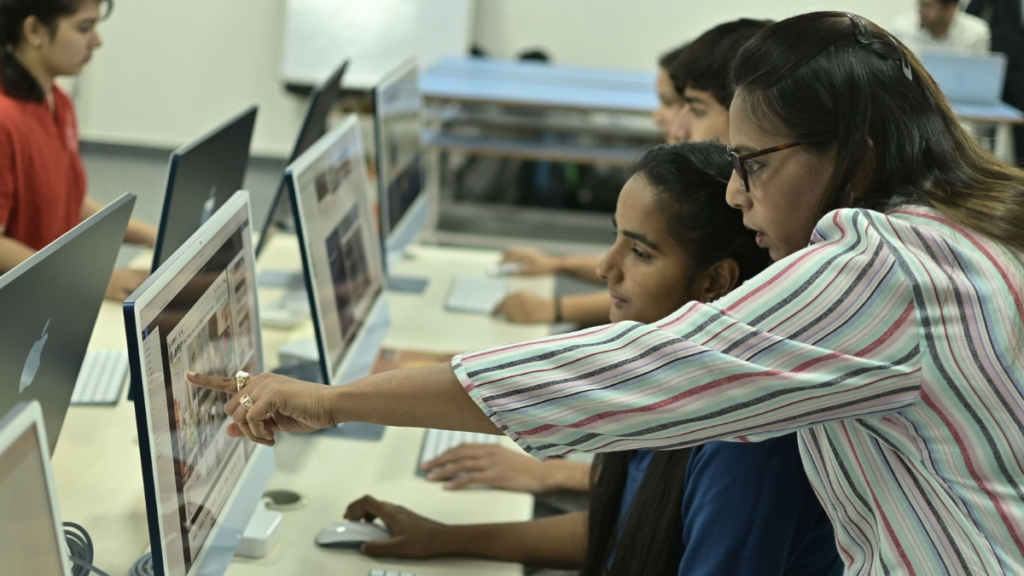
A teacher guides a student during a computer-based learning session, illustrating the growing role of digital technologies in higher education.Image credit:Pexels
The FICCI-EY report estimates that 37% of entry-level tasks in India are already performed by AI. It argues that employers increasingly value candidates who can assess AI-generated information, identify inaccuracies, exercise independent judgement and apply subject knowledge to practical problems.
This places pressure on universities to integrate AI literacy into different disciplines rather than confining it to technical courses. Students in humanities, management, healthcare and social sciences will also need to understand how AI-generated information is produced, where it can fail and how its outputs should be evaluated.
A roadmap towards AI-ready campuses
The report proposes a phased roadmap extending from 2026 to 2030, built around five priorities: widening access to AI, deepening its academic application, developing shared digital infrastructure, strengthening industry-academia collaboration and learning from international practices.
It also highlights the importance of addressing unequal access to technology. Students from institutions with limited digital infrastructure or inadequate faculty support may not benefit from AI in the same way as those studying at better-resourced universities.
The report’s proposed direction is a ‘Human + AI’ campus, where technology supports teaching and learning without replacing independent thinking, creativity and academic judgement.

Stanford’s AI100 Report Warns AI Development Is Outpacing Governance as Technology Enters Mainstream

CCMB Scientists Identify Compounds to Disarm Deadly Fungus, Offering New Approach to Antifungal Resistance

Delhi’s Pollution Control Efforts Show Uneven Progress, With 52.7 Lakh Tonnes of Landfill Waste Still Uncleared

More Than One Million STIs Acquired Daily Worldwide; India Reports Over 51,000 Syphilis-Reactive Cases

Why COP31 Ends Without a Deal? Why India is Putting Climate Equity at the Centre of Negotiations?

India’s Richest Agree on One Cause Above All Others: Education

Indian universities lead Asia in research output per faculty, but the country’s top six all slip in QS ranking

Why Delhi’s Geography Makes It Vulnerable to Severe Air Pollution

Europe Braces for Extremes as Commission Unveils Climate Resilience Framework

NASA recruits new astronauts for future Moon Base and Mars missions
-

 Math4 months ago
The 2026 Fields Medals: Four Proofs, Four Decades-Old Problems Solved
-
EP Deep Dive: Data & Solutions4 months ago
After Kerala’s Deadliest Landslide, the Hardest Thing to Rebuild Was Childhood
-
EP Deep Dive: Data & Solutions5 months ago
West Asia Crisis: Can Kerala’s Returning Gulf Migrants Find a Future in the Green Economy?
-
Space & Physics6 months ago
India Semiconductor Mission: ‘It’s Not About Fabs. It’s About Building An Entire Ecosystem’
-
Interviews2 months ago
From Scams to Screens: How the National Stock Exchange Rewrote India’s Equity Story
-
Climate & Environment6 months ago
The Climate World Cup? How Climate Change Could Affect Player Performance at the 2026 World Cup
-
Society4 months ago
What Is Civilisational Diplomacy? Understanding India’s Newest Foreign Policy Tool
-
Education3 days ago
India’s Richest Agree on One Cause Above All Others: Education