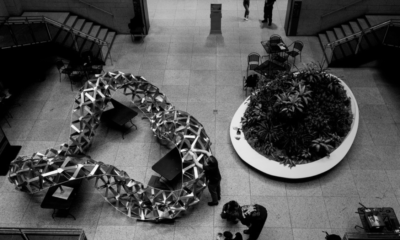

MIT researchers have developed an origami-inspired construction technique that could enable lightweight, rigid structures using less material and simpler assembly methods.
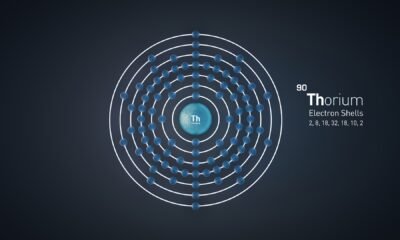

Scientists have demonstrated a working thorium-229 nuclear clock, opening new possibilities for precision timekeeping and research into dark matter.
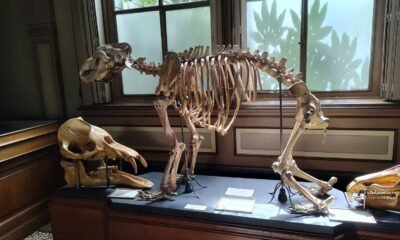

Explore Teylers Museum, the Netherlands’ oldest museum, where 18th-century science, fossils, physics and Enlightenment history remain remarkably preserved.


The DAAAM AI system developed enables robots to combine spatial mapping with language understanding, remember, describe, and interact with their environments.


Physicists at MIT have devised a table-top method to peer inside an atom’s nucleus using the atom’s own electrons


The 2025 Nobel Prize in Physics honours John Clarke, Michel H. Devoret, and John M. Martinis for revealing how entire electrical circuits can display quantum behaviour...


Take-off is one of the most critical phases of flight, relying on the precise orchestration of aerodynamics, propulsion, and control systems. Here’s how it works:


The innovation offers more than triple the energy density of today’s lithium-ion batteries — potentially clearing a major hurdle for electric-powered aviation, rail, and maritime travel


The new technique allows scientists to visualize real-time quantum behavior by momentarily freezing atoms in motion and illuminating them with precisely tuned lasers


New technique offers breakthrough in understanding solar photosphere’s opacity