Connect with us

Space & Physics

Nobel Prize in Physics: Clarke, Devoret, and Martinis Honoured for Pioneering Quantum Discoveries

The 2025 Nobel Prize in Physics honours John Clarke, Michel H. Devoret, and John M. Martinis for revealing how entire electrical circuits can display quantum behaviour — a discovery that paved the way for modern quantum computing.


Published

on

Physics Nobel jpeg

The 2025 Nobel Prize in Physics has been awarded to John Clarke, Michel H. Devoret, and John M. Martinis for their landmark discovery of macroscopic quantum mechanical tunnelling and energy quantisation in an electric circuit, an innovation that laid the foundation for today’s quantum computing revolution.

Announcing the prize, Olle Eriksson, Chair of the Nobel Committee for Physics, said, “It is wonderful to be able to celebrate the way that century-old quantum mechanics continually offers new surprises. It is also enormously useful, as quantum mechanics is the foundation of all digital technology.”

The Committee described their discovery as a “turning point in understanding how quantum mechanics manifests at the macroscopic scale,” bridging the gap between classical electronics and quantum physics.

John Clarke: The SQUID Pioneer

British-born John Clarke, Professor Emeritus at the University of California, Berkeley, is celebrated for his pioneering work on Superconducting Quantum Interference Devices (SQUIDs) — ultra-sensitive detectors of magnetic flux. His career has been marked by contributions that span superconductivity, quantum amplifiers, and precision measurements.

Clarke’s experiments in the early 1980s provided the first clear evidence of quantum behaviour in electrical circuits — showing that entire electrical systems, not just atoms or photons, can obey the strange laws of quantum mechanics.

A Fellow of the Royal Society, Clarke has been honoured with numerous awards including the Comstock Prize (1999) and the Hughes Medal (2004).

Michel H. Devoret: Architect of Quantum Circuits

French physicist Michel H. Devoret, now the Frederick W. Beinecke Professor Emeritus of Applied Physics at Yale University, has been one of the intellectual architects of quantronics — the study of quantum phenomena in electrical circuits.

After earning his PhD at the University of Paris-Sud and completing a postdoctoral fellowship under Clarke at Berkeley, Devoret helped establish the field of circuit quantum electrodynamics (cQED), which underpins the design of modern superconducting qubits.

His group’s innovations — from the single-electron pump to the fluxonium qubit — have set performance benchmarks in quantum coherence and control. Devoret is also a recipient of the Fritz London Memorial Prize (2014) and the John Stewart Bell Prize, and is a member of the French Academy of Sciences.

John M. Martinis: Building the Quantum Processor

American physicist John M. Martinis, who completed his PhD at UC Berkeley under Clarke’s supervision, translated these quantum principles into the hardware era. His experiments demonstrated energy level quantisation in Josephson junctions, one of the key results now honoured by the Nobel Committee.

Martinis later led Google’s Quantum AI lab, where his team in 2019 achieved the world’s first demonstration of quantum supremacy — showing a superconducting processor outperforming the fastest classical supercomputer on a specific task.

A former professor at UC Santa Barbara, Martinis continues to be a leading voice in quantum computing research and technology development.

A Legacy of Quantum Insight

Together, the trio’s discovery, once seen as a niche curiosity in superconducting circuits, has become the cornerstone of the global quantum revolution. Their experiments proved that macroscopic electrical systems can display quantised energy states and tunnel between them, much like subatomic particles.

Their work, as the Nobel citation puts it, “opened a new window into the quantum behaviour of engineered systems, enabling technologies that are redefining computation, communication, and sensing.”

EP Staff is the editorial team at EdPublica, an independent media organisation focused on science, education, environment and public policy. The team produces evidence-based news, features, explainers and analysis on issues that shape society and everyday life.

Space & Physics

India’s New Satellite Will Be Tested During Disasters

India’s latest Earth-observation satellite, EOS-05, could give disaster agencies a broader and more frequent view of floods, landslides and other hazards. But its real value will depend on how quickly satellite data can be turned into information that helps authorities act on the ground.

Published

on

GSLV-F17 rocket carrying ISRO’s EOS-05 Earth-observation satellite at the launch pad
ISRO’s GSLV-F17 carrying the EOS-05 Earth-observation satellite stands ready for launch, marking India’s first imaging satellite mission to geosynchronous orbit. Image credit: ISRO

When a flood spreads or a landslide cuts off a village, one of the first things authorities need is a clear picture of what has happened. India’s newest Earth-observation satellite could help close part of that information gap. Which areas are under water? Which roads are still open? Where are people stranded? Ground teams may be unable to reach affected areas, while conditions can change faster than assessments can be completed.

On September 4, the Indian Space Research Organisation (ISRO) successfully launched GSLV-F17 carrying EOS-05, which ISRO describes as India’s first imaging satellite designed for geosynchronous orbit. The satellite was placed into a sub-geosynchronous transfer orbit before its subsequent orbital operations.

The launch is a technological milestone. But its larger significance may be in how India uses the satellite once it is in operation.

Seeing a Disaster From Above

Earth-observation data already play a role in India’s disaster management. ISRO’s systems are used for applications including flood mapping, damage assessment and emergency management, while the National Database for Emergency Management brings together geospatial information for disaster agencies.

EOS-05 adds a different capability because of its orbit. A geosynchronous satellite can repeatedly observe a broad region as the Earth rotates. That makes it possible to monitor large areas without relying entirely on a satellite making another pass over the location.

During a flood, that could help authorities understand the extent of inundation. After a landslide, imagery could contribute to assessing affected terrain. The same Earth-observation infrastructure has applications in agriculture, water resources, forestry and urban planning. But the satellite itself is not the solution.

The Real Test is Speed

There is a long distance between an image captured in space and a decision made in a district control room. Data have to be received, processed and interpreted. The resulting information has to reach officials and emergency teams quickly enough to matter. That is particularly important when disasters are unfolding by the hour.

A satellite cannot rescue people or reopen a blocked road. What it can do is help authorities decide where those efforts are most urgently needed.

That distinction is important. The value of space technology in disaster management is not simply that it produces better images. It is that those images can potentially reduce the time needed to understand what is happening on the ground.

From Mapping Damage to Managing Risk

India’s disaster landscape makes that capability increasingly relevant. Floods can spread across districts, while landslides can isolate mountain communities with little warning. Cyclones, forest fires and extreme rainfall can also leave authorities trying to assess large areas at once.

Satellite observation cannot predict every such event. But combined with weather forecasts, river-level data, ground reports and geographic information, it can provide a fuller picture of how a disaster is unfolding. That is where EOS-05 could become more than another addition to India’s satellite fleet.

The real measure of its success will not be the launch itself, or even the quality of the images it produces. It will be whether those images reach the right people quickly enough to change what happens on the ground. Because in a disaster, seeing more is useful only if it helps authorities act faster and act in the right place.

Continue Reading

Space & Physics

India’s Moonshot Moment: Can New Delhi Turn Orbit Into Influence

India’s space mission is entering a new era, from Gaganyaan and space stations to private startups, space diplomacy and national security.

Anoop Krishnan H

Published

on

Gaganyaan is only the beginning. India’s space mission faces new opportunities and challenges as human spaceflight
The Gaganyaan capsule, illustrated: India's answer to six decades of human spaceflight by other powers. Illustration: Edpublica

Gaganyaan is only the beginning. India’s space mission faces new opportunities and challenges as human spaceflight, diplomacy, private industry and security reshape its ambitions beyond Earth.

Indian human space programme Gaganyaan is mooted by Indian Space Research Organisation. This ambitious space mission aims to send Indian astronauts in Outer Space indigenously by the proactive leadership of the Indian government.  India as a leading space power of the world aims to demonstrate her space capabilities and research in the final frontier. The Gaganyaan mission is the dream of 1.4 billion Indians. The programme will be initiated in 2027 creating a historic mark in the collective space exploration journeys. This is a stepping stone as NASA is envisioning to make Moon as the next base for active space programmes by 2030.

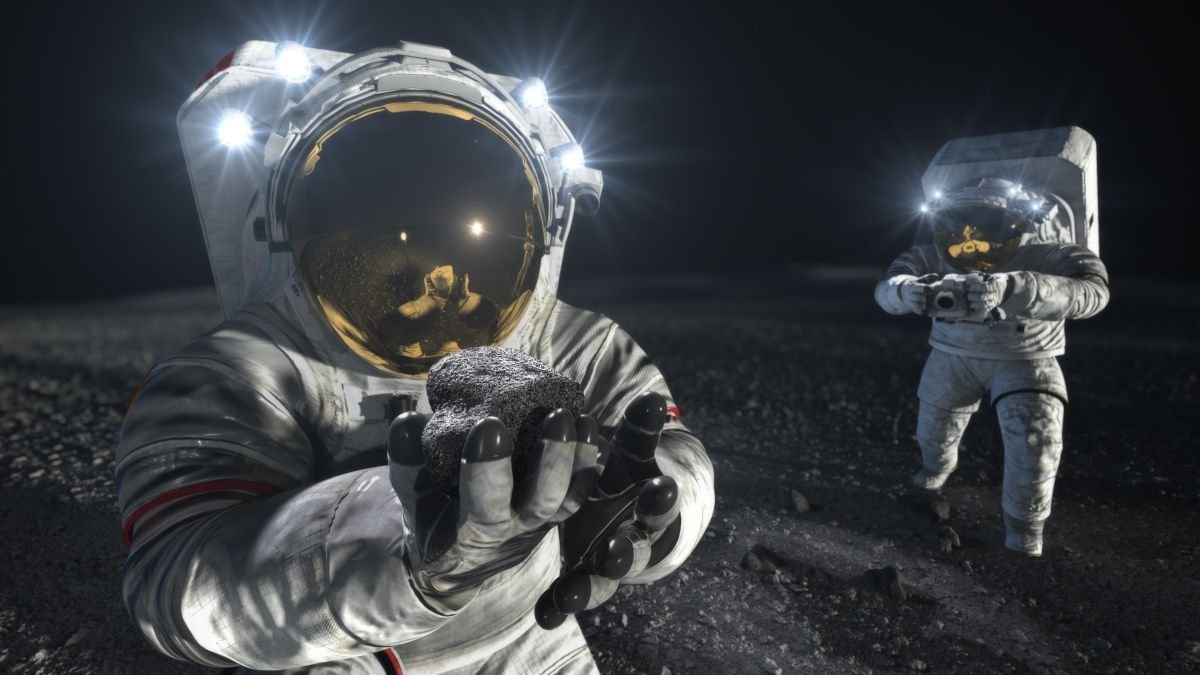
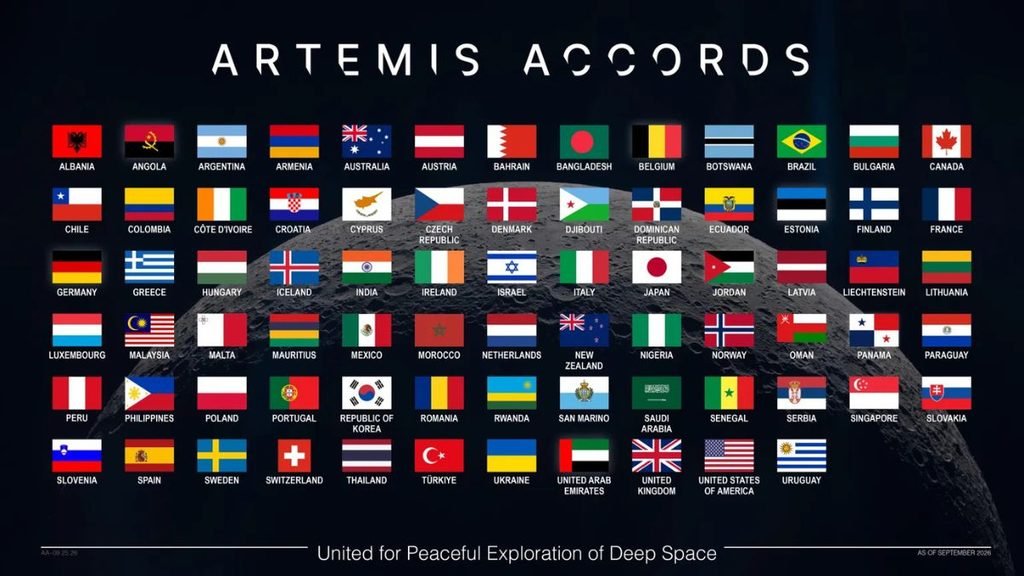
According to NASA this spectacular feat will be achieved soon within 3 years.  NASA has asked India’s ISRO to join for the permanent Lunar base in the south pole of Moon. Here comes the significance of Indo-US space partnership and how India will navigate through the space diplomacy keeping in mind of Indian dream of Bharatiya Antariksh Station and the long lasting commitment to strategic autonomy and an independent foreign policy. India already signed the Artemis accords in June 2023. If India is ready to be part of this initiative, it will mark the beginning of a new era in India-United States space cooperation. The question is how India will navigate this process, protecting its sovereignty and national interest while engaging with NASA to help build a new civilisation of space travellers on the lunar surface. According to media reports  India’s spectacular success with the Chandrayaan missions has led the United States to choose India as a natural partner, inviting it to join space exploration programmes on the Moon.

India’s Space Mission: The Next Frontier of Global Power

india space milestones timeline 2
Tracing India’s human spaceflight and space-policy milestones from Rakesh Sharma in 1984 through to the planned Gaganyaan (2027) and Bharatiya Antariksh Station (2035) — achieved milestones in blue, planned ones in amber.

The Gaganyaan mission is significant for strengthening Indian space station’s vision.  The Bharatiya Antariksh Station is an Indian space station which is a symbol of Indian space nationalism and a centre for joint research with friendly nations. India is actively pushing for space diplomacy and it is evident from the trainings received by Gaganyaan crew members. They have trained in Russia and the United States, continuing India’s commitment to strong bilateral ties with both Cold War-era rivals. Space exploration and travel are combined with diplomacy, as Indian foreign policy in a multipolar world order pushes for strong partnerships with both Russia and the United States.

Indian Air Force veteran Wing Commander Rakesh Sharma was the first Indian cosmonaut to reach the final frontier, in a Soviet space mission. Following this historic feat, Kalpana Chawla and Sunita Williams travelled to outer space on American missions. Recently, Group Captain Shubhanshu Shukla represented India in the Axiom mission successfully travelling to International Space Station and returned safely as a national hero. He is also part of the Gaganyaan mission. Colonel Anil Menon, who is part of the US Space Force, is also now in outer space. He has strong Indian connections, making him the first astronaut with roots in Kerala to explore the domain of outer space.

With privatisation in outer space in India, Skyroot Aerospace, a private company based in Hyderabad, successfully launched Vikram-1 rocket to low Earth orbit. Thus India is taking leverage of the infinite possibilities chasing stars and galaxies. Indian space ambitions are at a historic juncture now, with over 400 private Space  startups. Another mission is aiming for a reusable re-entry vehicle, targeted for launch in 2027, building on ISRO’s success with the Pushpak mission, the Reusable Launch Vehicle Landing Experiment, in 2024.

India's space mission. Gaganyaan crew module mounted on the test vehicle during ISRO's TV-D1 mission preparations.
Gaganyaan crew module and test vehicle used for ISRO’s TV-D1 abort test mission in 2023. Image Credit: Indian Space Research Organisation (ISRO), Government of India

However, there are concerns in India’s space sector, with many ISRO scientists seeking early retirement. The efficiency of major projects like Aditya and Gaganyaan should not be affected by this. Former ISRO Chairman G Madhavan Nair shared his concerns with the media about bureaucratisation within the organisation. ISRO is a symbol of India’s space story which is filled with resilience and strength of great visionary leaders like Dr Vikram Sarabhai and Dr APJ Abdul Kalam. Unfortunately, there have been budgetary cuts to major ISRO space projects. The government’s focus on Viksit Bharat, a holistically developed India, is only possible with investment in science and technology, and in-depth research in the domain of outer space.

Outer space is militarised, and the race for resource nationalism is a reality. For India to emerge as a global power, investment in space exploration is inevitable. Nations are increasingly aware of the strategic use of outer space for securing national interests. Satellites with civilian and national security purposes are critical assets of any nation. India too has many civilian and strategic assets in outer space, and protecting these is the responsibility of the government. The anti-satellite test Mission Shakti is a milestone demonstrating India’s hard-power capabilities in outer space. Some nations have capabilities such as laser-guided weapons, which can disable or destroy an enemy’s assets during conflict. Space is a key domain for ensuring seamless communication and intelligence-sharing during both war and peace.

Intelligence and surveillance are key factors in winning the wars of the present and future. The dominance in space technology and information superiority will determine the victories of nations fighting for their national interest.   

In India, the share of higher education in the annual budgetary allocation remains low. A young generation passionate to explore arenas of space science is to be inculcated with the right mindset. Allocation of funds in education sector is a key requirement for building a strong India with educated and skilled youth. ISRO’s active collaboration with 100 Atal Tinkering Labs is a positive step in inculcating the spirit of scientific enquiry at the grassroots level. Support and encouragement for students in the creative arts and sciences is the need of the hour. Atal Tinkering Labs and India’s startup ecosystem can achieve greater synergy, ensuring a seamless transition from school life to entrepreneurship, from plan to execution.

Human activity has actively degraded the ecosystem, impacting life on both land and water. Now, with active competition in the arena of outer space, space debris is a serious global security challenge. This debris travels swiftly in outer space, damaging active space assets including civilian and defence satellites. The young budding scientists of India need to re-invent and discover practical solutions to the pressing global challenge of space debris and work with relentless passion for making a strong and stable India.

Continue Reading

Space & Physics

Meteorite Dust Reveals Evidence of Magnetic Field in the Young Solar System

A magnetic field in the early solar system has been detected in ancient meteorite grains, offering evidence that magnetism helped shape the young sun.

Published

on

A magnetic field in the early solar system

Ancient grains in an Antarctic meteorite reveal evidence of a magnetic field in early solar system, suggesting magnetism helped shape the young sun

Tiny mineral grains preserved inside an ancient meteorite have recorded evidence of a magnetic field that existed during the earliest stages of the solar system, suggesting that magnetism, alongside gravity, helped shape the young sun and its surrounding disk of gas and dust.

Ancient Meteorite Records Reveal a Magnetic Field in the Early Solar System

Scientists at the Massachusetts Institute of Technology (MIT) examined microscopic grains in a meteorite recovered from Antarctica and found traces of ancient magnetism dating to the first 200,000 years of solar system history. The findings provide what researchers describe as the earliest known evidence of a magnetic field in the infant solar system.

The study, published in the Proceedings of the National Academy of Sciences, challenges the view that gravity alone drove the transformation of the early solar system from a cloud of gas and dust into a flattened disk that eventually produced the sun and planets.

“This transition, from a spherical cloud to a protoplanetary disk, is one of the most significant events in all of solar system history,” said Benjamin Weiss, professor of Earth and Planetary Sciences at MIT, in a statement issued. Measurements from the study, he said, indicate that magnetism likely played a role.

Magnetic records preserved in meteorite grains

The researchers studied DOM 08006, a primitive meteorite discovered in 2008 in the Dominion Range of Antarctica. The meteorite contains calcium-aluminum-rich inclusions, or CAIs, which formed during the earliest period of solar system development.

CAIs are among the oldest known solid materials from the solar system. Some of the grains contain magnetic minerals that can preserve the imprint of a magnetic field present when they formed.

The team isolated tiny grains from the meteorite and subjected them to a series of tests to determine whether they retained remanent magnetisation — a lasting record of an earlier magnetic field.

The researchers found evidence of a magnetic field with an estimated strength of about 150 to 600 microteslas. That is roughly three to 12 times stronger than Earth’s magnetic field today.

The preservation of these records was possible because DOM 08006 appears to have undergone relatively little alteration during its long history.

“Other meteorites went through many different processes over this 4.5 billion year history,” Weiss said. “But somehow, DOM has experienced less alteration than any other meteorite.”

Magnetism before the planets

Scientists already had evidence of magnetic fields in the solar system several million years after its formation, when the sun had formed and the planets were beginning to take shape.

The new measurements push that evidence much further back — to a period when the solar system was still a collapsing cloud of gas and dust and the sun itself was beginning to form.

In the early solar system, electrically charged particles moving through the developing disk could have generated a magnetic field. That field may then have influenced the movement of gas and material towards the central star.

The researchers argue that magnetism therefore needs to be considered alongside gravity when reconstructing how the early solar system evolved.

“We think these kinds of magnetic fields were helping to move gas from the protoplanetary disk, in toward this central star, the sun,” said Cauê Borlina, the study’s first author and now an assistant professor at Purdue University.

The findings do not replace gravity as the main force shaping the early solar system. Instead, they suggest that magnetic fields were another important part of the physical processes that brought material together and helped the young sun grow.

The study was led by Borlina, with Weiss, Elias Mansbach and Nilanjan Chatterjee of MIT, along with researchers from Tsinghua University, the University of Cambridge, Caltech and the University of California, Los Angeles

Continue Reading

Trending