Technology
From Sky to Sea: Bird-Inspired Robot Could Transform Ocean Exploration
Bird-inspired robot developed by MIT can fly, swim underwater and transition between air and water, offering a promising new tool for ocean exploration.

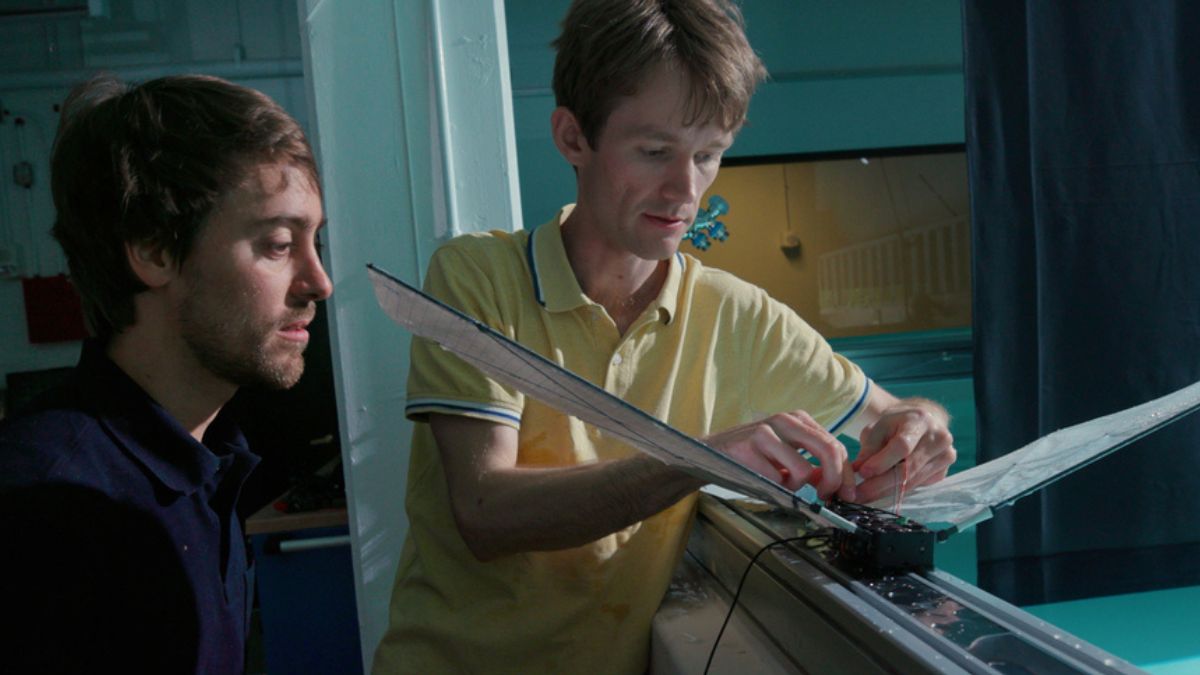
Exploring the ocean often requires a combination of ships, underwater vehicles and aerial drones. Researchers at the Massachusetts Institute of Technology and École Polytechnique Fédérale de Lausanne have developed a bird-inspired robot that could combine all three roles in a single machine. Called the Flapping-Wing Aerial-Aquatic Vehicle (FAAV), the 300-gram bird-inspired robot can fly through the air, swim underwater and transition seamlessly between the two, offering a new tool for ocean exploration. The findings, published in the journal Science, could also help scientists better understand how diving birds navigate two vastly different environments.
Learning from nature
The bird-inspired robot draws its design from diving birds such as puffins and loons, which hunt underwater without losing their ability to fly. These birds plunge beneath the surface in search of prey before launching themselves back into the air, a remarkable feat that engineers wanted to replicate.
To recreate this capability, the researchers studied the flight mechanics of several diving bird species. They found that smaller birds flap their wings roughly ten times per second while flying but reduce that frequency to about four times per second underwater. These observations became the foundation for designing the robot’s wing movements.

Replicating this behaviour was far from straightforward. Water is nearly 1,000 times denser than air, meaning a machine that performs efficiently in one environment is unlikely to function well in the other without significant adaptation.
“You have to do some adaptation to make that transition work. But there’s a solution that exists in nature,” said lead researcher Raphael Zufferey, assistant professor of mechanical engineering at MIT. “Birds like puffins can fly very fast through the air, and can dive and swim through water at speeds of 3 metres per second. They’re able to do pretty amazing things. So we knew it was possible. Just no one had tried this in a mobile robotic system.”, he said.
How the bird-inspired robot works
The bird-inspired robot consists of a waterproof central body containing a battery and electric motor, which powers a crankshaft to flap its wings. The flexible wings are coated with hydrophobic nanoparticles that repel water, while a motorised tail adjusts the robot’s pitch to help it climb into flight or dive beneath the surface.
Researchers tested three wing sizes in laboratory water tanks before conducting field trials in Switzerland’s Lake Geneva. After experimenting with different wing dimensions, flapping frequencies and tail angles, they found that medium-sized wings provided the best balance between underwater propulsion and stable flight.
During the trials, the bird-inspired robot swam underwater at speeds approaching one metre per second and flew through the air at around six metres per second. The team also discovered that pitching the robot at an angle of about 70 degrees allowed it to break through the water’s surface smoothly without its wings striking the water, enabling a successful transition into flight.
One of the study’s more surprising findings was that the bird-inspired robot did not require paddling feet to launch itself from the water. Many diving birds, including ducks and puffins, rely on their feet in addition to their wings when taking off from the water’s surface. In the robot’s case, however, carefully coordinated wing flapping and body positioning were enough to achieve the same result.
A new tool for ocean science
Beyond demonstrating an engineering achievement, researchers believe the bird-inspired robot could become a valuable tool for marine science. Instead of deploying costly research vessels, the robot could be launched from a boat or shoreline, fly to a remote study site, dive underwater to collect water samples or environmental measurements, return with the data, and repeat the mission multiple times a day.
“Our dream vision is for oceanographers, marine biologists and members of coastal communities to launch this robot from a boat, or from shore, and it would fly close to the area of interest, such as an iceberg or a port facility, or over a pod of whales. It would dive into the water to take a measurement or collect a sample, and fly back to deliver the data at a fraction of the cost of traditional methods. Then it could go back out to dive for more.” Zufferey said.
The research team is now working to improve the bird-inspired robot by enabling its wings to rotate as well as flap, while also testing its performance in rough seas and strong winds. If successful, the technology could pave the way for a new generation of hybrid aerial-aquatic robots, making ocean research faster, safer and significantly more cost-effective.













Technology
India’s Youngest Startup Founders Are Reaching for Space and Reinventing AI
At just 20, Onkar Singh Batra and Dhravya Shah are India’s youngest startup founders, building SpaceTech and AI ventures on the Hurun U30 List 2026.

India’s startup ecosystem is beginning to see a new generation of entrepreneurs who are starting younger and taking on increasingly complex technological challenges. This year’s youngest startup founders are just 20 years old, Onkar Singh Batra, founder of SpaceTech startup “Apolink”, and Dhravya Shah, founder of AI startup “Supermemory”. At just 20, they are the youngest entrepreneurs featured in the Avendus Wealth–Hurun India U30 List 2026, lowering the age benchmark from 22 in last year’s edition.
Building Solutions Beyond Their Years
At this young age, Batra and Shah are solving complex problems.
Batra founded Apolink to improve communication between low-Earth orbit satellites. As satellite constellations continue to expand worldwide, maintaining uninterrupted connectivity has become one of the industry’s key challenges. His startup is developing an inter-satellite broadband network designed to keep satellites connected without relying entirely on ground stations, helping improve the efficiency of future space communication systems.
Shah’s AI startup Supermemory, meanwhile, is focused on one of artificial intelligence’s biggest limitations. The startup is building what it describes as a memory layer for AI systems, enabling them to retain and retrieve information across interactions. As businesses increasingly integrate AI into their workflows, such capabilities are expected to make AI assistants more effective at handling long-term tasks and contextual decision-making.
Their ventures may be young, but both operate in technology sectors where innovation often requires years of research, engineering expertise and sustained investment.
A New Profile of Young Entrepreneurship
The inclusion of Batra and Shah reflects a broader evolution in India’s startup ecosystem, where younger founders are entering sectors that demand specialized technical knowledge.

“The 2026 U30 list reflects a decisive shift in India’s entrepreneurial landscape. One in four honourees are building in DeepTech and HardTech, spanning AI, SpaceTech, Aerospace & Defence, EVs and Cybersecurity. This marks a clear evolution from consumer-first startups to founders solving globally relevant, technology-intensive problems. The youngest entrepreneurs are now just 20 years old, underscoring how innovation is beginning earlier than ever,” said Anas Rahman Junaid, Founder and Chief Researcher at Hurun India.
The report also notes that 84 per cent of the entrepreneurs featured are first-generation founders, reflecting the growing accessibility of entrepreneurship beyond established business families.
Youngest Startup Founders Making an Early Mark
While Batra and Shah represent the youngest entrants on the list, several other founders in their early twenties have already built companies of remarkable scale.
Leading the list is Zepto, founded by Aadit Palicha and Kaivalya Vohra, both 23. The quick-commerce startup is the highest-funded company on this year’s U30 ranking, having raised US$2.3 billion. In just a few years, Zepto has grown into one of India’s most valuable startups, illustrating how quickly young entrepreneurs are translating ideas into businesses with national reach.
The ranking also features founders behind companies in fintech, healthcare, climate technology, defence, software and electric mobility, highlighting the breadth of sectors in which India’s under-30 entrepreneurs are making their mark.
Starting Younger, Aiming Further
The stories of Onkar Singh Batra and Dhravya Shah are about more than setting an age record. With greater access to technology, global networks, venture capital and startup support systems, young founders are entering the ecosystem earlier than previous generations. Many are choosing to solve problems that extend beyond consumer services, taking on challenges in fields such as artificial intelligence, space technology and advanced engineering.
Technology
India Pauses WhatsApp Username Rollout Over Fraud Concerns
India has paused WhatsApp’s username feature over fraud concerns. Here’s why the government intervened and how WhatsApp responded.

WhatsApp’s plan to let users communicate without sharing their phone numbers has run into regulatory scrutiny in India. The Centre has directed to pause the rollout of its upcoming WhatsApp username feature until consultations with the government are completed, citing concerns that it could create new opportunities for impersonation and online fraud.
The Ministry of Electronics and Information Technology (MeitY) has reportedly sought a detailed explanation of the feature and the safeguards built into it, asking the company to clarify how it plans to prevent misuse before the feature is introduced in India.
WhatsApp Username Feature: Privacy Under Scrutiny
The proposed feature would allow users to create a unique username and connect with others without revealing their mobile number. Similar systems already exist on messaging platforms such as Telegram and Signal, where usernames act as an alternative identity for communication.

For users, the feature offers greater privacy, especially when interacting with businesses, communities or people they do not wish to share their personal phone number with. But regulators believe the same feature could make it easier for cybercriminals to disguise their identities and impersonate trusted organizations.
Officials are particularly concerned that fraudsters could create usernames resembling those of banks, government departments or public officials, making phishing attempts and financial scams appear more credible.
Rising Cyber Fraud Provides the Backdrop
The government’s caution comes amid a significant rise in cyber-enabled financial frauds, particularly so-called “digital arrest” scams. In these schemes, fraudsters impersonate police officers, customs officials, CBI personnel or other government authorities and coerce victims into transferring money by falsely claiming they are under investigation.
Many of these scams shift from phone calls to encrypted messaging platforms, where voice calls, video calls and document sharing are used to make the deception appear authentic.
The scale of the problem was highlighted in a status report submitted by the Ministry of Home Affairs (MHA) to the Supreme Court in April 2026. According to the report, WhatsApp banned more than 9,400 accounts linked to digital arrest scams after launching a dedicated investigation in January this year.
The investigation began after Indian authorities shared a limited number of accounts involved in such frauds. WhatsApp subsequently used those accounts as starting points to identify and dismantle thousands of connected scam accounts operating across the platform, illustrating how organised these fraud networks have become.
The latest enforcement action has reinforced the government’s view that any change to user identity on messaging platforms must include robust protections against impersonation.
WhatsApp Outlines Safeguards
Responding to the government’s concerns, WhatsApp clarified that the username feature has not yet been launched and will be introduced gradually later this year.
The company said usernames are intended to improve privacy rather than reduce accountability. According to WhatsApp, the feature will be optional, allowing users to continue using phone numbers if they prefer.
It also said usernames will not be searchable through a public directory. Instead, users will need to know another person’s exact username before initiating contact.
To reduce impersonation risks, WhatsApp plans to reserve usernames associated with public figures, government institutions and well-known organisations. It also says it will prevent repeated attempts to register protected usernames and provide contextual information when users receive messages from unfamiliar accounts.
WhatsApp Username Feature: A Larger Debate on Digital Identity
India is WhatsApp’s largest market, making the government’s intervention significant beyond a single product update. As messaging platforms increasingly move away from phone-number-based identities, regulators are examining whether alternative identity systems can provide both anonymity and accountability. The consultations between WhatsApp and the government are therefore likely to influence not only the rollout of usernames in India but also how future privacy-focused features are assessed from a cybersecurity perspective.
Technology
Japan PM India Visit: Why Technology is at the Heart of New Delhi and Tokyo’s Partnership
The Japan PM India visit highlights how semiconductors, AI, critical minerals and resilient supply chains are reshaping the India-Japan partnership beyond trade and infrastructure.

Japanese Prime Minister Sanae Takaichi begins her three-day visit to India, technology has emerged as the defining pillar of the India-Japan partnership, with both countries looking to collaborate in semiconductors, artificial intelligence, critical minerals and advanced manufacturing.
The discussions at the 16th India-Japan Annual Summit come as governments worldwide race to secure critical technologies and reduce dependence on fragile global supply chains. For India, Japan brings decades of expertise in high-precision manufacturing. For Japan, India offers a rapidly expanding market, a skilled workforce and ambitions to become a global manufacturing hub.
Semiconductors Take Centre Stage
One of the most significant areas of cooperation is semiconductors. While Japan no longer dominates chip manufacturing, it remains a global leader in semiconductor materials, manufacturing equipment and precision components—essential building blocks for producing advanced chips.
India, meanwhile, is investing heavily in developing a domestic semiconductor ecosystem through the India Semiconductor Mission. In 2023, the two countries signed a Memorandum of Cooperation on the Japan-India Semiconductor Supply Chain Partnership to strengthen collaboration in manufacturing, research, design, talent development and supply-chain resilience.
As artificial intelligence, electric vehicles, 5G networks and data centres fuel global demand for advanced chips, semiconductor cooperation has become a strategic priority for both governments.
Beyond Infrastructure to Technology Transfer
The India-Japan relationship has traditionally been associated with infrastructure projects such as the Mumbai-Ahmedabad High-Speed Rail corridor. However, the partnership is increasingly shifting towards technology transfer and industrial capability.
The bullet train project, built using Japan’s Shinkansen technology and financed largely through concessional loans from the Japan International Cooperation Agency (JICA), has introduced advanced signalling, train control systems and specialised engineering expertise to India. The project also includes training for Indian engineers, helping develop domestic capabilities in high-speed rail technology.
Broader Technology Ecosystem
Technology cooperation now extends well beyond transport. India and Japan are expanding collaboration in artificial intelligence, digital infrastructure, clean energy, robotics and critical minerals—sectors that are expected to underpin future economic growth and industrial competitiveness.
Japan’s strengths in advanced manufacturing complement India’s focus on scaling electronics production and attracting global technology investment. Together, the two countries are seeking to build resilient supply chains that are less vulnerable to geopolitical disruptions.
Why the visit matters
The significance of Takaichi’s visit lies in the changing nature of the India-Japan partnership. What began as a relationship centred on infrastructure and investment is increasingly becoming one driven by technology, innovation and economic security.
As countries compete for leadership in next-generation industries, the outcomes of this summit could help shape India’s ambitions to become a global manufacturing and technology hub while reinforcing Japan’s role as one of its most important strategic technology partners.


From Lost Wages to Rising Medical Bills: How Extreme Heat Is Already Costing India’s Economy

From Sky to Sea: Bird-Inspired Robot Could Transform Ocean Exploration

India Becomes World’s Fourth-Largest LNG Import Hub as Gas Infrastructure Grows

Wayanad Landslide Death Toll Rises to Five; Search Continues for Missing Workers

Indian Scientists Find a New Way to Tune How Metals Interact with Light

From Bell Labs to the Classroom: A Second Career in Teaching

10 Technologies That Could Change How We Power Homes, Fight Cancer and Feed the World

Beyond the IITs: India’s University Rankings Story Is Getting Bigger

Why Humid Heat Is Becoming India’s Most Dangerous Climate Threat

Why Kerala’s Children Are Missing School as Monsoon Illnesses Return?

-

 Space & Physics1 month ago
India Semiconductor Mission: ‘It’s Not About Fabs. It’s About Building An Entire Ecosystem’
-
Climate1 month ago
The Climate World Cup? How Climate Change Could Affect Player Performance at the 2026 World Cup
-
Society3 weeks ago
From Bell Labs to the Classroom: A Second Career in Teaching
-
Space & Physics1 month ago
Engineers Develop Dual-Mode Propulsion System for Next-Generation Small Satellites
-
Space & Physics2 months ago
Inside India’s Semiconductor Push: ‘This Is a 100-Year Bet’
-
Interviews5 months ago
Geometry, Curiosity and Finding ‘Her’ Place
-
Technology2 weeks ago
10 Technologies That Could Change How We Power Homes, Fight Cancer and Feed the World
-
Society1 month ago
From One Roman Classroom to 60,000 Schools: How Maria Montessori Quietly Changed the World