
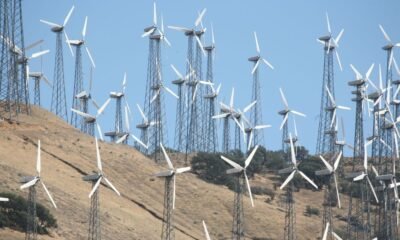

Researchers find that adjusting wind turbine blade speed when machines are misaligned with the wind could help increase power output from existing turbines.


MIT researchers have developed an AI system that helps humans understand why self-driving cars make certain decisions. The technology could help safety drivers respond to failures,...


MIT researchers have developed a machine-learning tool that can generate plausible extreme-weather scenarios beyond historical records, offering planners a new way to prepare for unprecedented floods,...
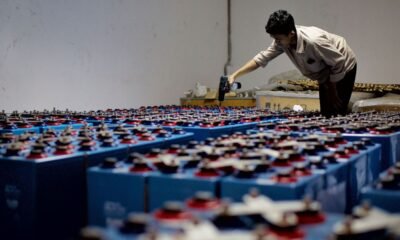

As India expands renewable energy, affordable storage is becoming critical. Sodium-ion batteries could offer a lower-cost, more resource-secure alternative to lithium-ion technology.


MIT research into nitrogen-fixing enzymes reveals how microbes efficiently convert atmospheric nitrogen into ammonia, offering clues for developing cleaner and more energy-efficient fertiliser production.


Bird-inspired robot developed by MIT can fly, swim underwater and transition between air and water, offering a promising new tool for ocean exploration.


A new MIT study finds flexible data center energy use could reduce electricity costs, ease pressure on power grids and reshape AI's energy footprint.


MIT and Microsoft have developed Murakkab, an AI system that optimizes agentic workflows, reducing cloud computing costs, energy use and resource demands.


MIT researchers have developed an ultra-low-power chip that enables tiny robots to create detailed 3D maps and navigate complex environments while consuming just 6 milliwatts of...


MIT study uses JWST to decode a rare exoplanet system, revealing how mini-Neptunes form beyond the frost line.