Society
China’s Quiet Innovation Takeover
China’s innovation engine is accelerating across multiple sectors, from robotaxis and new drug development to clean-tech megaprojects shaping global supply chains


China’s innovation momentum is accelerating across multiple high-value industries, extending far beyond its established leadership in electric vehicles, solar modules and advanced manufacturing. Recent datasets and research show how a combination of large-scale investment, regulatory agility and deep industrial capacity is enabling China to push rapidly into new technological frontiers — reshaping global competition in the process.
One pillar of this expansion is visible overseas. The China Low Carbon Technology FDI Database reports that since 2022, Chinese companies have committed over USD 227 billion to green-technology manufacturing abroad, surpassing the Marshall Plan in today’s dollars. By 2024, these investments totalled 461 projects in 54 countries, including nickel-processing plants in Indonesia, gigafactories in Europe, electrolyser facilities across the Gulf, and green-hydrogen initiatives in North Africa. Battery-related projects alone exceed USD 62 billion, reflecting the capital intensity and strategic importance of energy-storage supply chains.
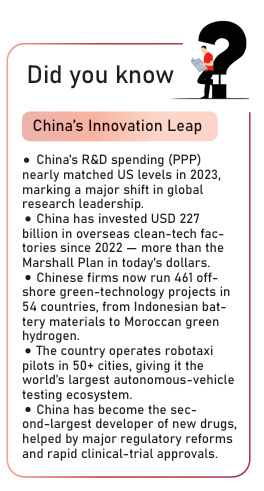
At home, China is rapidly moving up the value chain in emerging sectors. Autonomous-vehicle developers have built the world’s largest robotaxi ecosystem, with pilots running in 50+ cities and costs significantly below those of US rivals due to integrated supply networks for sensors, lidars and computing hardware. In pharmaceuticals, China has transformed itself into the second-largest developer of new drugs, buoyed by sweeping regulatory reforms, expanded clinical-trial capacity and an approval system that now moves faster than many Western regulators.
This acceleration is underpinned by sustained investment in research. PPP-adjusted figures show that China’s national R&D spending in 2023 was nearly equal to that of the United States, marking a pivotal shift in global innovation capability. A deep talent base, extensive manufacturing clusters and intense domestic competition further push firms to scale quickly and seek overseas markets.
Together, these dynamics form a distinctive innovation model that blends scale, speed and strategic coordination. For governments, universities and industry leaders worldwide, understanding how China orchestrates this growth — and where it is headed next — is becoming essential to navigating the future of global technology.












Society
Keralam’s Western Ghats ESA debate is now about the land between forests and farms
Kerala’s latest Western Ghats ESA debate is over where conservation should end and farms, homes and settlements begin, as the state seeks changes to the Centre’s 9,993.7-sq-km proposal.
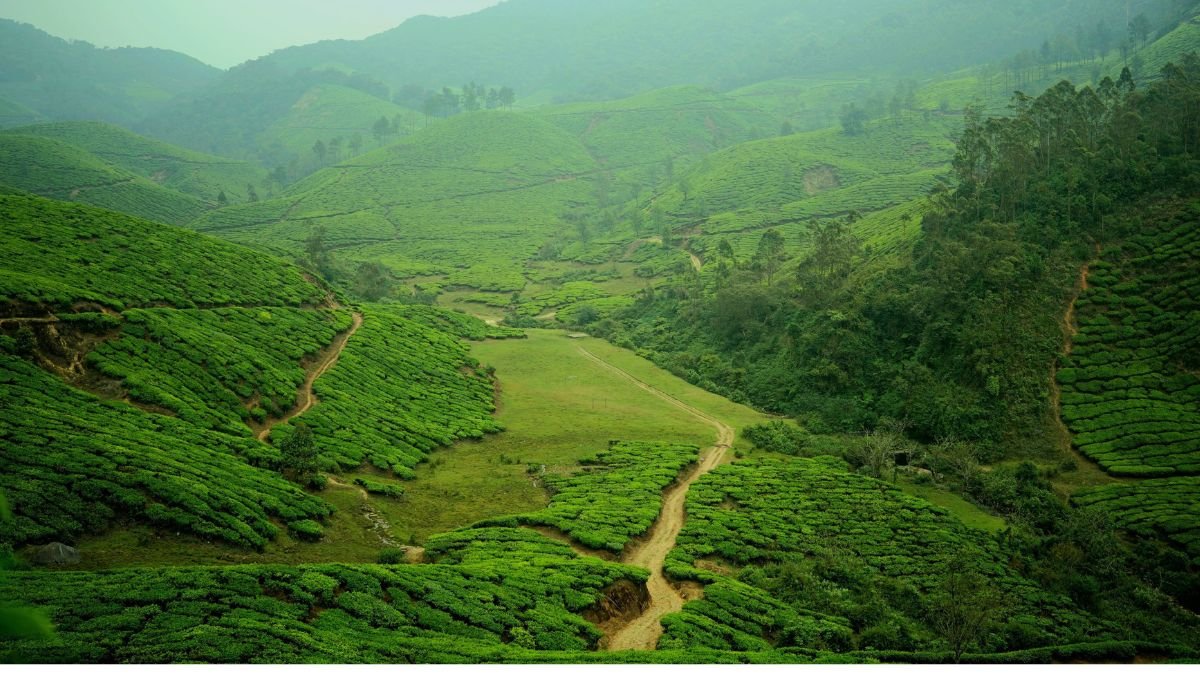
The Western Ghats, with a geological history stretching back hundreds of millions of years, is now a landscape where forests, farms and settlements coexist. Protecting it while accounting for generations of human habitation makes Keralam’s ESA boundary a particularly complex question. While there is broad recognition of the ecological importance of the Western Ghats, the question of which lands should fall within the ESA remains contentious.
Keralam is home to nearly a quarter of India’s plant diversity, with the Western Ghats accounting for much of this richness. The mountain range is also one of the world’s biodiversity hotspots, supporting species found nowhere else.
For the people living across this landscape, however, the ESA debate concerns what happens to their farms, homes and private land if they fall within the proposed boundary?
The ESA: Already Shrunk Considerably
The area proposed for ESA status in Keralam has changed substantially since the Kasturirangan exercise. The High Level Working Group headed by K. Kasturirangan had identified 13,108 sq km across 123 villages in Kerala. Subsequent physical verification by the state resulted in a smaller proposal of 9,993.7 sq km.
The composition of this area is important. About 9,107 sq km is forest, while 886.7 sq km is non-forest land. It is this non-forest portion that has become a source of concern for residents.
Environment Minister of Keralam, Sunny Joseph said people had been requesting that private properties and agricultural land should not be included in this category. He said there was no need for unnecessary anxiety over the ESA proposal and stressed the importance of creating greater public awareness about what the designation actually means.
The concern is not new. Kerala has previously sought the exclusion of populated areas and agricultural land during the process of identifying the ESA.

Why Keralam’s Landscape Makes the Debate Complicated
Keralam cannot easily separate its Western Ghats into neat blocks of forest and human habitation. Agricultural land, plantations and settlements are scattered through the mountain landscape. In several places, human activity exists close to forests and wildlife habitats, making the question of ecological sensitivity more nuanced than a simple forest-versus-development debate.
Oommen V Oommen, who headed the committee that examined Kerala’s ESA proposal, said the committee had interacted with people living in the Western Ghats region before making its recommendations. He pointed to the distinction made in the Kasturirangan exercise between natural and cultural landscapes.
According to Oommen, about 37% was identified as natural landscape and 63% as cultural landscape. The natural landscape, he said, should be completely protected. Farmland and other private properties were not included in the natural landscape identified for protection.
That distinction is important in Keralam, where people have lived in the Western Ghats for generations. The ESA discussion is therefore not simply about how much land should be protected, but about identifying which landscapes have the ecological characteristics that warrant stronger protection.
Joseph also pointed to Keralam’s densely populated landscape while contrasting it with states such as Tamil Nadu. Conservation boundaries that work in sparsely populated forest landscapes can have very different implications in a state where agriculture, settlements and forests are closely interwoven.
Keralam’s forests themselves cover a substantial part of the state, while the Western Ghats are central to its ecological security. The range feeds most of the state’s major rivers and supports a concentration of endemic species. While on the other hand there are many families depending on agriculture and tourism in these areas.
The Map is Changing
Even the 9,993.7 sq km figure is not necessarily the final boundary. The Keralam government has subsequently sought a further reduction in the proposed ESA and the exclusion of additional villages and populated and agricultural areas.
That makes the present debate less about whether Keralam needs to protect the Western Ghats and more about where protection is most necessary and how accurately those areas can be identified.
For residents, the distinction matters. An ESA notification can bring restrictions on certain categories of development and land use, making clarity over the boundary crucial. For conservationists, meanwhile, leaving ecologically important landscapes outside protection could weaken the purpose of the designation.
The main dilemma faced by Keralam is how they should focus on protecting a globally significant biodiversity landscape without treating every inhabited or cultivated patch of the Western Ghats in the same way.
Society
Why Global Tech and Industry Lean on Indian Talent
A look at how cultural roots, rigorous logic, and specialized management education shape a distinct global edge.

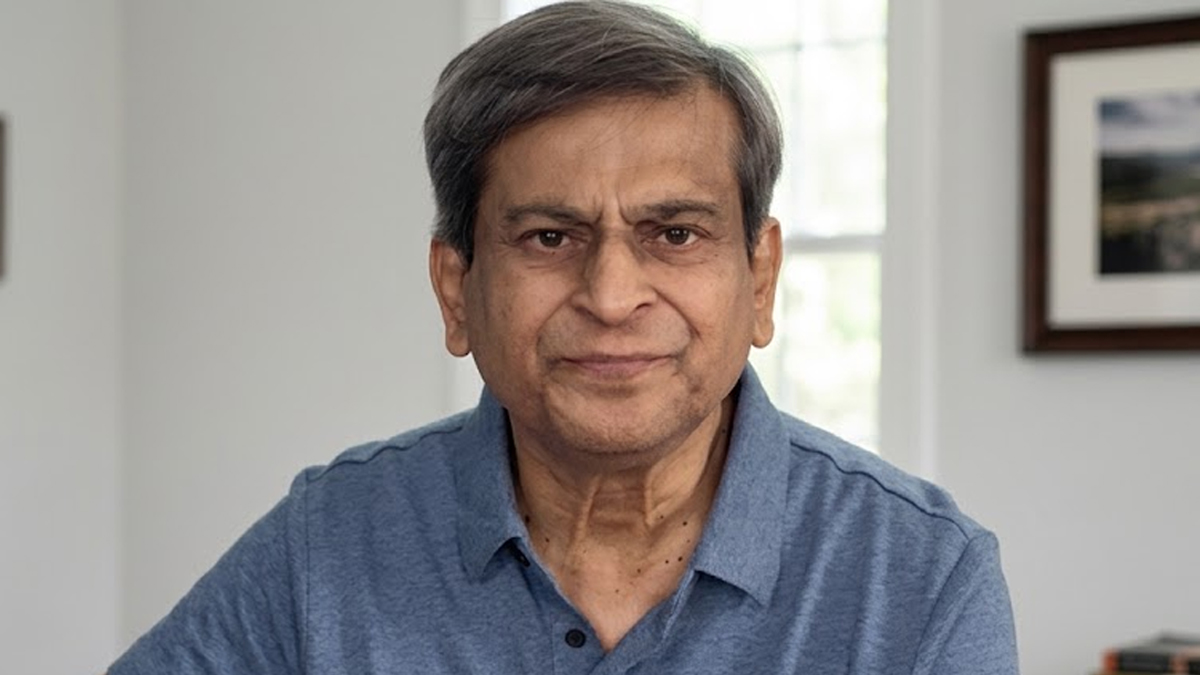
The modern corporate land scape is undergoing a massive, structural transformation. Across the globe, industries are no longer merely supported by in formation technology; they are entirely defined by it. From algorithmic finance to decentralized operations, “IT has become like a god—like, all-pervad ing,” observes management education expert Bharat Nadkarni.
As every sector moves toward an IT-based core, Indian youngsters have consistently found themselves at the forefront of this digital shift. This glob al positioning is not accidental. It is the result of a unique intersection be tween deep-seated cultural strengths, specialized technical streams, and a fundamentally logic-driven approach to solving problems.

Early Specialization and Management Polish
The journey of an Indian profes sional entering the global workforce typically begins with early academic focus. The current education system is structured to allow students who ex hibit a passion for scientific domains to concentrate deeply and cultivate a strict specialization early on. However, technical expertise alone is rarely enough to drive massive organizations forward. The real leverage happens when this scien tific groundwork is polished through management education.
By picking up the finer operational and structural points of business—whether special izing in strategic finance, logistics and operations, targeted marketing, or human resource frameworks—young professionals learn the art of execut ing at scale. Historically, these business silos operated independently. Today, tech nology acts as the universal connec tive tissue, smoothly binding opera tions, finance, and human resources into a single data-driven ecosystem. Because Indian students are trained to bridge the gap between technical execution and management strategy, they adapt exceptionally well to these interconnected systems.
A 500-Year Heritage of Logic
Beyond specialized academic pipe lines, a far deeper, cultural variable drives this aptitude. According to Nad karni, one of the primary foundational strengths of the demographic is a deeply ingrained ing manifests clearly in the career paths young professionals gravitate toward. Logic-dominant fields—such as advanced software engineering, mathematics, database architecture, and corporate finance—require an innate comfort with structure, pattern recognition, and systemic control. It is a space where clear, algorithmic thinking directly dictates success.capacity for rigorous logic. “Indian students are logically very strong,” Nadkarni explains.
“Maybe it is in our culture, and that culture may be of last 500 years.” This legacy of analytical reasoning manifests clearly in the career paths young professionals gravitate toward. Logic-dominant fields—such as advanced software engineering, mathematics, database architecture, and corporate finance—require an innate comfort with structure, pattern recognition, and systemic control. It is a space where clear, algorithmic thinking directly dictates success.
Navigating an All-Pervading Digital Future
As the international market evolves, the demand for this exact combination of deep logic and tech nical management is accelerating. The global shift toward data-centric business models plays directly to these intrinsic cultural and education al strengths.
For organizations trying to navigate this landscape, the lesson is clear: the strength of the emerging work force lies not just in their familiarity with modern tools, but in the struc tural logic they use to build them. By leveraging a historical foundation of analytical thought and refining it through modern management princi ples, a new generation is proving that they are uniquely equipped to lead an all-pervading digital economy.
Climate
India tops the world for population exposed to climate-driven risky heat
Climate-driven heat exposed 117 million people in India to a month or more of risky heat between June and August 2026, Climate Central found.



Keralam’s Western Ghats ESA debate is now about the land between forests and farms

Kerala’s Biodiversity Records Are Going Digital. What Could That Change?

Job Readiness for Students: 7 Career Sutras That Matter

India’s AI Moment Rests on More Than Code

KSBB Workshop Examines Biodiversity, Climate and Environmental Reporting

Farmers Borrowed to Build ‘Diggis’. Two Years Later, They Are Still Waiting for the Subsidy

When Decarbonisation Becomes the Real Conversation at Tiruppur’s Knit Show

When the Himalayas Collapse Without Warning, What Counts as Preparedness?

Anxiety Freezes Career Decisions. Curiosity Unfreezes Them

Meteorite Dust Reveals Evidence of Magnetic Field in the Young Solar System

-

 Math2 months ago
The 2026 Fields Medals: Four Proofs, Four Decades-Old Problems Solved
-
Climate2 months ago
After Kerala’s Deadliest Landslide, the Hardest Thing to Rebuild Was Childhood
-
Society3 months ago
West Asia Crisis: Can Kerala’s Returning Gulf Migrants Find a Future in the Green Economy?
-
Space & Physics4 months ago
India Semiconductor Mission: ‘It’s Not About Fabs. It’s About Building An Entire Ecosystem’
-
Climate4 months ago
The Climate World Cup? How Climate Change Could Affect Player Performance at the 2026 World Cup
-
Society2 months ago
What Is Civilisational Diplomacy? Understanding India’s Newest Foreign Policy Tool
-
Society3 months ago
From Bell Labs to the Classroom: A Second Career in Teaching
-
Space & Physics4 months ago
Engineers Develop Dual-Mode Propulsion System for Next-Generation Small Satellites