Know The Scientist
The PhD project that won Donna Strickland her Nobel Prize
Strickland helped realize a novel mechanism through which ultrashort and intense laser pulses could be emitted safely.


It was in the wee hours of October 2nd, 2018, when Donna Strickland received a call from Sweden saying she was declared one of the awardees of that year’s Nobel Prize in Physics. With that she would make history, being just the third woman since Marie Curie and Maria Goeppert Mayer, to win the Nobel Prize in Physics.
Like many Nobel laureates before and even after her, it did take a moment or two for Strickland to digest the news. However, she couldn’t have felt more surprised when she realized that it wasn’t any of her research in laser physics she’d prided on being an expert on that won her the prize. Instead, she was awarded for her PhD work all the way back in the 1980s, squishing laser pulses to generate powerful beams.
Her work came at a time in the 1980s when laser physicists faced difficulty increasing laser power beyond a threshold, when it could damage its casing and the apparatus.
By 1985, Strickland helped materialize a work-around solution proposed by her then PhD supervisor, Gérard Mourou. They had laser light pass through a prism, splitting them to produce a rainbow-like distribution of individually low power light beams. These would then be passed through a power amplifier, before being forcibly recombined into an extremely intense laser pulse. For this work developing the mechanism called, ‘chirped pulse amplification’ (CPA), Strickland and Mourou were each awarded one-quarter of the Nobel Prize. The other half was awarded to Arthur Ashkin, for his work developing tiny particle traps using optical laser beams.

A laboratory set up consisting of lasers passing through lenses and mirrors. These are continuous wave lasers, as opposed to pulsed lasers. Credit: Wikimedia
Their work removed the roadblock to building lasers with shorter pulses that were below femtoseconds (a billion times shorter than a microsecond) and ever higher power beyond pettawatts (thousands of billions of times powerful than a kilowatt source). Frontier research today uses these pulsed lasers to cut through metals, in experimental nuclear reactors to trigger fusion in pellets of hydrogen. But their usage extends well beyond the confines of the laboratory too. For example, LASIK surgery to correct eye power became a reality after intense ultraviolet pulsed lasers were shown to reshape the eye’s cornea. They’re a basic concept behind military applications such as directed-energy weapons.

Pulse waveforms of a 2.5 nanosecond pulse duration (much bigger than the lasers Strickland and Mourou worked on, that clocked in picoseconds – a thousandth of a nanosecond). Credit: Wikimedia / NIST
In the wake of CPA’s invention, Strickland and Morou moved onto researching different problems within laser physics, and led diverged career paths. However, Strickland, for one, had rather a very slow progression up the ranks. In fact, when the Royal Swedish Academy announced the 2018 physics laureates, Strickland wasn’t even a full professor at the University of Waterloo, Canada. Worse still, her recognition was stalled outside of academia until a Wikipedia page had to be propped after the Nobel Prize was announced.
This became a hot topic after Strickland’s win since it ruffled the feathers of scientists, particularly women commentators at one point, who saw in Strickland, a potential to be an influential role model for girls and women in STEM. For she was just the third physics laureate at the time, after Marie Curie and Maria Goeppert Mayer, and the first in a very long time after Mayer was awarded in 1963.
It turned out Strickland didn’t really apply to be promoted, and only did so following her Nobel Prize upon being beckoned by her well-wishers. Waterloo fast-tracked their final decision to promote her in just three weeks, which in any other scenario would have been an intense and long-drawn process altogether.
But the lack of sufficient academic recognition did color views on her and her work in public. As it later turned out, Wikipedia editors denied a page in her name, deeming her three decade research into laser physics as insignificant.
In fact, Strickland herself recalled being stunned that she was being awarded for her contribution decades ago. “This work was done over thirty years ago so it’s not something that I am living and breathing every day … No one is expecting, in my position, to win a Nobel Prize,” she said.
It’s unknown why exactly there has been a three decade long wait for laser physics to be awarded any Nobel Prize at all. Delaying consensus within the Nobel committee for the award can mean researchers may not even live to be awarded. The Nobel Prize doesn’t award posthumous awards. Arthur Ashkin, the third 2018 physics Nobel laureate, was already 96 years old and a retired emeritus professor. He passed away in 2020. However, understanding how the Nobel committee made the decisions that they did will have to wait another 44 years. when the nomination lists for the 2018 prize will be publicly released.
For Strickland, life can’t have been more different after winning the prize. To girls and women, she was a rockstar in science, being the first woman to win a physics Nobel in a long time. However, she knows how much it means to them what being a scientist is like in her younger days.
During her school days, Strickland stood out to gain both positive and negative attention. Positive, because she aced physics modules. But negative, in that, she was studying physics which was seen traditionally as a boys’ subject, and was questioned for her choices. Although her contribution to CPA wasn’t publicly acknowledged as much as it ever did only after three decades, Strickland did find some admirers soon after her work on CPA was published in 1985.
“I would like to acknowledge my homeroom teacher, Jim Forsyth, who was also my physics teacher in Grade 13,” Strickland said, as quoted in the 2018 Nobel biography. “When I returned to Canada as a faculty member at the University of Waterloo, he read that I had developed chirped pulse amplification. He contacted me through my mother asking if I would be willing to be placed on [her school’s] wall of fame. I wasn’t sure that I belonged on this wall that included John McCrae (a famous Canadian poet). Jim said that he wanted to have a female scientist on the wall as a role model for the female students. I agreed to his request and he made it happen. I have been on [her school’s] wall of fame for two decades for the development of CPA. They recently have rewritten the citation to say that I have received the Nobel Prize for CPA. Now it doesn’t seem so strange for me to be on [her school’s] wall of fame.”









Know The Scientist
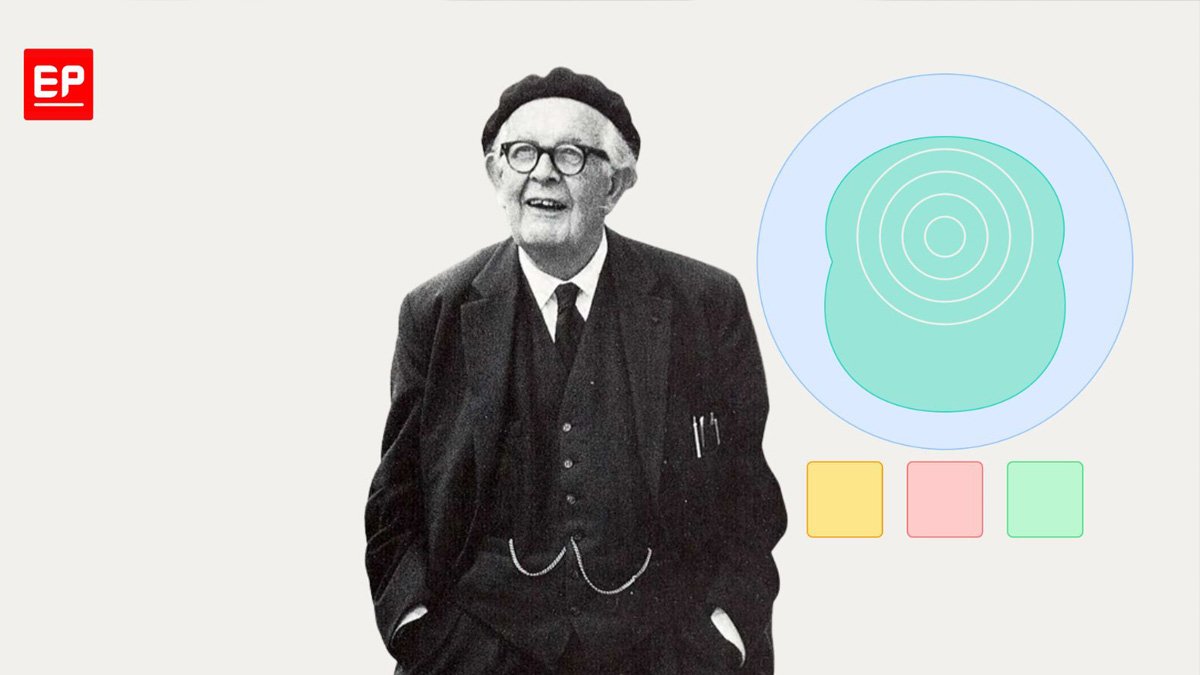
The Scientist Who Changed the Way We Understand Childhood
Long before brain scans and developmental neuroscience, a Swiss biologist-turned-psy chologist argued that children are not minia ture adults but active thinkers building their own understanding of the world — an idea that quietly rewired classrooms everywhere.

A little girl pours water from a short glass into a taller one and confidently declares there is now more water than before. Across the room, a tod dler drops a toy to the floor again and again, giggling every time someone picks it up. Outside, a young boy in sists the moon is following him home.
To most adults, these are just ordinary childhood moments — cute, a little odd, easily explained away. To Jean 60 Piaget, they were something far more significant: clues to how children actually think, learn, and make sense of the world. Long before brain imaging and developmental neuroscience trans formed our understanding of the hu man mind, Piaget proposed a simple but revolutionary idea: children are not miniature adults. They think differ ently, and their intelligence develops in stages as they interact with their environment.

Not mini-adults, but active thinkers
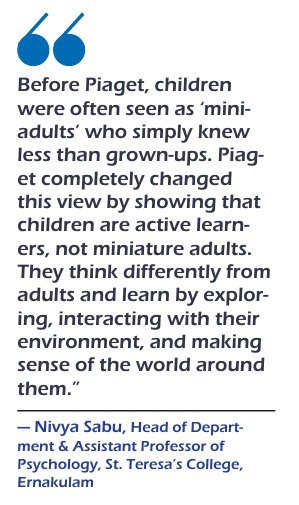
Before Piaget, children were often treated as smaller, less capable versions of adults — the same minds, just with less information filled in. His research overturned that assumption entirely. As Nivya Sabu, Head of Department and Assistant Professor of Psychology at St. Teresa’s College, Er nakulam, puts it: “Before Piaget, chil dren were often seen as ‘mini-adults’ who simply knew less than grown ups.
Piaget completely changed this view by showing that children are active learners, not miniature adults. They think differently from adults and learn by exploring, interacting with their environment, and making sense of the world around them.” It was this shift in perspective that transformed not just developmental psychology, but the way educators, parents, and researchers have under stood childhood ever since.
A childhood spent watching sparrows and snails
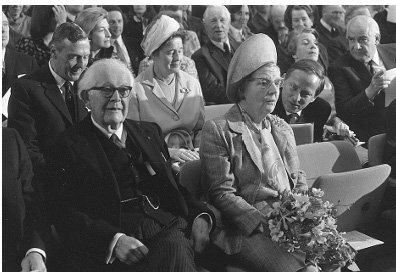
Piaget was born on 9 August 1896 in Neuchâtel, Switzerland, to Arthur Piaget, a professor of medieval liter ature, and Rebecca Jackson Piaget. Raised in a household that prized intellectual curiosity, he developed an early fascination with the natural world. At eleven, he published his first scientific paper — a short observation of an albino sparrow — and went on to study molluscs so meticulous ly that he was publishing research recognised by professional zoologists while still a teenager. He earned a doctorate in natural sciences from the University of Neu châtel in 1918. Biology remained his first love, but a bigger question was pulling at him: how do human beings actually come to know things? That curiosity would eventually carry him from studying organisms to studying the developing mind.
The wrong answers that changed psychology
After his doctorate, Piaget trav elled to Paris to work at the Binet Labora tory, helping standardise intelligence tests designed to measure children’s cognitive abilities. Most researchers around him were focused on sorting correct answers from in correct ones. Piaget became fascinat ed by something else entirely: children of similar ages kept making the same ‘wrong’ answers, over and over. Rather than dismissing these pat terns as ignorance, Piaget suspected they revealed something real about how children understand the world. That single observation became the foundation of his life’s work.
Piaget concluded that children don’t simply absorb information handed to them by adults. They actively con struct knowledge — through interact ing with their surroundings, asking questions, experimenting, making mistakes, and slowly refining what they think they know. He saw children less as students memorising facts and more as scientists testing hypotheses. That belief became the foundation of constructivism: the idea that learning is something children build, not some thing poured into them.
Schemas, and the two ways we learn
To explain how this building happens, Piaget introduced the idea of schemas — mental frameworks people use to organise and interpret new information. Every new experi ence gets measured against what a child already believes. When it fits, it’s absorbed through assimilation. When it doesn’t — when an experience challenges what a child thought was true — the child adjusts through accommodation. The push and pull be tween the two produces what Piaget called equilibration: a state of cogni tive balance that keeps a child open to learning more.
Four stages, four very different minds
Piaget spent decades observing children before proposing that cogni tive development unfolds through four distinct stages, each a genuinely dif ferent way of experiencing the world. In the sensorimotor stage (birth to roughly age two), infants learn almost entirely through their senses and physical actions — touching, tasting, grasping, crawling. One of the stage’s biggest milestones is object perma nence: understanding that a toy still exists even after it disappears from view. A baby searching for a hidden toy is quietly proving a fact about the universe to themselves for the first time.
In the preoperational stage (rough ly two to seven), language explodes, imagination takes over, and symbolic thinking begins — a cardboard box be comes a spaceship, a stick becomes a wand. But children at this age also tend to assume everyone else thinks exactly as they do, and struggle with conservation: the idea that pouring the same water into a taller glass doesn’t create more of it, no matter how con vincing it looks. Between seven and eleven, children enter the concrete operational stage, where logical thinking becomes far more organised. They grasp conser vation, classify objects, sequence items, and solve concrete problems using logic — which is roughly when mathematics and science experiments start to click.
Around age twelve, the formal operational stage brings abstract reasoning online. Adolescents start forming hypotheses, weighing multiple possibilities at once, debating ethics, and imagining futures they haven’t lived yet — the mental toolkit that carries them into more complex adult problem-solving. Piaget was insistent that none of these stages can be rushed. Every child moves through them at their own pace, and real learning happens when teaching matches a child’s developmental readiness — not when a concept is forced on a mind that isn’t ready for it yet.

Rebuilding the classroom around curiosity
This was a direct challenge to how most schools operated, where students were expected to memorise facts and repeat back whatever the teacher provided. Piaget argued the opposite: children learn best when they are active participants in their own learning, not passive recipients of it. The teacher’s job, in his view, shifts from being the sole source of knowledge to designing environments that invite curiosity, exploration, and discovery.
That idea now sits quietly behind a lot of what happens in classrooms to day — inquiry-based learning, project work, science experiments, educa tional games, building blocks, puzzles, group activities. All of it traces back to Piaget’s central claim: children learn by doing, and different ages need gen uinely different kinds of doing.
From the classroom to the clinic
Piaget’s influence didn’t stop at the classroom door. His model of cog nitive development is still a working framework for psychologists treating children and adolescents today — a way of reading behaviour through developmental readiness instead of adult expectations. As Anjali Nair, Senior Consultant Psychologist at Amaha, Bengaluru, explains: “One of the primary ways we use Piaget’s theory is to identify age-appropriate developmental delays in children. It is also highly relevant when assessing cognitive deficits and understand ing whether a child’s development is progressing as expected.” She points to egocentrism as a clear example: “A good example is egocentrism, which many people interpret as selfishness.
Children between two and four are developmentally incapable of ful ly understanding another person’s perspective. Without Piaget’s theo ry, these behaviours can easily be misread as maladaptive when they’re simply characteristic of that stage.” Nair notes that Piaget’s framework also shapes therapeutic approach es — play therapy and activity-based interventions, in particular, are built around matching technique to a child’s cognitive stage rather than their age alone.
A father first, A scientist always
Piaget’s most consistent laboratory may have been his own living room. After marrying Valentine Châtenay in 1923, he spent years closely observing the intellectual development of their three children — observations that fed directly back into his theories and underlined just how much of future learning gets shaped in the earliest years of life. He was, by any measure, prolific: more than fifty books and hundreds of research papers over his career.
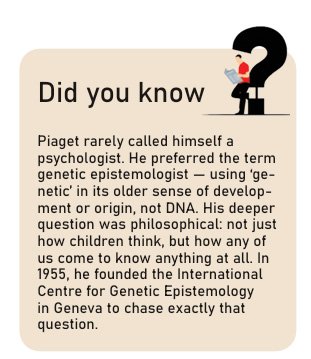
In 1955, he founded the International Centre for Genetic Epistemology in Geneva, pulling together psycholo gists, biologists, philosophers, math ematicians, and educators around one shared question — how does knowl edge actually develop? His influence eventually reached well beyond child psychology, into education, sociology, philosophy, and even early artificial intelligence research.
Why Piaget still matters
Later researchers have added to Piaget’s work — pointing out the roles of culture, language, and social inter action that his original stage model underplayed. But his central claim has held up remarkably well: children are not passive containers waiting to be filled with information. They are active participants in their own learning. That claim feels almost more urgent now than when he first made it. In a world where information is one search or one prompt away, the hard part of education was never really about handing over facts.
It’s teaching children to think critically, solve prob lems creatively, work with others, and adapt to a world that keeps changing shape — precisely the abilities Piaget spent his career arguing schools should be built around. As he himself put it: “The principal goal of education is to create men and women who are capable of doing new things, not sim ply repeating what other generations have done.” More than four decades after his death, that sentence still holds up as a fair description of what good education is trying to do. Piaget’s real legacy isn’t a set of four tidy stages to memorise. It’s a shift in how adults are willing to look at a child pouring water between two glasses — not as a mistake to correct, but as a mind quietly at work.
Know The Scientist
‘You’re admired, because no one understands you’
How does a soft-spoken, late-blooming, introspective young man—once dismissed as lazy and unimaginative—go on to become one of the greatest scientific minds the world has ever known? That story, woven with personal struggles, quiet determination, and an unmatched brilliance, is one of the most inspiring in the history of science. This edition of EP Know the Scientist turns the spotlight on the legend of Albert Einstein

A Meeting of Geniuses
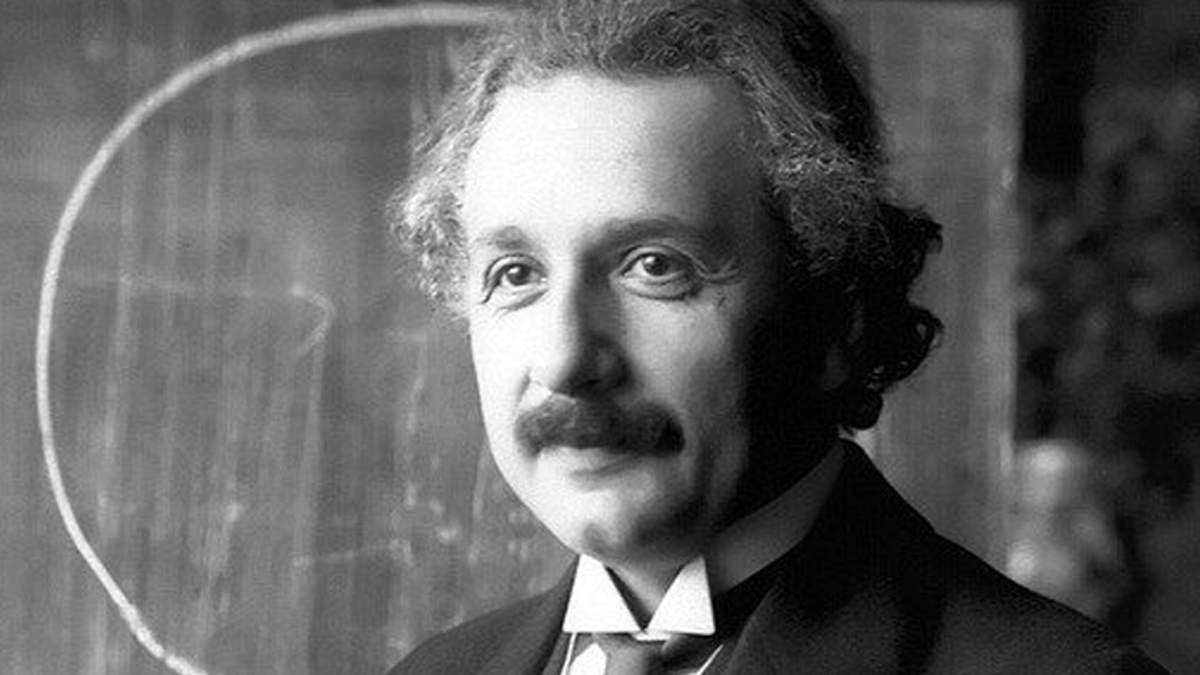
In 1931, two of the most brilliant minds of the 20th century met in Hollywood. One was Albert Einstein, the theoretical physicist who had turned our understanding of the universe on its head; the other, Charlie Chaplin, a master of silent cinema who could move the world to laughter without uttering a word.
“You’re admired because everyone understands you,” Einstein said to Chaplin.
“You’re admired,” Chaplin replied, “because no one understands you.”
That exchange perfectly captured the enigma of Einstein. Though his theories baffled the masses, his influence on science, and on the world itself, was impossible to ignore.
The Face of Modern Physics
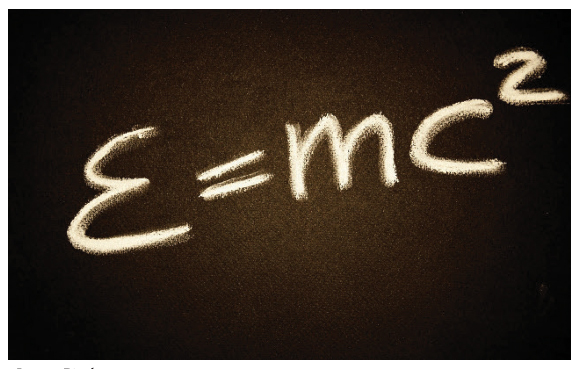
Albert Einstein’s contributions to science redefined physics. From his Special and General Theories of Relativity to his explanation of the photoelectric effect, he reshaped how we understand energy, gravity, light, and time. His famous equation, E = mc², may be the most recognized scientific formula in history—a symbol of human curiosity and intellectual might.
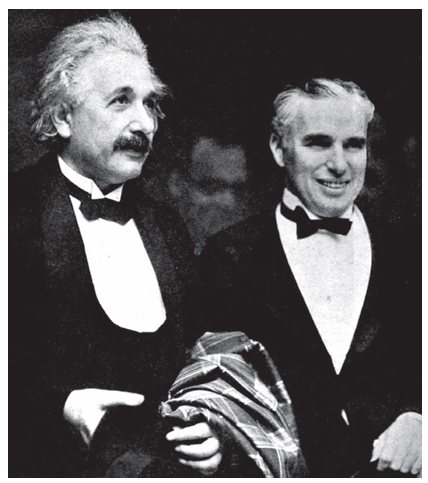
Even today, astronomers rely on Einstein’s insights to decode gravitational waves, explain the bending of light around stars, and predict the paths of planets like Mercury. Long after his passing, Einstein continues to be a guiding force in scientific exploration.
A Curious Child
Born in 1879 in Ulm, Germany, to a middle-class Jewish family, Einstein was a quiet child. His parents worried because he spoke late. Teachers misunderstood his dreamy nature. But from a young age, Einstein was captivated by the invisible forces of the world. A simple compass given to him at age five stirred a lifelong fascination with unseen energies.
By 12, a book on Euclidean geometry filled him with awe. He called it his “sacred little geometry book,” and it gave him a glimpse of the order behind nature’s complexity.
Despite a popular myth, Einstein was not bad at math. He excelled in mathematics and physics, though he struggled with the rigid, memorization-heavy Prussian education system. Creative thinking had little space in such classrooms—and Einstein needed space to think.
Failing to Fit, and Finding a Path
At 16, Einstein dropped out of school. He failed the entrance exam to Zurich’s prestigious Polytechnic School on his first try, performing well only in science and math. Undeterred, he studied on his own and passed the exam the following year.
After graduating in 1901, Einstein struggled to find work as a teacher. Eventually, he secured a job as a clerk at the Swiss Patent Office in Bern—a humble position that gave him time to think, scribble equations, and dream about the cosmos. It was during this period that Einstein’s revolutionary ideas took shape.
The Miracle Year
In 1905, while still a patent clerk, Einstein published four papers that would change the course of physics. He explained the photoelectric effect (which would win him the Nobel Prize in 1921), developed the Special Theory of Relativity, and introduced the idea of mass-energy equivalence. These ideas challenged Newtonian physics and formed the foundation of modern science.
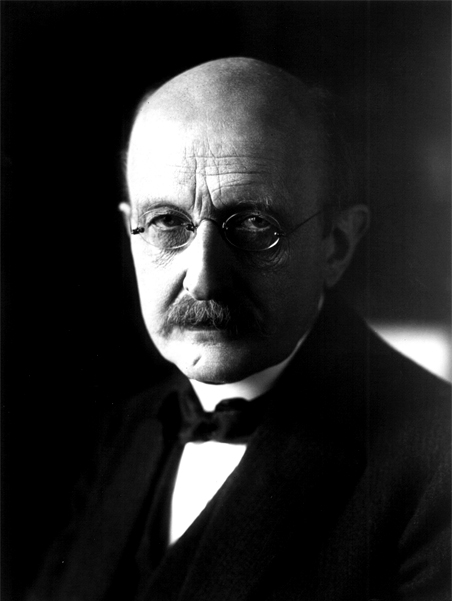
At first, his work went unnoticed. But Max Planck, one of the leading physicists of the time, recognized Einstein’s genius. The world soon followed.
Fame, Flight, and Fear
By the 1910s, Einstein’s fame had spread far beyond academic circles. He was offered positions at the most prestigious universities across Europe. In 1915, he completed his General Theory of Relativity—a breathtaking explanation of gravity as the curvature of space-time.
But in 1933, as Hitler rose to power, Einstein fled Germany for the United States, renouncing his citizenship. The man dubbed the “Pope of Physics” took refuge in Princeton, New Jersey, where he would live and work for the rest of his life.
The Atom Bomb and Moral Dilemmas
Einstein’s equation E = mc² implied that immense energy could be released by splitting atoms. Though he was a lifelong pacifist, in 1939, fearing Nazi Germany’s nuclear ambitions, Einstein co-signed a letter to U.S. President Franklin D. Roosevelt urging research into atomic weapons.
Ironically, he was never part of the Manhattan Project. After World War II, horrified by the bomb’s use in Hiroshima and Nagasaki, Einstein became a leading voice against nuclear weapons.
The Man Behind the Mind
Einstein was more than a physicist. He was a violinist, a humanist, and an outspoken critic of nationalism and racism. Though famously disheveled, his mind was razor-sharp. In 1952, he was even offered the presidency of Israel—a role he declined, saying he lacked the experience and temperament for politics.
His personal life was complex. He married twice, had children, and endured heartbreaks, illnesses, and separations. Yet his work remained a constant force—until the very end.
The Brain that Fascinated the World
When Einstein died on April 18, 1955, at the age of 76, he refused life-prolonging surgery. “I want to go when I want,” he said. But the fascination with his mind didn’t end there. The doctor who performed his autopsy, Thomas Harvey, removed Einstein’s brain—without permission. He sliced it into hundreds of pieces, preserving them for study.
Later analyses suggested Einstein’s brain had unusual features—more folds, a larger inferior parietal lobe, and a higher ratio of glial cells. Some researchers believe these might explain his extraordinary cognitive abilities. But others warn against drawing conclusions from a brain no longer alive.
Regardless, Einstein’s mind remains a symbol of limitless human potential.
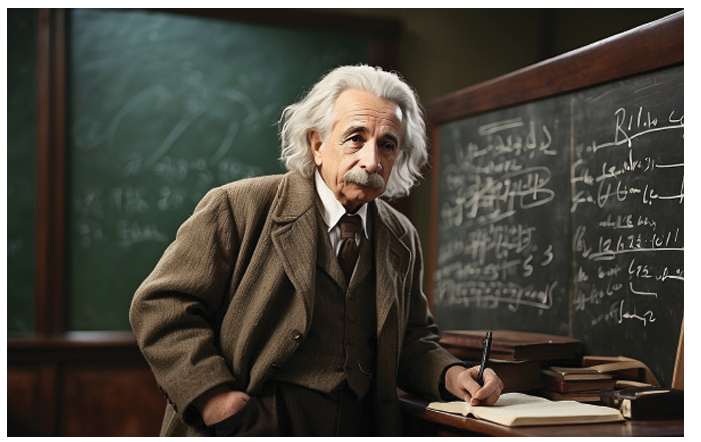
Legacy Eternal
Sixty-six years after his death, fragments of Einstein’s brain are still preserved in museums around the world. But his true legacy isn’t in physical remains—it’s in every scientific equation that bears his fingerprints, every telescope that bends light to measure distant stars, every classroom where young minds imagine the unimaginable.
In a world hungry for quick answers, Einstein stood for slow, deep thinking. “Imagination is more important than knowledge,” he once said. He gave us the tools to measure time and space—and the courage to wonder what lies beyond both.
Know The Scientist
Remembering S.N. Bose, the underrated maestro in quantum physics
Rejected in Britain, celebrated by Einstein, here’s the story of S.N. Bose, the Indian physicist who formulated quantum statistics, now a bedrock theory in condensed matter physics.
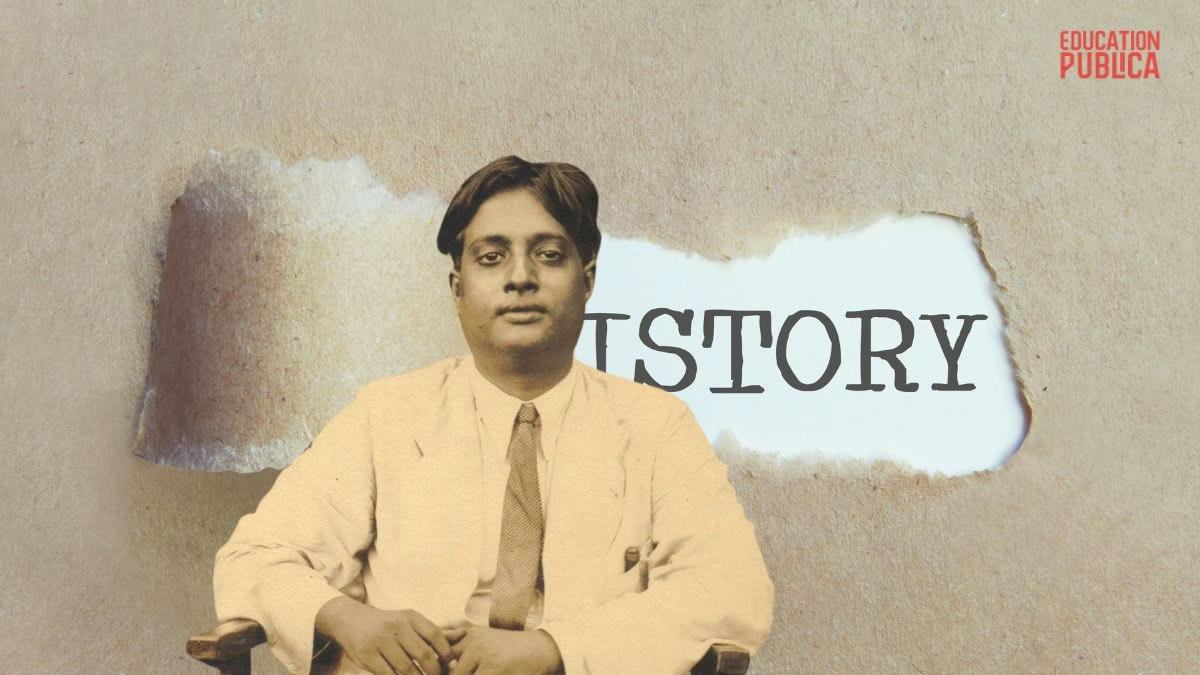
It’s 1924, and Satyendra Nath Bose, going by S.N. Bose was a young physicist teaching in Dhaka, then British India. Grappled by an epiphany, he was desperate to have his solution, fixing a logical inconsistency in Planck’s radiation law, get published. He had his eyes on the British Philosophical Magazine, since word could spread to the leading physicists of the time, most if not all in Europe. But the paper was rejected without any explanations offered.
But he wasn’t going to give up just yet. Unrelenting, he sent another sealed envelope with his draft and this time a cover letter again, to Europe. One can imagine months later, Bose breathing out a sigh of relief when he finally got a positive response – from none other than the great man of physics himself – Albert Einstein.
In some ways, Bose and Einstein were similar. Both had no PhDs when they wrote their treatises that brought them into limelight. And Einstein introduced E=mc2 derived from special relativity with little fanfare, so did Bose who didn’t secure a publisher with his groundbreaking work that invented quantum statistics. He produced a novel derivation of the Planck radiation law, from the first principles of quantum theory.
This was a well-known problem that had plagued physicists since Max Planck, the father of quantum physics himself. Einstein himself had struggled time and again, to only have never resolved the problem. But Bose did, and too nonchalantly with a simple derivation from first principles grounded in quantum theory. For those who know some quantum theory, I’m referring to Bose’s profound recognition that the Maxwell-Boltzmann distribution that holds true for ideal gasses, fails for quantum particles. A technical treatment of the problem would reveal that photons, that are particles of light with the same energy and polarization, are indistinguishable from each other, as a result of the Pauli exclusion principle and Heisenberg’s uncertainty principle.
Fascinated and moved by what he read, Einstein was magnanimous enough to have Bose’s paper translated in German and published in the journal, Zeitschrift für Physik in Germany the same year. It would be the beginning of a brief, but productive professional collaboration between the two theoretical physicists, that would just open the doors to the quantum world much wider. Fascinatingly, last July marked the 100 years since Einstein submitted Bose’s paper, “Planck’s law and the quantum hypothesis” on his behalf to Zeitschrift fur Physik.
With the benefit of hindsight, Bose’s work was really nothing short of revolutionary for its time. However, a Nobel Committee member, the Swedish Oskar Klein – and theoretical physicist of repute – deemed it a mere advance in applied sciences, rather than a major conceptual advance. With hindsight again, it’s a known fact that Nobel Prizes are handed in for quantum jumps in technical advancements more than ever before. In fact, the 2001 Nobel Prize in Physics went to Carl Wieman, Eric Allin Cornell, and Wolfgang Ketterle for synthesizing the Bose-Einstein condensate, a prediction made actually by Einstein based on Bose’s new statistics. These condensates are created when atoms are cooled to near absolute zero temperature, thus attaining the quantum ground state. Atoms at this state possess some residual energy, or zero-point energy, marking a macroscopic phase transition much like a fourth state of matter in its own right.
Such were the changing times that Bose’s work received much attention gradually. To Bose himself, he was fine without a Nobel, saying, “I have got all the recognition I deserve”. A modest character and gentleman, he resonates a lot with the mental image of a scientist who’s a servant to the scientific discipline itself.
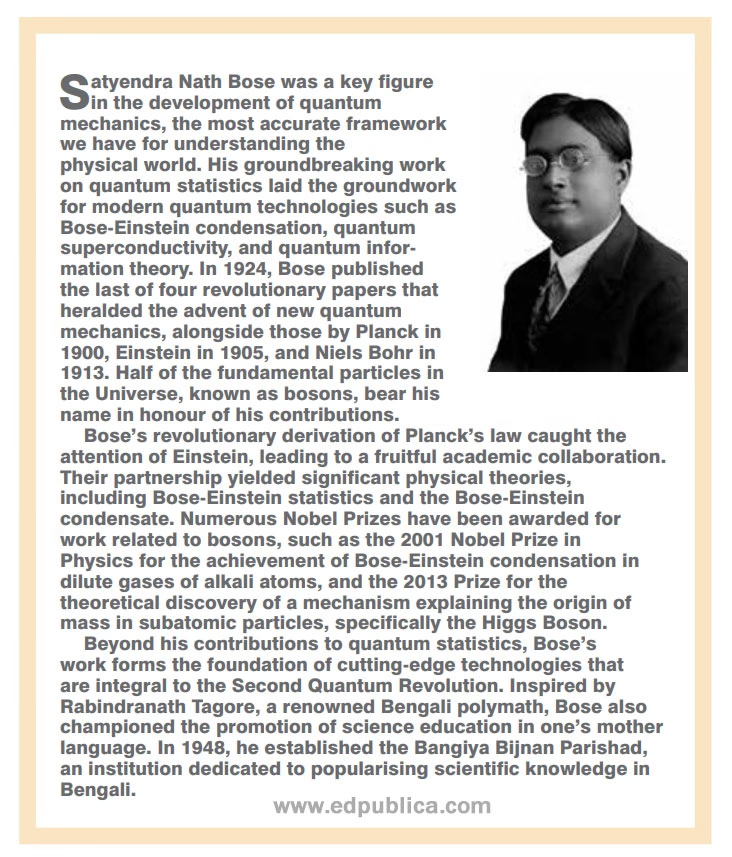
But what’s more upsetting is that, Bose is still a bit of a stranger in India, where he was born and lived. He studied physics at the Presidency College, Calcutta under the tutelage that saw other great Indian physicists, including Jagdish Chandra Bose and Meghnad Saha. He was awarded the Padma Vibhushan, the highest civilian award by the Government of India in 1954. Institutes have been named in his honour, but despite this, his reputation has little if no mention at all in public discourse.
To his physicists’ peers in his generation and beyond, he was recognized in scientific lexicology. Paul Dirac, the British physicist coined the name ‘bosons’ in Bose’s honor (‘bose-on’). These refer to quantum particles including photons and others with integer quantum spins, a formulation that arose only because of Bose’s invention of quantum statistics. In fact, the media popular, ‘god particle’, the Higgs boson, carries a bit of Bose as much as it does of Peter Higgs who shared the 2013 Nobel Prize in Physics with Francois Euglert for producing the hypothesis.


NMC Directs Medical Colleges to Set Up Patient Safety Committees

The Monsoon’s New Rhythm: Less Rain, More Intense Downpours

World Food Day: India’s Childhood Obesity Burden Raises Concerns Over Diabetes Risk

COP17: Can the World Still Meet Its Biodiversity Goals by 2030?

Chandigarh’s Sukhna Wetland Gets Ramsar Recognition, Taking India’s Count to 103

From Scams to Screens: How the National Stock Exchange Rewrote India’s Equity Story

Knowing When to Think for Ourselves: AI, Intuition and the Education of Discernment

After a Scorching Summer, Delhi’s Children Are Slow to Return Outdoors

Two Chemists Win Nobel Prize for Solving a Century-Old Puzzle: Why Life Picks One Hand Over the Other

India’s AI Moment Rests on More Than Code
-

 Math3 months ago
The 2026 Fields Medals: Four Proofs, Four Decades-Old Problems Solved
-
EP Deep Dive: Data & Solutions3 months ago
After Kerala’s Deadliest Landslide, the Hardest Thing to Rebuild Was Childhood
-
EP Deep Dive: Data & Solutions3 months ago
West Asia Crisis: Can Kerala’s Returning Gulf Migrants Find a Future in the Green Economy?
-
Space & Physics5 months ago
India Semiconductor Mission: ‘It’s Not About Fabs. It’s About Building An Entire Ecosystem’
-
Interviews4 weeks ago
From Scams to Screens: How the National Stock Exchange Rewrote India’s Equity Story
-
Climate5 months ago
The Climate World Cup? How Climate Change Could Affect Player Performance at the 2026 World Cup
-
Society3 months ago
What Is Civilisational Diplomacy? Understanding India’s Newest Foreign Policy Tool
-
Society4 months ago
From Bell Labs to the Classroom: A Second Career in Teaching