EDUNEWS & VIEWS
Is Something Really Wrong With India’s Education System?
From NEET paper leaks to education spending and ASER learning outcomes, here’s what the data reveals about the strengths and weaknesses of India’s education system.













EDUNEWS & VIEWS
Knowing When to Think for Ourselves: AI, Intuition and the Education of Discernment
As students increasingly turn to AI at the first sign of difficulty, Dr Vijayakumar Parameswaran Unnithan examines the risks to independent judgment and explains how schools can nurture critical thinking and discernment.

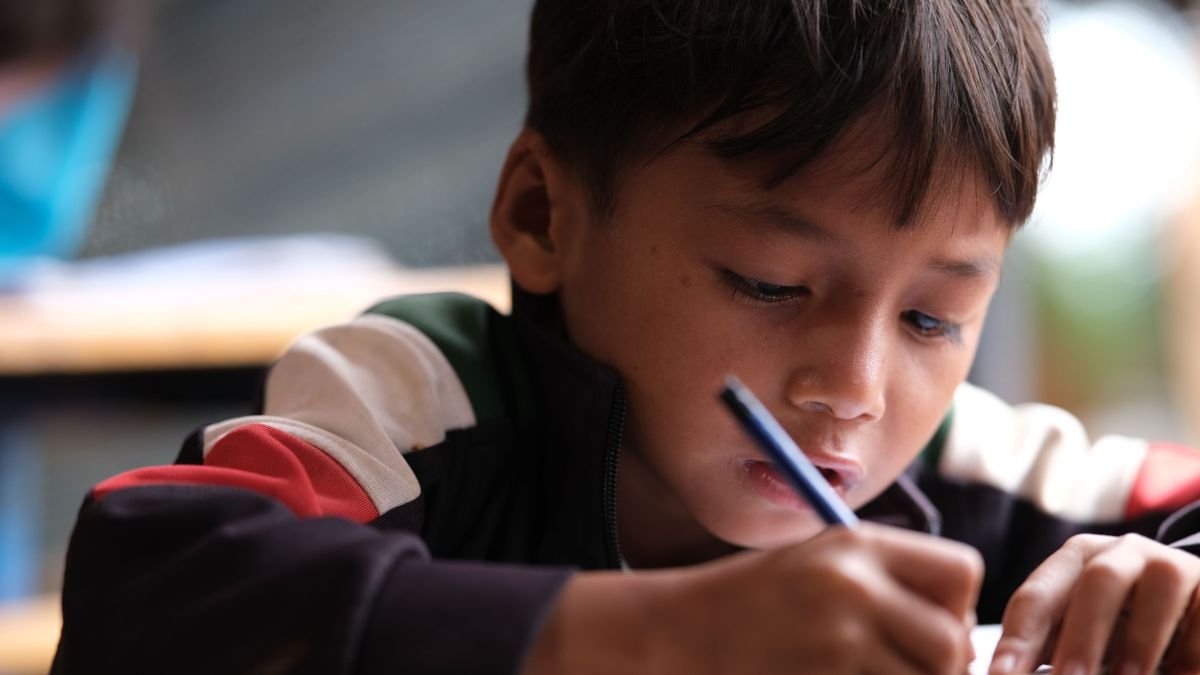
Every learner knows the moment when a problem stops being easy. The first attempt does not work, the next step is unclear, and a small discomfort sets in. For generations, that discomfort was where thinking began. Today, a chatbot increasingly fills that space.
As a career architect, I keep researching what students aspire to, how aware they are of their own paths, and where their motivation comes from. Between July and September 2025, I worked with 42 high school students, and about four in five of them used AI regularly. Four students described a habit that has stayed with me.
Whenever a homework problem felt a little tough, they turned to AI. They did not wait until they were stuck. The first sense of difficulty was itself the cue to hand the problem over, and to them this felt entirely reasonable. That moment, when difficulty arrives and is passed on before it can do its work, is what this article is about.
How AI Changes the Way We Judge Answers
Daniel Kahneman taught us to see the mind as working in two modes. System 1 is fast, associative and intuitive. It lets us read a face, finish a sentence or sense danger without deliberate effort, and it is also where anchoring, overconfidence and other familiar biases live. System 2 is slow and effortful. It questions a first impression, checks the evidence and revises a judgment.
System 2’s corrective work does not continuously scrutinise System 1. It is recruited when circumstances demand additional attention, for example, when something is difficult, surprising, or signals a possible error. Our own thinking can sometimes provide signals, such as difficulty, surprise, hesitation or contradiction, that prompt further scrutiny. The four students I spoke with seemed to have developed a habit of treating that very signal as a reason to stop thinking and ask the machine.
An answer produced by AI arrives without these signals. Whatever happens inside the machine, including the step by step reasoning that newer models display, the output reaches the student as a finished intuition. It is fast, fluent and confident, and fluency is persuasive in its own right. Decades of research on processing fluency show that people treat ease of reading as a cue to truth. In a classic experiment, statements that were easier to perceive were judged as true more often than the same statements presented with lower perceptual fluency.
Before generative AI, polished prose usually required education and editorial effort, so fluency carried some information about its source. Generative AI makes fluency nearly free, while readers continue to trust it as though it were costly to produce.
The result is an asymmetry. When a student’s own intuition is wrong, she at least has a chance of feeling it. When a judgment generated by AI is wrong, the burden of noticing falls entirely on her, and she is likely to process the machine’s fluent answer through her own System 1. Plausibility takes the place of scrutiny.
The Evidence Behind “Cognitive Surrender”
Researchers have begun to measure this. Steven Shaw and Gideon Nave at Wharton describe AI as a third system of cognition operating outside the brain, and they call the tendency to adopt AI outputs with minimal scrutiny “cognitive surrender”. Across three preregistered experiments with 1,372 participants, accuracy rose by 25 percentage points when the AI was correct and fell by 15 points when it was wrong.
People were not evaluating the answers so much as inheriting them. A survey of 319 knowledge workers by Microsoft Research and Carnegie Mellon points the same way. Workers who placed more confidence in AI engaged in less critical thinking, while those more confident in their own abilities engaged in more.
Why Discernment Matters More Than Ever
This is why the capacity that matters most now is discernment. Discernment is different from simply thinking more slowly. It begins with recognising that a judgment deserves examination in the first place, especially when nothing feels wrong. It continues by asking why an answer seems convincing, and whether that conviction comes from evidence or only from polish. It includes noticing what the answer leaves out.
It ends with a decision to accept the output, modify it, seek another view, or set it aside. Discernment is therefore not only the capacity to evaluate an answer. It is the capacity to recognise when accepting an answer without independent examination is itself a decision that requires scrutiny.
System 2 remains necessary, but what it scrutinises has changed. Students are no longer examining only the products of their own intuition. Increasingly, they are examining judgments produced by another cognitive system, one that operates continuously, rapidly and at scale.
Developmental Offloading: What Students May Lose
For adults, relying on AI is often a matter of cognitive offloading, handing a task to a tool while keeping the underlying capacity intact. For students, the issue may be different, because many of the capacities involved in independent judgment are still developing. When the environment continuously supplies ready-made interpretations, a young person has fewer occasions to generate an interpretation independently, tolerate uncertainty, compare alternatives and discover that a first impression was wrong.

The concern for education, then, is what I call developmental offloading. Capacities that are repeatedly delegated are exercised less often, and so they may not develop fully.
The evidence from classrooms supports this concern. In a field experiment with nearly a thousand high school mathematics students, Bastani and colleagues found that access to GPT‑4 improved performance while the tool was available, but students given unrestricted access performed worse when AI access was removed than students who had never had access.
A study of university learners published in the British Journal of Educational Technology found that ChatGPT significantly improved short term task performance without boosting intrinsic motivation, knowledge gain or transfer, and the authors named the pattern “metacognitive laziness”. The work looked better while the learning underneath it grew thinner.
The deepest risk goes beyond whether a student follows a particular answer. Over time, repeated interaction with AI may shape what the student notices, what she considers plausible and what she regards as worth questioning. At that point the machine is no longer only answering questions. It is quietly shaping the learner’s sense of which questions need asking.
How Schools Can Use AI Without Weakening Independent Thinking
None of this is an argument for keeping AI out of classrooms. The same Bastani study offers the most hopeful finding in this field. Safeguards made a real difference, and a tutor instructed to give teacher designed hints rather than hand over answers largely mitigated the harm. The technology did not decide the outcome. The design of its use did. AI augments discernment when its outputs provoke inquiry, comparison and reflection, and it erodes discernment when its outputs routinely replace them.
Schools can act on this. Teachers can ask students to stay with a difficult problem for a set time and form their own answer before consulting AI, and then to compare the two and explain the difference. They can set tasks where the question is not whether the AI’s answer is correct but why it sounds convincing and what it leaves out.
They can reward students for catching errors in machine output, which turns scepticism into a skill that earns recognition. Periodic assessments without AI can reveal what a student can do alone, so that neither the student nor the teacher mistakes assisted performance for capacity. And teachers can model doubt openly, showing students what it looks like to pause before a fluent answer and ask whether it has earned trust.
Helping Students Stay With Difficulty
Perhaps the most important support is also the simplest. A student turns to AI at the first sign of difficulty partly because the difficulty feels like evidence that she cannot do the problem. Teachers can change what that difficulty means. I saw this directly in my own work with these students. When a student hesitated during our sessions and was prompted with “think again”, “you know it” or “you can do it”, that prompt was enough to keep most of the students engaged with the problem. Instead of reaching for AI, they stayed with the problem and drew on what they already knew.
This is scaffolding in its truest sense, support that holds the student within the struggle long enough for her own capacity to take shape, and then steps back. The wider research points the same way. People who were more confident in their own abilities engaged in more critical thinking, while those more confident in AI engaged in less. A student’s belief that she can do it is not a soft extra. It is part of what keeps discernment alive.
The Question Education Must Answer
The four students I spoke with were not refusing to think. They knew they were turning to AI, and it seemed entirely reasonable to them. What they could not see was what they were handing over with it, the moment of difficulty in which discernment grows. The question facing education is not whether AI can think for our students. It is whether, through repeated interaction with AI, they continue to develop the capacity to decide when they should think for themselves.
EDUNEWS & VIEWS
PRASHAST: 72 Lakh Teachers Sensitised to Identify Children Who May Need Disability Support
More than 72 lakh teachers have been sensitised through a nationwide initiative using PRASHAST to promote disability screening, early identification and inclusive education in schools.


More than 72 lakh teachers have been sensitised to inclusive education through a nationwide initiative involving over 60,000 schools, the Union Ministry of Education announced on October 8. The initiative uses PRASHAST, a digital platform developed to help schools identify children who may have disabilities and require further assessment.
The Department of School Education and Literacy has been conducting the sensitisation drive for three months. The 30-minute orientation module aims to help teachers and other school personnel recognise the needs of children with special needs and create safer, more accessible learning environments.
The announcement concerns the reach of the sensitisation module. It does not establish how many children have been screened or how many have been referred for professional assessment.
Schools Need a Standardised Screening Tool
Children’s disabilities do not always have visible signs. Difficulties with reading, writing, communication, hearing, mobility or social interaction may indicate a need for additional support, but these observations alone cannot establish a disability.
The National Council of Educational Research and Training (NCERT) developed PRASHAST, short for Pre-Assessment Holistic Screening Tool, to give schools a structured way to identify children who may need further evaluation.
The tool covers all 21 disability conditions recognised under the Rights of Persons with Disabilities (RPwD) Act, 2016. These include conditions relating to vision, hearing, speech and language, locomotor disabilities, intellectual disability, specific learning disabilities, autism spectrum disorder and mental illness, among others.
Before the introduction of a uniform checklist, schools lacked a common screening framework covering all 21 conditions. PRASHAST was developed to help teachers use their regular interactions with students to flag possible concerns systematically.
The tool is aligned with the National Education Policy (NEP) 2020, the Right to Education Act, 2009, and the inclusive education objectives of the Samagra Shiksha programme.
How PRASHAST Works
PRASHAST uses a two-part checklist to separate initial classroom observations from the second-stage review. Part 1: Screening by regular teachers. Class and subject teachers use the first checklist to record observable indicators that may suggest a disability. The checklist is designed to use accessible language rather than rely heavily on medical terminology.
The screening is intended to draw on observations made over time and in different situations. The NCERT guidelines specify that children should be observed for a considerable period, with a minimum of 15 days indicated for the second-stage review, across settings such as classrooms, playgrounds and other school activities.
Part 2: Review by special educators. Special educators, counsellors or other designated personnel review the first-stage observations and conduct a second-level screening. This helps validate the initial findings and tentatively identify the disability category that may require further assessment.
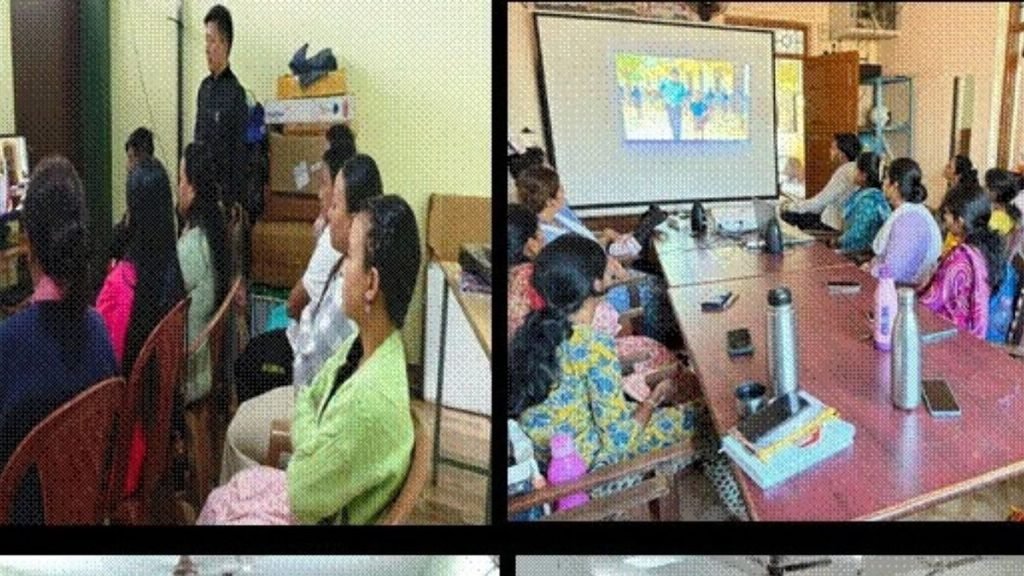
The digital platform can generate school-level reports that can be shared with the relevant authorities to facilitate follow-up, including assessment and disability certification under the applicable procedures. PRASHAST is a preliminary screening tool, not a diagnostic test. A child flagged by the checklist does not automatically have a disability. Formal assessment by qualified professionals is necessary to establish a diagnosis and determine the support required.
What the Sensitisation Module Covers
The latest nationwide drive extends beyond classroom teachers. The Ministry’s 30-minute module is designed for special educators, school heads and non-teaching personnel, including transport drivers, clerical staff, receptionists and wardens.
It uses practical examples and interactive activities to help school personnel understand children’s needs and adopt appropriate, respectful practices. The module is available in 12 Indian languages, according to the Ministry.
This wider participation matters because inclusion depends on more than classroom instruction. A child with a mobility impairment may face barriers in accessing school facilities, while a child with hearing difficulties may need adjustments to classroom communication. Staff responsible for transport, administration and other school services also influence whether children can participate safely and independently.
Sensitisation can help school personnel respond more appropriately to these needs. However, awareness training alone cannot provide the specialist support, accessible infrastructure or individual accommodations that some children require.
What the law requires schools to recognise
The Rights of Persons with Disabilities Act, 2016, provides the legal framework for recognising 21 specified disability conditions and protecting the rights of persons with disabilities. Its provisions include obligations relating to inclusive education and access to educational opportunities.
The National Education Policy 2020 also emphasises equitable access to education, including support for children with disabilities and specific learning disabilities. Early identification can help schools and families seek appropriate educational adjustments, specialist services and formal assessment.
PRASHAST supports this process by giving schools a common starting point. Its role is to flag possible needs and facilitate referrals, rather than replace medical or psychological evaluation.
The test is what happens after identification
The Ministry’s announcement establishes the scale of the sensitisation exercise, but it does not provide figures on the number of children screened through PRASHAST, the number of cases referred for assessment or the number who subsequently received support.
These are important measures of the initiative’s impact. Teacher awareness can help bring previously overlooked needs to attention, but children benefit only when schools can act on those observations.
That requires access to special educators, clear referral procedures, coordination with families and qualified professionals, and appropriate classroom support. Schools also need to handle screening information confidentially and avoid labelling children on the basis of preliminary observations.
The nationwide training drive broadens awareness of inclusive education across India’s schools. Its longer-term value will depend on whether that awareness translates into timely assessments and meaningful support for children who need it.
EDUNEWS & VIEWS
Who Feeds School Children? The Women Behind School Meal Workforce
A global report finds women make up most school meal workers, with many unpaid. From Japan to India, school systems are taking different approaches to valuing their work.
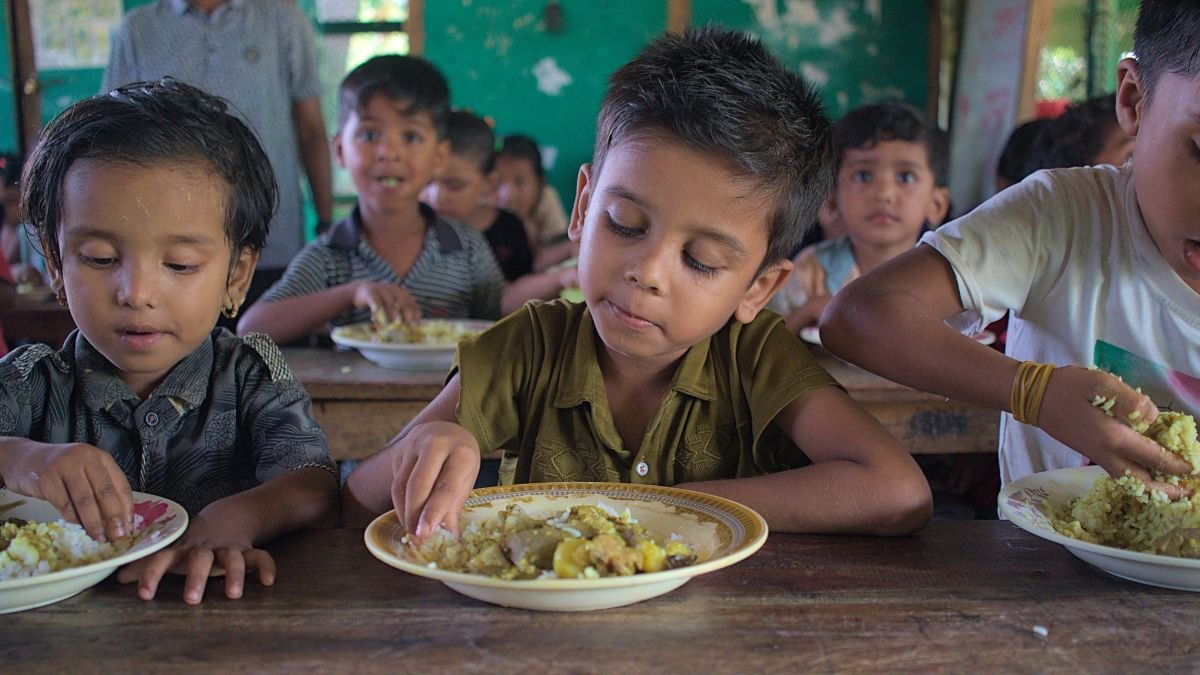
For 466 million children, a school meal depends on a workforce of about 7.4 million people who prepare, cook and serve it. Much of that work is done by women, yet the people behind the meal often remain outside the way school systems measure and value their workforce.
A global survey cited in a new report by the International Panel of Experts on Sustainable Food Systems (IPES-Food) found that in one out of every three school meal programmes, the majority of cooks and caterers are unpaid. At least three-quarters of these workers are women.
The finding places school kitchens within a much wider problem in food systems: work associated with feeding and caring for people is frequently treated as low-value labour, even when public services depend on it.
The Workforce Behind the Plate
Preparing a school meal involves much more than cooking. Food has to be procured, prepared in large quantities, cooked safely, portioned and served on time. Kitchens have to be cleaned and supplies managed. The work has to happen every school day.
Yet cooking and catering are among the jobs most closely associated with women’s unpaid responsibilities at home. The IPES-Food report estimates that women undertake 76% of unpaid care work globally. This includes cooking, cleaning, family caregiving and food provisioning. Women spend an average of 4 hours and 25 minutes a day on these activities, compared with 1 hour and 23 minutes for men.
That division follows women into paid employment. The report identifies cooks, cleaners and caterers as care-coded occupations that are overwhelmingly filled by women and systematically underpaid. School food brings this contradiction into a public institution. Work that would be recognised as labour in a factory or office can still be treated as an extension of domestic responsibility when it involves feeding people.
School Meals: Organised Differently
Countries have taken different approaches to the role of food and the people who prepare it. In Japan, shokuiku, or food education, places school caterers within children’s food learning. The role extends beyond preparing lunch and becomes part of how children understand food.
Brazil’s National School Feeding Programme, known as PNAE, incorporates feminist and agroecological principles. The IPES-Food report highlights the programme as an example of efforts to resist outsourcing and the intensification of school food work.
Kenya has focused on strengthening the role of workers and communities. Its School Meals Coalition has mobilised more than $24 million to support worker agency and community leadership. In South Korea, a grassroots coalition of civil society organisations campaigned for universally free and environmentally friendly school meals under public leadership.
The approaches differ, but they share an important feature: the school meal is treated as part of a public system rather than simply as a service that needs to be delivered at the lowest possible cost.
School Food Becomes a Contract
That distinction becomes particularly significant when school meals are outsourced. The IPES-Food report describes school feeding as a potential battleground for privatisation. Where school food jobs become better valued and salaries rise, they can become attractive targets for outsourcing.
The report cites global catering companies including Sodexo, Compass Group and Aramark and says outsourcing of school and university meal management has, in the cases it examines, been associated with job cuts and reductions in wages and benefits. The pressure to reduce the cost of a meal can therefore affect the person preparing it.
Catering unions, workers, parents and community groups have resisted this model in different places. The report points to growing recognition of locally controlled school meal programmes and their potential to keep care work within the public and community sphere.
This also changes what counts as an efficient school meal programme. A cheaper contract may reduce the visible cost of providing food, while shifting the pressure onto wages, job security and working conditions.
India’s Millions of School Meal Workers
India’s PM POSHAN programme provides one of the largest examples of a publicly supported school meal workforce. More than 24 lakh cook-cum-helpers work across the programme, with women making up more than 90% of them. The central government provides an honorarium of ₹1,000 a month for 10 months of the year, while states and Union territories can supplement the amount.
India’s cook-cum-helpers are not unpaid, so they should not be directly counted against the IPES-Food finding that the majority of cooks and caterers are unpaid in one out of three school meal programmes. Their employment arrangement is different: they receive an honorarium and are not regular school employees.

The scale of the workforce, however, shows why the question of how school food labour is valued matters. More than two million people, overwhelmingly women, are needed to prepare meals for children across the country. Their work is essential to the programme, but their employment status places them outside the regular teaching and administrative workforce that usually defines a school.
That gap between importance and recognition is visible across countries. Some systems have tried to build school meals into education, nutrition and community policy. Others have left the people doing the work in low-paid, unpaid or outsourced positions. For the children receiving the meal, the difference may be invisible. For the workers preparing it, it determines whether feeding children is recognised as a job with value, rights and protections.
-

 Math3 months ago
The 2026 Fields Medals: Four Proofs, Four Decades-Old Problems Solved
-
EP Deep Dive: Data & Solutions2 months ago
After Kerala’s Deadliest Landslide, the Hardest Thing to Rebuild Was Childhood
-
EP Deep Dive: Data & Solutions3 months ago
West Asia Crisis: Can Kerala’s Returning Gulf Migrants Find a Future in the Green Economy?
-
Space & Physics5 months ago
India Semiconductor Mission: ‘It’s Not About Fabs. It’s About Building An Entire Ecosystem’
-
Interviews3 weeks ago
From Scams to Screens: How the National Stock Exchange Rewrote India’s Equity Story
-
Climate4 months ago
The Climate World Cup? How Climate Change Could Affect Player Performance at the 2026 World Cup
-
Society3 months ago
What Is Civilisational Diplomacy? Understanding India’s Newest Foreign Policy Tool
-
Society4 months ago
From Bell Labs to the Classroom: A Second Career in Teaching