EDUNEWS & VIEWS
Beyond the IITs: India’s University Rankings Story Is Getting Bigger
QS World University Rankings 2027 reveal a changing higher education landscape in India, where non-IIT universities are making significant gains in research, employability and global recognition.






EDUNEWS & VIEWS
Standing with Teachers: The People Who Shape India’s Future
Standing with teachers means supporting their professional growth, working conditions and role in shaping India’s future amid rapid technological change.

EDUNEWS & VIEWS
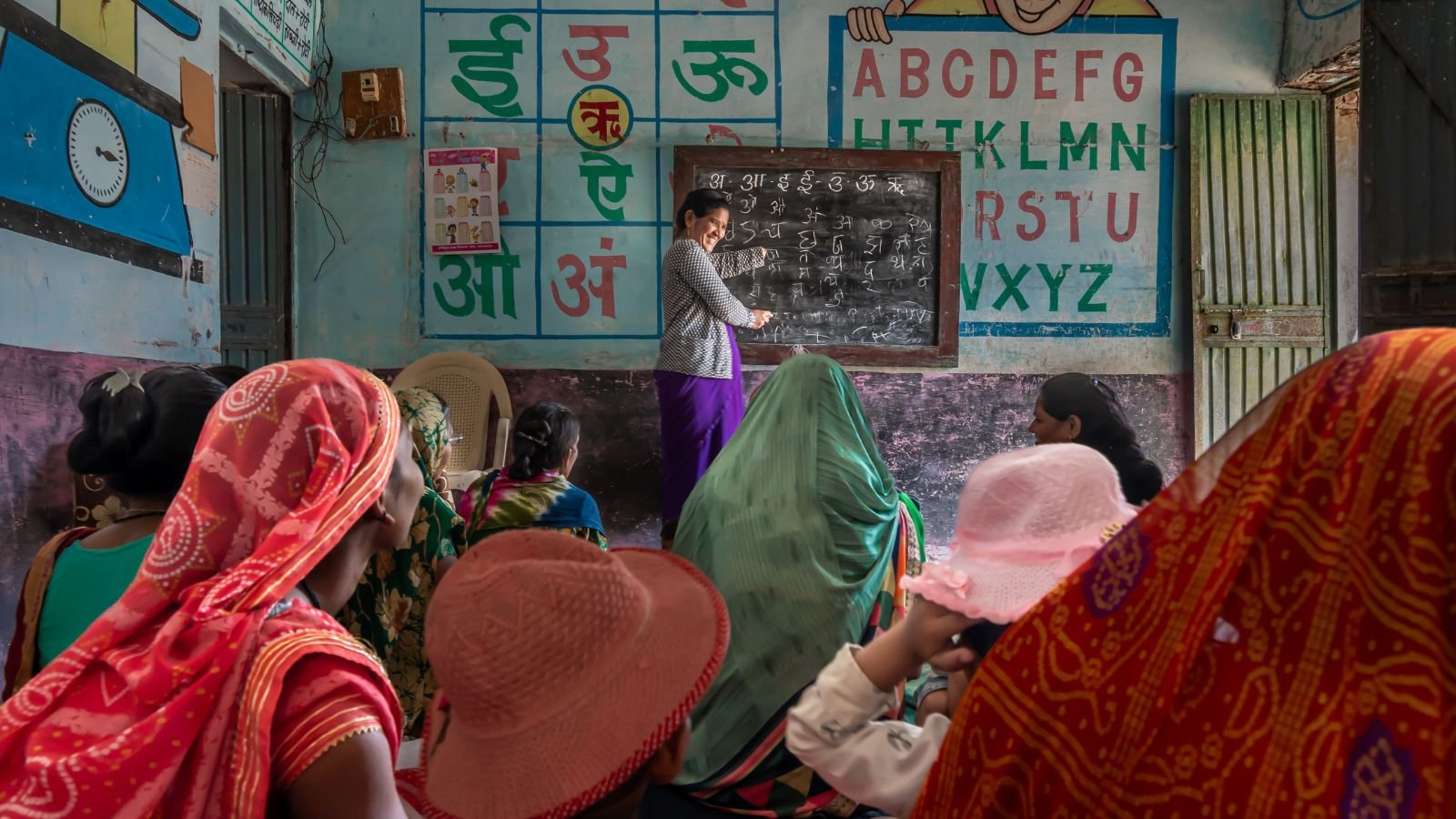
An Ageing Teacher Workforce Is Becoming a Recruitment Problem
An ageing teacher workforce is creating a recruitment challenge as older teachers approach retirement, young teachers leave and shortages persist in schools.
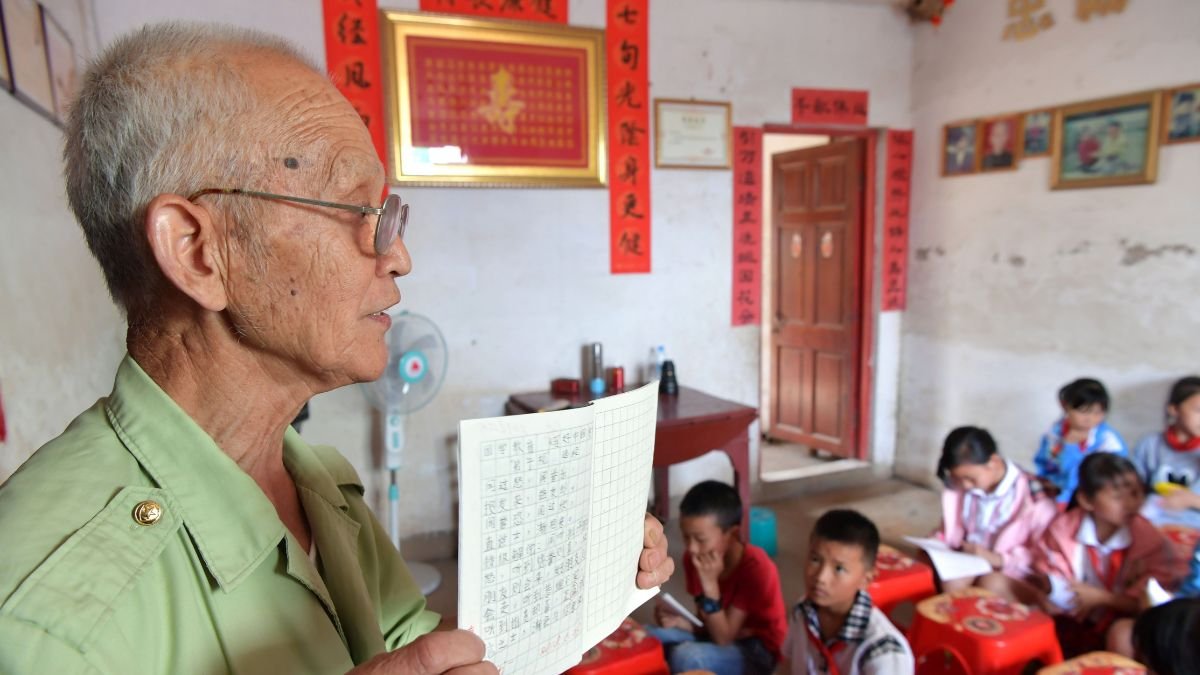
A teacher nearing retirement leaves behind more than an empty classroom. Finding someone with the right subject knowledge, qualifications and willingness to work in the same school can be much harder than simply filling a vacant post. That challenge is becoming more common as education systems grow older with less youngsters joining the teacher workforce. In Lithuania, 42% of primary and secondary teachers were aged 55 or older in 2024. The share was 38% in both Latvia and Estonia, 37% in Portugal and 33% in Greece.
The Organisation for Economic Co-operation and Development (OECD), a group of 38 countries that compares data and policies across areas including education, employment and the economy, is tracking this shift as part of a wider teacher recruitment problem.
Across OECD countries and partner economies, teachers aged 55 and above made up 23% of the teaching workforce in 2024, up from 20% in 2015. During the same period, the share of teachers under 35 fell from 23% to 22%. When experienced teachers retire, schools need qualified people ready to take their place. The problem is finding them is becoming difficult.
The Problem Bigger Than Empty Posts
A school can have a teacher shortage even when every classroom has someone standing in front of it. In 2024/25, 9.1% of primary and secondary teachers across OECD countries were not fully qualified. Around 4% of secondary teaching positions were unfilled at the beginning of the school year in both Latvia and Luxembourg.
The shortages are not spread evenly. Rural and remote schools, disadvantaged communities and subjects such as mathematics and natural sciences face particular difficulties in finding teachers. That makes an ageing workforce more complicated.
A teacher who retires from a mathematics classroom cannot simply be replaced by any available teacher. Schools need someone with the required subject knowledge and qualifications, and that person also has to be willing to work in that particular school or area.
Lithuania shows how these pressures can overlap. About 43% of its secondary teachers are already aged 55 or older. At the same time, its population aged 5 to 14 is projected to fall by 22% between 2024 and 2033. Fewer children may eventually mean fewer teachers are needed overall. But that does not guarantee that the teachers who remain will be in the right places or teach the subjects schools need

When Younger Teachers Leave?
There is another problem: bringing young people into teaching is only part of the challenge. Keeping them there matters too. Across countries and economies with available data, 6.4% of fully qualified primary and secondary teachers left the profession during the 2024/25 school year. Teachers with fewer than five years of experience accounted for more than one-third of resignations on average.
In some education systems, the share was much higher. Early-career teachers accounted for 77% of resignations in Israel, 69% in Austria, 66% in the French Community of Belgium and 64% in Luxembourg. The reasons vary. Workload, working conditions and the support available during the first years of teaching can influence whether new teachers remain in the profession.
And leaving a school does not always mean leaving education altogether. In Latvia, 12% of fully qualified teachers left the profession in 2024/25. But 37% of those who left moved into other jobs within the education sector. For schools, that still creates a recruitment problem. Experience may remain within education, but it is no longer necessarily available in the classroom where it is needed.
Fewer Children Do Not Solve the Shortage
There is a simple way to look at ageing populations: fewer children should eventually mean fewer teachers. The numbers show why that is not always enough. The population aged 5 to 14 across OECD countries is projected to decline by 9% between 2024 and 2033. Yet between 2015 and 2024, 17 of 40 countries with available data saw primary enrolment decline or remain broadly stable while their teaching workforce continued to grow.
Greece is a striking example. The number of primary students fell by about 12% between 2015 and 2024, but the number of primary teachers increased by 16%. The change was linked to decisions about class sizes, teachers’ working hours and instruction time. In other words, the number of children alone did not determine how many teachers schools needed.

The same issue appears at a local level. A village school may lose students but still need a mathematics teacher. A school serving a remote area cannot necessarily fill a vacancy simply because another school has surplus teachers. Where teachers are needed matters as much as how many are needed.
Teacher Workforce: The Indian Context
India’s teacher workforce is growing, but that does not mean teachers are available where they are needed. UDISE+ recorded 10.12 million teachers in 2024–25, up 6.7% from 2022–23. The national pupil-teacher ratio was 20:1 at primary level, 17:1 at upper primary, 15:1 at secondary and 23:1 at higher secondary.
State-level data tell a different story. NITI Aayog’s 2026 analysis recorded more than 2.08 lakh elementary teacher vacancies in Bihar, 80,341 in Jharkhand and 29,473 in Karnataka. India also had 1,04,125 single-teacher schools in 2024–25. Earlier UNESCO data cited by NITI Aayog showed that 89% of such schools were in rural areas. At secondary level, the national 15:1 ratio rose to 47:1 in Jharkhand and 37:1 in Maharashtra and Odisha.
This makes India’s missing age data significant. UDISE+ does not publish a nationally comparable share of teachers aged 55 and above. Without that information, it is difficult to estimate how many teachers are approaching retirement, which subjects and locations could lose experienced staff, or whether recruitment is keeping pace with potential exits.
The government has begun addressing the planning side of the problem. In July 2026, the Ministry of Education said states were being encouraged to use technology-based teacher requirement forecasting, while NITI Aayog has proposed a digital Human Resource Management Information System to track vacancies, transfers and postings. The four-year Integrated Teacher Education Programme is intended to strengthen the supply of new teachers.
The missing link is workforce forecasting that connects these measures. India needs to know not only how many teachers are in its schools, but their age, subject and location, and how many are likely to retire in the years ahead. That would allow states to anticipate vacancies and recruit for specific schools and subjects before shortages become visible in classrooms.
Society
India to Push Indian Sign Language Into Everyday Life
From an ISL rendition of Vande Mataram to school lessons, books and digital learning, new initiatives are widening the place of Indian Sign Language in everyday life for deaf people.

When Vande Mataram was presented in Indian Sign Language (ISL) at this year’s Sign Language Day event in New Delhi, it was more than a ceremonial performance. It showed how a familiar part of public life can be made accessible through a visual language. But the larger story lies elsewhere. Alongside the ISL rendition, the event brought out a range of new resources, for young children, school students, readers, teachers, interpreters and people accessing educational content online. Together, they point to an effort to take ISL beyond specialised spaces and into more routine parts of life.
India had about 50.7 lakh people with hearing disability, according to the 2011 Census. The figure includes people who were deaf as well as those with difficulty hearing. The Department of Empowerment of Persons with Disabilities (DEPwD) has called for ISL to become part of “everyday citizenship”, so that deaf people can take part in public life without communication barriers, said Additional Secretary Manmeet Kaur Nanda.
A Child’s First Lessons
Some of the new material begins at the earliest stage of education. “Sanket Vatika” visual books have been introduced for children aged 3–6. There is also new teaching material for courses that prepare ISL interpreters and teachers. For schoolchildren, ISL videos now cover content from 14 textbooks for Classes 1–6. The material includes 100 personalised adaptive learning videos. Concept-based videos have also been prepared for Classes 9–12.
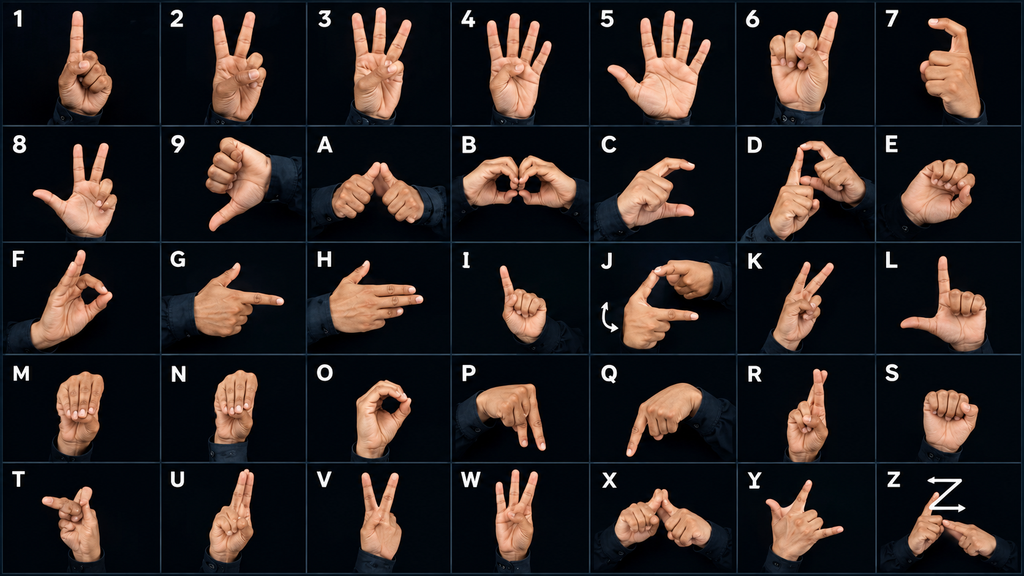
The idea is to build resources across different stages of schooling rather than leave gaps as children move from one level to another.
More Than Classroom Material
The move into ISL is also reaching books. Three hundred National Book Trust titles have been made accessible in ISL. They include stories, biographies and historical accounts.
The ISL Dictionary has also been expanded into 11 more languages. The stated goal is to eventually cover all 22 Scheduled Languages. For a language to be used widely, its vocabulary has to travel with it. The expansion of the dictionary is one part of that process.
Taking ISL to the Screen
ISL content is now being live-streamed through PM e-Vidya Channel 31 using direct encoder-based streaming. That puts educational material in a format that deaf viewers can access through a dedicated ISL channel, rather than having to rely only on spoken content.
Digital resources and translated material cannot cover every interaction. There is still a need for people who can interpret between ISL and spoken languages. At the event, DEPwD Joint Secretary Rajeev Sharma spoke about the growing demand for ISL interpreters across different fields.
The new teaching material for the Diploma in Indian Sign Language Interpretation and Diploma in Teaching Indian Sign Language courses is part of this effort. It points to a practical challenge: making information available in ISL is one part of access. Having enough trained people to support communication is another.
What this Looks Like in Ordinary Life
The ISL version of Vande Mataram may have been one of the more visible moments at the event. But the changes taking place in classrooms, books and digital learning are closer to the everyday experience of deaf people.
For a young child, it could mean learning a new word from a picture book in ISL. For a student, it could mean following a lesson in a language they understand. For a reader, it could mean picking up a story, biography or history book in ISL. And for someone who needs to communicate directly, it could mean having an interpreter to help bridge the conversation.
Taken together, these efforts are about making ISL useful beyond a classroom or a special occasion, as a language through which deaf people can learn, read, find information and take part in public life. That is what this year’s Sign Language Day, themed “Declaring Deaf People’s Human Rights”, sought to put into focus.


Climate Change, Overfishing and the Uncertain Future of Bangladesh’s Hilsa Fishermen

A Dead Star Feeds Off Planet Formed From Its Ashes

Trump’s AI Accord Puts Big Tech in Charge of Its Own Safety. Is That Enough?

Standing with Teachers: The People Who Shape India’s Future

An Ageing Teacher Workforce Is Becoming a Recruitment Problem

From Scams to Screens: How the National Stock Exchange Rewrote India’s Equity Story

Aim for the Stars: Anjali Thomas’s Journey from a Small College in Kerala to the Frontiers of Medical Imaging

India’s AI Moment Rests on More Than Code

From Silicon Valley to Sustainable Period Care; How This Engineer Is Rethinking Menstruation with Science

Marshall Islands: Why the US Nuclear Legacy Is Back Before the UN

-

 Math2 months ago
The 2026 Fields Medals: Four Proofs, Four Decades-Old Problems Solved
-
Climate2 months ago
After Kerala’s Deadliest Landslide, the Hardest Thing to Rebuild Was Childhood
-
Society3 months ago
West Asia Crisis: Can Kerala’s Returning Gulf Migrants Find a Future in the Green Economy?
-
Space & Physics4 months ago
India Semiconductor Mission: ‘It’s Not About Fabs. It’s About Building An Entire Ecosystem’
-
Interviews2 weeks ago
From Scams to Screens: How the National Stock Exchange Rewrote India’s Equity Story
-
Climate4 months ago
The Climate World Cup? How Climate Change Could Affect Player Performance at the 2026 World Cup
-
Society3 months ago
What Is Civilisational Diplomacy? Understanding India’s Newest Foreign Policy Tool
-
Society4 months ago
From Bell Labs to the Classroom: A Second Career in Teaching