Health
How India’s Agrarian Crisis Is Making Nutritious Food Unaffordable
India’s agrarian crisis is reducing farmer incomes while making healthy diets increasingly expensive. Here’s why India’s food system needs urgent reform.

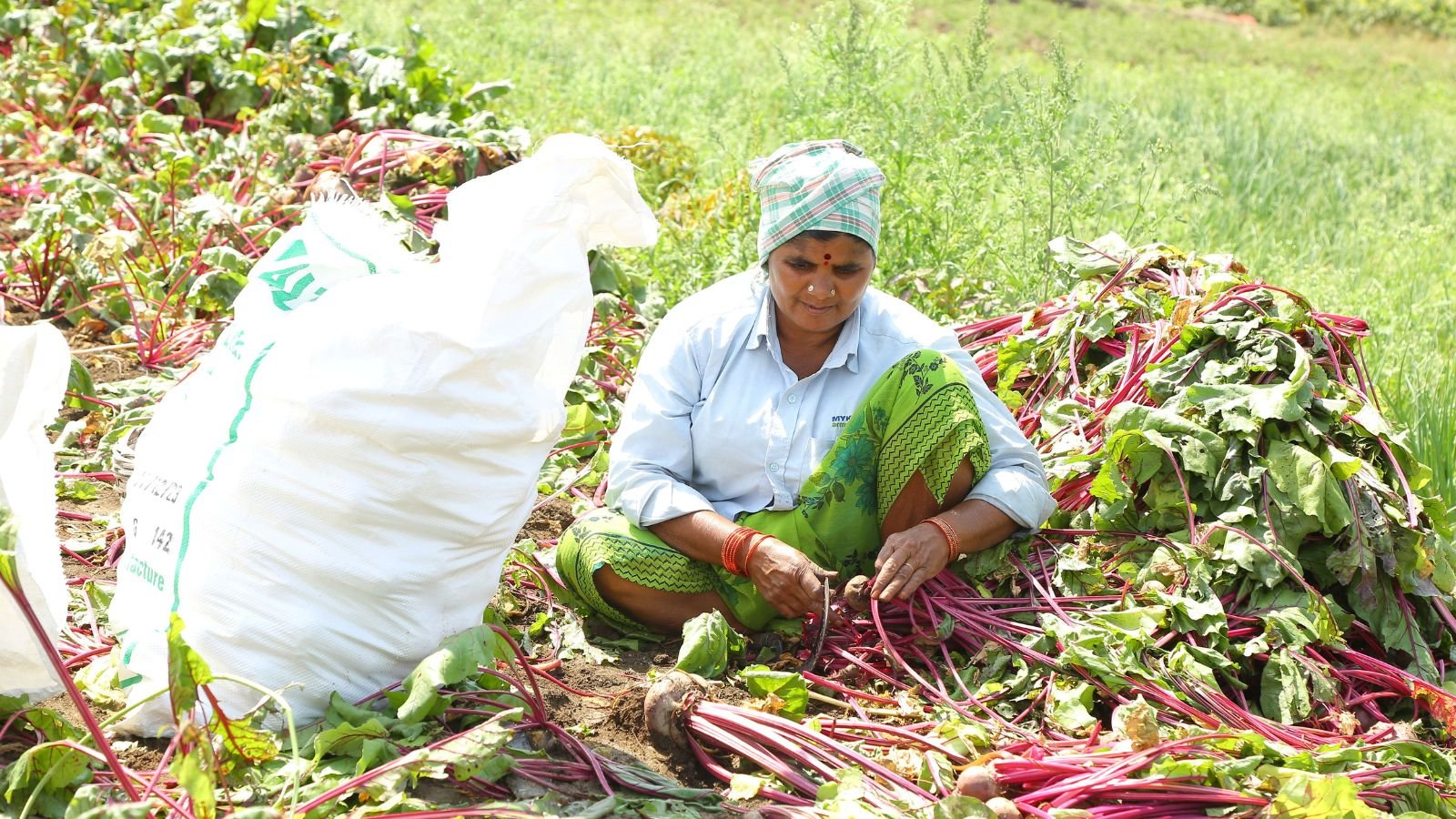
India’s agrarian crisis is shrinking farmer incomes while driving up the cost of healthy diets, exposing deep flaws in the country’s food system and nutrition security.
When the figures are carefully unpacked, one thing becomes unmistakable: Indian agriculture is passing through a deep and prolonged crisis. The sector is no longer a reliable source of income, and government support has not reached farmers in the measure needed to restore profitability. The farmer who, a few decades ago, owned his own soil is today gradually turning into a daily-wage labourer. Of a farming family’s total monthly earnings, barely one-third now comes directly from agriculture; the remaining share, nearly two-thirds, has to be made up through government or private jobs, wage labour, or small enterprises. In other words, farming alone is no longer enough to run a household.
How India’s Agrarian Crisis Is Making Nutritious Food Unaffordable
What is more worrying is that, even as the sector remains under pressure, the number of new entrants is rising rather than falling — and most are joining not as landowning farmers but as farm labourers. As landholdings are divided into smaller and smaller fragments, income from farming declines rapidly, forcing families to depend increasingly on non-agricultural sources to survive. This is reflected in suicide statistics too: of the total agricultural suicides recorded in 2023, the latest year for which the National Crime Records Bureau has released data, more than half — at least 56.5 per cent — were of farm labourers. This is not a sudden trend; it has been consistent for years. Of the 10,786 farm-sector suicides recorded that year, 4,690 were landowning farmers or cultivators, while 6,096 were farm labourers — that is, workers who own no land in their name, hold no crop insurance cover, and have no support to fall back on if the season fails. It is precisely this group of daily-wage workers that has today moved to the very centre of the agrarian crisis.
A survey by the National Bank for Agriculture and Rural Development (NABARD) paints a similarly stark picture: over the past five years, nearly 30 per cent of farming families reported crop losses caused by untimely rain, pest and disease attacks, cyclones or drought, and 12 per cent suffered unexpected drops in market prices. Faced with these shocks, families were left with only two options — exhaust their savings or borrow from moneylenders. The reality is so stark that, per NABARD’s All India Rural Financial Inclusion Survey (NAFIS) 2021-22, covering the five-year window from 2016-17 to 2021-22, the average farming household is left with a monthly surplus of just ₹1,951 after covering its expenses — and it is precisely out of this gap that the cycle of debt is born.
The average debt on a farming household stood at ₹91,231, marginally higher than the ₹89,074 average for non-farming households. The Parliamentary Standing Committee on Agriculture, Animal Husbandry and Food Processing has said the situation demands close monitoring and precisely targeted interventions, so that farmers can sustainably bear the burden of their debt while continuing to invest in agriculture. The committee stated that the department concerned must ensure farmers do not get trapped in an unbearable cycle of debt, and that the schemes designed for them actually deliver benefits on the ground.
And this crisis will not stop here. A powerful super El Niño is taking shape, and weather experts fear it may disrupt the coming monsoon. Farmers already entering the new season in loss, and under the weight of debt, have little capacity left to absorb another shock. In this new era of shifting climate, providing farmers with a coherent, far-sighted policy framework is not a lofty demand — it is the bare minimum.
The Rising Cost of Nutrition
The crisis in the fields echoes directly in urban kitchens, and today the sharpest edge of inflation is falling on the ordinary person’s plate. In India, a nutritious and balanced diet is becoming more expensive every year, moving further out of reach for crores of families. According to the UN’s latest report, The State of Food Security and Nutrition in the World 2026, the per capita cost of a healthy diet in India has risen by more than 48 per cent since 2017. The minimum cost of a daily balanced diet for an average Indian, which stood at $2.77 (PPP) in 2017, reached $4.11 in 2025 — a rise of roughly 34 per cent compared to 2021, when the figure for India stood at $3.07 (PPP). Purchasing power parity (PPP) does not depend on currency exchange rates alone; it also accounts for local prices of goods and services in a given country, and so more truly reflects the burden falling on an ordinary person’s pocket.
The average global per capita cost of a healthy diet has risen from $2.94 (PPP) in 2017 to $4.28 in 2025, an increase of nearly 46 per cent
This rise in prices hits poor and economically weaker families hardest, because the moment prices rise, it is nutrient-rich foods such as fruits, vegetables, milk and eggs that first begin disappearing from their plates. If a healthy diet continues to remain this expensive, the path to a balanced diet will become even harder for families already struggling with malnutrition. According to the definition set by the Food and Agriculture Organization (FAO) and the World Health Organization (WHO), a diet can be called healthy only when it simultaneously provides the body with sufficient energy, essential nutrients, variety and balance — mere fullness of the stomach is not the criterion.
The global picture is not very different. The average global per capita cost of a healthy diet has risen from $2.94 (PPP) in 2017 to $4.28 in 2025, an increase of nearly 46 per cent. The situation among India’s South Asian neighbours is even more severe than India’s own. In Bhutan, this cost has reached $6.17, a rise of 49 per cent compared to 2017. In Bangladesh it stands at $4.59 with a 48.5 per cent rise, in Sri Lanka at $5.21 with a 35 per cent rise, in Pakistan at nearly $3.94 with roughly a 33 per cent rise, and in Nepal at $4.19 with a 26 per cent rise. In other words, India’s cost is higher than Pakistan’s but lower than Nepal’s, Bangladesh’s, Sri Lanka’s and Bhutan’s. Yet it must not be forgotten that in a country with as vast a population as India, even a small rise in cost can have a massive impact on the plates of millions upon crores of households.
There is, however, one reassuring point: the number of people worldwide unable to afford a healthy diet has declined from 297 crore (37.4 per cent) in 2021 to 269 crore (32.7 per cent) in 2025. Even so, nearly one in every three people in the world today still cannot afford the cost of nutritious food, and it is the African continent that is scorched worst in this regard, where 66.6 per cent of the population finds a healthy diet beyond reach.
It is also worth understanding exactly where the larger share of the cost goes. The greatest expense falls on fruits, vegetables, milk, eggs, meat and other fresh and animal-based foods, while grains such as rice and wheat remain comparatively cheap. It is precisely during the journey from farm to consumer — through processing, transport, storage, cold chains and wholesale distribution — that the bulk of the cost gets added. As much as 70 to 75 per cent of the total amount a consumer pays for their diet is spent purely within this middle chain. The result is that the farmer does not receive adequate reward for his labour, and the consumer too does not get produce at a fair price — both sides end up at a loss.
Taking the example of poor households in India, staple grains such as rice and wheat are easily available through government schemes or subsidised markets. But the prices of pulses, green vegetables, fruits and milk — the very foods that give the body real strength and immunity — have risen so much that they are slipping beyond the monthly budget of an ordinary family. The outcome is that even as malnutrition and anaemia persist in the country on one hand, the inability to afford nutritious food is growing on the other. This makes one thing entirely clear: merely supplying grain is not enough; the real test lies in delivering nutrient-rich components such as fruits, vegetables, pulses, milk and eggs to every plate at affordable rates. For this, irrigation, cold chains, research, food processing and the supply chain will all need to be strengthened, while also curbing the wastage of food.
The FAO has issued one more warning in its report: that tensions in the Strait of Hormuz and an effective El Niño persisting until the end of 2026 could together place additional strain on global food and fertiliser prices in the period ahead. According to the organisation’s Chief Economist, Máximo Torero Cullen, the real crisis facing the world is not a shortage of food but the rising cost of nutritious diets, and that boosting local production could bring this cost down significantly.
It must be kept in mind that if nutritious food keeps slipping beyond the reach of the ordinary person, the consequences will not remain confined to hunger alone — they will cast their shadow over children’s growth, women’s health, working capacity and the country’s overall economic productivity. This malnutrition will keep hollowing out bodies from within, generation after generation. Therefore, the goal before India can no longer remain limited merely to “food for all”; it must become “nutritious food for all.” Local production, a strengthened supply system and nutrition-centred policies have today become the greatest need of the hour.
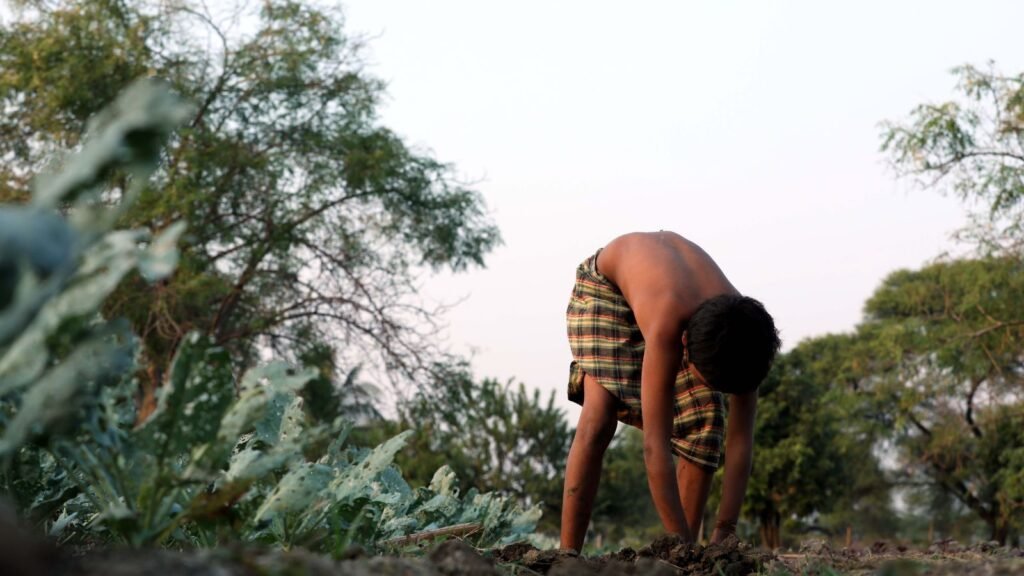
The suicide of a farmer in the field and the vanishing nutrition from a child’s plate — these two events may appear separate on the surface, but their roots lie buried in the same systemic failure
Vanishing Diversity on Children’s Plates
It is said that the habits that take root on a child’s plate in early childhood go on to shape the direction of health for an entire lifetime. Yet today, essential components such as fruits, vegetables, pulses and dry fruits are gradually vanishing from the plates of crores of children across the world. This reality has come to light through an extensive study conducted by researchers at Tufts University and published in the journal BMJ Global Health. Analysing data from more than 1,200 dietary surveys conducted across 185 countries between 1990 and 2018, the study assessed the consumption, among children and adolescents from birth to nineteen years of age, of five plant-based food groups: fruits, non-starchy vegetables, starchy vegetables, pulses, and nuts and seeds. According to the researchers, these components are important not only for physical growth but equally for learning ability, mental agility and protection from many diseases later in life, and yet most children are eating far fewer fruits and vegetables than experts recommend.
The suicide of a farmer in the field and the vanishing nutrition from a child’s plate — these two events may appear separate on the surface, but their roots lie buried in the same systemic failure. The farmer does not get a fair return for his sweat, and the consumer does not get the nutrition he needs on his plate, and it is the chain standing between these two ends that keeps reaping the greatest profit. As long as this imbalance within the chain remains uncorrected, this cyclical curse will keep returning every year in a new form — sometimes in the shape of a farmer in the field, and sometimes in the shape of a malnourished child.
(The views and interpretations presented are those of the author and do not necessarily reflect the editorial position of EdPublica.)











Health
Pancreatic Cancer Is Often Found Too Late. Scientists Want to Intercept It Earlier
More than 530,000 people develop pancreatic cancer globally each year. Researchers are exploring whether early detection and targeted drugs can stop it before it spreads.


More than half a million people are diagnosed with pancreatic cancer around the world each year. For many, the disease is discovered only after it has moved beyond the pancreas. The timing can make a profound difference. In the latest global estimates from the International Agency for Research on Cancer (IARC), more than 530,000 people developed pancreatic cancer in 2024, while more than 490,000 died from it. Although pancreatic cancer is only the 12th most commonly diagnosed cancer worldwide, it ranks sixth as a cause of cancer death.
It is also largely a disease of older adults. In the US, where detailed cancer surveillance data are available, the median age at diagnosis is 71. About two-thirds of patients are at least 65, according to the American Cancer Society.
But age is only part of the problem. Pancreatic cancer can remain difficult to recognise because early disease often causes no obvious symptoms. The pancreas sits deep inside the abdomen, making early tumours difficult to detect through a routine physical examination. When symptoms such as jaundice, weight loss, abdominal or back pain appear, the cancer may already have grown substantially or spread.
That is why researchers are beginning to pursue an idea that changes where the fight against pancreatic cancer starts. Instead of waiting for a tumour to become invasive, they want to identify the abnormal changes that come before it — and stop the disease there. The strategy is called cancer interception.
Why Catching It Early Matters
The numbers show why researchers are looking further upstream. In the latest US SEER data, only about 15% of pancreatic cancer cases are diagnosed while the cancer is still confined to the pancreas. For these patients, the five-year relative survival rate is 43.6%.
Once the cancer has spread to nearby lymph nodes, five-year survival falls to 17%. For patients whose cancer has already metastasised to distant parts of the body, it is just 3.4%. Overall, the five-year relative survival rate is 13.7%. Those figures are not simply statistics about treatment. They explain the urgency behind early detection. If doctors can find pancreatic cancer before it spreads, patients have a substantially better chance of surviving it.
The difficulty is that there is currently no routine screening test recommended for people at average risk. The American Cancer Society notes that no screening test has yet been shown to reduce deaths from pancreatic cancer in the general population. Surveillance is instead considered for people at particularly high risk, such as those with certain inherited genetic risks or strong family histories. So researchers are looking for people who can be watched closely before cancer appears.
Following People Before Cancer Arrives
One of the largest efforts is PRECEDE, a clinical study led by Diane Simeone, director of the Moores Cancer Center at the University of California San Diego Health. The study aims to follow 20,000 people at increased risk of pancreatic cancer. Participants include people with a family history of the disease, certain abnormalities in the pancreas and genetic factors that raise their risk.
More than 12,000 people had enrolled by the time researchers presented an update at the American Association for Cancer Research conference on pancreatic cancer in September. More than 50 pancreatic cancers had been detected among participants, many at early stages.
That makes the study more than an exercise in surveillance. It is creating a group of people who can be followed closely as their pancreatic tissue changes, potentially allowing researchers to see what happens in the period between an abnormality and full-blown cancer.
The researchers are also collecting biological samples to study experimental blood tests that could detect pancreatic cancer earlier. And there is another tool they hope can help: artificial intelligence. Researchers are examining whether AI can identify subtle abnormalities in pancreatic scans before they become apparent to the human eye.
If these approaches work, the goal would be to move diagnosis forward, from the point at which cancer is already established to a much earlier stage in its development. But early detection creates a new question. If doctors find something that could become cancer, can they stop it?
Can the Drug Work Earlier?
A new targeted drug has given scientists another reason to investigate. In August, the US Food and Drug Administration approved daraxonrasib for certain patients with advanced pancreatic cancer. The drug targets KRAS, a protein involved in signals that can drive cancer growth.
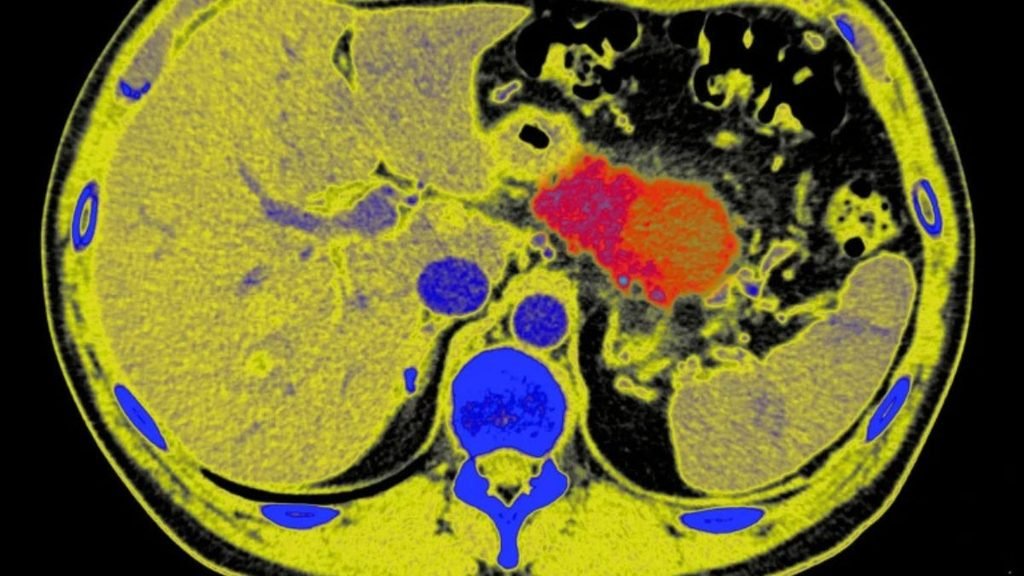
In a randomized clinical trial involving 500 patients with advanced pancreatic cancer, median overall survival was 13.2 months for patients receiving daraxonrasib, compared with 6.7 months for those receiving standard chemotherapy.
But the drug’s approval does not mean it can prevent pancreatic cancer.
It is approved for advanced disease. Researchers are interested in what might happen if drugs that target cancer-driving pathways are used much earlier, perhaps when abnormal pancreatic cells have not yet developed into an invasive tumour. That is the central idea behind interception.
Stopping Cancer Early
Treating someone who already has metastatic cancer and treating someone who has a precancerous pancreatic abnormality are completely different medical decisions. For a patient with advanced cancer, the potential benefits of a powerful treatment may justify significant side effects. For someone who has an abnormality that might never become cancer, the calculation is different.
Researchers therefore need to know which precancerous changes are dangerous enough to treat and whether the treatment itself causes more harm than the disease it is intended to prevent. That is why much of the evidence for pancreatic cancer interception is still coming from laboratory and animal studies.
A clue From Mice
At the September AACR meeting, Ben Stanger, a cancer researcher at the University of Pennsylvania, and his colleagues presented research involving mice carrying mutations in the Kras gene. KRAS mutations can activate proteins that promote cancer development. The researchers waited until the mice developed tiny precancerous growths in the pancreas. They then treated the animals with a drug designed to interfere with KRAS and related cancer-promoting proteins.
The treatment improved survival in the mice. The finding matters because it suggests that cancer-driving pathways may be vulnerable even before a pancreatic tumour becomes invasive. The researchers still need to establish whether the same strategy is safe and effective in humans, which patients should receive it, and how early treatment should begin.
From Treating Cancer to Stopping Its Progression
This is what makes cancer interception such a significant shift in pancreatic cancer research. The traditional approach begins after a tumour has formed. Doctors then try to remove it, shrink it or keep it from spreading. Interception moves the starting line. Researchers want to identify the biological changes that put pancreatic cells on the path toward cancer and intervene before that process becomes difficult to reverse.
Simeone’s team is already considering whether therapies such as daraxonrasib could eventually be studied in people after surgery for precancerous pancreatic growths or in patients with very early-stage disease. Such use would require clinical trials; the drug is currently approved for advanced pancreatic cancer. Simeone has estimated that combining earlier detection with interception could potentially raise five-year survival from 13.7% to 50%.
That figure is a research projection, not a demonstrated result.The immediate challenge is much more basic: scientists need to prove that they can reliably identify dangerous pancreatic changes early enough, and that treating them will actually prevent cancer from progressing.
For a disease in which only about 15% of cases in current US data are found while still localized, even finding that window would change the problem researchers are trying to solve. The hope behind cancer interception is therefore not simply to find a better drug for pancreatic cancer. It is to change the moment at which doctors have to fight it, from after it has spread to before it has a chance to become invasive.
Health
Scientists Find Two Distinct Origins in the Developing Human Brain
Brain cells in the forebrain and hindbrain develop from two distinct groups of early cells, Stanford researchers have found, revealing an ancient split that could improve research into brain-stem diseases such as SMA and ALS.
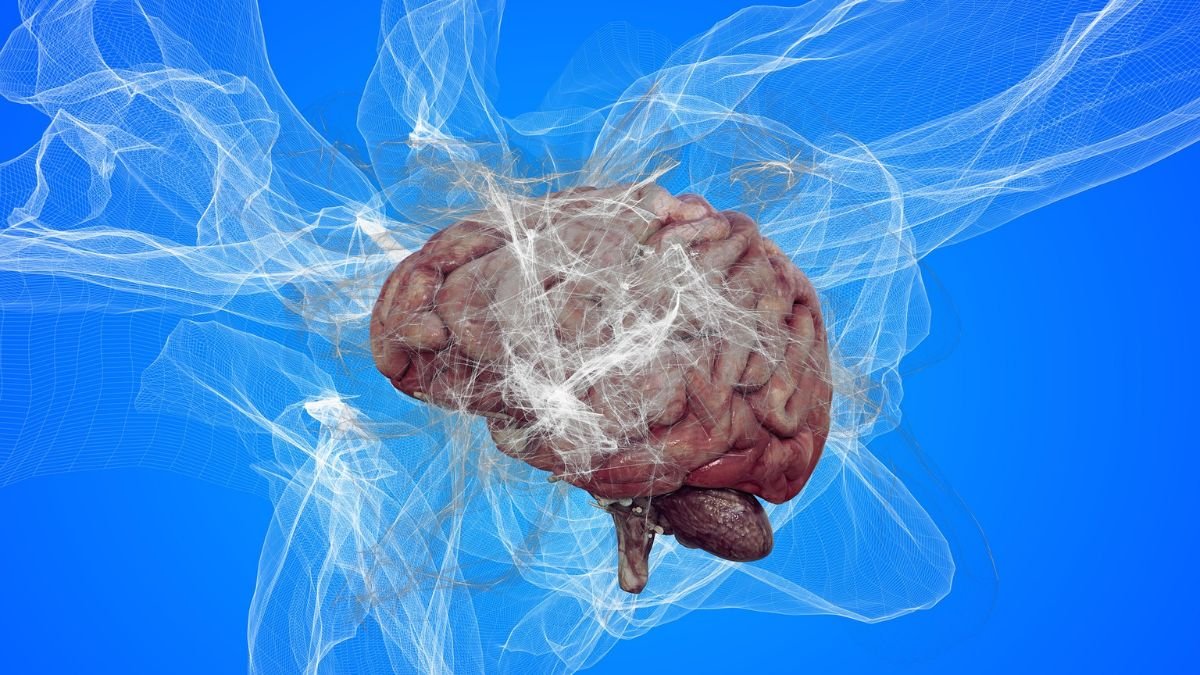
The human brain looks like one organ. Its history may tell a different story. A Stanford Medicine study has found that the front and back of the developing brain arise from two separate populations of brain cells, following different developmental paths from the earliest stages of embryonic development.
The finding challenges a long-standing idea that the entire brain grows from a common pool of progenitor cells. It may also solve a problem that has frustrated researchers for years: why some of the neurons that keep us breathing and swallowing have been so difficult to grow in the laboratory. The study was published in Nature Neuroscience on September 18.
Two paths, One Brain
Long before a brain takes shape, its cells begin making choices about what they will become. The Stanford researchers found that one group of early cells, carrying the Otx2 gene, develops into the forebrain and midbrain. A different group, marked by Gbx2, develops into the hindbrain. The two groups do not merge.
They also carry different arrangements of chromatin, the material that packages DNA. Those differences help keep the cells on separate developmental tracks. The hindbrain is not a minor part of the brain. It contains the brain stem and controls functions that keep the body running without conscious effort — breathing, heartbeat, swallowing and other basic processes.
Its neurons are also involved in moving the muscles of the face, tongue and throat. Yet scientists have struggled to make these cells from human stem cells. The new study suggests they may have been starting from the wrong place.
“People are always focused on creating the final cell type, like the neuron,” said Rayyan Jokhai, a graduate student and co-first author of the study. “But it’s important to begin at the earliest stages of embryonic development.”
Brain Cells: From Stem Cells to Working Neurons
The researchers used what they learned about early development to guide human pluripotent stem cells toward a hindbrain fate. It worked. The resulting neurons produced electrical signals and carried molecular markers associated with hindbrain regions involved in facial movement and swallowing.
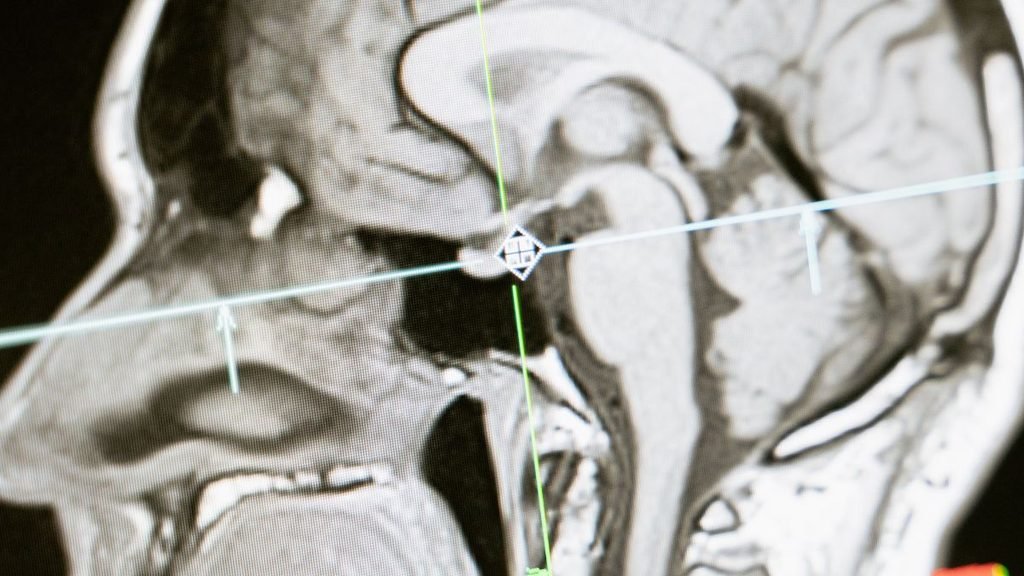
For researchers studying brain-stem diseases, having these cells in the laboratory could be valuable. In spinal muscular atrophy, motor neurons progressively deteriorate. ALS can damage motor neurons in both the forebrain and hindbrain. As the disease progresses, patients can lose the ability to swallow and, eventually, breathe.
Scientists cannot simply take brain-stem tissue from living patients and watch these neurons deteriorate. Lab-grown human hindbrain neurons could provide another option: researchers can study the cells, investigate what goes wrong and test possible treatments.
An Ancient Split
The story gets older when the researchers look beyond humans. They found the same two-origin pattern in chickens and zebrafish. They also found it in acorn worms, distant relatives of humans.
The pattern appears to reach back more than 550 million years. That suggests the separation is not a recent feature of the human brain. Instead, it may be a very old arrangement inherited from ancestors that lived hundreds of millions of years ago. The researchers propose that evolution brought two ancient neural systems together, eventually producing the integrated brain seen in vertebrates. In other words, what looks like one organ may have a much more complicated family history.
More than a story about brain evolution The finding could reshape how scientists make specialised brain cells in the laboratory. It may also open another line of research. The hindbrain contains neural circuits involved in hunger and appetite, raising questions about its role in metabolic disorders and treatments such as semaglutide.
For now, the Stanford team wants to trace the developmental origins of the spinal cord and understand how diseases such as SMA and ALS damage hindbrain neurons. The cells that eventually become parts of the human brain appear to make fundamentally different choices before there is anything recognisable as a brain. By the time the brain looks like one organ, its cells may already be carrying the history of two very different beginnings.
Health
Not Broken but Unheld: A New UN Report Asks Us to Tend the Forest, Not Only the Tree
A new UN report on youth mental health calls for an ecosystem approach linking well-being with education, work, housing, climate, technology and community.


-

 Math2 months ago
The 2026 Fields Medals: Four Proofs, Four Decades-Old Problems Solved
-
Climate2 months ago
After Kerala’s Deadliest Landslide, the Hardest Thing to Rebuild Was Childhood
-
Society3 months ago
West Asia Crisis: Can Kerala’s Returning Gulf Migrants Find a Future in the Green Economy?
-
Space & Physics4 months ago
India Semiconductor Mission: ‘It’s Not About Fabs. It’s About Building An Entire Ecosystem’
-
Interviews2 weeks ago
From Scams to Screens: How the National Stock Exchange Rewrote India’s Equity Story
-
Climate4 months ago
The Climate World Cup? How Climate Change Could Affect Player Performance at the 2026 World Cup
-
Society3 months ago
What Is Civilisational Diplomacy? Understanding India’s Newest Foreign Policy Tool
-
Society4 months ago
From Bell Labs to the Classroom: A Second Career in Teaching