
Space & Physics
JWST Finds Water Around a Dying Star Near the Milky Way’s Black Hole
A dying star near the Milky Way’s central black hole is shedding water, gas and dust into one of the galaxy’s most extreme environments.

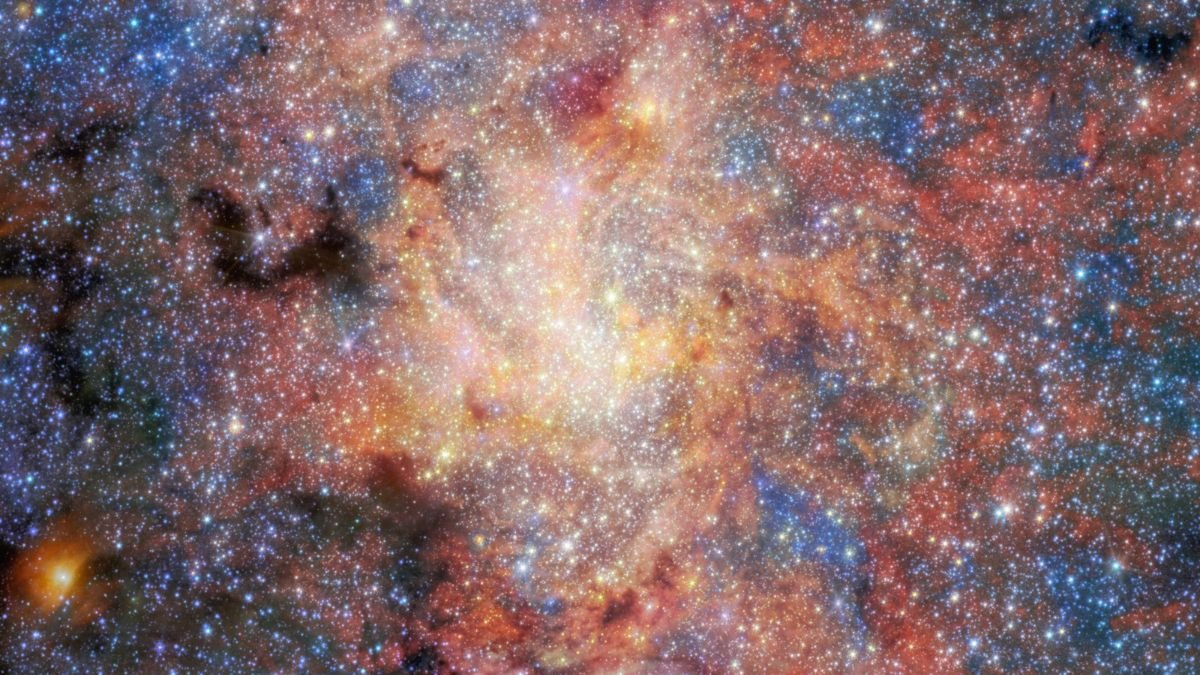
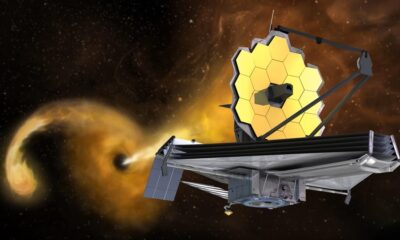
A dying star nearing the end of its life is shedding material into space just 0.55 light-years from the Milky Way’s central black hole. And somehow, some of that material is holding on. New observations from the James Webb Space Telescope have revealed water and oxygen-rich dust surrounding IRS 3, an evolved star living remarkably close to Sagittarius A*, the supermassive black hole at the heart of our galaxy.
The finding gives astronomers a rare view of what happens when an ordinary stage of stellar evolution unfolds in an anything-but-ordinary neighbourhood.
A Dying Star Beside a Black Hole
IRS 3 is an asymptotic giant branch (AGB) star, a late stage in the life of stars like this one. As such stars age, they swell, cool and lose material through powerful stellar winds. IRS 3 is doing exactly that. Gas and dust are streaming away from the star, creating a large envelope around it.
The star sits only about 0.55 light-years from Sagittarius A*. That may sound distant, but on the scale of the Galactic Centre it is remarkably close. Earth is about 26,000 light-years away from the same black hole.
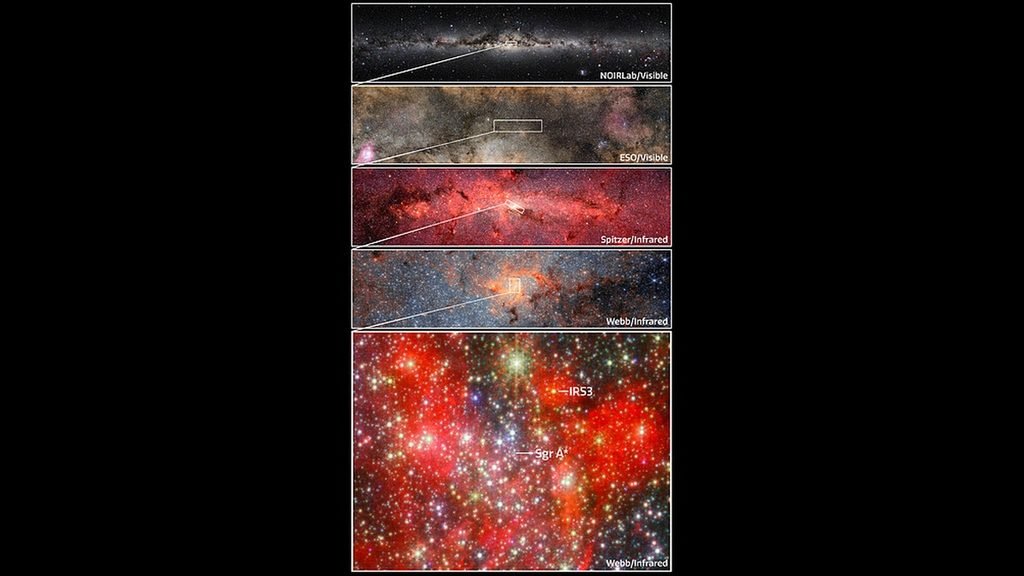
Around Sagittarius A* is a crowded, energetic environment filled with intense radiation, dense gas and powerful gravitational forces. Astronomers have long wondered how stars manage to evolve and shed material there. IRS 3 is offering an answer.
Webb Finds Water in the Stellar Outflow
NASA‘s James Webb Space Telescope looked at IRS 3 using its Mid-Infrared Instrument, or MIRI. Infrared observations are particularly useful here because the dust surrounding the star glows strongly at these wavelengths.
The observations revealed oxygen-rich dust in the star’s envelope. They also produced the first detection of water in this material. This does not mean Webb found a pool, cloud or droplets of water. The water exists as molecules mixed into the hot gas and dust surrounding the star.
That distinction matters because molecules can be vulnerable in the harsh environment around the Galactic Centre. Radiation can break them apart, while the conditions around a supermassive black hole can affect the material being expelled by nearby stars. Yet water molecules are present around IRS 3.
The Star is Feeding Its Surroundings
IRS 3 is losing material rapidly as it approaches the end of its life. Researchers estimate that the star is shedding roughly the mass of Earth every 18 days. That enormous outflow is important beyond IRS 3 itself.
When evolved stars lose their outer layers, they return material to the space between stars. The gas carries elements produced during the star’s lifetime, while newly formed dust becomes part of the reservoir from which future cosmic structures can emerge. IRS 3 is therefore caught in a familiar cycle of stellar life: a star is dying, but the material it releases can become part of something else.
What makes this case unusual is that the recycling process is happening almost next door to a supermassive black hole.
How Much Can Survive Here?
The observation does not mean that the black hole has little influence on its surroundings. Sagittarius A* still creates an extreme environment, and the researchers are interested precisely because IRS 3 shows that stellar material can persist within it.
“Galactic centres are among the most extreme environments,” said Florian Peißker of the University of Cologne, the study’s lead author to media. With Webb, researchers can now examine the material around stars such as IRS 3 in much greater detail and ask how stellar winds, dust formation and molecular chemistry behave so close to a black hole. The answer emerging from IRS 3 is intriguing: the environment may be extreme, but it does not necessarily shut down the chemistry of a dying star.
For IRS 3, the end of its stellar life is already underway. Its outer layers are drifting away into the Galactic Centre, carrying dust, molecules and the chemical ingredients of future cosmic systems with them. Even in the shadow of the Milky Way’s central black hole, a dying star is still leaving something behind.






Space & Physics
BepiColombo Enters Mercury’s Orbit Despite Thruster Glitch, Next Mission Milestone Set for December
ESA and JAXA’s BepiColombo mission has successfully entered Mercury’s orbit after an eight-year journey, despite a software glitch that cut short its first major orbital manoeuvre. The spacecraft is now preparing for the separation of its two science orbiters in December 2026.
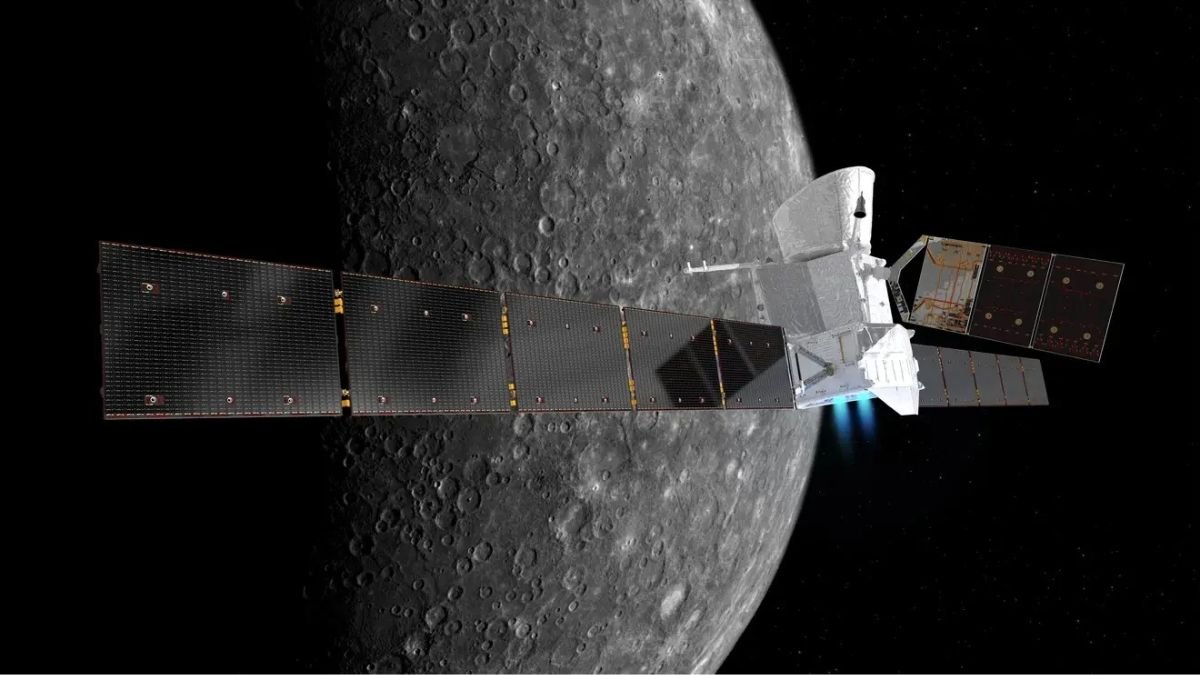
Europe and Japan’s joint mission to Mercury has achieved a major milestone after a long eight-year journey, although a software glitch cut short the spacecraft’s first major orbital manoeuvre. The spacecraft, BepiColombo, successfully entered a stable orbit around the planet on November 21, bringing its two science orbiters closer to their planned deployment in December. The mission is named after the Italian mathematician and engineer Giuseppe (Bepi) Colombo (1920–84). He is known for explaining Mercury’s peculiar characteristic of rotating about its own axis three times in every two orbits of the Sun. He also proposed to NASA the interplanetary trajectories that would allow Mariner 10 multiple Mercury flybys, by using gravity assists at Venus for the first time.
The Mercury Orbit Insertion (MOI) manoeuvre began at 18:24 UTC, when the Mercury Planetary Orbiter (MPO) fired its four axial thrusters to slow down and establish its orbit around the planet. The burn was scheduled to last 37 minutes, but an unexpected interruption brought it to an early end. When communication with the spacecraft was restored after a scheduled period of silence, mission controllers at the European Space Agency’s (ESA) European Space Operations Centre (ESOC) in Darmstadt, Germany, found that BepiColombo had entered safe mode.
This is a protective state in which a spacecraft suspends non-essential activities when it detects an unexpected condition. Initial analysis revealed that the thruster burn had achieved approximately 77% of its planned velocity change before being interrupted. Despite the setback, the spacecraft had secured its orbit around Mercury.
Software Glitch Interrupts Critical Manoeuvre
The mission control team immediately began examining spacecraft telemetry and trajectory data to establish whether the interrupted burn had affected orbital capture. The confirmation came around 01:00 local time, when the Flight Dynamics team established that BepiColombo had successfully entered Mercury’s orbit.
Investigations by ESA and the spacecraft’s lead manufacturer, Airbus, traced the problem to a software glitch involving attitude guidance and thruster control. Teams from ESA and the Japan Aerospace Exploration Agency (JAXA) are continuing to examine the anomaly.
According to ESA, BepiColombo remains safe and is following a stable trajectory around Mercury. The interruption has resulted in a longer orbital period of approximately 75 hours, compared with the originally planned 58 hours. The revised trajectory does not require additional manoeuvres and will not affect the planned separation of the two science orbiters in December.
Why Entering Mercury’s Orbit is So Challenging
Reaching Mercury presents a considerable challenge for spacecraft engineers. Although the planet is relatively close to Earth, its proximity to the Sun means that a spacecraft travelling towards it must shed a substantial amount of speed before it can settle into orbit.
BepiColombo’s journey began in October 2018. Its trajectory involved solar electric propulsion and nine planetary flybys, including encounters with Earth, Venus and Mercury. These manoeuvres gradually adjusted its speed and direction, allowing it to approach the planet at a much lower velocity. The mission also achieved a first in planetary exploration by using a technique called weak stability capture to enter orbit around another planet. Previously, this approach had been used in missions involving Earth’s Moon.
Under this technique, a spacecraft approaches a celestial body at a sufficiently low speed to become temporarily captured by its gravity. However, the resulting orbit is not necessarily stable enough to retain the spacecraft indefinitely. BepiColombo therefore needed the November 21 manoeuvre to turn this temporary capture into a lasting orbit. The chemical thrusters on its MPO spacecraft were used to reduce its velocity further and adjust its trajectory around Mercury.
Multiple Burns Help Conserve Fuel
The November 21 manoeuvre is only the beginning of a longer sequence of thruster burns. BepiColombo will undergo several such operations over the coming months as it gradually moves towards its designated science orbit. The decision to use multiple shorter burns instead of a single prolonged firing is linked to fuel efficiency. According to ESA’s BepiColombo Flight Dynamics Manager Frank Budnik, longer burns would result in greater gravity losses, reducing the effectiveness of the available propellant.
The spacecraft also has an important advantage when it performs these manoeuvres close to Mercury. Its velocity can be adjusted more efficiently when it is nearest to the planet, where its gravitational influence is strongest. Shorter burns allow the spacecraft to repeatedly take advantage of this favourable position. They also give the Flight Dynamics team an opportunity to assess the actual orbit after each manoeuvre and modify subsequent operations accordingly.
The original insertion sequence was designed to accommodate unexpected changes. Following the early termination of the November 21 burn, engineers recalculated the spacecraft’s trajectory and adjusted the remaining manoeuvres.
Two Science Orbiters to Separate in December
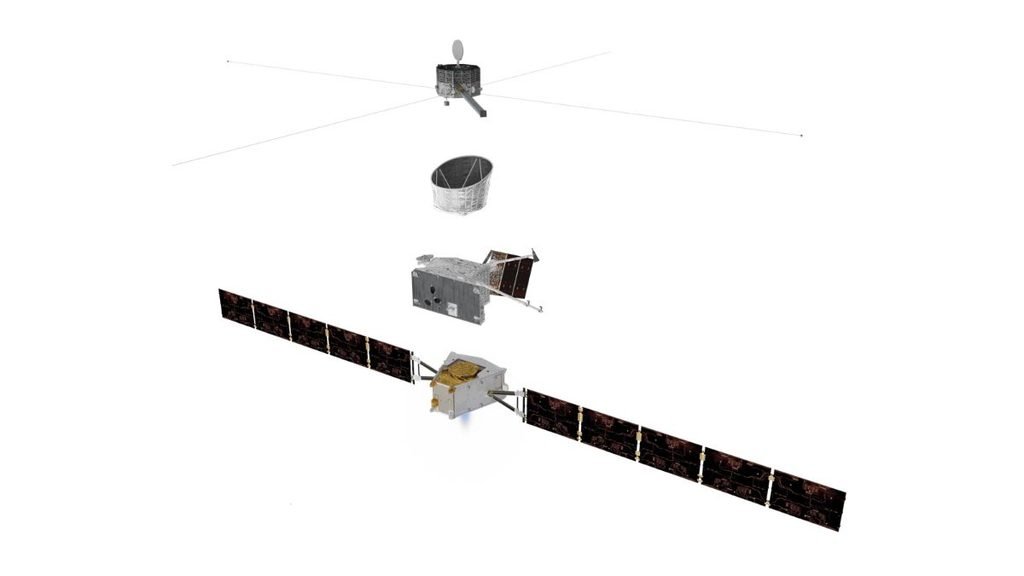
The next major milestone is the separation of BepiColombo’s two science spacecraft: ESA’s Mercury Planetary Orbiter (MPO) and JAXA’s Mercury Magnetospheric Orbiter, also known as Mio. The separation is scheduled for December 9 in Germany, corresponding to December 10 in Japan. Mio’s protective sunshield, called the Magnetospheric Orbiter Sunshield and Interface Structure (MOSIF), will remain attached to the MPO until December 16, when it is scheduled to be ejected.
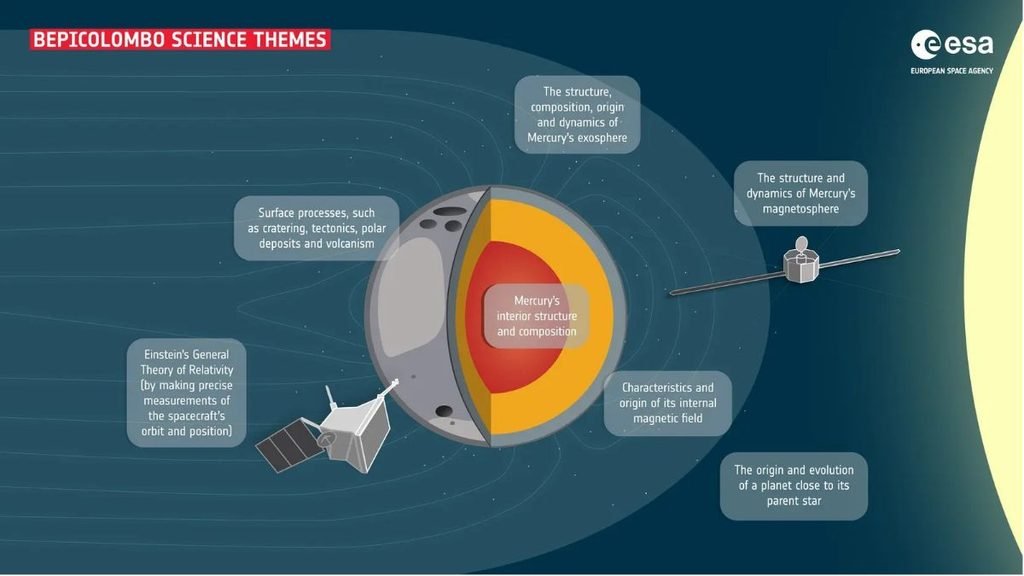
Following separation, further thruster manoeuvres will guide the MPO towards its final science orbit, which it is expected to reach by March 2027. Science operations are scheduled to begin in April 2027. The two orbiters have different scientific objectives. The MPO will investigate Mercury’s surface, internal structure and composition, while Mio will study the planet’s magnetic field and the surrounding space environment.
Their observations are expected to help scientists understand how Mercury formed, how its interior evolved and how its magnetic field interacts with the solar wind. The mission brings together nearly 600 scientists who will study different aspects of the planet. Geraint Jones, ESA’s BepiColombo Lead Project Scientist, said the successful orbital capture brings the team closer to beginning investigations of Mercury’s interior, surface and surrounding space environment.
After years of preparation and an eight-year journey, BepiColombo has reached a crucial stage. The December separation will bring its two orbiters closer to beginning their individual investigations of the Solar System’s innermost planet.
Space & Physics
As India’s Space Economy Opens Up, Can Private Investment Deliver Public Value?
India’s space-sector reforms have opened opportunities for private companies, but can investment and start-up growth translate into a competitive and sustainable space economy? Lessons from the US, Europe, Japan and China reveal the challenges ahead.
India’s decision to open its space sector to private enterprises marks a significant change in how the country approaches space research, manufacturing and commercialisation. Since the reforms announced in June 2020, private companies have gained opportunities to develop launch vehicles, manufacture satellites and provide space-based services. However, the expansion of commercial participation raises a more fundamental question: whether India can turn this policy opening into a competitive and sustainable space economy while ensuring that public investment continues to serve public interests?
Government data estimates India’s space economy at approximately 9 billion dollars as of August 2026, up from 8.4 billion dollars in 2023. It reports that the number of registered space start-ups increased from 1 in 2014 to approximately 440 in August 2026. Cumulative investment in Indian space start-ups reportedly reached 618.5 million dollars by March 2026.
These figures indicate growing entrepreneurial interest. The establishment of the Indian National Space Promotion and Authorisation Centre (IN-SPACe), the commercialisation mandate of NewSpace India Limited (NSIL), the Indian Space Policy 2023 and the liberalisation of foreign direct investment rules have created new institutional pathways for private participation.
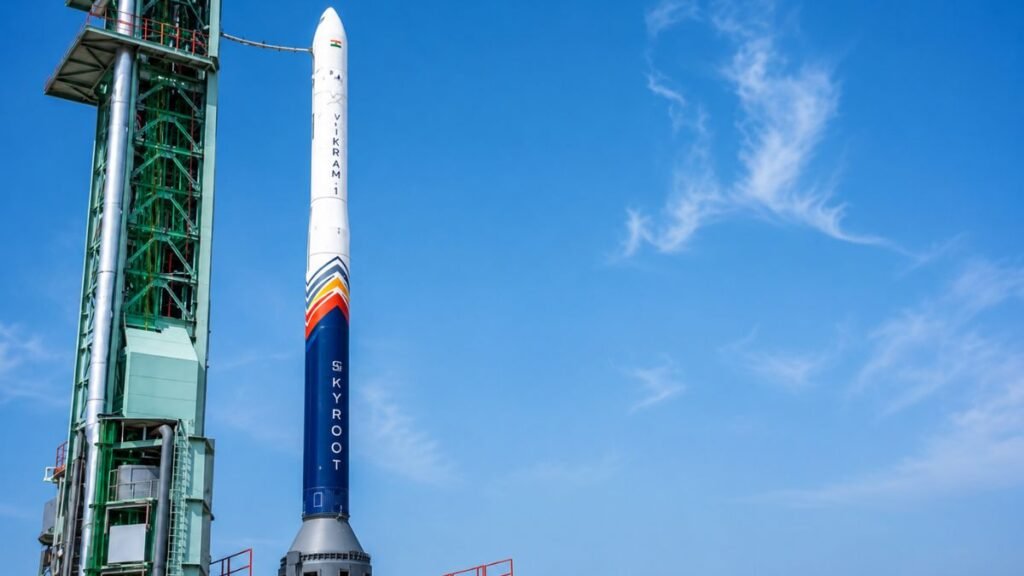
Yet, the number of registered start-ups does not establish how many companies have commercially viable products, recurring customers or sustainable revenue. Similarly, investment raised is not equivalent to industrial capacity. Rocket development, satellite manufacturing and launch infrastructure require substantial capital, long development periods and dependable demand.
A May 2026 assessment by Carnegie India, A Review of India’s 2023 Space Policy and Entrepreneurship Ecosystem, points to the sector’s early-stage challenges. It records a decline in Indian space-technology funding from 130.2 million dollars in 2023 to 59.1 million dollars in 2024, despite an increase in the number of funding deals. This suggests that the availability of capital and investor confidence cannot be assumed to grow continuously.
Learning From the American Model
The United States offers an important example of how government procurement can support private-sector innovation. Through NASA’s Commercial Crew Programme, the government shifted from developing and operating every transportation system itself towards purchasing transportation services from private companies.
In 2014, NASA awarded fixed-price contracts worth 2.6 billion dollars to SpaceX and 4.2 billion dollars to Boeing to develop spacecraft capable of carrying astronauts to the International Space Station. SpaceX’s Crew Dragon received human-rating certification in 2020 and has since completed operational crewed missions. Boeing’s Starliner, however, encountered technical difficulties, delays and additional costs.
A June 2026 assessment by NASA’s Office of Inspector General found that the programme’s contract value had increased from the original 6.8 billion dollars to more than 8 billion dollars, excluding additional resources invested by NASA and the companies. The report also identified shortcomings in NASA’s oversight and delays in Boeing’s certification.
The experience demonstrates both the opportunities and risks of public-private partnerships. Government procurement can provide companies with the dependable demand necessary to develop expensive technologies. However, private participation does not automatically guarantee lower costs, timely delivery or technical reliability.
For India, the lesson is to develop transparent, performance-based procurement systems in which private companies compete to supply launch and satellite services. Government support should be linked to technical milestones, safety standards and actual delivery rather than announcements and projected capabilities.
Japan and Europe: Funding Innovation and Creating Demand
Japan has adopted a longer-term approach to supporting private space enterprises. Its Space Strategy Fund, administered through the Japan Aerospace Exploration Agency (JAXA), aims to mobilise approximately one trillion yen over ten years. The programme supports companies, universities and research institutions working on transportation, satellite technologies and space exploration.
The model recognises that space technology cannot always be developed within conventional venture-capital timelines. Companies need sustained financial support to move from research and prototypes to manufacturing and commercial operations.
India has introduced a 500-crore rupees Technology Adoption Fund and approved a 1,000-crore rupees venture capital fund under IN-SPACe. These are important initiatives, but their effectiveness will depend on funding continuity, transparent selection and the ability to support companies beyond their initial development stages.
Europe offers another useful example. Through the European Space Agency’s European Launcher Challenge, the agency is supporting privately developed launch services. It has earmarked more than 900 million euros for the programme. Selected companies are expected to demonstrate orbital launch capabilities by 2027, with further support linked to operational launches and capacity improvements.
The programme also illustrates that commercialisation involves failures and uncertainty. One of its initially shortlisted participants, Orbital Express Launch, entered administration in February 2026 and withdrew from the challenge.
Rather than guaranteeing commercial success, the European approach attempts to develop competing launch providers through staged technical requirements and public support. India could similarly encourage multiple companies to develop competing technologies while ensuring that public contracts are awarded on demonstrated performance.
China’s approach: Private Companies With Public Infrastructure
China’s commercial space policy offers a different model. Its National Space Administration issued an Action Plan for the High-Quality and Safe Development of Commercial Spaceflight for 2025–2027. The plan proposes opening state-funded research and testing facilities to commercial companies, supporting the commercialisation of publicly funded technologies, expanding government procurement and improving access to tracking, telemetry and testing infrastructure.
It also proposes stronger provisions for space-debris monitoring, satellite data security, insurance and end-of-life disposal. The relevance for India is the recognition that financial assistance alone cannot create an industrial ecosystem. Access to testing facilities, research infrastructure, technical expertise and institutional customers can be equally important.
India’s IN-SPACe already has a mandate to facilitate access to ISRO facilities, subject to safety and operational requirements. The next challenge is ensuring that access is transparent, predictable and available to smaller enterprises as well as established companies.
Where is the Wider Economic Value?
One limitation of the current discussion on India’s space economy is its emphasis on launch vehicles, satellite manufacturing and start-up numbers. The economic value of space technology also lies in its applications on Earth.
Satellite-based services can support agricultural monitoring, weather forecasting, disaster management, fisheries, groundwater assessment, urban planning and environmental monitoring. For instance, satellite imagery can help authorities identify changes in land use, monitor flood-affected areas and assess vegetation conditions.
A May 2026 Carnegie India assessment highlights the need to develop India’s downstream space applications alongside manufacturing and launch capabilities. This is particularly important because the benefits of space technology extend beyond the companies that build satellites. Government departments could become regular customers for commercially developed satellite-data services. Such procurement would create a domestic market for Indian enterprises while improving the availability of information for public decision-making.
Without this demand, India could expand its capacity to manufacture and launch satellites without developing an equally strong ecosystem for processing, analysing and applying the resulting data.
Environmental and Regulatory Cost of Expansion
Commercial expansion also brings responsibilities that cannot be separated from economic growth. Increasing satellite deployments contribute to orbital congestion and raise the risks of collisions and space debris. The OECD’s The Space Economy at a Glance 2026 reports that more than 14,000 active operational satellites were in orbit by the end of 2025. US organisations operated approximately 76% of these satellites. The report also identifies increasing concentration in large commercial satellite constellations, particularly in low Earth orbit.
This raises concerns about access to orbital resources, spectrum coordination and the influence of a small number of operators over essential space infrastructure. India needs effective requirements for collision avoidance, satellite disposal at the end of operational life, debris mitigation and transparent reporting of environmental risks. It must also consider the implications of commercial control over satellite data, communications and other strategically important services.
The institutional framework requires scrutiny as well. IN-SPACe has responsibilities that include promoting private participation and authorising and supervising space activities. As the industry grows, transparent authorisation procedures, independent technical scrutiny and clear accountability become increasingly important.
Building an Economy, Not Just an Industry
The government projects that India’s space economy could reach 44 billion dollars by 2033 and 100 billion dollars by 2040. These figures represent policy ambitions, not guaranteed outcomes. Achieving them will require more than increasing the number of start-ups, satellites and launches. International experience offers a common lesson: commercial space sectors depend on sustained public procurement, long-term financing, access to research infrastructure, reliable regulation and a market for downstream applications. They also require safeguards against market concentration and environmental damage.
India’s reforms have created opportunities for private enterprises to participate in a sector built over decades through public investment and scientific research. The next phase must establish whether those opportunities can translate into viable businesses, technological independence and wider public benefits.
Space & Physics
NASA recruits new astronauts for future Moon Base and Mars missions
NASA has opened applications for its next astronaut class as the agency prepares for Artemis missions, a planned lunar base and future human missions to Mars.
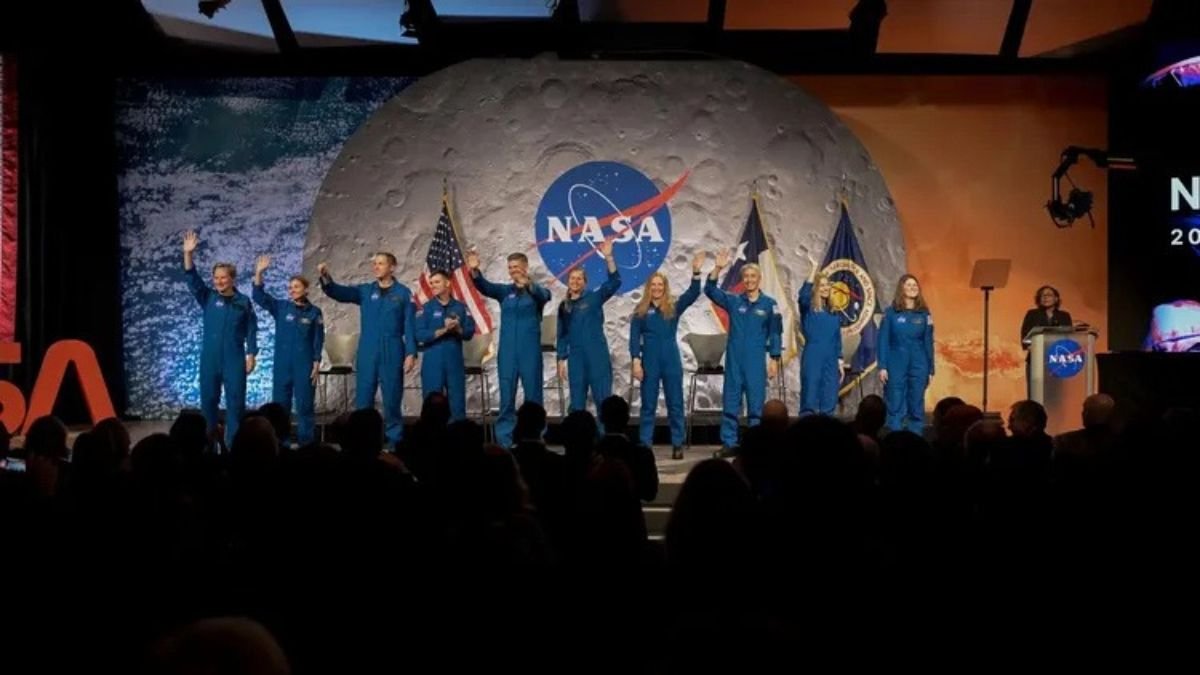
NASA is recruiting a new generation of astronauts to support its plans for a Moon Base, future Artemis missions and eventual human journeys to Mars. The selected candidates will train for missions that could help establish a sustained human presence on the lunar surface. NASA has opened applications for its next class of astronauts as it moves closer to its ambition of making the Moon a base for longer-term exploration. The recruitment comes as the US space agency works towards establishing the infrastructure needed to support human activities on the lunar surface and prepare for future crewed missions to Mars.
The recruitment drive is aimed at selecting candidates who could participate in future Artemis missions, work at a planned lunar base and help develop the technologies and operational capabilities needed for human missions to Mars. According to NASA, applications will remain open until December 3, 2026, at 11:59 pm Eastern Standard Time (December 4, 10:29 am IST). The agency expects to announce its final selection in late 2027.
The recruitment comes as NASA moves beyond its earlier approach of sending astronauts to the Moon for relatively short missions. Its longer-term ambition involves developing the infrastructure required for humans to live and work on the lunar surface for extended periods.
What is NASA’s Moon Base project?
NASA’s proposed Moon Base is part of its broader effort to establish a sustained human presence beyond Earth. The plan involves developing the facilities, transportation systems, power infrastructure and robotic equipment needed to support longer stays on the lunar surface.
The lunar south pole is a major focus of these plans. Scientists believe that permanently shadowed regions near the poles contain deposits of water ice. These resources could potentially be processed to provide drinking water, oxygen and hydrogen for rocket fuel, reducing the need to transport every essential supply from Earth.
A lunar base could also provide opportunities to study the Moon’s geology, investigate its resources and test technologies required for operating in extreme environments. The infrastructure and experience gained from these operations could prove important when NASA eventually attempts to send humans to Mars.
How will the Artemis Program Contribute?
NASA’s astronaut recruitment is closely linked to its Artemis programme. The programme aims to return humans to the lunar surface and develop the capabilities needed for longer-duration exploration. Through Artemis, NASA plans to study the lunar environment, particularly the south pole, while testing spacecraft, spacesuits and other technologies required for future exploration.
The programme is also intended to build on the experience gained from earlier human spaceflight missions and establish a foundation for journeys to Mars. Unlike the Apollo missions of the 1960s and 1970s, which focused on reaching the Moon and returning to Earth, Artemis is designed around a longer-term exploration strategy. The astronauts selected through the latest recruitment drive will train for increasingly complex missions, including operations on the lunar surface.
Who Can Apply to Become a NASA Astronaut?
The recruitment is open only to US citizens. Applicants must have a master’s degree in a science, technology, engineering or mathematics (STEM) discipline, including engineering, biological sciences, physical sciences or computer science. NASA also accepts certain equivalent qualifications, including doctoral-level research experience, specified medical degrees and recognised test pilot school programmes.
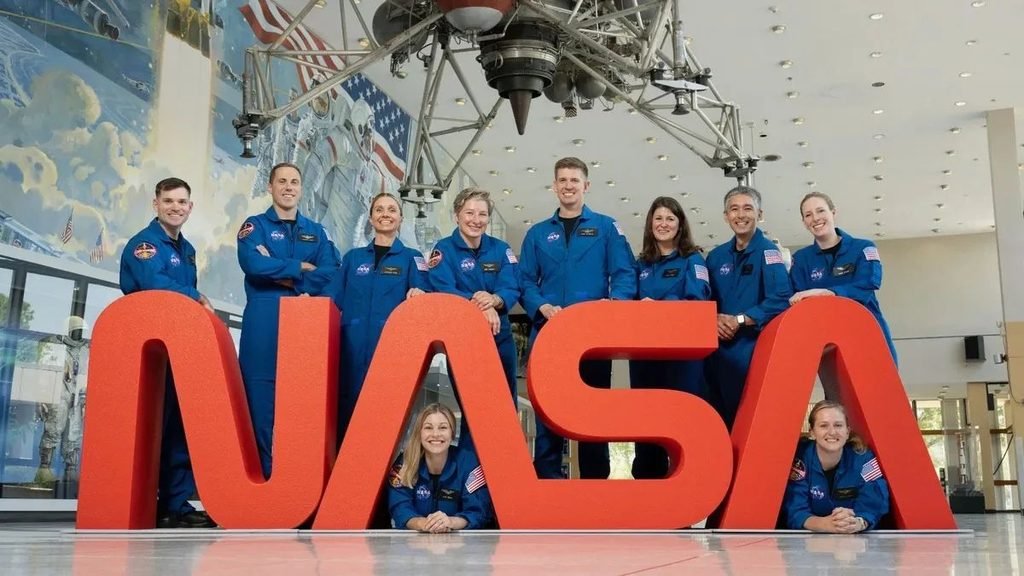
Candidates must have at least three years of relevant professional experience after completing their qualifying degree. Pilots can meet the experience requirement through specified flight hours in high-performance aircraft. Academic qualifications alone will not determine selection. Applicants must also pass NASA’s long-duration astronaut flight physical and demonstrate leadership, teamwork and communication skills.
The selected candidates will undergo nearly two years of astronaut training at NASA’s Johnson Space Center in Houston, Texas. Their preparation will include spacewalking, lunar geology, spacecraft operations and other technical skills required for space missions. NASA’s previous recruitment drive, which opened in 2024, received more than 8,000 applications. The agency selected 10 astronaut candidates in 2025.
Preparing for Human Missions
The latest recruitment reflects NASA’s effort to build the workforce and technical expertise required for its long-term exploration plans. Operating on the Moon presents challenges that go beyond reaching its surface. Astronauts will have to work in extreme temperatures, manage limited resources, deal with lunar dust and maintain equipment in an environment without Earth’s protective atmosphere.
These challenges also have implications for future Mars exploration, where astronauts would have to operate much farther from Earth, with limited opportunities for resupply and emergency assistance. The experience gained through sustained lunar exploration could help NASA understand how humans respond to extended stays beyond Earth and develop systems to support future interplanetary missions. The next generation of astronauts could therefore play a role in shaping how humans explore and eventually work beyond the Earth-Moon system.

BepiColombo Enters Mercury’s Orbit Despite Thruster Glitch, Next Mission Milestone Set for December

Stanford’s AI100 Report Warns AI Development Is Outpacing Governance as Technology Enters Mainstream

CCMB Scientists Identify Compounds to Disarm Deadly Fungus, Offering New Approach to Antifungal Resistance

Delhi’s Pollution Control Efforts Show Uneven Progress, With 52.7 Lakh Tonnes of Landfill Waste Still Uncleared

More Than One Million STIs Acquired Daily Worldwide; India Reports Over 51,000 Syphilis-Reactive Cases

India’s Richest Agree on One Cause Above All Others: Education

Indian universities lead Asia in research output per faculty, but the country’s top six all slip in QS ranking

Why Delhi’s Geography Makes It Vulnerable to Severe Air Pollution

Europe Braces for Extremes as Commission Unveils Climate Resilience Framework

NASA recruits new astronauts for future Moon Base and Mars missions
-

 Math4 months ago
The 2026 Fields Medals: Four Proofs, Four Decades-Old Problems Solved
-
EP Deep Dive: Data & Solutions4 months ago
After Kerala’s Deadliest Landslide, the Hardest Thing to Rebuild Was Childhood
-
EP Deep Dive: Data & Solutions5 months ago
West Asia Crisis: Can Kerala’s Returning Gulf Migrants Find a Future in the Green Economy?
-
Space & Physics6 months ago
India Semiconductor Mission: ‘It’s Not About Fabs. It’s About Building An Entire Ecosystem’
-
Interviews2 months ago
From Scams to Screens: How the National Stock Exchange Rewrote India’s Equity Story
-
Climate & Environment6 months ago
The Climate World Cup? How Climate Change Could Affect Player Performance at the 2026 World Cup
-
Society4 months ago
What Is Civilisational Diplomacy? Understanding India’s Newest Foreign Policy Tool
-
Education4 days ago
India’s Richest Agree on One Cause Above All Others: Education