Space & Physics
India Semiconductor Mission: ‘It’s Not About Fabs. It’s About Building An Entire Ecosystem’
India Semiconductor Mission is reshaping the country’s chip ambitions. Neelkanth Mishra explains the opportunities, challenges and long-term strategy.

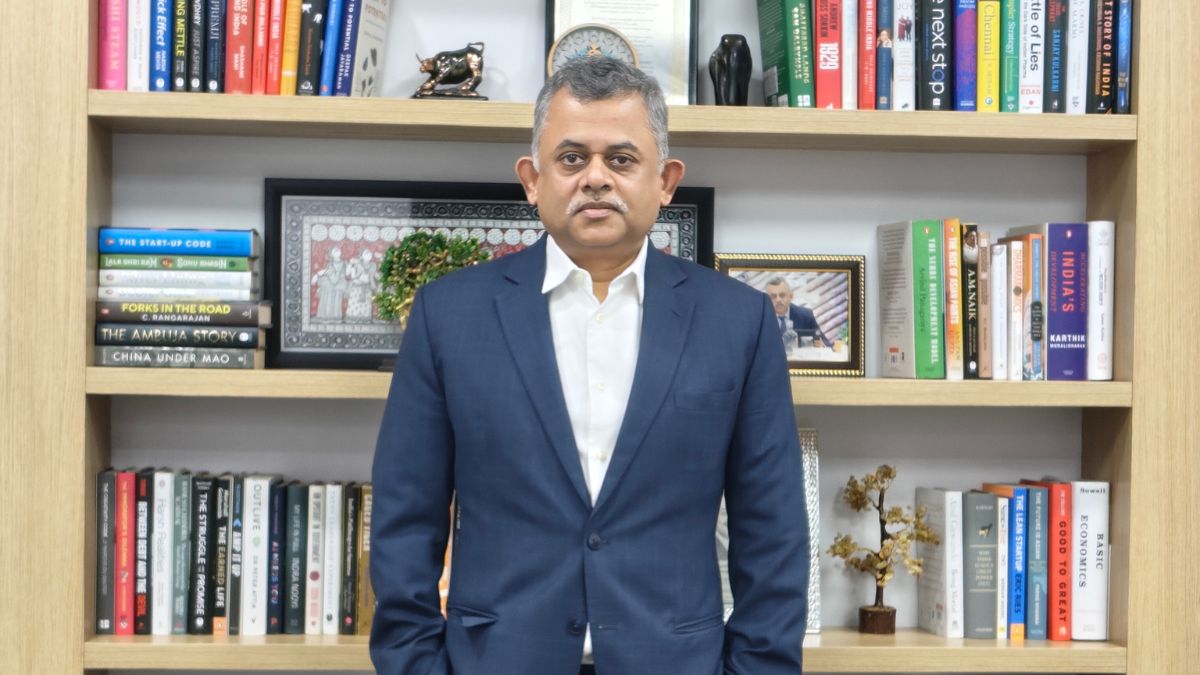
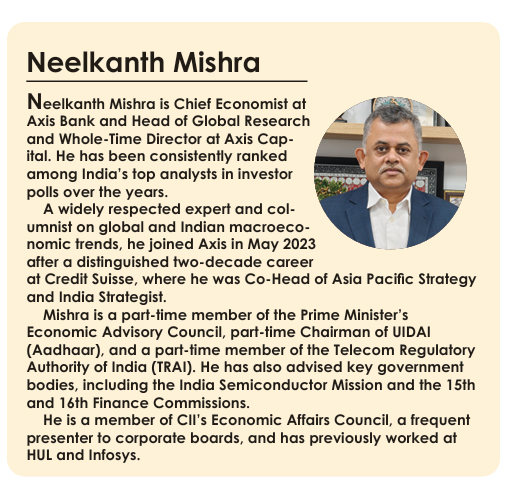
As India pushes ahead with its semiconductor ambitions under the India Semiconductor Mission (ISM), questions remain about where the country can realistically compete and how long it will take to build a viable ecosystem. In this exclusive conversation with Education Publica Editor Dipin Damodharan in Mumbai, Neelkanth Mishra, Chief Economist at Axis Bank and Head of Global Research at Axis Capital, draws on two decades of experience tracking the global semiconductor industry to explain India’s advantages, constraints, and long term trajectory. He is also a member of the advisory committee of the government’s India Semiconductor Mission and part-time Chairperson of the Unique Identification Authority of India (UIDAI). Edited excerpts.
How the India Semiconductor Mission Is Shaping the Industry
Let me start with asking something out of curiosity – how did you get interested in semiconductors in the first place?
When I joined Credit Suisse First Boston in 2003 in Singapore, the person who hired me was heading Asia technology research and was also the lead analyst for semiconductor foundries such as TSMC and UMC. I was hired to cover IT services, but he wanted help in building the semiconductor research franchise.
That led me to start reading about how chips are made. At that time, the industry was transitioning from 130-nanometer to 90-nanometer nodes, and copper was being introduced to replace aluminum due to resistance issues. There were challenges around yields because copper was seeping into substrates. I remember writing my first note around this issue after going through technical papers.

That note became quite popular, and it gave me the confidence to continue covering semiconductors. I spent a lot of time travelling to Taiwan, studying DRAM cycles, capex cycles, node transitions, and the broader global semiconductor ecosystem. Eventually, I moved to Taipei and began covering chip design companies such as MediaTek.
At that time, were you also tracking what was happening in India?
India has had chip design activity for a long time, even in the 1990s. Companies like Texas Instruments, Cadence, and Synopsys were recruiting from Indian campuses. Many engineers built long careers in these firms.
However, India did not have domestic chip manufacturing or strong Indian-owned chip design companies. By the mid-2000s, global firms such as Nvidia, Broadcom, and Intel began setting up design centres in India. So the design ecosystem was growing, but it was largely driven by global companies.
It is only in the last four to five years that more serious efforts have begun toward building Indian-owned capabilities.
So what changed in the last few years? Was it policy, or something else?
Policy has played a role. The Design Linked Incentive (DLI) scheme has been an important catalyst. We are seeing some early success. At the same time, there is also an evolutionary factor at play. Engineers who moved abroad 20–25 years ago are now at a stage where they have both the experience and financial capacity to take entrepreneurial risks. Many also want to return to India.
Another important factor is the growth of India’s electronics manufacturing ecosystem. As assembly volumes increase, there is greater awareness of what products need to be designed. Without that visibility into OEM pipelines, it is difficult to design chips.
Schemes like PLI for electronics manufacturing have helped build that awareness and ecosystem. As downstream industries grow, upstream opportunities in chip design also become clearer.
As US is good at designing chips, Taiwan and South Korea are good at manufacturing There’s always this question – should India focus on design, manufacturing, or packaging?
There is no either/or. India needs to participate across the value chain.
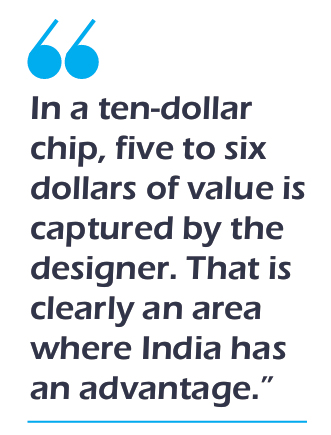
We already have a natural advantage in chip design, with about 20% of global design engineers based in India. Design is also less capital-intensive compared to manufacturing. In a $10 chip, $5–6 of value is captured by the designer, and in some cases even more.
At the same time, semiconductor manufacturing is a geopolitical necessity. It is not just a commercial issue but also a matter of national security. That is why governments provide significant subsidies for fabs.
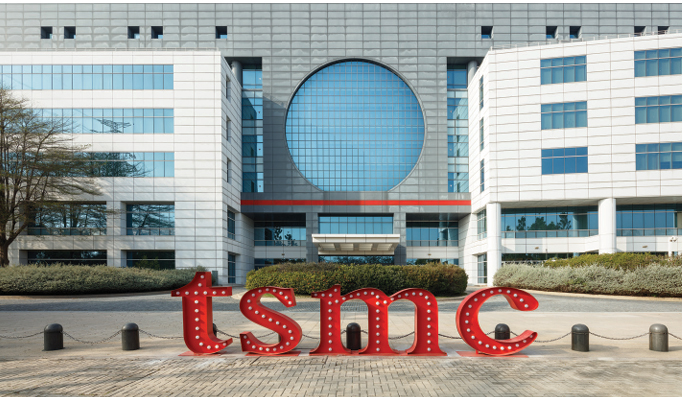
However, manufacturing is a low-return business globally. Only a few companies like TSMC and Samsung have consistently generated returns above their cost of capital. Much of the value in the ecosystem is captured by design firms and by capital equipment suppliers, which operate in highly concentrated markets.
Therefore, India must build capabilities across the chain—from design to manufacturing to equipment and materials—if it wants meaningful value capture.
When we talk about building an ecosystem, how complex is that in reality?
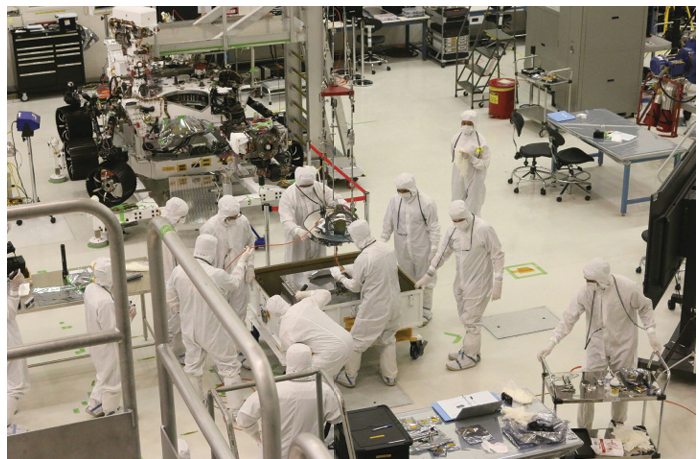
It is extremely complex. The industry has multiple layers of specialization. For example, electronic design automation (EDA) tools are dominated by a few companies. Lithography, especially extreme ultraviolet, is controlled by a single company globally. Equipment for deposition, wafer slicing, and testing is also concentrated among a handful of firms.
Even the chemicals used in wafer cleaning are highly sophisticated and require extraordinary purity. A single wafer can take months to manufacture, involving hundreds of process steps.
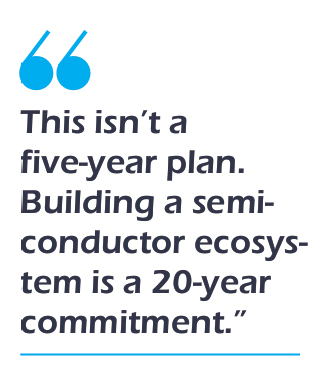
So when we talk about semiconductors, it is not just about fabs. It is about building an entire ecosystem—equipment, materials, design, testing, and packaging. This is why it is a 15–20 year journey at least.
What about talent? Are we ready from a skills perspective?
In general, skilling in India is more of a demand problem than a supply problem. If there is sufficient demand, the industry tends to create the supply.
For example, there is already discussion about developing tens of thousands of chip testing engineers in India, and that is achievable. However, for cutting-edge technologies, there is a need for deeper investment in research.
As we move toward more advanced nodes—such as 7 to 12 nanometers—we will require significant high-end research capabilities. Countries like China took over 25 years to reach that level.
We need to invest not just in near-commercial research (TRL 6–9) but also in fundamental research (TRL 1–4), which creates long-term intellectual property. Government initiatives like the Anusandhan National Research Fund are steps in that direction, but overall R&D spending needs to increase.
What role should industry play in R&D?
Industry participation is essential. The government can catalyse investment, but companies will invest when they see potential returns.
We have seen this in pharmaceuticals, where Indian firms moved into R&D after reaching limits in generics. A similar shift can happen in semiconductors, but it will require scale, capital, and long-term commitment.
Where do startups fit into this picture?
Startups will have a significant role, particularly in chip design. Manufacturing is extremely capital-intensive, requiring billions of dollars in investment, which limits the role of startups.
However, in design and innovation, startups can play an important part. Many innovations in the semiconductor ecosystem originate from smaller firms, which are later acquired or integrated into larger companies.
To produce a globally competitive company, you need a large ecosystem of startups, experimentation, and risk-taking.
Coming to policy – what did India learn from ISM 1.0?
ISM 1.0 (India Semiconductor Mission) was a learning curve for everyone. It helped the government understand how to evaluate proposals, support companies, and manage operational challenges.
There were practical issues—from customs procedures affecting sensitive equipment to ensuring uninterrupted power supply. Semiconductor manufacturing requires extremely high reliability, and even a brief power outage can cause significant losses.
Another important learning is that the global industry is now more comfortable working with India. While India may not yet be the first choice, confidence has improved due to visible commitment and progress.
This increased comfort allows India to be more ambitious with ISM 2.0.
How important is policy stability?
Policy continuity is very important because these are long-term projects. Global firms value consistency in decision-making and relationships.
There is also a growing effort to ensure continuity in leadership within government institutions, which helps build expertise and trust over time.
Do we need a dedicated semiconductor research institution like IMEC?
There are existing efforts, such as the facility in Mohali, which supports defence-related applications. There are also discussions around creating IMEC-like research centres.
However, over time, the private sector will need to take a larger role in research. Government support is critical in the early stages, but for sustained innovation and competitiveness, industry-led initiatives are more effective. The government can act as the binding force or the catalyst that brings people to the table; however, I believe it is ultimately better if the private sector takes the lead. This creates a natural incentive for innovation and rigorous research. Beyond a certain point, government support becomes both fiscally unfeasible and operationally undesirable
If we look ahead 20 years, where do you see India?
On the design side, India can become much more significant. It is possible to see 10–15 large chip design companies and many smaller firms emerging.
On the manufacturing side, we could have several large fabs and potentially global players establishing operations in India, especially if a strong domestic design ecosystem develops.
For example, companies like TSMC tend to follow innovation ecosystems. If Indian design firms grow in scale and sophistication, it could attract global manufacturing investments.
Let me end with this – can India produce a company like Nvidia?
It is possible, but it requires a large ecosystem. Many Indians already occupy senior roles in global semiconductor companies and are involved in cutting-edge design work.
To create a company of that scale, you need risk capital, entrepreneurial ambition, and a large number of startups. In other markets, hundreds of firms compete, and one eventually emerges as a dominant player.
So it is not about a single effort—it is about building an ecosystem where many experiments take place, and success emerges from that.




Space & Physics
JWST Finds Water Around a Dying Star Near the Milky Way’s Black Hole
A dying star near the Milky Way’s central black hole is shedding water, gas and dust into one of the galaxy’s most extreme environments.


A dying star nearing the end of its life is shedding material into space just 0.55 light-years from the Milky Way’s central black hole. And somehow, some of that material is holding on. New observations from the James Webb Space Telescope have revealed water and oxygen-rich dust surrounding IRS 3, an evolved star living remarkably close to Sagittarius A*, the supermassive black hole at the heart of our galaxy.
The finding gives astronomers a rare view of what happens when an ordinary stage of stellar evolution unfolds in an anything-but-ordinary neighbourhood.
A Dying Star Beside a Black Hole
IRS 3 is an asymptotic giant branch (AGB) star, a late stage in the life of stars like this one. As such stars age, they swell, cool and lose material through powerful stellar winds. IRS 3 is doing exactly that. Gas and dust are streaming away from the star, creating a large envelope around it.
The star sits only about 0.55 light-years from Sagittarius A*. That may sound distant, but on the scale of the Galactic Centre it is remarkably close. Earth is about 26,000 light-years away from the same black hole.

Around Sagittarius A* is a crowded, energetic environment filled with intense radiation, dense gas and powerful gravitational forces. Astronomers have long wondered how stars manage to evolve and shed material there. IRS 3 is offering an answer.
Webb Finds Water in the Stellar Outflow
NASA‘s James Webb Space Telescope looked at IRS 3 using its Mid-Infrared Instrument, or MIRI. Infrared observations are particularly useful here because the dust surrounding the star glows strongly at these wavelengths.
The observations revealed oxygen-rich dust in the star’s envelope. They also produced the first detection of water in this material. This does not mean Webb found a pool, cloud or droplets of water. The water exists as molecules mixed into the hot gas and dust surrounding the star.
That distinction matters because molecules can be vulnerable in the harsh environment around the Galactic Centre. Radiation can break them apart, while the conditions around a supermassive black hole can affect the material being expelled by nearby stars. Yet water molecules are present around IRS 3.
The Star is Feeding Its Surroundings
IRS 3 is losing material rapidly as it approaches the end of its life. Researchers estimate that the star is shedding roughly the mass of Earth every 18 days. That enormous outflow is important beyond IRS 3 itself.
When evolved stars lose their outer layers, they return material to the space between stars. The gas carries elements produced during the star’s lifetime, while newly formed dust becomes part of the reservoir from which future cosmic structures can emerge. IRS 3 is therefore caught in a familiar cycle of stellar life: a star is dying, but the material it releases can become part of something else.
What makes this case unusual is that the recycling process is happening almost next door to a supermassive black hole.
How Much Can Survive Here?
The observation does not mean that the black hole has little influence on its surroundings. Sagittarius A* still creates an extreme environment, and the researchers are interested precisely because IRS 3 shows that stellar material can persist within it.
“Galactic centres are among the most extreme environments,” said Florian Peißker of the University of Cologne, the study’s lead author to media. With Webb, researchers can now examine the material around stars such as IRS 3 in much greater detail and ask how stellar winds, dust formation and molecular chemistry behave so close to a black hole. The answer emerging from IRS 3 is intriguing: the environment may be extreme, but it does not necessarily shut down the chemistry of a dying star.
For IRS 3, the end of its stellar life is already underway. Its outer layers are drifting away into the Galactic Centre, carrying dust, molecules and the chemical ingredients of future cosmic systems with them. Even in the shadow of the Milky Way’s central black hole, a dying star is still leaving something behind.
Space & Physics
India’s New Satellite Will Be Tested During Disasters
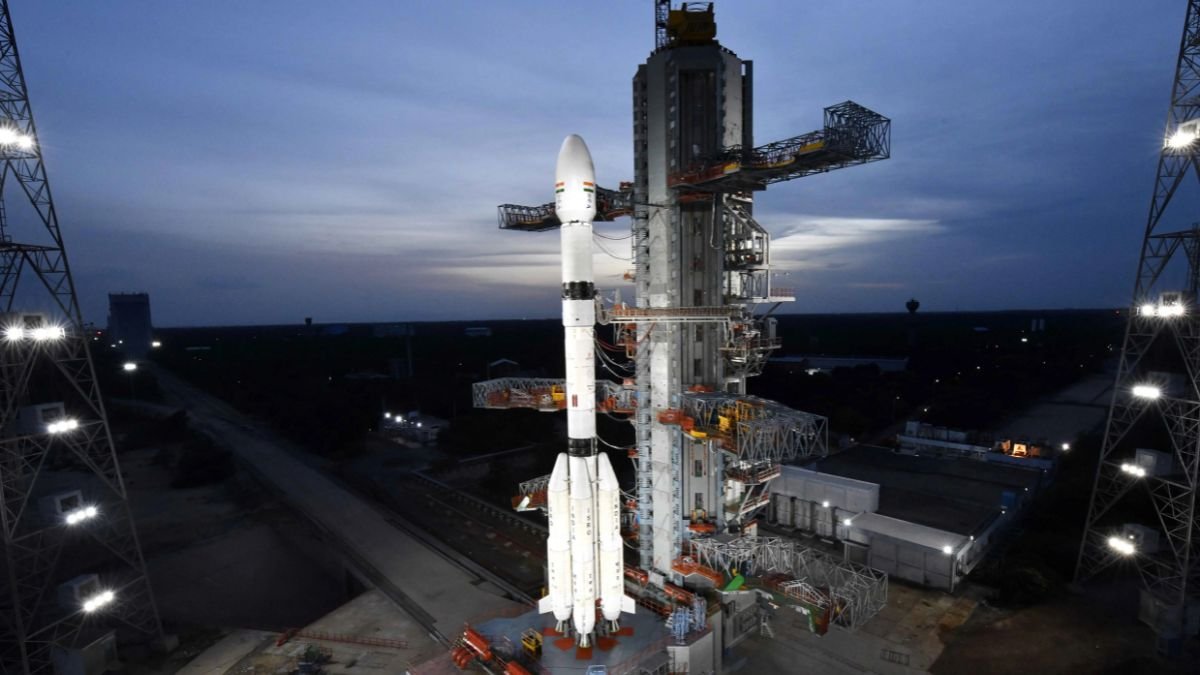
India’s latest Earth-observation satellite, EOS-05, could give disaster agencies a broader and more frequent view of floods, landslides and other hazards. But its real value will depend on how quickly satellite data can be turned into information that helps authorities act on the ground.
Space & Physics
India’s Moonshot Moment: Can New Delhi Turn Orbit Into Influence
India’s space mission is entering a new era, from Gaganyaan and space stations to private startups, space diplomacy and national security.


Gaganyaan is only the beginning. India’s space mission faces new opportunities and challenges as human spaceflight, diplomacy, private industry and security reshape its ambitions beyond Earth.
Indian human space programme Gaganyaan is mooted by Indian Space Research Organisation. This ambitious space mission aims to send Indian astronauts in Outer Space indigenously by the proactive leadership of the Indian government. India as a leading space power of the world aims to demonstrate her space capabilities and research in the final frontier. The Gaganyaan mission is the dream of 1.4 billion Indians. The programme will be initiated in 2027 creating a historic mark in the collective space exploration journeys. This is a stepping stone as NASA is envisioning to make Moon as the next base for active space programmes by 2030.
According to NASA this spectacular feat will be achieved soon within 3 years. NASA has asked India’s ISRO to join for the permanent Lunar base in the south pole of Moon. Here comes the significance of Indo-US space partnership and how India will navigate through the space diplomacy keeping in mind of Indian dream of Bharatiya Antariksh Station and the long lasting commitment to strategic autonomy and an independent foreign policy. India already signed the Artemis accords in June 2023. If India is ready to be part of this initiative, it will mark the beginning of a new era in India-United States space cooperation. The question is how India will navigate this process, protecting its sovereignty and national interest while engaging with NASA to help build a new civilisation of space travellers on the lunar surface. According to media reports India’s spectacular success with the Chandrayaan missions has led the United States to choose India as a natural partner, inviting it to join space exploration programmes on the Moon.
India’s Space Mission: The Next Frontier of Global Power
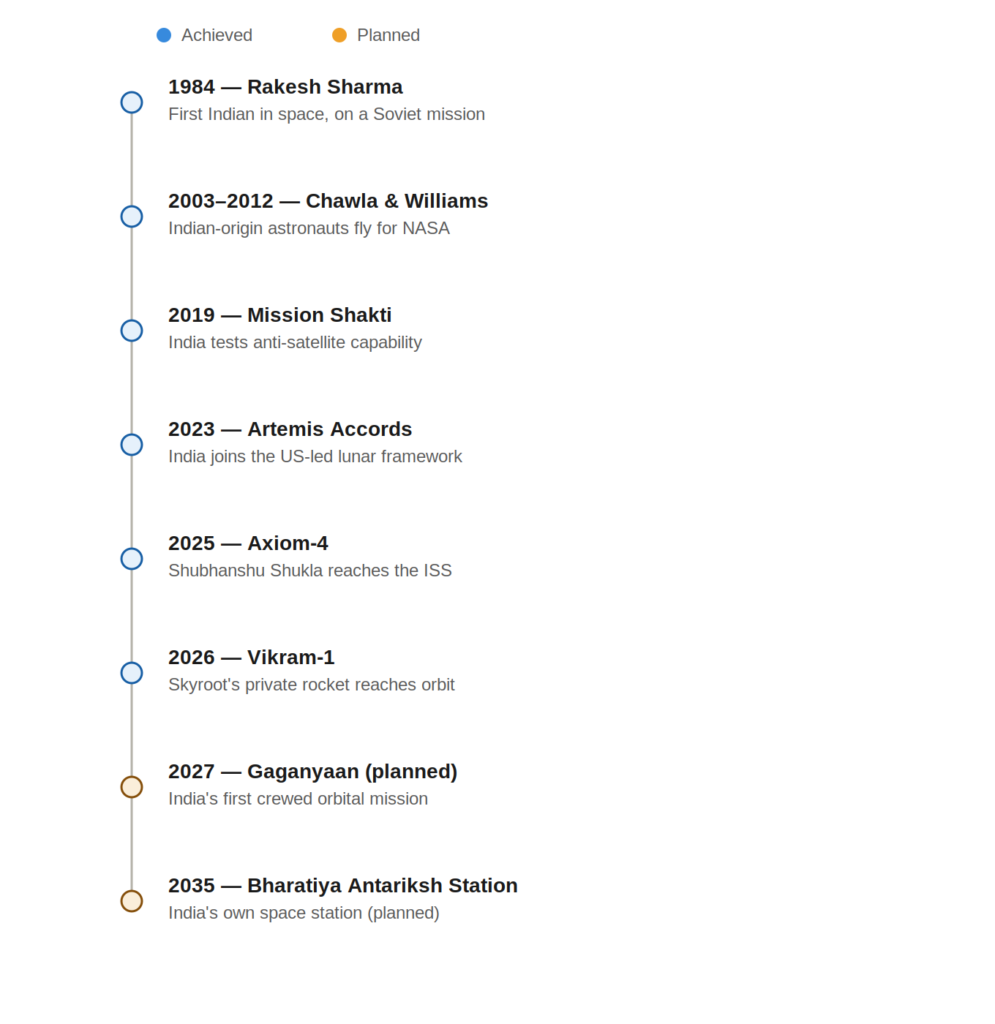
The Gaganyaan mission is significant for strengthening Indian space station’s vision. The Bharatiya Antariksh Station is an Indian space station which is a symbol of Indian space nationalism and a centre for joint research with friendly nations. India is actively pushing for space diplomacy and it is evident from the trainings received by Gaganyaan crew members. They have trained in Russia and the United States, continuing India’s commitment to strong bilateral ties with both Cold War-era rivals. Space exploration and travel are combined with diplomacy, as Indian foreign policy in a multipolar world order pushes for strong partnerships with both Russia and the United States.
Indian Air Force veteran Wing Commander Rakesh Sharma was the first Indian cosmonaut to reach the final frontier, in a Soviet space mission. Following this historic feat, Kalpana Chawla and Sunita Williams travelled to outer space on American missions. Recently, Group Captain Shubhanshu Shukla represented India in the Axiom mission successfully travelling to International Space Station and returned safely as a national hero. He is also part of the Gaganyaan mission. Colonel Anil Menon, who is part of the US Space Force, is also now in outer space. He has strong Indian connections, making him the first astronaut with roots in Kerala to explore the domain of outer space.
With privatisation in outer space in India, Skyroot Aerospace, a private company based in Hyderabad, successfully launched Vikram-1 rocket to low Earth orbit. Thus India is taking leverage of the infinite possibilities chasing stars and galaxies. Indian space ambitions are at a historic juncture now, with over 400 private Space startups. Another mission is aiming for a reusable re-entry vehicle, targeted for launch in 2027, building on ISRO’s success with the Pushpak mission, the Reusable Launch Vehicle Landing Experiment, in 2024.
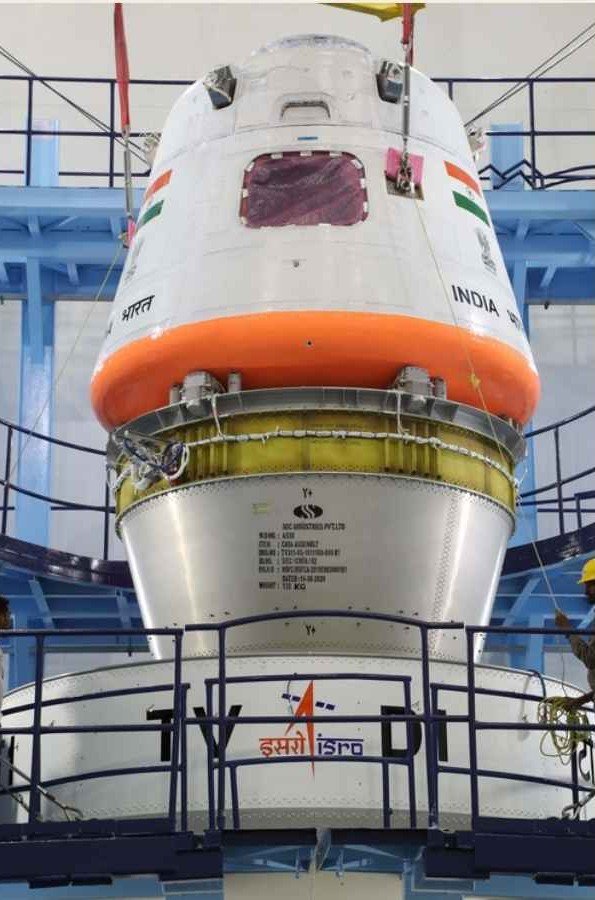
However, there are concerns in India’s space sector, with many ISRO scientists seeking early retirement. The efficiency of major projects like Aditya and Gaganyaan should not be affected by this. Former ISRO Chairman G Madhavan Nair shared his concerns with the media about bureaucratisation within the organisation. ISRO is a symbol of India’s space story which is filled with resilience and strength of great visionary leaders like Dr Vikram Sarabhai and Dr APJ Abdul Kalam. Unfortunately, there have been budgetary cuts to major ISRO space projects. The government’s focus on Viksit Bharat, a holistically developed India, is only possible with investment in science and technology, and in-depth research in the domain of outer space.
Outer space is militarised, and the race for resource nationalism is a reality. For India to emerge as a global power, investment in space exploration is inevitable. Nations are increasingly aware of the strategic use of outer space for securing national interests. Satellites with civilian and national security purposes are critical assets of any nation. India too has many civilian and strategic assets in outer space, and protecting these is the responsibility of the government. The anti-satellite test Mission Shakti is a milestone demonstrating India’s hard-power capabilities in outer space. Some nations have capabilities such as laser-guided weapons, which can disable or destroy an enemy’s assets during conflict. Space is a key domain for ensuring seamless communication and intelligence-sharing during both war and peace.
Intelligence and surveillance are key factors in winning the wars of the present and future. The dominance in space technology and information superiority will determine the victories of nations fighting for their national interest.
In India, the share of higher education in the annual budgetary allocation remains low. A young generation passionate to explore arenas of space science is to be inculcated with the right mindset. Allocation of funds in education sector is a key requirement for building a strong India with educated and skilled youth. ISRO’s active collaboration with 100 Atal Tinkering Labs is a positive step in inculcating the spirit of scientific enquiry at the grassroots level. Support and encouragement for students in the creative arts and sciences is the need of the hour. Atal Tinkering Labs and India’s startup ecosystem can achieve greater synergy, ensuring a seamless transition from school life to entrepreneurship, from plan to execution.
Human activity has actively degraded the ecosystem, impacting life on both land and water. Now, with active competition in the arena of outer space, space debris is a serious global security challenge. This debris travels swiftly in outer space, damaging active space assets including civilian and defence satellites. The young budding scientists of India need to re-invent and discover practical solutions to the pressing global challenge of space debris and work with relentless passion for making a strong and stable India.


AI Is Growing Fast, But Women Remain Underrepresented

Nepal Brings Climate Justice Fight to UN After Devastating Floods

India’s Journey of Turning Organic Waste Into Energy. Can It Scale?

Earth is Heating Up: The Economic Cost of a Rising Sea

Digital Detox: Why Taking a Break From Screens Matters

From Scams to Screens: How the National Stock Exchange Rewrote India’s Equity Story

Farmers Borrowed to Build ‘Diggis’. Two Years Later, They Are Still Waiting for the Subsidy

Aim for the Stars: Anjali Thomas’s Journey from a Small College in Kerala to the Frontiers of Medical Imaging

When the Himalayas Collapse Without Warning, What Counts as Preparedness?

Anxiety Freezes Career Decisions. Curiosity Unfreezes Them

-

 Math2 months ago
The 2026 Fields Medals: Four Proofs, Four Decades-Old Problems Solved
-
Climate2 months ago
After Kerala’s Deadliest Landslide, the Hardest Thing to Rebuild Was Childhood
-
Society3 months ago
West Asia Crisis: Can Kerala’s Returning Gulf Migrants Find a Future in the Green Economy?
-
Interviews5 days ago
From Scams to Screens: How the National Stock Exchange Rewrote India’s Equity Story
-
Climate4 months ago
The Climate World Cup? How Climate Change Could Affect Player Performance at the 2026 World Cup
-
Society3 months ago
What Is Civilisational Diplomacy? Understanding India’s Newest Foreign Policy Tool
-
Society3 months ago
From Bell Labs to the Classroom: A Second Career in Teaching
-
Space & Physics4 months ago
Engineers Develop Dual-Mode Propulsion System for Next-Generation Small Satellites