
Climate & Environment
Pacific Nations Push 1.5°C and Climate Finance Ahead of COP31
Pacific nations are using Pre-COP31 talks in Fiji to push for stronger action on climate change, including keeping the 1.5°C target within reach and improving access to climate finance.

Pacific island nations are seeking to put their climate concerns at the centre of global negotiations as ministers, climate negotiators and senior officials gather in Fiji for preparatory talks ahead of the COP31 climate summit.
The Pre-COP meeting, scheduled in Nadi from October 5 to 8, is intended to build momentum for the United Nations climate conference in Antalya, Türkiye, in November. COP31 will be held from November 9 to 20.
For Pacific countries, however, the meeting is more than a diplomatic step towards the main summit. It is an opportunity to press the world’s major economies on issues that directly affect the region, particularly the 1.5°C warming limit, climate finance and the growing impact of climate change on oceans and coastal communities.
Fiji has outlined four priorities for the Pre-COP discussions: keeping the 1.5°C target within reach, improving access to climate finance, placing oceans more prominently in climate negotiations and strengthening Pacific leadership.
The 1.5°C target is particularly important for small island nations facing rising seas, coastal erosion, extreme weather and growing pressure on communities and infrastructure.
Fiji’s climate officials have said the country wants to maintain the role of climate science in international decision-making and “hold the line” on 1.5°C. The country is also calling for climate finance to reach vulnerable communities more quickly, arguing that lengthy funding procedures can leave communities waiting for resources while climate risks continue to increase.
Access to finance is expected to be one of the key issues carried from the Pacific discussions into COP31. Pacific governments are seeking greater support for adaptation and resilience, including through a proposed Pacific Resilience Facility that would finance climate projects across the region.
The region is also seeking to bring oceans more firmly into the climate agenda. For Pacific island states, climate change is closely connected to the health of marine ecosystems, coastal communities, fisheries and food security.
The preparatory talks will therefore bring together two aspects of the climate debate: the global effort to limit further warming and the immediate need to protect communities already experiencing its effects.
The setting is significant. Leaders and delegates will also spend time in Tuvalu, a low-lying Pacific island nation particularly exposed to sea-level rise. The programme includes visits to adaptation projects, including reclaimed land and solar installations, allowing visiting leaders to see some of the measures being used by island states to respond to climate risks.
But the meeting comes with a diplomatic challenge. Reuters reported that relatively few leaders from outside the Pacific have confirmed their participation. Leaders from Antigua and Barbuda, Cabo Verde, Thailand, the Maldives and Timor-Leste are among those confirmed, while around 30 representatives of countries and institutions are expected at the leaders’ segment.

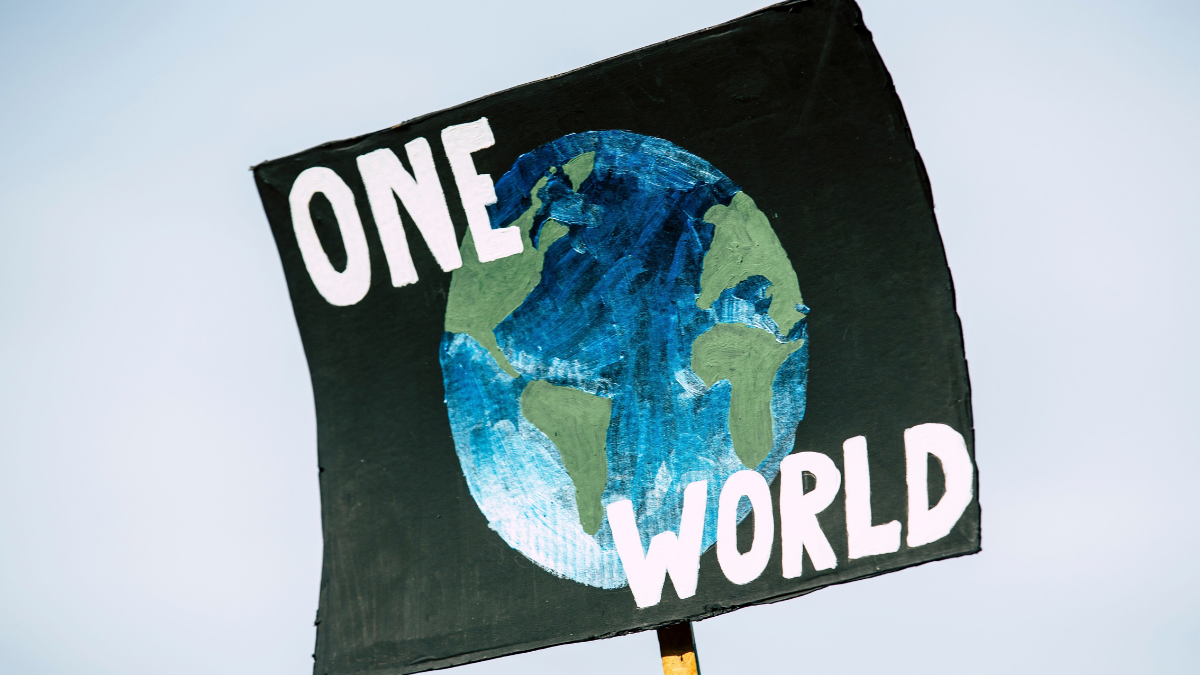
A placard displaying ‘Save the Earth’.Representational image.Image Credit:Pexels
The limited participation has drawn criticism from some Pacific officials, who argue that the region’s climate concerns deserve greater international attention. At the same time, the meeting is expected to bring thousands of delegates to Fiji, giving Pacific governments a platform to shape discussions before the main negotiations in Türkiye.
For the Pacific, the focus in Nadi will therefore be on translating regional concerns into negotiating priorities for COP31 — from keeping the 1.5°C goal central to improving access to climate finance and strengthening attention to oceans and adaptation.
The outcome of the Fiji discussions will feed into negotiations at COP31, where governments will have to work through the wider questions of climate ambition, finance and implementation.
For island nations on the frontline of climate change, the immediate priority is to ensure that their experience and demands are reflected proportionately in those negotiations.










Biodiversity
Kerala’s Pink Water Lily Paradise is in an Ecological Question
A viral video transformed Malarikkal into a popular tourism destination. But research into the pink water lilies raises questions about their impact on native aquatic plants and wetland ecosystems.

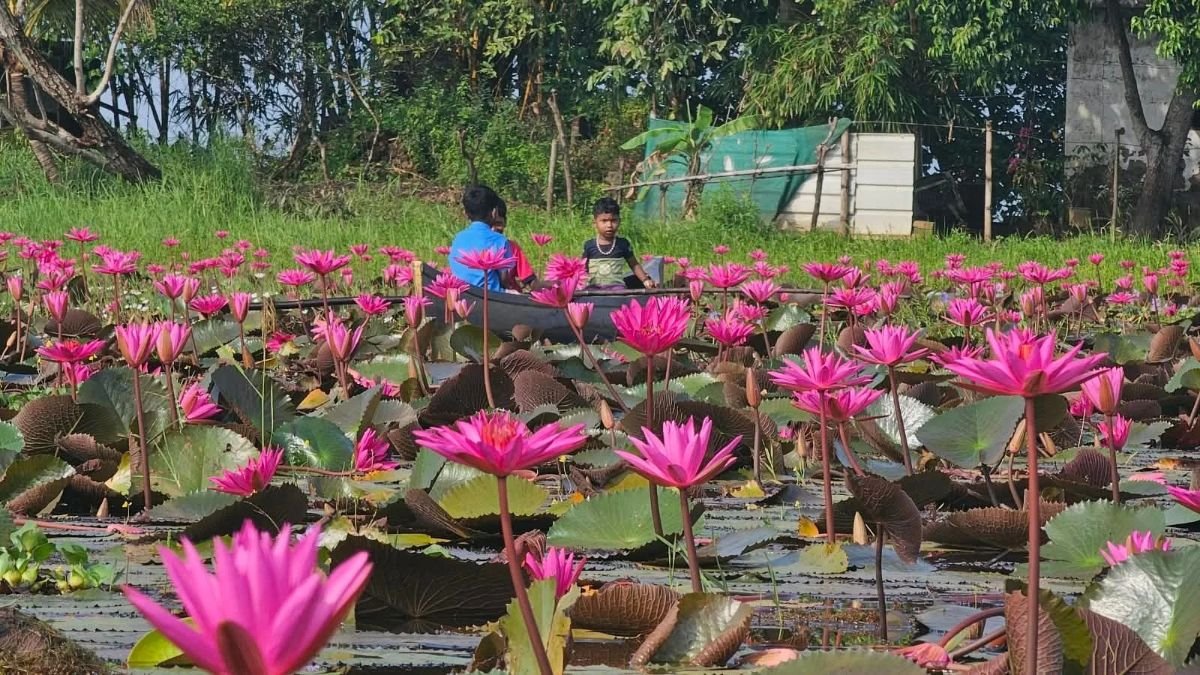
In 2018, a dance video featuring two young girls against a backdrop of pink water lilies went viral on TikTok. Captioned ‘Malarikkal Ambal Padam’, the video brought unexpected attention to a village in Kerala’s Kottayam district. What was once primarily an agricultural landscape soon began attracting visitors eager to see the seasonal flowering for themselves, recalls Lijo John, a resident of Malarikkal.
The spot, locally known as J Block 9000, gradually emerged as a tourist destination. Visitors from across Kerala, followed by tourists from other states, began arriving to see the pink flowers covering the flooded paddy fields. Over the years, the annual bloom has become an important source of seasonal income for the village.
The economic impact has been considerable. Local estimates suggest that Malarikkal generated around 6 crore rupees in tourism revenue over four months in 2026. Nearly 200 boat operators offer rides through the flowering fields, while shopkeepers and flower sellers also benefit from the seasonal rush. One boat operator reportedly earned around 3 lakh rupees from boat services during the season, while local accounts indicate that several others made at least 2 lakh rupees. Land prices have also increased, with an acre reportedly valued at around 15 lakh rupees.
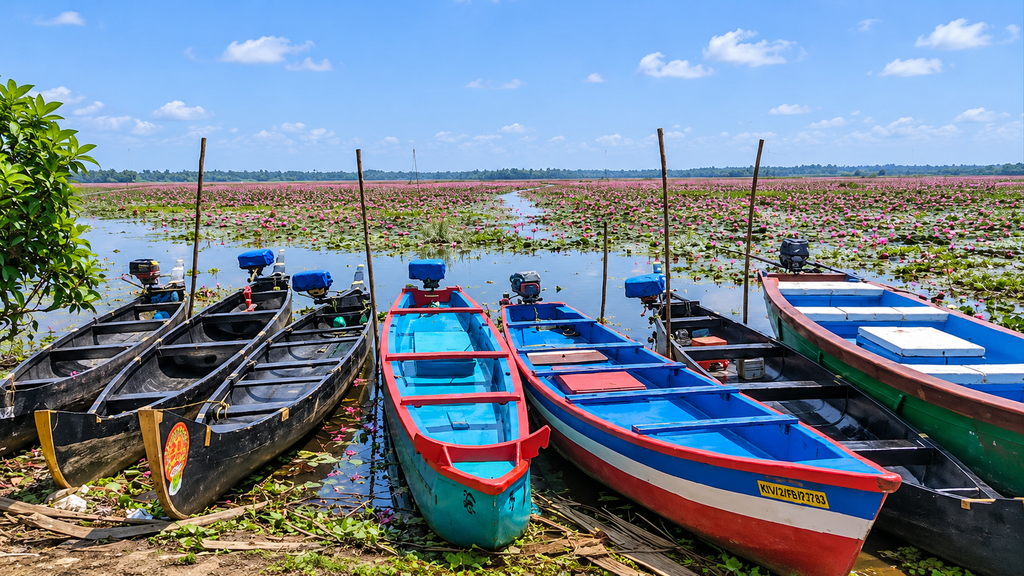
The annual flowering season has grown into a major local attraction, prompting the organisation of a dedicated tourism festival. The Malarikkal Water Lily Fest was inaugurated on August 8, 2023, by Kottayam District Police Chief K. Karthik. It was organised by Thiruvarppu Grama Panchayat, the Malarikkal Tourism Council and other local stakeholders.
The flowers are best viewed between 6 am and 9 am, when they are fully open. The flowering season generally lasts from July to October, when the paddy fields remain flooded between cultivation cycles. But the flowers that have brought Malarikkal economic recognition have also raised ecological concerns. A study published in Plant Science Today identifies the pink-flowered water lily spreading across Malarikkal as Nymphaea rubra Roxb. ex Andrews. Researchers have examined its growth, reproduction and spread across the region’s paddy fields.
An earlier ecological investigation by the Jawaharlal Nehru Tropical Botanic Garden and Research Institute (JNTBGRI), however, examined a different pink water lily in another part of Kuttanad. It identified the plant as Nymphaea × omarana, a hybrid water lily. Although both plants belong to the water lily group and produce pink flowers, they have different scientific identities.
An agricultural landscape under pressure
According to Lijo John, one of the landowners of the area, Malarikkal’s 1,850 acres of paddy fields are owned by around 650 individuals. Water lilies grow during the interval between paddy cultivation cycles, spreading across the flooded fields when rice is not being cultivated. Once the flowering season ends, the fields must be prepared for the next agricultural cycle. This creates a practical challenge for landowners and those involved in tourism. Boat rides, for instance, are not permitted in every field.
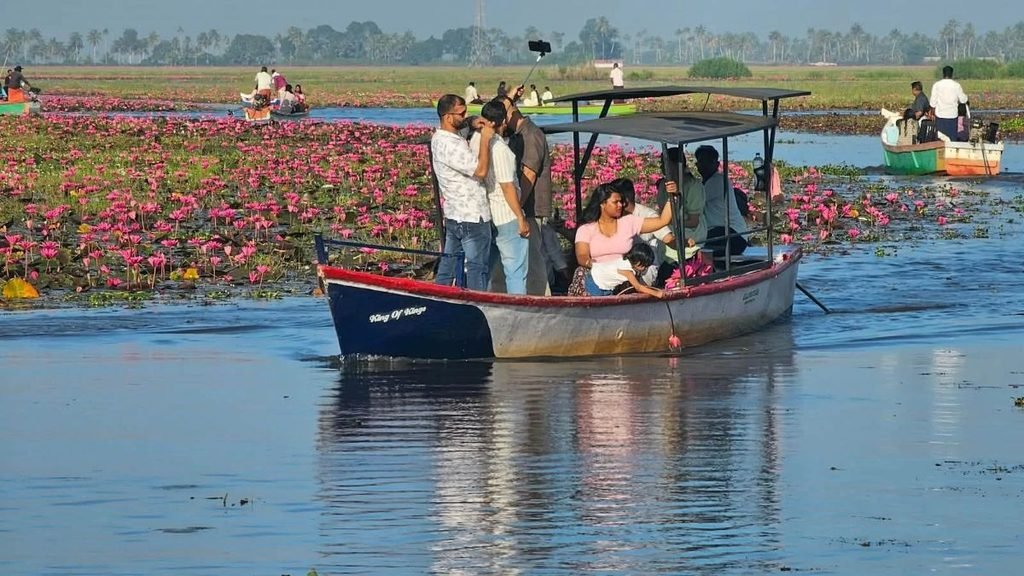
“There is a field nearby called Thiruvaikkiri. Boats are not allowed there now. Once the water in the field is drained, riding a boat through the field is harmful for the plot,” says Restin K Mathew, a boat operator and Malarikkal resident.
Such restrictions reflect the continuing agricultural importance of these fields. Even as tourism provides seasonal income, the land must remain suitable for paddy cultivation. Tourist activities therefore have to accommodate the requirements of farming. The ecological concerns extend beyond the immediate effects of tourism. The 2026 study, titled Drivers of invasion: The spread of pink-flowered Nymphaea rubra Roxb. ex Andrews in paddy ecosystems of Kuttanad, South India, examines the growth and spread of Nymphaea rubra in Malarikkal.
Published in Plant Science Today, the research examines the plant’s growth patterns and reproductive behaviour in the region’s paddy fields. Field observations conducted in J Block 9000 between June and September 2024 helped researchers study its growth under different water conditions.
The study estimates that the plant produces approximately 65,300 kg of fresh biomass per hectare. It also identifies seeds as the primary means of propagation in the fields, with water helping disperse them. The researchers found that water depth influenced the plant’s growth and flowering, with shallow conditions favouring greater leaf and flower production.
Native aquatic plants face competition
Titled The Pink Bloom of Kuttanadu: An Ecological Investigation, the study was undertaken with support from the Kerala State Biodiversity Board. It identified N. × omarana as an introduced horticultural hybrid suspected to have escaped from nurseries into natural wetlands. Field surveys found it widely distributed across Kuttanad, particularly in inland waterways and paddy fields. The study also recorded reports of the plant in Kozhikode.
One of the major concerns identified by the investigation is the displacement of native aquatic vegetation. The study identifies two native water lily species in the region, Nymphaea pubescens and Nymphaea nouchali, whose survival could be threatened by the spread of N. × omarana.
Lotus (Nelumbo nucifera), once common in Kuttanad, has also become increasingly restricted. According to the investigation, it is now almost confined to certain cultivated ponds. The large leaves of N. × omarana form dense layers across water bodies, limiting the amount of sunlight reaching the water. This can alter conditions for algae and other aquatic organisms that depend on these habitats.
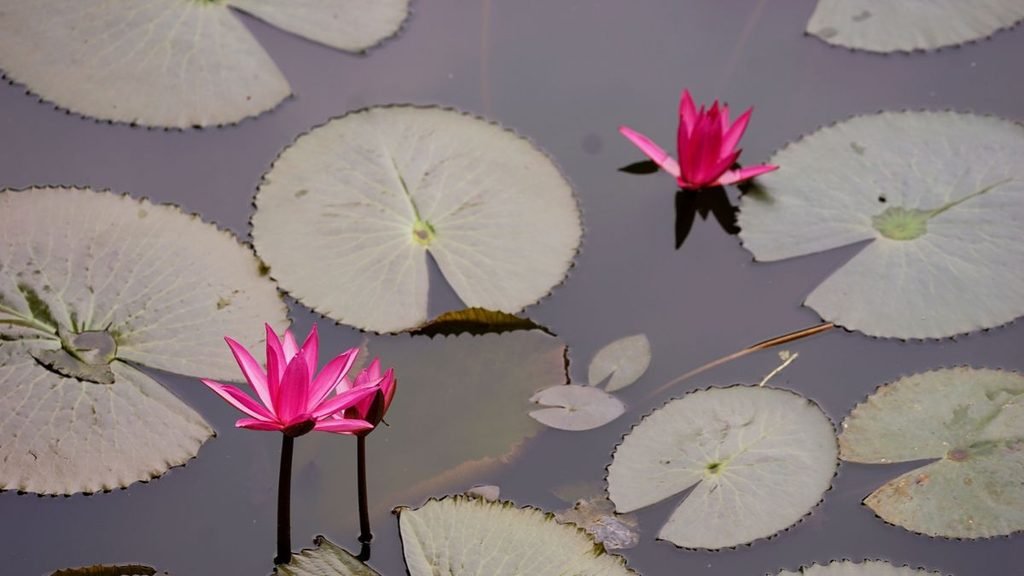
The investigation also records reduced natural water flow in affected parts of Kuttanad. Interactions with local residents revealed that the spread of the hybrid water lily had coincided with the accumulation of sludge and decaying plant material, contributing to deteriorating water quality. Traditional water transportation has also reportedly been affected.
The researchers raise concerns about methane production from accumulated decaying vegetation. The extensive foliage is also reported to reduce evaporation, potentially influencing local humidity. These effects require further field measurements to establish their extent. The plant’s resistance to eradication efforts adds to the challenge of controlling its spread. These findings relate to the hybrid water lily examined in the JNTBGRI investigation.
The Ecological Questions Surrounding Its Removal
At Malarikkal, the water lilies are cleared after the flowering season to prepare the fields for the next paddy cycle. According to landowner Lijo John, herbicides are used to eliminate the plants. This raises another set of environmental questions. The ecological impact of the plant’s growth needs to be considered alongside the possible consequences of the methods used to remove it.
The chemicals involved, their concentrations, application methods and the possibility of residues entering the water require further investigation. Their potential effects on fish, aquatic insects, other plants and water quality are particularly relevant in a landscape where agricultural activity and aquatic life share the same water bodies.
Local fish varieties include cheru meen, varaal, vaala and kaari. Whether the seasonal growth of the lilies or the herbicides used to remove them affects these fish populations remains unknown. The available research does not provide measurements of pesticide residues, dissolved oxygen levels or changes in fish populations in Malarikkal.
A site-specific assessment would help establish these effects. Monitoring water quality and aquatic biodiversity during the flowering, plant-removal and cultivation periods could provide a clearer picture of the changes taking place in the fields.
Exploring Alternative Uses For the Water Lily
The economic value of the flowering season makes the management of the water lilies more complicated. The plants now support a tourism economy that provides income to boat operators, shopkeepers and other local businesses. Finding ways to manage their spread while accounting for these livelihoods is an important part of the challenge.
Dr E. A. Siril, Professor and Head of the Department of Botany at the University of Kerala’s Kariavattom campus, is exploring the possibility of developing value-added products from water lilies. The research examines the use of the plant in products such as herbal tea, face wash, incense sticks, leaf plates and soap. Samples have been collected from Attingal and nearby locations to assess their suitability.
“Our study is about making value-added products from water lilies. Herbal tea, facewash etc. As far as we have considered it is economically viable as well. We collected samples from Attingal and nearby places. So far they are going good,” says Siril.
The plant’s seasonal availability, however, poses a challenge for commercial production. “The only problem regarding its economic viability is that it is a seasonal plant. Its unavailability in other seasons can affect the production,” he says. Siril believes that alternative uses could help derive economic value from the plant while addressing concerns about its invasive growth.
“As this is an invasive species, and they generate a lot of income through tourism, what we need to look at is other such alternative methods where we can put them into use,” he says.
The product-development work is still at an exploratory stage. Its commercial viability, production capacity and ability to utilise substantial quantities of harvested plant material will need to be established before it can contribute meaningfully to managing the plants’ spread.
Protecting the Wetland Without Overlooking Livelihoods
Malarikkal’s landowners have reservations about greater government intervention in the fields. Some consider the land private property and are concerned that additional regulations could interfere with how they manage cultivation and tourism.
This presents a challenge for wetland conservation. The fields support agricultural activity, provide seasonal tourism income and form part of the wider Kuttanad wetland ecosystem. Any effort to manage the spread of the water lilies must account for all three. The ecological investigations highlight the need for a better understanding of the plants’ spread and their effects on Kuttanad’s wetlands. For Malarikkal, this would involve examining seasonal changes in native aquatic vegetation, water quality and biodiversity, alongside the effects of clearing the plants before cultivation resumes.
The pink bloom has given Malarikkal a new economic identity. Its future, however, remains closely tied to the health of the paddy fields and the wetland ecosystem that sustains them. Understanding the ecological consequences of the flowering, tourism activities and plant-removal practices will be essential to managing this landscape without undermining the livelihoods it now supports.
Climate & Environment
MIT Develops AI Technique to Make Climate Predictions Faster and More Reliable
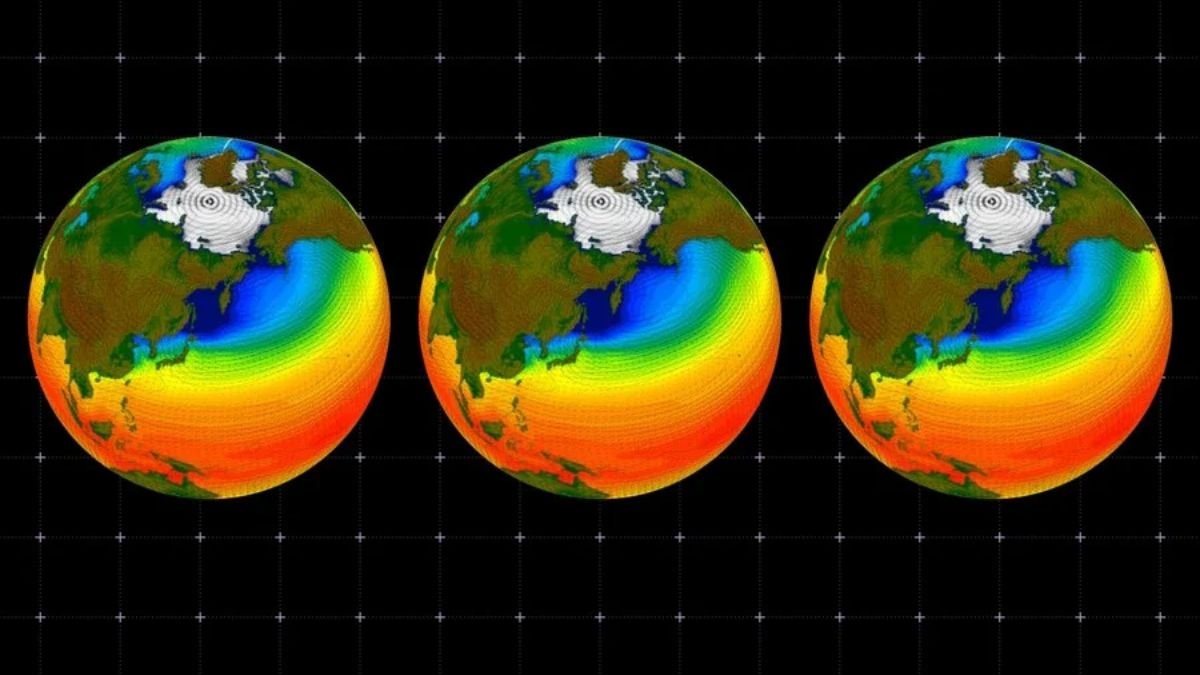
MIT scientists have developed a training technique that could make AI climate emulators faster to build, more adaptable and better at predicting unfamiliar emissions scenarios.
Climate & Environment
Global Climate Finance Hits Record $1.9 Trillion, but Vulnerable Nations Continue to Face Adaptation Funding Gap
Global climate finance reached a record $1.9 trillion in 2023–2024, but vulnerable developing countries continue to face an adaptation funding gap. As COP31 begins, questions remain over the delivery of the new $300 billion annual climate-finance target and equitable access to funding.

Global climate finance reached an unprecedented annual average of $1.9 trillion in 2023–2024, increasing by 32 per cent compared with the previous two-year period. However, despite the growth in investment, developing countries continue to face significant barriers in accessing the resources needed to adapt to climate change, according to assessments by the United Nations Framework Convention on Climate Change (UNFCCC) and the Organisation for Economic Co-operation and Development (OECD).
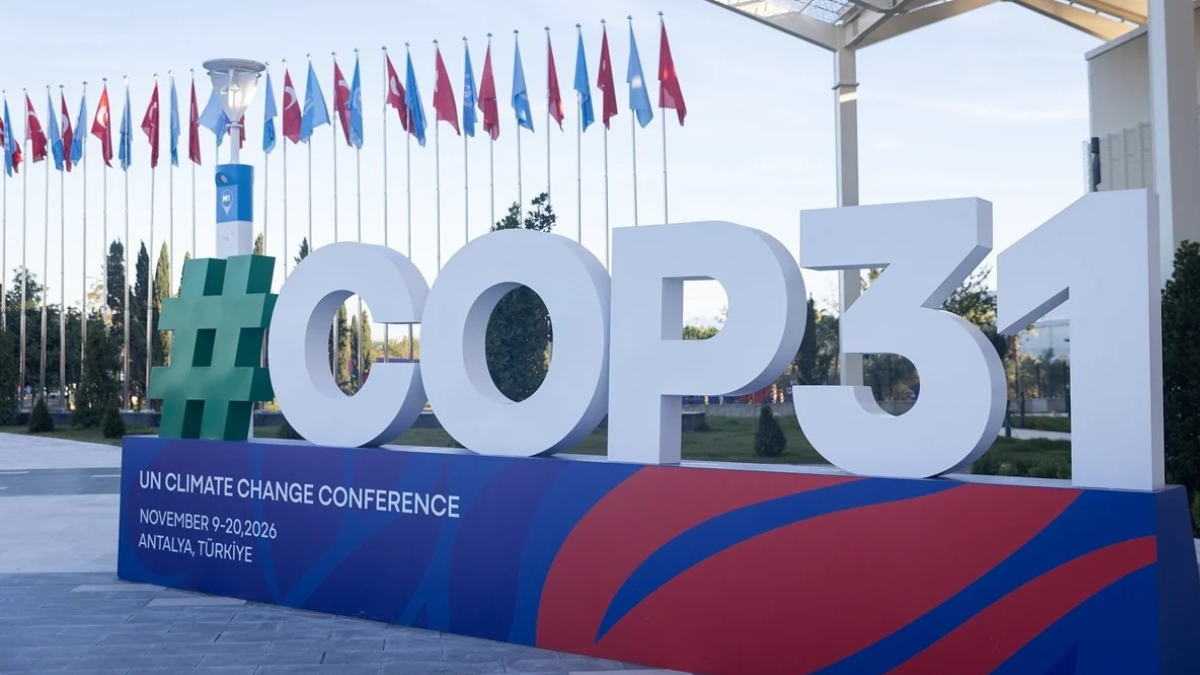
The findings come as countries meet for the 31st United Nations Climate Change Conference (COP31) in Antalya, Türkiye, from November 9 to 20. The conference takes place during the transition from the previous $100 billion annual climate-finance commitment to a new target of $300 billion by 2035.
Developed countries exceed $100 billion target, but questions remain
Developed countries had pledged to mobilise $100 billion annually by 2020 to support climate action in developing countries. The commitment was subsequently extended through 2025. According to the OECD’s 2026 assessment, developed countries provided and mobilised $132.8 billion in 2023 and $136.7 billion in 2024, exceeding the target for the third consecutive year.
However, the reported totals do not necessarily represent grants or money directly disbursed to developing countries. They include different forms of public finance, multilateral development bank contributions and private finance mobilised through public interventions.
Differences in accounting methods have also complicated assessments of whether countries are meeting their commitments. The UNFCCC’s 2026 assessment highlights variations in how countries report loans, grants, commitments and disbursements, making comparisons between datasets difficult.
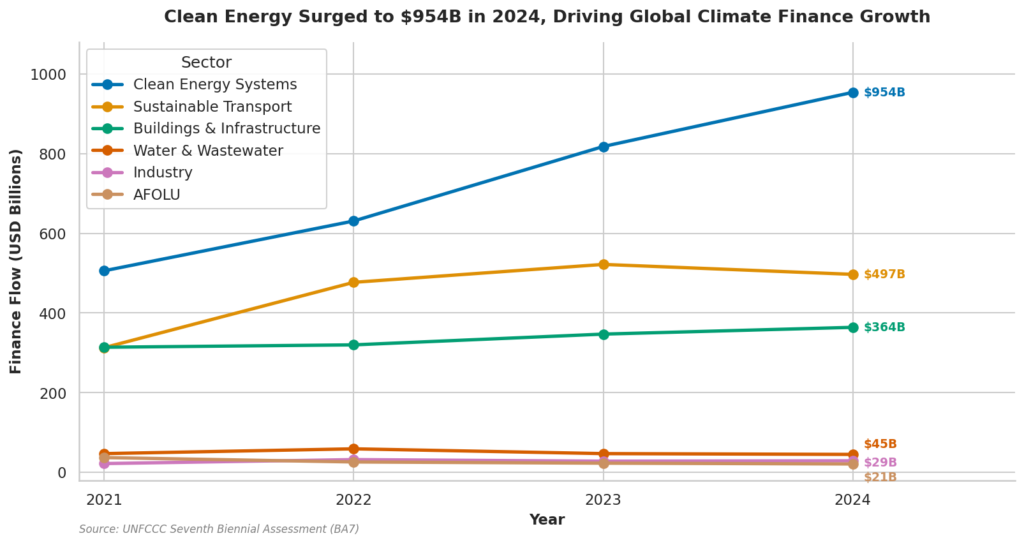
Total global climate finance reached an annual average of USD 1.9 trillion in 2023–2024.
The earlier target is now being replaced by the New Collective Quantified Goal (NCQG), adopted at COP29 in 2024. It calls for developed countries to take the lead in mobilising at least $300 billion annually for developing countries by 2035. The wider ambition is to scale up climate finance from all sources to at least $1.3 trillion annually by the same year.
Adaptation remains dependent on public finance
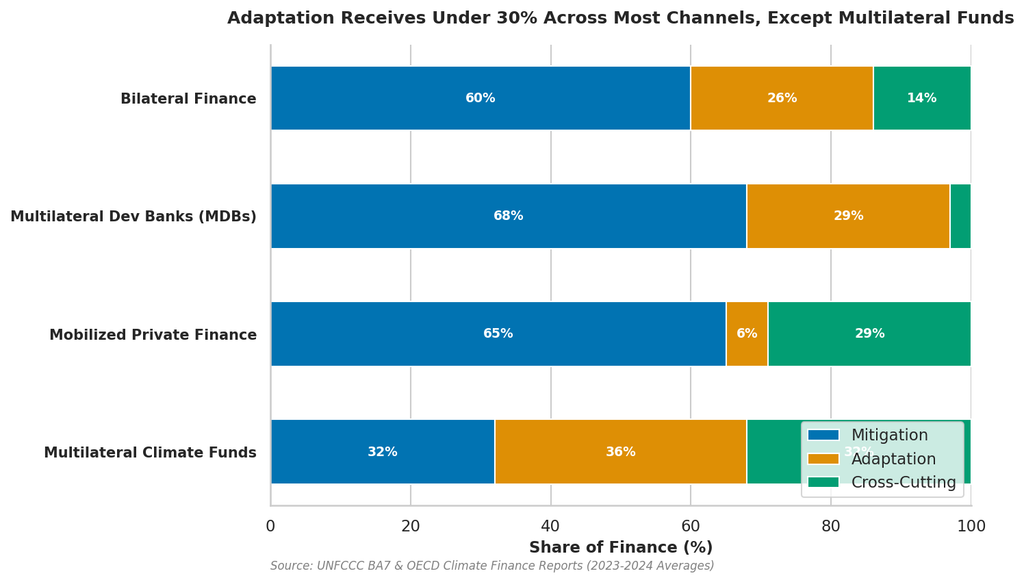
The expansion of climate finance has not translated into comparable support for adaptation. Investments in mitigation, including renewable energy and low-emission transport, have attracted substantial private capital. Adaptation projects such as flood protection, resilient agriculture, water management and coastal infrastructure, however, often generate fewer direct commercial returns.
The OECD reported that developed countries’ adaptation finance reached $33.6 billion in 2023 and $34.7 billion in 2024. Public finance accounted for more than 90 per cent of the tracked adaptation finance in both years, highlighting the continued dependence of adaptation initiatives on government and multilateral funding.
The broader financing gap is considerably larger. The United Nations Environment Programme’s Adaptation Gap Report 2026 estimates that developing countries will require approximately $305 billion annually by 2035 to meet their adaptation needs. This is substantially higher than the current international public adaptation finance flows.
LDCs and island nations receive a limited share
The financing imbalance is particularly significant for Least Developed Countries (LDCs) and Small Island Developing States (SIDS), which face high exposure to extreme weather, rising sea levels and other climate-related risks.
According to the OECD, LDCs received an annual average of $24.5 billion in climate finance in 2023–2024. SIDS received $3.8 billion in each of those years. The figures underline the limited scale of financial support reaching countries with substantial adaptation requirements.
A report published by the United Nations Capital Development Fund ahead of COP31 found that LDCs, which are home to almost 20 per cent of the global population, received only 1.9 per cent of global climate finance in 2024.
The terms on which finance is provided are also important. The UNFCCC’s assessment found that loans accounted for 91 per cent of multilateral development bank climate finance in its 2023–2024 channel-level breakdown. While loans can support large infrastructure projects, debt-based finance may place additional pressure on countries already facing economic constraints.
COP31 must move from targets to delivery
The latest figures reveal a gap between the scale of global climate investment and the resources reaching countries most vulnerable to climate impacts. Although the new $300 billion target represents an increase in the international climate-finance commitment, its effectiveness will depend on how much funding is accessible, predictable and directed towards adaptation.
For developing countries, particularly LDCs and SIDS, increasing the grant component, improving transparency in financial reporting and expanding concessional funding will be essential.
COP31 offers an opportunity to address these concerns as countries begin implementing the new climate-finance framework. The challenge is no longer only to mobilise larger sums, but to ensure that finance reaches communities facing the greatest climate risks.

Kerala’s Pink Water Lily Paradise is in an Ecological Question

Intellectual disabilities linked to severe educational disadvantage in India, study finds

Can Storytelling, Singing and Playing Help Children Reach Developmental Milestones? An Indian Study Explores the Link

TB deaths decline in India, but diagnostic gaps threaten elimination goals

Why NVIDIA Matters to the AI Revolution as Leadership Crisis Rocks the Chipmaker

Indian universities lead Asia in research output per faculty, but the country’s top six all slip in QS ranking

Why Delhi’s Geography Makes It Vulnerable to Severe Air Pollution

Europe Braces for Extremes as Commission Unveils Climate Resilience Framework

NASA recruits new astronauts for future Moon Base and Mars missions

Between Lectures and Lyrics: Kabeer Is Building a Malayalam Hip-Hop Career One Self-Taught Skill at a Time
-

 Math4 months ago
The 2026 Fields Medals: Four Proofs, Four Decades-Old Problems Solved
-
EP Deep Dive: Data & Solutions4 months ago
After Kerala’s Deadliest Landslide, the Hardest Thing to Rebuild Was Childhood
-
EP Deep Dive: Data & Solutions4 months ago
West Asia Crisis: Can Kerala’s Returning Gulf Migrants Find a Future in the Green Economy?
-
Space & Physics6 months ago
India Semiconductor Mission: ‘It’s Not About Fabs. It’s About Building An Entire Ecosystem’
-
Interviews2 months ago
From Scams to Screens: How the National Stock Exchange Rewrote India’s Equity Story
-
Climate & Environment5 months ago
The Climate World Cup? How Climate Change Could Affect Player Performance at the 2026 World Cup
-
Society4 months ago
What Is Civilisational Diplomacy? Understanding India’s Newest Foreign Policy Tool
-
Society5 months ago
From Bell Labs to the Classroom: A Second Career in Teaching