
Energy
India’s Journey of Turning Organic Waste Into Energy. Can It Scale?
India generates more than 1.6 lakh tonnes of municipal waste every day. Across the country, organic waste is being turned into biogas, Bio-CNG, electricity and manure.

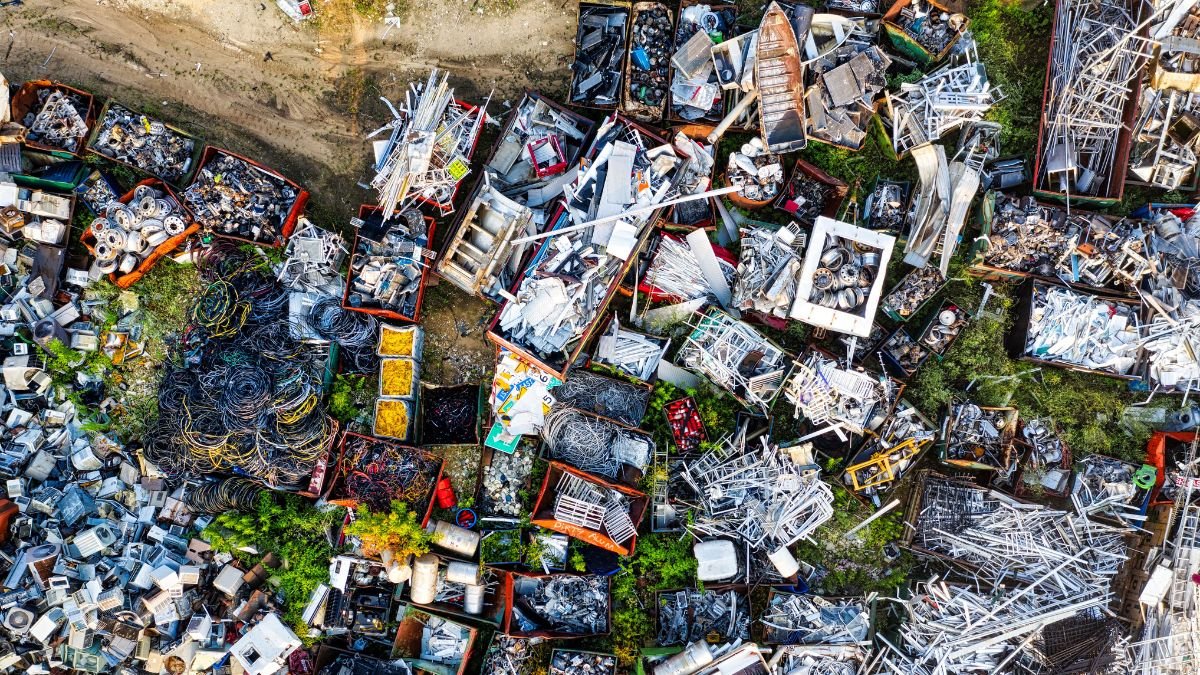
India’s cities generate about 1.62 lakh tonnes of municipal solid waste every day. Of this, around 1.32 lakh tonnes is processed, according to data reported by States and Union Territories on the Swachhatam portal in January 2026. That leaves more than 30,000 tonnes a day outside the reported processing stream.
The scale of the waste stream makes what happens to its biodegradable fraction important. Food scraps, vegetable and fruit waste, cattle dung and other organic material can either add to the disposal burden or be recovered for another use.
India’s new Solid Waste Management Rules, 2026, which came into force on April 1, make this distinction more explicit. They require waste to be separated at source into four streams, including wet waste. Kitchen waste, vegetables, fruit peels, meat and flowers are to be composted or processed through bio-methanation at the nearest facility.
Across India, projects are already using different organic waste streams to produce biogas, electricity, compressed biogas and manure. Their settings range from an educational campus and a vegetable market to a large cattle shelter and a city-scale Bio-CNG plant.
Campus that Replaced LPG with Biogas
At the Shrimati Manekba Vinay Vihar Educational Complex near Adalaj in Gujarat, the kitchen serves more than 500 people every day. Around 250 hostel students receive two meals a day, along with 15 staff families living on the campus.
The campus operates two biogas plants with a combined capacity of 90 cubic metres a day. They use dung from 222 cows kept at the institution’s cowshed, along with kitchen waste and agricultural residue from nearby fields.
The gas meets the campus’s entire cooking-fuel requirement. Without the plants, the campus would have needed around 30 LPG cylinders every month. The process also leaves behind slurry that can be used as organic fertiliser. The arrangement is relatively contained. The waste is generated within or close to the institution, and the resulting gas has a direct use on the same campus.
Vegetable Market Generating Its Own Power
At Bowenpally Vegetable Market in Hyderabad, roughly 10 tonnes of vegetable and fruit waste are collected every day. The waste was previously sent to landfills. An on-site biogas plant now processes nearly all of it. The plant generates around 400–500 units of electricity and 30 kg of biofuel every day. The electricity powers the market’s streetlights, stalls, administration building and water-supply network. The biofuel is used in the commercial kitchen.
The plant has reduced the market’s electricity bill by roughly half, from an earlier average of about ₹3 lakh a month. Five more plants have since been funded at other market yards. The project has also created work for women involved in waste sorting, machinery operation and administration. Here too, the waste source and the main users of the energy are concentrated in one location.
Prayagraj: Multiple Waste Streams Together
The Bio-CNG plant in Prayagraj operates at a much larger scale. It can process 343 tonnes of organic waste a day and produce around 21 tonnes of Bio-CNG. Its feedstock includes wet waste, paddy straw, cattle dung and poultry litter. The plant receives waste from hotels, restaurants and apartment complexes. Daily wet-waste supply has grown from around 7–8 tonnes initially to about 125 tonnes.
Along with Bio-CNG, the facility produces around 28 tonnes of compost each day, which is made available to local farmers. The gas supports city transport. The project is expected to extend piped gas access to around 45,000 households and reduce carbon emissions by approximately 57,000 tonnes annually.
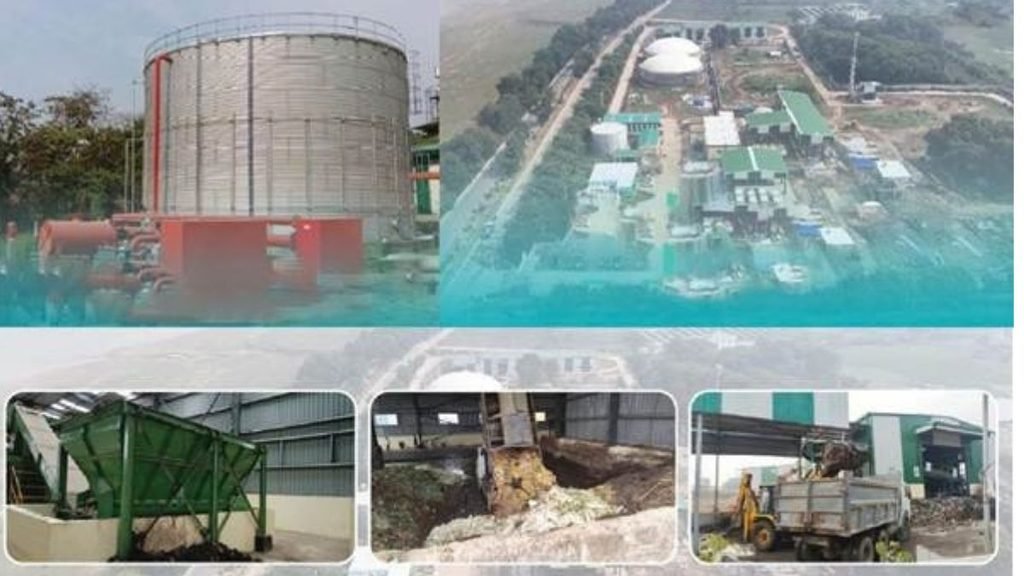
This is a different operating model from the smaller projects. Waste has to be brought in from multiple sources and supplied in sufficient quantities to keep a large facility running.
Gwalior Turns Cattle Dung Into Fuel
At Adarsh Gaushala in Laltipara, Gwalior, more than 10,000 cattle provide the main feedstock for a 100-tonne-per-day CBG plant. The ₹31-crore facility converts about 100 tonnes of cattle dung every day into two tonnes of compressed biogas. It also produces 10–15 tonnes of dry bio-manure daily.
The plant can process vegetable and fruit waste collected from markets and homes as well. The model is built around a large and concentrated source of organic material, with the resulting fuel and manure providing outlets for the products.
Waste Management: The Scale-up Problem Starts with the Waste
These projects demonstrate different ways of using organic waste. They also have conditions that are not automatically available across a city. The Gujarat campus has its own cowshed and kitchen. Bowenpally has a large quantity of similar waste concentrated in one market. Gwalior has access to thousands of cattle. Prayagraj draws from organised sources such as hotels, restaurants and apartment complexes.
Household waste presents a different problem. It is spread across thousands of locations and can contain plastics, glass and other contaminants. Recovering the organic fraction requires consistent segregation and collection. Moving it to a processing facility adds transport costs.
The plant itself is only one part of the system. A facility also needs a dependable supply of suitable feedstock. Once gas or electricity is produced, there must be a user or buyer. Compost and bio-manure need markets as well.
The 2026 rules place greater emphasis on this chain. Four-stream segregation is now mandatory, and bulk waste generators producing 100 kg or more of waste a day are required to ensure that their waste is collected, transported and processed properly. They must process wet waste on-site as far as possible or obtain an Extended Bulk Waste Generator Responsibility certificate where that is not feasible.
What the Projects Tell Us About Waste-to-energy
The four projects provide evidence of what can work when the waste stream, technology and end use are aligned. They do not establish that the same economics will apply across India’s urban areas.
The Bowenpally example, for instance, shows a substantial reduction in the market’s electricity bill, but the available account does not provide enough information on capital expenditure, operating costs or the time required to recover the investment. The same questions become more important as systems grow larger.
There is also a distinction between expected and demonstrated environmental benefits. The approximately 57,000-tonne annual carbon reduction cited for Prayagraj is an expected outcome, not a measured result reported in the source material. And the climate value of these systems cannot be judged only by what comes out of the plant. Collection, transport, processing and the energy source being replaced all form part of the calculation.
India’s waste figures show why the issue matters. More than 1.6 lakh tonnes of municipal waste enters the urban system every day, even as the country reports processing around 81% of it. The opportunity for organic waste lies in what happens before disposal becomes necessary. The challenge is making segregation, collection, processing and end-use work reliably enough for waste-to-energy to become part of that larger system.













Energy
India’s crude oil imports rise 11% as dependence on foreign energy persists
India’s crude oil imports continue to rise despite expanding refining capacity and petroleum exports. With nearly 88% of its crude oil requirements met through imports, the country faces persistent energy security challenges amid rising demand, geopolitical uncertainties and constraints in domestic production.
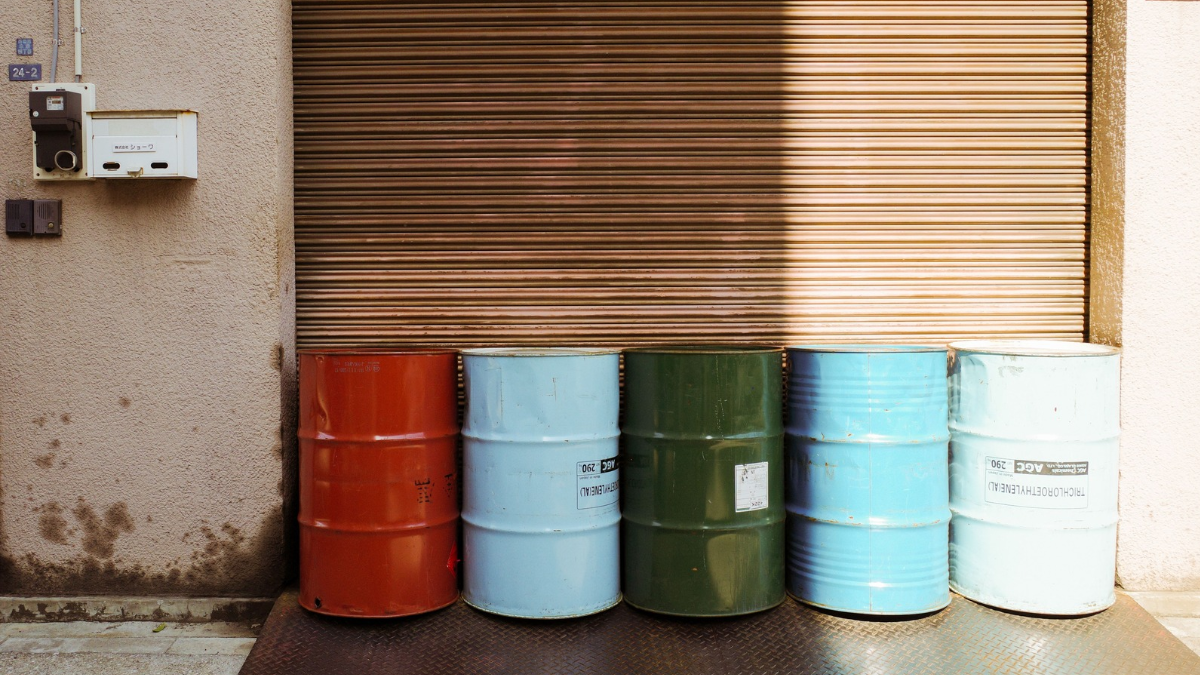
India’s crude oil imports increased to 23.31 million tonnes in October 2026, registering a 4.7% rise over September and an approximately 11% increase compared with the 21 million tonnes imported in October 2025. The latest figures from the Petroleum Planning and Analysis Cell (PPAC), under the Ministry of Petroleum and Natural Gas, highlight the country’s continued dependence on overseas crude supplies even as its domestic refining industry expands.
The increase comes amid rising energy requirements, an expanding transportation sector and the country’s growing role in the international petroleum-products market. However, the widening gap between domestic crude availability and consumption presents a persistent challenge for India’s energy security.
According to PPAC’s import-export data, India imported 146.60 million tonnes of crude oil between April and October 2026. October alone accounted for 23.31 million tonnes, making it one of the highest monthly import volumes during the period. The figures are provisional, as private refiners report their import and export data at their discretion.
Refining capacity and export strength
The import figures also reflect the scale of India’s refining industry. The country processes imported crude into petrol, diesel, aviation turbine fuel and other petroleum products, supplying domestic consumers while exporting a substantial share of its output.
Data reported from the Ministry of Petroleum and Natural Gas showed that Indian refineries processed approximately 24.12 million tonnes of crude oil in October, compared with 22.88 million tonnes in September and 22.53 million tonnes in October 2025. The increase indicates higher refinery activity and the industry’s capacity to convert imported crude into marketable products.
PPAC’s October trade figures also illustrate this export capacity. India exported 5.36 million tonnes of petroleum products during the month, against imports of 2.44 million tonnes of finished petroleum products. Diesel exports alone stood at 2.72 million tonnes, while motor spirit (petrol) exports reached 0.97 million tonnes.
Between April and October, petroleum-product exports totalled 32.15 million tonnes, substantially exceeding product imports of 15.09 million tonnes. This trade position underlines India’s importance in the global refining market. However, the export strength does not translate into crude oil self-sufficiency: the refineries still require substantial volumes of imported feedstock.
Domestic production struggles to keep pace
The underlying challenge is the limited growth in domestic crude oil production relative to the country’s energy requirements.
In a written response to the Rajya Sabha on 30 March 2026, the Ministry of Petroleum and Natural Gas stated that India’s crude oil import dependence, measured against petroleum, oil and lubricants consumption, remained broadly around 88% during FY 2023–24, FY 2024–25 and FY 2025–26.
This means that roughly nine out of every ten units of crude oil required by the country are sourced from abroad. The dependence has persisted despite exploration initiatives and efforts to increase domestic production.
India’s domestic oilfields face challenges including the maturity of several producing fields, declining output from older reservoirs and the technical and financial difficulties associated with exploring more complex geological formations. New discoveries and production projects require substantial investment and long development periods before they can contribute significantly to national supply.
The imbalance also exposes the country to international price movements. A rise in crude prices can increase the cost of imports, widen the trade deficit and place pressure on the rupee. Since crude oil is an essential input for transportation, manufacturing, fertilisers and petrochemicals, prolonged price increases can also feed into broader inflation.
Rising fuel demand adds to the pressure
Consumption trends provide another dimension to the country’s dependence on imported crude. India’s October petroleum-product consumption increased by 2.7% year-on-year to approximately 20.49 million tonnes, according to PPAC data.
Diesel consumption rose 12% to 8.53 million tonnes, while petrol consumption increased 3.5% to 3.80 million tonnes. Diesel demand is closely linked to freight movement, agriculture, construction and industrial activity, making it an important indicator of economic activity.
However, LPG consumption moved in the opposite direction, declining 12.3% to 2.52 million tonnes. The fall in cooking-gas consumption, alongside stronger transport-fuel demand, points to differing patterns across India’s petroleum market.

Drone shot of a large, complex offshore oil platform in deep blue ocean waters.Image credit:Aron razif/Pexels
For the April–October period, total petroleum-product consumption stood at approximately 134.18 million tonnes, 3.2% lower than the corresponding period in the previous year. This suggests that growth in individual fuels does not necessarily translate into uniform expansion across the entire petroleum sector.
Energy security beyond refining
India’s growing refining capacity and petroleum-product exports have strengthened its position in international energy markets. Yet, the country’s reliance on imported crude leaves its energy supply chain exposed to geopolitical disruptions, shipping constraints and fluctuations in international prices.
The concentration of oil transportation through strategically important maritime routes, particularly the Strait of Hormuz, adds another layer of vulnerability. Disruptions along such routes can affect shipping costs, insurance premiums and the availability of supplies, even when crude is purchased from geographically diverse sources.
The challenge, therefore, extends beyond securing sufficient crude oil. India must also improve domestic exploration, strengthen strategic petroleum reserves and diversify its energy sources to reduce exposure to external shocks.
At the same time, the expansion of alternative fuels, biofuels, compressed biogas and electric mobility could gradually moderate petroleum demand. PPAC’s August 2026 journal, Reimagining Mobility: Future Transportation Fuels for Viksit Bharat 2047, examines several of these pathways, including electrification, hydrogen, sustainable aviation fuel and other emerging technologies.
India’s oil and gas sector thus faces two parallel priorities: meeting the immediate energy requirements of a growing economy while preparing for a transition towards a more diversified energy system. Its expanding refining industry demonstrates considerable industrial capacity, but the continued dependence on imported crude shows that refining strength alone cannot guarantee energy security.
Energy
Can India’s Electric Vehicles, Efficient ACs and LEDs Show How Policy Can Change Energy Use?
India’s shift to efficient ACs, electric three-wheelers and LED bulbs shows how policy can change everyday energy choices. A new RMI report examines what these changes mean for the country’s electricity demand, fuel dependence and energy security.
Three out of every five three-wheelers sold in India are now electric. A decade ago, inverter air conditioners accounted for barely 1% of the market; but by 2022, their share had reached 77%. The UJALA programme, meanwhile, has distributed 369 million LED bulbs to households across the country. These efforts have become a part of India’s transition towards energy efficiency which receives less attention than solar parks and power plants. The primary underlying factor behind the movement is the fact that the way people use energy, and the policies that influence what they buy drives to the ultimate transition.
A report by the Rocky Mountain Institute (RMI), Locking in Prosperity: Ten Practical, Evidence-Backed Actions Toward Affordable, Reliable, and Secure Power Systems, uses these Indian examples to show how countries can make electricity more affordable and reduce their dependence on fuels whose prices can change suddenly. It uses examples from India and other countries to explain what governments, power companies and regulators can do. The report examines 20 case studies across 15 countries and recommends ten actions to improve electricity systems.
The two of its recommendations featuring India are improving the efficiency of air conditioning and encouraging electric vehicle adoption. Its UJALA programme appears separately as an example of how large-scale procurement can bring down the cost of efficient technology. The common thread is practical policy, while each example shows how government intervention can help shift a market, reduce costs for consumers or ease pressure on the energy system.
Inverter ACs Move From the Margins to the Mainstream
India’s air-conditioning market offers a striking example of how quickly consumer technology changes when efficiency is set as a market priority. According to figures cited in Press Information Bureau, inverter ACs made up just 1% of the market in 2015. Their share rose steadily over the following years, reaching 30% in 2017, 54% in 2018 and 77% in 2022.
Inverter technology adjusts a compressor’s speed to match cooling demand. Conventional fixed-speed units generally switch the compressor on and off to maintain the set temperature. The ability to vary output allows inverter models to use electricity more efficiently under many operating conditions. RMI attributes the market shift to India’s efforts to promote cooling efficiency through standards, product labelling and wider awareness. Its recommendation is to strengthen testing and labelling so that consumers can identify air conditioners that perform efficiently under real-world conditions.

The effect is also seen in the country’s overall electricity demand. The International Energy Agency (IEA) expects India’s electricity use to grow by an average of 6.4% a year until 2030. Air conditioning is expected to account for more than one-fifth of that increase.
As temperatures rise and more households install ACs, the electricity consumed by each unit will affect the country’s total demand. ACs that use less power can reduce the amount of additional electricity needed. But India will still have to expand its power generation capacity and upgrade the networks that carry electricity to homes and businesses.
Electric Three-wheelers Changing the Economics of Transport
India’s electric three-wheeler market sets another example of policy and economics reinforcing each other. RMI describes India as a global leader in the electrification of two- and three-wheelers as electric vehicles account for three in five three-wheelers sold in the country today. Adoption of electric two-wheelers is also increasing. The major reason for the shift has been purchase incentives, domestic manufacturing measures and the expansion of charging infrastructure. But the financial case for drivers is just as important.
For a commercial three-wheeler covering long distances each day, fuel is a recurring expense. An electric vehicle changes that cost structure: the purchase price may be higher, but the owner can spend less on energy and maintenance over the vehicle’s lifetime.
RMI compares electric and petrol-powered two- and three-wheelers based on a daily distance of 100 km. It counts the purchase price, registration, taxes, insurance, maintenance and the cost of fuel or electricity. The comparison assumes high daily use. Drivers who cover long distances can save more on running costs, helping them recover the higher purchase price of an electric vehicle. Therefore, the report recommends easier access to loans and charging facilities. It also says buyers need clear information about the total cost of owning an electric vehicle. Purchase subsidies can bring down the upfront cost, while affordable loans and dependable charging can make the switch easier for drivers.
Electric vehicles also reduce the amount of petrol and diesel needed for transport. Their growing use will increase electricity demand, but to test whether it can remain sustainable will depend partly on how that electricity is produced. For drivers, however, using electricity instead of petrol or diesel can reduce their exposure to changes in fuel prices.
UJALA: Power of Buying at Scale
Unnat Jyoti by Affordable LEDs for All is a Government of India scheme launched on January 5, 2015, to make energy-efficient LED bulbs affordable for households. Under the scheme, the government, through Energy Efficiency Services Limited (EESL), arranged the bulk purchase of LED bulbs and made them available to households at lower prices. LED bulbs cost more than ordinary bulbs at the time, which discouraged many households from buying them. By purchasing large quantities, EESL helped bring down prices and encouraged people to replace traditional bulbs with LEDs. This also helped households reduce electricity consumption and bills.
Under the UJALA scheme, 369 million LED bulbs have been distributed to 90 million households, according to the RMI report. Bulk procurement brought the average procurement price down by nearly 90%, from around 5 USD per bulb at the program’s launch to about 0 USD by 2024 in the report’s chart. RMI estimates that efficient LED lighting in India now saves households more than 2.24 billion dollars in electricity bills annually. This is the report’s estimate of annual savings, rather than a direct measurement of the amount saved by every household.
UJALA shows how buying products in large quantities can bring down their prices. By purchasing millions of LED bulbs together, the government helped reduce costs and made them affordable for more households. The same method could help make other energy-efficient technologies cheaper. However, bulk purchasing alone may not be enough. The products must meet quality standards, reach consumers through proper distribution networks and be easy for people to buy and use.
The Pressure Shifts to the Electricity System
The three examples show how policy can reduce the amount of energy consumers need for everyday activities and make alternatives to fossil fuels more attractive. The challenge that needs the utmost attention is how electricity demand is rising as transport, cooling, industry and digital infrastructure become more dependent on power.
The IEA expects India to add more than 570 terawatt-hours to its annual electricity consumption by 2030 compared with current levels. Along with new power plants, electricity must also be moved through transmission and distribution networks and supplied at the time and place it is needed.
This is where the other recommendations in RMI’s report become relevant. They include improving electricity-demand forecasts, clearing delays in grid connection queues, making large electricity users more flexible and using battery storage to balance supply and demand. The report also highlights advanced transmission technologies that can increase the capacity of existing lines.
These measures address a different part of the problem from efficient appliances and electric vehicles. They focus on whether the grid can handle changing patterns of electricity use without making power more expensive or less reliable. India’s experience with inverter ACs, electric three-wheelers and LED bulbs shows how government policies can influence what people buy and use. The next task is to apply similar measures across the power sector. India will need to produce electricity more cleanly, reduce wastage and expand its power networks to meet rising demand.
Energy
Energy Independent by 2047? India’s Electricity Is Getting There. Its Oil and Gas Aren’t.
IEA’s World Energy Outlook 2026 shows India’s power sector going non-fossil fast — but oil, gas and LPG imports are set to rise, not fall, by 2035.

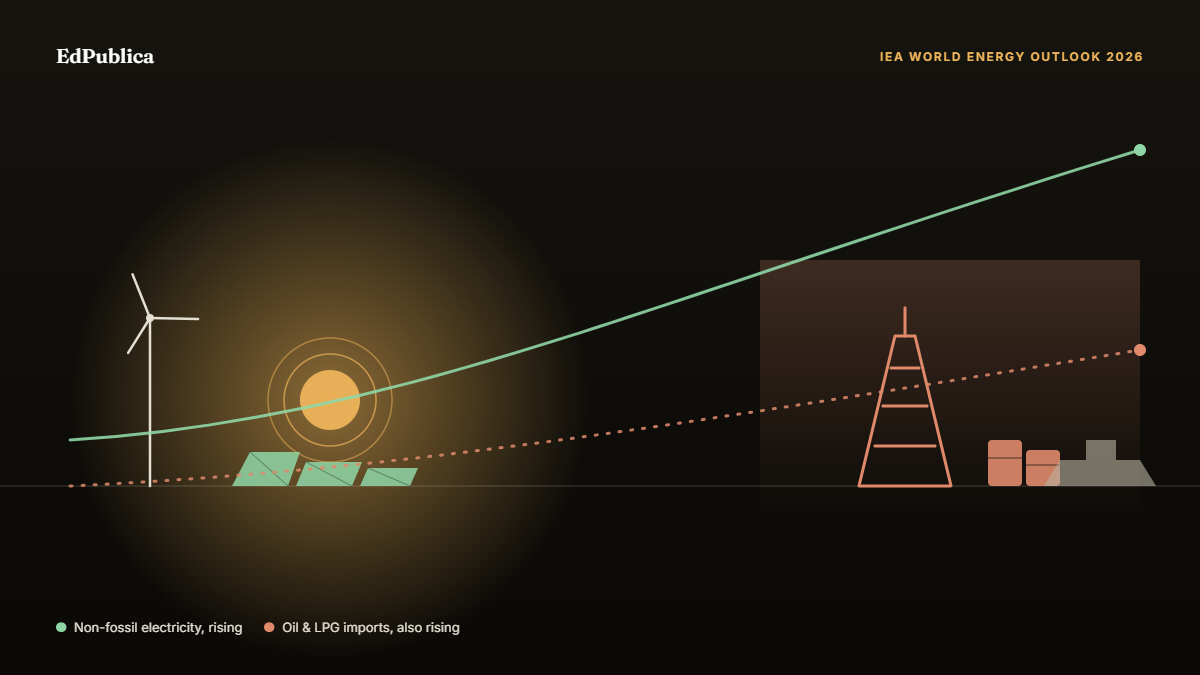
IEA’sWorld Energy Outlook 2026 has India’s electricity shifting fast towards non-fossil sources. For oil, gas and cooking fuel, the same projections show more imports, not fewer.
India has said since 2021 that it wants to be energy independent by 2047. The International Energy Agency’s World Energy Outlook 2026, published on 19 November, does not say India is on course for that. Its projections stop at 2035, and for oil and gas they point the other way.
India already meets about 40 per cent of its energy needs through imports, including 90 per cent of its crude oil and 50 per cent of its natural gas, according to the Outlook. Over the next decade its energy demand is projected to grow by 2.5 per cent a year in the agency’s Stated Policies Scenario (STEPS), roughly three times the global rate. STEPS counts existing policies plus measures that governments have formally proposed. “In all our scenarios, India accounts for more growth in energy demand over the next decade than any other country or region in the world,” the IEA said.
The picture is uneven. Electricity is moving quickly away from imported fuel. Oil and LPG are not. And the one scenario in the Outlook where India pushes harder on imports shows gains that are real but partial.
Is India Really Heading Toward Energy Independence?
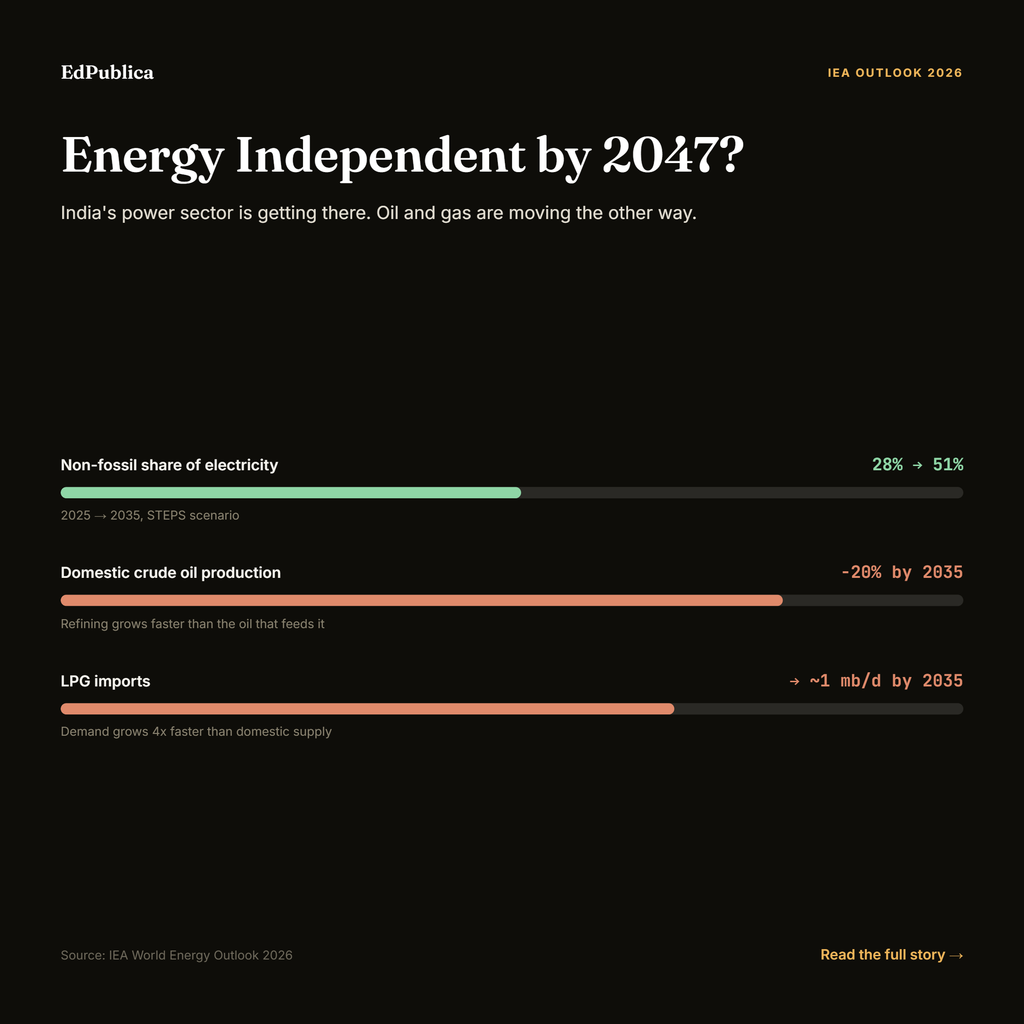
India’s electricity generation rises from 2,114 terawatt-hours (TWh) in 2025 to 3,585 TWh in 2035 under STEPS, an increase of about 70 per cent. The non-fossil share, meaning renewables and nuclear, goes from 28 per cent to 51 per cent. “As non-fossil capacity continues to expand, India generates well over half of its electricity from non-fossil sources by 2035 in the STEPS,” the report says. Solar PV accounted for half of India’s capacity additions over the past decade.
A quick calculation with those rounded shares adds a wrinkle. Non-fossil output roughly triples, from about 590 TWh to about 1,830 TWh. But fossil generation, 72 per cent of the 2025 total and 49 per cent of the 2035 total, still rises from about 1,520 TWh to about 1,760 TWh, an increase of around 15 per cent. The share of coal and gas falls while the amount of electricity made from them goes up. (These are our own calculations from rounded IEA shares, not figures the IEA publishes.)
Globally, Ben Backwell, chair of the Global Renewables Alliance, pointed to the IEA’s expectation that “Renewables are now expected to grow from 33% of electricity generation today to around 50%, and potentially even higher, by 2035.” India’s non-fossil share, which includes nuclear, goes from 28 to 51 per cent over the same years. The measures differ, but the direction and rough scale are similar.
Dave Jones, chief analyst at Ember, reads the Hormuz crisis as an accelerant. “Hormuz will speed up electrification and renewables, likely faster than many people think,” he said. The IEA’s own summary lists a push for faster electrification among the common responses it sees from countries hit by the crisis.
Oil and LPG: the other direction
Domestic crude production is projected to fall by nearly 20 per cent by 2035 under STEPS. Over the same period refining capacity grows by about 1 million barrels a day from nearly 6 million in 2025, with another 840,000 barrels a day already under construction, 660,000 of it expansions at existing plants and 180,000 greenfield. India ranks fourth in the world by refining capacity and third by refinery runs, and it remains a net exporter of petroleum products. But a larger refining industry fed by a shrinking home supply means more crude has to come from abroad.
The Outlook expects crude imports from the Middle East to stay broadly flat while total imports rise, with most of the extra supply coming from outside the Gulf. West Asia supplied roughly half of India’s refinery intake in 2025.
Cooking gas is the sharper problem. India produced about 450,000 barrels a day of LPG in 2025, around 40 per cent of what it uses. Under STEPS, domestic supply grows by less than 100,000 barrels a day by 2035 while demand grows by nearly 400,000, which could take LPG imports to nearly 1 million barrels a day.
This year showed what that exposure costs. The IEA estimates that the LPG used in half of India’s residential cooking cylinders passes through the Strait of Hormuz. LPG imports fell by more than 50 per cent in the first two months of the conflict, and the government maximised domestic production and put household supplies ahead of other users. “The Strait of Hormuz remains critical to India’s energy security,” the report said.
IEA Executive Director Fatih Birol put the wider lesson plainly. “I don’t see any credible pathway for the energy world to return to the way it was before,” he said. He also warned that “In pursuit of greater energy security, countries must take care not to replace one dependency with another.”
What a harder push would buy
The Outlook includes a scenario in which India goes further to cut its reliance on imported fuel: faster adoption of electric vehicles, more industrial electrification, better efficiency, more renewables and more domestic coal. By 2035 electric car adoption is 30 per cent faster than under STEPS. India’s oil requirement is 580,000 barrels a day lower and its natural gas use is 8 per cent lower than in STEPS.
For scale, Jan Rosenow, Professor of Energy and Climate Policy at the University of Oxford, noted that “China’s electric vehicle fleet, for example, is avoiding around 1.5 million barrels of oil a day.” The baselines differ, since that is China’s fleet today and India’s figure is an extra saving in 2035, but it gives a sense of the size of the prize. Rosenow’s broader point was that “countries which had electrified more of their energy use were better protected from this year’s supply shock.”
Coal does much of the work on the import side. Greater domestic coal production could bring steam coal imports down from nearly 150 million tonnes of coal equivalent in 2025 to around 30 million by 2035, and cut overall coal import dependence from about 30 per cent to 15 per cent. But rising steel output pushes coking coal demand up by 55 per cent, and India would still depend on imports for much of that extra requirement.
That sits awkwardly with climate goals, and campaigners have said so. David Tong of Oil Change International said the IEA “has yet again reiterated that there is no room for new oil, gas, and coal beyond existing fields to limit global warming to 1.5ºC.” Maria Pastukhova of E3G made a different point about the global picture: “over three quarters of the additional reduction in oil and gas imports that could result from policy responses to the Hormuz crisis comes from energy efficiency, electrification and renewables.” That is a worldwide figure, not an Indian one.
The cooling load
Over the next decade India is expected to add more than 12,000 cars to its roads every day, see a 33 per cent increase in built-up space and install another 200 million air conditioners. Globally, the IEA finds that energy needed to keep buildings cool is now overtaking the energy needed to heat them for the first time.
Pastukhova called this one of the report’s most alarming and least noticed findings: “by 2035, cooling will account for 30% of global peak electricity demand.” She added that “In emerging and developing economies outside China, 85% of households are exposed to high temperatures, yet fewer than one in five of these households have air conditioning.” India is in that group. Her warning on the fix was blunt: “Falling clean technology costs alone will not prevent it”.
Air conditioning is what drives peak demand, and the Outlook says coal will keep an important role in meeting India’s electricity demand. Anyone judging how independent India’s power system can become by 2047 has to count that load.
Reading 2047 against the data
The 2047 goal was announced by the Prime Minister in his 2021 Independence Day speech, with the stated aim of bolstering energy security by reducing imports. The IEA’s own policies database lists it as announced. The Outlook does not test it directly, because its projections end in 2035.
The case that it can be done comes from elsewhere. A 2023 modelling study from Lawrence Berkeley National Laboratory set out a pathway to near-complete energy independence by 2047 across power, transport and industry, mainly by cutting imported oil used in road transport and imported coal used in industry and power.
Set against the IEA’s numbers, the power half of that pathway is visibly under way. The oil half is not yet there. Under STEPS, crude output falls, refining grows and LPG imports climb. The stronger scenario narrows the gap but does not close it, and it leans on coal to do so.
Birol said that “energy security and energy transitions have never been so closely aligned.” For India, the next decade will show whether that alignment reaches the fuels it buys from abroad, or stays mostly in the power grid.

The Inequality Behind the Numbers: WHO Finds Major Gaps in How Countries Monitor Health Equity

Older Than the Border: How Drass Kept Its Polo Alive

Monash Researchers Develop Technology to Recover Critical Minerals from Coal Waste

An 8,000-km Train Journey to Explore India’s Entrepreneurial Landscape

Global University Enrolment Could Peak by 2035 as Demographic Shifts Reshape Higher Education

India’s Richest Agree on One Cause Above All Others: Education

Indian universities lead Asia in research output per faculty, but the country’s top six all slip in QS ranking

Why Delhi’s Geography Makes It Vulnerable to Severe Air Pollution

When the Corridors Close: A Story of Elephants and Displaced Lives

Europe Braces for Extremes as Commission Unveils Climate Resilience Framework
-

 Math4 months ago
The 2026 Fields Medals: Four Proofs, Four Decades-Old Problems Solved
-
EP Deep Dive: Data & Solutions4 months ago
After Kerala’s Deadliest Landslide, the Hardest Thing to Rebuild Was Childhood
-
EP Deep Dive: Data & Solutions5 months ago
West Asia Crisis: Can Kerala’s Returning Gulf Migrants Find a Future in the Green Economy?
-
Interviews2 months ago
From Scams to Screens: How the National Stock Exchange Rewrote India’s Equity Story
-
Climate & Environment6 months ago
The Climate World Cup? How Climate Change Could Affect Player Performance at the 2026 World Cup
-
Society5 months ago
What Is Civilisational Diplomacy? Understanding India’s Newest Foreign Policy Tool
-
Education1 week ago
India’s Richest Agree on One Cause Above All Others: Education
-
Society6 months ago
From Bell Labs to the Classroom: A Second Career in Teaching