
Climate & Environment
Flash Energy Droughts Could Put New Pressure on Renewable Grids
Flash energy droughts, rapid periods of unusually low wind and solar generation could become longer and more frequent as climate change alters renewable energy patterns.

A grid can have thousands of wind turbines and millions of solar panels and still face an electricity shortage when the weather turns against renewable generation. The concern is not simply that wind or solar output falls. It is what happens when the decline comes quickly and continues for several days.
A new study published in Nature identifies these events as “flash energy droughts” and finds that climate change could make some of them last longer. The finding points to a growing challenge for power systems that are adding renewable generation faster than they are building the flexibility needed to manage its variability.
When Renewable Generation Suddenly Drops
An energy drought occurs when wind or solar farms produce unusually little electricity for a sustained period. The researchers add another feature to the definition: the decline must happen unusually quickly.
Using 1985–2014 as a historical baseline, they identified energy droughts when daily wind or solar capacity factors fell below the 10th percentile of the baseline for at least three consecutive days. Events with an unusually rapid decline into that low-output period were classified as flash energy droughts. When wind and solar shortages occurred together, they were treated as compound events.
For a power system, the speed of the decline matters. A gradual reduction gives grid operators more time to adjust generation, move electricity between regions, charge or preserve storage and manage demand. A rapid drop leaves fewer options.
Kavan Javanroodi, an Assistant Professor at Lund University who studies climate-resilient energy systems and extreme climate events, wrote in an accompanying Nature Climate Change commentary that rapid declines in renewable generation can leave electricity systems with little time to respond.
Longer Droughts Create Bigger Grid Problem
The researchers used climate-model projections and an electricity-dispatch model to examine how flash energy droughts could change under different future emissions scenarios. Under the relatively low-emissions SSP1-2.6 scenario, the projected duration of flash energy droughts increases by 25.6% for wind and 29.8% for solar.
The change is much larger for compound events affecting both resources. Their projected duration increases by 155.7% under the same scenario. That figure does not mean renewable electricity production will fall by 155.7%. It refers specifically to the modelled duration of compound flash energy droughts.
The study also estimates that around 70.8% of global wind and solar capacity could be exposed to increasing frequency and duration of flash energy droughts. The significance lies in the overlap between two trends: renewable generation is becoming a larger part of electricity systems, while climate change is altering the weather conditions that drive that generation.
When Wind and Solar Fall Together
Wind and solar are often considered complementary sources. Solar produces most of its electricity during daylight, while wind follows different weather patterns and can generate power at night. When one resource is weak, the other may help compensate. A compound energy drought removes some of that buffer.
The study finds that flash energy droughts can increase unserved energy, flexibility requirements and electricity costs, placing greater pressure on the rest of the power system.
This changes the storage question, too. A battery that shifts solar power from the afternoon into the evening can help with a daily peak. But if wind and solar remain unusually weak for several days, the problem becomes one of energy duration, not simply instantaneous power. A system may need electricity for longer than a conventional short-duration battery can provide it.
India’s Renewable Expansion
India is rapidly increasing its dependence on renewable electricity. As of August 31, 2026, the country had 168.04 GW of installed solar capacity and 58.52 GW of wind capacity, according to the Ministry of New and Renewable Energy. Total renewable capacity, including large hydropower, stood at about 295.55 GW. India’s renewable resources are also exposed to changing climate conditions.
A 2026 study in Applied Energy examining climate impacts on India’s solar and wind resources projected that solar photovoltaic generation potential could decline by up to 10% across the country under the scenarios studied. Changes in wind potential varied substantially by region, with projected changes ranging from about 20% lower to 30% higher. The study also projected increases in solar-generation drought days in several parts of India. But they underline the same planning challenge: renewable generation depends on a climate that is itself changing.
Storage Cannot be the Only Answer
India is already planning for a much larger role for energy storage. The Ministry of New and Renewable Energy, citing the Central Electricity Authority’s National Electricity Plan, puts India’s energy-storage requirement at 82.37 GWh in 2026–27, rising to 411.4 GWh by 2031–32. Of the projected 2031–32 requirement, 236.22 GWh is expected from battery energy storage systems and 175.18 GWh from pumped-storage projects.
Those systems can help bridge the gap between when renewable electricity is generated and when consumers need it. But a multi-day renewable drought requires a broader strategy.
Longer-duration storage can carry electricity through prolonged shortages. Pumped-storage hydropower can provide large-scale flexibility. Transmission can move electricity from regions where renewable generation remains strong to areas facing a shortfall. Demand-response systems can shift some consumption away from stressed periods.
Better forecasting also matters. If grid operators can identify a rapidly developing renewable drought early, they can preserve storage, bring flexible generation online and prepare the network before the shortage becomes acute.
For the Days When Renewables Fall Short
The study also points to the importance of where renewable projects are built. Strategic siting could reduce exposure to flash energy droughts, although the benefits depend on climate conditions, available resources and whether suitable sites can actually be developed. That adds another consideration to renewable-energy planning.
A good solar or wind site is not only one that produces large amounts of electricity under normal conditions. It should also be considered in terms of how its generation behaves during extreme weather conditions and how easily the wider grid can compensate when output falls. For India, the next phase of the renewable transition will therefore require more than adding generation capacity.
It will require a grid that can store electricity for longer, move it across regions, adjust demand and respond quickly when weather-driven generation suddenly drops. The goal is not to eliminate the variability of renewable energy. It is to build a power system capable of working through it.











Climate & Environment
Global Climate Finance Hits Record $1.9 Trillion, but Vulnerable Nations Continue to Face Adaptation Funding Gap
Global climate finance reached a record $1.9 trillion in 2023–2024, but vulnerable developing countries continue to face an adaptation funding gap. As COP31 begins, questions remain over the delivery of the new $300 billion annual climate-finance target and equitable access to funding.

Global climate finance reached an unprecedented annual average of $1.9 trillion in 2023–2024, increasing by 32 per cent compared with the previous two-year period. However, despite the growth in investment, developing countries continue to face significant barriers in accessing the resources needed to adapt to climate change, according to assessments by the United Nations Framework Convention on Climate Change (UNFCCC) and the Organisation for Economic Co-operation and Development (OECD).
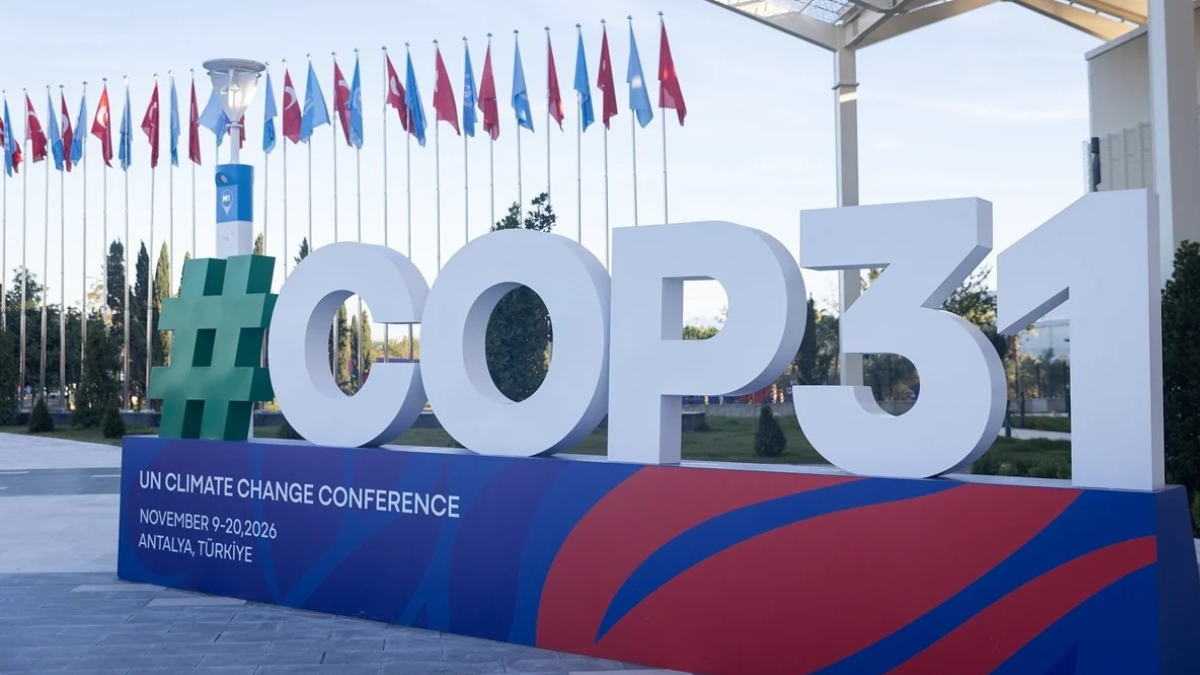
The findings come as countries meet for the 31st United Nations Climate Change Conference (COP31) in Antalya, Türkiye, from November 9 to 20. The conference takes place during the transition from the previous $100 billion annual climate-finance commitment to a new target of $300 billion by 2035.
Developed countries exceed $100 billion target, but questions remain
Developed countries had pledged to mobilise $100 billion annually by 2020 to support climate action in developing countries. The commitment was subsequently extended through 2025. According to the OECD’s 2026 assessment, developed countries provided and mobilised $132.8 billion in 2023 and $136.7 billion in 2024, exceeding the target for the third consecutive year.
However, the reported totals do not necessarily represent grants or money directly disbursed to developing countries. They include different forms of public finance, multilateral development bank contributions and private finance mobilised through public interventions.
Differences in accounting methods have also complicated assessments of whether countries are meeting their commitments. The UNFCCC’s 2026 assessment highlights variations in how countries report loans, grants, commitments and disbursements, making comparisons between datasets difficult.
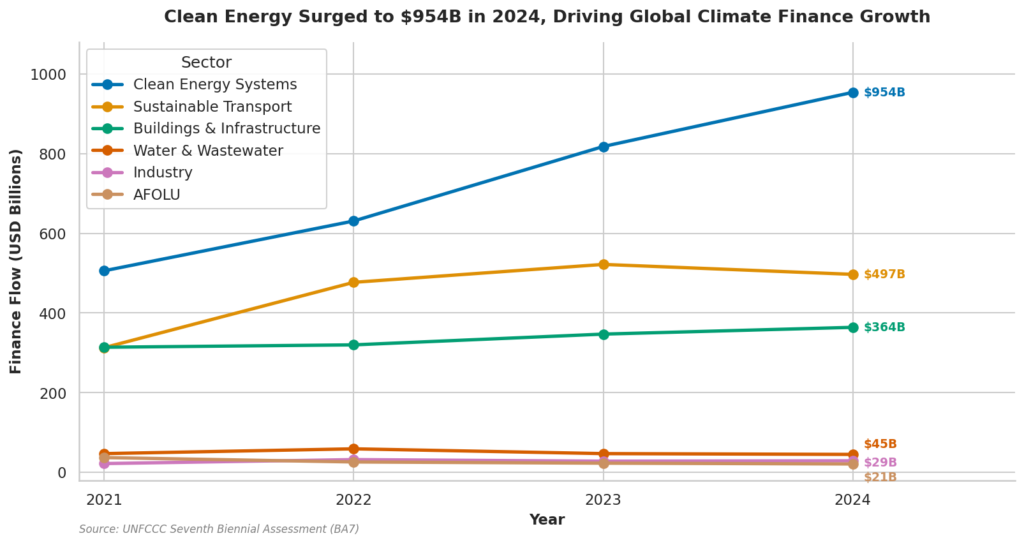
Total global climate finance reached an annual average of USD 1.9 trillion in 2023–2024.
The earlier target is now being replaced by the New Collective Quantified Goal (NCQG), adopted at COP29 in 2024. It calls for developed countries to take the lead in mobilising at least $300 billion annually for developing countries by 2035. The wider ambition is to scale up climate finance from all sources to at least $1.3 trillion annually by the same year.
Adaptation remains dependent on public finance
The expansion of climate finance has not translated into comparable support for adaptation. Investments in mitigation, including renewable energy and low-emission transport, have attracted substantial private capital. Adaptation projects such as flood protection, resilient agriculture, water management and coastal infrastructure, however, often generate fewer direct commercial returns.
The OECD reported that developed countries’ adaptation finance reached $33.6 billion in 2023 and $34.7 billion in 2024. Public finance accounted for more than 90 per cent of the tracked adaptation finance in both years, highlighting the continued dependence of adaptation initiatives on government and multilateral funding.
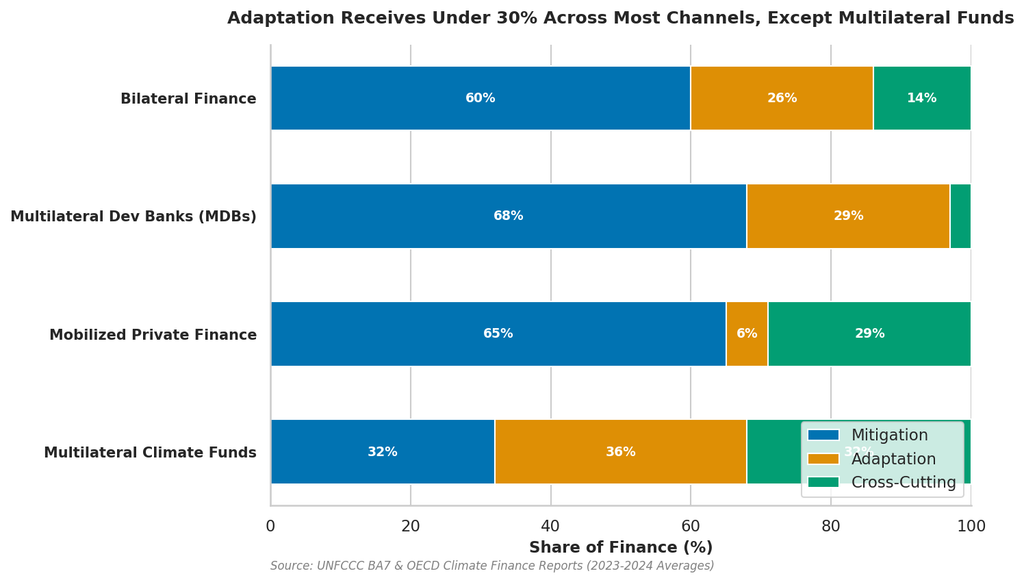
The broader financing gap is considerably larger. The United Nations Environment Programme’s Adaptation Gap Report 2026 estimates that developing countries will require approximately $305 billion annually by 2035 to meet their adaptation needs. This is substantially higher than the current international public adaptation finance flows.
LDCs and island nations receive a limited share
The financing imbalance is particularly significant for Least Developed Countries (LDCs) and Small Island Developing States (SIDS), which face high exposure to extreme weather, rising sea levels and other climate-related risks.
According to the OECD, LDCs received an annual average of $24.5 billion in climate finance in 2023–2024. SIDS received $3.8 billion in each of those years. The figures underline the limited scale of financial support reaching countries with substantial adaptation requirements.
A report published by the United Nations Capital Development Fund ahead of COP31 found that LDCs, which are home to almost 20 per cent of the global population, received only 1.9 per cent of global climate finance in 2024.
The terms on which finance is provided are also important. The UNFCCC’s assessment found that loans accounted for 91 per cent of multilateral development bank climate finance in its 2023–2024 channel-level breakdown. While loans can support large infrastructure projects, debt-based finance may place additional pressure on countries already facing economic constraints.
COP31 must move from targets to delivery
The latest figures reveal a gap between the scale of global climate investment and the resources reaching countries most vulnerable to climate impacts. Although the new $300 billion target represents an increase in the international climate-finance commitment, its effectiveness will depend on how much funding is accessible, predictable and directed towards adaptation.
For developing countries, particularly LDCs and SIDS, increasing the grant component, improving transparency in financial reporting and expanding concessional funding will be essential.
COP31 offers an opportunity to address these concerns as countries begin implementing the new climate-finance framework. The challenge is no longer only to mobilise larger sums, but to ensure that finance reaches communities facing the greatest climate risks.
Climate & Environment
India Ranks 28th in Global Climate Ranking, Down Five Places
ndia has dropped five places to 28th in the Climate Change Performance Index 2027. Despite reaching 50% non-fossil installed power capacity, coal supplied 71% of its electricity in 2025.

India has reached a major milestone in renewable energy capacity, with non-fossil fuel sources accounting for half of its installed electricity capacity in June 2025. Yet coal continued to generate 71% of the country’s electricity that year. This gap between capacity additions and the actual electricity mix is central to India’s performance in the Climate Change Performance Index (CCPI) 2027, where the country has slipped five places to 28th.
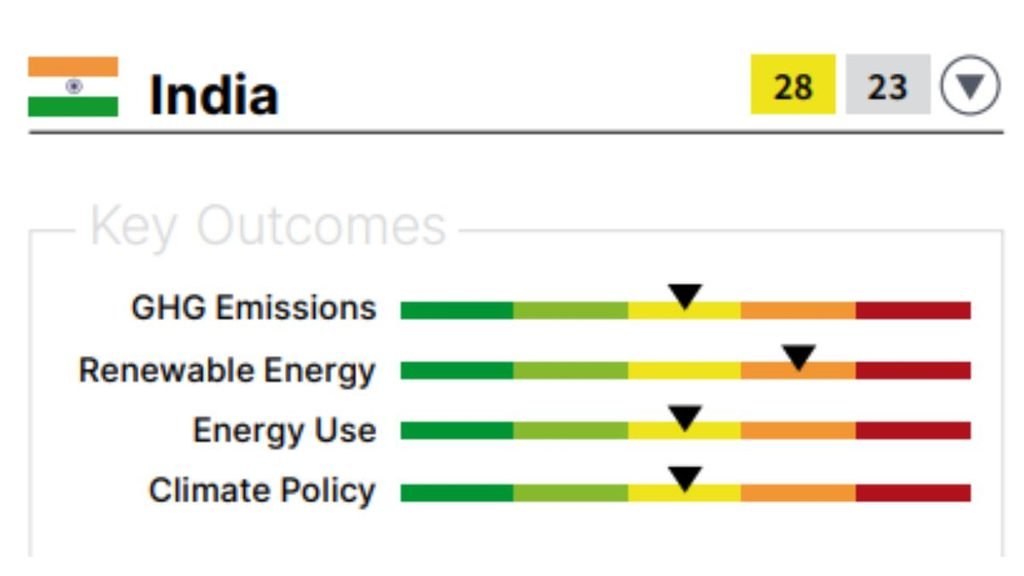
The index, published by Germanwatch and the NewClimate Institute, gives India an overall medium rating. Its assessment points to a mixed record: India has made substantial progress in expanding renewable energy and has performed relatively well on climate policy, but its energy use, emissions and renewable energy performance remain areas of concern.
India’s fall in the rankings should not be read as evidence that its renewable energy expansion has stalled. The country reached the 50% non-fossil capacity milestone five years ahead of its earlier 2030 target. However, installed capacity measures the potential to generate electricity, not how much power sources actually supply. The milestone also includes nuclear energy.
Data from Ember’s Global Electricity Review 2026 show that coal accounted for 71% of India’s electricity generation in 2025, against a global average of 33%. India’s coal generation did fall by 2.9% that year, while renewable generation rose sharply. But the continued dominance of coal in the electricity mix shows how much of the country’s power demand remains tied to fossil fuels.
Grid Constraints Slow the Transition
The challenge is becoming visible in the way India’s electricity grid handles solar power. An Ember analysis published in January 2026 estimated that the country curtailed 2.3 terawatt hours (TWh) of solar generation between late May and December 2025. Grid operators had to reduce solar output as an emergency measure to maintain grid security.
The problem is linked partly to the limited flexibility of conventional power plants. Solar generation rises during daylight hours, while electricity demand continues into the evening, when solar output falls. Coal-fired plants that remain online to meet demand can have limited room to reduce their output further. Without sufficient storage and other flexible sources of electricity, the grid cannot always accommodate the full amount of renewable power available.
This creates a practical constraint for India’s energy transition. Adding solar and wind capacity is essential, but the electricity system also needs stronger transmission networks, battery storage and power plants capable of adjusting output to changes in demand and renewable generation. Otherwise, more installed capacity will not translate into an equivalent reduction in coal-fired electricity.
The CCPI’s category rankings reflect the uneven progress. India ranks 13th in climate policy, but 31st in greenhouse gas emissions, 33rd in energy use and 40th in renewable energy. Its renewable energy category receives a low overall rating, despite a high trend indicator. This suggests that recent progress is significant, while the overall level of renewable energy deployment and its contribution to the energy system still have considerable room to improve.
India’s targets: Stronger Implementation
India’s updated climate commitments set out targets for 2035. These include reducing the emissions intensity of its gross domestic product by 47% from 2005 levels, raising the share of non-fossil sources to around 60% of cumulative installed electricity capacity, and creating a carbon sink of 3.5–4 billion tonnes of carbon dioxide equivalent through forest and tree cover.
The country has also begun implementing its Carbon Credit Trading Scheme, with emissions-intensity targets assigned to 490 industrial entities from January 2026. The effectiveness of the scheme will depend on the ambition of those targets, reliable monitoring and verification, and evidence that participating industries are actually reducing emissions.
The index also draws attention to gaps in energy efficiency. Building energy codes and appliance standards exist, but compliance remains uneven, particularly in informal markets. In transport, urban rail connectivity had expanded to 26 cities by August 2026. However, public transport improvements will also require affordable and reliable bus services, along with safer infrastructure for walking and cycling.
India’s dependence on imported fossil fuels adds an economic and energy-security dimension to the transition. Disruptions to shipping through the Strait of Hormuz have highlighted the risks faced by countries that rely on international supplies of oil and gas. Reducing fossil fuel consumption would help limit exposure to such external shocks, alongside its climate benefits.
Climate Change Performance Index: How India Compares With Other Major Economies
The CCPI leaves its first three positions vacant because no country meets the highest performance standards across all assessed categories. Denmark ranks highest at fourth place, followed by Lithuania and Luxembourg. Denmark has remained the best-performing country in the index for six consecutive years.
The contrast with the United Kingdom is also instructive. The UK, ranked seventh, is the only G20 economy to receive a high overall rating. Its electricity system became coal-free in 2025, according to Ember. Ten G20 members, meanwhile, received very low ratings in the CCPI, underscoring the difficulty major economies face in aligning their energy systems and climate commitments. India’s 28th position places it ahead of several developing economies, including Brazil at 21st, the Philippines at 16th and Nigeria at 17th. But its ranking also shows that early gains in clean-energy capacity do not, on their own, secure a stronger overall climate performance.
India has set a net-zero emissions target for 2070. The CCPI assessment points to the need for clearer, time-bound pathways for reducing the use of coal, oil and gas, with sector-specific milestones and plans to support workers and regions dependent on fossil fuel industries. The immediate test is visible in the electricity system: India must make its growing renewable capacity more usable, while reducing the share of power generated from coal. Until that happens, the country’s clean-energy expansion will continue to coexist with a power mix heavily dependent on fossil fuels.
Climate & Environment
Global fossil fuel emissions projected to fall in 2026, but India’s emissions to rise 4.4%
Global climate finance reached a record annual average of $1.9 trillion in 2023–2024, but developing countries continue to face significant barriers to accessing adaptation funding. As COP31 begins in Antalya, questions remain over the delivery of the new $300 billion annual climate-finance target and the support available to climate-vulnerable nations.
Global carbon dioxide emissions from fossil fuels are projected to decline marginally in 2026, even as India’s emissions are expected to increase by 4.4%, according to the latest Global Carbon Budget released by the Global Carbon Project on November 10. The findings highlight the uneven pace of the global energy transition, with expanding renewable energy capacity yet to deliver a sustained reduction in fossil fuel emissions.
The 2026 assessment estimates that global fossil fuel CO₂ emissions will reach 38.2 billion tonnes, representing a 0.4% decline compared with 2025. However, the projected reduction is partly attributed to lower oil consumption following the energy shock associated with the Iran conflict, rather than solely to structural changes in energy systems.
India’s fossil fuel emissions are projected to grow by 4.4% in 2026, exceeding the country’s average annual growth rate of 3.5% over the previous decade. India accounts for approximately 8% of global fossil fuel CO₂ emissions. The report notes that the projected increase partly reflects a rebound from relatively low emissions growth in 2025.
The contrasting trends in major economies underline the challenges of reducing emissions while meeting growing energy demand. China’s fossil fuel emissions are projected to decline by 0.9%, while those of the United States and the European Union are expected to fall by 1.3% and 1.5%, respectively.
Renewable energy offsets growing demand
The expansion of renewable energy and electric vehicles is increasingly limiting the growth of global emissions. According to the assessment, solar and wind power, alongside electric vehicles, are now offsetting approximately two-thirds of the additional emissions that would otherwise arise from increasing energy demand.
Emissions avoided through solar and wind power have increased substantially, from 0.28 billion tonnes in 2010 to an estimated 4.6 billion tonnes in 2026. The findings indicate that clean technologies are becoming increasingly important in meeting rising energy requirements without a corresponding increase in fossil fuel consumption.
However, the transition remains insufficient to achieve a sustained decline in global emissions. A research paper published alongside the carbon budget in Nature Climate Change, titled ‘A further acceleration of clean energy is needed for global CO₂ emissions to peak and decline‘, estimates that economic growth and changing energy consumption could add 2.59 billion tonnes of emissions between 2025 and 2028.
Solar power, wind power and electric vehicles could offset approximately 1.64 billion tonnes of this increase under current deployment trends. An accelerated deployment scenario could raise the avoided emissions to around 2 billion tonnes.
The researchers argue that renewable energy expansion must accelerate further to ensure that the growth in clean energy outpaces increasing global energy demand.
Land-use emissions add to the challenge
The projected decline in fossil fuel emissions does not translate into an overall reduction in carbon dioxide emissions. When emissions from land-use changes, including deforestation and forest degradation, are included, global CO₂ emissions are expected to reach 43.3 billion tonnes in 2026, compared with 42.8 billion tonnes in 2025.

View of Taipei’s skyline shrouded in smog.Image credit:Pexels
Emissions from land-use changes are projected to rise to 5.1 billion tonnes this year. The increase is associated with peatland fires and forest degradation in Southeast Asia, amid drier conditions linked to the developing El Niño.
The assessment also highlights the importance of natural carbon sinks. Land and ocean ecosystems absorbed approximately 49% of human-caused carbon emissions over the past decade. However, climate change is increasingly affecting their ability to absorb and store carbon.
Atmospheric CO₂ concentrations are projected to reach 427.7 parts per million in 2026, approximately 54% above pre-industrial levels.
Less than four years of the 1.5°C carbon budget remain
The report estimates that the remaining global carbon budget for limiting warming to 1.5°C is approximately 150 billion tonnes of CO₂. At current emission levels, this amount could be exhausted in less than four years.
The findings reinforce the urgency of accelerating the transition away from fossil fuels while protecting forests and other natural carbon sinks. Although renewable energy and electric mobility are increasingly limiting emissions growth, the researchers caution that their expansion has not yet reached the scale required to reverse the global emissions trajectory.
For India, the projected 4.4% increase highlights the challenge of aligning expanding energy requirements with climate commitments. The findings point to the need for faster renewable energy deployment, improvements in energy efficiency and stronger protection of natural ecosystems.
The 2026 Global Carbon Budget is the 21st annual assessment produced by an international research collaboration involving more than 140 scientists. It provides updated estimates of global carbon emissions, natural carbon sinks and the implications for meeting the goals of the Paris Agreement.

Global Climate Finance Hits Record $1.9 Trillion, but Vulnerable Nations Continue to Face Adaptation Funding Gap

India Ranks 28th in Global Climate Ranking, Down Five Places

Global fossil fuel emissions projected to fall in 2026, but India’s emissions to rise 4.4%

NASA recruits new astronauts for future Moon Base and Mars missions

Between Lectures and Lyrics: Kabeer Is Building a Malayalam Hip-Hop Career One Self-Taught Skill at a Time

Indian universities lead Asia in research output per faculty, but the country’s top six all slip in QS ranking

Europe Braces for Extremes as Commission Unveils Climate Resilience Framework

Delhi’s Air Quality Paradox: Lower Average, Higher Everyday Pollution

NMC Directs Medical Colleges to Set Up Patient Safety Committees

Brazil’s Amazon deforestation hits record low. Can the recovery last?
-

 Math4 months ago
The 2026 Fields Medals: Four Proofs, Four Decades-Old Problems Solved
-
EP Deep Dive: Data & Solutions4 months ago
After Kerala’s Deadliest Landslide, the Hardest Thing to Rebuild Was Childhood
-
EP Deep Dive: Data & Solutions4 months ago
West Asia Crisis: Can Kerala’s Returning Gulf Migrants Find a Future in the Green Economy?
-
Space & Physics6 months ago
India Semiconductor Mission: ‘It’s Not About Fabs. It’s About Building An Entire Ecosystem’
-
Interviews2 months ago
From Scams to Screens: How the National Stock Exchange Rewrote India’s Equity Story
-
Climate & Environment5 months ago
The Climate World Cup? How Climate Change Could Affect Player Performance at the 2026 World Cup
-
Society4 months ago
What Is Civilisational Diplomacy? Understanding India’s Newest Foreign Policy Tool
-
Society5 months ago
From Bell Labs to the Classroom: A Second Career in Teaching