Space & Physics
How India’s Semiconductor Industry Rose From Ashes to Atoms
How India is rebuilding its semiconductor future—from a lost opportunity in the 1980s to a high-stakes push to master the science, scale, and systems that define the global chip industry.

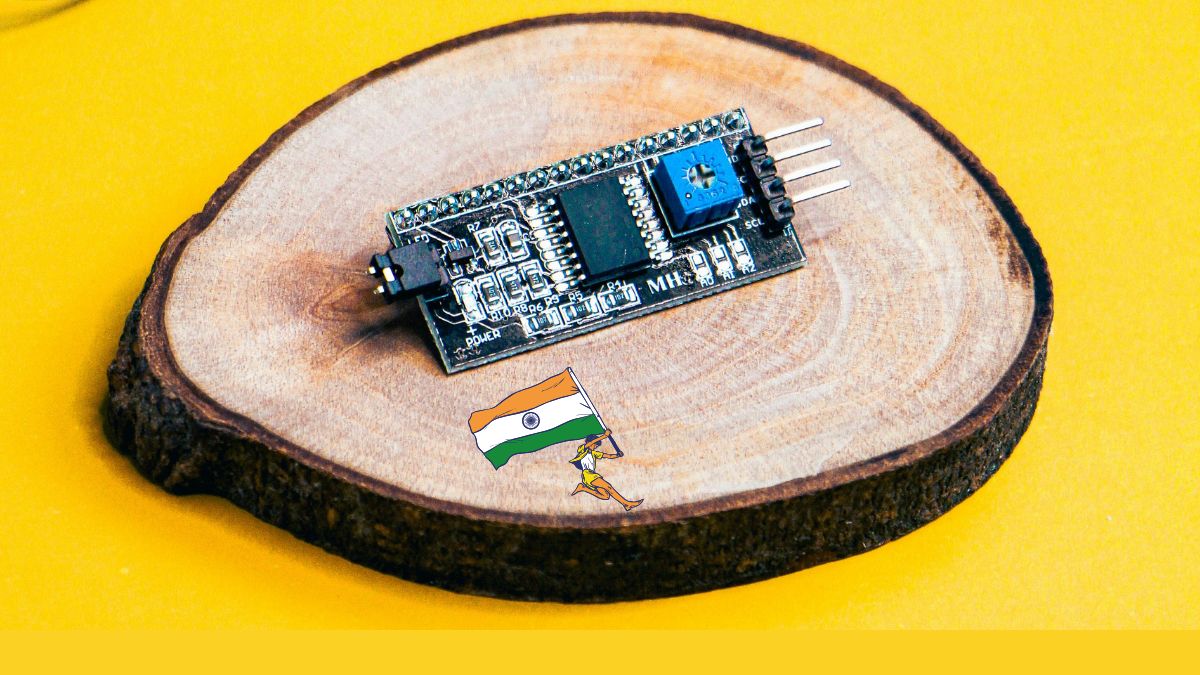
India’s semiconductor ambition is not merely an industrial policy experiment—it is an attempt to rebuild a technological capability lost decades ago, and to do so in a world where chips have become instruments of economic power and geopolitical leverage. From the ashes of an early setback to a renewed push backed by billions in investment, the country is seeking to construct an ecosystem that spans physics, engineering, and global supply chains. The challenge is not simply to manufacture chips, but to master the science, scale, and systems that define the industry—an effort that will unfold not over years, but over generations.
From early setbacks to a renewed national push, India is attempting to build one of the world’s most complex industrial ecosystems – where physics, policy, and geopolitics converge.
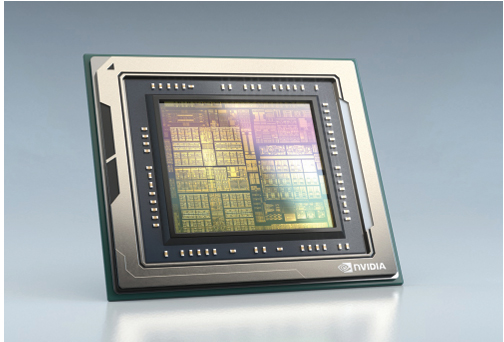
In the early months of 1989, India’s most ambitious experiment in semiconductor manufacturing came to an abrupt halt. A fire tore through the country’s primary chip fabrication facility in Mohali, Punjab, crippling an ecosystem that had taken years to build and, more importantly, interrupting a trajectory that might have placed India far closer to the global frontier.
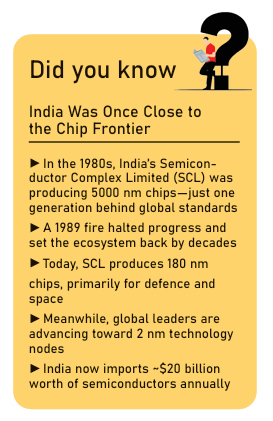
The Semiconductor Complex Limited (SCL), established in 1976, had begun producing chips in 1984—at 5000 nanometers, just one generation behind global standards. India was not leading the semiconductor race, but it was not far behind either—especially in an industry where catching up later becomes exponentially harder.
This was only 13 years after Intel introduced the world’s first microprocessor—and three years before Taiwan Semiconductor Manufacturing Company (TSMC) began production. The fire changed everything. Its cause was never officially determined. Investigators noted that it appeared to have started at multiple points—fuelling speculation of sabotage. What followed was not just physical damage, but institutional collapse.
India lost infrastructure.
India lost talent.
India lost time.
The disruption was not merely industrial. It was institutional. Engineers dispersed, expertise dissipated, and momentum stalled. By the time operations resumed years later, the global semiconductor landscape had already shifted irreversibly. Today, SCL—now a research-focused facility—produces legacy chips of around 180 nanometers, primarily for defence and space applications. Meanwhile, TSMC is manufacturing 3-nanometer chips and preparing for 2-nanometer production.
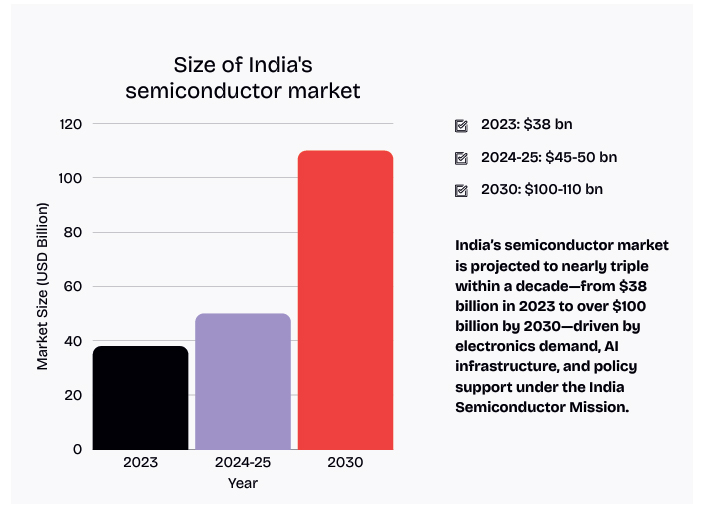
The gap is not incremental, it is generational. India imported semiconductor chips worth nearly $20 billion in 2024, with demand growing rapidly as electronics penetrate every aspect of life. And yet, semiconductors remain invisible—embedded in everything, owned by others. TSMC produces chips for global giants like Apple and Nvidia. SCL serves strategic domestic needs
More than three decades on, India is attempting to rebuild that lost trajectory.
But the context has changed. Semiconductors are no longer obscure components buried within devices. They are the foundation of artificial intelligence, telecommunications, defence systems, and economic competitiveness. They shape not just markets, but geopolitics.
India is not simply re-entering an industry it once attempted to build. It is stepping into one of the most complex and strategically contested systems in the modern world.
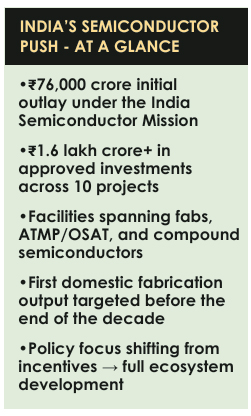
In March 2026, Prime Minister Narendra Modi inaugurated a INR 3,300 crore semiconductor facility in Gujarat, declaring India a “reliable global supplier” in an increasingly fragmented chip economy. Around the same time, Union Minister Ashwini Vaishnaw announced that multiple semiconductor plants are expected to come online over the next few years, with the first fabrication output targeted before the end of the decade. But behind the announcements lies a deeper reality. India is not building a factory. It is attempting to build one of the most complex scientific-industrial ecosystems ever created.
The Physics Beneath the Industry
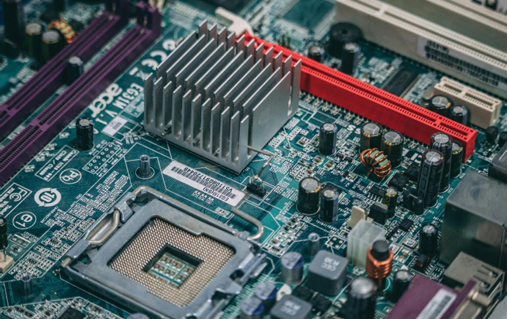
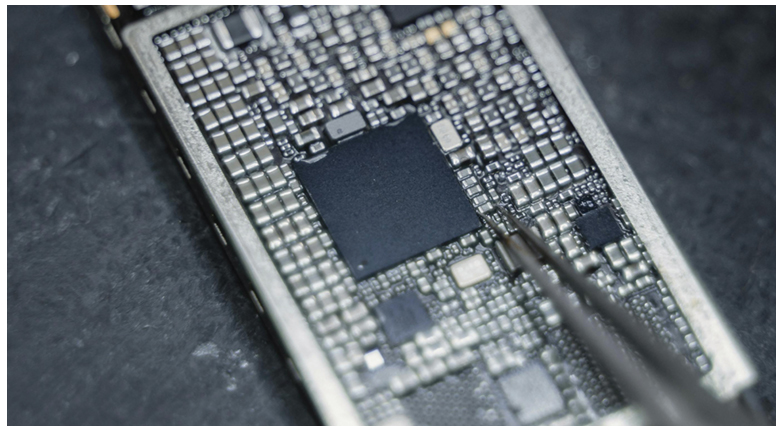
To understand the scale of India’s ambition, it is necessary to understand what a semiconductor actually is—not as a product, but as a process. Modern chips are constructed at nanometre scales, where the behaviour of electrons begins to defy classical expectations. Transistors—billions of which are embedded within a single chip—operate by controlling the flow of these electrons through carefully engineered silicon structures. But as these structures shrink, the physics becomes increasingly unstable.
Electrons leak across barriers that were once reliable. Heat accumulates in ways that are difficult to dissipate. Materials behave unpredictably under extreme miniaturisation. What appears as incremental progress in computing power is, in reality, a constant negotiation with the limits of matter.
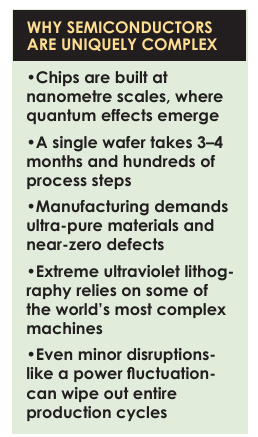
“A single wafer can take three to four months to manufacture, and there are hundreds of layers that have to be deposited,” notes Neelkanth Mishra, an expert on India’s semiconductor policy and Chief Economist at Axis Bank.
Each of these layers involves a sequence of deposition, etching, doping, and cleaning processes, repeated dozens of times with near-perfect precision. The tolerances are so tight that even microscopic contaminants can render entire batches unusable.
“The chemicals used in wafer cleaning are extraordinarily high purity, and even small impurities can affect yields,” Mishra adds. The process is not only delicate but energy-intensive. As IIT Bombay’s Udayan Ganguly explains, a single thermal step in fabrication can raise the temperature of a silicon wafer from ambient levels to over 1,000 degrees Celsius within seconds, requiring enormous power and precise control.
What emerges from this process is not simply a manufactured object, but a highly controlled physical system—engineered at scales where conventional intuition no longer applies.
A System Defined by Control
If the science of semiconductors is unforgiving, the global ecosystem built around it is equally restrictive.
“From design software to lithography to testing equipment, 90% of the industry is controlled by just two or three companies in each segment,” Mishra observes.
This concentration reflects decades of accumulated expertise, capital investment, and intellectual property. In some areas, such as extreme ultraviolet lithography—the process required to produce the most advanced chips—the dependence is even more pronounced.
“If you want to do extreme ultraviolet lithography, there is only one company in the world that can do it.” Such chokepoints have transformed semiconductors into strategic assets. Access to technology is no longer determined solely by markets, but increasingly by geopolitical alignment and national priorities.
For countries seeking to build domestic capabilities, this creates a paradox: the need to integrate into a global system while simultaneously reducing dependence on it.
India’s Semiconductor Industry: Policy Meets Scale
India’s renewed push into semiconductors is structured around this tension.
The India Semiconductor Mission, launched in 2022 with a substantial fiscal outlay, represents one of the most ambitious industrial policy initiatives in the country’s recent history. Since then, the government has approved ten semiconductor projects with investments exceeding ₹1.6 lakh crore across six states, covering fabrication, packaging, and specialised semiconductor technologies.
This is not an isolated effort. It is an attempt to build multiple layers of the value chain simultaneously. Early investments have focused on assembly, testing, and packaging facilities—segments that are less capital-intensive and can be scaled relatively quickly. Projects such as the Micron packaging facility in Gujarat, along with other recently approved units, are expected to serve as entry points for building industrial capability.
At the same time, larger and more complex initiatives—such as the proposed fabrication facility in Dholera—are intended to anchor the ecosystem over the longer term.
The second phase of the mission signals a shift in emphasis. Beyond manufacturing, the focus is expanding to include materials, equipment, and intellectual property—areas that are critical for long-term self-reliance.
Prime Minister Narendra Modi has framed semiconductors as central to India’s technological future, calling for the country to become a “reliable global supplier.” Union Minister Ashwini Vaishnaw has indicated that multiple plants are expected to become operational within this decade.
India’s Semiconductor Industry and The Design Advantage
Despite its limited manufacturing footprint, India occupies a significant position in the global semiconductor landscape through design.
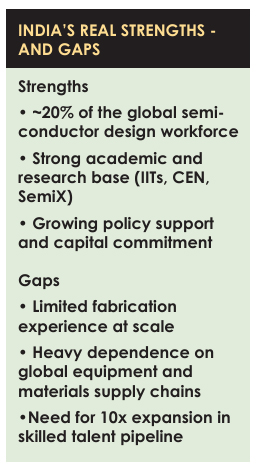
Nearly one-fifth of the world’s semiconductor design engineers are based in the country. Global firms rely on Indian teams to develop chips used in everything from consumer electronics to advanced computing systems. Nearly 20% of the global semiconductor design workforce is based in India. Companies such as Intel, Qualcomm, Nvidia, AMD, and Broadcom rely on Indian engineers for chip design.
“In a ten-dollar chip, five to six dollars of value is captured by the designer,” Mishra points out. This concentration of talent provides India with a strategic advantage, particularly in a world where intellectual property increasingly determines value. India has mastered design. What it has not yet built is manufacturing scale. However, this strength has historically been tied to global companies. The challenge now is to translate it into domestic capability—developing Indian firms that can own and commercialise their designs.
The Ecosystem Question
The central challenge for India lies not in any single segment of the semiconductor value chain, but in the integration of all its components.
“You cannot just build wafer fabs. You need everything—from capital equipment to chemicals—to make the ecosystem viable,” Mishra says.
A semiconductor industry requires:
- Reliable energy and water infrastructure
- Access to specialised materials and gases
- Advanced manufacturing equipment
- A continuous pipeline of skilled talent
It also requires coordination across institutions.
“The ecosystem is a triple helix—academia, industry, and government,” says Swaroop Ganguly of IIT Bombay. “Without tight collaboration, it cannot work.”
This interdependence makes semiconductors fundamentally different from most other industries. Progress in one area depends on parallel advances in others.

Institutions That Sustained the Science
Even during the decades when India lacked large-scale manufacturing, certain institutions preserved and advanced semiconductor research.
At IIT Bombay, work in microelectronics dates back to the 1970s, when the institute began building capabilities in semiconductor devices and integrated circuits. Over time, this evolved into more sophisticated infrastructure, including cleanroom facilities and collaborative programmes with organisations such as ISRO.
The establishment of the Centre of Excellence in Nanoelectronics (CEN) in the early 2000s further strengthened this foundation, enabling advanced research in semiconductor devices and fabrication techniques. By the late 2010s, India had emerged as a significant contributor to global semiconductor research, with IIT Bombay playing a leading role in experimental nanoelectronics.
In 2023, these efforts were consolidated under SemiX, a dedicated centre aimed at integrating research, talent development, and industry collaboration.
The Economics of Dependence
Semiconductors underpin virtually every modern activity, yet their economic footprint often goes unnoticed. “Every time you go to a doctor, drive a car, or watch a movie—you are effectively paying a semiconductor fee,” says Udayan Ganguly.
The observation is less rhetorical than it appears. As digital systems expand, the cost of semiconductors becomes embedded in everything from healthcare to transportation.
“If India does not control semiconductors to some extent, we are basically fighting a losing battle.”
This framing shifts the conversation from industrial policy to economic sovereignty. Control over semiconductors is not merely about manufacturing capacity; it is about retaining value within the economy.
Innovation as a Continuous Process
One of the defining characteristics of the semiconductor industry is its pace of change. “Semiconductors are not a bandwagon you jump onto—it’s a treadmill,” Ganguly notes. “If you stop running, you fall off.” Technological progress is relentless. Every generation of chips introduces new architectures, materials, and manufacturing techniques. Companies that fail to keep up quickly lose relevance.
“You cannot just build a plant and expect to coast,” Udayan Ganguly adds.
For India, this implies that building initial capacity is only the first step. Sustained investment in research and development will be essential to remain competitive.
Scaling Talent and Capability
India’s talent base is often cited as its greatest advantage, but scaling that advantage presents its own challenges. “We have the core capability,” says Udayan Ganguly. “But to meet demand, we need to scale talent by at least ten times.” This expansion cannot rely solely on elite institutions. It requires a broader transformation of engineering education, incorporating interdisciplinary training across physics, chemistry, materials science, and mechanical engineering. “Semiconductors are not just electronics,” Swaroop Ganguly emphasises. “They require multiple disciplines working together.”
The Long Horizon
Semiconductor ecosystems are not built quickly. The experience of other countries underscores this timeline. Taiwan, South Korea, and China invested consistently over decades before achieving their current positions.
“The Chinese started investing in the late 1990s and are still building capabilities—this is at least a 15–20 year journey,” Mishra notes.
For India, the challenge is not only to start, but to sustain momentum across political and economic cycles.
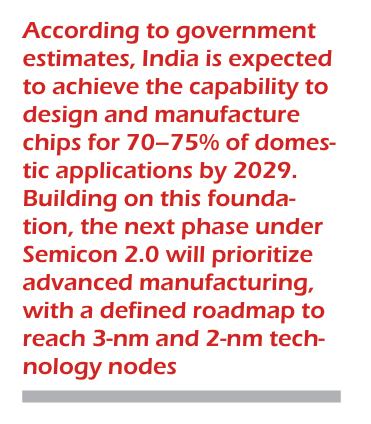
According to government estimates, India is expected to achieve the capability to design and manufacture chips for 70–75% of domestic applications by 2029. Building on this foundation, the next phase under Semicon 2.0 will prioritize advanced manufacturing, with a defined roadmap to reach 3-nm and 2-nm technology nodes. By 2035, India aims to establish itself as one of the world’s leading semiconductor nations.
India’s semiconductor industry ambitions are rooted as much in history as in future aspirations. The loss of early momentum in the late twentieth century delayed its entry into an industry that rewards continuity and scale. Today, the country is attempting to rebuild that trajectory under far more complex conditions. The progress made so far—policy frameworks, investment commitments, institutional capacity—suggests that the foundation is being laid. But the real test lies ahead.
Semiconductors are not merely manufactured. They are engineered—through sustained effort, coordinated systems, and long-term commitment.
From the ashes of past setbacks to the atomic precision of modern chipmaking, India’s semiconductor journey has begun again. Whether it can be sustained will determine not just the future of an industry, but the contours of technological power in the decades to come.




Space & Physics
India’s New Satellite Will Be Tested During Disasters
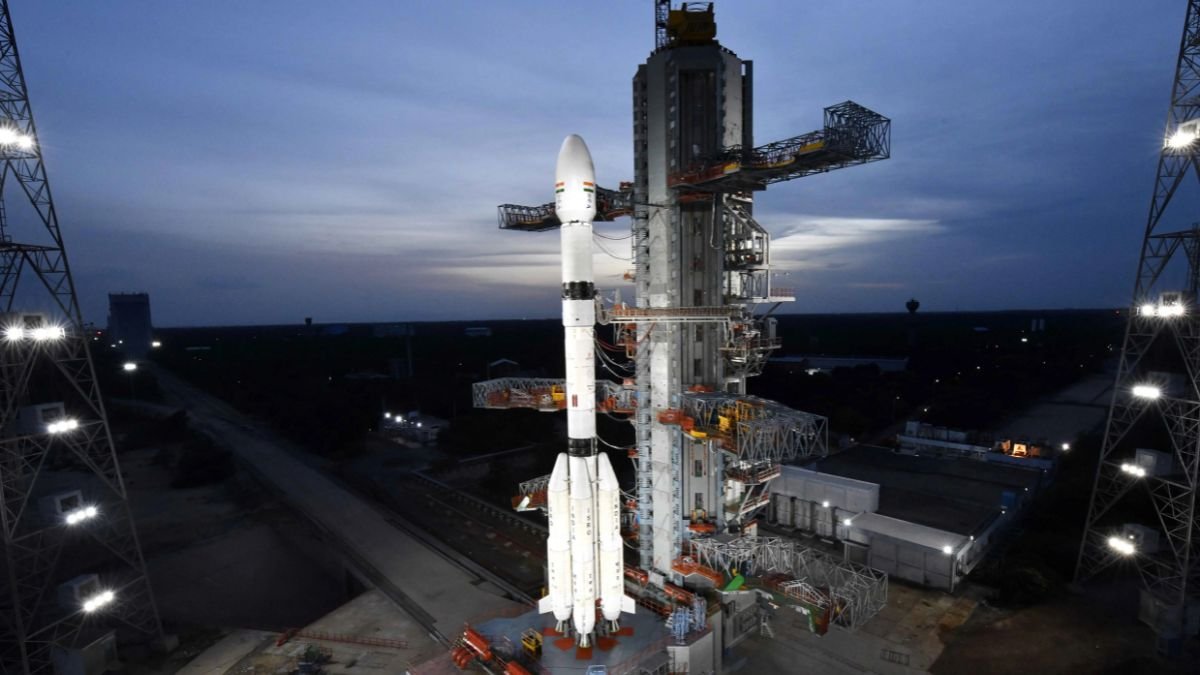
India’s latest Earth-observation satellite, EOS-05, could give disaster agencies a broader and more frequent view of floods, landslides and other hazards. But its real value will depend on how quickly satellite data can be turned into information that helps authorities act on the ground.

Space & Physics
India’s Moonshot Moment: Can New Delhi Turn Orbit Into Influence
India’s space mission is entering a new era, from Gaganyaan and space stations to private startups, space diplomacy and national security.


Gaganyaan is only the beginning. India’s space mission faces new opportunities and challenges as human spaceflight, diplomacy, private industry and security reshape its ambitions beyond Earth.
Indian human space programme Gaganyaan is mooted by Indian Space Research Organisation. This ambitious space mission aims to send Indian astronauts in Outer Space indigenously by the proactive leadership of the Indian government. India as a leading space power of the world aims to demonstrate her space capabilities and research in the final frontier. The Gaganyaan mission is the dream of 1.4 billion Indians. The programme will be initiated in 2027 creating a historic mark in the collective space exploration journeys. This is a stepping stone as NASA is envisioning to make Moon as the next base for active space programmes by 2030.
According to NASA this spectacular feat will be achieved soon within 3 years. NASA has asked India’s ISRO to join for the permanent Lunar base in the south pole of Moon. Here comes the significance of Indo-US space partnership and how India will navigate through the space diplomacy keeping in mind of Indian dream of Bharatiya Antariksh Station and the long lasting commitment to strategic autonomy and an independent foreign policy. India already signed the Artemis accords in June 2023. If India is ready to be part of this initiative, it will mark the beginning of a new era in India-United States space cooperation. The question is how India will navigate this process, protecting its sovereignty and national interest while engaging with NASA to help build a new civilisation of space travellers on the lunar surface. According to media reports India’s spectacular success with the Chandrayaan missions has led the United States to choose India as a natural partner, inviting it to join space exploration programmes on the Moon.
India’s Space Mission: The Next Frontier of Global Power
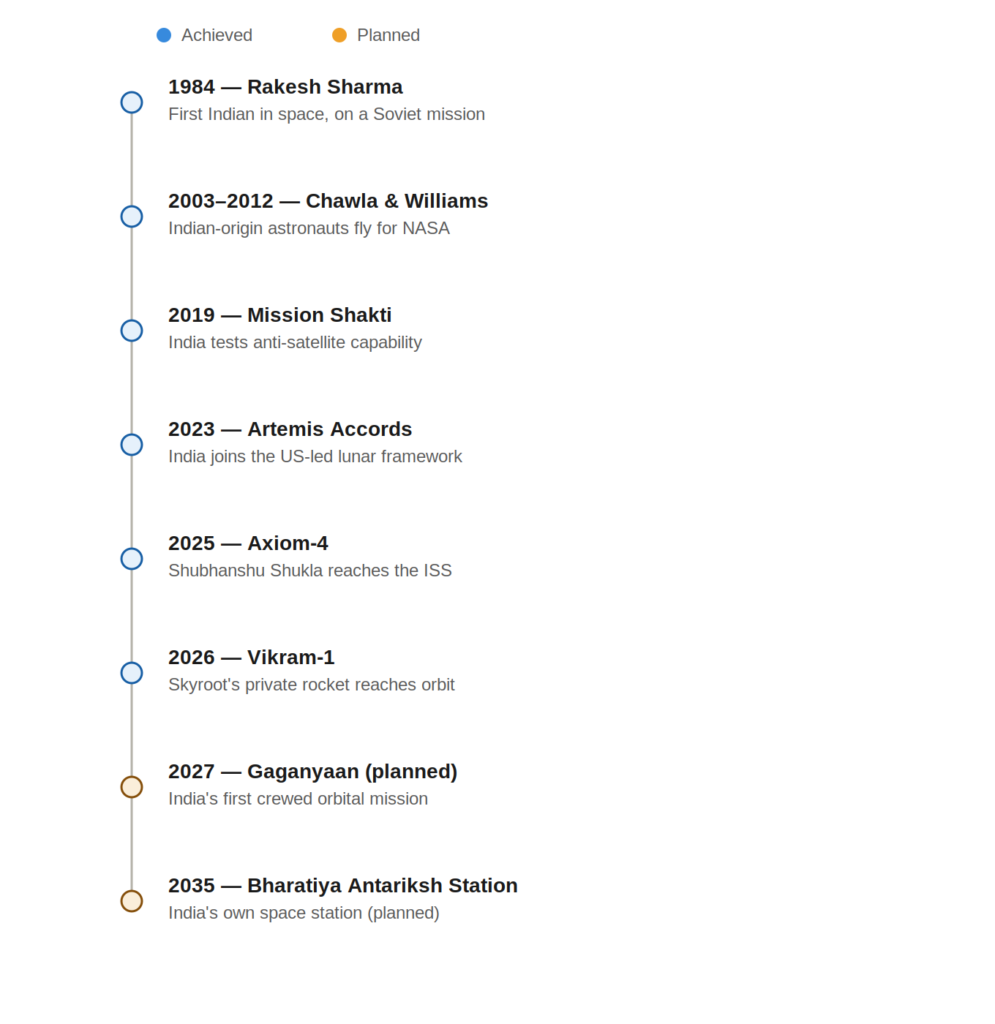
The Gaganyaan mission is significant for strengthening Indian space station’s vision. The Bharatiya Antariksh Station is an Indian space station which is a symbol of Indian space nationalism and a centre for joint research with friendly nations. India is actively pushing for space diplomacy and it is evident from the trainings received by Gaganyaan crew members. They have trained in Russia and the United States, continuing India’s commitment to strong bilateral ties with both Cold War-era rivals. Space exploration and travel are combined with diplomacy, as Indian foreign policy in a multipolar world order pushes for strong partnerships with both Russia and the United States.
Indian Air Force veteran Wing Commander Rakesh Sharma was the first Indian cosmonaut to reach the final frontier, in a Soviet space mission. Following this historic feat, Kalpana Chawla and Sunita Williams travelled to outer space on American missions. Recently, Group Captain Shubhanshu Shukla represented India in the Axiom mission successfully travelling to International Space Station and returned safely as a national hero. He is also part of the Gaganyaan mission. Colonel Anil Menon, who is part of the US Space Force, is also now in outer space. He has strong Indian connections, making him the first astronaut with roots in Kerala to explore the domain of outer space.
With privatisation in outer space in India, Skyroot Aerospace, a private company based in Hyderabad, successfully launched Vikram-1 rocket to low Earth orbit. Thus India is taking leverage of the infinite possibilities chasing stars and galaxies. Indian space ambitions are at a historic juncture now, with over 400 private Space startups. Another mission is aiming for a reusable re-entry vehicle, targeted for launch in 2027, building on ISRO’s success with the Pushpak mission, the Reusable Launch Vehicle Landing Experiment, in 2024.
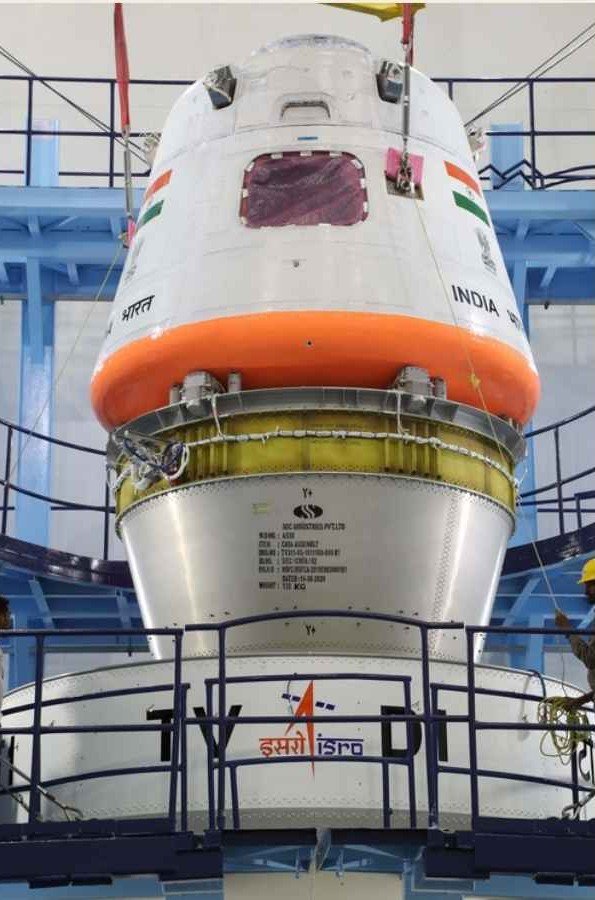
However, there are concerns in India’s space sector, with many ISRO scientists seeking early retirement. The efficiency of major projects like Aditya and Gaganyaan should not be affected by this. Former ISRO Chairman G Madhavan Nair shared his concerns with the media about bureaucratisation within the organisation. ISRO is a symbol of India’s space story which is filled with resilience and strength of great visionary leaders like Dr Vikram Sarabhai and Dr APJ Abdul Kalam. Unfortunately, there have been budgetary cuts to major ISRO space projects. The government’s focus on Viksit Bharat, a holistically developed India, is only possible with investment in science and technology, and in-depth research in the domain of outer space.
Outer space is militarised, and the race for resource nationalism is a reality. For India to emerge as a global power, investment in space exploration is inevitable. Nations are increasingly aware of the strategic use of outer space for securing national interests. Satellites with civilian and national security purposes are critical assets of any nation. India too has many civilian and strategic assets in outer space, and protecting these is the responsibility of the government. The anti-satellite test Mission Shakti is a milestone demonstrating India’s hard-power capabilities in outer space. Some nations have capabilities such as laser-guided weapons, which can disable or destroy an enemy’s assets during conflict. Space is a key domain for ensuring seamless communication and intelligence-sharing during both war and peace.
Intelligence and surveillance are key factors in winning the wars of the present and future. The dominance in space technology and information superiority will determine the victories of nations fighting for their national interest.
In India, the share of higher education in the annual budgetary allocation remains low. A young generation passionate to explore arenas of space science is to be inculcated with the right mindset. Allocation of funds in education sector is a key requirement for building a strong India with educated and skilled youth. ISRO’s active collaboration with 100 Atal Tinkering Labs is a positive step in inculcating the spirit of scientific enquiry at the grassroots level. Support and encouragement for students in the creative arts and sciences is the need of the hour. Atal Tinkering Labs and India’s startup ecosystem can achieve greater synergy, ensuring a seamless transition from school life to entrepreneurship, from plan to execution.
Human activity has actively degraded the ecosystem, impacting life on both land and water. Now, with active competition in the arena of outer space, space debris is a serious global security challenge. This debris travels swiftly in outer space, damaging active space assets including civilian and defence satellites. The young budding scientists of India need to re-invent and discover practical solutions to the pressing global challenge of space debris and work with relentless passion for making a strong and stable India.
Space & Physics
Meteorite Dust Reveals Evidence of Magnetic Field in the Young Solar System
A magnetic field in the early solar system has been detected in ancient meteorite grains, offering evidence that magnetism helped shape the young sun.



KSBB Workshop Examines Biodiversity, Climate and Environmental Reporting

Why Global Tech and Industry Lean on Indian Talent

From Silicon Valley to Sustainable Period Care; How This Engineer Is Rethinking Menstruation with Science

India tops the world for population exposed to climate-driven risky heat

Can a Webcam Replace the Guru? A Kerala Startup Is Betting Yes

Farmers Borrowed to Build ‘Diggis’. Two Years Later, They Are Still Waiting for the Subsidy

Our Algorithm Knows What We Want Before We Do. That is the Problem.

When Decarbonisation Becomes the Real Conversation at Tiruppur’s Knit Show

When the Himalayas Collapse Without Warning, What Counts as Preparedness?

The Engineer of Tomorrow Is Already Here

-

 Math2 months ago
The 2026 Fields Medals: Four Proofs, Four Decades-Old Problems Solved
-
Climate2 months ago
After Kerala’s Deadliest Landslide, the Hardest Thing to Rebuild Was Childhood
-
Society2 months ago
West Asia Crisis: Can Kerala’s Returning Gulf Migrants Find a Future in the Green Economy?
-
Space & Physics4 months ago
India Semiconductor Mission: ‘It’s Not About Fabs. It’s About Building An Entire Ecosystem’
-
Climate4 months ago
The Climate World Cup? How Climate Change Could Affect Player Performance at the 2026 World Cup
-
Society2 months ago
What Is Civilisational Diplomacy? Understanding India’s Newest Foreign Policy Tool
-
Society3 months ago
From Bell Labs to the Classroom: A Second Career in Teaching
-
Space & Physics4 months ago
Engineers Develop Dual-Mode Propulsion System for Next-Generation Small Satellites