
Health
Puberty, Pregnancy and Menopause Reshape the Female Brain Differently, Study Finds
A new study examines how puberty, pregnancy and menopause are associated with distinct patterns of structural changes in the female brain, highlighting the need for more research into women’s brain health across the lifespan.


A study comparing brain scans across three major hormonal transitions finds shared patterns of structural change during puberty and pregnancy, while menopause follows a distinct trajectory.
The female brain undergoes different patterns of structural change during puberty, pregnancy and menopause, according to a study published in Nature Communications, highlighting how hormonal transitions may influence brain development and ageing across a woman’s life.
The research compared longitudinal brain imaging data from 1,095 participants. Researchers applied consistent analytical methods across three groups to investigate whether the hormonal transitions trigger similar or distinct changes in grey matter, the brain tissue involved in information processing.
The findings show that girls transitioning through menarche — the first menstrual period — and women going through pregnancy experienced widespread reductions in cortical grey matter volume. However, the patterns differed across brain regions. Women transitioning through menopause, meanwhile, showed no significant reduction in total or cortical grey matter volume during the study period, although women in the stable premenopausal and postmenopausal comparison groups showed declines.
The results suggest that these major hormonal transitions are associated with distinct patterns of brain remodelling rather than a single process affecting the female brain throughout reproductive life.
Puberty and pregnancy share some changes
The research team examined three cohorts: 142 participants in the puberty group, 110 in the pregnancy group and 843 in the menopause group. The researchers compared participants undergoing each transition with control groups to distinguish transition-related changes from ordinary developmental and age-related trajectories.
In the puberty cohort, 34 girls were assessed before and after menarche. Their brain scans showed significant monthly reductions in total and cortical grey matter volume, a pattern not observed in the stable premenarchal and postmenarchal comparison groups.
Similar changes appeared in women who became mothers. Both first-time and second-time mothers showed significant reductions in total and cortical grey matter volume compared with women who had not given birth. The study estimated monthly reductions of approximately 0.12% in total grey matter volume among first-time mothers and 0.11% among second-time mothers.

MRI Brain scans.Representational image.Image credit:Pexels
Despite these similarities, the researchers found that puberty generally involved greater cortical volume reductions than pregnancy. Their regional analysis covered 74 cortical regions and identified both shared and divergent patterns of change.
In 34 regions, the changes associated with puberty and pregnancy did not differ significantly from each other, while both showed greater reductions than the menopausal transition. These areas were concentrated in the prefrontal, parietal and temporal association cortices, which are involved in higher-order functions.
Other regions, particularly those associated with sensorimotor processing, showed a stepwise pattern in which the decline was greatest during puberty, followed by pregnancy and then menopause.
The authors caution that structural changes should not automatically be interpreted as evidence of damage. The study examined brain volume rather than directly measuring cognitive ability or the functional consequences of these changes.
Menopause presents a different pattern
The findings for menopause differed from those for puberty and pregnancy. Women who transitioned from premenopause to postmenopause during the study showed no statistically significant reduction in total or cortical grey matter volume. In contrast, the stable premenopausal and postmenopausal groups showed significant declines over their respective observation periods.
The researchers suggest that this pattern may indicate an attenuation of age-related volume decline during the menopausal transition itself. However, they stress that this interpretation remains preliminary, and the absence of a significant reduction does not establish that the brain undergoes no changes during menopause.
The study also has limitations. The three cohorts were drawn from different datasets and scanned using different MRI systems. Hormone measurements were not available in a harmonised format across all groups, preventing the researchers from directly comparing hormone levels with brain changes throughout the lifespan. Menarche and menopause were also classified using self-reported information rather than detailed clinical staging.
The findings add to a field in which women’s brain health, particularly during reproductive transitions, remains comparatively understudied. The authors call for future research combining repeated brain scans with hormonal, reproductive, psychological and social data.
By examining puberty, pregnancy and menopause within a common analytical framework, the study provides a more detailed picture of how structural brain changes vary across these transitions. It also underscores the need to investigate each stage separately rather than treating the female brain as following one continuous pattern of hormonal change.

Health
Dementia Risk Extends to Middle Age in Rural India, New Study Finds
A new study in rural Andhra Pradesh identifies probable dementia among adults aged 45–59, highlighting the importance of early attention to cognitive health and associated risk factors.


Dementia, commonly associated with older age, may affect people much earlier than generally recognised. A new study conducted in rural Andhra Pradesh has identified probable dementia among adults aged 45–59, drawing attention to the need to address cognitive health before individuals reach old age.
Published on October 19, 2026, in the Journal of Global Health, the study found that 3.4% of participants aged 45–59 screened positive for probable dementia. Among participants aged 60 and above, the proportion increased to 7.4%.
Titled Prevalence and determinants of probable dementia in rural India: a cross-sectional study in the APCAPS cohort, the research examined 2,163 adults aged 45 and above from 29 villages near Hyderabad. The researchers analysed data collected between 2021 and 2023 through the Andhra Pradesh Children and Parents Study (APCAPS) cohort.
The research team included investigators affiliated with the ICMR-National Institute of Nutrition, the Public Health Foundation of India, the London School of Hygiene and Tropical Medicine and Chiang Mai University.
Education, Occupation and Stroke Emerge as Key Factors
The researchers used the Brief Community Screening Instrument for Dementia (BCSI-D) to identify probable dementia. They also examined its association with educational attainment, occupation, household assets and cardiometabolic conditions, including diabetes, hypertension, cardiovascular disease and stroke.
One of the strongest associations emerged between stroke and probable dementia. Participants with a history of stroke had 3.77 times higher odds of screening positive for probable dementia than those without such a history.
Education also emerged as an important factor. Literate participants had approximately half the odds of probable dementia compared with illiterate participants. The adjusted odds ratio was 0.54, indicating a significant association between literacy and cognitive health.
Occupation showed another notable association. Participants who were unemployed or retired had 2.23 times higher odds of probable dementia than those engaged in agriculture or animal rearing.
However, the researchers cautioned that the study’s cross-sectional design does not establish that unemployment or retirement causes dementia. Cognitive difficulties may also contribute to individuals leaving employment.
Interestingly, the study did not find statistically significant associations between hypertension or diabetes and probable dementia. The researchers noted that the relatively small number of probable dementia cases and other factors could have influenced these findings. The absence of a significant association does not establish that these conditions have no effect on cognitive health.
Rural Communities Face a Growing Cognitive Health Challenge
The findings add to existing evidence on dementia prevalence in India. A nationwide study published in Alzheimer’s & Dementia in 2023, using data from the Longitudinal Ageing Study in India (LASI), estimated that 7.4% of Indians aged 60 and above were living with dementia, representing approximately 8.8 million people.
The national study also reported a higher prevalence in rural areas (8.4%) than in urban areas (5.3%), highlighting geographical differences in the burden of dementia.
The latest research extends this discussion by examining adults below 60, an age group that has received comparatively less attention in dementia research. Based on its findings, the researchers estimated that the 3.4% screening-positive rate among adults aged 45–59 could translate to approximately 8.1 million people nationally requiring further diagnostic evaluation. However, this is an illustrative projection based on a rural southern Indian cohort and should not be interpreted as a national prevalence estimate.

Representative image.Image credit:Pexels
The researchers also acknowledged limitations in identifying dementia through screening instruments. A positive screening result does not constitute a clinical diagnosis. Differences in literacy and familiarity with formal cognitive assessments could influence screening performance, particularly in populations where educational opportunities are limited.
They called for longitudinal studies and clinical diagnostic confirmation to establish the prevalence and progression of dementia among middle-aged adults.
The findings highlight the importance of integrating cognitive health into broader public-health planning, particularly through greater attention to vascular risk factors and the needs of stroke survivors. As India’s population ages, the study suggests that dementia prevention and early identification may need to begin well before individuals enter older adulthood.
Health
FSSAI Moves to Restrict Added Sugars in Infant Foods, Citing Need for Stronger Nutritional Safeguards
FSSAI has proposed restricting the addition of sucrose and fructose to infant foods for babies up to six months. The draft amendment aims to strengthen nutritional safeguards.

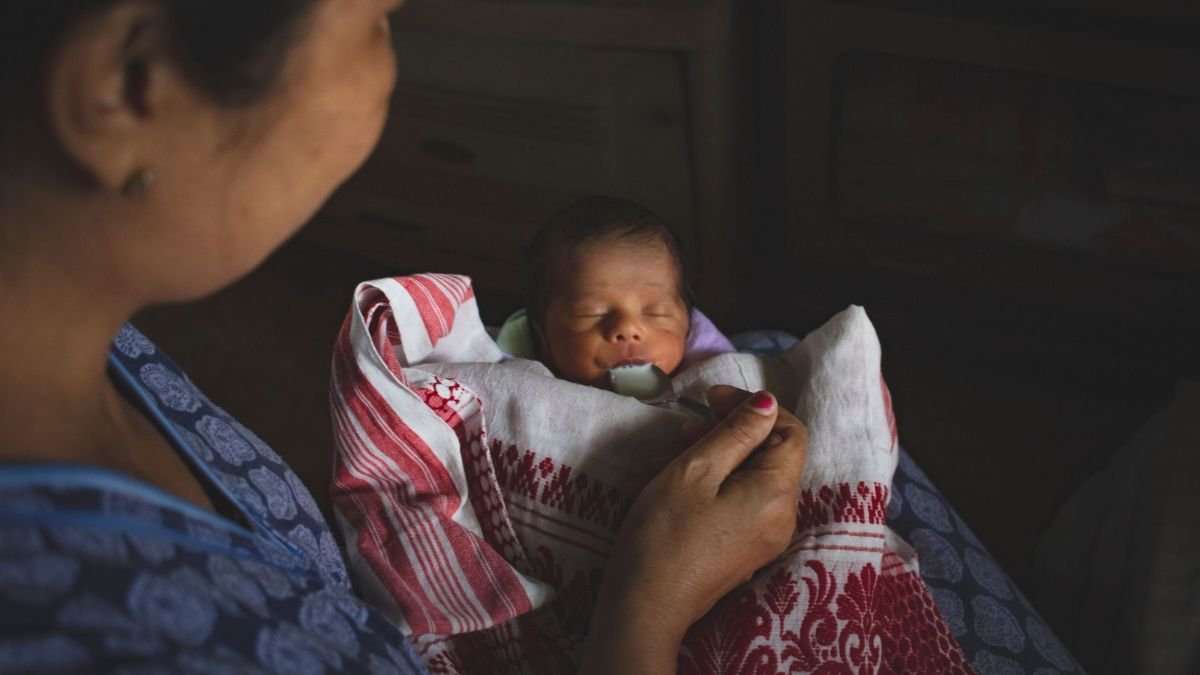
The first months of life leave little room for nutritional guesswork. An infant’s food must supply the energy and nutrients needed for growth, making the composition of commercial infant nutrition products a matter of public health. Whether manufacturers need to add particular sugars to these products is therefore an important regulatory question.
Research published in recent years has begun examining how added sugars enter infants’ diets, including through formula milk, and whether early exposure is associated with subsequent eating patterns and weight gain. Although the evidence does not establish that added sucrose or fructose in infant formula directly causes obesity, it has raised questions about the nutritional value of adding sugars when alternative carbohydrate sources are available.
Against this backdrop, the Food Safety and Standards Authority of India (FSSAI) has proposed prohibiting the addition of sucrose and fructose to food products intended for infants up to six months of age. The draft amendment, published in the Gazette of India on 16 October 2026, would tighten the existing rules governing the composition of these products.
Early Exposure to Added Sugars
An Indian study published in the Indian Journal of Community Medicine in 2021 examined the sugar and salt content of 114 commercially available infant formulas and baby foods. The researchers found that around 28% of the products had a high-sugar profile, while approximately 51% listed sugar or related ingredients among their first four ingredients.
The study covered products intended for children aged up to 24 months, including infant formulas and complementary foods. Its findings offer evidence that sugar content warrants scrutiny in India’s infant and young-child food market. However, the assessment relied on product labels and did not establish whether the products caused adverse health outcomes. It also did not demonstrate that infant formulas intended specifically for babies under six months routinely contained added sucrose or fructose.
Research elsewhere has examined possible links between added sugars in infant formula and early growth. A 2025 study published in The Journal of Nutrition followed 234 infants from predominantly low-income households in the United States. Researchers assessed dietary intake at six, nine and 12 months and found an association between higher added-sugar intake from formula and higher weight-for-length scores.
For every additional 10 grams of added sugar consumed daily through formula, weight-for-length scores increased by an average of 0.060. The study was observational, so it cannot establish that sugar caused the difference. Its findings also cannot be directly generalised to Indian infants.
A separate study published in Frontiers in Nutrition in 2023 examined dietary data from 95 infants and toddlers aged nine to under 16 months. It found an association between added sugars consumed through infant formula and sugar-sweetened beverage consumption later in infancy. The researchers did not establish a significant association between formula-derived added sugars and added-sugar intake from table foods. The small sample and cross-sectional design limit the conclusions that can be drawn.
These studies examine different aspects of early sugar exposure: the composition of products available in India, associations with infant weight and possible links with later dietary patterns. None establishes that the proposed restriction will prevent childhood obesity. They do, however, provide grounds for examining whether particular sugars need to be added to products intended for very young infants.
Infant’s Food: Why the First Six Months Matter
The World Health Organization (WHO) and UNICEF recommend exclusive breastfeeding during the first six months of life, followed by the introduction of appropriate complementary foods at around six months while breastfeeding continues.
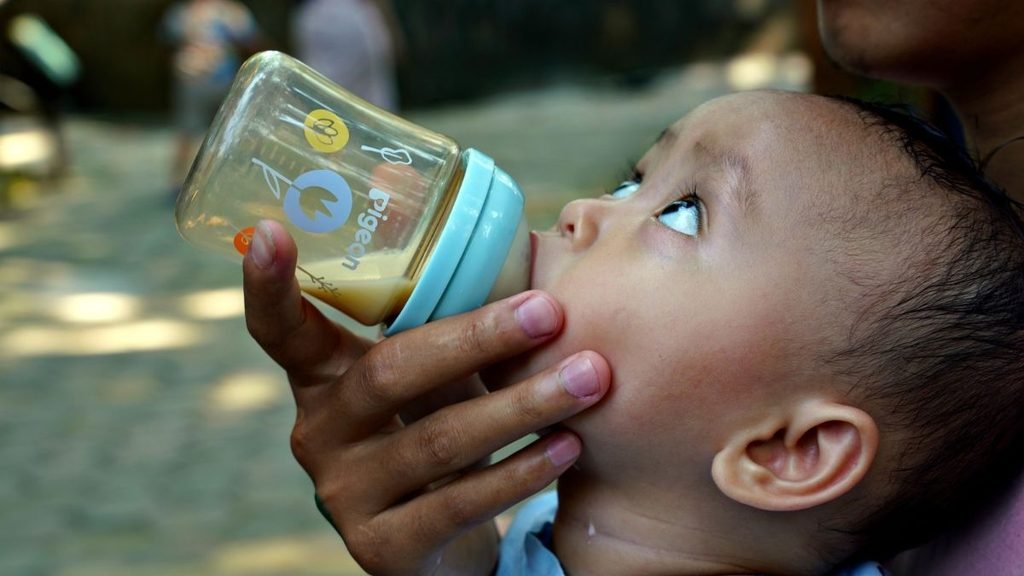
For infants who require an alternative to breast milk, appropriately formulated infant formula can provide essential nutrition. Its carbohydrate composition must meet nutritional requirements for growth and development. The question for regulators is whether adding particular sugars serves a necessary nutritional purpose in products designed for this age group.
WHO’s 2023 guideline on complementary feeding recommends that children aged six to 23 months should not consume foods high in sugar, salt and trans fats. Its evidence review identified associations between sugar-sweetened beverage consumption during infancy and later obesity in some studies, although the certainty of the evidence was low. The recommendation concerns the broader diet of children aged six months and older; it does not specifically establish the effects of sucrose or fructose in infant formula.
The distinction between naturally occurring sugars and added sugars is equally important. Milk naturally contains lactose, which provides energy. Sucrose and fructose may instead be introduced as ingredients during product formulation. Their use needs to be assessed against the nutritional requirements of the intended age group.
What the FSSAI Amendment Proposes
Under the Food Safety and Standards (Foods for Infant Nutrition) Regulations, 2020, lactose and glucose polymers are the preferred carbohydrate sources in infant nutrition products. The existing rules permit sucrose and/or fructose when required as a carbohydrate source, subject to prescribed limits.
The draft Food Safety and Standards (Foods for Infant Nutrition) Amendment Regulations, 2026, proposes prohibiting the addition of sucrose and fructose to products intended for infants up to six months of age. This would remove the existing allowance for these two sugars in products for this age group. FSSAI has invited objections and suggestions from stakeholders within 60 days from the date on which copies of the relevant Gazette notification are made available to the public. The submissions will be considered before the amendment is finalised.
Health
NMC Directs Medical Colleges to Set Up Patient Safety Committees
The National Medical Commission has directed medical colleges and medical institutions to establish patient safety committees, designate nodal officers and strengthen procedures to prevent avoidable harm.



New Semiconductor Could Help Make Solar Cells More Efficient, Oxford Study Finds

Europe Braces for Extremes as Commission Unveils Climate Resilience Framework

Dementia Risk Extends to Middle Age in Rural India, New Study Finds

Delhi’s Air Quality Paradox: Lower Average, Higher Everyday Pollution

Lesser Florican, Bengal Florican Top India’s Priority List for Bird Conservation, Study Finds

Knowing When to Think for Ourselves: AI, Intuition and the Education of Discernment

After a Scorching Summer, Delhi’s Children Are Slow to Return Outdoors

Two Chemists Win Nobel Prize for Solving a Century-Old Puzzle: Why Life Picks One Hand Over the Other

Marshall Islands: Why the US Nuclear Legacy Is Back Before the UN

Climate Change, Overfishing and the Uncertain Future of Bangladesh’s Hilsa Fishermen

-

 Math3 months ago
The 2026 Fields Medals: Four Proofs, Four Decades-Old Problems Solved
-
EP Deep Dive: Data & Solutions3 months ago
After Kerala’s Deadliest Landslide, the Hardest Thing to Rebuild Was Childhood
-
EP Deep Dive: Data & Solutions4 months ago
West Asia Crisis: Can Kerala’s Returning Gulf Migrants Find a Future in the Green Economy?
-
Space & Physics5 months ago
India Semiconductor Mission: ‘It’s Not About Fabs. It’s About Building An Entire Ecosystem’
-
Interviews1 month ago
From Scams to Screens: How the National Stock Exchange Rewrote India’s Equity Story
-
Climate5 months ago
The Climate World Cup? How Climate Change Could Affect Player Performance at the 2026 World Cup
-
Society4 months ago
What Is Civilisational Diplomacy? Understanding India’s Newest Foreign Policy Tool
-
Society5 months ago
From Bell Labs to the Classroom: A Second Career in Teaching