Connect with us

Climate

From Fighting Water to Saving It: The Netherlands Faces a Growing Drought Challenge

A land built to keep water out is now struggling to keep enough of it in — forcing a world leader in water management to rethink its infrastructure

Sebin Pious

Published

on

Netherlands drought challenge
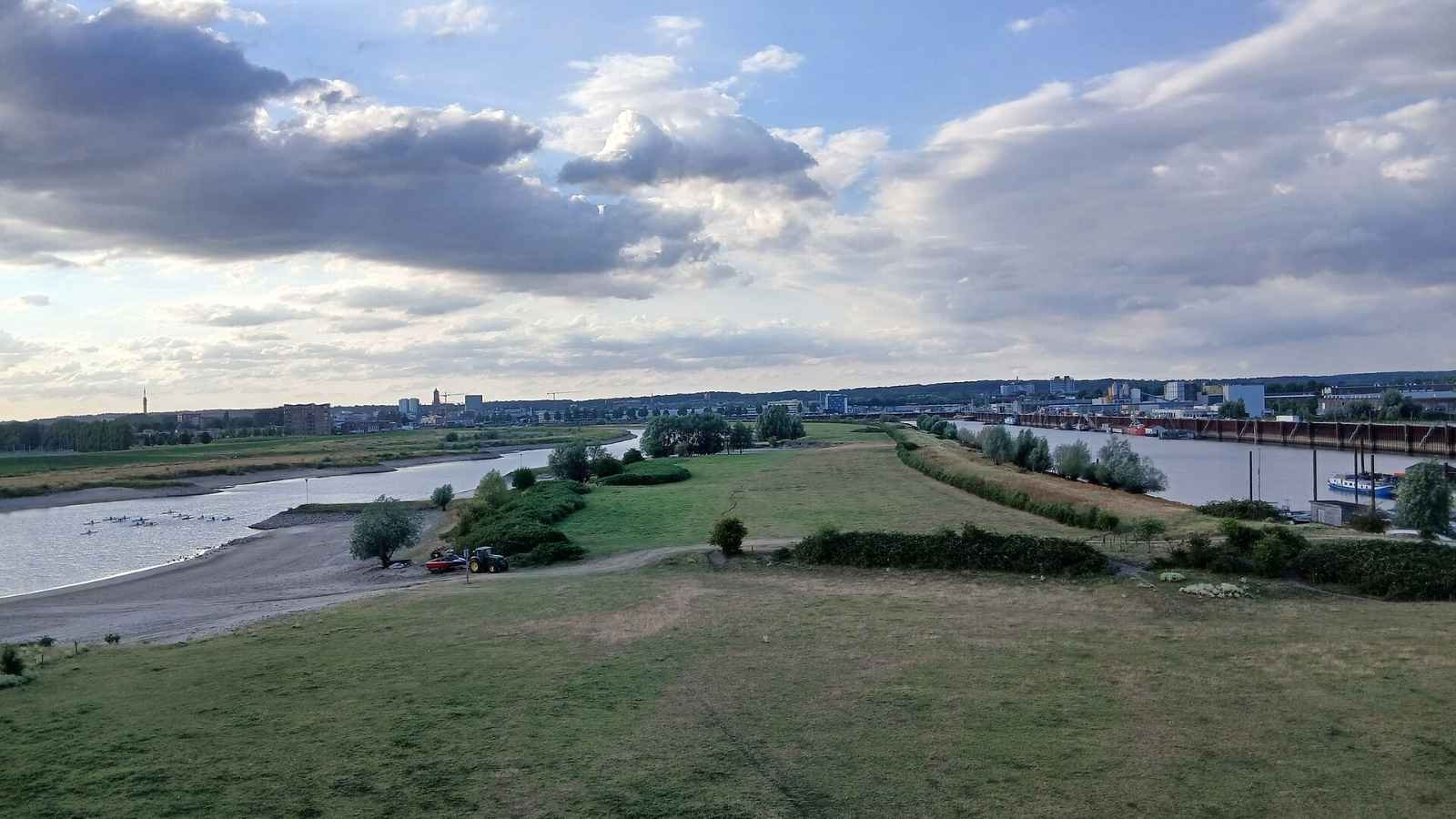
Low water levels on the Nederrijn near Arnhem's Andrej Sacharovbrug, 5 August 2026. Photo: Tomas Guus / Wikimedia Commons (CC0)

The Netherlands built its global reputation by keeping water out. Now, longer dry spells and intensifying heatwaves are forcing the country to confront a very different problem: how to keep enough fresh water in the landscape. From greenhouse agriculture to homes built on wooden foundation piles, the Netherlands drought challenge is exposing the limits of infrastructure designed primarily for flood protection.

When people think of the Netherlands, the images that come to mind are windmills, tulip fields and the great sea walls that have kept the ocean at bay for centuries. The Dutch built their reputation, and much of their nation, on mastering water — pumping it away, holding it back, and reclaiming land from the sea to build a prosperous country on ground that, by rights, shouldn’t exist. Yet beneath that carefully engineered landscape, the Netherlands is now facing an unfamiliar problem: it is running out of fresh water.

As repeated summer heatwaves sweep across Western Europe, Dutch water authorities say they have reached the limit of what engineering can do. In several regions, officials have exhausted every standard measure available to them and are left with what amounts to a last resort — waiting, and hoping, for rain.

Netherlands Drought Challenge: From Floods to Water Scarcity

To understand how a country famous for its rainfall and rivers has arrived at this point, it helps to look at how the land itself was designed. For generations, the Dutch water system had one job: get excess water out to sea as fast as possible, to prevent flooding. That same efficiency has become a liability as weather patterns shift towards longer dry spells and more intense heat. The pressure peaks in late summer, when temperatures regularly cross 35°C and water evaporates faster than rainfall can replace it.

The consequences of shrinking water reserves go well beyond the daily weather report. They are already reaching into the economy, and into the foundations — quite literally — of Dutch homes.

Thousands of historic Dutch houses stand on wooden foundation piles. When groundwater levels drop, those piles are exposed to air and begin to rot. On clay and peat soils, the ground shrinks unevenly, pulling foundations down and cracking brick walls

Economic Strain and Sinking Homes

In Westland, the heart of Dutch greenhouse horticulture, the Delfland water authority has banned growers from drawing irrigation water from local ditches and canals — the first such ban in its history. According to the growers’ umbrella body Glastuinbouw Nederland, the ban affects around 150 commercial growers, with potential damages running as high as €150 million.

At the same time, a quieter crisis is unfolding beneath people’s homes. Thousands of historic Dutch houses stand on wooden foundation piles. When groundwater levels drop, those piles are exposed to air and begin to rot. On clay and peat soils, the ground shrinks unevenly, pulling foundations down and cracking brick walls. The Council for the Living Environment and Infrastructure estimates that close to half a million buildings across the country could show foundation damage by 2035, with repair costs reaching as much as €54 billion.

From Water Battle to Water Sponge

This reality is forcing a fundamental shift in how the Netherlands manages its resources. For centuries, Dutch policy was simple: fight the water, and push it away. Today, water authorities are engaged in a delicate balancing act, trying to save every drop using canal locks and storage basins. But holding onto existing water can only do so much once the rain stops altogether.

Long-term resilience will require redesigning the landscape itself. Rather than treating rainwater as a threat to be flushed out to sea, experts increasingly argue that the Netherlands needs to function more like a giant sponge — capturing heavy winter rain and storing it safely to survive the dry summer months that are becoming the norm.

A Lesson Beyond Borders

What is unfolding in the Netherlands carries a lesson well beyond it. If a nation this experienced in water engineering is struggling to keep pace with a changing climate, it says something about how quickly conditions can outrun even the most sophisticated infrastructure. As riverbeds stay low and the dry spells drag on, the Dutch find themselves in an unfamiliar position for a country built on water: waiting for the skies to open.

Sebin Pious is a management professional, business consultant, and independent content contributor based in the Netherlands. He works with startups and growing organizations on business strategy, marketing, and execution. His areas of interest include international relations, politics, economics, history, and current affairs.

Climate

Environmental Literacy, Not Tree Planting, Is What India’s Schools Need

Awareness is not the same as literacy — and India’s classrooms are still teaching the former

Anusreeta Dutta

Published

on

Environmental Literacy, Not Tree Planting, Is What India's Schools Need
A classroom is where environmental awareness should evolve into environmental literacy, equipping students to understand the systems driving climate change and sustainability. Photo: Mehmet Turgut Kirkgoz/Pexels

Planting trees and organising awareness campaigns are valuable, but they cannot replace environmental literacy. As climate change increasingly shapes everyday life, India’s schools must teach students how environmental systems, public policy and sustainability are interconnected.

Every year, schools across India mark World Environment Day with the same rituals. Children plant saplings, make posters, join cleanliness drives, and pledge to “save the environment.” A photograph is taken, a few speeches are made, and the saplings are watered for a week or two before the event winds down and environmental education slips back to the margins of the curriculum. There is nothing wrong with planting trees. The concern is what happens when tree-planting, poster-making and occasional awareness drives become the whole of environmental education: children end up with a dangerously thin understanding of the environmental forces that already govern their lives.

India’s environmental problems are no longer confined to the classroom or the textbook. Heatwaves have thrown school timetables out of kilter. Air pollution affects children’s health and their ability to concentrate. Floods and cyclones disrupt attendance and damage school infrastructure. Water shortages are a recurring reality in many parts of the country, and waste management, plastic pollution, groundwater depletion and biodiversity loss are becoming questions of everyday survival rather than abstract concerns. Yet much of environmental education still treats the environment as something outside the classroom, and environmental protection as an occasional act of cleaning or conservation. The problem isn’t that Indian children don’t know about trees. It’s that they are rarely taught why environmental crises happen, who pays the price for them, and what other choices communities could make.

Why Environmental Literacy Matters

India has a long history of institutional efforts on environmental education. Supreme Court rulings in the 1990s pushed environmental education into schools, and the National Curriculum Framework, along with subsequent policy measures, tried to weave environmental topics into the curriculum. The National Education Policy (NEP) 2020 places considerable emphasis on environmental awareness, sustainable development and responsible citizenship. On paper, the direction looks promising. In the classroom, that intent rarely survives translation.

A student may be told to conserve electricity, but is anyone explaining where India’s electricity comes from, why coal still dominates the grid, how renewable energy is expanding, and what trade-offs come with each alternative?

A child might learn that forests matter for ecological balance, but is anyone teaching them why the trees are being cut, who owns the forest land, what happens to the communities living in or around forests, how infrastructure projects reshape ecosystems, or how climate change itself is accelerating deforestation? A student may be told to conserve electricity, but is anyone explaining where India’s electricity comes from, why coal still dominates the grid, how renewable energy is expanding, and what trade-offs come with each alternative? A pupil may be advised not to waste water, but do they understand groundwater depletion, unequal access to water, the weaknesses in urban infrastructure, or the politics of sharing rivers between states?

These are fundamentally different levels of learning. The first produces awareness. The second produces environmental literacy. India needs far more of the latter.

The Environment Is Not Only a Question of Individual Behaviour

One of the deepest weaknesses of conventional environmental education is its tendency to place almost the entire burden on the individual: turn off the lights, carry a cloth bag, don’t litter, plant a tree, use less water. These are worthwhile habits. But taken alone, they carry a quiet suggestion — that environmental destruction is essentially a matter of personal carelessness. Climate change, pollution and ecological collapse are not happening because people forget to switch off a fan or reuse a plastic bag.

They are the product of energy systems, industrial production, urban design, transport networks, agricultural practices, consumption patterns and public policy choices. When environmental education stops at individual behaviour, students may grow into conscientious consumers while remaining unaware of the institutional and political processes that actually shape environmental outcomes. They should also be taught to ask who is responsible for emissions, and why a project is sited where it is. That shift — from moral instruction to civic awareness — is the one Indian environmental education still largely has not made.

Climate Change Is Already in the Classroom

The strongest argument for rethinking environmental education is that climate change is no longer a distant subject for Indian schoolchildren — it is already shaping their school experience. Extreme heat makes classrooms uncomfortable and undermines concentration. Floods and cyclones damage school infrastructure and disrupt attendance. Air pollution curtails outdoor activity. Water scarcity affects sanitation facilities, with a disproportionate impact on adolescent girls.

These effects are not distributed evenly. A private school with air conditioning, backup power and a reliable water supply absorbs climate stress very differently from an under-resourced government school. Climate change, in other words, is not only an environmental issue — it is also a question of educational inequality. A child sitting through a heatwave in a poorly ventilated classroom experiences climate change in fundamentally different terms from a child in a climate-controlled one, yet few environmental education programmes address that disparity directly. They should. Climate literacy needs to teach children that environmental issues are inseparable from class, geography, gender, occupation and access to infrastructure.

From ‘Save the Planet’ to Environmental Justice

Another limitation lies in how environmental issues are framed. Students are told they must “save the planet.” But the planet will endure regardless. The more urgent question is what kind of civilisation humanity will be able to inhabit as environmental pressures mount — and that is where environmental justice comes in.

India’s renewable energy transition makes this complexity visible. Solar and wind power are essential to reducing dependence on fossil fuels, but large-scale projects can also mean land acquisition, damage to agricultural livelihoods, and conflict with local communities. Protecting biodiversity matters, but so do the rights of people living around protected areas. Electric vehicles cut tailpipe emissions, but their batteries depend on mineral mining with its own environmental and social costs. Recycling eases pressure on landfills, but informal waste collectors often work in hazardous, unregulated conditions.

None of this is an argument against environmental action. It is an argument for teaching students how environmental systems actually work, contradictions included. A mature curriculum should embrace that complexity rather than flatten it.

From Awareness to Environmental Literacy
Photo:  Tima Miroshnichenko/Pexels

Teachers Need Support, Not Just Demands

None of this is possible if teachers are left to carry the burden alone. Environmental education, where it exists, is often exam-driven, squeezed for time, and layered on top of an already heavy workload. Many teachers have no specialised training in climate science or environmental policy. Improving environmental education is, in large part, a question of improving teacher preparation and giving teachers the tools to connect environmental issues to subjects they already teach: geography can examine groundwater depletion, economics can study the cost of pollution, civics can look at environmental regulation, mathematics can work with climate data, history can trace industrialisation and land-use change, and language classes can practise environmental journalism and writing. Environmental education does not need a separate subject. It needs a different way of teaching the subjects that already exist.

The Classroom as a Site of Inquiry

Some of the most valuable environmental learning may not come from lectures at all. Schools can double as sites of inquiry. Students can take temperature readings in their own classrooms and study local heat patterns, check air quality where they live, map household water use, conduct waste audits, track the loss of local biodiversity, or examine power consumption and the potential for renewables. They can trace where their school’s waste actually goes. These exercises build evidence-based reasoning in a way no poster campaign can, developing skills in observation, questioning and analysis that are essential to understanding environmental issues.

Beyond Symbolic Environmentalism

Finally, what is needed is a cultural shift, not another annual ritual. Environmental education should be more than a photograph of children clutching saplings. A planted tree is visible; the systems that actually determine environmental outcomes — urban design, energy generation, water governance, waste management, industrial regulation, the distribution of climate risk — are not, and children need to understand them regardless.

India is raising a generation that will have to navigate hotter cities, strained water systems, shifting coastlines and difficult development choices. Telling children to plant trees isn’t wrong. It simply isn’t enough. The goal of environmental education should not be young people who appreciate the value of a tree, but citizens who understand how societies shape the environment — and how the environment, in turn, shapes society. That is the real difference between symbolic awareness and meaningful education.

Continue Reading

Climate

How Assam’s Recurrent Floods Are Becoming an Economic Burden

Assam’s recurrent floods are creating a growing economic burden, from ₹200 crore in estimated annual losses to 4.27 lakh hectares of land lost to erosion since 1950. As rainfall patterns shift and compound flooding intensifies, the state faces rising risks to livelihoods, infrastructure and development.

Published

on

Riverbank erosion threatening homes and livelihoods along a flood-prone riverbank.
Riverbank erosion threatens homes and livelihoods, highlighting the permanent economic costs of Assam’s recurrent flooding. Representational image. Image credit: GM Khairul/Pixabay

Floods are a recurring part of life in Assam. Every monsoon, the Brahmaputra and its tributaries spill into the state’s floodplains, disrupting agriculture, damaging infrastructure and forcing communities to move. But each flood leaves behind more than waterlogged fields and damaged roads. It also leaves an economic bill.

On average, floods inundate 9.31 lakh hectares of Assam every year, according to the state government. Nearly 40% of the state’s land area is flood-prone, while average annual flood losses are estimated at around INR 200 crore. Riverbank erosion adds a more permanent cost. According to report by Climate Central, Assam has lost nearly 4.27 lakh hectares of land since 1950, equivalent to about 7.4% of its geographical area.

The cost does not end when the water recedes. Floods repeatedly disrupt agriculture, tea plantations, fisheries, transport and livelihoods. When a river changes course and takes away farmland, the loss can last for generations. Homes disappear, productive land shrinks and families are forced to start again elsewhere.

The scale of displacement shows how closely the human and economic costs are linked. In 2024, floods in Assam triggered an estimated 2.5 million internal displacements, accounting for nearly half of all disaster-related displacements recorded in India that year.

For a state that has learned to live with floods, the bigger challenge is now managing the repeated economic shocks they create.

When Floods Become Compound

Assam’s floods are rarely the result of one factor alone. Increasingly, several processes can come together to push rivers beyond their limits. Scientists describe this as compound flooding—when multiple sources contribute to flooding at the same time.

Heavy rainfall over Assam can coincide with intense precipitation upstream in Arunachal Pradesh, Bhutan and Tibet. Snow and glacier melt in the eastern Himalayas add seasonal runoff, while swollen tributaries, landslides and riverbank erosion can make the situation worse. The result can be higher flood peaks and longer periods of inundation.

The economic consequences can also multiply. Heavy rain may destroy crops, while rising river levels erode farmland and damage roads. A washed-out bridge can disrupt the movement of food and goods. A flooded market can stop local businesses from operating. For families dependent on daily wages, even a few days without work can mean lost income. In other words, the flood may last days, but its economic effects can last much longer.

Assam recurrent floods and its economic burden.
Floodwater fills a home, damaging interiors and belongings illustrating the hidden household costs of recurrent flooding. Representational image. Image credit: Vilkass/Pexels

A River that Keeps Reshaping the Economy

The Brahmaputra basin stretches across China, Bhutan, India and Bangladesh, covering approximately 650,000 square kilometres. Once the river enters India, it travels for about 710 kilometres through the Assam Valley.

It is a river in constant motion. The Brahmaputra carries huge quantities of sediment from the Himalayas, creating braided channels, shifting sandbars and constantly changing riverbanks.

For Assam, this makes flooding different from a short-lived disaster. The river does not simply cover the land; it can redraw the map.

Assam has lost approximately 4.27 lakh hectares of land to erosion since 1950. The loss is not merely geographical. Farmland disappears, homes are displaced and established settlements can be cut off or forced to move. With the land goes the economic activity that depended on it.

Climate projections suggest that these pressures could intensify. The Assam State Action Plan on Climate Change projects a 5–38% increase in extreme rainfall events and more than a 25% rise in flood events under future climate scenarios. Models also project around a 13% increase in the Brahmaputra’s annual streamflow, while sediment loads could rise by nearly 40% by the end of the century.

If these projections materialise, Assam could face more frequent flooding alongside growing pressure on land, infrastructure and livelihoods.

The Himalayan Connection

The economic risks in Assam begin much farther upstream. The Hindu Kush Himalayan Assessment projects that even if global warming is limited to 1.5°C, at least one-third of the region’s glacier volume could disappear by 2100. Under higher-emission scenarios, glacier losses could exceed 50–65%.

In the short term, warmer temperatures can accelerate snow and glacier melt, increasing runoff. Over time, continued glacier retreat could alter the timing and volume of water entering the river system. Rainfall patterns are changing too. A systematic review cited in the document points to a possible shift in peak rainfall from July to August, along with increasing post-monsoon rainfall and declining pre-monsoon rainfall.

That matters because when rain falls can be as important as how much falls. More intense rainfall can produce sharper flood peaks and leave less time for water to drain.

As Mahesh Palawat, Vice President–Meteorology and Climate Change at Skymet Weather, notes, increasing rainfall variability and shifting monsoon behaviour are making floods less predictable. For Assam, unpredictability has an economic cost of its own. Farmers need to decide when to sow and harvest. Businesses depend on functioning roads and transport networks. Governments have to plan infrastructure that may need to withstand increasingly uncertain conditions.

The Cost of Exposure

Climate change is only part of the picture. Deforestation, urbanisation and unplanned land-use changes can increase runoff and reduce the landscape’s ability to hold water. Development in flood-prone areas also puts more homes, businesses and infrastructure in harm’s way.

The vulnerability is particularly high in low-lying floodplain and char areas, where communities face both flooding and erosion. Repeated displacement can mean losing homes, productive assets and livelihoods more than once. This is why the economic burden of flooding cannot be measured only by the value of buildings or crops damaged during a flood.

It also includes lost working days, disrupted supply chains, damaged crops, interrupted transport, relocation costs and public spending on repairs and recovery. The estimated INR 200 crore in average annual flood losses therefore represents only part of the wider economic burden.

A Future of More Frequent Shocks

The projections point to a difficult future. Hydrological simulations cited in the document suggest that a flood that currently occurs once every 10 years could occur once every two years by 2080 under high-emission scenarios.

This does not mean every future flood will follow that pattern. But it shows how sharply flood frequency could change. And that raises an economic question that Assam will increasingly have to confront: How often can communities, businesses and governments afford to rebuild?

If floods become more frequent, recovery from one event could overlap with preparation for the next. Money spent repairing roads, restoring farmland and rebuilding homes would have to compete with investments needed for long-term development. The cost of doing nothing could therefore extend well beyond the next flood season.

Reducing the Cost of Living With Floods

Assam cannot stop the Brahmaputra from flooding. But it can reduce the damage and, in turn, reduce the economic cost. That means improving upstream observations and early-warning systems, strengthening data sharing across the Brahmaputra basin and designing infrastructure for future climate risks. Floodplain planning, erosion management and ecosystem protection also need to become part of long-term development planning rather than being treated only as disaster-response measures.

Better forecasts can give communities and businesses more time to move livestock, crops and equipment. Better risk maps can help determine where critical infrastructure should, and should not be built. Protecting natural flood buffers can also help slow runoff and reduce exposure.

As Dr Akshay Deoras, Research Scientist at the National Centre for Atmospheric Science, University of Reading, argues, preparing for Assam’s future floods means accounting for changing rainfall patterns, not simply the total amount of rainfall. The Brahmaputra will continue to shape Assam. Floods will remain part of the state’s geography.

The challenge is to ensure that every flood does not also become another economic setback, another loss of land, another disrupted livelihood, another damaged road and another bill to pay. Living with the Brahmaputra may be unavoidable. Making that relationship increasingly unaffordable is not.

Continue Reading

Climate

When the Monsoon Returns, Fear Returns: How Climate Disasters Are Reshaping Mental Health in Himachal Pradesh

In Himachal Pradesh, repeated floods and landslides are reshaping mental health in the mountains — but disaster policy still doesn’t see it.

Raman Kant

Published

on

Himachal Pradesh mental health
Samej, in Himachal Pradesh's Shimla district, has witnessed repeated monsoon disasters in recent years. For many residents, every spell of heavy rain now revives memories of loss and uncertainty.Photo: Raman Kant

“As soon as the monsoon arrives, fear spreads across the village. People panic because they have already seen what these rains can do. In 2023 and again in 2025, many families here lost their homes, farmland and orchards to monsoon disasters. The moment it starts raining heavily, everyone fears history will repeat itself.”

Het Ram, a resident of Siraj Valley in Himachal Pradesh’s Mandi district, pauses before adding a detail that has quietly become part of everyday life. Most households in his village now keep their important documents, first-aid kits, clothes, dry food, drinking water, ropes and tarpaulin packed together in one corner of the house, ready to be carried at a moment’s notice if disaster strikes.

“Without our documents, we cannot even claim government compensation,” he says.

Why Himachal Pradesh Floods Continue to Haunt Survivors

Het Ram’s experience is shared by families across many villages in Himachal Pradesh, where the monsoon — once welcomed as a season of abundance — has increasingly become synonymous with fear. With the first spell of July rain comes an unspoken anxiety that settles over entire communities. People’s eyes remain fixed not on the clouds but on the fragile mountain slopes towering above their homes. A spell of intense rainfall is enough to keep families awake through the night. Fluctuating blood pressure, panic attacks, insomnia and chronic stress have gradually become a routine part of life in the state’s vulnerable mountain settlements.

Himachal Pradesh Floods Fuel Mental Health Crisis
Left: Het Ram stands in his orchard in Siraj Valley, where repeated monsoon disasters have transformed the rainy season into one of anxiety and uncertainty. Right: Het Ram’s cowshed, damaged during successive monsoon disasters, reflects the lasting impact of floods and landslides on livelihoods in Himachal Pradesh.Photos: Raman Kant

Psychologists describe this condition as anticipatory anxiety — the distress that emerges not after a traumatic event but from the constant fear that it may happen again. A study of disaster survivors in Uttarakhand found that repeated exposure to natural disasters leaves people in a permanent state of hypervigilance: interrupted sleep, startling at the slightest sound, and feeling anxious the moment it begins to rain had become routine for many of those affected.

‘I fear the mountain above my home may collapse’

Chudamani
Chudamani

For 56-year-old Chudamani of Sarpada village in Rampur subdivision, July is no longer just another month — it is a season of dread.

Whenever it rains, sleep deserts her. She spends hours sitting outside her house, her eyes fixed on the hillside looming overhead. A single fear keeps returning: What if the mountain gives way? What if everything is gone within seconds?

The fear has haunted her ever since the devastating flash floods of July 2024, when a swollen Samej Khad swept away both her two-storey house and her vehicle.

“Nowhere feels safe anymore,” says her husband, Chatar Singh. “The moment the rains begin, fear settles into our minds. Every spell of heavy rain makes us wonder which family’s home will be destroyed next.”

The scale of destruction behind the anxiety

According to the Himachal Pradesh State Disaster Management Authority, 2,108 people lost their lives during the monsoon seasons between 2020 and 2025, while property worth thousands of crores of rupees was destroyed.

The 2023 monsoon alone claimed 404 lives, left 38 people missing and forced more than 50,000 people to abandon their homes. A total of 2,546 houses were completely destroyed and another 10,853 suffered partial damage. Overall losses crossed INR 12,000 crore.

chatter singh
“Nowhere feels safe anymore,” says Chatar Singh. Photo: Raman Kant

On August 14, 2023, a landslide in Shimla city killed 20 people. The following year, a cloudburst in the Samej area of Shimla district triggered flash floods that washed away 32 houses and claimed 36 lives. These recurring disasters across Shimla, Mandi and Kullu districts have left behind more than physical and economic devastation — every monsoon now revives memories of loss, uncertainty and the fear of losing loved ones all over again.

‘Not even a needle found after floods’

Alok Kumar of Sarpada village in Rampur embodies the depth of this trauma.

His ancestral home in Samej village was completely washed away in the 2024 floods. His mother and eight tenants lost their lives in the disaster.

“The flood was so devastating that not even a needle remained from our 21-room house,” he recalls. “I still haven’t recovered from that tragedy. Every time I hear about floods or landslides, the entire scene flashes before my eyes. We live in the mountains, so there is always the fear that another disaster could strike at any time.”

He says disasters have become an annual reality.

“For the last three years, something has happened every monsoon. It has increased stress and anxiety among almost everyone in the village. Even the elderly say they have never witnessed anything like this before.”

Despite struggling emotionally, Alok has never sought professional help. Like many others in disaster-prone regions, he considers such distress an unavoidable part of life in the hills.

What doctors are seeing

Mental health professionals in Himachal Pradesh say the psychological toll of climate disasters is becoming more visible, even though systematic evidence from the state is still lacking.

Dr Dinesh Dutt, a psychiatrist at Indira Gandhi Medical College (IGMC), Shimla, says climate change is directly influencing people’s mental well-being.

“Climate has a direct impact on mental health. After monsoon disasters, many survivors continue to relive the traumatic event. Distressing thoughts, memories and images keep recurring in their minds. Clinically, we recognise these symptoms as anxiety and post-traumatic stress disorder (PTSD). We are seeing such cases in hospitals, and our assessments suggest that climate-related events are contributing to these psychological conditions. However, there is still no systematic research that conclusively establishes this link in Himachal Pradesh.”

He adds that the state currently lacks a comprehensive database documenting climate-related mental health cases.

The concerns raised by clinicians are echoed in scientific literature. A review published in Frontiers in Public Health (2025) found that sudden climate-related disasters such as floods, landslides and cyclones frequently lead to PTSD and acute anxiety, while repeated exposure to such events has been associated with depression, hopelessness and, in some cases, suicidal thoughts. Mental health experts believe a similar pattern is gradually emerging in the rural regions of Himachal Pradesh.

Children are carrying the burden too

The psychological impact of recurring disasters is becoming increasingly visible among children.

Mukta, a government schoolteacher in Rohru, says classroom behaviour has changed noticeably since the devastating monsoon of 2023.

“Children have become frightened of the rains. During heavy rainfall, some of them become unusually quiet. Since Rohru is an apple-growing region, many children also worry that their family’s orchards and livelihoods may be destroyed.”

Poonam’s ten-year-old daughter, who lives in Shimla, has also developed an intense fear of the monsoon. Their residential building was declared unsafe after a landslide last year, forcing the family to live with relatives for ten days.

“Since that incident, she has developed a deep sense of insecurity,” Poonam says. “Every time it starts raining, that fear returns.”

For teenagers, the consequences are often less visible but equally profound.

Ashish Dogra, a Class XII student from Ramnagar in Shimla, says the rainy season has transformed childhood routines.

“During the monsoon, no one goes out to play anymore. We stay indoors all day. We talk to friends on the phone, but after a while it becomes boring. Sometimes that isolation makes us irritable and angry.”

Psychologist Neelam Bali says children’s emotional responses are closely linked to the anxiety they observe within their own families.

“When children see their parents constantly worried, they internalise that stress. Most are unable to express their emotions openly, and over time the anxiety begins to show in their behaviour. It eventually affects their studies and overall school performance.”

She emphasises that parents need to encourage open conversations with children.

“Play is one of the most effective ways for children to cope with stress. If they remain cut off from outdoor activities for long periods, they are more likely to experience loneliness, irritability and anger.”

Dr Dutt adds that climate disasters affect children, adults and older people in different ways. “If survivors do not receive timely psychological first aid, the long-term health consequences can be significant.”

When landscapes become a source of grief

Natural disasters alter far more than homes, roads and livelihoods. They also transform people’s emotional relationship with the landscapes they have known all their lives.

When the mountains that once symbolised safety and belonging suddenly become a source of destruction, recovering emotionally is rarely easy.

Researchers describe this experience as solastalgia — the distress people feel when the environment they identify as home is damaged or transformed. Unlike nostalgia, which is a longing for a place left behind, solastalgia emerges while people remain in the very place they call home, watching it deteriorate around them. Over time, this distress can deepen into prolonged grief, anxiety and depression.

Shifting homes in search of safety

Discussions around migration from Himachal Pradesh’s hill districts have traditionally centred on employment, education and infrastructure. But a new driver is quietly emerging: the search for psychological security.

For some families, the fear of living in disaster-prone areas has become so overwhelming that they are abandoning ancestral homes for places they perceive to be safer.

Prabhat Chand, 47, a government school lecturer from Rampur, is one such resident. After the devastating floods in Samej, he decided to leave the area and build a new home nearly 17 kilometres away in Sarpada village.

P Chand
Prabhat Chand. After the devastating floods in Samej, Chand decided to leave the area and build a new home nearly 17 kilometres away in Sarpada village. Photo: Raman Kant

“Most of the families affected by the disaster have moved elsewhere,” he says. “The flood was so destructive that the place no longer feels fit for habitation.”

Ruchi, who lives in Tutu on the outskirts of Shimla, also shifted to another rented house after repeated monsoon scares. Her previous home stood beside a seasonal stream, and every spell of heavy rainfall made her anxiety worse.

“Whenever I saw news reports of rain-related disasters, I became anxious. Watching the water level in the stream rise only intensified that fear,” she says.

Although she still worries during the monsoon, moving to a different neighbourhood has eased the constant panic she once experienced.

Mental health remains missing from disaster response

Himachal Pradesh has made significant progress in recognising the health risks posed by climate change. The state has adopted the State Action Plan on Climate Change and Human Health (2022–27) and established a Climate Change and Human Health Cell to strengthen public health preparedness.

Himachal Pradesh Floods Fuel Mental Health Crisis
Illustration/S James/EdPublica

The plan focuses on physical health, disease surveillance, healthcare infrastructure resilience, early warnings and logistics, but does not address mental health support or psychological care for disaster-affected populations.

While the Climate Change and Human Health Cell provides training to healthcare workers and Accredited Social Health Activists (ASHAs) on mental health and psychological first aid, experts say these efforts have yet to translate into meaningful support on the ground.

Dr Sanjay Pathak, former Director of the Himachal Pradesh Mental Health Authority, believes disaster management continues to prioritise physical rehabilitation over psychological recovery.

“Government responses after disasters understandably focus on relief and rehabilitation,” he says. “But very little attention is paid to what kind of psychological intervention survivors require. Unless mental health becomes an integral part of disaster response, people will continue to live with a persistent sense of insecurity.”

Dr Dutt points to another challenge: the severe shortage of trained mental health professionals.

“The frequency of disasters is increasing much faster than our capacity to provide psychological support. For now, community and family networks are helping people cope. But as those social structures weaken, the need for professional mental health services will become much greater.”

The policy gap extends beyond Himachal Pradesh. An analysis published by the Observer Research Foundation (ORF) notes that disaster management strategies in India remain largely centred on rescue operations, rehabilitation and rebuilding infrastructure, with mental health support yet to be systematically integrated into these frameworks. The analysis also found that psychological disorders following natural disasters are 40 per cent more common than physical injuries — underscoring the need to treat mental health as a core part of disaster preparedness and recovery.

What needs to change?

Both Dr Pathak and Dr Dutt agree that psychosocial care must become a standard part of emergency relief rather than an afterthought. They identify three immediate priorities: training schoolteachers to provide basic psychosocial support to children affected by disasters; strengthening the capacity of ASHA workers and frontline health personnel to identify and respond to psychological distress; and expanding access to counselling and mental health services in disaster-affected communities.

For a Himalayan state facing ever more frequent extreme weather, integrating mental health into disaster management is no longer simply a public health recommendation — it is a necessity.

As climate change continues to reshape the mountains, it is also reshaping the emotional landscape of the people who call them home. The landslides and floods may disappear once the rains recede, but for many survivors, the fear remains — returning every monsoon, long before the first cloudburst.

Raman Kant is a mentee at the Asian College of Journalism’s Climate Change Media Hub, supported by Interlink Academy, Germany.

Continue Reading

Trending