Startups & Innovation
The Engineer of Tomorrow Is Already Here
Artificial intelligence, quantum computers, and living laboratories are converging to rewrite what engineers do — and who, or what, does the designing.

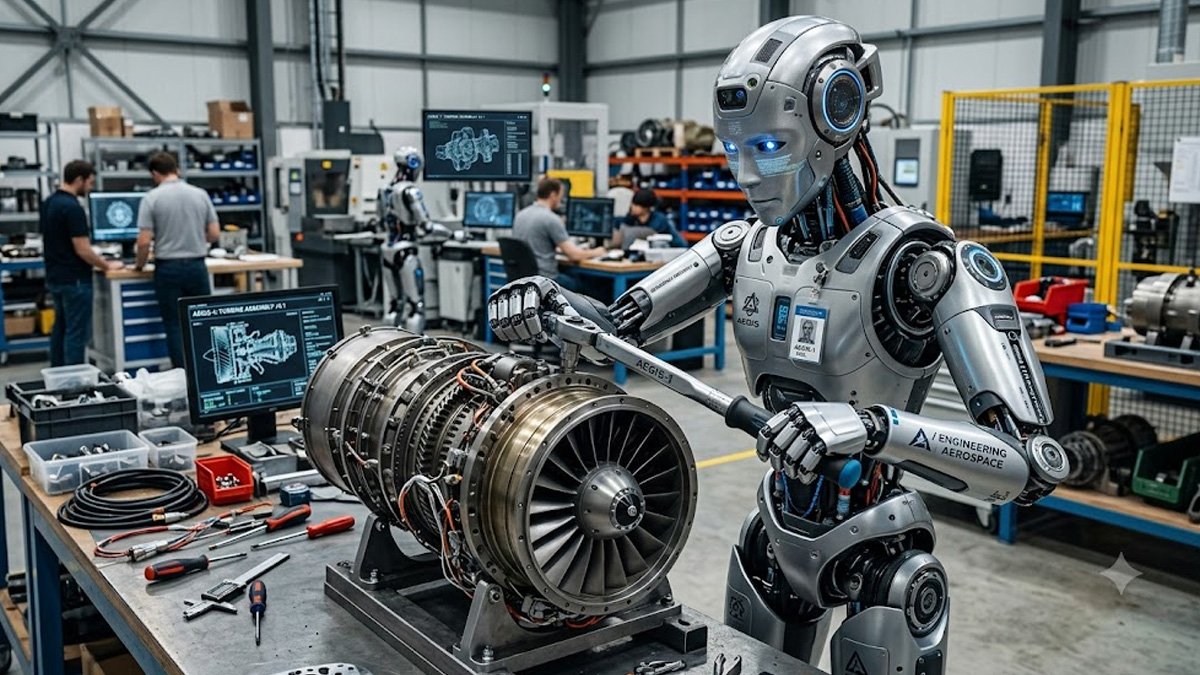
For most of human history, engineering meant shaping the physical world: bridges that held, machines that ran, buildings that stood. That definition is dissolving. The engineer of the near future will spend as much time training algorithms and choreographing robots as they do drawing blueprints — and in many cases, the blueprint itself will already be the machine’s idea, not theirs.
The World Economic Forum calls this moment a defining feature of the Fourth Industrial Revolution: a period when breakthroughs across multiple scientific fields are accelerating at once, colliding, and compounding. Engineering — long a discipline of steel, concrete, and circuitry — is being rewritten as something closer to a conversation between human judgment and digital intelligence.
When the Machine Designs the Machine
Nowhere is that shift more visible than in generative design. An engineer today can specify a handful of goals — strength, weight, cost, sustainability — and receive hundreds of AI-generated design alternatives within minutes. The job is no longer only to draft the solution, but to choose wisely among the machine’s proposals and refine the one that fits.
The same intelligence is quietly transforming factory floors through predictive maintenance. Sensors buried inside machinery track vibration, temperature, and pressure around the clock, while machine-learning models flag failures before they happen — cutting downtime, costs, and risk in one motion.
This isn’t a fringe experiment. The 2026 Roadmap on Artificial Intelligence and Machine Learning for Smart Manufacturing names digital twins, explainable AI, industrial robotics, and foundation models as the technologies set to define the next generation of engineering systems — with one condition attached: this intelligence has to be trustworthy enough to operate safely in high-stakes industrial settings.
Humans, Not Replaced — Repositioned
The popular fear is that automation pushes people out. Industry 5.0 tells a different story. Where Industry 4.0 was about connecting machines, Industry 5.0 is about giving humans back the parts of the job machines can’t do — judgment, creativity, ethical decision-making — while collaborative robots, or “cobots,” absorb the repetitive and hazardous work.
Alongside them, digital twins — virtual replicas of real machines and systems — let engineers rehearse a change before making it: simulate a process, predict where it will break, and fix it on screen instead of on the factory floor. The result is measurable: less material wasted, less energy burned, more built with less.
Building Without Borrowing From the Future
Sustainability has moved from a talking point to an engineering constraint. It’s no longer a question of whether a design is efficient, but whether it can be efficient and leave less behind — in emissions, in waste, in energy debt passed on to future generations.
That pressure is visible in green buildings that manage their own energy use, in construction materials designed to be carbon-neutral from the outset, and in electrical grids being re-engineered to absorb solar, wind, and hydrogen power without faltering. Increasingly, AI is the tool making that balancing act possible — monitoring emissions in real time, optimizing energy use on the fly, and giving industries a way to grow without simply consuming more.
The Body as the Next Frontier
Perhaps the most startling convergence is happening in medicine. Biomedical engineers are no longer just building tools for doctors to use — they’re building systems that diagnose, monitor, and even manufacture treatments largely on their own.
A 2026 review in Current Opinion in Biotechnology describes the rise of “biofoundries” — highly automated laboratories where AI, robotics, and digital twins work together to design and test new medicines and vaccines with little human intervention. What once took years of trial-and-error in a lab can now be compressed dramatically, as computational design and robotic experimentation replace much of the guesswork.
Alongside these labs, three-dimensional bioprinting and brain-computer interfaces are advancing quickly, pointing toward a future where damaged tissue can be rebuilt and lost function restored — engineering applied not to bridges or factories, but to the human body itself.
Beyond Earth, Beyond Classical Computing
Two frontiers remain more speculative but no less consequential. Quantum engineering promises computers that solve problems — in drug discovery, materials science, logistics, climate modeling — that remain out of reach for even today’s most powerful supercomputers. It’s still an emerging field, but governments and corporations are pouring in resources on a bet that the payoff will be transformative.
Meanwhile, engineering is quite literally leaving the planet. Reusable rockets, autonomous spacecraft, and commercial lunar landers are turning aerospace into one of the fastest-moving corners of the profession. Through NASA’s Artemis and Moon to Mars programs, engineers are now designing the plumbing of a civilization beyond Earth: surface habitats, autonomous rovers, and life-support systems built to run for years without a repair crew nearby — groundwork for a permanent human foothold on the Moon, and eventually, Mars.
The Cities We Haven’t Built Yet
Back on Earth, the challenge is more immediate: housing billions more people in cities that don’t buckle under their own weight. Smart cities lean on sensors, AI, and the Internet of Things to manage traffic, electricity, water, and public services as conditions change in real time, rather than reacting after the fact.
The materials holding those cities up are changing too. Graphene, self-healing concrete, biodegradable polymers, and shape-memory alloys are moving from laboratory curiosities to construction-site realities. A 2026 review by researchers led by M. Devika points to geopolymer concrete, recycled aggregate concrete, and self-curing concrete as leading candidates for the infrastructure of tomorrow — materials that, paired with AI-driven monitoring, can flag their own wear and predict their own maintenance needs before a crack ever appears.
What Won’t Change
Every one of these frontiers — generative design, cobots, biofoundries, quantum machines, lunar habitats, self-healing cities — shares a common thread: they are converging, not evolving in isolation. Intelligent factories borrow from robotics; sustainable materials borrow from AI; medicine borrows from automation once built for assembly lines.
What won’t change is the reason any of it matters. The measure of tomorrow’s engineering won’t be how sophisticated the technology is, but what it does with that sophistication — whether it slows climate change, extends healthy years of life, and builds infrastructure that serves more people, more fairly. The tools are new. The responsibility is not.
References
Lee, J., et al. (2026). 2026 Roadmap on Artificial Intelligence and Machine Learning for Smart Manufacturing. arXiv:2605.00839.
Cochrane, R. R., Dos Santos, L. V., & Cai, Y. (2026). The convergence of AI-driven engineering biology and emerging technologies advancing globally networked autonomous biofoundries. Current Opinion in Biotechnology, 99, 103503.
World Economic Forum. (2025). Technology Convergence Report.
Organisation for Economic Co-operation and Development. (2025). OECD Science, Technology and Innovation Outlook 2025.
National Aeronautics and Space Administration. (2026, May 26). NASA provides update on Moon Base rovers, landers, missions.
Devika, M., Nithya, A. S., Kumar, S. S., Hariharan, M. S., Athira, R., & Sathyan, D. (2026). State-of-the-art review on sustainable concrete: Advancing structural performance for smart cities. In Lecture Notes in Civil Engineering. Springer Nature Switzerland.

Society
How a South Indian Startup Is Reimagining Agriculture From the Sky
From flood-ravaged fields in Kerala to precision farming systems powered by drones, Fuselage Innovations is rethinking agriculture through data, efficiency, and real-time intelligence.

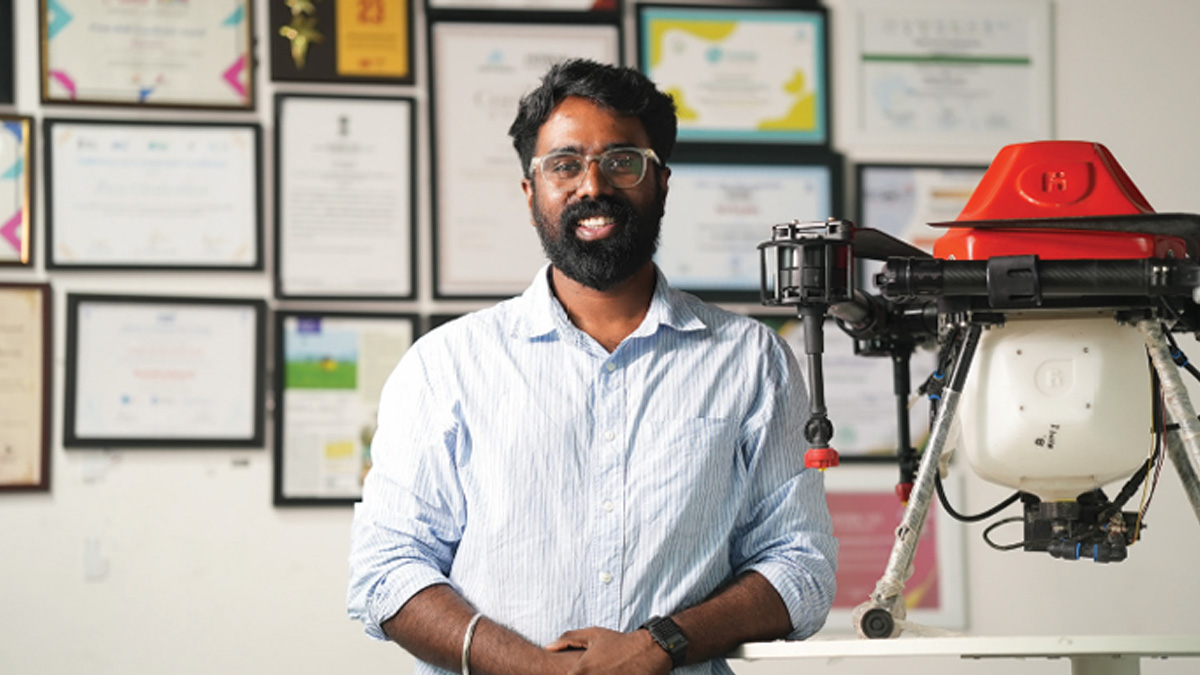
Drone technology in agriculture is rapidly changing how farmers monitor crops, manage resources and improve productivity. A South Indian startup is now using aerial innovation and precision farming tools to reshape agriculture from the sky
In 2018, catastrophic floods swept across South Indian state of Kerala, submerging farmland and leaving behind more than visible damage. When the waters receded, they revealed a deeper crisis—soil chemistry had changed, salinity had increased, and farming systems that had sustained communities for generations no longer behaved the same way.
For many farmers, the land had become unfamiliar.
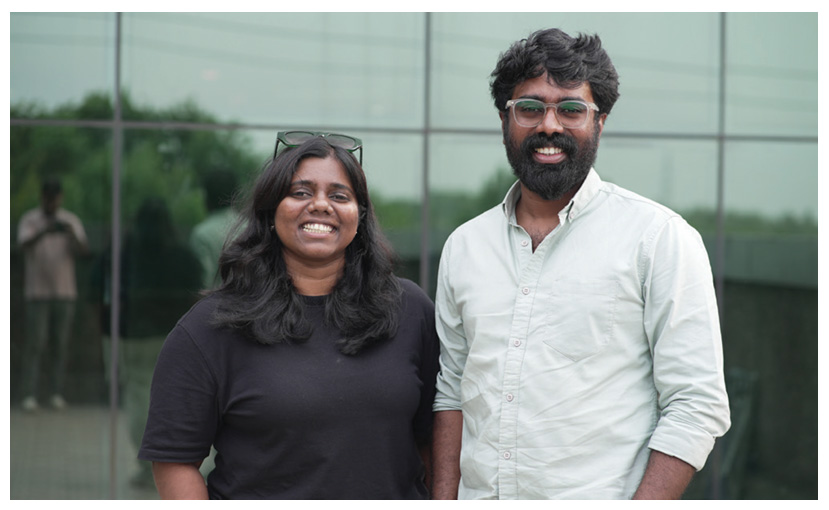
For Devan Chandrasekharan, an aeronautical engineer with roots in farming, this moment marked a turning point.
“That moment made it clear that agriculture needed more than incremental change,” he says. “It needed a different way of understanding what’s happening in the field.”
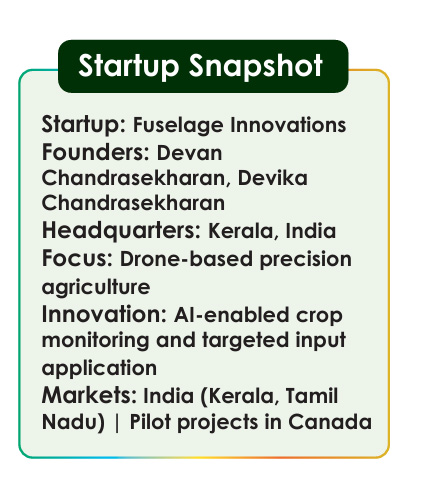
Today, as co-founder of Fuselage Innovations, a Kerala-headquartered agritech company with operations expanding across southern India and early international pilots, Devan is part of a new wave of innovators rethinking agriculture through technology.
Drone Technology in Agriculture: From Fields to Flight Paths
Modern agriculture is increasingly shaped by data. But while satellite systems offer scale, they often lack immediacy. Cloud cover, delays, and low resolution limit their usefulness in time-sensitive decisions.
“In farming, timing is everything,” Devan notes. “If you cannot act at the right moment, even the best data loses its value.”
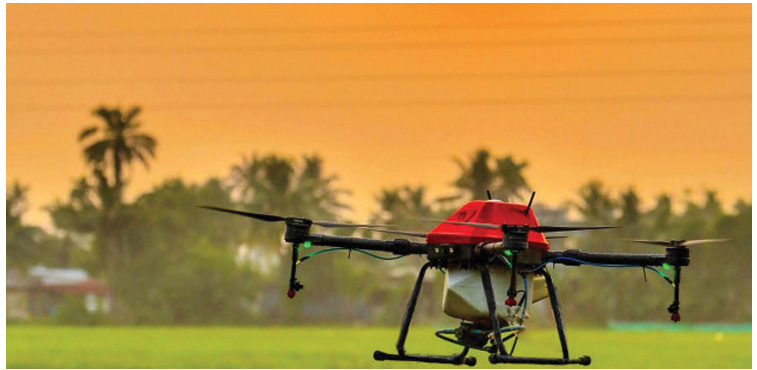
Fuselage Innovations addresses this gap using drones equipped with multispectral sensors, capable of capturing real-time, high-resolution data directly from the field. These systems detect early signs of stress—nutrient deficiencies, pest risks, or water imbalances—long before they become visible.
Farming as a Predictive System
The company’s approach goes beyond aerial imaging. It is built around a stage-wise model that tracks crop growth from early development to harvest, linking each phase to targeted interventions.
This transforms farming from a reactive process into a predictive one.
“Instead of responding to visible damage, we can identify stress signals early and intervene precisely,” Devan says. “That changes the entire economics of farming.”
The results are significant. Field applications have shown yield increases of up to 35 percent, alongside a reduction of nearly 50 percent in pesticide and fertiliser use. Precision spraying has also cut input volumes dramatically—from 150–200 litres per acre to just 10–15 litres—reducing both costs and environmental impact.
Scaling Beyond Boundaries
While the company’s early work was rooted in Kerala, its reach has expanded into Tamil Nadu and other parts of India, with pilot projects now extending to international markets such as Canada.
“Farming challenges may vary across regions, but the need for efficiency, sustainability, and better decision-making is universal,” Devan says.
Yet adoption remains a challenge. Farming is inherently risk-sensitive, and new technologies are often met with caution. To address this, the company initially offered its services free of cost, allowing farmers to see results before committing.
“Trust is the biggest barrier,” Devan says. “Farmers need to see the impact on their own fields before they adopt something new.”
The Future from Above
As climate pressures intensify and resource constraints deepen, agriculture is entering a new phase—one where data and precision will define productivity.
“Technology alone cannot solve agriculture,” Devan emphasises. “But when it is aligned with the realities of farmers and ecosystems, it can become a powerful tool for transformation.”
What began in the aftermath of a flood has now evolved into a model for the future—where farming is not just guided by tradition, but informed by intelligence.
Because the future of agriculture may not lie only in the soil—but in how we see it from above.


The Engineer of Tomorrow Is Already Here

The AI That Helps Humans See When Self-Driving Cars Go Wrong

India Is Facing More Climate Disasters. Who Pays When They Happen?

Meta’s $18 Billion Child-Safety Reckoning: Can Social Media Be Made Safer for Teens?

Farmers Borrowed to Build ‘Diggis’. Two Years Later, They Are Still Waiting for the Subsidy

Astronomers Discover a ‘Black Hole Star’, a New Kind of Object in the Early Universe

From Bell Labs to the Classroom: Finding Purpose After Retirement

From Soil to Profit: How Organic Turmeric Changed the Fortunes of a Tribal Farming Family
Farmers Borrowed to Build ‘Diggis’. Two Years Later, They Are Still Waiting for the Subsidy

Our Algorithm Knows What We Want Before We Do. That is the Problem.

-

 Math1 month ago
The 2026 Fields Medals: Four Proofs, Four Decades-Old Problems Solved
-
Climate1 month ago
After Kerala’s Deadliest Landslide, the Hardest Thing to Rebuild Was Childhood
-
Society2 months ago
West Asia Crisis: Can Kerala’s Returning Gulf Migrants Find a Future in the Green Economy?
-
Space & Physics3 months ago
India Semiconductor Mission: ‘It’s Not About Fabs. It’s About Building An Entire Ecosystem’
-
Climate3 months ago
The Climate World Cup? How Climate Change Could Affect Player Performance at the 2026 World Cup
-
Society2 months ago
What Is Civilisational Diplomacy? Understanding India’s Newest Foreign Policy Tool
-
Society3 months ago
From Bell Labs to the Classroom: A Second Career in Teaching
-
Space & Physics3 months ago
Engineers Develop Dual-Mode Propulsion System for Next-Generation Small Satellites