Space & Physics
Why does superconductivity matter?

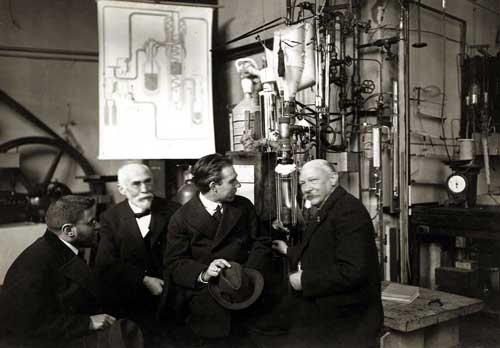
Superconductivity was discovered by H. Kamerlingh Onnes on April 8, 1911, who was studying the resistance of solid Mercury (Hg) at cryogenic temperatures. Liquid helium was recently discovered at that time. At T = 4.2K, the resistance of Hg disappeared abruptly. This marked a transition to a new phase that was never seen before. The state is resistanceless, strongly diamagnetic, and denotes a new state of matter. K. Onnes sent two reports to KNAW (the local journal of the Netherlands), where he preferred calling the zero-resistance state ‘superconductivity’’.
There was another discovery that went unnoticed in the same experiment, which was the transition of superfluid Helium (He) at 2.2K, the so-called λ transition, below which He becomes a superfluid. However, we shall skip that discussion for now. A couple of years later, superconductivity was found in lead (Pb) at 7K. Much later, in 1941, Niobium Nitride was found to superconduct below 16 K. The burning question in those days was: what would the conductivity or resistivity of metals be at a very low temperature?
The reason behind such a question is Lord Kelvin’s suggestion that for metals, initially the resistivity decreases with falling temperature and finally climbs to infinity at zero Kelvin because electrons’ mobility becomes zero at 0 K, yielding zero conductivity and hence infinite resistivity. Kamerlingh Onnes and his assistant Jacob Clay studied the resistance of gold (Au) and platinum (Pt) down to T = 14K. There was a linear decrease in resistance until 14 K; however, lower temperatures cannot be accessed owing to the unavailability of liquid He, which eventually happened in 1908.
In fact, the experiment with Au and Pt was repeated after 1908. For Pt, the resistivity became constant after 4.2K, while Au is found to superconduct at very low temperatures. Thus, Lord Kelvin’s notion about infinite resistivity at very low temperatures was incorrect. Onnes had found that at 3 K (below the transition), the normalised resistance is about 10−7. Above 4.2 K, the resistivity starts appearing again. The transition is too sharp and falls abruptly to zero within a temperature window of 10−4 K.
All superconductors are normal metals above the transition temperature. If we ask in the periodic table where most of the superconductors are located, the answer throws some surprises. The good metals are rarely superconducting
Perfect conductors, superconductors, and magnets
All superconductors are normal metals above the transition temperature. If we ask in the periodic table where most of the superconductors are located, the answer throws some surprises. The good metals are rarely superconducting. The examples are Ag, Au, Cu, Cs, etc., which have transition temperatures of the order of ∼ 0.1K, while the bad metals, such as niobium alloys, copper oxides, and 1 MgB2, have relatively larger transition temperatures. Thus, bad metals are, in general, good superconductors. An important quantity in this regard is the mean free path of the electrons. The mean free path is of the order of a few A0 for metals (above Tc), while for good metals (or the bad superconductors), it is usually a few hundred of A0. Whereas for the bad metals (good superconductors), it is still small as the electrons are strongly coupled to phonons. The orbital overlap is large in a superconductor. In good metals, the orbital overlap is small, and often they become good magnets. In the periodic table, transition elements such as the 3D series elements, namely Al, Bi, Cd, Ga, etc., become good superconductors, while Cr, Mn, and Fe are bad superconductors and in fact form good magnets. For all of them, that is, whether they are superconductors or magnets, there is a large density of states at the Fermi level. So, a lot of electronic states are necessary for the electrons in these systems to be able to condense into a superconducting state (or even a magnetic state). The nature of the electronic wave function determines whether they develop superconducting order or magnetic order. For example, electronic wavefunctions have a large spatial extent for superconductors, while they are short-range for magnets.
Meissner effect
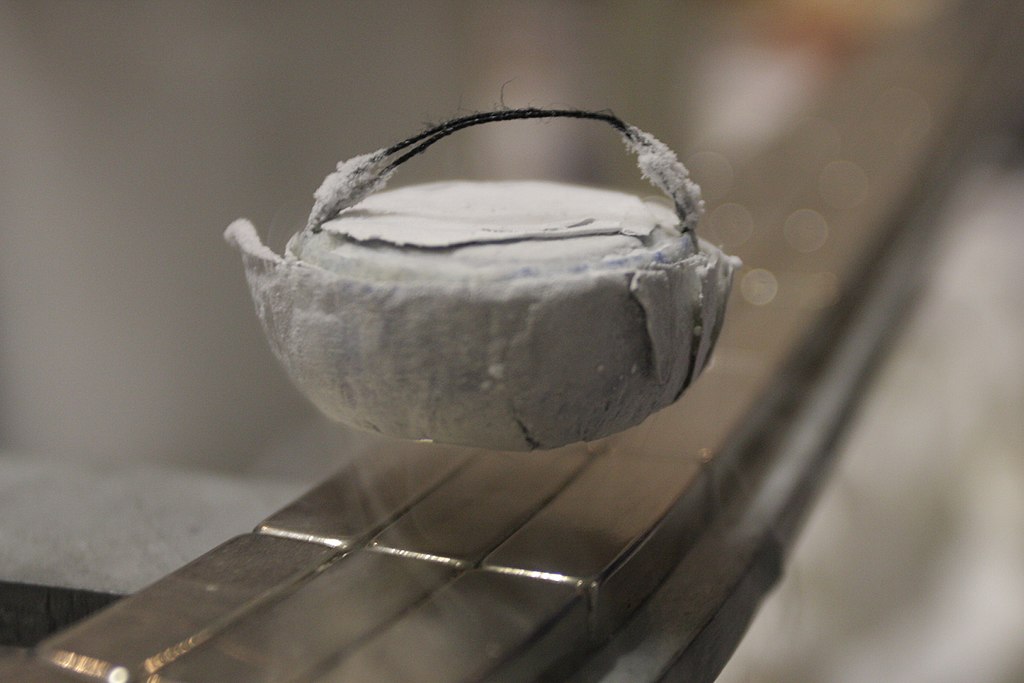
The near-complete expulsion of the magnetic field from a superconducting specimen is called the Meissner effect. In the presence of a magnetic field, the current loops at the periphery will be generated so as to block the entry of the external field inside the specimen. If a magnetic field is allowed within a superconductor, then, by Ampere’s law, there will be normal current within the sample. However, there is no normal current inside the specimen. Thus, there can’t be any magnetic field. For this reason, superconductors are known as perfect diamagnets with very large diamagnetic susceptibility. Even the best-known diamagnets (which are non-superconductors) have magnetic susceptibilities of the order of 10−5. Thus, the diamagnetic property can be considered a distinct property of superconductors compared to zero electrical resistance.
The near-complete expulsion of the magnetic field from a superconducting specimen is called the Meissner effect
A typical experiment demonstrating the Meissner effect can be thought of as follows: Take a superconducting sample (T < Tc), sprinkle iron filings around the sample, and switch on the magnetic field. The iron filings are going to line up in concentric circles around the specimen. This implies the expulsion of the flux lines outside the sample, which makes the filings line up.
Distinction between perfect conductors and superconductors
The distinction between a perfect conductor and a superconductor is brought about by magnetic field-cooled (FC) and zero-field-cooled (ZFc) cases, as shown below in Fig. 1.
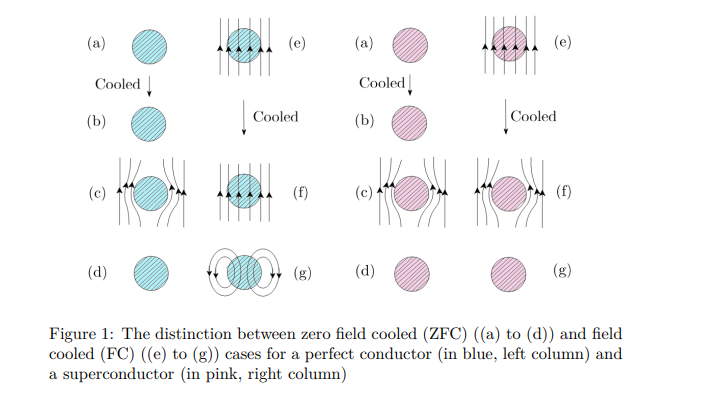
In the absence of an external magnetic field, temperature is lowered for both the metal and the superconductor in their metallic states from T > Tc to T < Tc (see left panel for both in Fig. 1). Hence, a magnetic field is applied, which eventually gets expelled owing to the Meissner effect. The field has finally been withdrawn. However, if cooling is done in the presence of an external field, after the field is withdrawn, the flux lines get trapped for a perfect conductor; however, the superconductor is left with no memory of an applied field, a situation similar to what happens in the zero-field cooling case. So, superconductors have no memory, while perfect conductors have memory.
Microscopic considerations: BCS theory
The first microscopic theory of superconductivity was proposed by Berdeen, Cooper, and Schrieffer (BCS) in 1957, which earned them a Nobel Prize in 1972. The underlying assumption was that an attractive interaction between the electrons is possible, which is mediated via phonons. Thus, electrons form bound pairs under certain conditions, such as (i) two electrons in the vicinity of the filled Fermi Sea within an energy range ¯hωD (set by the phonons or lattice). (ii) The presence of phonons or the underlying lattice is confirmed by the isotope effect experiment, which confirms that the transition temperature is proportional to the mass of ions. Since the Debye frequency depends on the ionic mass, it implies that the lattice must be involved. 3 A small calculation yields that an attractive interaction is possible in a narrow range of energy. This attractive interaction causes the system to be unstable, and a long-range order develops via symmetry breaking. In a book by one of the discoverers, namely, Schrieffer, he described an analogy between a dancing floor comprising couples, dancing one with any other couple, and being completely oblivious to any other couple present in the room. The couples, while dancing, drift from one end of the room to another but do not collide with each other. This implies less dissipation in the transport of a superconductor. The BCS theory explained most of the features of the superconductors known at that time, such as (i) the discontinuity of the specific heat at the transition temperature, Tc. (ii) Involvement of the lattice via the isotope effect. (iii) Estimation of Tc and the energy gap. The value of Tc and the gap are confirmed by tunnelling experiments across metal-superconductor (M-S) or metal-insulator-superconductor (MIS) types of junctions. Giaever was awarded the Nobel Prize in 1973 for his work on these experiments. (iv) The Meissner effect can be explained within a linear response regime. (v) Temperature dependence of the energy gap, confirming gradual vanishing, which confirms a second-order phase transition. Most of the features of conventional superconductors can be explained using BCS theory. Another salient feature of the theory is that it is non-perturbative. There is no small parameter in the problem. The calculations were done with a variational theory where the energy is minimised with respect to some free parameters of the variational wavefunction, known as the BCS wavefunction.
Unconventional Superconductors: High-Tc Cuprates
This is a class of superconductors where the two-dimensional copper oxide planes play the main role, and superconductivity occurs in these planes. Doping these planes with mobile carriers makes the system unstable towards superconducting correlations. At zero doping, the system is an antiferromagnetic insulator (see Fig. 2). With about 15% to 20% doping with foreign elements, such as strontium (Sr), etc. (for example, in La2−xSrxCuO4), the system turns superconductivity. There are two things that are surprising in this regard. (i) The proximity of the insulating state to the superconducting state; (ii) For the system initially in the superconducting state, as the temperature is raised, instead of going into a metallic state, it shows several unfamiliar features that are very unlike the known Fermi liquid characteristics. It is called a strange metal.
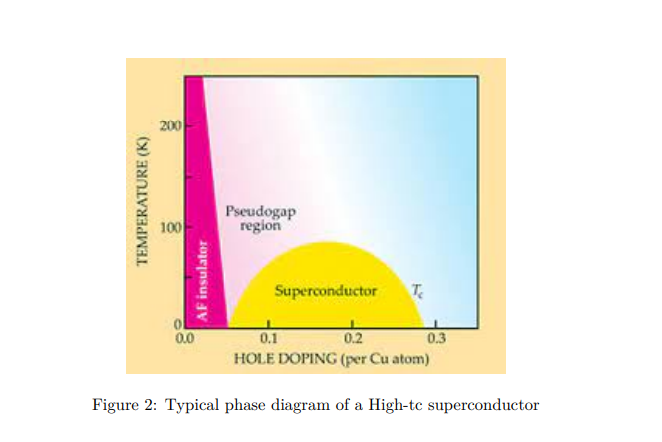
In fact, there are some signatures of pre-formed pairs in the ‘so-called’ metallic state, known as the pseudo gap phase. Since the starting point from which one should build a theory is missing, a complete understanding of the mechanism leading to the phenomenon cannot be understood. It remained a theoretical riddle.











Space & Physics
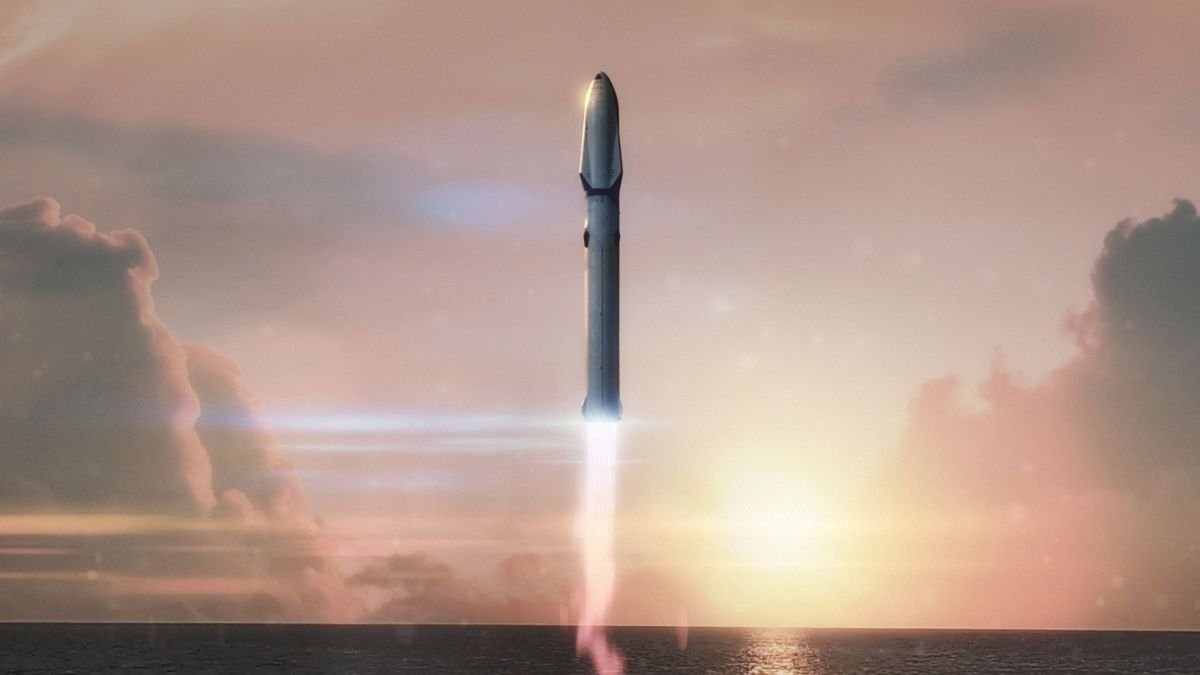
World Space Week 2026: How the Rocket Revolution Is Changing Space
World Space Week 2026 explores the Rocket Revolution, from reusable launchers and private space companies to the growing role of satellites.

Space & Physics
A Dead Star Feeds Off Planet Formed From Its Ashes
It adds to a known coterie of planets now found orbiting dead stars, astronomers are busy studying to spot signs of life.

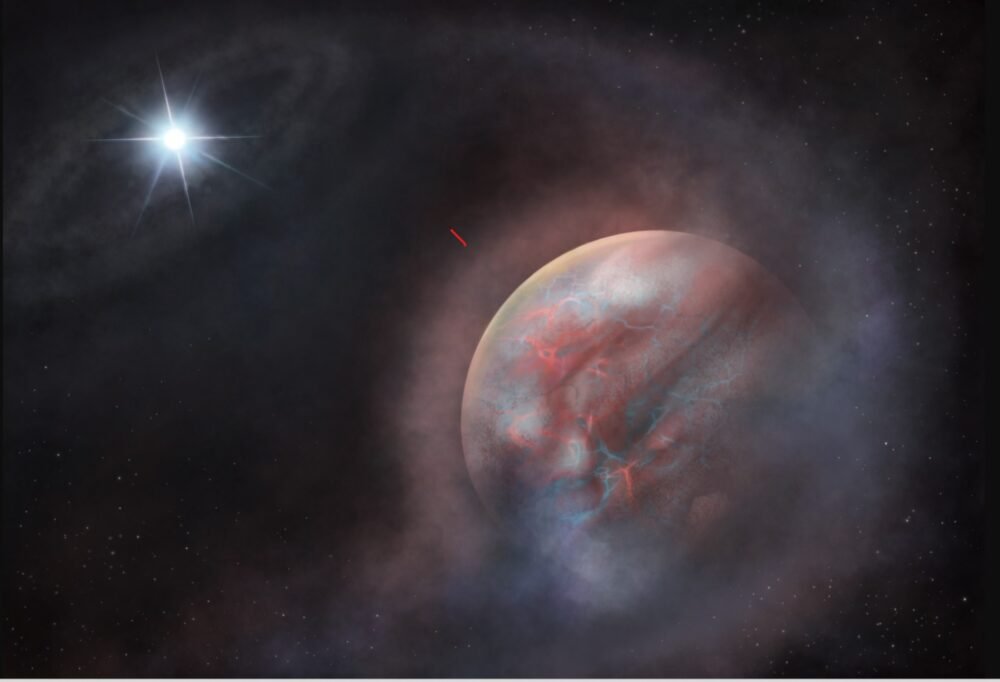
A planet orbiting once every 4 days around a white dwarf star HS 0209+0832 – about 270 light years in the direction of the constellation Pisces – is steadily losing its atmosphere to its host star. While many stars in solar systems beyond our own often feed on their planets, this particular star feeds on its own ashes.
The gaseous planet HS 0209+0832 b was discovered in 2024, when the Transiting Exoplanet Survey Satellite, a NASA space telescope, found it orbiting the white dwarf star over the course of four days. The new study followed through with detailed observations from TESS data, NASA’s space-based Far Ultraviolet Spectroscopic Explorer, in addition to the ESO’s mountain-based Very Large Telescope, to study the star’s atmosphere and in turn inferring some chemistry occurring in the planet.
In a study published in the journal Nature Astronomy on Monday and funded by NASA, European Research Council, Fundación Occident and the Instituto de Astrofísica de Canarias, an international team of astronomers have reported imprints of niobium, a heavy element, in the atmosphere of a white dwarf star.
Astronomers predict the transiting young planet around the dead star is supplying that niobium back to its host. The sighting is evidence of a “second generation” planet, one of many candidates identified over several years, manifesting in a myriad different ways from spent gas ejected in the wake of stellar deaths.
It adds to a known coterie of planets now found orbiting dead stars, astronomers are busy studying to spot signs of life.
What are white dwarf stars?
White dwarves are an exotic stars, and are all that’s left off giant stars shedding their large gaseous skin in violent deaths. Our sun is destined one day to transform into a white dwarf, but only after swelling in size some five billion years from now to become a red giant when it will eclipse past the earth’s orbit. It would take several million years after that for the red giant sun to shed its gaseous exterior to become a white dwarf.
Planets if any, found orbiting these dead stars may have likely migrated from the new solar system’s outer reaches. All that’s left off the progenitor star’s past are imprints of light metals and other elements on the white dwarf’s atmosphere. Such planets have previously been spotted orbiting pulsars, a kind of neutron star, back in 1992. In fact, its discovery had marked the first ever detection of any planet orbiting a star beyond our sun.
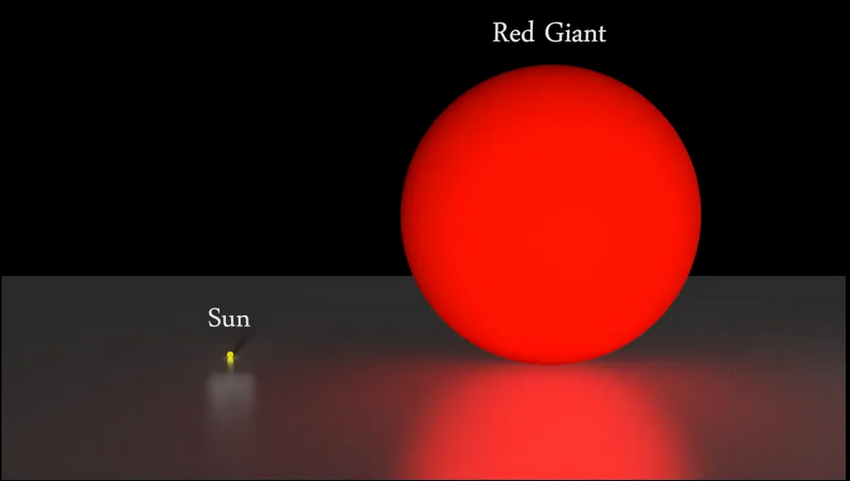
In five billion years, our sun will evolve to become a red giant star. Credit: Svitlana Leonidivna Malchenko
Sighting niobium
Elements such as niobium don’t typically form in the core of stars like our sun. Chemical production usually limits to elements lighter than or until iron, with its 26 protons and 30 neutrons. Beyond that, slamming an extra proton or neutron will cause those to split, leaving iron to be the last element to be directly forged.
Niobium, with 41 protons and 52 neutrons, is thought to be born after absorbing slow passing neutrons when the red giant star dies to form a white dwarf star. This niobium hitches a ride along with rest of the contents of the red giant star, farther into the outer reaches of the system after the formation of the white dwarf.
These contents could create a new disc of circumstellar material with dust and gas that could condense one day to form new planets. The “second generation” planet found orbiting the white dwarf star from the new study, could have been born this way.
Alternatively, it may have been a planet in the outskirts like Neptune, migrating inwards, and enriching itself with niobium-rich star material.
Either way, the planet got too close to its host star, which is irradiating its newfound niobium-rich atmosphere, stripping it away and devouring it.
While it’s likely not a candidate planet for life as we know it to be found, it’s discovery can help ascertain how such worlds are formed in the aftermath of a star’s various phases of evolution.
Space & Physics
Artemis Accords Reach 76 Countries: What It Means for India
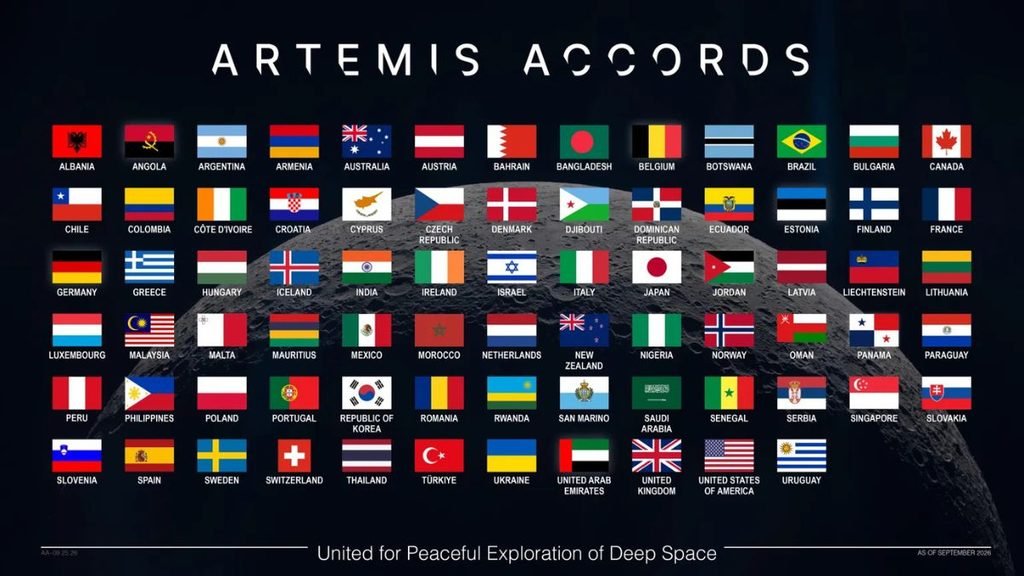
The Artemis Accords now have 76 signatories. With NASA inviting ISRO to its Moon Base programme, India’s role in lunar exploration is expanding.
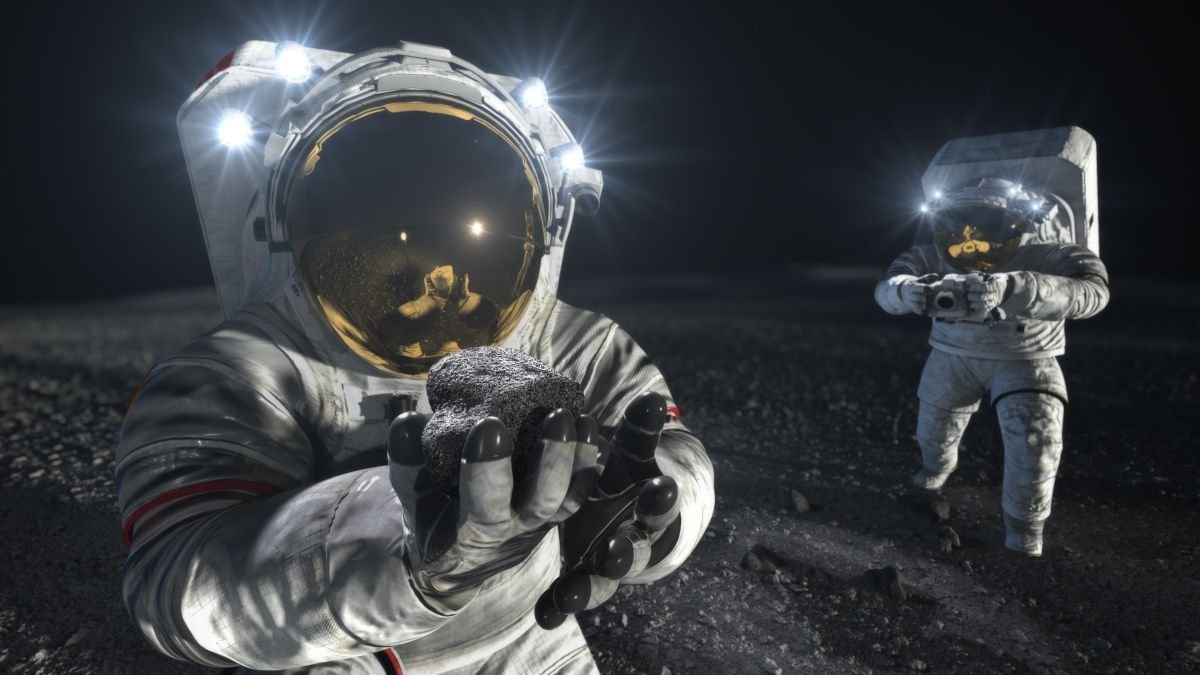
The Artemis Accords now have 76 signatories, expanding the international framework around the next phase of lunar exploration. For India, the milestone comes weeks after NASA invited the Indian Space Research Organisation (ISRO) to participate in its planned Moon Base programme.
Albania, Croatia, Côte d’Ivoire and San Marino joined the Accords in September, taking participation to 76 countries. NASA says nearly 40% of the world’s nations are now part of the framework, which sets principles for peaceful, transparent and responsible exploration of the Moon, Mars and beyond.
India became the 27th signatory in June 2023. At the India-US Civil Space Joint Working Group meeting in Bengaluru in August, NASA invited ISRO to participate in its Moon Base programme. The two countries also agreed to advance discussions on open scientific-data sharing under the Accords.
India’s Moon Base opportunity
The invitation does not specify what India will contribute. NASA has said every Artemis Accords signatory can participate through scientific payloads, technology demonstrations, CubeSats and other capabilities. Any specific Indian contribution would require further agreements.
India, however, is developing its own increasingly ambitious lunar programme. ISRO’s Chandrayaan-4 is planned as a lunar sample-return mission, designed to collect samples from the Moon’s polar region and bring them back to Earth. Chandrayaan-5/LUPEX, being developed with Japan’s JAXA, will study lunar polar volatiles in situ.
These missions could give India experience and scientific capabilities relevant to a future international lunar infrastructure.
ISRO Shaping the Data Conversation
Scientific data could be another area of Indian participation. In May 2026, ISRO led an initial Artemis Accords discussion on advancing open-data practices. NASA subsequently held two workshops focused on making lunar scientific data more accessible, interoperable and reproducible across countries.
That is significant as more lunar missions target the same regions. Shared standards could allow researchers to combine observations from different spacecraft instead of treating each mission’s data separately.
Moon – Space Coperation
India-US space cooperation is also expanding into human spaceflight. ISRO’s 2025–26 annual report records that Indian astronaut Shubhanshu Shukla travelled to the International Space Station in June 2025 as part of the Axiom-4 mission and conducted seven microgravity experiments. ISRO also held discussions with NASA on potential cooperation related to Gaganyaan.
The Artemis relationship therefore sits alongside an existing programme of India-US cooperation, including the NASA-ISRO Synthetic Aperture Radar (NISAR) mission.
What Changes for India?
The significance of the 76-country milestone lies in the network developing around it. The Artemis Accords cover scientific-data sharing, interoperability, non-interference between missions, emergency assistance and protection of historically significant lunar sites. NASA says signatories are now working through technical meetings and workshops to put these principles into practice.
For India, that creates several possible avenues: contributing technology or science to NASA’s Moon Base effort, sharing lunar data, and working with a growing group of countries on standards for increasingly crowded lunar operations. What India’s specific contribution to the Moon Base remains undecided. But with Chandrayaan-4, LUPEX and its human-spaceflight programme advancing alongside deeper NASA cooperation, India is entering the next phase of lunar exploration with its own capabilities already taking shape.


India Captures 5.7% of Global Greenfield Investment, Outpacing China

World Mental Health Day: How Late-Night Scrolling May Be Disrupting Sleep and Fuelling Anxiety

Climate Science Faces a Deadline: Can the IPCC Deliver Before the 2028 Global Stocktake?

Knowing When to Think for Ourselves: AI, Intuition and the Education of Discernment

Puberty, Pregnancy and Menopause Reshape the Female Brain Differently, Study Finds

From Scams to Screens: How the National Stock Exchange Rewrote India’s Equity Story

Aim for the Stars: Anjali Thomas’s Journey from a Small College in Kerala to the Frontiers of Medical Imaging

Two Chemists Win Nobel Prize for Solving a Century-Old Puzzle: Why Life Picks One Hand Over the Other

India’s AI Moment Rests on More Than Code

Marshall Islands: Why the US Nuclear Legacy Is Back Before the UN

-

 Math3 months ago
The 2026 Fields Medals: Four Proofs, Four Decades-Old Problems Solved
-
Climate2 months ago
After Kerala’s Deadliest Landslide, the Hardest Thing to Rebuild Was Childhood
-
Society3 months ago
West Asia Crisis: Can Kerala’s Returning Gulf Migrants Find a Future in the Green Economy?
-
Space & Physics4 months ago
India Semiconductor Mission: ‘It’s Not About Fabs. It’s About Building An Entire Ecosystem’
-
Interviews3 weeks ago
From Scams to Screens: How the National Stock Exchange Rewrote India’s Equity Story
-
Climate4 months ago
The Climate World Cup? How Climate Change Could Affect Player Performance at the 2026 World Cup
-
Society3 months ago
What Is Civilisational Diplomacy? Understanding India’s Newest Foreign Policy Tool
-
Society4 months ago
From Bell Labs to the Classroom: A Second Career in Teaching