Women In Science
The Data Don’t Lie: Women Are Still Missing from Science — But Why?
Despite two decades of progress, women remain just one in three researchers worldwide. Global datasets reveal how systemic filters — from classrooms to laboratories and limited mentorship access — continue to push women to the margins of science

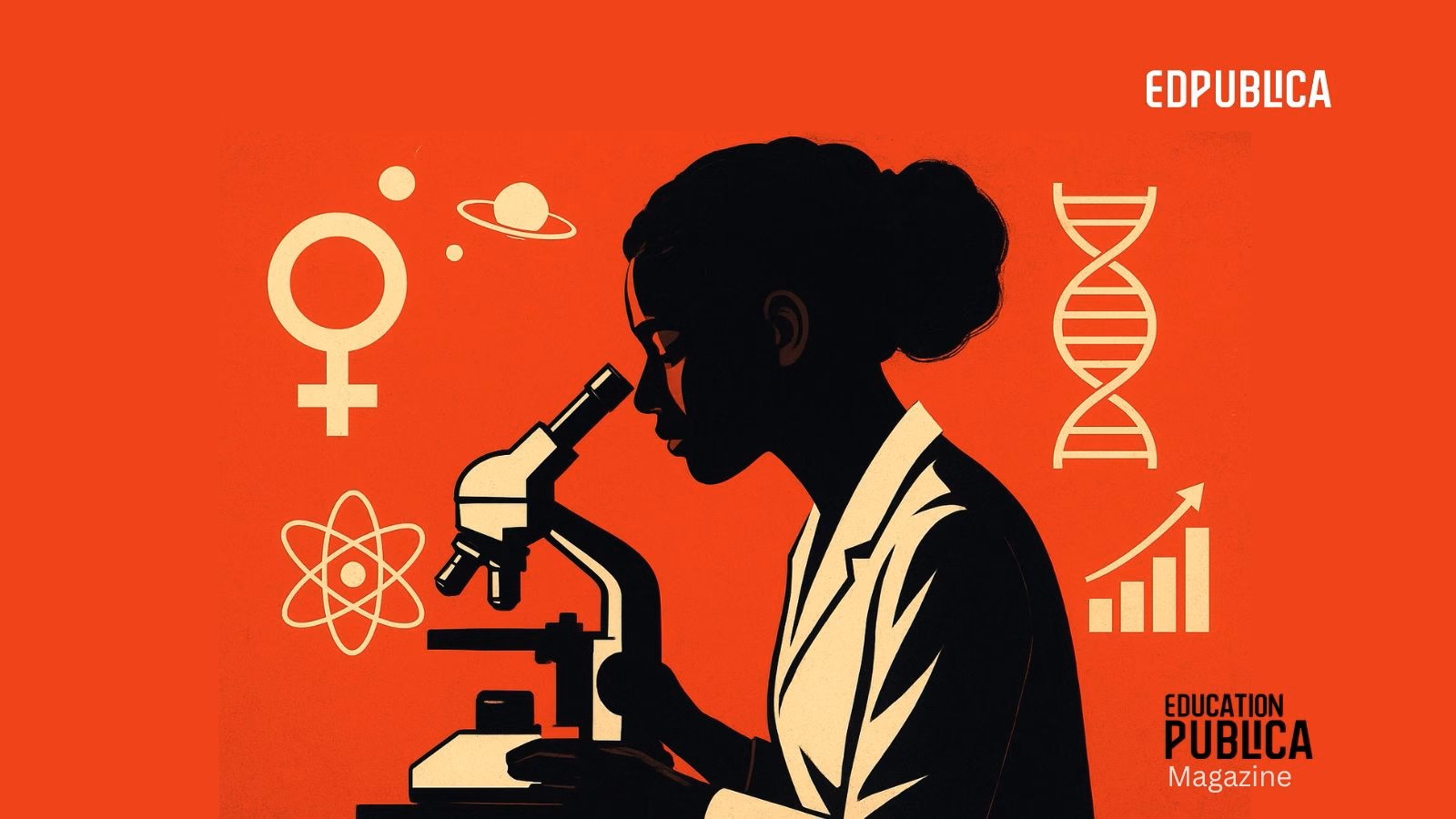
When a young astrophysicist in Buenos Aires packed up her telescope after her PhD, she had every intention of continuing her research. Five years later, she works in data analytics, far from the night skies she once studied.
EdPublica met her by chance at Kuala Lumpur airport. Her story is echoed across continents — from lab benches in Lagos to computing centres in Bengaluru — where women enter science full of promise, only to find themselves on the margins of it.
According to UNESCO’s latest data, only one in three researchers worldwide is a woman — a number that has barely moved in two decades. For all the progress in girls’ education and gender equality elsewhere, science — the very field meant to advance humanity — remains caught in an old equation that continues to leave women out.
The slow revolution
‘UNESCO’s Status and Trends of Women in Science (2025)‘ reveals a striking paradox: more women than ever are pursuing higher education, yet their presence in scientific research and leadership has barely expanded.
Globally, women account for about 35 percent of graduates in STEM fields, but that average conceals deep divides. In life sciences, they have reached near parity. In engineering, physics, and computing, their numbers plummet below a quarter.
“Girls are not opting out of science,” says Shamila Nair-Bedouelle, UNESCO’s Assistant Director-General for Natural Sciences. “They are being filtered out by systems that were never designed for them.”
That “filter” begins early. Subtle stereotypes about what girls are “good at” shape subject choices long before university. The absence of visible role models compounds the message.
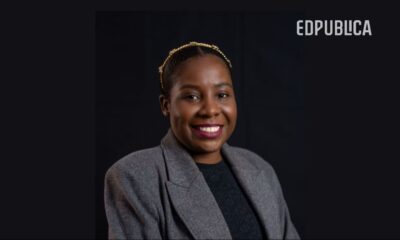
Dr. Julia Puseletso Mofokeng, Senior Lecturer in Chemistry at the University of the Free State, South Africa, recalls that absence vividly:“When I was doing my honours degree, I was the only female student in a class of six. Later, in a research group, I found myself surrounded by men. During international collaborations, out of 18 participants, I was the only woman. That realization motivated me — I decided that if I wanted to see more women in science, I had to be that role model,” she tells EdPublica.
Her reflection captures a global truth: women’s participation rises where mentorship and visibility intersect. Where they don’t, even ambition finds itself isolated.
From classrooms to corridors of power
Getting a degree is only the first hurdle. The next — and far harder — challenge is staying in the system. UNESCO data show that women hold just one-third of research positions globally, dropping to around 22 percent in G20 nations.
In industrial and corporate R&D, the numbers shrink further. Temporary contracts, uneven access to grants, and opaque promotion systems form invisible barriers. Even where hiring begins on equal footing, women’s participation thins out with every rung of seniority.
A 2025 bibliometric analysis of 80 million scientific papers found that men dominate the top ten percent of most productive and cited researchers in almost every field. Women start at comparable rates but face higher attrition and fewer opportunities to lead multi-author studies or secure large grants.
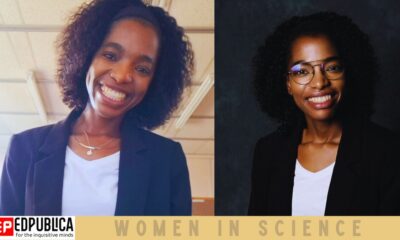
“Science is not short of capable women,” says Dr. Claudia Ntsapi, a researcher at the University of the Free State, in conversation with EdPublica.
“Systemic barriers — gender bias, lack of mentorship, limited resources — continue to hinder true equality in science careers.”
She points to South Africa’s paradox: women make up the majority of university graduates, yet only 13 percent of STEM graduates are women, and Black women remain severely underrepresented in leadership.
“We need mentorship networks, scholarships, and policies that promote work-life balance. And we must raise awareness about the contributions of women in science to challenge the stereotypes that keep girls away,” Dr. Claudia adds.
The gender of knowledge
The problem, UNESCO argues in its Call to Action: Closing the Gender Gap in Science (2024), is not merely one of representation — it’s one of perspective. Who participates in science shapes what science studies, and how it studies it.
When most clinical research was designed around male physiology, women’s health outcomes suffered. When engineers ignored how climate disasters displace caregivers, adaptation models missed critical social realities.
“Science cannot be sustainable if it is exclusive,” UNESCO notes. “Gender equality is a prerequisite for scientific excellence.”
Mathematician Professor Neena Gupta, recipient of the Infosys Prize 2024 in Mathematical Sciences, agrees that inclusion isn’t charity — it’s strength. In her interview with EdPublica, says, “Women constitute half of our strength and are equally capable of contributing to science and mathematics. But they often shoulder additional family responsibilities. With the right support — from family, government, and institutions — women can contribute freely to science and technology.”
Why women leave
Behind the statistics are systems built on old assumptions — that a researcher’s productivity must be uninterrupted, that career gaps signal lack of commitment, that caregiving is a private burden.
Across countries, more than 70 percent of women in research are on temporary or part-time contracts, compared to 55 percent of men. When funding tightens, they are often the first to go. Maternity leave resets grant eligibility. Mentorship networks skew male, perpetuating cycles of exclusion.
Dr. Laura Monk, a Royal Society Dorothy Hodgkin Fellow and Lecturer at the University of Bristol (UK), captures this invisible struggle, “Mathematics is indeed a very masculine field. I’ve been lucky not to face overt sexism, but I struggled deeply as one of the only girls in my cohort. Finding female mentors and peers was crucial — it gave me a sense of belonging and purpose. That’s what many young women lack: the feeling that they belong here.”
Professor Neena Gupta echoes that sentiment from India’s perspective, “there are now more women in mathematics than there were earlier, and the number is growing. Having role models helps. We must continue supporting these women so young girls can see proof that they too can succeed.”
Flickers of progress
Still, the global picture is not uniformly bleak. Central Asia now hovers near gender parity in research, and Latin America’s public research systems have pushed women’s representation close to 45 percent. Eastern Europe has stabilized near 40 percent.
In Asia, change is slower but visible. India reports that 43 percent of PhD students are women, yet only about 18 percent work in industrial R&D. Government initiatives like KIRAN, Vigyan Jyoti, and SERB’s POWER grants are slowly rewriting that equation by funding re-entry fellowships and supporting mid-career researchers.
“I have faced the challenges most women face — balancing family, raising children,” says Professor Gupta. “But I was fortunate to have a supportive family that shared my responsibilities. That support made it possible for me to focus on research.”
Her story, echoed in laboratories across continents, underlines a pattern: where family and institutional support converge, women stay and thrive. Where they don’t, science loses talent it cannot afford to waste.
Leadership and the glass microscope
If entry and retention are the first two bottlenecks, leadership is the third. Less than 15 percent of national science academy fellows are women. Nobel Prizes, large-scale grants, and directorships of major research facilities remain overwhelmingly male.
Promotion criteria reward uninterrupted publication and global visibility — metrics that inherently penalize those who take career breaks. “It’s not that women aren’t producing excellence,” UNESCO notes. “It’s that the system measures excellence through a lens that erases them.”
The Call to Action lays out a clear roadmap: transparent promotion processes, gender audits for research grants, institutional accountability, and gender-responsive budgeting. It calls on governments to publish annual data — because what isn’t measured isn’t fixed.
India in the global equation
India’s story sits at the intersection of progress and persistence. Female enrolment in STEM has surged, and the country now ranks among the top producers of women science graduates. Yet in leadership, the gap yawns wide.
Only one in four senior faculty positions in India’s universities is held by a woman. In industrial research, that number drops to one in five. Cultural expectations and workplace rigidity continue to limit re-entry for mid-career women.
But India’s policy landscape offers lessons: the Department of Science and Technology’s women-focused grants, INSPIRE fellowships, and the inclusion of gender equity in the National Science and Technology Policy draft all point toward systemic change — if implementation follows intent.
Why it matters now
Women’s equal participation in science is not a “women’s issue.” It is a scientific, developmental, and democratic imperative. Every dataset or discovery that excludes half the population leaves the world poorer in ideas.
UNESCO’s twin reports — one analytical, one urgent — make the same argument: the gender gap in science is measurable, correctable, and indefensible. Closing it is not about fairness alone; it is about unlocking the full imagination of science itself.
As Dr. Mofokeng puts it, “if I wanted to see more women in science, I had to be that woman.”
The next generation shouldn’t have to say the same.
Note: This story is part of the EdPublica Women in Science Initiative, an ongoing global editorial effort to document the data, experiences, and policies shaping women’s participation in research and leadership. The series celebrates women in science while examining mentorship networks, policy interventions, and structural inequalities in depth. Readers and researchers are invited to share insights or stories with EdPublica’s Women in Science Desk, contact@edpublica.com, or dipin@edpublica.com







Women In Science
Rewriting cancer: Ankita Bansal’s quest to decode tumour metabolism
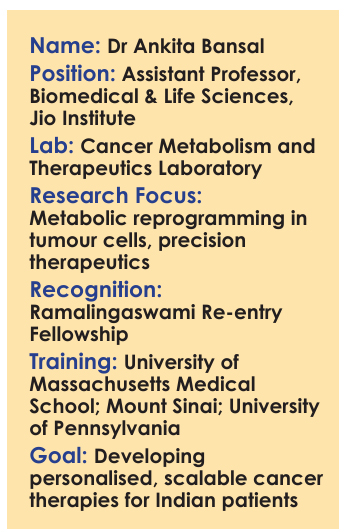
From aging research to precision cancer therapeutics, Ankita Bansal’s work sits at the intersection of metabolism, technology, and patient-centred science—seeking to transform how cancer is detected and treated in India
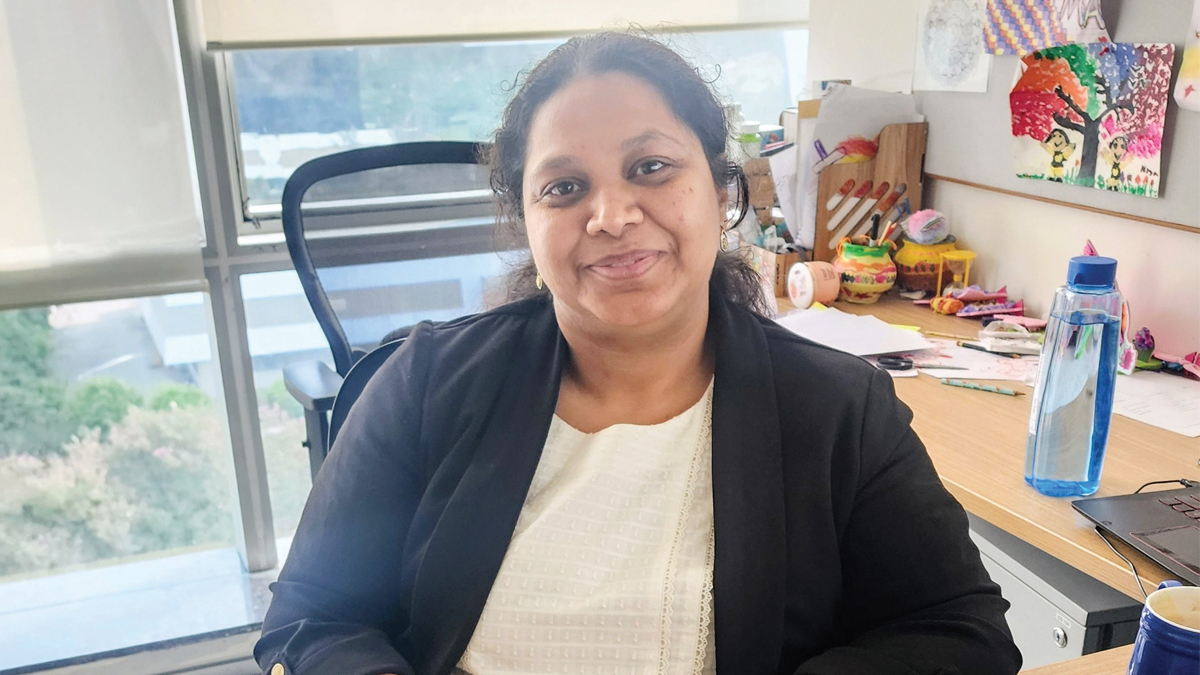
Scientist Ankita Bansal is investigating cancer metabolism to uncover new pathways for precision cancer therapies and early detection. Her research aims to make cancer treatment more personalised, accessible, and effective for Indian patients.
In the evolving landscape of cancer research, where breakthroughs increasingly depend on understanding the invisible workings of cells, metabolism is emerging as one of the most powerful frontiers. At the centre of this shift is Dr Ankita Bansal—scientist, educator, and one of the new voices shaping India’s precision medicine ecosystem. As part of Education Publica’s ‘Women in Science’ series, Bansal represents a generation of researchers redefining not just what science discovers, but how it translates into real-world impact. An Assistant Professor at Jio Institute, Mumbai and recipient of the prestigious Ramalingaswami Re-entry Fellowship, her work focuses on decoding how cancer cells reprogram their metabolism—and how these hidden dependencies can be turned into targeted, patient-specific therapies. Trained across leading global institutions, Bansal’s scientific journey spans aging biology to cancer metabolism, united by a single question: how do we move from understanding disease to meaningfully improving lives? Her research now centres on identifying metabolic signatures unique to Indian patients, with the aim of building scalable, accessible precision therapeutics. At a time when India is positioning itself as a hub for translational science, Bansal’s work sits at a critical intersection—where biology meets technology, and where discovery is measured not just in publications, but in its potential to reach patients.
From Cells to Systems: Rethinking Cancer with Ankita Bansal
Ankita Bansal is exploring how cancer cells rewire their metabolism – unlocking new pathways for precision therapies tailored to Indian patients
What first sparked your curiosity about biology – and was there a moment when you knew research was the path you wanted to take?
It started with simple observations and asking “why?” Over time, that curiosity deepened into a desire to understand why living systems behave the way they do. I began tinkering with home experiments to tease things apart, though I never actually set out to become a researcher. I simply followed my instinct to test ideas and see what happens when you change a variable. It was only much later that I realized what I had been doing all along had a formal name: research.
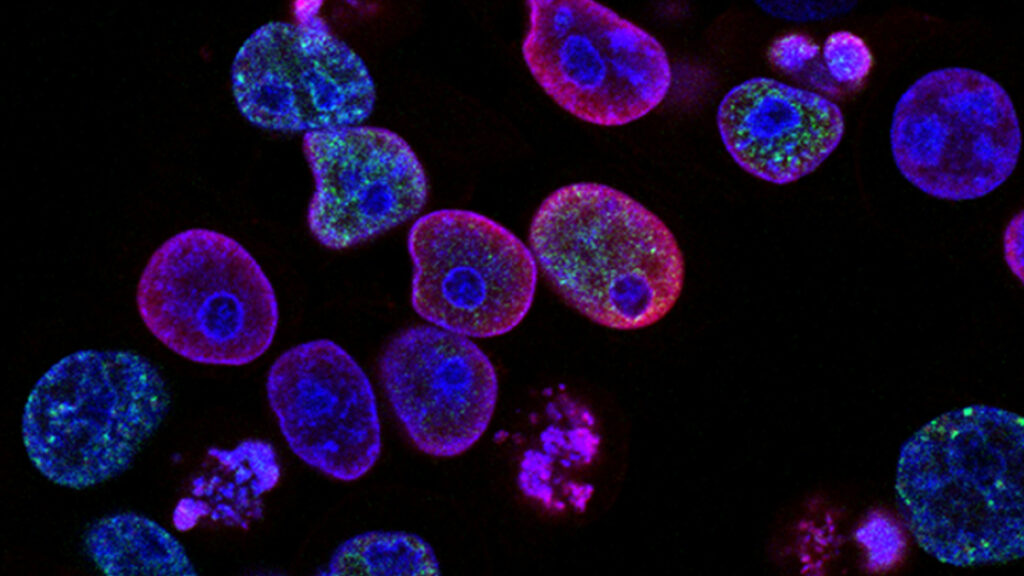
During your PhD, your work showed that living longer and living healthier are not necessarily driven by the same genes. How did that discovery change the way you think about aging – and about what science should aim for?
Longevity without quality of life is not worth aspiring to. Healthspan is about independence, resilience, and the ability to engage with the world—it isn’t just a fixed number of years on a chart. This philosophy carries directly into my cancer work, where improving how people live, staying in remission, and catching cancer early matters as much as extending survival.
Science operates the same way. It is not just about metrics—publications, h-index, or grants—but the broader ecosystem: the people, the communities it touches, and how it shapes society.
Decoding Cancer Metabolism for Better Care
You’ve worked across systems from C. elegans to cancer cells. How has this shaped you as a scientist?
Training in C. elegans grounded me in systems biology and metabolism, constantly reminding me that disease is rarely a single-gene or single-pathway problem. Moving into cancer research reinforced the complexity of biological networks and the importance of thinking at the level of the whole organism. This journey shaped me into a scientist who views disease as a dynamic interaction between metabolism, environment, and time, rather than an isolated molecular event.

What fascinates you most about targeting cancer through its metabolism rather than more traditional approaches?
Cancer cells are highly adaptable, yet they remain dependent on specific metabolic sources. That paradox is what fascinates me; that dependency is a vulnerability we can exploit. Metabolism fuels growth. A cancer cell can carry every genetic mutation imaginable, but without access to specific metabolic building blocks, it cannot sustain itself.
It also opens questions beyond treatment: Why do some cancers stay in remission while others metastasize? What metabolic signatures appear early enough to catch a tumor before it becomes a clinical problem? Understanding these dependencies allows us to build early detection approaches that are scalable and accessible to broader populations.
Are there experiences from your global training that influence how you mentor students or run your lab?
If you cannot explain your science to a ten-year-old or a ninety-year-old grandmother, the project might not be good enough. In my lab, I want to train scientists who communicate well, take ownership, and think like mavericks—be the goat, not the sheep.
It is okay to fail, provided you learn during the process. I want people who question assumptions and feel safe doing so. This culture can be difficult to implement in India, where deference runs deep in academic structures, but that makes it all the more important to try.
Why is the gap between academic discovery and patient-ready products still so wide – and what needs to change?
The biggest misconception is that academia and patient-ready products exist in separate silos. They don’t; they exist on a continuum. While this is a global problem, it is particularly acute in India. Academia rewards novelty, while translation requires scalability and collaboration. You cannot simply license a ready technology and call it translation; you have to be part of the process from day one. Academia must take real ownership in nation-building, with the patient’s needs as the starting point, not an afterthought. Scientists, clinicians, industry, and policymakers need to be in the room together far earlier than they currently are.
Building a research lab from the ground up is no small task. As a woman leading a lab, what challenges have surprised you the most?
The juggling act that no one adequately prepares you for: running a competitive research program while raising a family. In India, the lack of high-quality childcare and reliable after-school programs is a significant challenge. It is a major hurdle that directly affects productivity and well-being. Being open about these realities matters, because pretending they don’t exist helps no one.
Gender disparities in science are still very visible in India. Where do you see genuine opportunities for change?
Every day is better than the last. Things are genuinely improving, and I don’t want to paint a picture darker than reality. The most persistent barriers remain inadequate childcare infrastructure and the “two-body problem.” Beyond that, there are no impossible bottlenecks. The trajectory is positive. The key is to keep making the case that these structural issues are solvable through dialogue and goodwill.
How can Indian institutions better support women in science?
We need childcare infrastructure, flexible timelines, and open communication channels. These should be framed not as “accommodations,” but as essential investments in retaining top-tier talent.
Did role models play a part in your journey?
My grandmother pursued a double MA after marriage and showed me that learning has no expiration date. My mother embodied the resilience required of a working woman, and my father taught me that success comes through sacrifice. My PhD mentor ignited my passion for research, even while facing her own health challenges, shaping my approach to science with both rigor and empathy. I also value the scientific dialogue I share with my husband, a scientist-entrepreneur whose translational outlook broadens my perspective.
Visibility matters. When women scientists share not only their achievements but also their doubts and unconventional paths, the journey becomes more accessible. There is no single template for success.
What excites you most about building a precision therapeutics lab in India right now?
Our time has begun. India is at a unique point in its trajectory—our Amrit Kaal. We have growing technological capacity, vast patient populations, and massive unmet clinical needs. Out-of-the-box thinking is now highly sought after. Translating discoveries into affordable, scalable solutions that directly impact patients is what motivates me every morning.
Looking ahead a decade, what legacy do you hope your work leaves behind?
I hope to leave behind frameworks that integrate metabolism, technology, and clinical insight to revolutionize early cancer detection. More importantly, I hope to foster a culture where science is patient-centered first—where we start with the patient’s needs, not the publication, and build everything outward from there.
Women In Science
Protecting Life on the Mountainsides: A Conversation with Prof. Le Roux
In this conversation, she discusses what’s driving rising roadkill risks in Africa’s mountains, how vulnerable species are being affected, and why conservation planning must rapidly evolve to protect these fragile ecosystems. Women in Science is a recurring Education Publica column profiling women scientists from around the world — their work, journeys, and impact
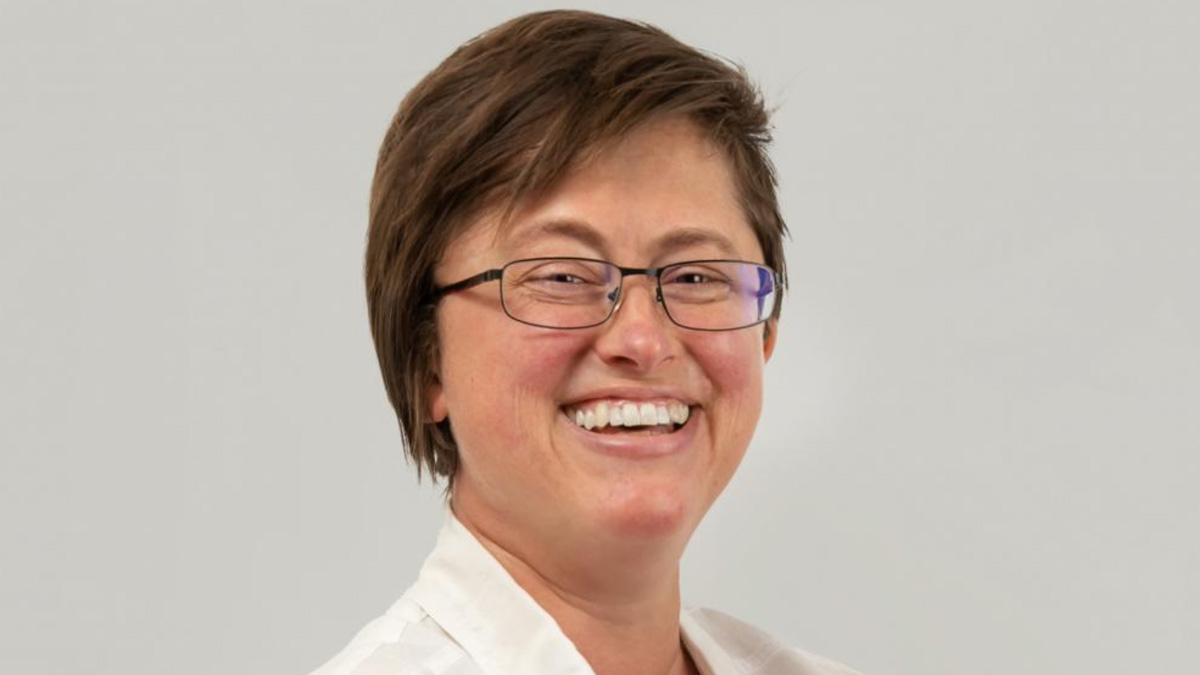
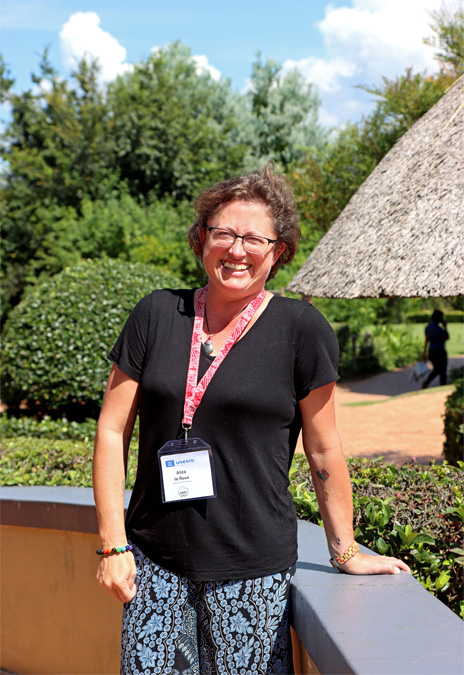
In this edition of Women in Science, Education Publica introduces Prof. Le Roux, a leading behavioural ecologist and Assistant Dean in the Faculty of Natural and Agricultural Sciences, and Associate Professor in the Department of Zoology and Entomology at the University of the Free State. Her work spans biodiversity, mountain ecosystems, and the escalating threat of wildlife mortality on roads. In this conversation, she discusses what’s driving rising roadkill risks in Africa’s mountains, how vulnerable species are being affected, and why conservation planning must rapidly evolve to protect these fragile ecosystems. Women in Science is a recurring Education Publica column profiling women scientists from around the world — their work, journeys, and impact.
You’ve dedicated your career to behavioural ecology and zoological sciences. What inspired you to pursue this path, and how has your journey shaped the way you approach issues like wildlife conservation and mountain biodiversity?
I’ve always loved being out in nature, ever since the first time my father took me for a hike up Table Mountain. Growing up, I experienced first-hand how wild animals and wilderness can be good for the soul (not just for the planet and for our physical health) – and then, as an adult, I saw in Europe and North America how very little wildness remains over there. This has really driven it home to me that we, on this continent, have very precious, living resources that we need to protect – and these resources are particularly unique in mountains. Disregarding this in favour of mining and other capitalistic ventures is really just speeding us along to a dystopian future.
Your research highlights the growing risk of roadkill in mountainous regions, particularly for endangered and vulnerable species. How is the expansion of road networks affecting wildlife in these areas?
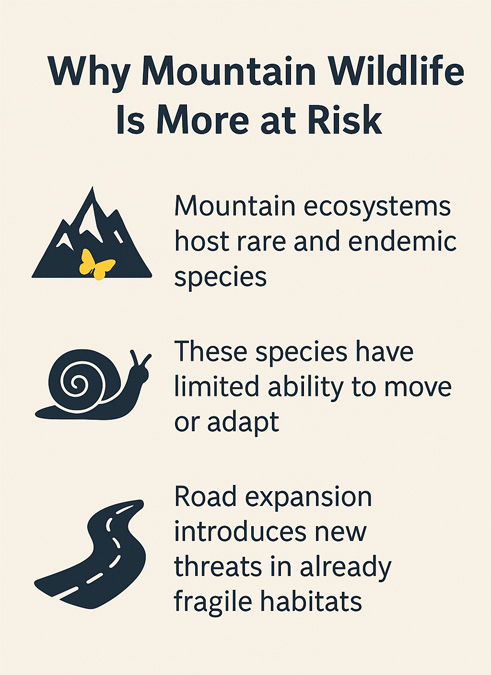
Quite simply, these areas were previously less accessible to humans and vehicles, and the expanding road networks are changing that equation. Species at high altitudes now become more exposed to potential invasive species (which humans transport deliberately or accidentally) and collisions with vehicles. Our vehicles move far faster than natural predators do, so escaping the risk of oncoming traffic is not something any species is particularly adapted to. Populations will need to learn to avoid traffic and/or roads, if at all possible. This is not usually possible.
You mentioned that certain species, such as African wild dogs, lions, and elephants, are particularly vulnerable to roadkill. How do IUCN categories help frame the urgency of this problem?
The IUCN sets the global standard for us to understand which species to focus on in terms of conservation efforts. Knowing that nearly 8% of the mammals killed in mountains were of conservation concern, we must realise that we cannot simply ignore the risk. We are not just killing common species—we are killing species already at risk because of hunting pressure, climate change, and other threats.
Your findings show that amphibians are killed at the highest rate in mountainous regions, while mammals face greater risk in low-lying areas. What explains this difference?
It is difficult to answer because there is very limited data on population sizes of amphibians and mammals at different altitudes. Mountains provide more variation in microhabitats, so there may be pockets of ideal amphibian habitats with more freshwater and cooler microclimates. When a road cuts through such a pocket, a single car could kill dozens of amphibians at the “right” time. This should be studied further. These microclimates do not affect large mammals in the same way. It is also unclear whether mammals are killed more in low-lying areas because of more vehicles or more mammals.
Many small species are killed simply because they are less visible. Is there a broader societal or policy bias that undervalues smaller species?
Humans have an affinity for larger, charismatic species. However, the patterns are not only due to our personal biases—it is also practical. Drivers see larger animals more readily and avoid collisions because of potential damage to vehicles. Small animals are easier to disregard. Some drivers even deliberately kill snakes, but this did not create a large spike in the dataset. With effective communication, we could make drivers pay more attention to small but “special” species. We can change our behaviour.
Unpredictable weather patterns and the topography of mountain roads contribute to wildlife-vehicle collisions. How can infrastructure or road design help?
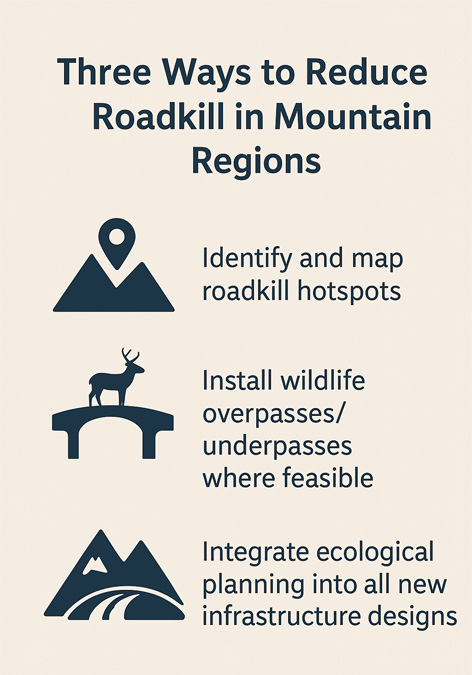
Mitigation often involves wildlife crossing structures—overpasses or underpasses—and warning signs in high-risk zones. For this to work in mountains, planners need to identify these high-risk zones and determine which structures or traffic-calming interventions are feasible. This will be a unique challenge in mountain environments.
Your study, covering 10 countries and spanning more than five decades of data, reveals major gaps in data collection. What are the most pressing gaps?
There are vast gaps in our information on population sizes and densities of vertebrate species in most African countries. If you look at the Map of Life, you’ll see how little biodiversity data we have from central and west Africa. We also found no roadkill studies in these large regions. We need to support scientists in those countries to investigate the challenges and potential solutions.
Mountain regions host unique biodiversity. How does roadkill threaten these rare or endemic species?
Because of the topography and history of mountains, they frequently host critical, unique biodiversity. Many are biodiversity hotspots. These endemic species cannot easily escape climate or anthropogenic change because physical barriers limit movement. There is also only so far “up” they can move. This is different in lowlands. Roads bring a new threat to species already vulnerable due to climate change.
Data collection on roadkill is often inconsistent. What needs to change to get a more accurate picture of the crisis?
It would be helpful if we had an international body to coordinate monitoring of roadkill risk, but I am not aware of such a body. It is not a methodological issue.
How can governments and conservation groups balance infrastructure development with protection of vulnerable species?
City planners, municipalities, and ecologists need to collaborate. Rather than relying solely on Environmental Impact Assessments, ideas for green spaces, wildlife corridors, and ecological connectivity should be included at the design stage of new developments. Such planning benefits environmental health and human wellbeing. Architects and engineers should also be encouraged to “think green” from the start.
What urgent actions are needed from both the scientific community and the public?
Identifying roadkill hotspots is essential as a first step. There are many areas where roadkill risk is lower, so we need to know where to focus mitigation measures.
Women In Science
Women in STEM Need Systemic Change
Stay committed, stay curious, and never underestimate the impact your work can have on the world

Despite notable gains in women’s participation in science careers in South Africa, women remain underrepresented across STEM fields. While more women are graduating from universities, studies continue to show that men dominate science, technology, engineering, and mathematics careers — a gap that is even more pronounced among Black women. Although women form the majority of young university graduates nationally, only about 13% of STEM graduates are women, and Black women remain significantly underrepresented in senior academic and research leadership positions.
These disparities stem from systemic barriers including gender bias, limited access to mentorship, and inconsistent availability of resources. Such obstacles continue to hinder the full and equitable participation of women in scientific careers.
At the University of the Free State (UFS), where I work, there is a growing institutional commitment to support emerging researchers — particularly women — through mentorship and research development initiatives. This aligns with Vision 130, which aims to foster research excellence and increase societal impact. I am fortunate to be part of the university’s Transformation of the Professoriate Mentoring Programme, designed to build a strong cohort of emerging scholars. The programme provides academic and research mentorship, supports access to networking and funding opportunities, and nurtures candidates toward assuming senior academic and research roles. It also helps lay the groundwork for future centres of research excellence.
Those of us who benefit from such opportunities carry a responsibility to extend mentorship to more women researchers, especially from underrepresented groups. Expanding women’s participation in science requires addressing the barriers that continue to limit progress. Key interventions include expanding mentorship and networking opportunities, increasing financial support and scholarships for women in STEM, and promoting national policies that support work–life balance and the needs of working mothers.
There is also an urgent need to raise awareness about women’s contributions to science and challenge persistent stereotypes that discourage girls from pursuing scientific careers. Building inclusive, diverse work environments where women feel valued and supported is essential to increasing both participation and retention. Progressive policies that promote the employment of Black women academics in STEM leadership roles are also critical. A diverse cohort of women in authority can provide gender-sensitive mentorship and create pathways for future scholars.
Pursuing a career in science demands hard work, resilience, and a commitment to continuous learning. It is a challenging journey, but deeply rewarding for those passionate about contributing to the advancement of humanity through research. It requires uncovering new insights, developing innovative solutions, and sharing knowledge that can transform lives. Marie Curie captured this spirit beautifully when she said, “I am among those who think that science has great beauty… like a fairy tale.” This sense of wonder should fuel every aspiring researcher.
Science is also fundamentally collaborative. Seek mentors, build networks, remain humble, and embrace learning from others. Your contributions — even those that seem small — form part of a larger scientific story that future generations will build on. If you are driven by curiosity, purpose, and a desire to contribute to the greater good, a career in science may be the path for you…
-

 Society6 months ago
The Ten-Rupee Doctor Who Sparked a Health Revolution in Kerala’s Tribal Highlands
-
Space & Physics4 weeks ago
India Semiconductor Mission: ‘It’s Not About Fabs. It’s About Building An Entire Ecosystem’
-
Climate3 weeks ago
The Climate World Cup? How Climate Change Could Affect Player Performance at the 2026 World Cup
-
Society1 week ago
From Bell Labs to the Classroom: A Second Career in Teaching
-
Society6 months ago
Why the ‘Stanford Top 2% Scientists’ Label Is Widely Misrepresented
-
Space & Physics3 weeks ago
Engineers Develop Dual-Mode Propulsion System for Next-Generation Small Satellites
-
Interviews5 months ago
Geometry, Curiosity and Finding ‘Her’ Place
-
Climate6 months ago
Climate Extremes in 2025 Exposed Inequality and the Limits of Adaptation, Scientists Warn