Space & Physics
The various avatars of the Hall effect
In this second article of Ed Publica’s series on the Hall effect, Dr. Saraubh Basu examines the physics of the Hall effect variants discovered over the course of the past century.

This is the second article of Ed Publica’s series on the Hall effect, which covers the various manifestations of the Hall effect. You can read the first article here.
The ‘anomalous’ Hall effect
In 1881, just two years after Edwin Hall discovered the eponymous Hall effect, he spotted an anomaly when replicating the effect with ferromagnets.
He had observed a tenfold deflection of electric charges this time around, compared to non-magnetic conductors.
Suspecting the magnetic properties played a role, this avatar of the Hall effect is dubbed the anomalous Hall effect. The word ‘anomalous’ is used owing to the fact that external magnetic field no longer remains as a stringent requirement for the Hall effect; instead, the intrinsic magnetization (for instance, the ferromagnet in the above example) fulfils that criterion.
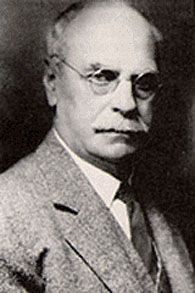
The physicist Edwin Hall. Credit: Wikimedia
The Hall resistivity in ferromagnets increase steeply under the presence of very weak magnetic fields. However, in stronger magnetic fields, the Hall resistivity doesn’t increase further very much. This saturation is rather strange, for it is in contrast to the classical Hall effect where the Hall resistivity maintains its steady growth.
There are several other effects that play a crucial role in determining the anomalous Hall resistivity, thus making it a complicated phenomenon that physicists lack comprehensive understanding about, in comparison to the various other avatars of the Hall effect.
Quantum avatar(s)
The fact that a simple lab experiment showed how the Hall resistivity can be expressed as an equation that contains merely constants, opened up a a plethora of research to understand the cause of this ‘universality’. For it hinted to the involvement of a very fundamental phenomenon.
In 1980, Klaus von Klitzing discovered the quantum avatar of the Hall effect was detected. He was amidst research at a magnetic facility in Grenoble, France, working to improve electron mobility in metal oxide semiconductor field effect transistors (MOSFET). These are transistors that typically operate at extremely low temperatures and under intense magnetic fields.
von Klitzing observed his sample’s Hall resistivity assuming discretized values. This means the resistivity jumps in steps, by a fixed amount that can be scaled as multiples of an integer number (includes 0 along with whole numbers such as 1,2,3, and so on). This discretization reveals the underlying quantum mechanical behavior that has been unraveled at long last – thus bearing its name – the integer quantum Hall effect. von Klitzing later won the Nobel Prize in Physics for 1985 for this work.
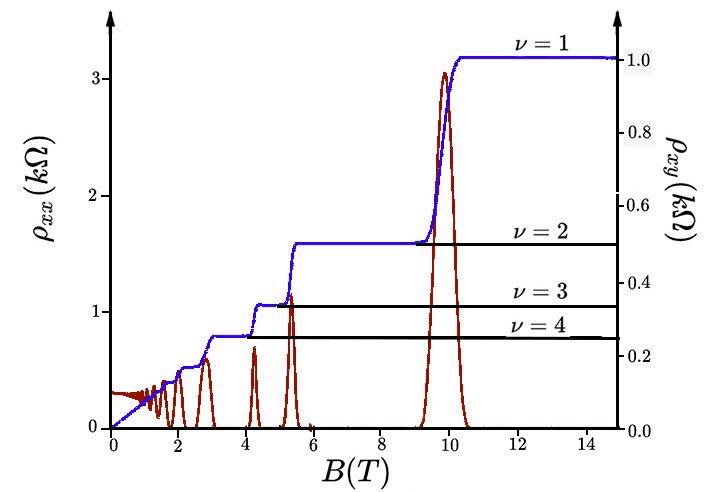
The plot here depicts the transverse and longitudinal Hall resistivity (y-axis) increasing in integer steps as the magnetic field (x-axis) increases. This is due to the integer quantum Hall effect. Credit: Wikimedia
But the quantization isn’t limited to integer multiples. In fact, two years later, the fractional quantum Hall effect was observed in experiments. It was shown there were about 100 fractions, including those that aren’t whole numbers that were now in the formula.
Robert Laughlin, who would later win a share of the 1998 Nobel Prize in Physics, proposed a theory to explain the observations. It boils down to the interaction among electrons, either due to the Coulombic repulsion force or the Pauli exclusion principle.
These interacts would eventually split the degeneracy of these enormously degenerate Landau energy levels. These are quantum states occupied by electrons that complete circular revolutions under the influence of an external magnetic field. Splitting these degeneracies, lead to the opening of an energy gap, for the fractional quantum Hall effect to be observed.
‘Spin’ avatar(s)
Just as there are electric charges in nature, so are there spin currents found in nature. ‘Spin’ is a key property found in quantum particles. Unlike what the name suggests, these quantum particles don’t spin or rotate about any axis passing through them. However, these particles carry an angular momentum as though it does spin.
In 1971, before von Klitzing observed the quantum Hall effect, Mikhail Dyakonov and Vladimir Perel hypothesized the spin Hall effect.
In this avatar of the Hall effect, quantum spins of opposite kinds accumulate at the edges of the sample, orthogonal to the direction in which the charge current passes.
The spin selection can be facilitated by the spin-orbit coupling. This refers to the modified energy levels in an atom when the electron’s motion is under the influence on the magnetic field generated by the nucleus. Strong coupling may be intrinsic to doped semiconductors. The proposal has triggered intense investigation of the phenomenon, with first experimental observations of the spin Hall effect seen in n-doped semiconductors and two-dimensional hole gases.
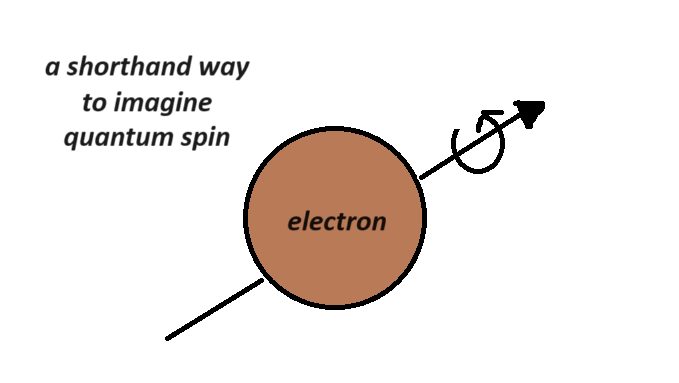
Quantum spins don’t really look like the depiction above, which is meant to showcase a fact that particles like electrons do have an intrinsic angular momentum nonetheless. Credit: Karthik / Ed Publica
For more than a decade, studies concerning the spin current and its application to novel spintronics (or spin electronics) have received plethora of attention. This is with regard to efficiently generating, manipulating and detecting spin accumulation in a sample material. Some progress has also occurred from the device fabrication perspective via techniques such as spin injection, among others.
A major advantage in dealing with the spin current lies in the non-dissipative (or very less dissipation) nature which arises owing to the time reversal invariance of the spin current. This presents a non-dissipative scenario (unlike the dissipative effects seen with charged currents), thus making it quite advantageous for spin transport phenomena.
Furthermore, a quantized version of the spin Hall effect exists, with mercury telluride and cadmium telluride quantum well superlattices, showcasing this effect. In 2005, a quantum treatment was proposed by Charles Kane and Eugene Mele, in the form of a tight binding toy model of electrons operating in a two-dimensional honeycomb lattice.
In fact, the ‘wonder material’ graphene, which is a two-dimensional honeycomb lattice constituting carbon atoms, does satisfy some key requirements for the quantum spin Hall effect. However, it lacks a large spin-orbit coupling among other requirements.
Nonetheless, graphene’s ability to entertain the quantum spin Hall effect, makes it a prospective candidate to find applications in next-generation spintronic devices.










Space & Physics
NASA to launch first crewed Artemis Moon mission on April 1
NASA will launch Artemis II on April 1, marking the first crewed mission around the Moon in over 50 years.

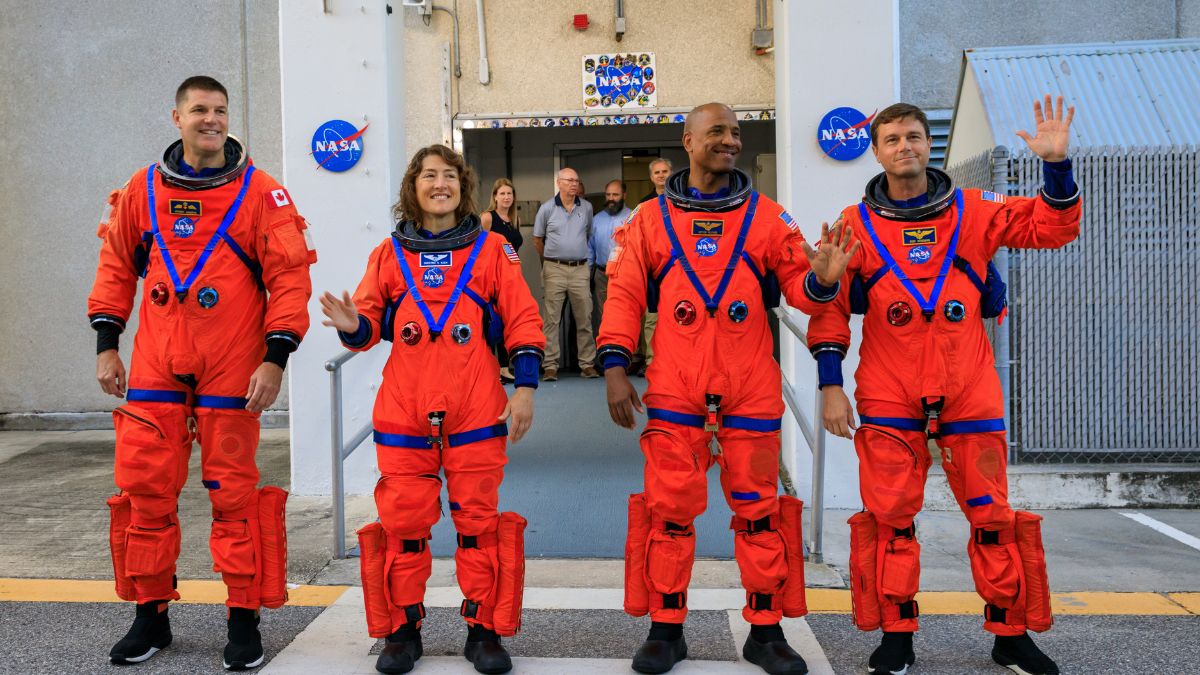
Artemis will be the first human mission to travel beyond low-Earth orbit since the Apollo era, and it is designed as a 10-day journey that will take astronauts on a flyby around the Moon before returning to Earth.
NASA is set to make history with the launch of its first crewed Artemis mission around the Moon, with liftoff targeted for April 1, 2026, marking humanity’s return to deep space exploration after more than five decades.
The mission, known as Artemis II, will carry four astronauts aboard the Orion spacecraft using NASA’s powerful Space Launch System rocket. The launch is scheduled from Kennedy Space Center in Florida, with additional backup launch opportunities extending through early April.
This will be the first human mission to travel beyond low-Earth orbit since the Apollo era, and it is designed as a 10-day journey that will take astronauts on a flyby around the Moon before returning to Earth.
The crew includes NASA astronauts Reid Wiseman, Victor Glover, and Christina Koch, along with Canadian astronaut Jeremy Hansen. The mission is expected to test critical systems such as life support, navigation, and the spacecraft’s heat shield in deep space conditions.
Unlike future Artemis missions, Artemis II will not land on the lunar surface. Instead, it serves as a crucial step toward upcoming missions that aim to establish a sustained human presence on the Moon and eventually enable crewed missions to Mars.
NASA officials say the mission represents a major milestone in space exploration, combining international collaboration and advanced technology to usher in a new era of human spaceflight.
Space & Physics
Magnetic Fields Found to Shape Star Formation Near Milky Way Disc
Scientists map magnetic fields in molecular clouds near the Milky Way, revealing their key role in slowing and shaping star formation.

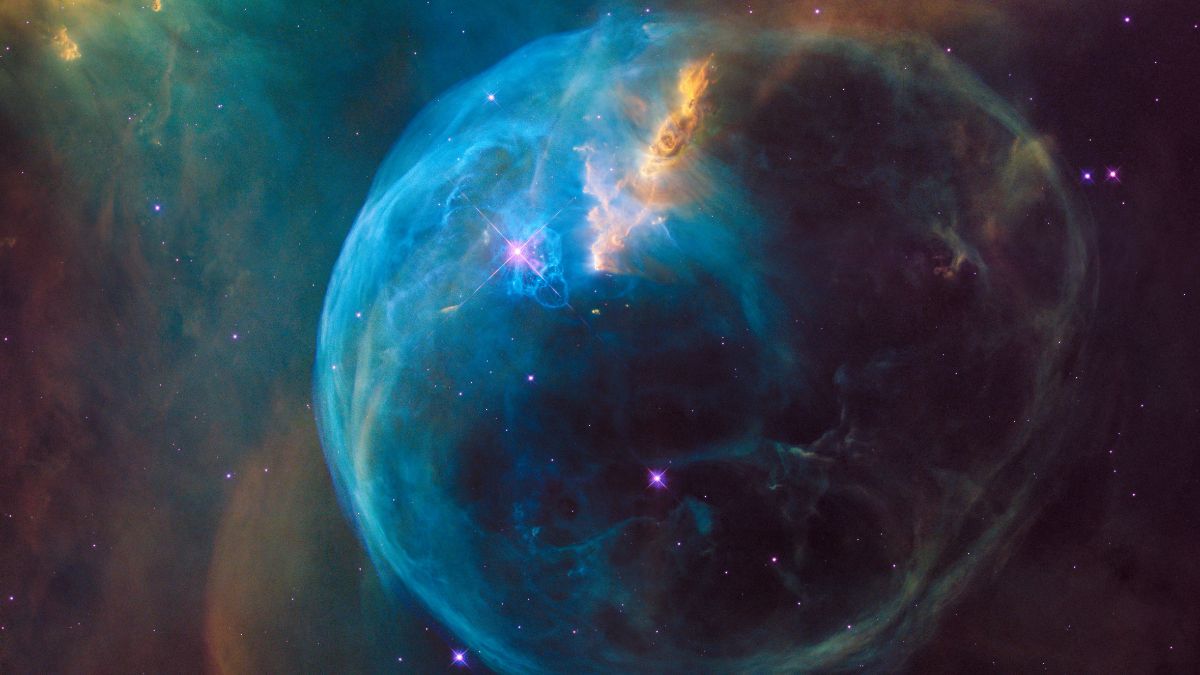
Scientists map magnetic fields in molecular clouds near the Milky Way, revealing their key role in slowing and shaping star formation.
Scientists have uncovered new insights into how stars are formed by mapping the magnetic fields surrounding molecular clouds near the Milky Way’s disc, offering a deeper understanding of one of the universe’s most fundamental processes.
The study focuses on two small molecular clouds—L1604 and L121—revealing how magnetic fields influence the balance between gravity and internal pressure during star formation.
Magnetic Fields Star Formation in Milky Way Clouds
For decades, astronomers have understood star formation as a balance between gravity pulling gas inward and internal pressure pushing outward. However, the new research highlights a third critical factor: magnetic fields.
In a media statement, the researchers explained that magnetic fields act as an invisible force shaping how molecular clouds evolve and collapse to form stars.
The study was conducted by scientists from the Aryabhatta Research Institute of Observational Sciences (ARIES)m Uttarakhand, India and Assam University, using advanced polarimetric techniques to detect otherwise invisible magnetic structures.
Magnetic Fields Star Formation Observed Using Polarimetry
To map these fields, the team used R-band polarimetry with the ARIES Imaging Polarimeter mounted on a 104-cm telescope in Nainital.
This technique measures how starlight becomes polarised as it passes through dust grains aligned by magnetic fields.
In a media statement, the researchers said that by analysing thousands of such light signals, they were able to “see” the skeleton of magnetic fields surrounding the molecular clouds for the first time.
Two Molecular Clouds Reveal Contrasting Behaviour
The study examined two distinct clouds:
- L1604, located about 816 parsecs away, is dense and massive, with strong potential for future star formation
- L121, much closer at 124 parsecs, is less dense but exhibits a stronger and more organised magnetic field
In a media statement, the scientists noted that the orderly magnetic structure in L121 suggests it has not yet undergone intense gravitational collapse, unlike more active star-forming regions.
Magnetic Fields Star Formation Controlled by Energy Balance
By calculating magnetic field strength, the researchers found that both clouds are sub-critical, meaning magnetic forces are strong enough to resist gravitational collapse across most of their structure.
In a media statement, the team stated that magnetic energy dominates over both turbulence and gravity at the outer regions of the clouds.
However, deep within the dense cores, gravity may begin to take over, creating conditions suitable for star formation.
The “Recipe” for Star Formation
The findings suggest that magnetic fields play a crucial role in regulating how quickly stars form.
In a media statement, researchers said that magnetism acts as an “invisible hand,” slowing down star formation and preventing galaxies from converting all their gas into stars at once.
The study positions L1604 and L121 as natural laboratories for understanding the interplay between gravity and magnetism.
Rather than being passive clouds, they represent dynamic systems where fundamental forces interact over millions of years to shape the birth of stars.
The findings offer a clearer picture of how galaxies like the Milky Way sustain star formation over long cosmic timescales, balancing collapse with control.
Space & Physics
Researchers Use AI to Enable Robots to ‘See’ Through Walls
MIT researchers develop AI-powered system using wireless signals to help robots see through walls and reconstruct hidden objects and indoor spaces.
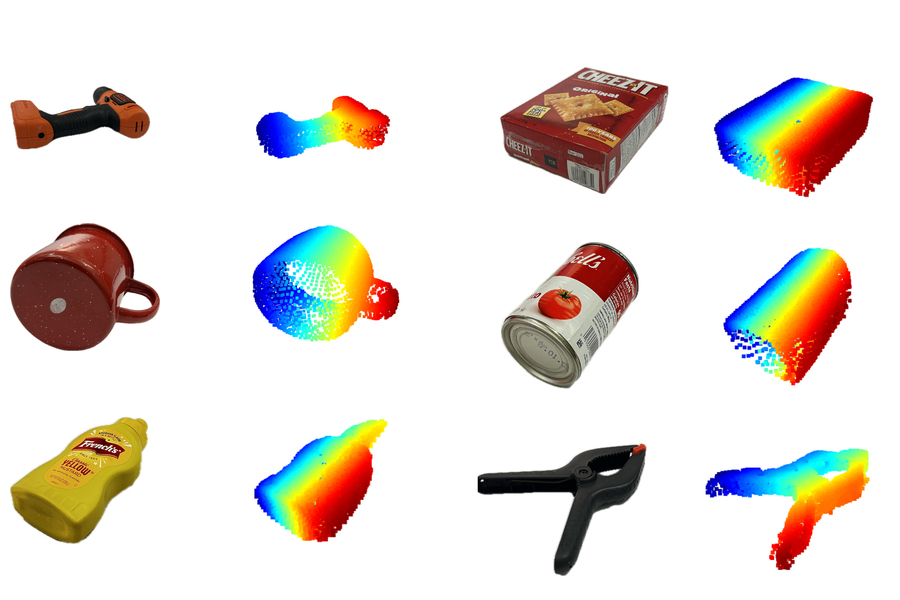
Researchers at Massachusetts Institute of Technology have developed a new artificial intelligence-powered system that allows robots to detect and reconstruct objects hidden behind walls and obstacles, marking a significant breakthrough in machine perception.
The system combines wireless signals with generative AI models to enable what researchers describe as a new form of “wireless vision,” potentially transforming robotics, logistics, and smart environments.
AI See Through Walls Using Wireless Signals
The research builds on over a decade of work using millimeter wave (mmWave) signals—similar to those used in Wi-Fi—which can pass through materials such as drywall, plastic, and cardboard and reflect off hidden objects.
Earlier approaches could only capture partial shapes due to limitations in how these signals reflect.
The new system overcomes this by combining wireless reflections with generative AI, enabling the reconstruction of complete object shapes even when they are not directly visible.
“What we’ve done now is develop generative AI models that help us understand wireless reflections. This opens up a lot of interesting new applications, but technically it is also a qualitative leap in capabilities, from being able to fill in gaps we were not able to see before to being able to interpret reflections and reconstruct entire scenes,” said Fadel Adib, in a media statement.
“We are using AI to finally unlock wireless vision.”
AI See Through Walls Improves Object Reconstruction
The system, called Wave-Former, first creates a partial image of a hidden object using reflected wireless signals. It then uses a trained AI model to fill in missing parts and refine the reconstruction.
In tests, Wave-Former successfully reconstructed around 70 everyday objects—including boxes, utensils, and fruits—with nearly 20% higher accuracy than existing methods.
The objects were placed behind or under materials such as wood, fabric, and plastic, demonstrating the system’s robustness in real-world conditions.
AI See Through Walls Reconstructs Entire Rooms
Beyond individual objects, the researchers developed a second system capable of reconstructing entire indoor environments.
Using a single stationary radar, the system tracks how wireless signals bounce off moving humans and surrounding objects. These reflections—often considered noise—are analysed by AI to map out the room layout.
The system, known as RISE, was tested using over 100 human movement patterns and achieved twice the accuracy of existing techniques in reconstructing indoor spaces.
Privacy-Preserving Alternative to Cameras
Unlike camera-based systems, this approach does not capture visual images, offering a privacy-preserving alternative for indoor monitoring and robotics.
Because it relies on wireless signals rather than cameras, it can detect presence and layout without revealing identifiable details.
Applications in Warehousing and Smart Homes
The researchers say the technology could have wide-ranging applications:
- Warehouses: Robots could verify packed items before shipping, reducing errors and returns
- Smart homes: Robots could better understand human location and movement
- Human-robot interaction: Improved safety and efficiency in shared environments
The system could also pave the way for future “foundation models” trained specifically on wireless data, similar to how large AI models are trained for language and vision.


Scientists Crack the Genetic Code Behind Seedless Grapes

Climate Change Could Turn Ocean Food into ‘Fast Food’, MIT Study Warns

Why Campuses Need a Happiness Officer Now

The hidden fault lines of global energy: why oil and gas chokepoints are a permanent risk

NASA to launch first crewed Artemis Moon mission on April 1
NASA to launch first crewed Artemis Moon mission on April 1

Climate change heat impact affected over 2.5 billion people

How China Is Redrawing the Global Map of Critical Minerals

Study Reveals How Ocean Bacteria Drive Plastic Biodegradation

Weather, Not Just Emissions, Driving PM2.5 Pollution in Indian Cities: Study
-

 Society3 months ago
The Ten-Rupee Doctor Who Sparked a Health Revolution in Kerala’s Tribal Highlands
-
Society3 months ago
From Qubits to Folk Puppetry: India’s Biggest Quantum Science Communication Conclave Wraps Up in Ahmedabad
-
COP305 months ago
Brazil Cuts Emissions by 17% in 2024—Biggest Drop in 16 Years, Yet Paris Target Out of Reach
-
Women In Science6 months ago
The Data Don’t Lie: Women Are Still Missing from Science — But Why?
-
Earth5 months ago
Data Becomes the New Oil: IEA Says AI Boom Driving Global Power Demand
-
COP305 months ago
Corporate Capture: Fossil Fuel Lobbyists at COP30 Hit Record High, Outnumbering Delegates from Climate-Vulnerable Nations
-
Space & Physics4 months ago
Indian Physicists Win 2025 ICTP Prize for Breakthroughs in Quantum Many-Body Physics
-
Health5 months ago
Air Pollution Claimed 1.7 Million Indian Lives and 9.5% of GDP, Finds The Lancet