Society
Shell ‘shocks’ as it exits from US hydrogen car fuel economy
The company left its only commercial light-duty presence in California, due to ‘hydrogen supply complications and other external market factors,’ said Andrew Beard, the Vice President of Shell Hydrogen.









Society
Older Than the Border: How Drass Kept Its Polo Alive
In Drass, a Himalayan town in Ladakh’s Kargil district, a centuries-old form of polo has outlived wars and winters. Now a new generation, young women among them, is riding it into the future.

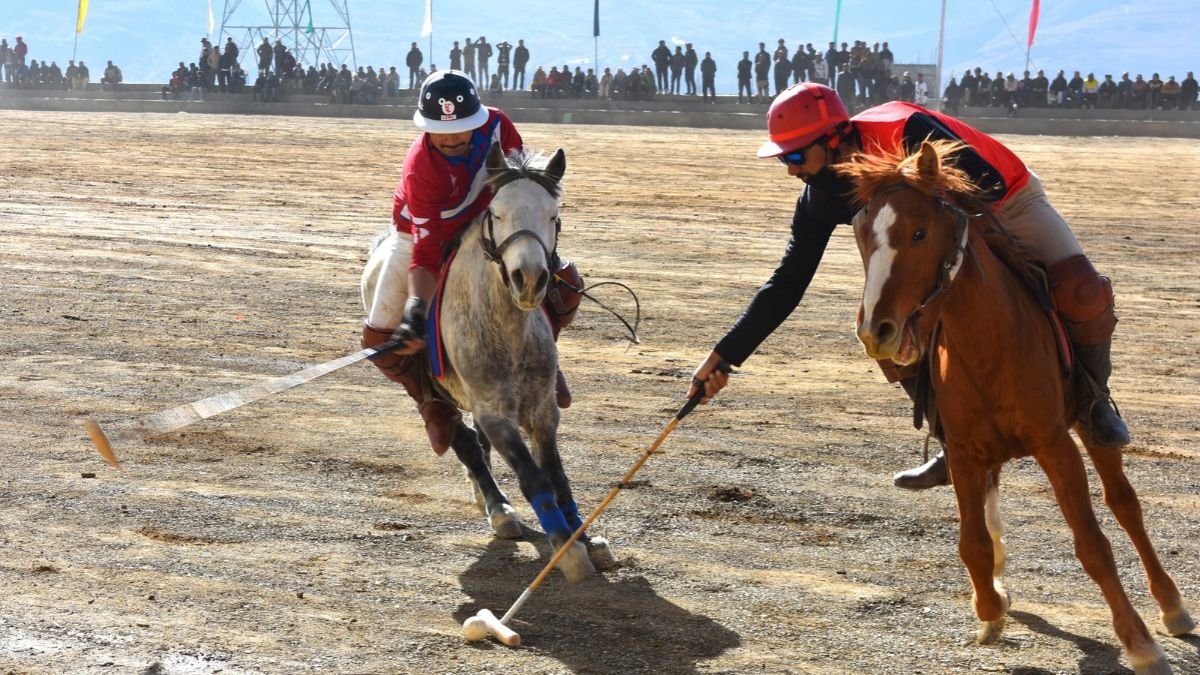
The afternoon wind swept through the Goshan Polo Ground in Drass, lifting sheets of dust into the thin Himalayan air. Hooves pounded the earth with a force that echoed against mountains streaked with late-season snow. Riders leaned forward, mallets flashing in the sunlight, while spectators crowded the sidelines and followed the movement of the ball with intense concentration.
Few sporting arenas sit in such dramatic surroundings, and fewer still stand in a place known worldwide for wars between nuclear-armed neighbours.
Drass, perched in the trans-Himalayan belt of Ladakh, occupies a prominent place in the public imagination as one of the principal theatres of the 1999 Kargil conflict. Geography textbooks describe it as one of the coldest inhabited regions on earth. But residents tell another story.
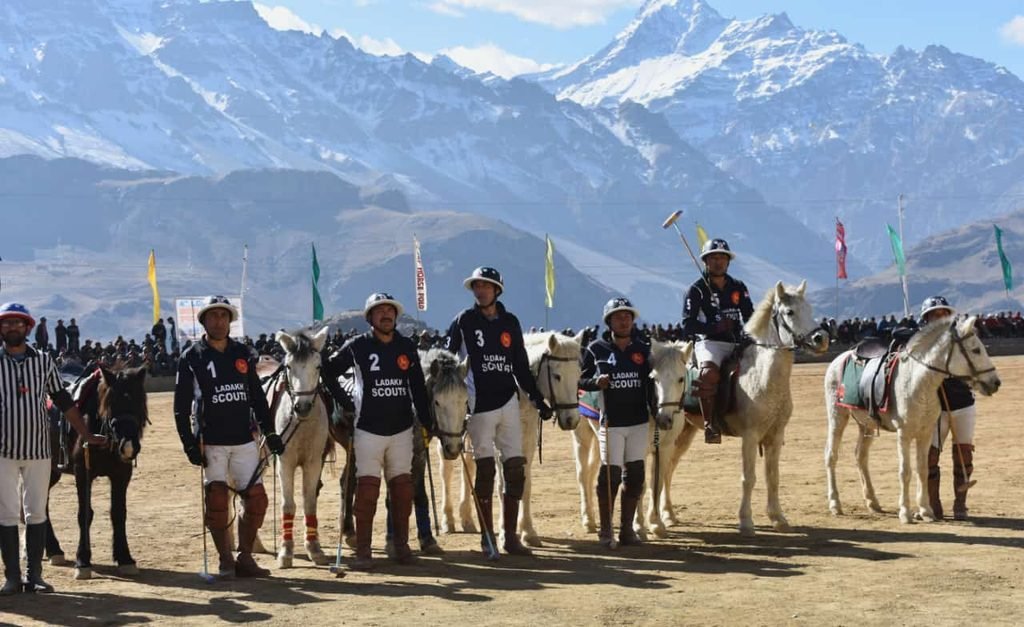
They speak of horses, polo grounds, village tournaments and a sporting tradition that reaches back centuries, when Ladakh was connected to Central Asia through the Silk Route and horses were the principal means of transportation. This was a trade route through which commodities and cultures travelled for more than 2,000 years. Caravans journeyed from Iran to India and other Central Asian regions, with connections extending towards Europe. Along with trade, these routes also facilitated the movement of people, traditions and cultural practices.
Polo comes to Ladakh
Ladakhi polo itself traces a remarkable journey through history.
According to Tashi Norbu, a researcher of sociology and anthropology at Jamia Millia Islamia in Delhi, polo reached Ladakh through Baltistan.
“Ladakhi Buddhist King Jamyang Namgyal married a Muslim princess from Baltistan (now in Pakistan),” Norbu explained. “She brought the game and players with her as the dowry.”
Centuries later, that legacy remains visible in villages scattered across Ladakh’s mountains. Polo grounds occupy prized spaces within communities, and local tournaments draw participants ranging from childhood to old age.
The game has become part of the region’s cultural identity, with generations learning its techniques and traditions through their families and communities.
The girl from Bhimat
Today, the Vijay Divas Cup 2026 is being played here. Among the spectators moving towards the ground is seventeen-year-old Hawa Illiyas. She walks beside her father through the crowds gathered for the summer tournament.
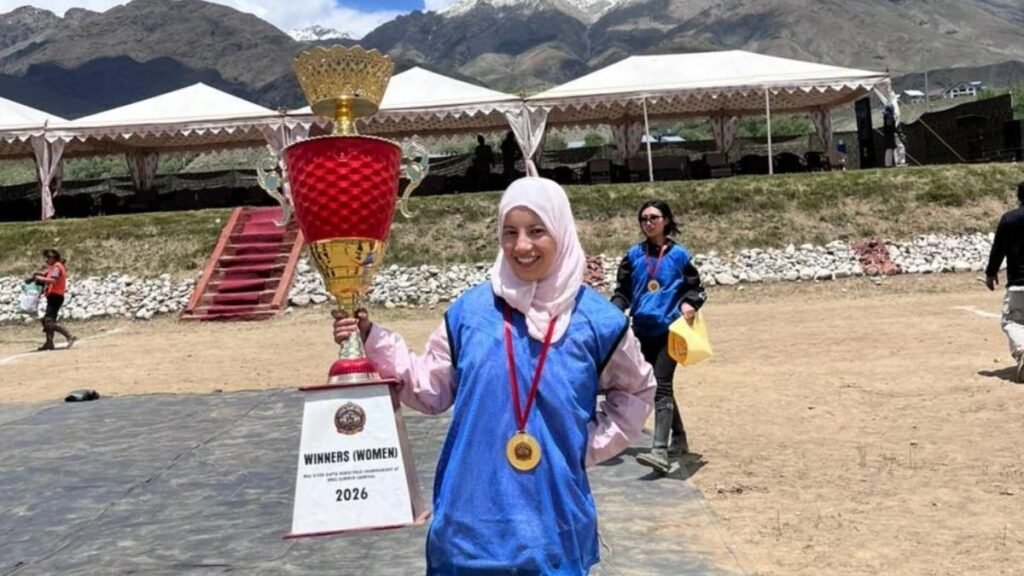
Hawa represents something unusual in Drass. She is the only girl from her village, Bhimat, playing in a women’s polo team. Her participation has drawn attention throughout the area, where polo has long been viewed as a male pursuit.
But social expectations have never persuaded her to step away from the sport. Polo runs through her family history. Hawa belongs to the fourth generation of riders in her household, and she sees the game as an inheritance rather than an occupation reserved for men.
“Polo is part of our culture and holds significance in our lives,” she said. “Why should only men take our culture and identity forward?”
A few minutes later, her team, Himalayan B, scored the opening goal. Cheers rolled through the ground as horses wheeled sharply across the dusty field. The sound travelled through the valley at nearly 12,000 feet above sea level, where oxygen is scarce and athletic effort demands unusual endurance.
The game made up in energy and enthusiasm what it lacked in polish and infrastructure.
When Himalayan B went on to win the tournament, Mohammad Amin, president of the Polo Association in Drass, reflected on the challenges of playing the game in the great Himalayas, where the terrain is far from ideal.
A frontier of wars
The region lies between nuclear-armed neighbours and has witnessed repeated conflicts. India and China fought a war in 1962 and faced another major military standoff in eastern Ladakh in 2020. India and Pakistan fought wars in 1947–48, 1965 and 1971, followed by the Kargil conflict in 1999.

“We faced the direct impact of all the wars, and polo suffered too,” says Amin.
“During the Kargil war, the maximum loss was of livestock, and in fact our best-quality horses were killed. It took us the next six to seven years to get that breed again and train them for the game,” he says.
The shadows of war can survive for decades. People lose cultural practices and livelihood opportunities, while families can find themselves separated between two countries when borders are redrawn.
Despite such difficulties, polo survived in Ladakh through cultural resilience and continued social practice. Horse culture remains deeply woven into daily life. Families throughout Drass still rear several horses at home.
“Older residents remember a period three decades ago when households commonly owned twenty or more animals,” says Amin.
P. Stobdan, the late diplomat and scholar from Ladakh, viewed the relationship between people and horses through a strategic lens.
“Riding a horse has its own importance in border areas,” he told EdPublica shortly before his death. “Communication systems and transportation networks can face interruptions at any time.”
He also pointed out that horse riding provides livelihood opportunities through work with the Indian Army, transporting supplies to remote mountain positions where vehicles face limitations.
How Ladakhi polo differs from international polo”
With a population of around 3.06 lakh, Ladakh is larger than Switzerland in area. Playing polo in this terrain is different from playing it on the plains. Athletes from Drass say global audiences often describe polo as the “Game of Kings”, but Ladakhi polo follows a different script.
Altitude, terrain and culture completely alter the contest. It is a game of commoners, surviving through sheer grit and determination.
Matches unfold on rough earthen grounds rather than manicured grass fields. Teams field six players instead of four. After a goal, the scoring side places the ball on the centre line, a practice that differs from the restart procedure in international polo.
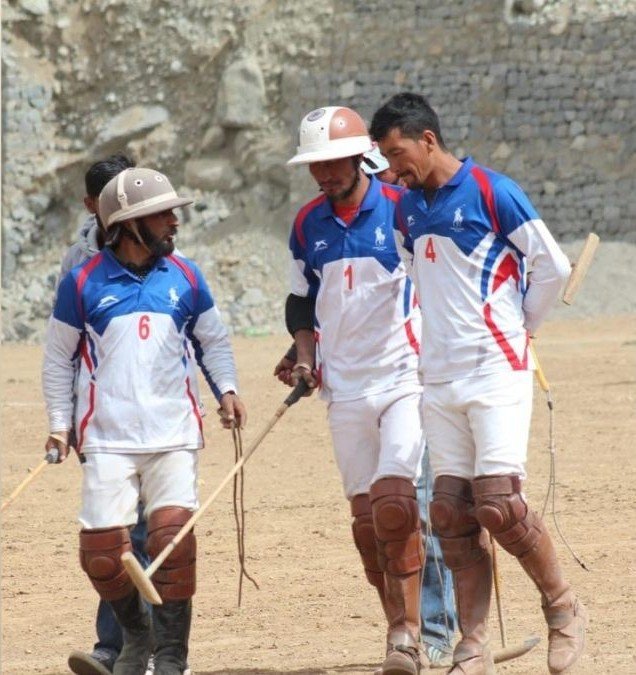
Local Balti musicians play the dapak, announcing goals through music rather than electronic scoreboards.
Matches continue for fifty minutes without interruption. Riders depend on compact local horses whose smaller stature conceals remarkable stamina, developed through generations of mountain life.
Playing polo has its own significance in a region with sensitive frontiers, where residents have lived with military mobilisation, artillery exchanges and strategic uncertainty for decades. Polo serves a different purpose here, as villagers describe it as “a language of continuity and survival”.
Horses and riders communicate through trust, instinct and familiarity. Local leaders frequently frame tournaments as cultural gatherings that reinforce connections among communities living near sensitive borders.
When polo became another identity
For four months each year, the region remains cut off from the rest of the world as mountain passes close due to heavy snowfall. During sub-zero temperatures, locals take care of their horses and feed them at home through the winter.
“These horses have given us so much. They were our transport to villages for decades, when roads had not been built. They were also a livelihood when we worked as porters for the Army, with no connection to the rest of the world,” says Amin.
Amin, who has been training polo players in Drass, has never received formal training outside Ladakh. He is passing on the practices and rules of the game that he learnt from his elders to the next generation.
“Every village used to have grounds known locally as shagrans, and I learnt the sport there. Formal academies never existed. Children rode horses after school, joined neighbourhood matches, and absorbed techniques through observation and repetition,” he says.
This local tradition continues, though its scale has expanded considerably. Government agencies and the Indian Army now organise tournaments that attract participants and spectators from outside Ladakh. Events linked to Vijay Divas commemorations, in remembrance of the Kargil War, and the Lieutenant Governor’s Cup have elevated Drass onto a broader sporting map.
Young players also view the sport through practical ambitions. Polo skills can support recruitment into Army regimental teams and create pathways towards state, national and international competitions.
Ladakh’s Union Territory administration has added to that momentum. Leading Indian players have participated in Drass tournaments. A Mongolian team has competed here as well, creating exchanges between regions linked through horse cultures that developed under similar environmental conditions.
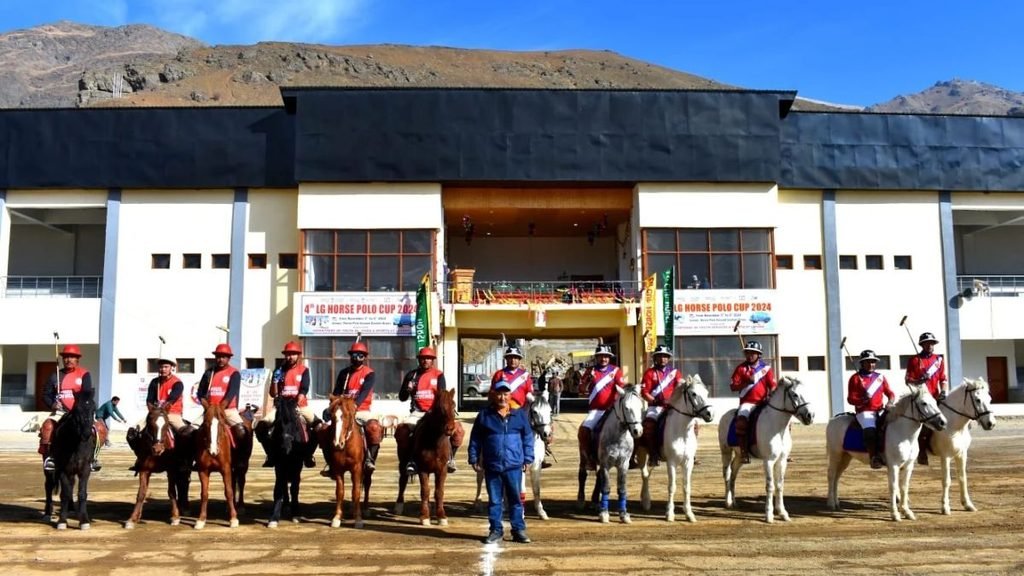
Amin points to another milestone with particular enthusiasm. Between 2012 and 2015, Drass hosted the Lalit Suri International Polo Tournament. Fresh interest continues to emerge.
“This year, I have a proposal from U.S. Polo representatives who want to explore Drass and play a tournament here in the Himalayas,” he says.
The growing interest in polo has also brought changes to the region’s tourism landscape.
“Tourism was almost absent here,” says Umer Alfaf, who runs a homestay in Drass. “Visitors came to Leh and Kargil, but polo brought more people to Drass as well.”
Tourists now schedule visits around major tournaments. Adventure travellers combine mountain expeditions with polo events. Local businesses benefit through accommodation, transport, food services and guiding activities.
As polo attracts visitors from outside the region, Drass is increasingly being recognised for something beyond its history of conflict. Its sporting tradition offers another perspective on a place whose identity has long been shaped by its sensitive geographical location.
As evening wrapped itself around Drass, the riders made their final runs. Beneath the high Himalayan sky, polo remained what it has been for centuries: the heartbeat of Drass.
Amid these changes, Hawa, a young girl from the Himalayas, is looking forward to receiving formal training and playing international polo beyond Ladakh. For someone who belongs to the fourth generation of riders in her family, the ambition is also about carrying forward a tradition that has shaped her community for generations.
Books
The Science of Selling: How Sudheer Babu Decodes Buyer Psychology in ‘The Revenue Multiplier’
A review of Sudheer Babu’s The Revenue Multiplier, exploring how behavioural science and buyer psychology can shape smarter, ethical sales.

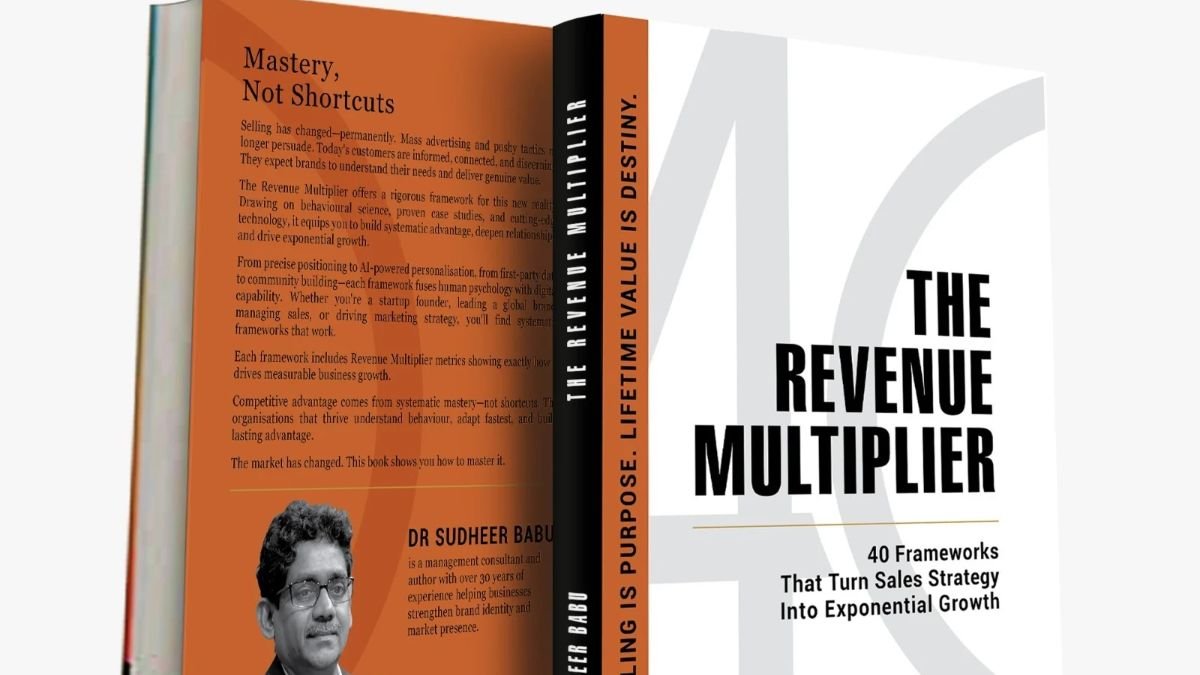
The Revenue Multiplier, by Dr. Sudheer Babu, is a book about why people buy and how a business can sell with that in mind. Its premise is that behavioural science should be the foundation of growth, not an afterthought. In each chapter, Babu starts with a psychological mechanism, explains how it shapes a buyer’s decision, and then turns that insight into a commercial action. He applies this method consistently, and that consistency is the book’s main strength.
The Revenue Multiplier: How Behavioural Science Shapes Sales
The book’s opening case shows the approach. Using BJ Fogg’s Behaviour Model, Babu explains that a behaviour occurs when motivation, ability and a prompt converge. In Babu’s telling, Maggi’s two-minute cooking time raised the ability to act enough to offset a family’s low motivation to abandon traditional food habits. The child’s hunger, he says, was the prompt. Babu then notes that the vegetables added to the packet let families see the snack as a proper meal. This is the compensatory principle at work: simplicity can outweigh reluctance.
Framing comes next. Babu draws on the framing effect, which shows that the way information is presented changes what people perceive and decide. He contrasts fear-based safety messages with affirmative ones, and he shows how a brand can shape the picture a buyer carries into a decision.
The chapter on the Reactance Trap shows the method most clearly. Drawing on Jack W. Brehm’s 1966 work, Babu argues that a buyer who feels pressured resists in order to protect their freedom to choose. His remedy is respectful: tell the customer plainly that the final decision is theirs. He also reminds readers that resistance can appear in different forms across cultures, as delayed decisions or silence, so the approach must be adapted to local norms.
The chapters on decision architecture build on this. Babu applies the primacy and recency effects to the order of presentations and uses anchoring, a finding documented by Amos Tversky and Daniel Kahneman, to show how the first price a buyer sees shapes every price that follows. His decoy example, which uses a plan priced close to a premium option but with fewer features, illustrates asymmetric dominance. These are familiar tools of behavioural economics. Babu presents them as design choices, not tricks.
Loss aversion and scarcity work on the same logic. A limited-time offer can work because the fear of losing an opportunity can outweigh the gain. The endowment effect explains why a virtual try-on or a personalised summary can raise the perceived value of a product before purchase.
The book also covers choice overload, in which more options make a decision harder. It treats positioning as a question of processing fluency: a brand that is easy to understand is easier to remember and trust. Babu’s baker who tries to sell everything, and so becomes known for nothing, makes the point well.
Influence principles from Robert Cialdini run through the sales chapters. A two-step lead funnel uses reciprocity, offering a small gift after a simple first response. Authority and liking explain why endorsements by admired figures carry weight, and social proof explains how that trust spreads through a network.

The book also leaves some questions for the reader. Behavioural effects such as choice overload, decoy pricing and scarcity do not work the same way in every market or with every kind of buyer, and a review of this length cannot test Babu’s commercial claims. His examples, Maggi included, are best read as a source of hypotheses to try with real customers rather than as guaranteed levers.
Babu is careful about how these tools should be used. The book calls his approach ‘smart design, not manipulation’, and it warns that artificial scarcity damages trust once it is exposed. Readers who want to understand buyers, rather than simply pressure them, will find it a clear, practical and humane guide.
The book is available in Kindle and print editions through Amazon. The print edition is also distributed internationally through IngramSpark and available from Kerala Bookstore.
Society
India’s Farm Subsidies Fail to Offset Price Pressures on Farmers, OECD Report Finds
India’s agricultural support system faces scrutiny after a new OECD report found that market regulations and trade restrictions continue to depress prices received by farmers, despite substantial government subsidies. The findings raise questions about the effectiveness of farm support policies, public investment and the sustainability of agricultural growth.
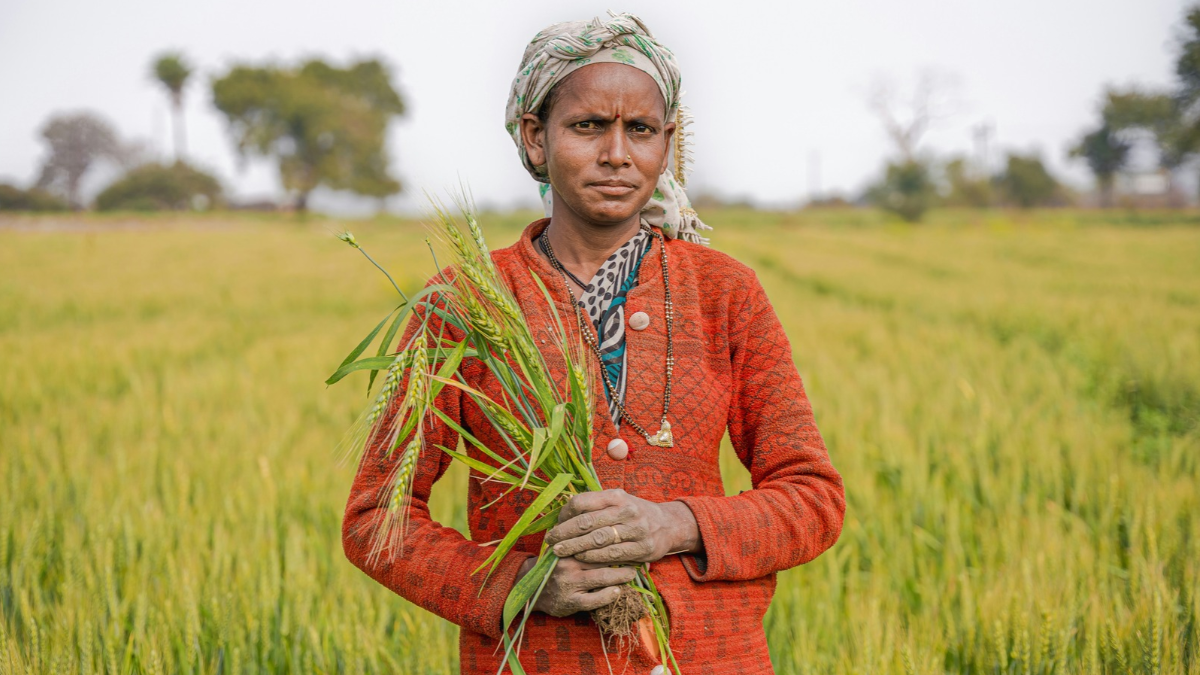
India’s agricultural support system presents a striking contradiction: the government spends substantial sums on subsidies and income-support programmes, yet its policies continue to impose an implicit financial burden on farmers. A new assessment by the Organisation for Economic Co-operation and Development (OECD) finds that India’s net support to agricultural producers remained negative during 2023–25, suggesting that budgetary payments did not compensate for the price-depressing effects of domestic marketing regulations and trade policies.
The Agricultural Policy Monitoring and Evaluation 2026, released on November 2, estimates India’s Producer Support Estimate (PSE) at an average of -9.2% of gross farm receipts during 2023–25. The negative figure indicates that agricultural policies, taken together, reduced the prices producers received compared with international reference prices, even after accounting for direct government support.
The finding draws attention to a structural problem in India’s agricultural policy: support delivered through subsidies can be undermined by policies that influence how crops are marketed, priced and traded.
The gap between subsidies and prices
The OECD’s PSE is not a measure of the amount of money farmers receive from the government. It estimates the annual value of transfers to agricultural producers arising from policy measures, including direct payments and the difference between domestic and international market prices.
In India’s case, the report identifies both positive and negative market price support. Commodities receiving positive support recorded an average of 3.5% of gross farm receipts, while those facing negative support experienced price effects of as much as -23.4% during 2023–25.
The report attributes the overall negative estimate to a combination of domestic marketing regulations and trade policy measures. Restrictions on the export of rice, wheat, sugar, onions and related products during the assessment period are among the measures identified. Such interventions are often introduced to contain domestic food prices and protect consumers from inflation. However, when they restrict access to higher-priced international markets, they can also limit the prices producers receive.
India gradually relaxed several restrictions during 2025, including measures affecting rice exports. Nevertheless, the OECD argues that unpredictable restrictions make agricultural markets less certain and can discourage farmers, traders and businesses from investing in production and supply chains.
This presents a difficult policy balance. Governments need to protect consumers from sudden food-price increases, particularly low-income households, but interventions that repeatedly change market conditions can undermine price incentives for producers.
Agriculture’s economic importance
The implications extend beyond farm incomes. According to the OECD, agriculture accounted for 16.3% of India’s GDP in 2024 but employed 42.4% of the workforce. The disparity points to a significant productivity gap between agriculture and the rest of the economy.
The report also notes that farm incomes have grown at less than one-third the rate of non-agricultural incomes in recent years. Although agricultural output has expanded, a large share of the workforce continues to depend on a sector that contributes a considerably smaller share of national economic output.
India’s agricultural output grew at an average annual rate of 3.9% between 2014 and 2023, exceeding the global average. Total factor productivity grew by 1.5% annually during the period, supported by technological progress, improved seeds and infrastructure, including irrigation and roads.
However, output growth alone does not guarantee that gains reach farmers. The prices received for produce, the cost of inputs, access to markets and the distribution of value along supply chains all influence farm incomes.
The OECD’s findings therefore raise a question about whether India’s existing support mechanisms are sufficiently addressing the conditions that determine what farmers earn.
Where does government support go?
The report does not suggest that India has withdrawn financial support from agriculture. Budgetary transfers to producers averaged 10.7% of gross farm receipts during 2023–25. Much of this support, however, was directed towards variable input subsidies, particularly fertilisers, electricity and irrigation water.
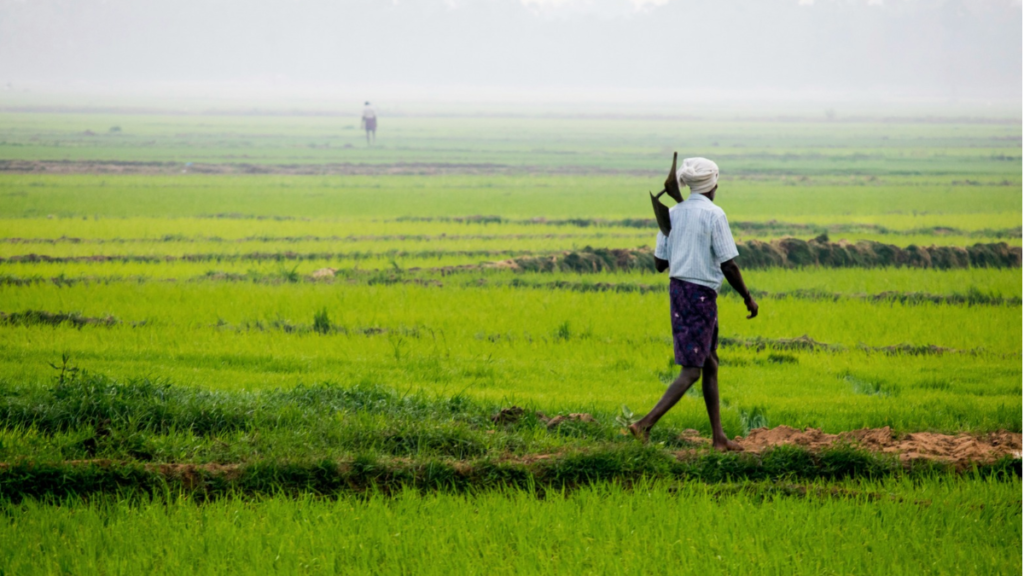
A farmer walking in a paddy field at early morning.Image credit:Pexels
These subsidies help farmers manage production costs and are politically significant, especially when input prices rise. The government continues to rely on them to maintain affordability and support agricultural production.
The scale of fertiliser assistance illustrates this dependence. On November 11, 2026, the Union Cabinet approved a nutrient-based subsidy allocation of ₹62,370 crore for phosphatic and potassic fertilisers for the October 2026–March 2027 winter cropping season. The allocation was approximately 64% higher than that for the previous winter season, reflecting pressures from international fertiliser prices and supply disruptions.
But input subsidies are not a substitute for investments that improve productivity over the long term. The OECD recommends gradually reducing inefficient fertiliser, electricity and irrigation-water subsidies and redirecting resources towards agricultural research, education, rural infrastructure, financial services, sustainable input use and climate resilience.
The distinction is important. Subsidising electricity or water consumption can provide immediate relief, but poorly designed subsidies may also encourage excessive use of resources. A transition towards more efficient support would need to protect small and vulnerable farmers while reducing incentives for wasteful consumption.
The environmental cost of agricultural growth
India’s productivity gains have also come with mounting pressure on natural resources. The OECD records an increase in the country’s nitrogen balance from 90.7 kg per hectare in 2000 to 133.4 kg per hectare in 2024. The phosphorus balance rose from 20.8 to 28.1 kg per hectare over the same period.
These indicators measure the difference between nutrients entering agricultural systems and those removed through harvested crops and other processes. Persistent surpluses can indicate inefficient fertiliser use and increase the risk of nutrient pollution in soil and water.
The report links rising fertiliser use and agricultural output to growing pressure on land and water resources. It argues that support policies should encourage more sustainable production rather than simply increase the volume of inputs used.
This is particularly relevant for India, where irrigation, fertiliser affordability and electricity subsidies are closely connected to agricultural production. Reforming these systems without adequate alternatives could increase costs for farmers. The challenge is therefore to improve efficiency without shifting the burden of transition onto those with the least capacity to absorb it.
Rethinking agricultural policy
The OECD recommends making agricultural trade more predictable by limiting ad hoc export restrictions and extending the Agricultural Export Policy framework to more products. It also calls for domestic marketing reforms that allow farmers and traders to respond more effectively to market demand.
Its broader recommendation is to shift public spending away from measures that distort production and trade towards investments in productivity, sustainability and resilience. Research, extension services, infrastructure and digital skills are identified as areas requiring greater attention.
The Economic Survey 2025–26 also identifies fragmented landholdings, limited access to irrigation and quality inputs, low mechanisation and insufficient investment as continuing constraints on Indian agriculture. It points to initiatives in agricultural extension, digital agriculture, farmer-producer organisations and market infrastructure as part of the policy response.
The OECD’s assessment should not be read as an argument against all subsidies or government intervention. Price stabilisation and food security remain important objectives in a country where millions of households depend on affordable food. But the report highlights the limitations of a system that supports farmers through input subsidies while simultaneously using market and trade controls that can depress the value of their produce.
The central policy question is no longer simply how much the government spends on agriculture, but whether that spending improves farmers’ capacity to earn, invest and adapt. For India, a more durable agricultural support system will require aligning price policy, market access, public investment and environmental sustainability rather than treating them as separate concerns.

The Inequality Behind the Numbers: WHO Finds Major Gaps in How Countries Monitor Health Equity

Older Than the Border: How Drass Kept Its Polo Alive

Monash Researchers Develop Technology to Recover Critical Minerals from Coal Waste

An 8,000-km Train Journey to Explore India’s Entrepreneurial Landscape

Global University Enrolment Could Peak by 2035 as Demographic Shifts Reshape Higher Education

India’s Richest Agree on One Cause Above All Others: Education

Indian universities lead Asia in research output per faculty, but the country’s top six all slip in QS ranking

Why Delhi’s Geography Makes It Vulnerable to Severe Air Pollution

When the Corridors Close: A Story of Elephants and Displaced Lives

Europe Braces for Extremes as Commission Unveils Climate Resilience Framework
-

 Math4 months ago
The 2026 Fields Medals: Four Proofs, Four Decades-Old Problems Solved
-
EP Deep Dive: Data & Solutions4 months ago
After Kerala’s Deadliest Landslide, the Hardest Thing to Rebuild Was Childhood
-
EP Deep Dive: Data & Solutions5 months ago
West Asia Crisis: Can Kerala’s Returning Gulf Migrants Find a Future in the Green Economy?
-
Interviews2 months ago
From Scams to Screens: How the National Stock Exchange Rewrote India’s Equity Story
-
Climate & Environment6 months ago
The Climate World Cup? How Climate Change Could Affect Player Performance at the 2026 World Cup
-
Society5 months ago
What Is Civilisational Diplomacy? Understanding India’s Newest Foreign Policy Tool
-
Education1 week ago
India’s Richest Agree on One Cause Above All Others: Education
-
Society5 months ago
From Bell Labs to the Classroom: A Second Career in Teaching