Space & Physics
Pioneers of modern Artificial Intelligence


The 2024 Nobel Prize for Physics has been a trend breaker with computer scientists being awarded the prestigious prize.
Geoffrey Hinton, one of this year’s laureates, was previously awarded the 2018 Turing Prize, arguably the most prestigious prize in computer science.
John Hopfield, the other laureate, and Hinton, were amongst the early generation of computer scientists in the 1980s, who’d set the foundations for machine learning, a technique used to train artificial intelligence. These techniques shaped modern AI models, to take up the mantle from us, to discover patterns within reams of data, which otherwise would take humans arguably forever.
Until the last mid-century, computation was a task that required manual labor. Then, Alan Turing, the British inventor and scientist, who’d rose to fame during World War 2, having helped break the Enigma code, would conceive the theoretical basis for modern computers. It was when he tried to push further, he came up with, arguably a thought, that led to publication of “Can machines think?” Seemingly an innocuous question, but with radical consequences if it really took shape, Turing, through his conceptions of algorithms, laid the foundation of artificial intelligence.
Why the physics prize?
Artificial neural networks, particularly, form the basis for today’s much popular OpenAI’s ChatGPT, and numerous other facial, image and language translational software. But these machine learning models have broken the ceiling with regards to their applications in numerous disciplines: from computer science, to finance to physics.
Physics did form the bedrock in AI research, particularly that of condensed matter physics. Particularly of relevance is spin glass – a phenomena in condensed matter physics, that involves quantum spins behaving randomly when it’s not supercooled, when it rather becomes orderly. Their applications to AI is rather foundational.
John Hopfield and Geoff Hinton are pioneers of artificial neural networks. Hopfield, an American, and Hinton, from Britain, came from diverse disciplines. Hopfield trained as a physicist. But Hinton was a cognitive psychologist. The burgeoning field of computer science, needed interdisciplinary talent, to attack a problem that no single physicist, logician, mathematician could solve. To construct a machine that can think, it will have to learn to make sense of reality. Learning is key, and computer scientists took inspiration from across statistical and condensed matter physics, psychology and neuroscience to come up with the neural network.
Inspired by the human brain, it involves artificial neurons, that holds particular values. This takes shape when the network would be initially fed data as part of a training program before it’s trained further on unfamiliar data. These values would update upon subsequent passes with more data; forming the crux of the learning process. The potential for this to work happened though with John Hopfield constructing a simple neural network in 1982.

Hopfield network, with neurons forming a chain of connections. Credit: Wikimedia Commons
Neurons pair up with one another, to form a long chain. Hopfield would then feed an image, training it by having these neurons passing along information, but only one-way at a time. Patterns of neurons that fire together, wire together, responding to particular patterns that it formerly trained with. Known as the Hebbian postulate, it actually forms the basis for learning in the human brain. It was when the Hopefield network was able to identify even the most distorted version of the original image, did AI take its baby steps. But then to train the network to learn robustly across a swathe of more data, required additional layers of neurons, and wasn’t an easy goal to achieve. There was a need for an efficient method of learning.
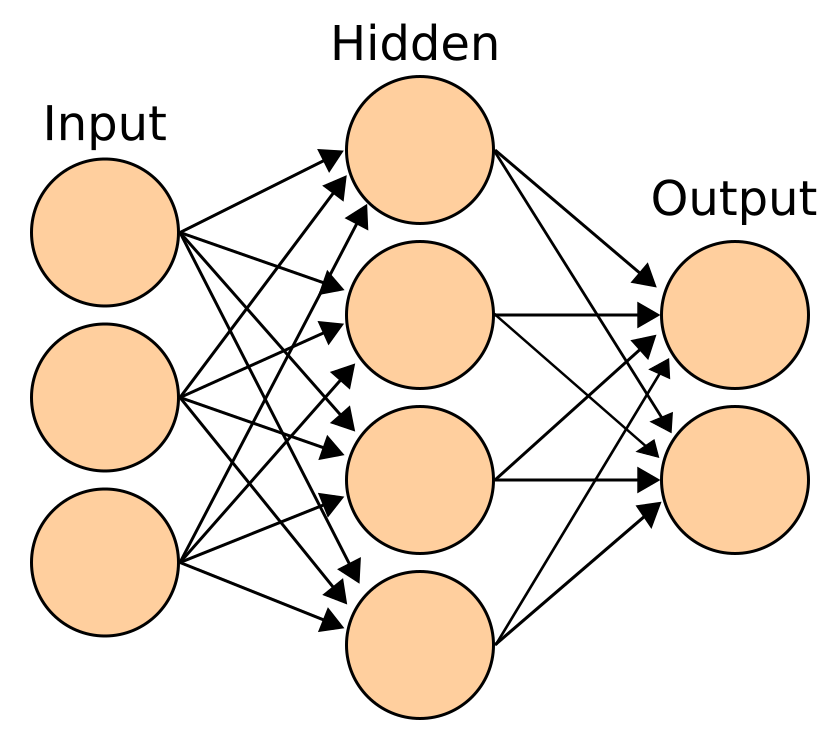
Artificial neural network, with neurons forming connections. The information can go across in both directions (though not indicated in the representation). Credit: Wikimedia Commons
That’s when Geoff Hinton entered the picture at around the same timeframe, helping conceive backpropagation, a technique that’s now mainstream and is the key to machine learning models that we use today. But in 2000, Hinton conceived the multi-layered version of the “Boltzmann machine”, a neural network founded on the Hopfield network. Geoff Hinton was featured in Ed Publica‘s Know the Scientist column.













Space & Physics
Indian-Belgian Team Develops Portable Detectors to Image Mountains and Monuments Using Cosmic Rays
Portable cosmic-ray detectors could help researchers examine mountains, tunnels and historical monuments without invasive procedures, opening new possibilities for scientific imaging and infrastructure inspection.
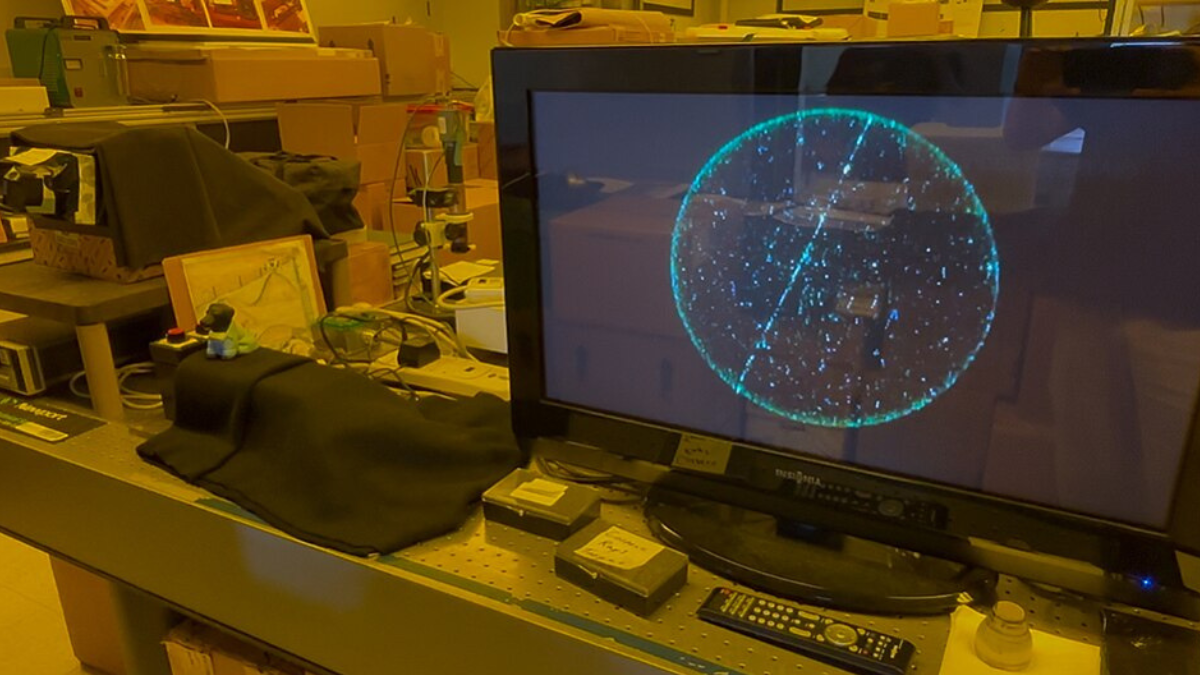
An international team of researchers from India and Belgium has developed portable particle detectors that could help scientists examine the interiors of mountains, tunnels and historical monuments without damaging them. The technology uses naturally occurring cosmic-ray particles to map variations in the density of objects, offering a potential approach to non-invasive imaging of large structures.
The detectors, developed using glass-based Resistive Plate Chambers (RPCs), achieved a particle-detection efficiency exceeding 95% during testing, according to a report published by Research Matters on October 24, 2026. The findings demonstrate the potential of compact detector systems to investigate dense materials and support future applications in geology, archaeology and infrastructure assessment.
The collaboration includes researchers from India’s National Institute of Science Education and Research (NISER), Bhubaneswar, and the Homi Bhabha National Institute (HBNI), alongside researchers from Belgian institutions, including Université catholique de Louvain and the Inter-University Institute for High Energies.
How cosmic rays reveal hidden structures
The technology uses muons, high-energy particles produced when cosmic rays interact with Earth’s atmosphere. These particles continuously reach the Earth’s surface and can penetrate substantial thicknesses of rock, concrete and other materials.
As muons travel through an object, some are absorbed or deflected depending on its density and thickness. By measuring the number and trajectories of particles passing through a structure, researchers can identify variations in internal density and reconstruct images of otherwise inaccessible areas.
The technique, known as muography, is comparable in principle to X-ray imaging, but uses naturally occurring particles instead of an artificial radiation source. It has previously been used to investigate geological formations, including volcanoes, and to explore archaeological structures.
However, conventional muon detectors can be bulky, difficult to transport and challenging to operate in remote locations. The new glass-based detectors aim to address some of these limitations through a compact design and sealed operation, reducing dependence on continuous gas supplies.
Testing the detector system
The researchers developed three glass RPC prototypes using thin glass electrodes separated by gas-filled gaps. When a muon passes through a chamber, it ionises the gas, generating an electrical signal that can be recorded to determine the particle’s position.
Electronic readout systems capture these signals and help reconstruct the trajectories of incoming particles. During testing, the detectors achieved an efficiency exceeding 95%, with a timing resolution of approximately 1.8 nanoseconds, according to the research report.
To examine the system’s ability to detect dense materials, the team conducted an absorption experiment using one prototype. During an open-sky measurement, researchers recorded nearly 55,000 muon tracks. After placing a lead block in the experimental setup, the recorded count fell to 30,894, demonstrating how dense material reduced the number of particles reaching the detector.

Representational image.Image credit:Pexels
The experiment provided proof of principle that the system could measure muon attenuation and support radiographic imaging. However, imaging complex structures such as mountains or monuments requires measurements from multiple directions and further computational reconstruction.
Applications and challenges ahead
Portable muon detectors could eventually help researchers investigate hidden cavities, examine geological formations, inspect tunnels and study the internal structures of historical monuments. Engineers could also explore their application in assessing infrastructure such as dams and bridges, although these uses would require additional testing and validation.
For cultural heritage conservation, muography could offer a valuable alternative where drilling or other invasive investigations risk damaging fragile structures. A 2025 review published in iScience highlighted the technique’s potential as a complementary, non-destructive method for studying cultural heritage objects, while noting that the relatively low flux of naturally occurring muons can require lengthy data-collection periods.
The technology is not yet a universal replacement for existing inspection methods. Its practical application will depend on factors such as spatial resolution, detector size, measurement duration and the complexity of the structure being examined.
The researchers have proposed further improvements, including lighter structural materials, larger detector areas and enhanced readout systems. These developments could make the detectors easier to deploy and improve the quality of reconstructed images.
Space & Physics
How Scientists Traced the Flow of Matter Around a Dead Star Using X-rays
By studying changes in X-ray signals from Centaurus X-3, researchers at Bengaluru’s Raman Research Institute have found evidence of an unusual way in which matter reaches a neutron star. The discovery could change how scientists explain the radiation coming from this distant system.
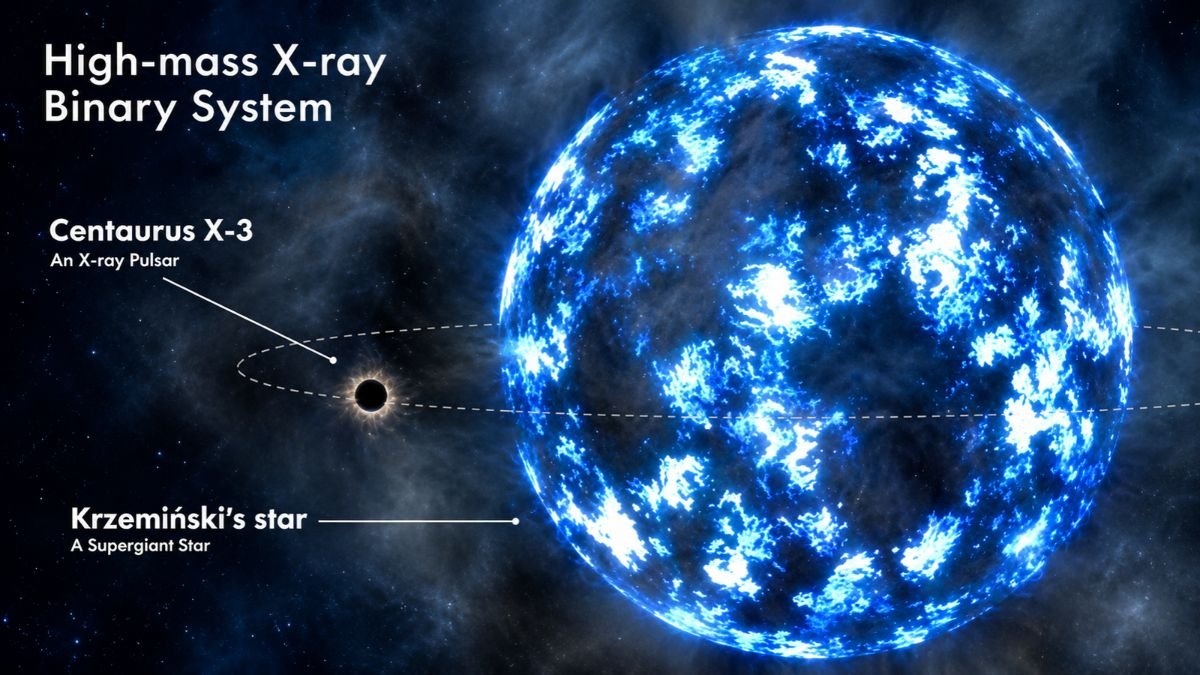
When a massive star dies, its core can collapse into an extremely dense object called a neutron star. Despite being only about the size of a city, it can have a mass comparable to that of the Sun. Its powerful gravity can pull matter away from a nearby companion star, releasing energy in the form of X-rays as the material falls towards it.
Scientists at Bengaluru’s Raman Research Institute (RRI) have studied these X-ray signals from Centaurus X-3, a star system about 24,000 light-years from Earth. By examining changes in the signals, the researchers identified a stream of matter flowing towards the neutron star and found evidence of a rotating disk of material around it. This is an unusual finding because such disks are not commonly expected in this type of star system. The discovery could help scientists better understand how matter moves around neutron stars and how these distant objects produce X-rays.
Star That Pulls in Matter
Centaurus X-3 is in the constellation Centaurus. It belongs to a class of systems known as high-mass X-ray binaries. These systems contain a neutron star and a massive companion star held together by gravity.
A neutron star forms when the core of a massive star collapses at the end of its life. It packs roughly the Sun’s mass into a sphere only about the size of a city. Its gravity is so strong that it can pull in material from a nearby companion star. As this material falls towards the neutron star, it releases enormous amounts of energy, including X-rays. Scientists study this radiation to understand how the material behaves and how the system works.
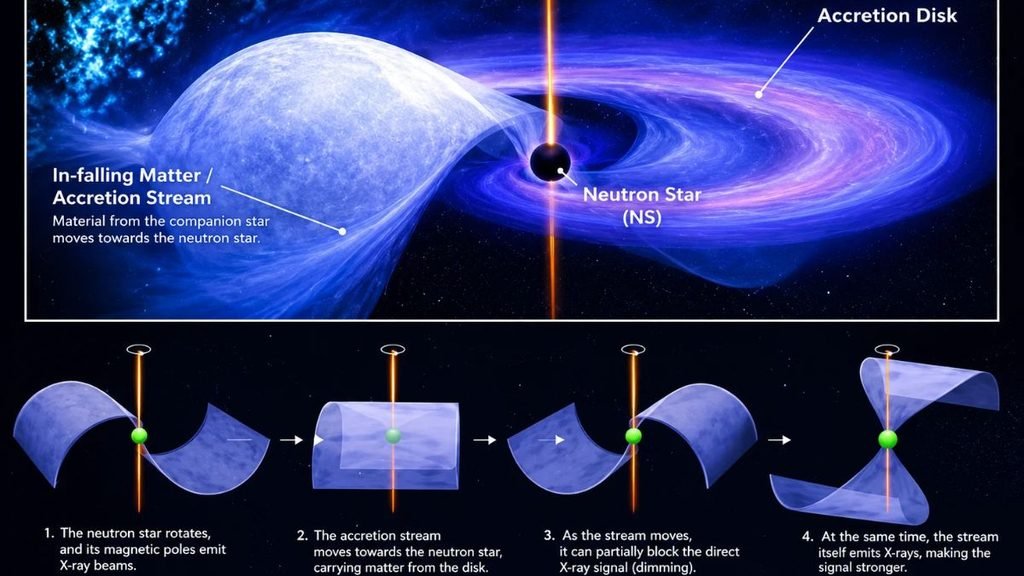
Centaurus X-3 is also a pulsar. Its neutron star rotates and sends out radiation from regions near its magnetic poles. As the star spins, these beams sweep across space. When a beam passes an observing satellite, the satellite detects a pulse of radiation, much as a lighthouse produces a repeating flash as it turns. These regular pulses provide scientists with a way to study the neutron star and its surroundings.
What the Changing Signals Revealed
The radiation from Centaurus X-3 does not come only from the neutron star itself. Some of it interacts with nearby material, including the surface of the companion star, gas flowing away from it and matter surrounding the neutron star. This material absorbs radiation and emits it again. Scientists call this secondary radiation.
Changes in this radiation can help researchers work out what is happening around the neutron star. However, Centaurus X-3 is so far away that telescopes cannot clearly distinguish its surrounding structures. It appears as a single point of light. Scientists must therefore piece together the system’s structure from the signals they receive.
Earlier observations had shown that the intensity of certain secondary X-ray emission lines changed as the neutron star rotated. An emission line is a feature in a spectrum that can reveal information about the material producing or interacting with the radiation. A research team led by Kinjal Roy of RRI examined four such emission lines in detail. The researchers found that the structure producing these changes must be rotating along with the neutron star.
The pattern helped them identify the likely source which is a stream of matter moving towards the neutron star.
Following the stream of matter
This stream is part of a process called accretion, in which a compact object draws in material from its surroundings. In Centaurus X-3, the stream carries matter from an accretion disk towards the neutron star. The disk is a rotating structure of gas and other material that moves around the star before being drawn inwards. The neutron star’s magnetic field then guides the incoming matter towards its magnetic poles.
The stream also changes what an observing satellite sees. As it moves around the neutron star, it can come between the satellite and the star, partially blocking the direct radiation. When this happens, the primary X-ray signal weakens. At the same time, radiation from the stream itself becomes stronger in the observed signal.
The researchers used these changing signals to connect the observed variations to the movement of matter around the neutron star. The evidence for an accretion stream also points to an accretion disk feeding it. This matters because scientists generally expect high-mass X-ray binaries to gather material in a different way.
Why an accretion disk matters
In many high-mass X-ray binaries, a neutron star captures gas directly from the stream of material blown away by its companion star. This is known as stellar-wind accretion. An accretion disk involves a different arrangement: material gathers into a rotating structure before flowing towards the neutron star. The findings from Centaurus X-3 indicate that this disk-based process is taking place in a system where it is not generally expected.
That difference matters when scientists calculate how the system produces and releases radiation. If their models leave out the disk, they may fail to account for some of the radiation coming from the surrounding material.
“Accretion disk is not expected to occur in [HMXBs] So, if an accretion disk is forming in this system, emission models have to be modified,” Roy said in the Department of Science and Technology’s announcement. He added that future models of Centaurus X-3 would need to account for radiation from the disk.
The research does not mean that scientists have directly photographed the disk. Instead, they have used the changing X-ray signals to infer the presence and behaviour of structures that remain too distant to resolve clearly. Published in The Astrophysical Journal, the study adds to the understanding of Centaurus X-3, one of the most widely studied binary pulsars. It also shows how small changes in radiation can reveal the movement of matter around objects that are otherwise beyond the reach of direct observation.
By identifying the flow responsible for the changing signals, the researchers have provided a more detailed picture of how this neutron star draws in material. That picture will help scientists refine their models of Centaurus X-3 and examine whether similar processes occur in other high-mass X-ray binaries.
Space & Physics
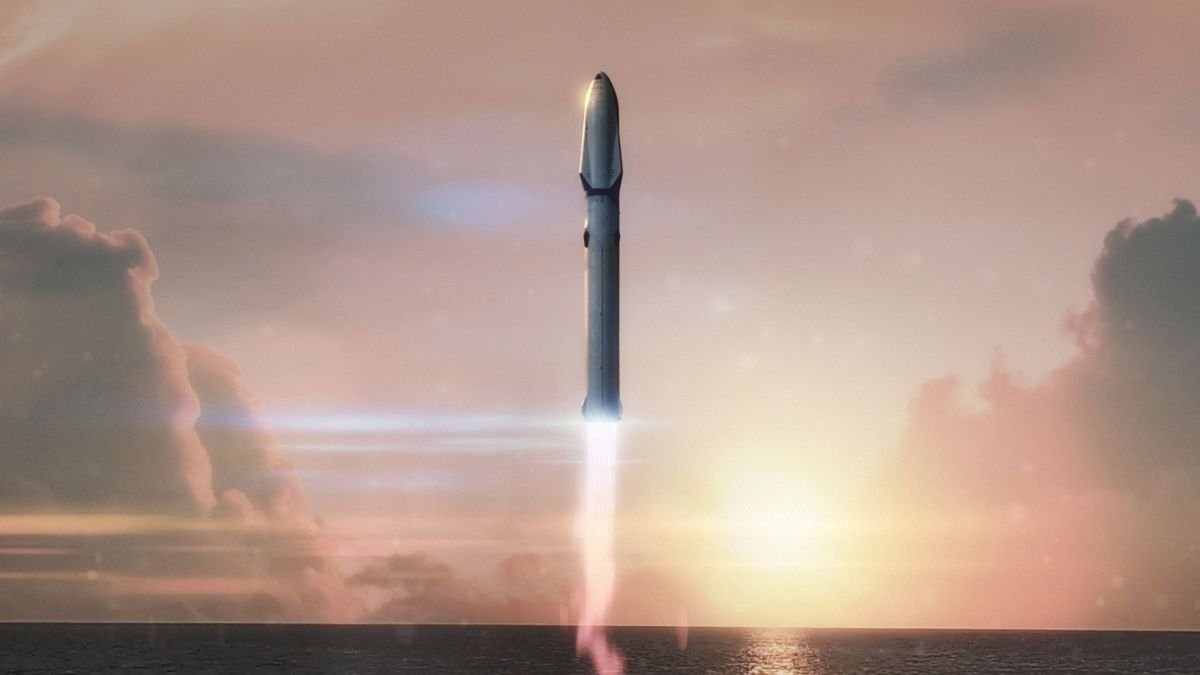
World Space Week 2026: How the Rocket Revolution Is Changing Space
World Space Week 2026 explores the Rocket Revolution, from reusable launchers and private space companies to the growing role of satellites.


Indian-Belgian Team Develops Portable Detectors to Image Mountains and Monuments Using Cosmic Rays

India’s Clean Energy Research Funding Falls Short of Manufacturing Ambitions, Study Finds

Kashmir’s Traditional Rice Varieties Hold Genetic Clues to Climate Resilience

India Builds Synthetic Biology Capacity for Medicines and Industrial Production

India’s Green Cover Declined by 5.6 Percentage Points in 25 Years as Summer Heat Intensified: Study

Knowing When to Think for Ourselves: AI, Intuition and the Education of Discernment

After a Scorching Summer, Delhi’s Children Are Slow to Return Outdoors

Two Chemists Win Nobel Prize for Solving a Century-Old Puzzle: Why Life Picks One Hand Over the Other

Marshall Islands: Why the US Nuclear Legacy Is Back Before the UN

How Wind Turbines Could Produce More Power From the Same Wind

-

 Math3 months ago
The 2026 Fields Medals: Four Proofs, Four Decades-Old Problems Solved
-
EP Deep Dive: Data & Solutions3 months ago
After Kerala’s Deadliest Landslide, the Hardest Thing to Rebuild Was Childhood
-
EP Deep Dive: Data & Solutions4 months ago
West Asia Crisis: Can Kerala’s Returning Gulf Migrants Find a Future in the Green Economy?
-
Space & Physics5 months ago
India Semiconductor Mission: ‘It’s Not About Fabs. It’s About Building An Entire Ecosystem’
-
Interviews1 month ago
From Scams to Screens: How the National Stock Exchange Rewrote India’s Equity Story
-
Climate5 months ago
The Climate World Cup? How Climate Change Could Affect Player Performance at the 2026 World Cup
-
Society4 months ago
What Is Civilisational Diplomacy? Understanding India’s Newest Foreign Policy Tool
-
Society4 months ago
From Bell Labs to the Classroom: A Second Career in Teaching