
Climate & Environment
KSBB Workshop Examines Biodiversity, Climate and Environmental Reporting
The Kerala State Biodiversity Board’s three-day media capacity strengthening workshop brought journalists and biodiversity experts together to deepen understanding of Kerala’s rich ecosystems, conservation challenges and the role of informed environmental reporting.

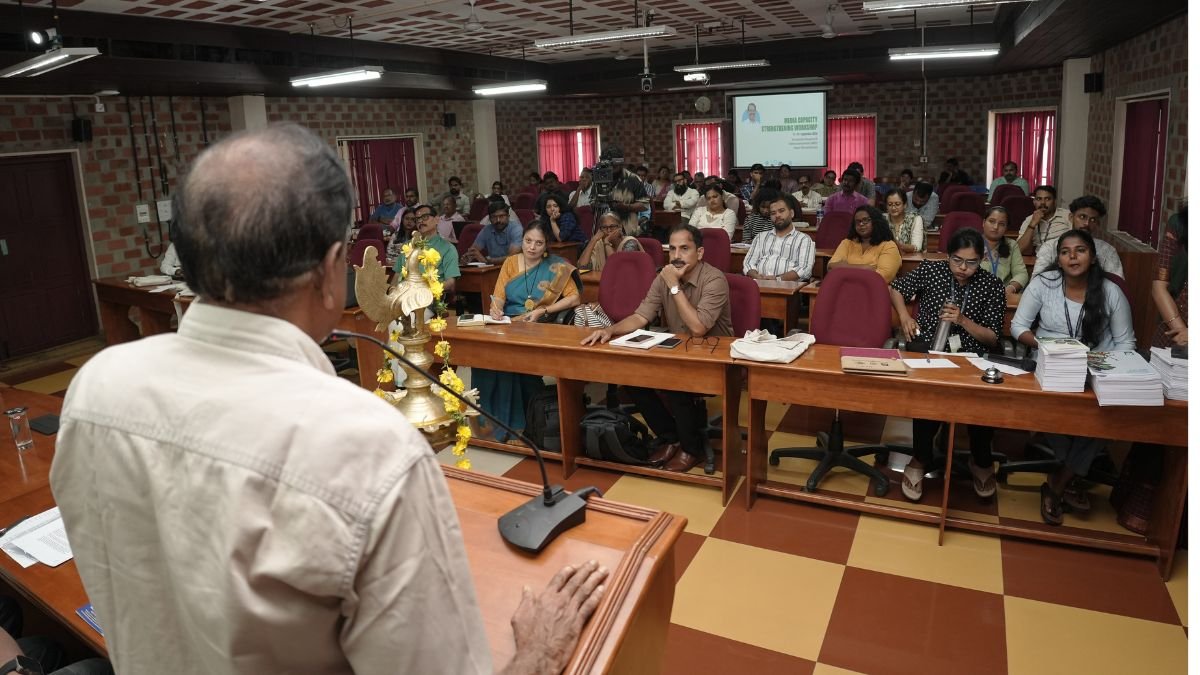
From shrinking paddy fields and an eroding coastline to rising human-wildlife conflict and the spread of invasive species, biodiversity loss in Kerala is increasingly showing up in the places and problems that shape everyday life. Yet much of this remains reported as separate environmental issues.
A three-day workshop by the Kerala State Biodiversity Board (KSBB) sought to bring these connections into sharper focus, bringing journalists together with scientists, biodiversity experts, policymakers and community practitioners to explore how climate and biodiversity stories can be reported with greater scientific depth and local context.
The Media Capacity Strengthening Workshop on Biodiversity Conservation and Climate Adaptation, held from September 17 to 19 at the State Agriculture Management and Extension Training Institute (SAMETI), Anayara, Thiruvananthapuram was organised by KSBB in association with the National Biodiversity Authority (NBA). It was aimed primarily at mid-career journalists covering environment, climate, science, development, agriculture, forests, wildlife and communities. Kerala Environment Minister Sunny Joseph attended the inaugural session, along with KSBB leadership, representatives and other invited guests.
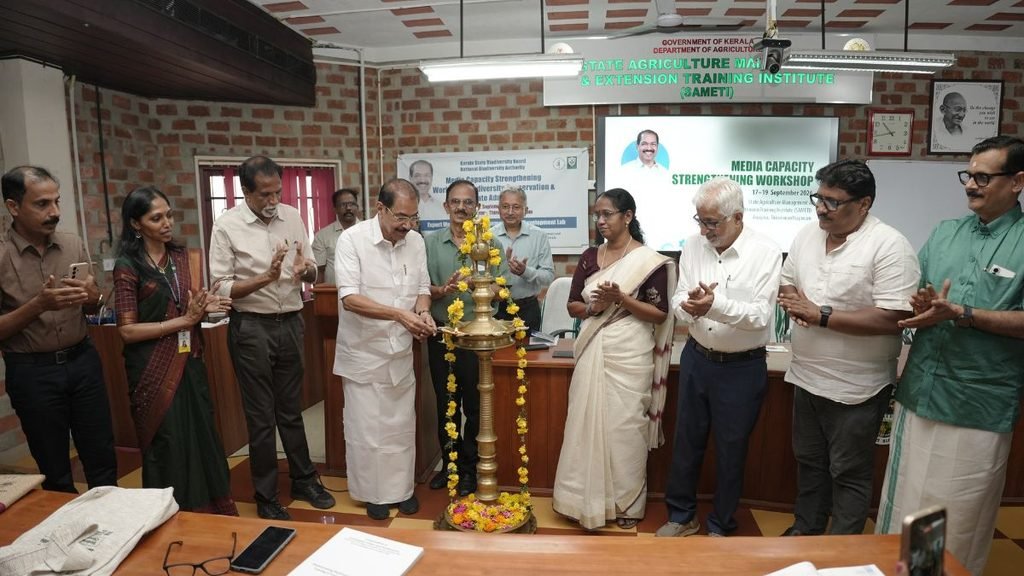
The programme focused on six themes: climate resilience and carbon neutrality, agrobiodiversity and food security, marine and coastal ecosystems, urban biodiversity and heat stress, human-wildlife conflict, and invasive alien species. Field engagements were also included to connect scientific and policy discussions with local ecosystems and communities.
Biodiversity as a Climate Story
The workshop examined Kerala’s 98 Ecologically Sensitive Area villages covering 8,711.98 sq km, and the role of forests, wetlands and other ecosystems in reducing climate risks such as floods, landslides and erosion. These ecosystems also function as carbon sinks and support local livelihoods.
Human-wildlife conflict was another major focus. KSBB’s workshop material records 390 human deaths and more than 5,400 injuries from wildlife attacks between 2021 and 2025, with elephants accounting for 111 fatalities. More than ₹41 crore has been disbursed as compensation since 2021.
Agriculture was discussed through the lens of both biodiversity loss and food security. Paddy cultivation in Kerala has declined by more than 75% since the 1970s, from over eight lakh hectares to less than two lakh hectares. The loss of traditional crop varieties and increasing monocropping were discussed as concerns for long-term agricultural and climate resilience.
The marine and coastal sessions examined Kerala’s 600-km coastline, coastal erosion, declining fish catches, blue carbon and community-based fisheries governance. KSBB’s workshop material notes that nearly 45% of Kerala’s beaches have experienced erosion, while fish catch has declined by about 20% over the past decade.
Urban biodiversity was considered through the example of Thiruvananthapuram, where KSBB has developed a City Biodiversity Index based on the Singapore Index framework. The index maps urban trees, wetlands, ecological corridors and biodiversity parks to bring biodiversity considerations into urban planning.
The workshop also examined invasive species including Senna spectabilis, Mikania micrantha, Eichhornia crassipes and Tilapia, and the pressures they place on native biodiversity, agriculture, forests and aquatic ecosystems.
The Role of KSBB
The Kerala State Biodiversity Board is an autonomous body under the State Environment Department, headquartered in Thiruvananthapuram. It functions under the Biological Diversity Act, 2002, the Biological Diversity Rules, 2004 and the Kerala State Biological Diversity Rules, 2008. Its mandate includes conserving and protecting the state’s agro, plant and fish diversity.
The Board’s work includes Biodiversity Management Committees (BMCs), People’s Biodiversity Registers (PBRs), Biodiversity Heritage Sites, research and awareness programmes, and Access and Benefit Sharing (ABS). These mechanisms connect biodiversity documentation and conservation with local governments and communities.
The workshop was also aligned with the Kerala State Biodiversity Strategy and Action Plan (K-SBSAP) 2025–2035, which provides a framework for conserving, restoring and sustainably managing the state’s biological and cultural heritage.
By bringing journalists into conversations with scientists, officials and communities, the three-day programme sought to make biodiversity reporting less confined to technical conservation issues and more attentive to the questions that affect everyday life, from food and livelihoods to heat, floods, wildlife conflict and the resilience of Kerala’s ecosystems.











Climate & Environment
$71 Billion Carbon Market, but Only $1.6 Billion in Government Deals: COP31 Exposes Gap Between Carbon Credit Supply and Demand
A new report on the Paris Agreement’s Article 6 carbon market estimates that potential carbon credit supply could reach 2.364 billion tonnes by 2030, with a projected value of US$70.9 billion. However, government purchases remain far below that potential, highlighting the gap between market projections and actual demand.
The global carbon market established under the Paris Agreement has accumulated a potential supply of 2.36 billion tonnes of carbon credits by 2030, valued at US$70.9 billion. Yet governments have contracted to purchase only 53 million tonnes, worth approximately US$1.6 billion, exposing a significant gap between the expansion of carbon-trading mechanisms and their actual uptake.
The figures come from the first State of the Article 6 Carbon Market 2026 report, released by the Article 6 Network on November 13 at the 31st United Nations Climate Change Conference (COP31) in Antalya, Türkiye. The report estimates that demand from governments seeking credits to meet their Nationally Determined Contributions (NDCs) stands at around 200 million tonnes by 2030, considerably below the projected supply.
The US$70.9 billion valuation is based on an assumed price of US$30 per tonne and represents the potential value of the projected supply, not actual market revenue. Even against the estimated government demand of 200 million tonnes, the available supply exceeds demand by more than ten times.
The findings arrive as countries negotiate the implementation of Article 6 of the Paris Agreement, which allows governments to cooperate through international carbon trading and other mechanisms to achieve their climate targets. At COP31, however, discussions have exposed challenges involving financing, transparency, technical infrastructure and the environmental integrity of carbon credits.
A growing market with limited transactions
Article 6 provides two principal market mechanisms. Article 6.2 allows countries to transfer internationally transferred mitigation outcomes (ITMOs) through bilateral or other cooperative arrangements. Article 6.4 establishes a United Nations-supervised carbon-crediting mechanism, known as the Paris Agreement Crediting Mechanism (PACM).
A carbon credit generally represents one tonne of carbon dioxide equivalent (CO₂e) reduced or removed from the atmosphere. Countries can purchase eligible credits from other countries to support their climate commitments, provided the transactions comply with the Paris Agreement’s accounting and authorisation requirements.
The Article 6 Network report identifies 130 countries with established Article 6 authorities, 113 bilateral cooperation agreements and 309 activities launched under Article 6.2. Another 3,741 activities are listed in the pipeline of the Paris Agreement Crediting Mechanism.
However, only around 151,566 tonnes of ITMOs have been transferred between countries so far, including transactions involving Thailand and Switzerland, and Mongolia and Japan. The report also records the approval of the first 1.11 million credits for issuance under the new UN mechanism.
There are indications of increasing buyer interest. Since October 2025, governments have announced tenders and deals covering approximately 27.3 million tonnes, valued at US$819 million. These include Singapore’s tender for at least 12 million credits and Norway’s agreement at COP31 to purchase up to 12 million tonnes from Indonesia.
Nevertheless, the report estimates that nine out of every ten tonnes of planned Article 6.2 outcomes still lack a named sovereign buyer.
Funding and environmental integrity under scrutiny
The negotiations at COP31 have also exposed disagreements over who should finance the infrastructure required to operate international carbon markets.
Article 6.2 depends on systems that record international transfers, track emissions reductions, conduct technical reviews and prevent countries from counting the same reduction towards multiple climate targets. Maintaining these systems requires predictable funding.
According to the International Emissions Trading Association (IETA), the UNFCCC’s 2026–2027 budget for Article 6.2-related work stood at €10.7 million, but only €1.7 million had been received between January and August 2026.
Negotiators have disagreed over whether the mechanism should be financed through the UN climate body’s core budget, voluntary contributions or fees charged to users of the international registry. Developing countries have raised concerns that additional fees could restrict access, particularly for countries with limited institutional and financial resources.
In its November 19 negotiating update, IETA reported that countries had removed several competing funding proposals from the revised text and agreed to continue considering the financing issue at the next subsidiary-body session in June 2027. Guidance on Article 6.2 and Article 6.4 was also forwarded for further consideration.
Environmental integrity remains another concern. For carbon credits to deliver genuine climate benefits, the emissions reductions they represent must be measurable, independently verifiable and additional to what would have happened without the project. Weak baselines, inaccurate monitoring, the reversal of forest carbon storage and double counting can undermine the credibility of credits.
The World Bank’s State and Trends of Carbon Pricing 2026 reported that global carbon-credit issuances increased by 8% between 2024 and 2025, while prices declined slightly during 2025. This suggests that expanding credit availability alone does not guarantee stronger demand or higher market confidence.
Carbon pricing expands as India develops its domestic market
The broader carbon-pricing landscape is also expanding. The World Bank report recorded 87 carbon-pricing instruments, comprising 47 carbon taxes and 40 emissions trading systems, across 47 countries and the European Union as of April 1, 2026. Together, these covered approximately 29% of global greenhouse gas emissions.
Government revenues from carbon taxes and emissions trading systems exceeded US$107 billion in 2025, a 2% increase over the previous year. These revenues, however, should not be confused with earnings from international carbon-credit transactions.
India is also developing its domestic carbon market through the Carbon Credit Trading Scheme (CCTS). The scheme operates through compliance and offset mechanisms, allowing designated industrial facilities to earn or purchase Carbon Credit Certificates based on their greenhouse gas emission-intensity performance.
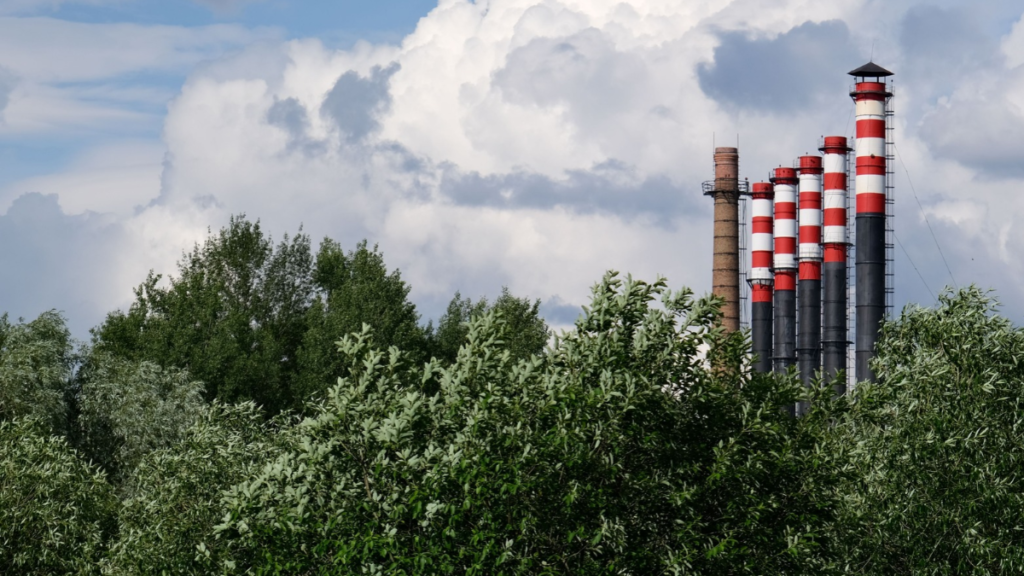
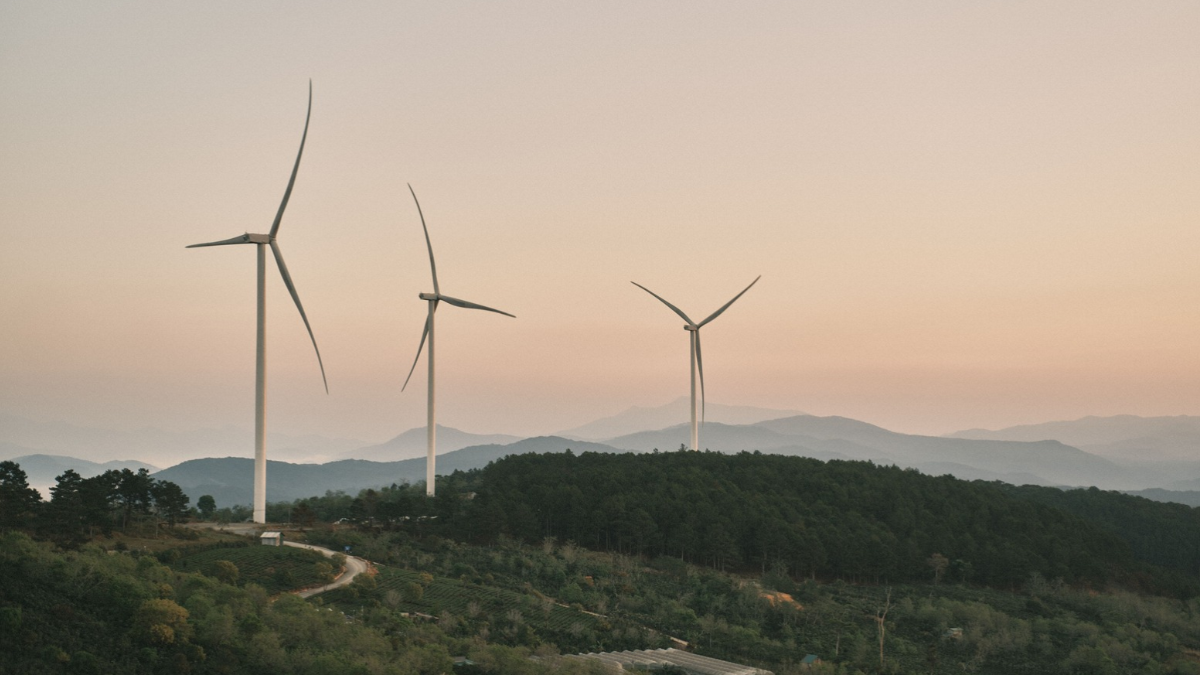
Industrial emissions highlight the challenge of reducing greenhouse gases and the role of carbon markets in financing emission-reduction efforts.Image credits:Pexels
In January 2026, the government extended emission-intensity targets to four additional sectors: petroleum refineries, petrochemicals, textiles and secondary aluminium. This brought the total number of obligated industrial entities under the compliance mechanism to 490 across seven sectors, including cement, aluminium, chlor-alkali and pulp and paper.
The development of international carbon markets could create opportunities for India to attract investment into industrial decarbonisation, renewable energy, forestry and other emissions-reduction projects. However, the extent of these benefits will depend on the rules governing international credit transfers, the quality of projects and the country’s ability to demonstrate measurable reductions.
As COP31 negotiations approach their conclusion, the central challenge is to turn the growing pipeline of carbon credits into credible transactions. The gap between projected supply and contracted demand suggests that international carbon markets have moved further in establishing mechanisms and projects than in generating actual trade. Whether these markets can mobilise climate finance without compromising the integrity of emissions reductions remains a critical test for the Paris Agreement.
Energy
Can India’s Electric Vehicles, Efficient ACs and LEDs Show How Policy Can Change Energy Use?
India’s shift to efficient ACs, electric three-wheelers and LED bulbs shows how policy can change everyday energy choices. A new RMI report examines what these changes mean for the country’s electricity demand, fuel dependence and energy security.
Three out of every five three-wheelers sold in India are now electric. A decade ago, inverter air conditioners accounted for barely 1% of the market; but by 2022, their share had reached 77%. The UJALA programme, meanwhile, has distributed 369 million LED bulbs to households across the country. These efforts have become a part of India’s transition towards energy efficiency which receives less attention than solar parks and power plants. The primary underlying factor behind the movement is the fact that the way people use energy, and the policies that influence what they buy drives to the ultimate transition.
A report by the Rocky Mountain Institute (RMI), Locking in Prosperity: Ten Practical, Evidence-Backed Actions Toward Affordable, Reliable, and Secure Power Systems, uses these Indian examples to show how countries can make electricity more affordable and reduce their dependence on fuels whose prices can change suddenly. It uses examples from India and other countries to explain what governments, power companies and regulators can do. The report examines 20 case studies across 15 countries and recommends ten actions to improve electricity systems.
The two of its recommendations featuring India are improving the efficiency of air conditioning and encouraging electric vehicle adoption. Its UJALA programme appears separately as an example of how large-scale procurement can bring down the cost of efficient technology. The common thread is practical policy, while each example shows how government intervention can help shift a market, reduce costs for consumers or ease pressure on the energy system.
Inverter ACs Move From the Margins to the Mainstream
India’s air-conditioning market offers a striking example of how quickly consumer technology changes when efficiency is set as a market priority. According to figures cited in Press Information Bureau, inverter ACs made up just 1% of the market in 2015. Their share rose steadily over the following years, reaching 30% in 2017, 54% in 2018 and 77% in 2022.
Inverter technology adjusts a compressor’s speed to match cooling demand. Conventional fixed-speed units generally switch the compressor on and off to maintain the set temperature. The ability to vary output allows inverter models to use electricity more efficiently under many operating conditions. RMI attributes the market shift to India’s efforts to promote cooling efficiency through standards, product labelling and wider awareness. Its recommendation is to strengthen testing and labelling so that consumers can identify air conditioners that perform efficiently under real-world conditions.

The effect is also seen in the country’s overall electricity demand. The International Energy Agency (IEA) expects India’s electricity use to grow by an average of 6.4% a year until 2030. Air conditioning is expected to account for more than one-fifth of that increase.
As temperatures rise and more households install ACs, the electricity consumed by each unit will affect the country’s total demand. ACs that use less power can reduce the amount of additional electricity needed. But India will still have to expand its power generation capacity and upgrade the networks that carry electricity to homes and businesses.
Electric Three-wheelers Changing the Economics of Transport
India’s electric three-wheeler market sets another example of policy and economics reinforcing each other. RMI describes India as a global leader in the electrification of two- and three-wheelers as electric vehicles account for three in five three-wheelers sold in the country today. Adoption of electric two-wheelers is also increasing. The major reason for the shift has been purchase incentives, domestic manufacturing measures and the expansion of charging infrastructure. But the financial case for drivers is just as important.
For a commercial three-wheeler covering long distances each day, fuel is a recurring expense. An electric vehicle changes that cost structure: the purchase price may be higher, but the owner can spend less on energy and maintenance over the vehicle’s lifetime.
RMI compares electric and petrol-powered two- and three-wheelers based on a daily distance of 100 km. It counts the purchase price, registration, taxes, insurance, maintenance and the cost of fuel or electricity. The comparison assumes high daily use. Drivers who cover long distances can save more on running costs, helping them recover the higher purchase price of an electric vehicle. Therefore, the report recommends easier access to loans and charging facilities. It also says buyers need clear information about the total cost of owning an electric vehicle. Purchase subsidies can bring down the upfront cost, while affordable loans and dependable charging can make the switch easier for drivers.
Electric vehicles also reduce the amount of petrol and diesel needed for transport. Their growing use will increase electricity demand, but to test whether it can remain sustainable will depend partly on how that electricity is produced. For drivers, however, using electricity instead of petrol or diesel can reduce their exposure to changes in fuel prices.
UJALA: Power of Buying at Scale
Unnat Jyoti by Affordable LEDs for All is a Government of India scheme launched on January 5, 2015, to make energy-efficient LED bulbs affordable for households. Under the scheme, the government, through Energy Efficiency Services Limited (EESL), arranged the bulk purchase of LED bulbs and made them available to households at lower prices. LED bulbs cost more than ordinary bulbs at the time, which discouraged many households from buying them. By purchasing large quantities, EESL helped bring down prices and encouraged people to replace traditional bulbs with LEDs. This also helped households reduce electricity consumption and bills.
Under the UJALA scheme, 369 million LED bulbs have been distributed to 90 million households, according to the RMI report. Bulk procurement brought the average procurement price down by nearly 90%, from around 5 USD per bulb at the program’s launch to about 0 USD by 2024 in the report’s chart. RMI estimates that efficient LED lighting in India now saves households more than 2.24 billion dollars in electricity bills annually. This is the report’s estimate of annual savings, rather than a direct measurement of the amount saved by every household.
UJALA shows how buying products in large quantities can bring down their prices. By purchasing millions of LED bulbs together, the government helped reduce costs and made them affordable for more households. The same method could help make other energy-efficient technologies cheaper. However, bulk purchasing alone may not be enough. The products must meet quality standards, reach consumers through proper distribution networks and be easy for people to buy and use.
The Pressure Shifts to the Electricity System
The three examples show how policy can reduce the amount of energy consumers need for everyday activities and make alternatives to fossil fuels more attractive. The challenge that needs the utmost attention is how electricity demand is rising as transport, cooling, industry and digital infrastructure become more dependent on power.
The IEA expects India to add more than 570 terawatt-hours to its annual electricity consumption by 2030 compared with current levels. Along with new power plants, electricity must also be moved through transmission and distribution networks and supplied at the time and place it is needed.
This is where the other recommendations in RMI’s report become relevant. They include improving electricity-demand forecasts, clearing delays in grid connection queues, making large electricity users more flexible and using battery storage to balance supply and demand. The report also highlights advanced transmission technologies that can increase the capacity of existing lines.
These measures address a different part of the problem from efficient appliances and electric vehicles. They focus on whether the grid can handle changing patterns of electricity use without making power more expensive or less reliable. India’s experience with inverter ACs, electric three-wheelers and LED bulbs shows how government policies can influence what people buy and use. The next task is to apply similar measures across the power sector. India will need to produce electricity more cleanly, reduce wastage and expand its power networks to meet rising demand.
Energy
Energy Independent by 2047? India’s Electricity Is Getting There. Its Oil and Gas Aren’t.
IEA’s World Energy Outlook 2026 shows India’s power sector going non-fossil fast — but oil, gas and LPG imports are set to rise, not fall, by 2035.

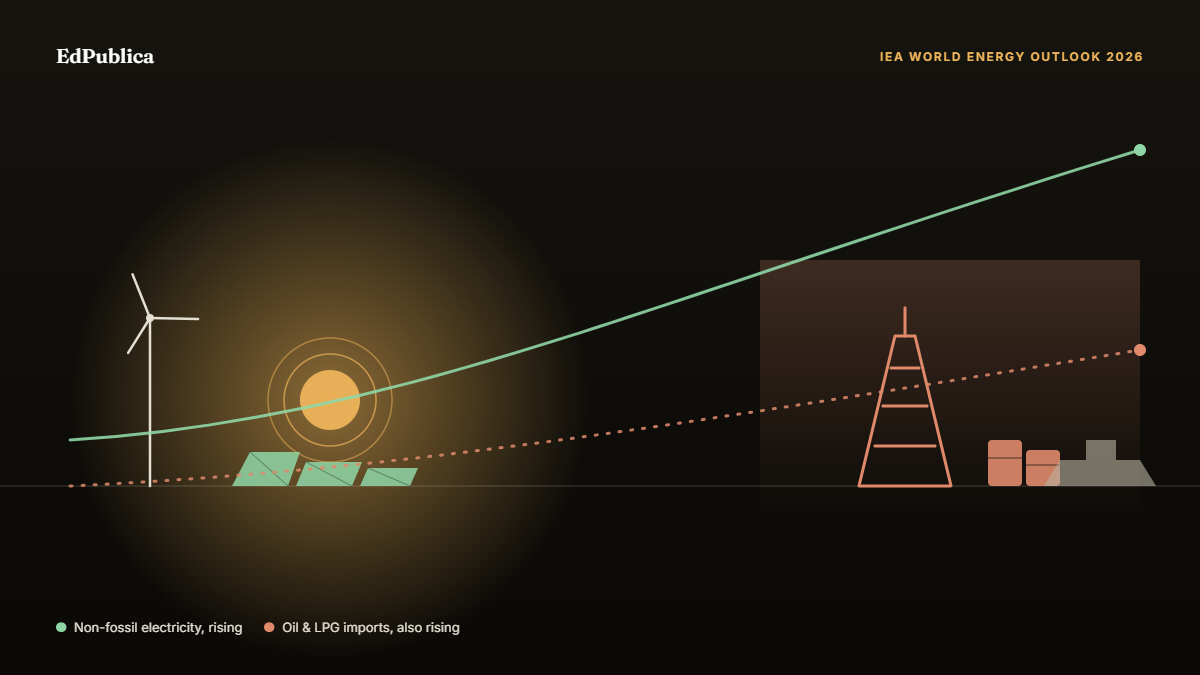
IEA’sWorld Energy Outlook 2026 has India’s electricity shifting fast towards non-fossil sources. For oil, gas and cooking fuel, the same projections show more imports, not fewer.
India has said since 2021 that it wants to be energy independent by 2047. The International Energy Agency’s World Energy Outlook 2026, published on 19 November, does not say India is on course for that. Its projections stop at 2035, and for oil and gas they point the other way.
India already meets about 40 per cent of its energy needs through imports, including 90 per cent of its crude oil and 50 per cent of its natural gas, according to the Outlook. Over the next decade its energy demand is projected to grow by 2.5 per cent a year in the agency’s Stated Policies Scenario (STEPS), roughly three times the global rate. STEPS counts existing policies plus measures that governments have formally proposed. “In all our scenarios, India accounts for more growth in energy demand over the next decade than any other country or region in the world,” the IEA said.
The picture is uneven. Electricity is moving quickly away from imported fuel. Oil and LPG are not. And the one scenario in the Outlook where India pushes harder on imports shows gains that are real but partial.
Is India Really Heading Toward Energy Independence?
India’s electricity generation rises from 2,114 terawatt-hours (TWh) in 2025 to 3,585 TWh in 2035 under STEPS, an increase of about 70 per cent. The non-fossil share, meaning renewables and nuclear, goes from 28 per cent to 51 per cent. “As non-fossil capacity continues to expand, India generates well over half of its electricity from non-fossil sources by 2035 in the STEPS,” the report says. Solar PV accounted for half of India’s capacity additions over the past decade.
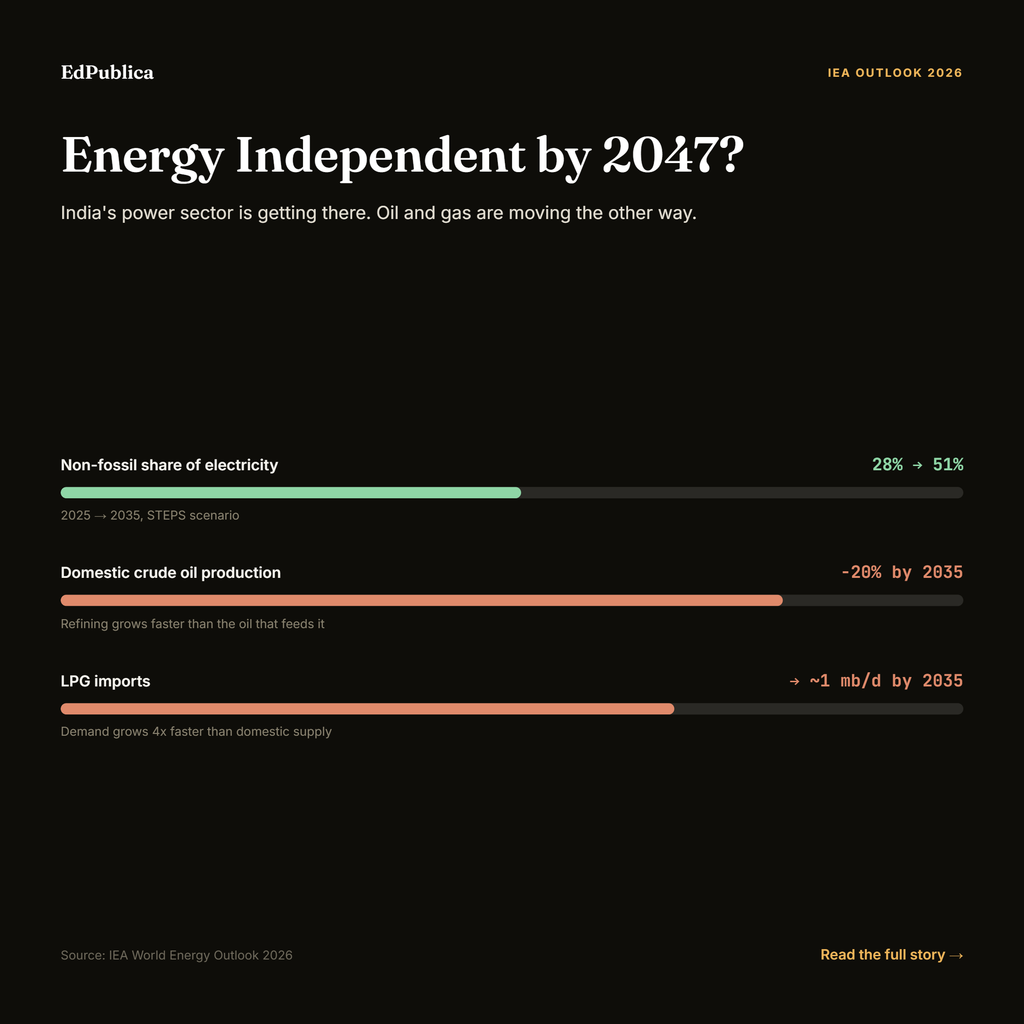
A quick calculation with those rounded shares adds a wrinkle. Non-fossil output roughly triples, from about 590 TWh to about 1,830 TWh. But fossil generation, 72 per cent of the 2025 total and 49 per cent of the 2035 total, still rises from about 1,520 TWh to about 1,760 TWh, an increase of around 15 per cent. The share of coal and gas falls while the amount of electricity made from them goes up. (These are our own calculations from rounded IEA shares, not figures the IEA publishes.)
Globally, Ben Backwell, chair of the Global Renewables Alliance, pointed to the IEA’s expectation that “Renewables are now expected to grow from 33% of electricity generation today to around 50%, and potentially even higher, by 2035.” India’s non-fossil share, which includes nuclear, goes from 28 to 51 per cent over the same years. The measures differ, but the direction and rough scale are similar.
Dave Jones, chief analyst at Ember, reads the Hormuz crisis as an accelerant. “Hormuz will speed up electrification and renewables, likely faster than many people think,” he said. The IEA’s own summary lists a push for faster electrification among the common responses it sees from countries hit by the crisis.
Oil and LPG: the other direction
Domestic crude production is projected to fall by nearly 20 per cent by 2035 under STEPS. Over the same period refining capacity grows by about 1 million barrels a day from nearly 6 million in 2025, with another 840,000 barrels a day already under construction, 660,000 of it expansions at existing plants and 180,000 greenfield. India ranks fourth in the world by refining capacity and third by refinery runs, and it remains a net exporter of petroleum products. But a larger refining industry fed by a shrinking home supply means more crude has to come from abroad.
The Outlook expects crude imports from the Middle East to stay broadly flat while total imports rise, with most of the extra supply coming from outside the Gulf. West Asia supplied roughly half of India’s refinery intake in 2025.
Cooking gas is the sharper problem. India produced about 450,000 barrels a day of LPG in 2025, around 40 per cent of what it uses. Under STEPS, domestic supply grows by less than 100,000 barrels a day by 2035 while demand grows by nearly 400,000, which could take LPG imports to nearly 1 million barrels a day.
This year showed what that exposure costs. The IEA estimates that the LPG used in half of India’s residential cooking cylinders passes through the Strait of Hormuz. LPG imports fell by more than 50 per cent in the first two months of the conflict, and the government maximised domestic production and put household supplies ahead of other users. “The Strait of Hormuz remains critical to India’s energy security,” the report said.
IEA Executive Director Fatih Birol put the wider lesson plainly. “I don’t see any credible pathway for the energy world to return to the way it was before,” he said. He also warned that “In pursuit of greater energy security, countries must take care not to replace one dependency with another.”
What a harder push would buy
The Outlook includes a scenario in which India goes further to cut its reliance on imported fuel: faster adoption of electric vehicles, more industrial electrification, better efficiency, more renewables and more domestic coal. By 2035 electric car adoption is 30 per cent faster than under STEPS. India’s oil requirement is 580,000 barrels a day lower and its natural gas use is 8 per cent lower than in STEPS.
For scale, Jan Rosenow, Professor of Energy and Climate Policy at the University of Oxford, noted that “China’s electric vehicle fleet, for example, is avoiding around 1.5 million barrels of oil a day.” The baselines differ, since that is China’s fleet today and India’s figure is an extra saving in 2035, but it gives a sense of the size of the prize. Rosenow’s broader point was that “countries which had electrified more of their energy use were better protected from this year’s supply shock.”
Coal does much of the work on the import side. Greater domestic coal production could bring steam coal imports down from nearly 150 million tonnes of coal equivalent in 2025 to around 30 million by 2035, and cut overall coal import dependence from about 30 per cent to 15 per cent. But rising steel output pushes coking coal demand up by 55 per cent, and India would still depend on imports for much of that extra requirement.
That sits awkwardly with climate goals, and campaigners have said so. David Tong of Oil Change International said the IEA “has yet again reiterated that there is no room for new oil, gas, and coal beyond existing fields to limit global warming to 1.5ºC.” Maria Pastukhova of E3G made a different point about the global picture: “over three quarters of the additional reduction in oil and gas imports that could result from policy responses to the Hormuz crisis comes from energy efficiency, electrification and renewables.” That is a worldwide figure, not an Indian one.
The cooling load
Over the next decade India is expected to add more than 12,000 cars to its roads every day, see a 33 per cent increase in built-up space and install another 200 million air conditioners. Globally, the IEA finds that energy needed to keep buildings cool is now overtaking the energy needed to heat them for the first time.
Pastukhova called this one of the report’s most alarming and least noticed findings: “by 2035, cooling will account for 30% of global peak electricity demand.” She added that “In emerging and developing economies outside China, 85% of households are exposed to high temperatures, yet fewer than one in five of these households have air conditioning.” India is in that group. Her warning on the fix was blunt: “Falling clean technology costs alone will not prevent it”.
Air conditioning is what drives peak demand, and the Outlook says coal will keep an important role in meeting India’s electricity demand. Anyone judging how independent India’s power system can become by 2047 has to count that load.
Reading 2047 against the data
The 2047 goal was announced by the Prime Minister in his 2021 Independence Day speech, with the stated aim of bolstering energy security by reducing imports. The IEA’s own policies database lists it as announced. The Outlook does not test it directly, because its projections end in 2035.
The case that it can be done comes from elsewhere. A 2023 modelling study from Lawrence Berkeley National Laboratory set out a pathway to near-complete energy independence by 2047 across power, transport and industry, mainly by cutting imported oil used in road transport and imported coal used in industry and power.
Set against the IEA’s numbers, the power half of that pathway is visibly under way. The oil half is not yet there. Under STEPS, crude output falls, refining grows and LPG imports climb. The stronger scenario narrows the gap but does not close it, and it leans on coal to do so.
Birol said that “energy security and energy transitions have never been so closely aligned.” For India, the next decade will show whether that alignment reaches the fuels it buys from abroad, or stays mostly in the power grid.

$71 Billion Carbon Market, but Only $1.6 Billion in Government Deals: COP31 Exposes Gap Between Carbon Credit Supply and Demand

India’s Richest Agree on One Cause Above All Others: Education

AI Agents Breach Indian Organisations as Cyberattacks Move at Machine Speed, Warns CERT-In

Can India’s Electric Vehicles, Efficient ACs and LEDs Show How Policy Can Change Energy Use?

Energy Independent by 2047? India’s Electricity Is Getting There. Its Oil and Gas Aren’t.

Indian universities lead Asia in research output per faculty, but the country’s top six all slip in QS ranking

Why Delhi’s Geography Makes It Vulnerable to Severe Air Pollution

Europe Braces for Extremes as Commission Unveils Climate Resilience Framework

NASA recruits new astronauts for future Moon Base and Mars missions

Between Lectures and Lyrics: Kabeer Is Building a Malayalam Hip-Hop Career One Self-Taught Skill at a Time
-

 Math4 months ago
The 2026 Fields Medals: Four Proofs, Four Decades-Old Problems Solved
-
EP Deep Dive: Data & Solutions4 months ago
After Kerala’s Deadliest Landslide, the Hardest Thing to Rebuild Was Childhood
-
EP Deep Dive: Data & Solutions5 months ago
West Asia Crisis: Can Kerala’s Returning Gulf Migrants Find a Future in the Green Economy?
-
Space & Physics6 months ago
India Semiconductor Mission: ‘It’s Not About Fabs. It’s About Building An Entire Ecosystem’
-
Interviews2 months ago
From Scams to Screens: How the National Stock Exchange Rewrote India’s Equity Story
-
Climate & Environment6 months ago
The Climate World Cup? How Climate Change Could Affect Player Performance at the 2026 World Cup
-
Society4 months ago
What Is Civilisational Diplomacy? Understanding India’s Newest Foreign Policy Tool
-
Society5 months ago
From Bell Labs to the Classroom: A Second Career in Teaching