Society
He spared millions of people from a debilitating parasite
Guinea worm, once a disease that plagued millions, now affects fewer than 20 people worldwide—an incredible transformation driven by Jimmy Carter’s tireless advocacy.


“I’d like the last Guinea worm to die before I do,” former US president Jimmy Carter told reporters in 2015. While Carter’s passing on December 29, 2024, came before this goal was fully realized, his extraordinary efforts have brought the world to the brink of achieving the unimaginable. Guinea worm, once a disease that plagued millions, now affects fewer than 20 people worldwide—an incredible transformation driven by Carter’s tireless advocacy. His unwavering dedication has not only changed the course of public health but has also made complete eradication a realistic, imminent goal.
In the mid-1980s, former US president and Nobel Prize-winning peacemaker Jimmy Carter’s life and legacy took a turn toward global health when he witnessed the damage caused by Guinea worm disease in rural Ghana. It was an encounter that would shape not only his post-presidency but also the lives of millions of people in some of the world’s poorest regions. As he toured the villages, Carter was confronted by a sight that would forever remain etched in his memory: children and adults alike suffering from the parasitic worms that emerge painfully through the skin, often causing severe physical and emotional distress.
“Once you’ve seen a small child with a two- or three-foot-long live Guinea worm protruding from her body, right through her skin, you never forget it,” Carter reflected in later years (An Hour Before Daylight: A Personal Journey, 2001). His commitment to eradicating this disease would become one of the defining aspects of his post-presidential work.
Carter’s focus on Guinea worm disease and his contributions to global health remain a commendable testament to the role of science and leadership in solving complex public health challenges. Guinea worm disease, also called Dracunculiasis, was a significant health crisis, affecting millions of people annually. It was estimated that around 3.5 million cases of this debilitating disease occurred worldwide each year, primarily in rural communities where access to clean water was scarce. Guinea worm, transmitted through contaminated water, is a parasitic infection that involves the slow emergence of long worms from the skin, causing excruciating pain. The cycle of infection was perpetuated by the human tendency to seek relief by submerging affected body parts in water, inadvertently facilitating the worms’ reproduction.

In 1982, the former president and the former first lady Rosalynn Carter established the Carter Center, a non-profit organization dedicated to advancing human rights and improving public health worldwide. Just four years later, in 1986, the organization launched a determined initiative to eliminate Guinea worm disease. This initiative came at a critical moment when the World Health Organization (WHO) set its sights on eradicating the disease globally. The disease’s grip on affected regions demanded a multifaceted approach, and Carter’s leadership brought together political will, scientific expertise, and on-the-ground action to begin a comprehensive campaign against the parasitic threat, along with WHO.
The Carter Center’s strategy was simple yet revolutionary: improve access to clean water, educate communities about prevention, and mobilize local governments and international bodies to take action. One of the key interventions was the provision of filtration devices, called “poultices”, that helped people avoid ingesting copepods, the tiny fleas responsible for spreading the parasite. By ensuring that people had access to clean drinking water, Carter’s team was able to significantly reduce the cycle of infection, ultimately breaking the transmission chain of the parasite.
Carter’s ability to mobilize global resources and create lasting partnerships made Guinea worm disease one of the most successful examples of disease eradication in history. Under his guidance, the incidence of Guinea worm disease plummeted from 3.5 million cases in the 1980s to just 13 reported cases in 2022, according to the U.S. Centers for Disease Control and Prevention (CDC). The disease, which had once ravaged communities across parts of Africa and Asia, was now on the verge of becoming only the second human disease in history, after smallpox, to be fully eradicated.
Sharon Roy and Vitaliano Cama, scientists at the CDC who worked closely with the Carter Center, have consistently praised Carter’s leadership. “Carter’s bold vision, leadership, and ability to create political will for supporting Guinea worm eradication in affected countries were instrumental in this success,” Cama remarked (Carter Center, 2022). The fight against Guinea worm disease continues today, but the almost complete eradication of the parasite is a reflection of Carter’s unyielding dedication to improving the health of the world’s most vulnerable populations.
This extraordinary public health achievement is not just a victory for science, but a lasting mark to the power of compassionate leadership in advancing global health. Carter’s work with the Guinea worm eradication program is often cited as one of the most effective and far-reaching scientific interventions of the 20th century. His legacy demonstrates that when science is combined with moral vision and political resolve, great change is possible—even in the most challenging circumstances.
Jimmy Carter passed away on December 29, 2023, in Plains, Georgia, at the age of 99, after entering hospice care earlier in the year. His death marked the end of a remarkable life dedicated to public service, humanitarian causes, and advancing global health. Alongside his wife, Rosalynn Carter, who passed away in November 2023, Jimmy Carter left an indelible mark on global health, using his platform to better the lives of those in need.
The nearly eradicated Guinea worm disease stands as one of the greatest successes in the field of public health. As we pay tribute to the late president, it is clear that his scientific interventions and humanitarian work will continue to inspire efforts to combat disease, poverty, and suffering for generations to come. Through his vision and the ongoing work of the Carter Center, Jimmy Carter’s legacy in the world of science and global health will remain an enduring example of the positive impact one individual can have on the lives of millions.
Reference:
- Carter, Jimmy. An Hour Before Daylight: A Personal Journey. 2001.
- Vitaliano Cama and Sharon Roy, U.S. Centers for Disease Control and Prevention. “Global Guinea Worm Eradication Efforts and Achievements.” Carter Center, 2022.
(The article first appeared in the February 2025 edition of EdPublica magazine)











Society
Greece Passes Social Media Ban for Children Under 15
Greece’s new law will bar children under 15 from social media from January 2027, adding to international efforts to regulate young people’s access to online platforms.

Climate
Climate Disasters Disrupted Schooling for 171 Million Students in 2025, UNICEF Finds
Climate disasters disrupted schooling for 171 million students worldwide in 2025, highlighting the urgent need for climate-resilient schools and education systems.
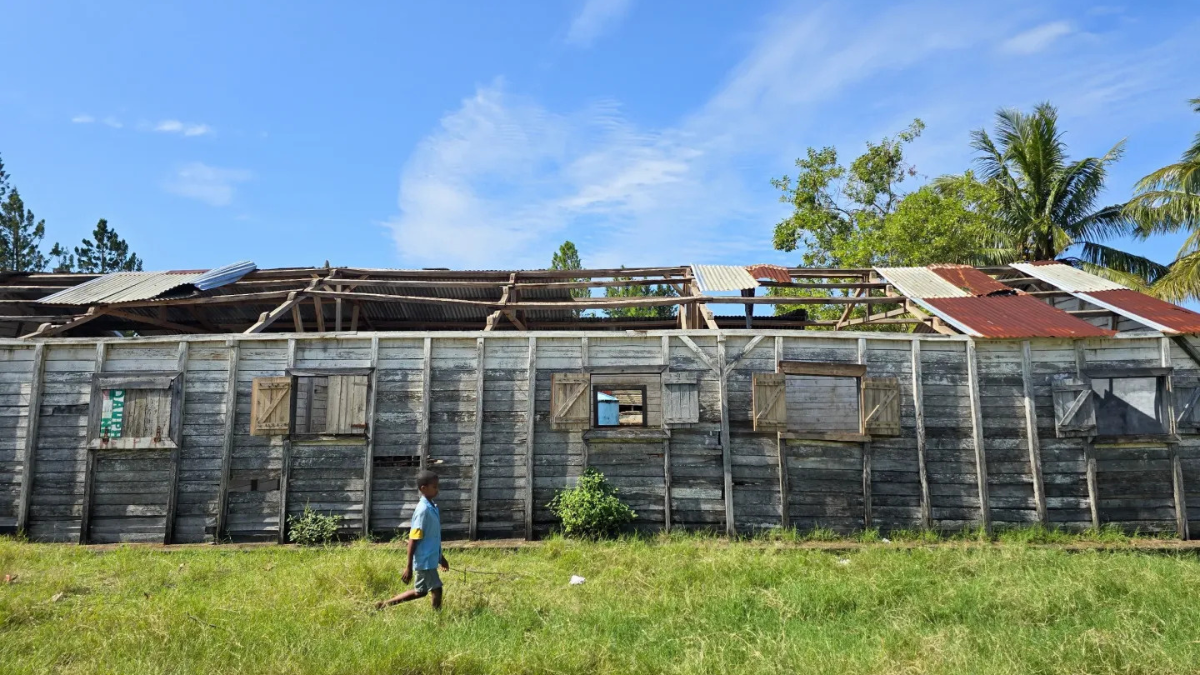
Climate-related disasters disrupted schooling for at least 171 million students worldwide in 2025, affecting one in every 10 school-age children, according to a new UNICEF report that warns of growing threats to learning, educational equality and future economic prospects.
The report, Learning Interrupted: Global Snapshot of Climate-Related School Disruptions in 2025, released on September 10, analysed data from 106 countries and territories. It found that storms, floods, heatwaves, droughts and wildfires caused school closures, shortened teaching hours, reduced attendance and shifts to remote learning.
The findings underline how climate change is emerging as a threat to educational continuity, particularly in countries where schools lack the infrastructure and resources to withstand extreme weather.
Storms and floods interrupt learning
Storms were the leading cause of climate-related school disruptions in 2025, affecting 109 million students globally. Floods affected at least 70 million, while heatwaves disrupted schooling for approximately 50 million children. These figures overlap and should not be added together as separate groups.
In Pakistan, severe monsoon flooding in August delayed the return to school for more than 28 million students. In Egypt, a powerful Khamsin wind-and-dust storm prompted a nationwide suspension of classes for one day, affecting more than 28 million students.
The problem extends beyond individual disasters. Forty countries experienced multiple rounds of climate-related school disruptions during 2025, exposing students to repeated interruptions throughout the academic year.
Floods can damage classrooms, sanitation facilities and learning materials, while extreme heat can make classrooms unsafe and undermine students’ ability to concentrate. Even after schools reopen, damaged infrastructure, disrupted transport and household financial pressures can prevent children from returning to regular attendance.
A growing threat to educational equality
Three-quarters of the students affected in 2025 lived in low- and lower-middle-income countries, where education systems often have fewer resources to prepare for disasters and restore teaching afterwards, UNICEF found.
The World Bank’s 2024 report, Choosing Our Future: Education for Climate Action, offers further evidence of the long-term challenge. It estimated that 400 million students globally experienced school closures due to extreme weather between 2022 and 2024. In affected schools in low-income countries, students lost approximately 45 instructional days between January 2022 and June 2024, compared with around six days in high-income countries.
These interruptions can compound existing educational disadvantages. Students from wealthier households may have access to private tutoring, digital devices and alternative learning arrangements. Children from poorer households may lack internet connectivity, electricity or suitable spaces to study during closures.
South Asia’s exposure highlights the challenge
UNICEF’s previous assessment, covering 2024, recorded at least 242 million students experiencing climate-related school disruptions across 85 countries and territories. South Asia was the most affected region, with 128 million students impacted. Heatwaves affected an estimated 171 million students worldwide that year.
India was among the countries affected by heat-related educational disruptions. In April 2024, extreme heat contributed to school interruptions across Bangladesh, Cambodia, India, the Philippines and Thailand, affecting at least 118 million children collectively. The figure represents the five-country group, not India alone.
The 2024 and 2025 totals should not be interpreted as a direct year-on-year decline. The reports covered different sets of countries and climate events, and the number of recorded disruptions depends on the incidents identified in each assessment.
Climate-resilient schools become a priority
UNICEF estimates that disruptions experienced in 2025 could cost affected students at least US$200 billion in lifetime earnings through lost learning and widening educational inequalities. This is a projection of potential future losses, rather than income already lost.
The World Bank has argued that relatively modest investments can help schools adapt. Its 2024 analysis estimated that a one-time investment of US$18.51 per child could help mitigate learning losses through measures such as improving classroom temperatures, strengthening school infrastructure and training teachers.
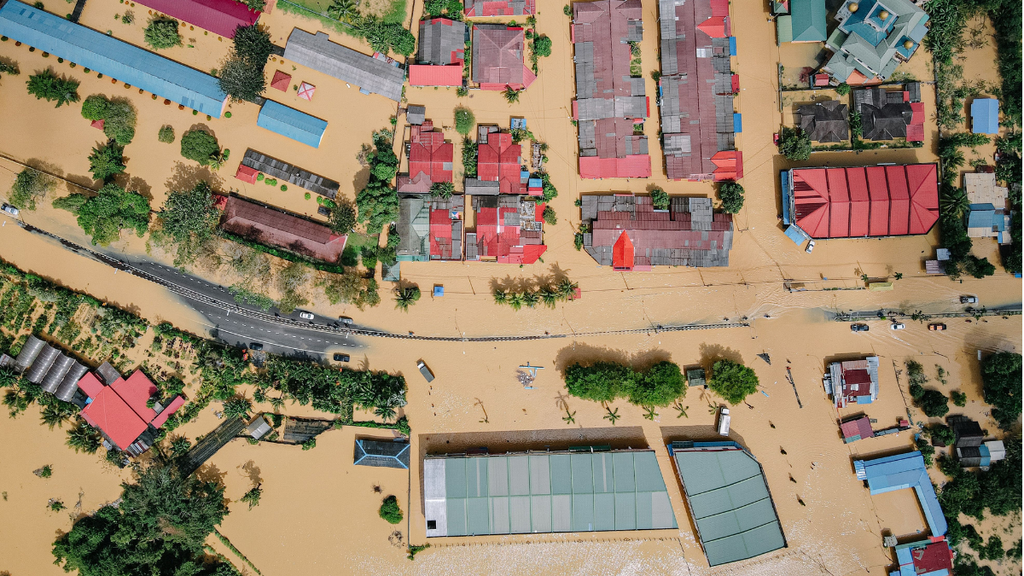
Aerial view showing significant flood damage in a residential neighborhood with inundated streets and homes.Image credit:Pexels
UNICEF is calling for climate resilience to be incorporated into education planning, alongside investment in stronger school buildings, emergency preparedness and systems that allow teaching to continue during disasters.
As extreme weather increasingly interrupts academic calendars, education systems must prepare not only to enrol children but also to protect their ability to learn. Climate-resilient infrastructure, early-warning systems and plans for educational continuity will be essential to ensuring that disasters do not deepen existing inequalities in access to education.
Society
Global Job Market Faces a Growing Inclusion Gap as AI and Digitalisation Reshape Work
Global employment faces a growing inclusion gap as AI and digitalisation reshape the labour market. UN and ILO reports highlight persistent informal employment, youth exclusion and unequal access to the skills needed for emerging jobs.

The global economy is undergoing a profound employment transition, driven by artificial intelligence (AI), digitalisation, demographic changes and the shift towards greener industries. Yet, while these forces are expected to create new career opportunities, access to employment and the benefits of technological progress remain deeply unequal, according to the United Nations’ World Social Report 2026.
Released on October 15, the report, published by the UN Department of Economic and Social Affairs (UN DESA), warns that billions of people remain excluded from the jobs, skills, infrastructure and social protections required to participate in economic transformation. Its findings highlight a central challenge for policymakers: creating employment opportunities is not enough unless people can access them and secure decent working conditions.
The scale of the problem is evident in the report’s latest figures. In 2025, 58 per cent of workers worldwide were informally employed, while 27 per cent of young women aged 15–24 were neither employed nor participating in education or training. An estimated 2.2 billion people also lacked internet access, limiting their ability to benefit from digital services, online learning and emerging employment opportunities.
More Jobs, but Unequal Opportunities
The challenge extends beyond unemployment to the quality and security of work. The International Labour Organization’s Employment and Social Trends 2026 report estimated that global unemployment would remain at 4.9 per cent in 2026, equivalent to approximately 186 million people. However, nearly 300 million workers continued to live in extreme working poverty, surviving on less than US$3 a day. The report also projected that 2.1 billion workers would be in informal employment in 2026, often without adequate social protection or employment security.
Young people face particular difficulties entering the labour market. According to the ILO, youth unemployment reached 12.4 per cent in 2025, while approximately 260 million young people were not in employment, education or training. For many, the transition from education to work remains uncertain, particularly where economies fail to generate enough productive jobs.
These challenges coincide with substantial changes in the kinds of jobs employers expect to need. The World Economic Forum’s Future of Jobs Report 2025, based on projections from more than 1,000 employers, estimates that technological, economic, demographic and green-transition trends could create 170 million jobs globally by 2030 while displacing 92 million. This would produce a net gain of 78 million jobs. However, the report warns that the transition will require extensive workforce adaptation. Nearly 40 per cent of workers’ existing skills are expected to change by 2030, and 63 per cent of surveyed employers identified skills gaps as a major barrier to business transformation.
The projections suggest that the central employment challenge is not simply whether jobs will disappear, but whether workers can move into emerging roles. Demand is expected to grow in areas such as AI, data analysis and cybersecurity, alongside essential occupations in healthcare, education and agriculture. Workers whose skills do not match changing requirements risk being excluded even as new vacancies emerge.
Digital Access and Skills Will Shape the Transition
Access to technology is another dividing line. The World Bank’s Digital Progress and Trends Report 2025 identifies disparities in connectivity, computing infrastructure, relevant data and digital skills as barriers to wider participation in the AI economy. While AI adoption is expanding, high-income countries continue to dominate important areas of AI innovation and computing capacity.

Representational image.Image credit:Pexels
For people without reliable internet access, affordable devices or opportunities to acquire digital skills, the shift towards online recruitment, digital services and AI-assisted work can deepen existing disadvantages. Connectivity alone, however, is insufficient: workers also need relevant training, accessible education and opportunities to apply their skills in productive employment.
The UN report argues that governments must invest in quality education, lifelong learning, digital and AI capabilities, affordable connectivity and stronger social protection. Labour-market policies must also support decent working conditions, equal opportunities and training that helps workers move between occupations.
For developing economies with large young populations, the stakes are particularly high. A growing workforce can support economic growth only when enough productive jobs are available and workers can acquire the capabilities those jobs demand. Without such opportunities, demographic potential can translate into prolonged unemployment, insecure work and widening inequality.


Indian-Belgian Team Develops Portable Detectors to Image Mountains and Monuments Using Cosmic Rays

India’s Clean Energy Research Funding Falls Short of Manufacturing Ambitions, Study Finds

Kashmir’s Traditional Rice Varieties Hold Genetic Clues to Climate Resilience

India Builds Synthetic Biology Capacity for Medicines and Industrial Production

India’s Green Cover Declined by 5.6 Percentage Points in 25 Years as Summer Heat Intensified: Study

Knowing When to Think for Ourselves: AI, Intuition and the Education of Discernment

After a Scorching Summer, Delhi’s Children Are Slow to Return Outdoors

Two Chemists Win Nobel Prize for Solving a Century-Old Puzzle: Why Life Picks One Hand Over the Other

Marshall Islands: Why the US Nuclear Legacy Is Back Before the UN

How Wind Turbines Could Produce More Power From the Same Wind

-

 Math3 months ago
The 2026 Fields Medals: Four Proofs, Four Decades-Old Problems Solved
-
EP Deep Dive: Data & Solutions3 months ago
After Kerala’s Deadliest Landslide, the Hardest Thing to Rebuild Was Childhood
-
EP Deep Dive: Data & Solutions4 months ago
West Asia Crisis: Can Kerala’s Returning Gulf Migrants Find a Future in the Green Economy?
-
Space & Physics5 months ago
India Semiconductor Mission: ‘It’s Not About Fabs. It’s About Building An Entire Ecosystem’
-
Interviews1 month ago
From Scams to Screens: How the National Stock Exchange Rewrote India’s Equity Story
-
Climate5 months ago
The Climate World Cup? How Climate Change Could Affect Player Performance at the 2026 World Cup
-
Society4 months ago
What Is Civilisational Diplomacy? Understanding India’s Newest Foreign Policy Tool
-
Society4 months ago
From Bell Labs to the Classroom: A Second Career in Teaching