EDUNEWS & VIEWS
Who Feeds School Children? The Women Behind School Meal Workforce
A global report finds women make up most school meal workers, with many unpaid. From Japan to India, school systems are taking different approaches to valuing their work.

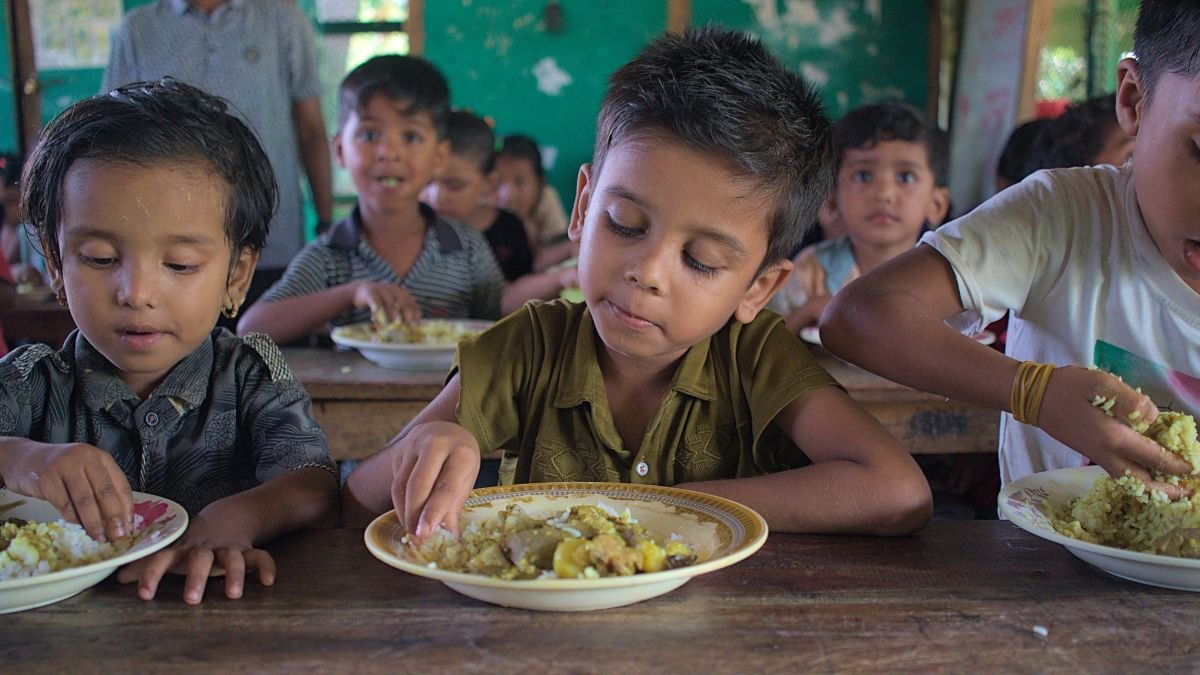
For 466 million children, a school meal depends on a workforce of about 7.4 million people who prepare, cook and serve it. Much of that work is done by women, yet the people behind the meal often remain outside the way school systems measure and value their workforce.
A global survey cited in a new report by the International Panel of Experts on Sustainable Food Systems (IPES-Food) found that in one out of every three school meal programmes, the majority of cooks and caterers are unpaid. At least three-quarters of these workers are women.
The finding places school kitchens within a much wider problem in food systems: work associated with feeding and caring for people is frequently treated as low-value labour, even when public services depend on it.
The Workforce Behind the Plate
Preparing a school meal involves much more than cooking. Food has to be procured, prepared in large quantities, cooked safely, portioned and served on time. Kitchens have to be cleaned and supplies managed. The work has to happen every school day.
Yet cooking and catering are among the jobs most closely associated with women’s unpaid responsibilities at home. The IPES-Food report estimates that women undertake 76% of unpaid care work globally. This includes cooking, cleaning, family caregiving and food provisioning. Women spend an average of 4 hours and 25 minutes a day on these activities, compared with 1 hour and 23 minutes for men.
That division follows women into paid employment. The report identifies cooks, cleaners and caterers as care-coded occupations that are overwhelmingly filled by women and systematically underpaid. School food brings this contradiction into a public institution. Work that would be recognised as labour in a factory or office can still be treated as an extension of domestic responsibility when it involves feeding people.
School Meals: Organised Differently
Countries have taken different approaches to the role of food and the people who prepare it. In Japan, shokuiku, or food education, places school caterers within children’s food learning. The role extends beyond preparing lunch and becomes part of how children understand food.
Brazil’s National School Feeding Programme, known as PNAE, incorporates feminist and agroecological principles. The IPES-Food report highlights the programme as an example of efforts to resist outsourcing and the intensification of school food work.
Kenya has focused on strengthening the role of workers and communities. Its School Meals Coalition has mobilised more than $24 million to support worker agency and community leadership. In South Korea, a grassroots coalition of civil society organisations campaigned for universally free and environmentally friendly school meals under public leadership.
The approaches differ, but they share an important feature: the school meal is treated as part of a public system rather than simply as a service that needs to be delivered at the lowest possible cost.
School Food Becomes a Contract
That distinction becomes particularly significant when school meals are outsourced. The IPES-Food report describes school feeding as a potential battleground for privatisation. Where school food jobs become better valued and salaries rise, they can become attractive targets for outsourcing.
The report cites global catering companies including Sodexo, Compass Group and Aramark and says outsourcing of school and university meal management has, in the cases it examines, been associated with job cuts and reductions in wages and benefits. The pressure to reduce the cost of a meal can therefore affect the person preparing it.
Catering unions, workers, parents and community groups have resisted this model in different places. The report points to growing recognition of locally controlled school meal programmes and their potential to keep care work within the public and community sphere.
This also changes what counts as an efficient school meal programme. A cheaper contract may reduce the visible cost of providing food, while shifting the pressure onto wages, job security and working conditions.
India’s Millions of School Meal Workers
India’s PM POSHAN programme provides one of the largest examples of a publicly supported school meal workforce. More than 24 lakh cook-cum-helpers work across the programme, with women making up more than 90% of them. The central government provides an honorarium of ₹1,000 a month for 10 months of the year, while states and Union territories can supplement the amount.
India’s cook-cum-helpers are not unpaid, so they should not be directly counted against the IPES-Food finding that the majority of cooks and caterers are unpaid in one out of three school meal programmes. Their employment arrangement is different: they receive an honorarium and are not regular school employees.
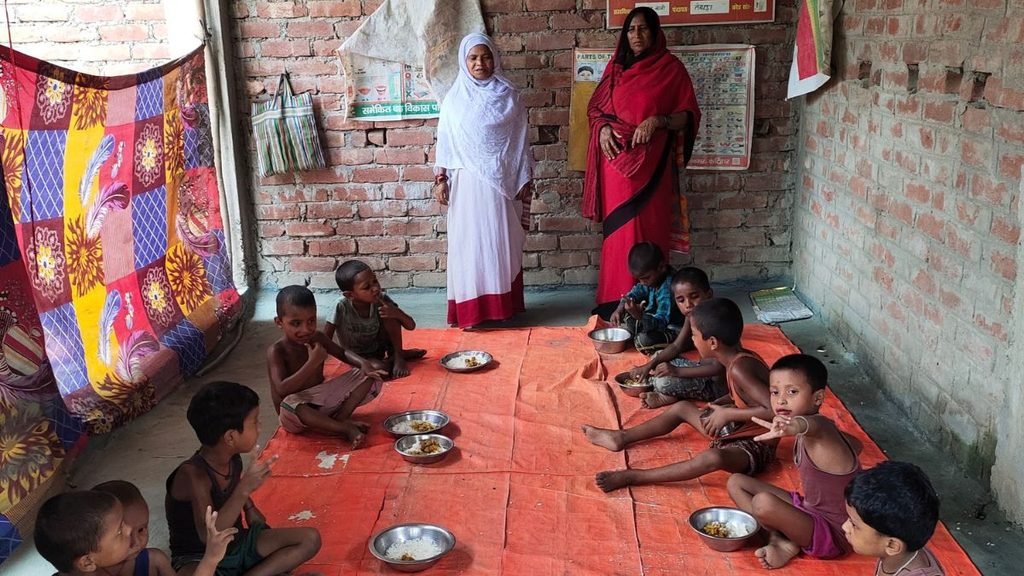
The scale of the workforce, however, shows why the question of how school food labour is valued matters. More than two million people, overwhelmingly women, are needed to prepare meals for children across the country. Their work is essential to the programme, but their employment status places them outside the regular teaching and administrative workforce that usually defines a school.
That gap between importance and recognition is visible across countries. Some systems have tried to build school meals into education, nutrition and community policy. Others have left the people doing the work in low-paid, unpaid or outsourced positions. For the children receiving the meal, the difference may be invisible. For the workers preparing it, it determines whether feeding children is recognised as a job with value, rights and protections.












The Sciences
Two Chemists Win Nobel Prize for Solving a Century-Old Puzzle: Why Life Picks One Hand Over the Other
The 2026 Nobel Prize in Chemistry goes to Henri Kagan and Kenso Soai for discoveries that explain how one mirror-image molecule can dominate.

EDUNEWS & VIEWS
Standing with Teachers: The People Who Shape India’s Future
Standing with teachers means supporting their professional growth, working conditions and role in shaping India’s future amid rapid technological change.

EDUNEWS & VIEWS
An Ageing Teacher Workforce Is Becoming a Recruitment Problem
An ageing teacher workforce is creating a recruitment challenge as older teachers approach retirement, young teachers leave and shortages persist in schools.
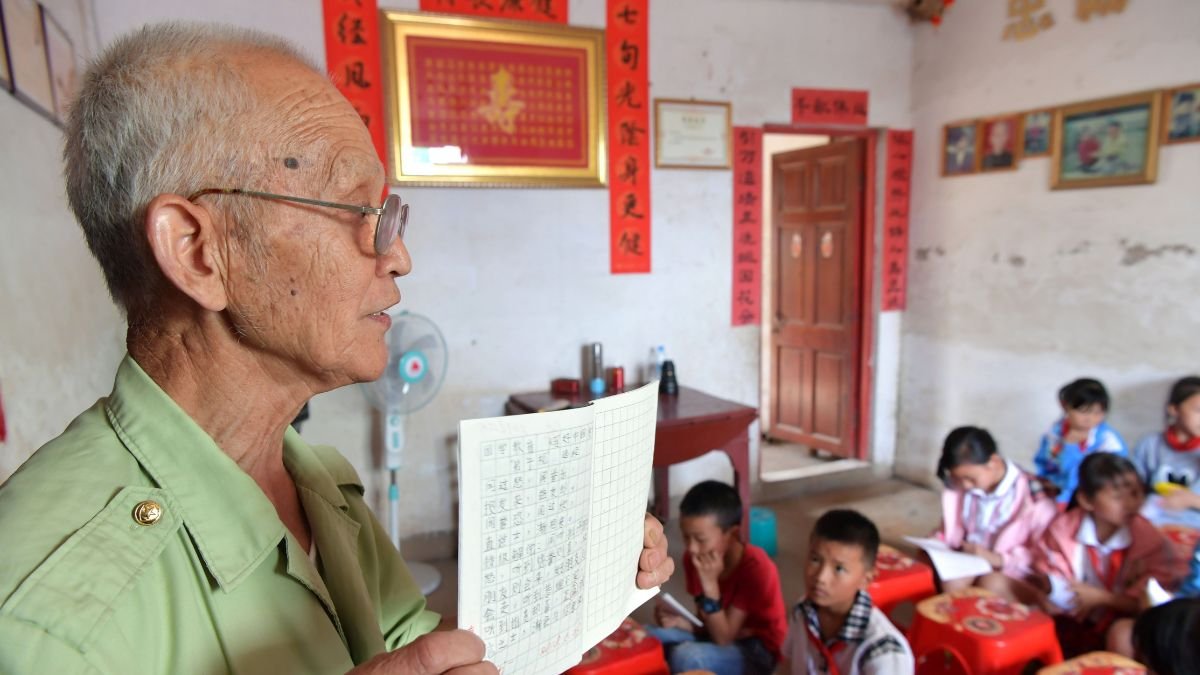
A teacher nearing retirement leaves behind more than an empty classroom. Finding someone with the right subject knowledge, qualifications and willingness to work in the same school can be much harder than simply filling a vacant post. That challenge is becoming more common as education systems grow older with less youngsters joining the teacher workforce. In Lithuania, 42% of primary and secondary teachers were aged 55 or older in 2024. The share was 38% in both Latvia and Estonia, 37% in Portugal and 33% in Greece.
The Organisation for Economic Co-operation and Development (OECD), a group of 38 countries that compares data and policies across areas including education, employment and the economy, is tracking this shift as part of a wider teacher recruitment problem.
Across OECD countries and partner economies, teachers aged 55 and above made up 23% of the teaching workforce in 2024, up from 20% in 2015. During the same period, the share of teachers under 35 fell from 23% to 22%. When experienced teachers retire, schools need qualified people ready to take their place. The problem is finding them is becoming difficult.
The Problem Bigger Than Empty Posts
A school can have a teacher shortage even when every classroom has someone standing in front of it. In 2024/25, 9.1% of primary and secondary teachers across OECD countries were not fully qualified. Around 4% of secondary teaching positions were unfilled at the beginning of the school year in both Latvia and Luxembourg.
The shortages are not spread evenly. Rural and remote schools, disadvantaged communities and subjects such as mathematics and natural sciences face particular difficulties in finding teachers. That makes an ageing workforce more complicated.
A teacher who retires from a mathematics classroom cannot simply be replaced by any available teacher. Schools need someone with the required subject knowledge and qualifications, and that person also has to be willing to work in that particular school or area.
Lithuania shows how these pressures can overlap. About 43% of its secondary teachers are already aged 55 or older. At the same time, its population aged 5 to 14 is projected to fall by 22% between 2024 and 2033. Fewer children may eventually mean fewer teachers are needed overall. But that does not guarantee that the teachers who remain will be in the right places or teach the subjects schools need

When Younger Teachers Leave?
There is another problem: bringing young people into teaching is only part of the challenge. Keeping them there matters too. Across countries and economies with available data, 6.4% of fully qualified primary and secondary teachers left the profession during the 2024/25 school year. Teachers with fewer than five years of experience accounted for more than one-third of resignations on average.
In some education systems, the share was much higher. Early-career teachers accounted for 77% of resignations in Israel, 69% in Austria, 66% in the French Community of Belgium and 64% in Luxembourg. The reasons vary. Workload, working conditions and the support available during the first years of teaching can influence whether new teachers remain in the profession.
And leaving a school does not always mean leaving education altogether. In Latvia, 12% of fully qualified teachers left the profession in 2024/25. But 37% of those who left moved into other jobs within the education sector. For schools, that still creates a recruitment problem. Experience may remain within education, but it is no longer necessarily available in the classroom where it is needed.
Fewer Children Do Not Solve the Shortage
There is a simple way to look at ageing populations: fewer children should eventually mean fewer teachers. The numbers show why that is not always enough. The population aged 5 to 14 across OECD countries is projected to decline by 9% between 2024 and 2033. Yet between 2015 and 2024, 17 of 40 countries with available data saw primary enrolment decline or remain broadly stable while their teaching workforce continued to grow.
Greece is a striking example. The number of primary students fell by about 12% between 2015 and 2024, but the number of primary teachers increased by 16%. The change was linked to decisions about class sizes, teachers’ working hours and instruction time. In other words, the number of children alone did not determine how many teachers schools needed.

The same issue appears at a local level. A village school may lose students but still need a mathematics teacher. A school serving a remote area cannot necessarily fill a vacancy simply because another school has surplus teachers. Where teachers are needed matters as much as how many are needed.
Teacher Workforce: The Indian Context
India’s teacher workforce is growing, but that does not mean teachers are available where they are needed. UDISE+ recorded 10.12 million teachers in 2024–25, up 6.7% from 2022–23. The national pupil-teacher ratio was 20:1 at primary level, 17:1 at upper primary, 15:1 at secondary and 23:1 at higher secondary.
State-level data tell a different story. NITI Aayog’s 2026 analysis recorded more than 2.08 lakh elementary teacher vacancies in Bihar, 80,341 in Jharkhand and 29,473 in Karnataka. India also had 1,04,125 single-teacher schools in 2024–25. Earlier UNESCO data cited by NITI Aayog showed that 89% of such schools were in rural areas. At secondary level, the national 15:1 ratio rose to 47:1 in Jharkhand and 37:1 in Maharashtra and Odisha.
This makes India’s missing age data significant. UDISE+ does not publish a nationally comparable share of teachers aged 55 and above. Without that information, it is difficult to estimate how many teachers are approaching retirement, which subjects and locations could lose experienced staff, or whether recruitment is keeping pace with potential exits.
The government has begun addressing the planning side of the problem. In July 2026, the Ministry of Education said states were being encouraged to use technology-based teacher requirement forecasting, while NITI Aayog has proposed a digital Human Resource Management Information System to track vacancies, transfers and postings. The four-year Integrated Teacher Education Programme is intended to strengthen the supply of new teachers.
The missing link is workforce forecasting that connects these measures. India needs to know not only how many teachers are in its schools, but their age, subject and location, and how many are likely to retire in the years ahead. That would allow states to anticipate vacancies and recruit for specific schools and subjects before shortages become visible in classrooms.


World Space Week 2026: How the Rocket Revolution Is Changing Space

Who Feeds School Children? The Women Behind School Meal Workforce

Artificial Intimacy: Sherry Turkle’s Warning About the Chatbot Age

Inside Gas Kitchens, Workers Face Heat as High as 50°C

Two Chemists Win Nobel Prize for Solving a Century-Old Puzzle: Why Life Picks One Hand Over the Other

From Scams to Screens: How the National Stock Exchange Rewrote India’s Equity Story

Aim for the Stars: Anjali Thomas’s Journey from a Small College in Kerala to the Frontiers of Medical Imaging
Two Chemists Win Nobel Prize for Solving a Century-Old Puzzle: Why Life Picks One Hand Over the Other

India’s AI Moment Rests on More Than Code

Marshall Islands: Why the US Nuclear Legacy Is Back Before the UN

-

 Math3 months ago
The 2026 Fields Medals: Four Proofs, Four Decades-Old Problems Solved
-
Climate2 months ago
After Kerala’s Deadliest Landslide, the Hardest Thing to Rebuild Was Childhood
-
Society3 months ago
West Asia Crisis: Can Kerala’s Returning Gulf Migrants Find a Future in the Green Economy?
-
Space & Physics4 months ago
India Semiconductor Mission: ‘It’s Not About Fabs. It’s About Building An Entire Ecosystem’
-
Interviews2 weeks ago
From Scams to Screens: How the National Stock Exchange Rewrote India’s Equity Story
-
Climate4 months ago
The Climate World Cup? How Climate Change Could Affect Player Performance at the 2026 World Cup
-
Society3 months ago
What Is Civilisational Diplomacy? Understanding India’s Newest Foreign Policy Tool
-
Society4 months ago
From Bell Labs to the Classroom: A Second Career in Teaching