Connect with us

EDUNEWS & VIEWS

Mumbai Leads India in Global Student City Rankings, Delhi Named World’s Most Affordable

Published

on

India : Student city ranking
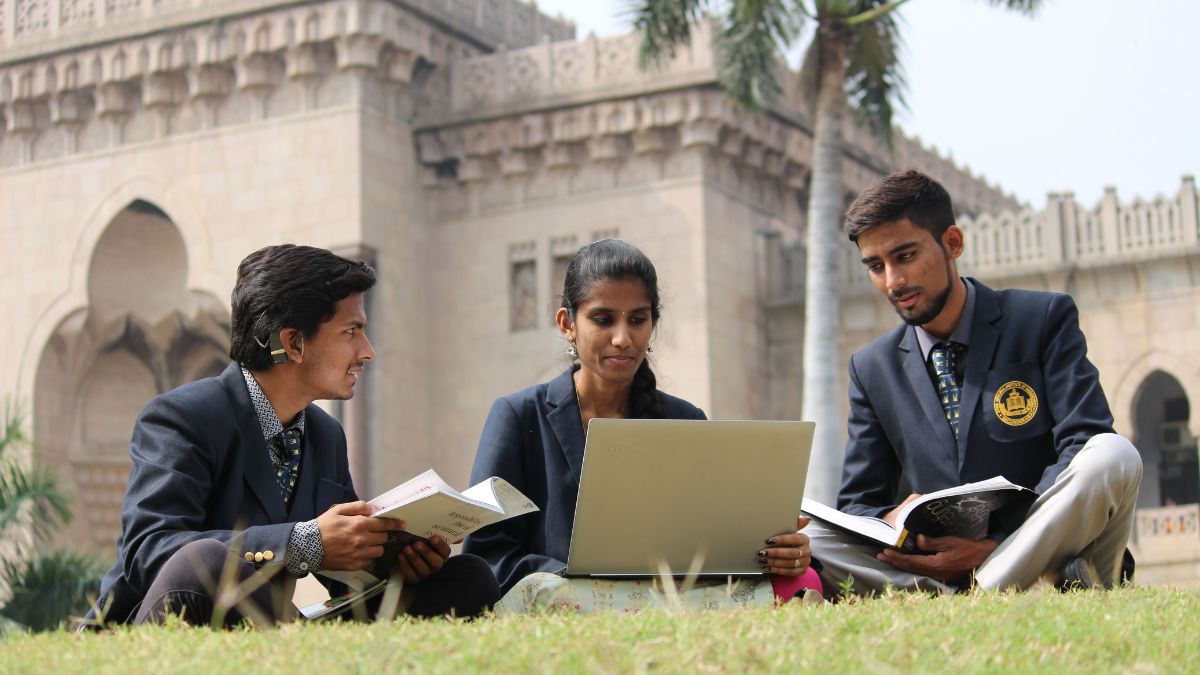
Students study together with books and a laptop on a university campus. Representational image. Image Credit: Kiran Pokury Photography

India’s higher education landscape is undergoing significant change. With the National Education Policy (NEP) 2020 aiming to make the country a global education hub, universities are expanding international partnerships and implementing academic reforms. Even as discussions around governance, funding and academic quality continue, the latest Student City Ranking by QS offers a timely assessment of how India’s leading student cities compare on the global stage.

Among the world’s 150 ranked student cities, Mumbai emerged as India’s highest-ranked city, climbing seven places to 91st globally. Delhi followed at 99th, but distinguished itself by being named the world’s most affordable city for students, reflecting India’s longstanding advantage of relatively low tuition fees and living costs.

The rankings assess cities across six indicators—university performance, employer activity, affordability, student mix, desirability and student views. To qualify, cities must have a population of more than 250,000 and at least two universities featured in the QS World University Rankings.

Student City Ranking: Affordability Remains India’s Strongest Asset

Delhi emerged as the world’s most affordable student city, with average annual international tuition fees of around US$2,700. Mumbai ranked 12th on affordability, while Bangalore and Chennai also featured among the world’s 30 most affordable student cities.

Indian cities also performed well on graduate employability. Delhi ranked 29th and Mumbai 34th globally for Employer Activity, suggesting that employers increasingly value graduates from institutions in these cities.

These findings complement broader improvements in India’s higher education system, which has seen a growing number of universities gain international recognition in recent years. They also align with the country’s efforts to strengthen its global academic presence through institutional reforms and international collaborations.

Global Competitiveness Remains the Main Challenge

While affordability remains a clear advantage, the rankings indicate that cost alone has not translated into greater international appeal. All four Indian cities ranked near the bottom globally on Student Mix, an indicator measuring the size and diversity of international student populations. Mumbai ranked 150th and Delhi 146th, highlighting the limited presence of overseas students on Indian campuses.

The student city rankings suggest that India has established a strong foundation through affordability and improving graduate employability. However, achieving its ambition of becoming a global education destination will likely depend on a broader set of factors, including research excellence, international partnerships, campus diversity, student support and a globally competitive academic environment.

EP Staff is the editorial team at EdPublica, an independent media organisation focused on science, education, environment and public policy. The team produces evidence-based news, features, explainers and analysis on issues that shape society and everyday life.

Learning & Teaching

Job Readiness for Students: 7 Career Sutras That Matter

Job readiness for students goes beyond a degree. These seven career sutras cover skills, adaptability, experience, confidence and career planning.


Dr. Vijayakumar Parameswaran Unnithan

Published

on

Job readiness for students goes beyond a degree.
Illustration: S James/EdPublica

Job readiness for students requires more than academic qualifications. These seven career sutras offer a practical guide to building skills, experience, adaptability and confidence for the transition from college to work.

College life is an exciting time. It is your chance to explore, learn, grow, and get ready for the future. Today’s workplace is changing rapidly, so a degree or qualification alone is not enough. Research on graduate employability consistently identifies transferable skills, career self-development and adaptability as important components of career readiness. Here are some guiding principles, or “sutras,” to help those still in college, or those just out of college and looking for work, get ready for their careers.

Sutra 1: Be a Learner First, a Job‐Seeker Later

The most important skill is learning how to learn. Studies show that employers look for graduates who can adapt, reflect, and manage themselves. Treat “how I learn” as a project. Ask yourself: What helps me focus? How do I review material? How do I handle tough topics?

  • See each assignment as more than just a task to finish. Think about how you got to your answer, what was hard, and what you might do differently next time.
  • Think of your degree or educational qualification as a starting point, not the end. At work, you will need to learn new tools, ideas, and technologies quickly. Recent studies highlight that being willing to keep learning is a key quality for getting hired.
  • Read deeply, not just quickly. Summaries, extracts, and quick explanations are everywhere now, and they can quietly replace the habit of sitting with a full article, a chapter, or a difficult argument long enough to actually work through it. What you read closely today becomes the vocabulary and the reference points you reach for later, in interviews, in writing, and in decisions. Treat at least some of your reading each week as something to sit with, not something to get through.

Sutra 2: Build Transferable Skills—Communication, Adaptability, Problem Solving & Teamwork

Many studies show that while technical knowledge is important, the skills that really make you stand out are useful in any job. For example, communication, teamwork, adaptability, and problem-solving are among the top skills employers worldwide look for.

  • Work on clear communication. Try writing emails, speaking in groups, or explaining your ideas to someone unfamiliar with the subject.
  • Look for team projects, either in class or outside, where you can practice working together, sharing roles, and solving disagreements.
  • Take on problems without clear answers, such as hackathons, case studies, or social issues. This helps you get used to uncertainty and think about how you solve problems.
  • Keep a journal about your skills. Write down when you worked in a team, what went well, what did not, and what you will try next time.

Sutra 3: Develop Digital and Contextual Awareness

Workplaces today are more digital, global, and often a mix of in-person and remote. It is not just about coding, but also about using digital tools, working remotely, and understanding different situations.

  • Get comfortable with at least one digital tool important to your field, such as collaboration software, data visualisation, or version control.
  • Stay curious about your field. What new technologies are coming up? How are organisations changing?
  • Try working on remote teams or giving virtual presentations. These are becoming normal, even for people just starting out.

Sutra 4: Create Meaningful Learning-Work Bridges

Doing well in your studies matters, but employers also want to see that you have linked what you learn to real-world experience. Research on work-integrated learning (WIL) shows it improves communication, professional attitude, transferable skills, and digital literacy.

  • Look for internships, short projects, volunteer work, or chances to work with industry, even if they are informal.
  • When you get real-world experience, take time to reflect. What was useful from your studies? What surprised you? What will you change next time?
  • Pick courses or extra credits that include industry projects, applied work, or client assignments. These experiences help you prepare for work.

Sutra 5: Cultivate Self-Efficacy, Adaptability & Career Agency

Skills matter, but you also need to believe you can use them, adjust when things change, and guide your own path. Research shows that confidence and adaptability are strong predictors of getting hired.

  • Grow your confidence by slowly taking on new roles. Try leading a small team, organising a campus or community event, or presenting your work in public.
  • Be open to feedback, mistakes, and changes. Being adaptable means you can switch direction when needed.
  • Take charge of your career story. Be ready to answer questions like “Why this field?”, “What do I offer?”, and “What kind of changes are happening in the field/s and how do I prepare myself?” Do not wait for someone to ask—practice saying it out loud.

Sutra 6: Align with Interests, Values & Purpose

Getting a job is just the start. It is also about growing, thriving, and finding work that matters to you. Skills are important, but so are purpose, ethics, and a sense of who you are as a professional. Studies show that students who reflect, connect their work to their values, and contribute to society often do better.

  • Take time to reflect often. What kind of work excites you? What is important to you in life and at work?
  • Pick activities or small projects that connect you to causes, communities, or challenges you care about.
  • Always keep ethics and professionalism in mind. How you act and your attitude toward others matter more than you might think.

Sutra 7: Design Your Launch Plan

You are getting close to starting your career. Now is the time to make a plan—not just to get a job, but to launch your career.

  • List the roles, industries, or jobs you want. What do job postings ask for? Compare your skills to what employers want—research shows there’s often a gap.
  • Set small goals. Update your CV/résumé or LinkedIn profile, complete a project or earn a certificate (nowadays, many free, useful courses are available online), talk to three alumni in your field, visit a company, or publish or present your work.
  • Keep track of your progress. Use your skills journal and review each month what you have done and what you plan to do next. This habit of thinking about your learning is linked to better employability.
  • Think of each class project, team meeting, internship conversation, hackathon, virtual presentation, or online collaboration as an encounter, not just an event to get through. An encounter is something you actually engage with, not something that simply happens to you while you wait for the next milestone. What separates two students with similar opportunities is often not the opportunities themselves but whether each encounter got noticed and recorded, or passed by unremarked. Your skills journal makes that noticing visible, and visibility is what makes it usable later.
  • Find one mentor you keep returning to, not just people you meet once. A single relationship you can bring your documented encounters back to, someone willing to ask harder questions than you would ask yourself, is worth more than a wide list of one-time contacts. Revisit that conversation on a regular rhythm, not only when something has gone wrong.
  • Grow your network. Go to industry talks, join student groups, and connect with mentors. Building relationships can open doors.

Final Thoughts

Moving from student to professional is not a straight path. It is more like a winding road where you try things, learn, adjust, and grow. By following these seven sutras, you build a strong base for employability—not just for your first job, but for a meaningful and lasting career.

There is a name for what this record becomes over time: Enacted Career Identity. Who you are professionally is not decided in advance or captured by the story you tell in an interview. It emerges through the encounters you choose, the work you pursue, and the experiences you keep documenting, year by year, until the pattern becomes recognisable as who you are. That is what makes the story in Sutra 5 worth believing: a field may carry little meaning on its own, but a documented trail of encounters can give it real significance.

The record also does more than support an interview answer. Read over time, it reveals the kinds of work that genuinely engaged you—not simply what you thought you should pursue—and can point towards the environments where you are most likely to thrive. It becomes evidence for further study too, showing a pattern of curiosity and choice that a transcript alone cannot. And revisiting it later can give new meaning to experiences that once seemed ordinary or difficult.

Start today. Every assignment, team project, and extra role is a chance to build your skills. With intention, reflection, and action, you will be ready when opportunities come your way.

Continue Reading

EDUNEWS & VIEWS

From Drones to Aircraft Maintenance: What India’s New WorldSkills Entries Say About the Future of Work

From drones to aircraft maintenance, India’s new WorldSkills categories offer a glimpse into how technology is reshaping jobs and skills across the country.
Published

on

Skilled worker operating industrial machinery during technical training
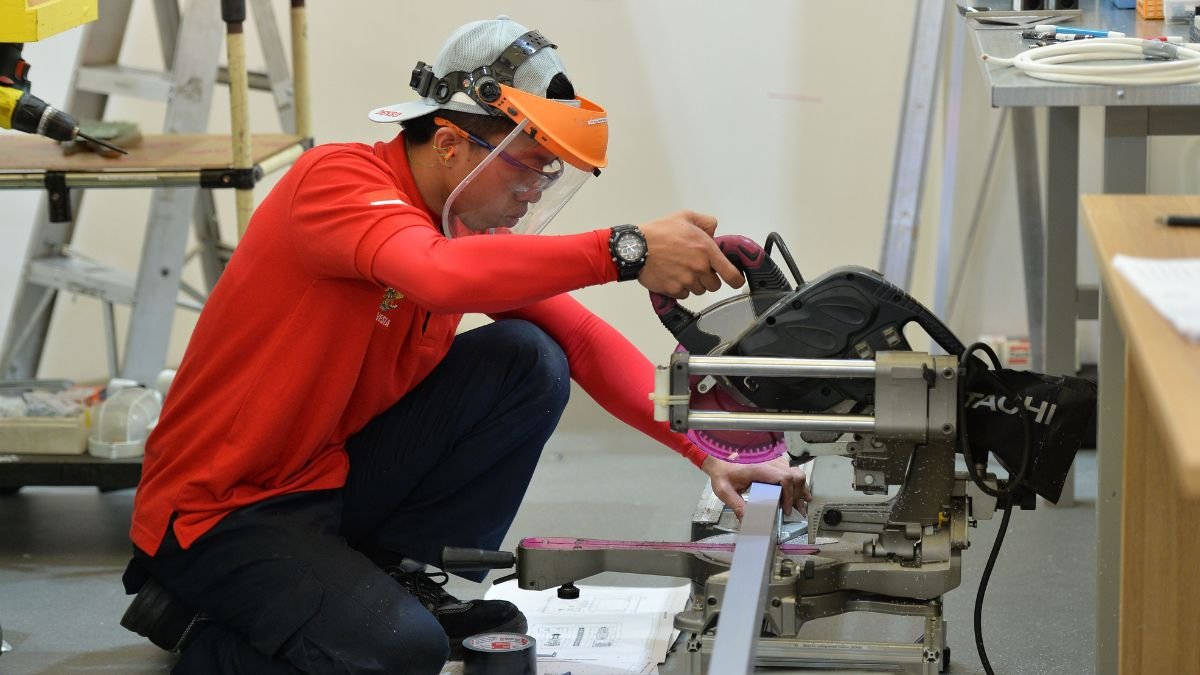
A skilled worker operates industrial machinery, reflecting the growing demand for specialised technical skills in a technology-driven economy. Representational image. Image credit: Lodi Joyo Siswanto/Pexels

What does a skilled worker look like in 2026? The answer is becoming harder to fit into the old categories. At the WorldSkills Competition in Shanghai this month, Indian competitors will take part in 63 of 64 skills. For the first time, India will enter 11 categories, including unmanned aerial systems, aircraft maintenance, intelligent security technology, software testing, optoelectronic technology and digital interactive media design. Nearly 70 competitors will represent the country.

The list is revealing. It includes jobs that sit at the intersection of several disciplines: mechanics and electronics, healthcare and precision manufacturing, software and quality assurance, aviation and advanced diagnostics. Drones are no longer simply flying machines; they are becoming tools in agriculture, infrastructure and public services. Security systems increasingly rely on sensors, AI-enabled surveillance and automated responses. Optoelectronics has applications ranging from healthcare to communications and advanced manufacturing.

For India, this raises a question that matters well beyond a competition in Shanghai: are the country’s workers being prepared for the jobs that industries are beginning to need?

A Different Kind of Skills Shortage?

India’s employment conversation often swings between two extremes—too few jobs for a large young population, and too few people with the skills employers want. Both can be true. The World Economic Forum’s Future of Jobs Report 2025 estimates that 63% of workers in India will require training by 2030. About 12% are not expected to receive the upskilling they need, representing more than 70 million workers.

The pressure is coming partly from technology. Indian employers expect AI and machine learning, big data and security-related roles to grow rapidly over the coming years. They also anticipate greater demand arising from developments in areas such as computing, semiconductors and quantum technologies.

But technological change does not create only jobs with “AI” or “data” in their titles. It changes the work done by people in existing occupations. An aircraft maintenance worker, for example, may now need to understand increasingly complex electronic and mechanical systems. Industrial technicians are working with machinery that requires more sophisticated diagnostics. Agricultural workers and infrastructure teams are beginning to use drones. Software products need people who can test them systematically before they reach users. That is reflected in the new WorldSkills categories.

The Technician is Changing Too

The popular image of the technology worker is still largely that of a programmer sitting behind a screen. India’s new skills list tells a broader story. Heavy Vehicle Technology requires advanced diagnostic, repair and maintenance capabilities. Industrial Mechanics involves precision assembly, troubleshooting and optimisation of complex machinery. Aircraft Maintenance demands expertise across mechanical, electrical, fluid and structural systems. Software Testing requires workers to examine whether digital products function reliably.

These occupations are not replacing technology with human labour. They are occupations being reshaped by technology. As machines become more capable, the people who install, maintain, inspect, test and troubleshoot them become more important too. A factory may become more automated, but somebody still has to understand what happens when an automated system stops working. A drone can collect agricultural data, but somebody has to operate it, interpret its output and deal with what the machine cannot.

The skills shortage, therefore, is not confined to India’s technology sector. It is spreading into the technical occupations that support a technology-heavy economy.

Degrees may not tell the whole story

There is a related change taking place in how employers think about talent. The World Economic Forum reports that around 30% of companies in India expect skills-based hiring including removing degree requirements—to help address talent shortages. Globally, that figure is 19%. For young workers, that could prove consequential.

A qualification still matters. But in occupations where technology changes quickly, employers also need to know what a person can actually do. Can they diagnose a machine? Test software? Work with a drone system? Maintain an aircraft? Operate sophisticated equipment safely? That is where vocational and technical education becomes relevant to India’s much larger employment question. The issue is not whether vocational training should compete with university education. It is whether young people have enough routes into specialised work—and whether those routes are connected to what employers actually need.

Professionals attend a business analysis training session for worldskills, highlighting the importance of upskilling for a changing job market.
Professionals attend a business analysis session as employers and workers adapt to the changing skills demands of the future of work. Representational image. Image credit: Pavel Danilyuk/Pexels

India’s WorldSkills preparation is being supported by training institutions, industry partners and domain experts, including organisations working across manufacturing, software, retail, heavy industry and dental technology. That industry connection may be more important than the competition itself.


What happens after the medals?

India’s performance at international skills competitions has improved considerably. It rose from 29th at WorldSkills in 2015 to 13th in 2024 and ranked eighth in Asia at WorldSkills Asia 2025. But medals are a narrow measure of a country’s skills capacity. The larger question is whether specialised training reaches beyond a relatively small group of competitors.

Can an ITI student in a smaller Indian city access training in technologies that employers will need five years from now? Can a worker already in a factory retrain when the machinery changes? Can training institutions update equipment and curricula quickly enough? And will employers pay a premium for the skills they say they cannot find?

Those questions matter because India’s demographic advantage depends partly on what happens to its workforce after people leave the classroom. The WorldSkills categories offer a useful snapshot of where some of that work is heading. They bring together aviation, healthcare, manufacturing, software, security and drones—fields that once belonged to separate training systems.

That may be the most interesting part of India’s participation in Shanghai. The future of work is not arriving as one new profession. It is appearing inside existing ones, quietly changing what a mechanic, technician, designer, tester or maintenance worker is expected to know.

For millions of young Indians entering the labour market, that shift may matter far more than who takes home a medal.

Continue Reading

EDUNEWS & VIEWS

If AI Can Explain Everything, What Is Left for a Teacher to Teach?

AI in education is changing the teacher’s role from delivering knowledge to developing critical thinking, ethical judgment and human skills.


Prof. (Dr.) Jyotsna Singh, Campus Director and Professor, NMIMS,

Published

on

AI in Education Is Changing What Teachers Need to Teach
As AI takes on the task of explaining and delivering knowledge, the role of the teacher is shifting towards critical thinking, mentorship and ethical judgment in higher education. Image credit: Kirubakaran Uthira Kumar/Pexels

AI in education is changing the teacher’s role from delivering information to developing critical thinking, ethical judgment, resilience and human connection. As AI becomes a powerful learning tool, teachers may become more important as mentors and guides.

Every few decades, technology forces higher education to step in front of an existential mirror. When search engines made the world’s information queryable in milliseconds, critics prematurely declared the traditional classroom obsolete. Today, as Generative AI (Artificial Intelligence) tools evolve from search interfaces into systems capable of explaining corporate finance models, writing complex code, and breaking down multi-variable calculus step-by-step, we face a far more provocative question: If AI can explain everything, what is actually left for a teacher to teach?

AI in Education Is Changing What Teachers Need to Teach

For decades, higher education was built on an implicit assumption that the teacher’s primary job was the delivery of content. The educator was the traditional authority figure holding access to knowledge and transmitting it to passive recipients. But if education is reduced merely to information delivery, AI will indeed render the traditional teacher redundant. As academic leaders navigating a multidisciplinary university environment, we know that information is not wisdom, and an explanation is not true understanding. As AI becomes a ubiquitous, hyper-efficient personal tutor, the role of the teacher is not shrinking; it is undergoing a profound and necessary elevation.

Generative AI models are exceptional at providing fast answers, but they are fundamentally indifferent to truth, context, and nuance. They synthesise probabilistic patterns rather than human meaning. In a time when students can produce a well-written study of a business case or legal precedent in a matter of seconds, the main responsibility of educators is to teach students how to evaluate answers rather than how to obtain them. In the era of artificial intelligence, critical thinking is now about rigorous investigation rather than knowledge retrieval. Instructors must teach students how to analyse AI outputs, including how to spot algorithmic bias, find logical fallacies, confront minute errors, and comprehend the moral trade-offs and human costs associated with important choices. An algorithm cannot match the human mind’s ability to navigate ambiguity, which is necessary to develop this level of critical judgment.

Higher education is also a very emotional and social process. Vulnerability is necessary for learning; a pupil must first own their ignorance in order to acquire new information. While an AI can adjust to a student’s cognitive tempo, it is unable to recognise the faint spark of inquiry in a quiet seminar room, read the exasperation on a student’s face, or detect a sudden lack of confidence before a significant presentation. Teachers work as mentors, fostering character, ethical responsibility, and resilience. They foster collaborative environments where leadership thrives, set an example of sensitivity, and encourage discussion among peers who hold different opinions. A machine can outline the technical concepts of corporate governance or bioethics, but only a human mentor can instil the moral compass required to lead responsibly in an unpredictable world.

If AI can explain the what and the how, the teacher remains the master of the why.

Instead of replacing teachers, AI presents a unique opportunity by relieving them of repetitious explanations and mundane administrative duties. Teachers might recover their primary role as learning architects by delegating foundational drills and basic synthesis to automated technologies. Project-based challenges, real-world simulations, and interdisciplinary discussions where human collaboration is unavoidable are replacing passive lectures in forward-thinking educational institutions. In order to help students identify their unique skills, intellectual interests, and sense of agency, they concentrate on posing open-ended questions that lack tidy, algorithmic solutions.

As we evaluate the future of our educational institutions, we should not view AI as a competitor to the teacher, but as a clarity-enforcing mirror. If AI can explain the what and the how, the teacher remains the master of the why. As technology democratises access to knowledge at an unprecedented scale, the human touch in education becomes more valuable, not less. The future belongs not to machines that hold all the answers, but to human beings who can think critically, act ethically, collaborate empathetically, and lead with purpose. Guiding young minds to that destination is something only a teacher can do.

Continue Reading

Trending