Sustainability
Sharing Over Shopping: How Kerala’s Swap House Is Modelling a Different Way to Consume
Discover how Maradu Swap Shop in Kerala is promoting sustainable living by encouraging reuse, reducing waste and building a community-driven circular economy.

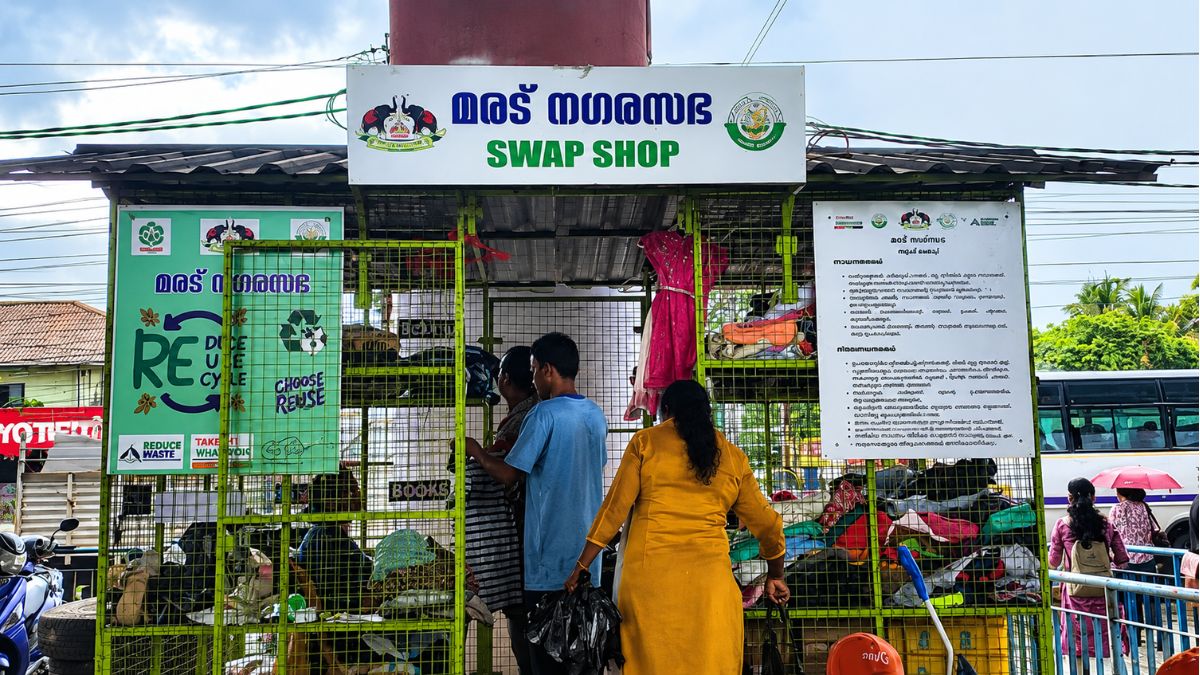
Maradu, Kerala, India — There is a Swap Shop beneath a highway flyover in this small municipality in southern India where nothing has a price. There are no tags, no billing counters and no advertisements. Instead, from 9.30 a.m. to 5.30 p.m. every day, people arrive carrying books they’ve finished reading, toys their children have outgrown, furniture that no longer fits their homes, and appliances that still work but are no longer wanted. By closing time, many of these items have found new owners, for free.
This is the Swap Shop, an initiative run by the local municipal government in Maradu, part of the Kochi metropolitan area in the southern Indian state of Kerala. It was inaugurated on May 28, 2026.Residents donate usable household items, and anyone who needs them can take them home at no cost.
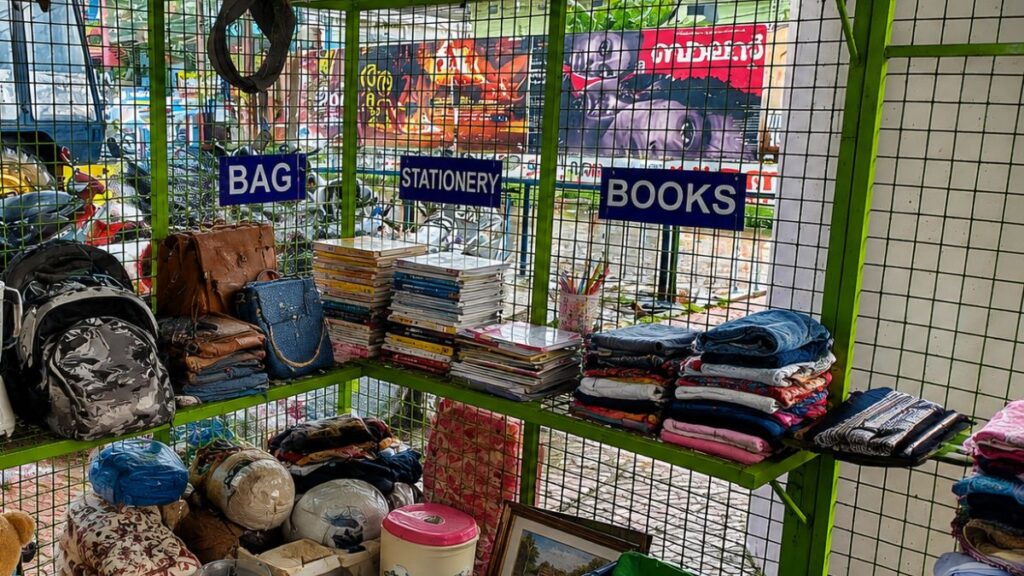
Throughout the day, a steady stream of visitors passes through carrying clothes, toys, books, kitchen utensils, school supplies, furniture and electronics. Some come to give; others come to receive. People travel from towns like Kalamassery, Aluva, Pukkattupady, well beyond Maradu’s own boundaries to use the centre, making it a resource for a much wider community than the municipality it belongs to. Every donation and collection is logged in a register kept by the municipal office — a simple system built on accountability and trust rather than money.
Swap Shop Giving Everyday Objects a Second Life
The shelves at the Swap Shop tell small, ordinary stories: a baby cradle no longer needed because the child has grown; school textbooks that have served their purpose; a television replaced by a newer model; furniture left behind by a family moving house.
Elsewhere, these items might have ended up discarded or gathering dust in storage. Here, they usually find a new owner within days.
Beevi, who manages the centre daily, says that transformation is the most rewarding part of the work.
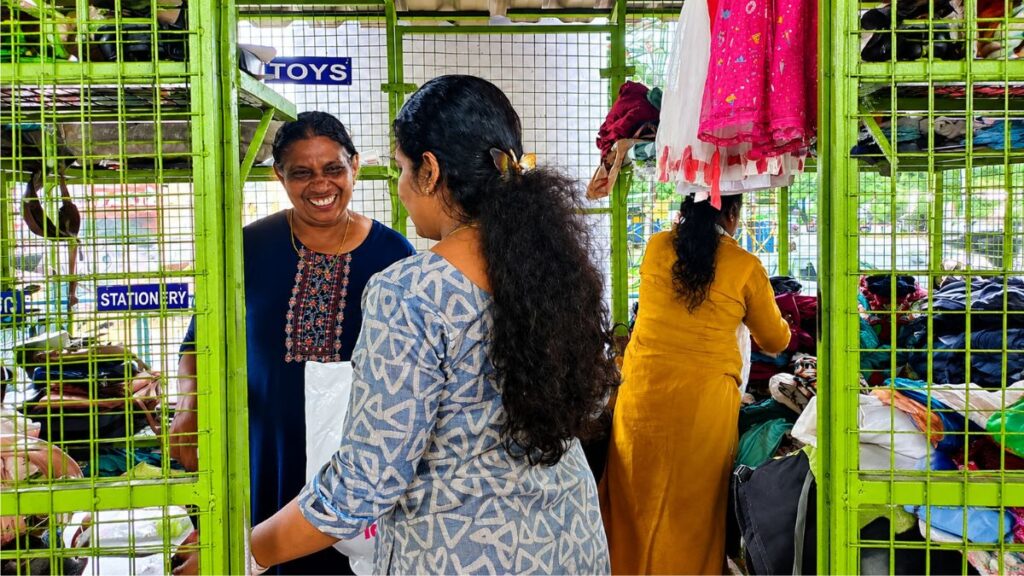
“Many people burn or throw away items they no longer need. Through this initiative, those things reach the people who can actually use them. In the hands of someone who needs them, everything has value,” she says. “Many families have benefited from it, and we continue to receive enquiries from people who want to donate or collect items.”
Part of a Bigger Waste Problem
The Swap Shop sits within a much larger challenge facing Kerala, a state of roughly 35 million people on India’s southwestern coast. Kerala has spent recent years overhauling its waste management systems, an effort that gained urgency after a major fire broke out in 2023 at Brahmapuram, one of the region’s largest waste dumping sites, near Kochi. The blaze burned for days and blanketed the city in smoke, becoming a flashpoint in the debate over how the state handles its garbage.
According to Kerala’s government-run Solid Waste Management Project, the state generates about 3.7 million tonnes of municipal solid waste a year, roughly 10,000 tonnes a day. Of that, large cities contribute around 1,415 tonnes daily, smaller municipalities like Maradu produce 4,523 tonnes, and rural village councils generate a further 4,106 tonnes.
Handling that volume requires more than better collection and processing systems. It requires reducing how much waste is generated in the first place, which is the gap initiatives like the Swap Shop are designed to fill. Environmental groups describe this approach as part of a “circular economy”: a model in which products are kept in use for as long as possible through sharing, repair and reuse, rather than being discarded and replaced.
A European Idea, Adapted Locally
Ajitha Nandakumar, the elected chairperson of Maradu Municipality, says the concept was inspired by community swap centres she had come across in several European countries.
“It follows a give-and-take policy. It promotes sustainability while helping reduce solid waste. Instead of throwing away usable items, people can donate them, and someone else who needs them can use them,” she says.
For the municipality, the Swap Shop is not just a waste-reduction tool. it’s also an attempt to shift how residents think about consumption. In a market where replacing an item is often cheaper and easier than repairing or sharing it, the Swap Shop offers a quiet alternative: a school bag, an iron, or a dining table doesn’t stop being useful just because one household no longer wants it.
Kochi’s broader sustainability push has largely focused on large infrastructure, waste treatment plants, cleaner public transport systems, and similar projects. But this small building beneath a flyover is a reminder that community-led, low-cost initiatives can play just as meaningful a role.
For the people who walk through its doors each day, an object’s worth isn’t measured by its age or its price tag, but simply by whether it can still be used.
Maradu is a municipality within the Kochi metropolitan area in the Indian state of Kerala









Sustainability
India Captures 5.7% of Global Greenfield Investment, Outpacing China
India accounted for 5.7% of global greenfield investment between 2020 and 2025, more than double China’s share. UNCTAD data highlight the concentration of investment in AI infrastructure, semiconductors and energy-transition technologies.

Sustainability
The Climate Problem Hiding in Your Kitchen Bin
Food waste sent to landfills can generate methane as it decomposes without oxygen, adding to greenhouse gas emissions and the climate crisis.
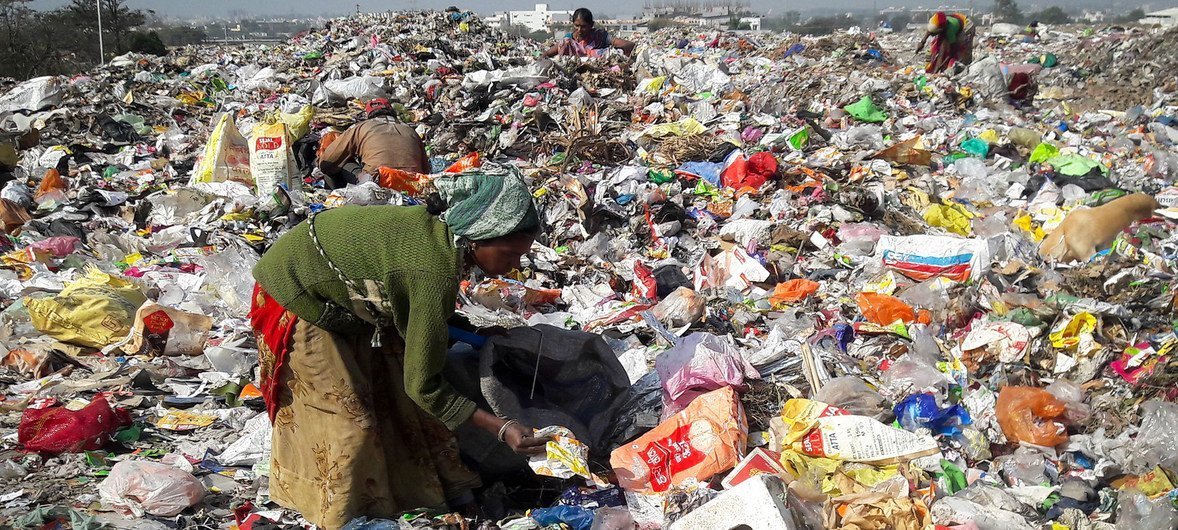
Every day, more than one billion meals go uneaten around the world. What appears to be a problem of excess food, poor planning or household waste is also becoming a climate problem, as discarded food can generate methane when it decomposes in landfills.
Global food waste reached an estimated 1.05 billion tonnes in 2022, accounting for nearly one-fifth of all food available to consumers at the retail, food service and household levels, according to the United Nations Environment Programme (UNEP) Food Waste Index Report 2024.
Households accounted for about 60 per cent of this waste, highlighting how everyday food consumption is closely connected to the global climate challenge.
How wasted food becomes a climate problem
Food waste becomes particularly problematic when it is sent to landfills. Buried beneath layers of other waste, organic matter decomposes in oxygen-poor conditions. Microorganisms then break it down and release methane.
Methane is a far more powerful heat-trapping gas than carbon dioxide over shorter periods. The UN estimates that methane traps about 86 times more heat than carbon dioxide over a 20-year period.
Landfills are therefore an important source of human-caused methane emissions. In the United States, municipal solid waste landfills are the third-largest source of human-related methane emissions.
The scale of food waste also means that the climate impact begins long before food reaches a landfill. Food that is never eaten still requires land, water, energy and other resources to produce, process, transport and store.
The Food and Agriculture Organization (FAO) estimates that around 1.4 billion hectares of agricultural land ,roughly 28 per cent of the world’s agricultural land is used to produce food that is ultimately lost or wasted.
Food waste can also contribute indirectly to deforestation because agricultural expansion remains a major driver of forest loss. Wasting food therefore means wasting the land and natural resources used to produce it.
Cutting waste could deliver faster climate benefits
The climate implications are significant, but methane’s relatively short atmospheric lifetime also presents an opportunity.
Unlike carbon dioxide, which can remain in the atmosphere for centuries, methane breaks down much faster. Cutting methane emissions can therefore produce climate benefits within decades.
“At a time when the world is searching for practical ways to slow warming quickly, tackling food waste may be one of the most immediate and cost-effective climate solutions available,” said Martin Krause, Director of the Climate Change Division at UNEP.
The Food Waste Breakthrough initiative aims to halve food waste by 2030 and could reduce methane emissions by up to 7 per cent.
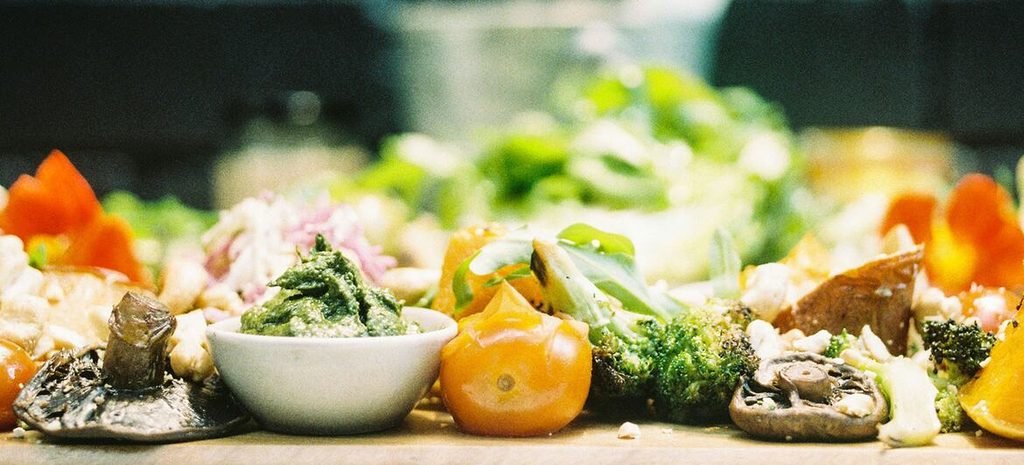
Food waste represents a major environmental threat .Image credit: Unsplash/Simon Peel
Several countries are already attempting to reduce waste before it reaches landfills. Brazil has introduced national plans focused on reducing food and organic waste, while UNEP is working with authorities, schools, communities and food businesses in Rio de Janeiro to reduce food waste.
In Kenya, a UNEP-supported initiative is recovering surplus food from across the agricultural value chain and redirecting it to early childhood education centres in underserved communities.
What happens to unavoidable food scraps?
Preventing food waste is the most effective way to avoid methane emissions. But food scraps that cannot be prevented can also be managed differently.
When organic waste is separated from other rubbish and composted in oxygen-rich conditions, it does not produce methane in the same way as food buried in an anaerobic landfill environment.
This approach is being promoted in several African countries, where organic material makes up more than half of municipal solid waste. Eleven governments, with support from the UNEP-convened Climate and Clean Air Coalition, have committed to incorporating waste pickers into formal waste-management systems and training them to sort and compost organic waste.
Another emerging approach uses black soldier flies. Their larvae consume organic waste, allowing food scraps to be converted into useful biomass. The approach is already being used in waste-management systems in countries including Uganda and Malawi.
A climate solution hiding in the bin
Global efforts to tackle food waste have gained momentum, but progress remains insufficient. The world is still far from meeting the Sustainable Development Goal of halving per-capita food waste by 2030.
More than 60 countries have also pledged, through the Declaration on Reducing Methane from Organic Waste, to cut waste-sector methane emissions by 30 to 35 per cent below 2020 levels by 2030.
For consumers, the climate connection can begin with something as simple as buying only what is needed, storing food properly and using leftovers.
“Every meal rescued, shared or never wasted is food put to better use. It is also methane avoided,” Krause said.
The message is straightforward: reducing food waste is not only about saving food. It is also about reducing the methane released when that food becomes rubbish and slowing warming in the process.
Earth
Hunter Valley Coal Mine Gets Approval to Run to 2045. What Does It Mean for Australia’s Climate Transition?
Australia’s Hunter Valley coal mine has been approved to operate until 2045, raising questions about how the extension fits into the country’s transition towards lower emissions and its net-zero target.
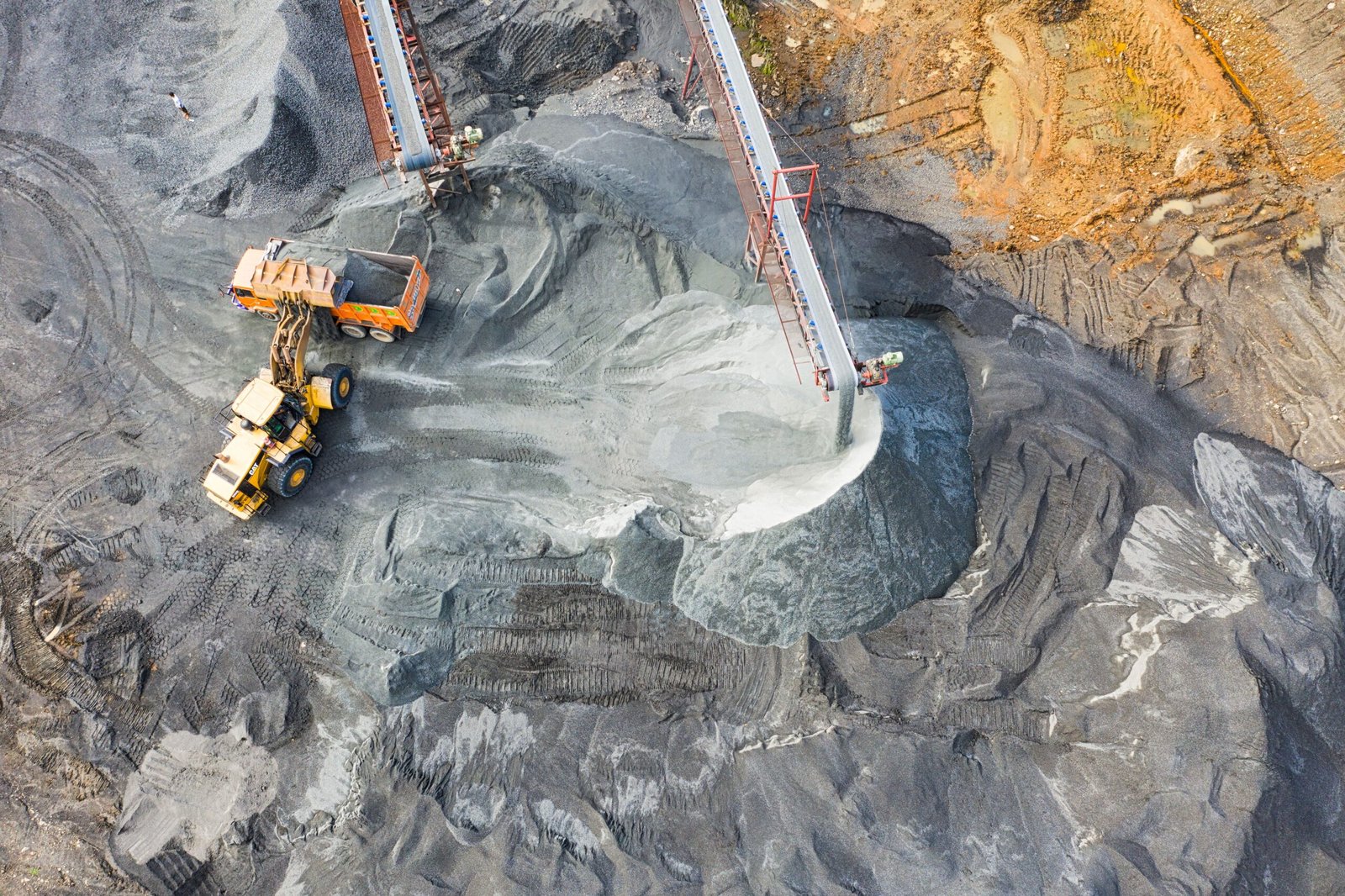
Australia’s transition away from fossil fuels faces a new test after New South Wales approved the continuation of the Hunter Valley Operations (HVO) coal mine until 2045.
The NSW Independent Planning Commission (IPC) on September 30 approved the continuation of HVO North until the end of 2045 and HVO South until the end of 2042. The project would allow an estimated 429 million tonnes of coal to be extracted from the Hunter Valley near Singleton.
The decision is significant not only because of the scale of the mine, but because it extends a major coal operation into the period in which Australia is committed to sharply reducing its greenhouse-gas emissions.
Australia’s current climate commitments include cutting national emissions by 43 per cent from 2005 levels by 2030 and by 62–70 per cent by 2035, with net-zero emissions targeted for 2050.
The latest government inventory estimates Australia’s emissions at 452.4 million tonnes of carbon dioxide equivalent in the year to June 2026, a preliminary 1.8 per cent decline from the previous year. Emissions in the year to March 2026 were 25 per cent below 2005 levels.
Against that backdrop, the IPC acknowledged that the HVO project would have a substantial climate footprint. Its statement of reasons estimates that the project could result in about 809 million tonnes of greenhouse-gas emissions from local mining operations and the eventual combustion of exported coal overseas. The commission said those emissions would contribute to climate impacts in the Hunter, NSW and globally.
The 809-million-tonne figure needs an important qualification to note. it is a lifecycle-related estimate that includes overseas combustion emissions and should not be interpreted as emissions produced directly by the mine.
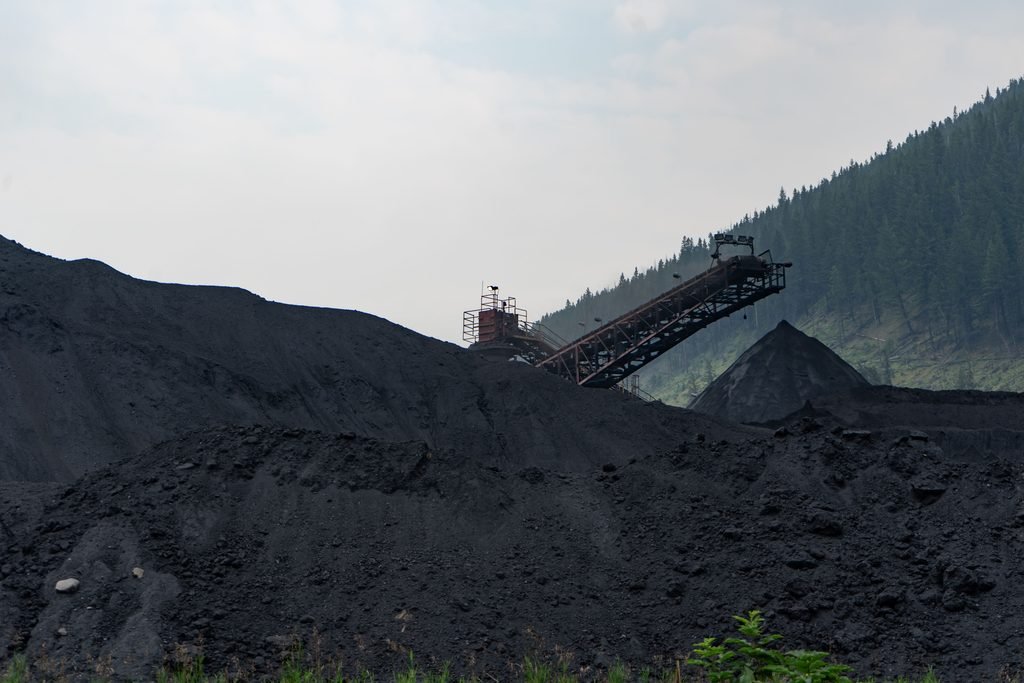
Coal mine.Representational image.Image credit:Pexels
The economic case for the extension is substantial. HVO employs more than 1,500 people and engages more than 800 suppliers, according to evidence presented to the IPC. The NSW Government says the continuation could secure up to 1,500 ongoing jobs and create about 600 temporary positions through infrastructure upgrades, subject to federal approval.
The approval also comes with conditions intended to address the mine’s emissions and its eventual transition. HVO must prepare a Scope 3 Management Plan dealing with emissions associated with exported coal, maximise renewable electricity use at the mine and purchase additional carbon offsets. It must also prepare a comprehensive closure plan within 12 months, in consultation with local councils and communities, outlining how the mine will transition towards closure while supporting workers and the local economy.
The NSW Government argues that the decision can support regional employment while maintaining the state’s broader emissions-reduction pathway. It says the approved proposal has 43 per cent lower Scope 1 emissions than the company’s 2022 application. NSW’s 2026–50 coal policy also allows extensions of existing mines while ruling out applications for new greenfield coal mines.
At the national level, the federal Safeguard Mechanism is intended to reduce emissions from Australia’s largest industrial facilities. The government says the mechanism is designed to put covered facilities on a trajectory consistent with the country’s 2030 target and net-zero goal.
That creates the central question around HVO’s extension. How does Australia manages the economic and employment role of existing coal regions while reducing emissions over the same period.
The NSW approval does not settle that question. The project still requires approval from the Australian Government under the Environment Protection and Biodiversity Conservation Act.
For the Hunter Valley, the decision provides a longer operating horizon for an established coal industry. For Australia’s climate transition, it brings the challenge of managing an economy in which existing fossil-fuel assets continue operating while national policy seeks progressively sustainable energy and lower emissions.


Greece Passes Social Media Ban for Children Under 15

Istanbul Floods Reveal How Climate Change and Urbanisation Combine to Raise Flood Risks

Nepal’s 4.7 Billion Flood Recovery Bill Dwarfs UN Climate Fund Allocation

India–Poland to Pursue Joint Research in AI, Semiconductors and Quantum Technology

Climate Disasters Disrupted Schooling for 171 Million Students in 2025, UNICEF Finds

Knowing When to Think for Ourselves: AI, Intuition and the Education of Discernment

After a Scorching Summer, Delhi’s Children Are Slow to Return Outdoors

Two Chemists Win Nobel Prize for Solving a Century-Old Puzzle: Why Life Picks One Hand Over the Other

Marshall Islands: Why the US Nuclear Legacy Is Back Before the UN

How Wind Turbines Could Produce More Power From the Same Wind

-

 Math3 months ago
The 2026 Fields Medals: Four Proofs, Four Decades-Old Problems Solved
-
EP Deep Dive: Data & Solutions3 months ago
After Kerala’s Deadliest Landslide, the Hardest Thing to Rebuild Was Childhood
-
EP Deep Dive: Data & Solutions4 months ago
West Asia Crisis: Can Kerala’s Returning Gulf Migrants Find a Future in the Green Economy?
-
Space & Physics5 months ago
India Semiconductor Mission: ‘It’s Not About Fabs. It’s About Building An Entire Ecosystem’
-
Interviews1 month ago
From Scams to Screens: How the National Stock Exchange Rewrote India’s Equity Story
-
Climate5 months ago
The Climate World Cup? How Climate Change Could Affect Player Performance at the 2026 World Cup
-
Society3 months ago
What Is Civilisational Diplomacy? Understanding India’s Newest Foreign Policy Tool
-
Society4 months ago
From Bell Labs to the Classroom: A Second Career in Teaching