Sustainability
Smarter AI, Lower Power Bills? Study Says Flexible Data Centers Could Cut Energy Costs
A new MIT study finds flexible data center energy use could reduce electricity costs, ease pressure on power grids and reshape AI’s energy footprint.

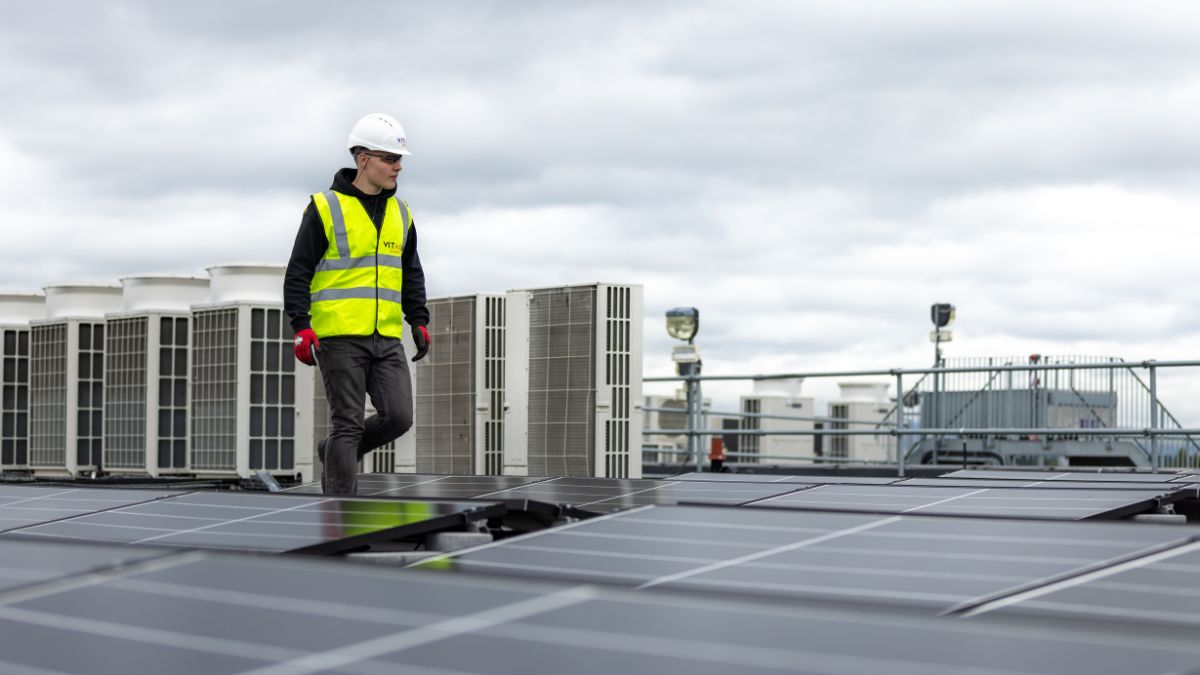
Data center energy use could become cheaper and more efficient if AI facilities shift electricity consumption to off-peak hours, according to a new MIT study that highlights both economic and environmental trade-offs.
As artificial intelligence fuels a rapid expansion of data centres around the world, concerns are growing over how much electricity these facilities will consume—and whether power grids can keep up.
A new study by researchers at the Massachusetts Institute of Technology (MIT) suggests there may be a way to ease the pressure. Rather than consuming electricity around the clock at fixed rates, data centres could shift a significant portion of their energy use to off-peak hours, lowering electricity costs while making better use of existing grid capacity.
The findings, published in the journal iScience, indicate that if data centres adopt more flexible electricity consumption patterns, average power system costs could fall by as much as 5 per cent in Texas, 4 per cent in the Mid-Atlantic region and 2 per cent across western U.S. states.
Data Center Energy Use: Flexible Data Centers Could Reduce Energy Costs
The researchers modelled how expanding data centres would affect electricity grids in three regions that are expected to host about 82 per cent of U.S. data centres by 2030: Texas, the Mid-Atlantic and the Western Interconnect, which covers 11 western states.
Their simulations found that shifting at least one-fifth of a data centre’s electricity use away from peak-demand periods could reduce overall system costs. In some cases, as much as half of a facility’s energy demand would need to be moved to quieter periods of the day.
“The key with data centers is: How can we add them to the network without adding a lot to our peak usage?” said Christopher Knittel, economist at the MIT Sloan School of Management and co-author of the study, in a media statement.
“One way for data centers to do that — to add to average usage but not the peak usage — is if they provide some grid flexibility during those high-cost periods. And that’s what we’ve been interested in understanding.”
The researchers note that most data centres already have some operational flexibility because they typically run below full capacity. Instead of carrying out energy-intensive computing tasks during periods of peak electricity demand, many could shift those operations to midday, when solar power generation is often highest and overall demand is lower.
AI Growth Is Putting Pressure on Power Grids
The rapid expansion of AI has dramatically increased demand for computing infrastructure, raising questions about whether electricity grids can support hundreds of new data centres without driving up costs or emissions.
The study suggests that adding more data centres does not automatically translate into higher electricity prices. Because much of the cost of running a power grid comes from fixed infrastructure such as transmission lines, increasing electricity use can spread those costs across a larger customer base—provided peak demand does not rise at the same pace.
“It’s really just math,” Knittel said.
“There are two dimensions that data centers have to make decisions about. One is how much of their load in any one time period is flexible. And two, how many hours, plus or minus, can they move that computation?”
Flexible Data Centers May Have Different Climate Impacts
The environmental picture is more complex.
The researchers found that the projected growth in data centres by 2030 could significantly increase carbon dioxide emissions if electricity demand is met through fossil fuels. Compared with a scenario without new data centres, emissions could rise by 58 per cent in Texas, 20 per cent in the Mid-Atlantic region and 24 per cent in the western United States.
However, the impact varies depending on how regional electricity systems generate power.
In Texas, where wind energy accounts for a large share of electricity generation, shifting data-centre operations to times when renewable energy is abundant could reduce carbon emissions by as much as 40 per cent.
In contrast, the Mid-Atlantic region presents a different picture. There, flexible electricity use could unintentionally keep coal-fired power plants operating for longer periods.
“When data centers provide some flexibility in that latter scenario, the data centers actually move hours to when sun and wind energy production is slowing, and that allows a coal plant to stay on,” Knittel observed. “So it doesn’t necessarily attract more renewable investment. It attracts more coal investment.”
Policy Could Shape the Future of AI Infrastructure
The researchers argue that flexibility alone is unlikely to become common unless governments and grid operators create incentives for companies.
“That’s why we have policy,” Knittel said.
One option would be to allow data centres that agree to flexible electricity use to connect to the grid sooner.
“One big concern about these data centers now is how long it takes for them to connect to the grid,” Knittel said. “One way to provide flexibility now is what’s called ‘connect and manage,’ which is, connecting you faster to the grid if you agree to provide flexibility. Tech firms would take that deal. They would rather connect a year earlier, and throttle down computation a few hours a day, than to have to wait. We do this with power plants too.”
He added that industry-wide rules would help address competitive concerns.
“Tech companies say they won’t provide flexibility alone. But if everyone in the industry has to, it’s okay.”
Balancing AI Growth With Sustainable Energy
As governments and technology companies race to build the computing infrastructure needed for the AI era, the study suggests that when data centres consume electricity may prove to be as important as how much they consume.
The researchers conclude that smarter scheduling of electricity demand, combined with supportive public policy, could lower power system costs while reducing pressure on electricity grids. At the same time, the study highlights that the environmental benefits of flexible energy use will depend on how individual regions generate electricity, reinforcing the need for location-specific energy planning.










Climate
The Giant Steel Gates Guarding the Netherlands from the Sea
The Maeslantkering is the Netherlands’ giant movable flood barrier, protecting Rotterdam and South Holland while keeping one of Europe’s busiest ports open.

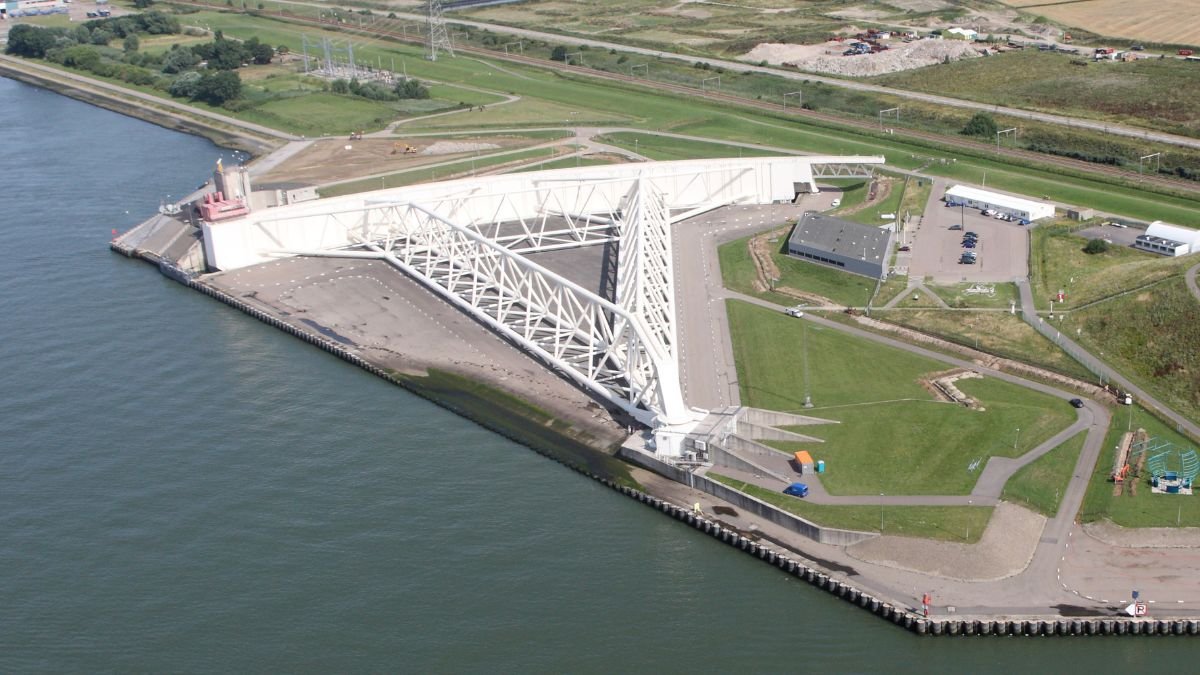
The Maeslantkering uses two enormous movable steel gates to protect Rotterdam and South Holland from extreme storm surges while keeping the river open to ships.
Imagine a wall of water rising from the sea, threatening to flood low lying towns, farmlands, and entire cities. Now picture two massive steel arms, each as long as the Eiffel Tower, floating out from the riverbanks to join together and hold that water back.
This is not a scene from a movie. It is a real piece of infrastructure spanning the Nieuwe Waterweg river channel near Hoek van Holland in the Netherlands. Known as the Maeslantkering, or the Maeslant Barrier, it is the largest movable flood barrier on Earth. For more than three million people living in South Holland, including the port city of Rotterdam, these steel gates are the main defense against extreme ocean storms.
Maeslantkering: Why the Netherlands’ Giant Flood Barrier Matters
Why the Dutch Built a Gate Instead of a Wall The Netherlands has managed water for centuries, as nearly a third of the country sits below sea level. After a devastating North Sea flood in 1953, the Dutch government built a vast network of dams, dikes, and storm surge barriers across the country, known as the Delta Works.
However, the river route leading to Rotterdam created a practical problem. Rotterdam is home to Europe’s largest and busiest seaport. Blocking the river permanently with a fixed dam was impossible because cargo ships need round the clock access. The initial plan was to build higher earthen dikes along the riverbanks. But as engineers examined future sea level projections, they realized standard dikes would have to be enormous. Building them meant demolishing historic neighborhoods and disrupting communities for decades.
The solution was a different approach altogether: a storm surge barrier that stays open during normal weather to keep shipping lanes clear, but swings shut when severe storms approach.
How the Gates Work
The mechanics of the Maeslantkering are straightforward in design, but huge in scale. The barrier relies on two hollow steel gates parked in dry docks on opposite sides of the river.
When a major storm hits, hydraulic engines push the gates out into the waterway, where they float like barges until they meet in the middle. Once aligned, valves open and the gates fill with river water. As they gain weight, they sink onto a concrete bed built into the river floor.
The operation of the Maeslantkering relies heavily on automation. The entire closure process is directed by a specialized computer system called the Decision Support System, known by its Dutch acronym BOS
As the gates lower, water rushes underneath them at high speed. This natural currents sweep away sand and silt so the structures rest flat against the riverbed without getting stuck on sediment. When the storm passes and ocean levels drop, pumps empty the water from inside the gates. The buoyant structures float back up and swing back into their docks, reopening the river to maritime traffic.
Automated Controls with Human Oversight
The operation of the Maeslantkering relies heavily on automation. The entire closure process is directed by a specialized computer system called the Decision Support System, known by its Dutch acronym BOS.
The software constantly monitors weather forecasts, incoming tides, and river flow rates. If calculations show water levels will rise 3 meters above normal in Rotterdam, the system initiates the closure process automatically. Leaving the trigger to software removes the risk of human delay or miscalculation during a sudden storm emergency.
Even with automation running the system, human engineers remain on site. Whenever severe weather threatens the coast, a technical team monitors the operations from a nearby control room, ready to take manual control if a system fault occurs.
Balancing Ships, Farms, and Rising Tides
Closing the barrier stops all ship traffic into Rotterdam, so shutting the gates is never done without cause. The barrier only closes during major storm events, though engineers run a routine test closure every September to keep the machinery and operational teams prepared.
As sea levels change and seasonal river flows shift, the Maeslantkering remains a critical piece of Dutch water management. It demonstrates how civil engineering can function alongside natural waterways, protecting millions of residents while keeping an essential trade route open to the world.
Sustainability
Solar Power Is Bringing More Electricity to Indian Farms. But What About the Water Beneath Them?
India’s solarisation drive is giving farmers more reliable and affordable electricity for irrigation. But as solar pumps expand, a new concern is emerging: could easier access to power accelerate groundwater extraction in regions where aquifers are already under stress? Evidence from Rajasthan and Gujarat suggests the answer depends on how solar irrigation is designed and managed.
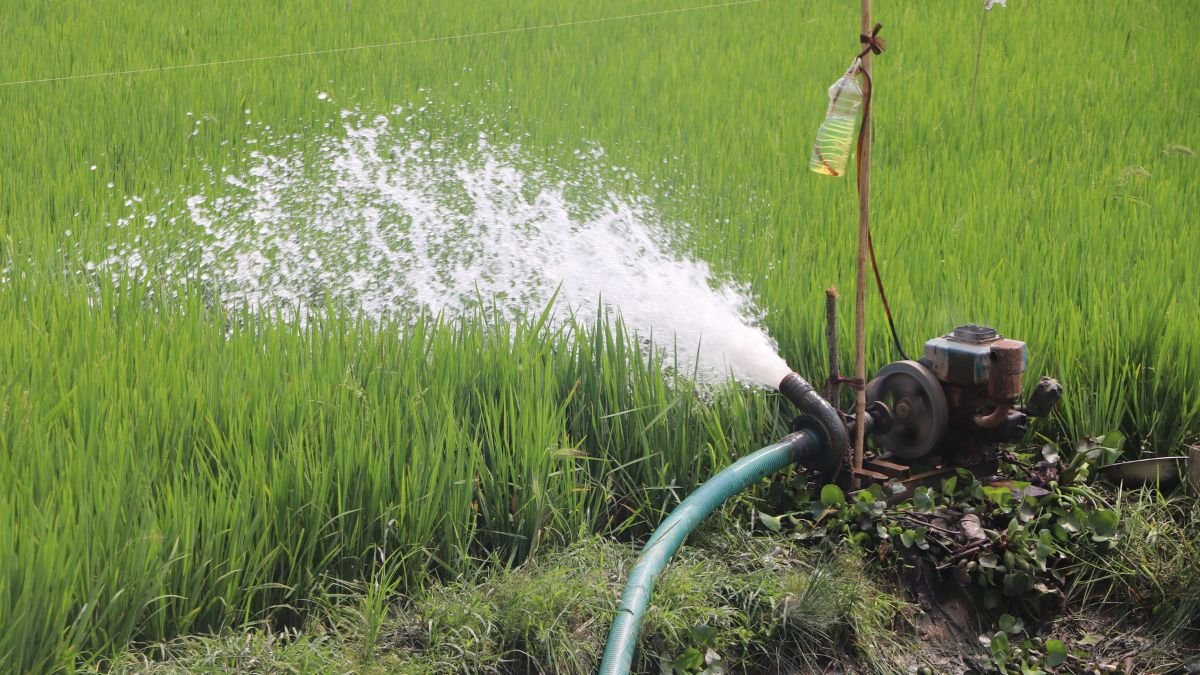
For years, electricity has been one of the biggest uncertainties in Indian farming. Farmers dependent on groundwater have often had to work around limited power supply, run diesel pumps or wait for electricity to arrive at odd hours. Solarisation is changing that equation. Through the Centre’s PM-KUSUM scheme, agricultural pumps are being converted to solar power and entire agricultural feeders are being solarised. The aim is to provide farmers with more reliable daytime electricity, reduce diesel use and lower the cost of agricultural power.
The change is significant. By 2025-26, around 25 lakh agricultural pumps had been installed or solarised under PM-KUSUM, while the programme had added 7.67 GW of solar capacity during the year. For a farmer, a solar pump can mean fewer hours spent waiting for electricity and greater control over irrigation. But there is a complication. Much of India’s irrigation already depends on groundwater. If solar power makes pumping cheaper and more reliable, farmers may have fewer reasons to stop pumping.
That creates a difficult question for India’s clean-energy transition: Can giving farmers more electricity to pump water also accelerate the depletion of the water they depend on? The answer is not a simple yes. Evidence from different parts of India shows that solarization can increase ground water extraction in some circumstances, while well-designed systems can also encourage farmers to use less water.
The difference lies in the incentives.
When the Energy Constraint Disappears
India has an enormous agricultural groundwater economy. About two-thirds of the country’s irrigation depends on groundwater, while India has an estimated 23 million agricultural pumps. Around three-quarters of these pumps are electric, according to recent research on solar irrigation.
For decades, electricity availability and the cost of pumping have acted as constraints on groundwater extraction. Solar pumps can weaken those constraints. Once the initial investment is made, the cost of running a solar pump is considerably lower than continuously buying diesel. In areas where electricity is subsidised, solarisation can similarly reduce the financial cost associated with irrigation.
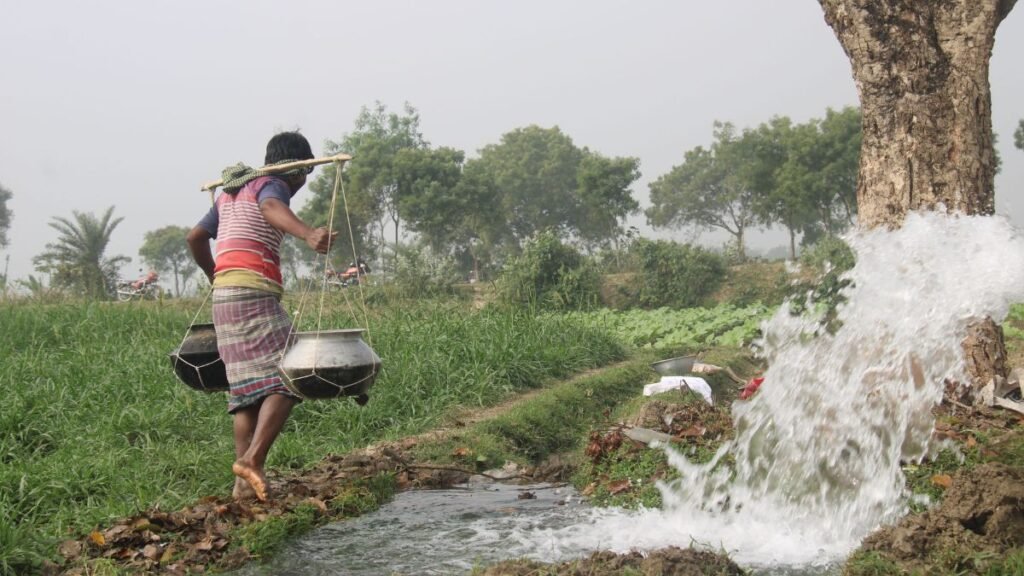
That can be good news for farmers. It can also encourage them to irrigate more land, grow additional crops or pump water for longer periods. Research from Rajasthan provides some evidence of this effect.
A study of 414 farmers across six districts found that solar-pump adoption increased groundwater consumption by 16–39% in Jaipur and Sikar. At the same time, farmers benefited from lower energy costs and higher farm incomes. The finding is important because it shows that groundwater depletion does not necessarily result from farmers making an environmentally harmful choice. They may simply be responding to a new economic reality. If irrigation becomes cheaper, using more water can make financial sense.
The Groundwater Problem is Already Severe
Solarisation is also arriving at a time when several parts of India are already extracting groundwater faster than their aquifers can sustainably provide it. The 2025 national groundwater assessment estimated India’s annual extractable groundwater resource at 407.75 billion cubic metres. Annual extraction stood at 247.22 billion cubic metres, putting the country’s overall stage of groundwater extraction at 60.63%.
But the national average hides the severity of the problem in several states. In 2025, the stage of groundwater extraction was estimated at: Punjab: (156%), Rajasthan: (147%), Haryana: (137%), Tamil Nadu: (74%), Uttar Pradesh: (70%), Karnataka: (66%) A figure above 100% indicates that annual groundwater extraction exceeds the state’s annual extractable groundwater resource.
At the national level, 730 of 6,762 groundwater assessment units were classified as over-exploited in 2025. This is why the location of a solar pump matters. A pump installed in an area with a healthy aquifer is not equivalent to one installed in a region where groundwater levels are already falling.
Rajasthan Offers a Warning
Rajasthan illustrates the tension particularly clearly. The state had a groundwater extraction stage of 147% in 2025. At the same time, it has become one of India’s major beneficiaries of solar irrigation programmes.
But it would be misleading to directly attribute Rajasthan’s groundwater crisis to solar pumps. Groundwater depletion in the state has deeper roots: intensive agriculture, rainfall variability, water-intensive cropping and decades of groundwater dependence all play a role. The significance of solarisation is different.
It can potentially remove one of the constraints on further extraction. The Rajasthan study found that solar-pump adopters increased groundwater consumption in some districts while also seeing substantial economic gains. In districts that had previously relied heavily on diesel, diesel consumption fell sharply after solar-pump adoption.
This is the paradox at the heart of the solar irrigation story. The technology can simultaneously make farming more sustainable in energy terms and less sustainable in water terms.
Gujarat Shows How Outcome can be Different
There is another side to the story. Research from Gujarat has found that solarisation does not necessarily lead to more groundwater extraction. A 2026 study examined grid-connected solar irrigation pumps in Anand and Botad, two areas with different aquifer conditions. In Anand, farmers using solar pumps actually used 556–608 mm less irrigation water than the comparison group across the two years studied. The reason is crucial. Farmers with grid-connected solar pumps could sell surplus electricity to the grid.
That creates a different economic calculation. Instead of using every available unit of electricity to pump water, a farmer has a financial incentive to conserve electricity—and therefore potentially water—and sell the surplus.
The same study found no significant difference in irrigation water use between solar and non-solar farmers in hard-rock Botad, where water availability itself was a stronger constraint. The lesson is not that solar pumps are either good or bad for groundwater. It is that the policy surrounding the pump determines much of the outcome.
The Missing Link: Energy Policy and Water Policy
India has already acknowledged the groundwater risks associated with solar irrigation. PM-KUSUM guidelines restrict the installation of new standalone solar pumps in groundwater-depleted areas identified as dark zones. In such areas, solarisation of existing electric pumps is subject to conditions including the adoption of micro-irrigation.
But the scale of India’s solarisation means that groundwater considerations cannot remain a safeguard attached to individual schemes. They need to become part of the planning process itself. That means asking three questions before expanding solar irrigation in a region:
How much solar capacity is being installed? How much groundwater is available? How much additional water could that energy make it possible to extract? Those questions are particularly important in states such as Punjab, Rajasthan and Haryana, where groundwater extraction is already above the annual extractable resource.
Solarisation could also be used to change farmers’ incentives rather than simply increase their pumping capacity. Electricity buyback, efficient irrigation, crop diversification and groundwater monitoring could make conserving water financially attractive.
The Transition Below the Ground
India needs more clean electricity in rural areas. Solar power can reduce diesel dependence, improve the reliability of agricultural power and give farmers greater control over irrigation. Those are real gains. But electricity and water are not separate systems on a farm.
The same solar panel that produces clean energy can power a pump drawing hundreds of litres of groundwater from an aquifer. Whether that becomes a problem depends on how much water is available, what crops are being grown, how efficiently water is used and what incentives farmers face.
The evidence from Rajasthan suggests that cheap solar pumping can increase groundwater use. The evidence from Gujarat suggests that a different policy design can encourage farmers to conserve water instead. So the question for India’s solarisation drive is no longer simply how many pumps can be solarised.
It is whether the country can make sure that the electricity transition above the ground does not quietly deepen the water crisis below it. India may have solved part of its rural power problem. The next challenge is making sure the solution does not come at the cost of its aquifers.
Technology
Indian School Students Develop Waste-Based Material for Affordable Prosthetics
Reviv3D, developed by three Bengaluru school students, combines recycled plastic, bagasse and basalt to explore a more affordable and sustainable material for prosthetic technology. The innovation won the global finals of Monash University’s Change It Challenge.
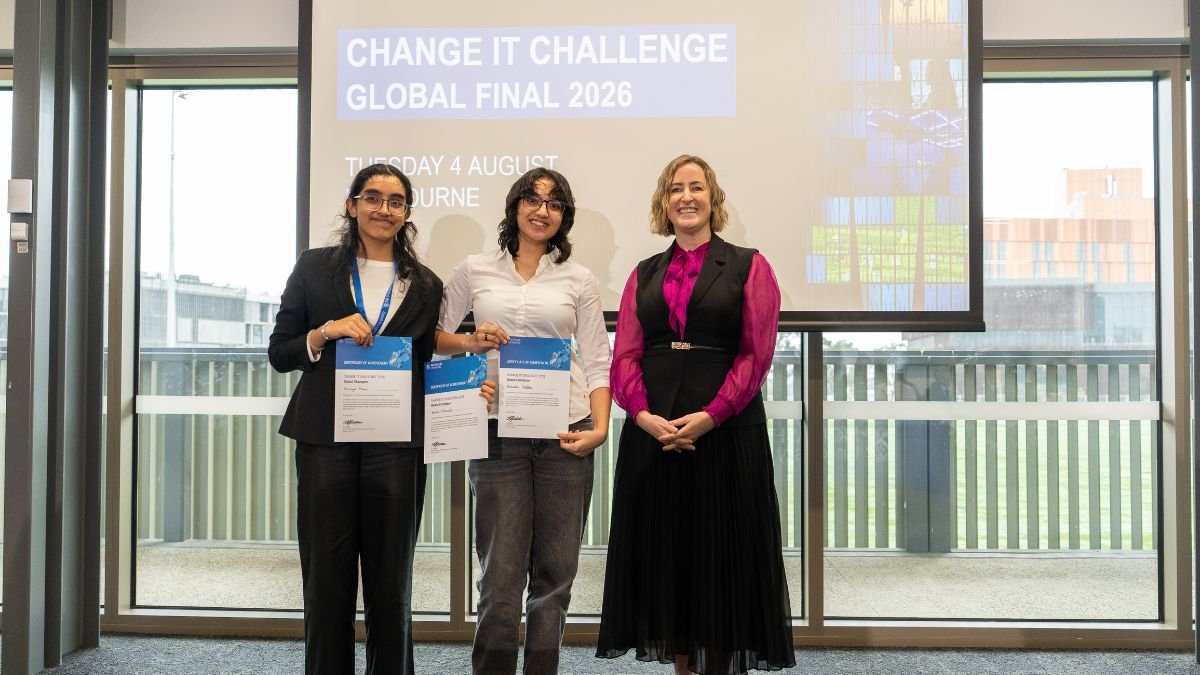
For thousands of people living with limb loss in India, getting a prosthetic limb can remain out of reach because of cost and limited access. Vidushee, Shravya and Shloka, students of Mallya Aditi International School in Bengaluru, have developed a material that they believe could help make some prosthetic components more affordable. Their project, Reviv3D, uses a composite made from recycled plastic, bagasse and basalt. The students say the material is stronger than some fibreglass alternatives, considerably cheaper and recyclable.
The project has now won the global finals of Monash University’s Change It Challenge in Melbourne, giving the students an international platform to present their approach to an issue that sits at the intersection of healthcare, materials science and sustainability.
A Shortage Shaped By Cost
Access to a prosthetic limb is not determined only by whether the technology exists. Its cost, availability and suitability for an individual’s needs can determine whether a person is able to obtain and use one. The competition material cites around 23,000 amputations annually in India and notes that many people do not receive prosthetic limbs because of their cost.
India has developed several approaches to making prosthetic technology more accessible. The Jaipur Foot, for example, became widely recognised for providing relatively low-cost prostheses designed around local requirements.
Reviv3D approaches the problem from another direction: the material itself. The students asked whether materials that are readily available as waste could be combined to produce a strong, functional and lower-cost material for prosthetic applications.
Reviv3D: Three Waste Materials, One Composite
Reviv3D combines three main inputs. Recycled plastic forms the polymer component of the material. Bagasse, the fibrous residue left after sugarcane or sorghum is crushed to extract its juice, provides plant-based reinforcement. Basalt, sourced from stone-crushing waste, adds another reinforcing component. Together, these materials form a composite. The principle behind a composite is to combine materials with different properties so that the final product can perform better than its individual components might on their own.
Bagasse has been studied as a natural fibre for reinforcing composite materials, while basalt is valued for properties such as strength and stiffness. The students’ work brings these materials together with recycled plastic for a potential use in prosthetic technology.
Their stated aim is to produce a material that can offer the required strength at a substantially lower cost than some conventional alternatives.
An Environmental Solution Alongside a Healthcare Problem
The project also has a second dimension. Each of the materials used in Reviv3D comes from a waste stream or a material that can otherwise have limited value after its primary use. Plastic waste is one of India’s persistent environmental challenges. Agricultural residues such as bagasse are generated in large quantities, while stone-crushing produces substantial quantities of mineral waste.

Using such materials in a new composite creates the possibility of turning waste into a resource. This idea is central to the circular economy: rather than following a linear model in which materials are extracted, manufactured into products and eventually discarded, materials are kept in use for as long as possible.
Reviv3D does not solve the plastic or industrial-waste problem by itself. But it demonstrates how a waste material can be considered as an engineering input rather than simply something that needs to be disposed of. That becomes particularly interesting when the resulting product is intended for a socially important application.
Why the Material Matters
For a prosthetic application like Reviv3D, affordability cannot come at the expense of performance. A prosthetic component may be exposed to repeated loads and movement over long periods. The material therefore needs to withstand mechanical stress while remaining light and durable.
That means the students’ claims about strength and cost will need to be tested systematically. Further research would need to examine properties such as tensile and compressive strength, fatigue resistance, impact resistance, weight, flexibility and durability. Researchers would also need to establish whether the material can be manufactured consistently at scale.
The conditions in which a prosthetic is used can also affect material performance. Exposure to moisture, temperature changes and repeated mechanical stress can alter materials over time. If Reviv3D progresses towards medical use, additional safety testing, clinical evaluation and regulatory approval would be required.
The information released by Monash does not indicate that the material has undergone clinical trials or received regulatory approval. It is therefore more accurate to describe Reviv3D as a student-developed material innovation with potential for further research, rather than as an already validated prosthetic technology.
From Bengaluru to Melbourne
The project Reviv3D was developed by Vidushee, Shravya and Shloka at Mallya Aditi International School. Their work progressed to the global finals of Monash University’s Change It Challenge, which brings high school students together to develop solutions to real-world problems.
Vidushee and Shravya represented the team at the Melbourne final, while Shloka was unable to attend. The judging panel, led by Monash University Executive Director of Student Recruitment Amy Gledden, praised the team’s problem-solving abilities, scientific approach and human-centred design.
As part of the programme, the students attended academic sessions, visited Monash’s Clayton and Caulfield campuses and interacted with researchers.
For Vidushee and Shravya, the experience also offered an opportunity to develop the project further. They said the competition helped them strengthen their research, communication and teamwork skills and encouraged them to explore how their work could contribute to more affordable healthcare.
What Needs to Happen Next?
Winning the competition is an important milestone, but determining whether Reviv3D can become a practical prosthetic material will require further research. The first step would be rigorous laboratory testing to establish how the composite behaves under different mechanical conditions. Researchers would then need to examine manufacturing, cost, durability and the specific prosthetic components for which the material might be suitable.
There is also an important question about who would use the technology and how it would be produced for them. Prosthetic devices often require individual fitting and adjustment, so affordability depends not only on the raw material but also on manufacturing, design, fitting and follow-up services.
These are challenges that the students’ prototype cannot answer on its own. But Reviv3D begins with an important idea: a healthcare problem does not always require a solution from a single field. Here, materials science meets assistive technology, while waste materials become part of the search for a more affordable solution. The project does not yet establish that recycled plastic, bagasse and basalt can replace existing prosthetic materials. That will depend on further testing.
What the three students have demonstrated is that a question about access to healthcare can lead to another question about how we use the materials around us—and whether some of what we call waste could instead become part of the solution.


Nepal’s Glacier Disaster Exposes the Unequal Cost of Climate Change

When Health Care Becomes a Target, Patients Pay the Price

Academic Diplomacy: How India Can Build Global Influence Through Universities

Six Months of the Hormuz Crisis: A USD 330 Billion Global Fuel Bill — and India’s USD 22.5 Billion Share

The Giant Steel Gates Guarding the Netherlands from the Sea

When the Monsoon Returns, Fear Returns: How Climate Disasters Are Reshaping Mental Health in Himachal Pradesh

Astronomers Discover a ‘Black Hole Star’, a New Kind of Object in the Early Universe

From Bell Labs to the Classroom: Finding Purpose After Retirement

Why Is India Flooding If El Niño Predicted a Weak Monsoon?

From Soil to Profit: How Organic Turmeric Changed the Fortunes of a Tribal Farming Family

-

 Math1 month ago
The 2026 Fields Medals: Four Proofs, Four Decades-Old Problems Solved
-
Climate1 month ago
After Kerala’s Deadliest Landslide, the Hardest Thing to Rebuild Was Childhood
-
Society2 months ago
West Asia Crisis: Can Kerala’s Returning Gulf Migrants Find a Future in the Green Economy?
-
Space & Physics3 months ago
India Semiconductor Mission: ‘It’s Not About Fabs. It’s About Building An Entire Ecosystem’
-
Climate3 months ago
The Climate World Cup? How Climate Change Could Affect Player Performance at the 2026 World Cup
-
Society2 months ago
What Is Civilisational Diplomacy? Understanding India’s Newest Foreign Policy Tool
-
Society2 months ago
From Bell Labs to the Classroom: A Second Career in Teaching
-
Space & Physics3 months ago
Engineers Develop Dual-Mode Propulsion System for Next-Generation Small Satellites