Connect with us

Society

How India’s Richest Man Remembers This Chemical Engineer

Here are the four key insights Mukesh Ambani shared about renowned chemical engineer Prof. M M Sharma:

Published

on

design 3 jpeg
Image credit: By special arrangement

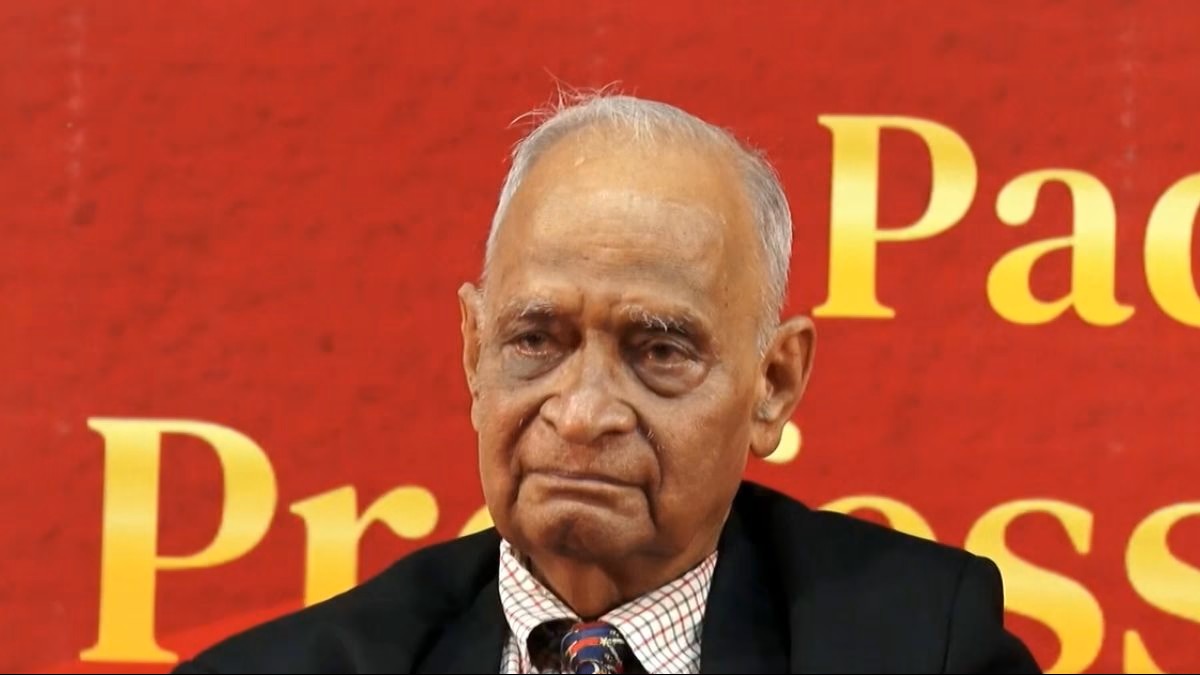
At the launch of the biography Divine Scientist chronicling the life of legendary Indian chemical engineer Prof. Man Mohan Sharma, Mukesh Ambani, CMD of Reliance Industries, offered a moving tribute that captured the intellect, values, and national impact of his former teacher.

Prof. Sharma is a renowned chemical engineer, who became the first Indian engineer to be elected as a Fellow of Royal Society, the UK in 1990.

Here are the four key insights Ambani shared about Prof. Sharma:

1. The Alchemist of Minds

Ambani recalled how Prof. Sharma transformed his understanding of chemical engineering — and leadership. “He had the power to convert curiosity into knowledge, knowledge into commercial value, and both into everlasting wisdom,” he said. Choosing ICT over IIT Bombay, Ambani said Sharma’s first lecture confirmed he’d made the right decision.

2. Master of ‘Economics of Chemistry’

“He wasn’t just a scientist — he taught us how molecules make money,” said Ambani. He fondly remembered calling Sharma a “Bania chemical engineering professor” for blending scientific brilliance with business sense — a philosophy that informed Reliance’s rise in the petrochemicals industry.

3. Sustainability Visionary

Long before sustainability became a buzzword, Prof. Sharma taught his students to turn every ‘by-product’ into a ‘co-product’. “He insisted nothing should be wasted,” said Ambani. That vision shaped Reliance’s integrated manufacturing strategy, from crude oil to consumer products.

4. A Silent Architect of Economic Reforms

Prof. Sharma wasn’t just a scholar — he was a behind-the-scenes changemaker. Ambani revealed how Sharma, alongside his father Dhirubhai Ambani, lobbied for deregulating India’s chemical industry. “He told policymakers: if you want India to grow, end the license raj and build scale,” said Ambani. “He is not just our Guru — he is a Rashtra Guru.”

The emotional address underscored the enduring influence of a teacher whose lessons extend far beyond the classroom — into boardrooms, factories, and the future of India.

Society

India’s Young Dream Is Changing. Are We Ready?

From skills and employment to entrepreneurship, purpose and global aspirations, India’s youth are redefining what a successful future looks like.

Published

on

interview 6
India’s young generation is navigating new opportunities, skills, careers and aspirations in a rapidly changing world.Image credit: Sanket Barik /Pexels

India’s young generation is navigating a changing job market, skills gap, career pressures and global ambitions. What can India do to build a more secure and purposeful future for its youth?

India’s youth are shaping the destiny of the modern nation state, and the country’s demographic dividend is often cited as its greatest economic advantage. Yet in the post-pandemic era, that advantage sits uneasily alongside a labour market being reshaped by technology, and alongside growing anxieties about work-life balance. Degrees and formal qualifications matter less than they once did; skills now decide who gets hired. The conventional career ladder is giving way to entrepreneurship, and local ideas are finding global audiences through a digitally connected world.

India’s Youth Face a Changing Job Market

Even in the age of the internet, young people in India’s remote villages need more than connectivity to compete for jobs. Better English communication, soft skills training and technical know-how could do much to empower farmers and young people in rural areas. The Union government’s Deen Dayal Upadhyaya Grameen Kaushalya Yojana, aimed at upskilling rural youth, is a step in this direction, but the scheme’s reach and impact deserve closer scrutiny than they currently receive.

Reducing unemployment cannot be the government’s job alone. It calls for a collective effort: a social reform movement that goes beyond electoral politics and pushes for constructive dialogue on the concerns of young people. Independent media has a role here too, in pursuing solutions-driven journalism, without fear or favour, that surfaces localised ideas for financial security and wellbeing.

Dignity of Work, Voice in Parliament

A social renaissance built on universal access to education and life-skills training, paired with a national minimum wage across sectors, would restore a basic sense of dignity to every working citizen. A national mission on youth concerns, one that cuts across party lines, is overdue. Greater youth representation in Parliament could combine the experience of older leaders with the energy of a younger population, in service of the Gandhian ideal of Sarvodaya, the upliftment of all through equal access to education, services and mentorship.

Life After the Civil Services Exam

Many young Indians aspire to the civil services, and a whole industry of coaching academies has grown around that aspiration. But only a small fraction of aspirants clear every stage of the examination and enter the service. For the rest, failure need not be an ending. Careers in media, academia and research are open to those willing to look beyond government employment. Aspirants would do well not to pour years into preparation alone; short courses and internships alongside exam preparation build a resume rich in the domains they actually care about, whatever path they eventually take.

Beyond the Rat Race

The pursuit of social prestige, at the expense of everything else, breeds burnout and a routine that feels mechanical rather than meaningful. A professional life worth having offers more than financial security; it offers peace of mind and a sense of contentment. That kind of self-reliance and purpose is possible, but it requires young people to define success on their own terms rather than borrow someone else’s definition of it.

The same is true of attention. Shrinking attention spans, a by-product of life on the smartphone, are a legitimate cause for concern in a hyper-connected era. A weekly or monthly digital holiday, however modest, can restore clarity of thought and make room for the kind of offline interaction that a screen cannot replace.

An Aspirational, Global Generation

India’s youth remain aspirational, drawn to opportunities in Europe, the Gulf and North America, and increasingly to frontiers beyond Earth. Geopolitical tensions in the Middle East, the war in Ukraine and a volatile global economy have not dimmed that ambition. Policymakers could do more to meet it at home, by building India into a genuine hub for higher education, with international students, faculty and university campuses. That transformation has already begun in pockets. What is missing is a coherent, pan-Indian policy to carry it forward, and with it, India’s aspiration to become a genuine centre of global learning.

Continue Reading

Society

From Soil to Profit: How Organic Turmeric Changed the Fortunes of a Tribal Farming Family

A tribal farming family in Rajasthan’s Banswara district improved its livelihood through organic turmeric farming, value addition and diversified agriculture.

Vikas Parashram Meshram

Published

on

Organic Turmeric Farming
Organic turmeric cultivation and value addition helped Mangalsingh and Shantidevi Ganaga diversify their income while adopting more sustainable farming practices in Rajasthan's tribal Banswara district.Photo — Lalita Makwana, Community Facilitator, VAAGDHARA)

A farming couple in Rajasthan’s Banswara district transformed their livelihood through organic turmeric farming, value addition and a nutrition garden, demonstrating how sustainable agriculture and crop diversification can strengthen rural incomes and food security.

In India’s tribal regions, farming has never been merely a means of livelihood—it has been a way of life carried forward across generations. Yet changing markets, rising input costs and climate uncertainty are encouraging some farmers to combine traditional knowledge with new approaches.

Mangalsingh Ganaga, a farmer from Phalwa village in Rajasthan’s Banswara district, is one such example. By introducing organic turmeric cultivation alongside his existing crops and adding value through processing, he improved his household income while demonstrating how sustainable farming can create new opportunities for smallholders.

Organic Turmeric Farming And The Turnaround

Turmeric has long been an inseparable part of Indian kitchens and Ayurvedic medicine. Rich in curcumin—the compound responsible for its distinctive yellow colour and medicinal properties—it has traditionally been used to treat ulcers, digestive disorders and a range of other ailments. Because turmeric is used in almost every Indian household, demand remains steady throughout the year, making it an attractive crop for farmers who have access to quality seed, organic cultivation techniques and local markets.

Building on Traditional Farming

Phalwa village, located in Anandpuri tehsil of Banswara district, is a predominantly tribal settlement where agriculture and livestock remain the backbone of rural livelihoods.

Mangalsingh cultivates six bighas of irrigated land, growing maize, black gram, sesame and patharia rice during the kharif season, followed by chickpea and wheat in the rabi season. His household also maintains four buffaloes, three cows, two bullocks and five goats, providing milk, farm labour and a steady supply of organic manure.

Although he had long wanted to experiment with natural farming methods, he lacked the technical guidance to do so.

“I had always wanted to try something new alongside my traditional farming, but I didn’t know where to begin. Once I learned about organic farming and received proper guidance, I finally had the confidence to experiment on my own land,” says Mangalsingh.

The turning point came when he met Lalita Makwana, a community facilitator with VAAGDHARA, a Banswara-based organisation working with tribal farming communities. Through the Gram Swaraj Self-Help Group, he was introduced to VAAGDHARA’s Sachchi Kheti (True Farming) programme, which trains farmers in organic cultivation and sustainable agricultural practices.

Learning Organic Farming

Through VAAGDHARA’s Farmer Field School, Mangalsingh gradually reduced his dependence on chemical fertilisers and pesticides, replacing them with farmyard manure and dashparni extract, a traditional bio-pesticide prepared by fermenting ten bitter or pungent leaves—such as neem and custard apple—with cow urine and cow dung.

Rather than replacing his existing crops, he adopted a mixed-cropping system by cultivating maize alongside turmeric. The approach not only reduced production risks but also created an additional income stream from the same piece of land.

Mangalsingh Ganaga harvesting organic turmeric farming on his farm in Banswara district, Rajasthan.
Mangalsingh Ganaga’s family preparing turmeric powder. Photo — Ishwar Pargi, 

To maximise returns, he moved beyond selling raw turmeric. Instead, he processed part of his harvest into turmeric powder and packaged it for sale, allowing him to secure a substantially higher market price.

Adding Value Increased Income

Under the Sachchi Kheti programme, Mangalsingh received five kilograms of turmeric seed, which he planted on a 20 × 25-foot plot using approximately 400 kilograms of cow-dung manure from his own livestock. Technical guidance throughout the cultivation cycle—from sowing to harvesting—came through VAAGDHARA’s Farmer Field School.

He sowed the crop in the first week of July 2025 and harvested it in May the following year, producing 60 kilograms of turmeric from the initial five kilograms of seed.

Rather than selling the entire harvest as raw produce, he adopted a value-addition strategy:

>> 20 kg of raw turmeric sold at ₹150 per kg, earning ₹3,000

>> 30 kg processed into turmeric powder and sold at ₹400 per kg, earning ₹12,000

>> 10 kg retained for household consumption and seed for the next planting season

The turmeric generated gross sales of ₹15,000. Because the seed was supplied through the programme and the manure came from his own livestock, cash input costs remained relatively low. He also found ready buyers without travelling to distant markets, as word spread locally about the chemical-free turmeric.

A Nutrition Garden Brings Additional Income

The family’s transformation did not end with turmeric.

Mangalsingh’s wife, Shantidevi Ganaga, received a vegetable seed kit through VAAGDHARA’s Poshan Vatika (Nutrition Garden) initiative. The kit included seeds for okra, cowpea, bottle gourd, ridge gourd, tomato, brinjal, cluster beans, fenugreek, spinach and chilli.

The garden supplied fresh vegetables for the family’s own consumption while generating an additional income through surplus sales.

“The nutrition garden not only improved our family’s diet but also gave me an income of my own. Selling the surplus vegetables helped strengthen our household finances,” says Shantidevi.

organic turmeric farming success story from rajasthan
Shantidevi Ganaga harvesting okra in her field. Photo: Lalita Makwana

Over the course of the year, she earned around ₹60,000 by selling vegetables—making a significant contribution to the family’s overall income while improving household nutrition.

Diversification Builds Resilience

Both Mangalsingh and Shantidevi continue to participate in VAAGDHARA’s Farmer Field School, where community facilitators provide technical guidance while encouraging farmers to exchange experiences and learn from one another.

The family’s journey highlights a broader lesson for smallholder agriculture: diversification strengthens resilience. Grain crops, organic turmeric, livestock and vegetables together provide multiple income streams, reducing dependence on any single crop or growing season.

Programmes such as Sachchi Kheti and the Nutrition Garden initiative aim not only to improve farm incomes but also to encourage environmentally sustainable agriculture that supports long-term soil health and reduces dependence on chemical inputs.

Lessons Beyond One Farm

For Mangalsingh and Shantidevi Ganaga, organic farming has become more than a change in cultivation practices—it has become a pathway to greater economic security and improved food security.

Their experience illustrates how technical guidance, value addition and diversified farming can work together to strengthen rural livelihoods. Whether such success can be replicated more widely will depend on sustained farmer training, market access and continued support for sustainable agriculture. But for one tribal farming family in southern Rajasthan, a small turmeric plot and a nutrition garden have already demonstrated how innovation rooted in local knowledge can deliver lasting change.

Continue Reading

Health

How India’s Agrarian Crisis Is Making Nutritious Food Unaffordable

India’s agrarian crisis is reducing farmer incomes while making healthy diets increasingly expensive. Here’s why India’s food system needs urgent reform.

Vikas Parashram Meshram

Published

on

India Agrarian Crisis: Why Nutritious Food Is Becoming Unaffordable
Rising production challenges and increasing food prices are reshaping both farm livelihoods and access to nutritious diets. Photo: EqualStock IN / Pexels.

India’s agrarian crisis is shrinking farmer incomes while driving up the cost of healthy diets, exposing deep flaws in the country’s food system and nutrition security.

When the figures are carefully unpacked, one thing becomes unmistakable: Indian agriculture is passing through a deep and prolonged crisis. The sector is no longer a reliable source of income, and government support has not reached farmers in the measure needed to restore profitability. The farmer who, a few decades ago, owned his own soil is today gradually turning into a daily-wage labourer. Of a farming family’s total monthly earnings, barely one-third now comes directly from agriculture; the remaining share, nearly two-thirds, has to be made up through government or private jobs, wage labour, or small enterprises. In other words, farming alone is no longer enough to run a household.

How India’s Agrarian Crisis Is Making Nutritious Food Unaffordable

What is more worrying is that, even as the sector remains under pressure, the number of new entrants is rising rather than falling — and most are joining not as landowning farmers but as farm labourers. As landholdings are divided into smaller and smaller fragments, income from farming declines rapidly, forcing families to depend increasingly on non-agricultural sources to survive. This is reflected in suicide statistics too: of the total agricultural suicides recorded in 2023, the latest year for which the National Crime Records Bureau has released data, more than half — at least 56.5 per cent — were of farm labourers. This is not a sudden trend; it has been consistent for years. Of the 10,786 farm-sector suicides recorded that year, 4,690 were landowning farmers or cultivators, while 6,096 were farm labourers — that is, workers who own no land in their name, hold no crop insurance cover, and have no support to fall back on if the season fails. It is precisely this group of daily-wage workers that has today moved to the very centre of the agrarian crisis.

A survey by the National Bank for Agriculture and Rural Development (NABARD) paints a similarly stark picture: over the past five years, nearly 30 per cent of farming families reported crop losses caused by untimely rain, pest and disease attacks, cyclones or drought, and 12 per cent suffered unexpected drops in market prices. Faced with these shocks, families were left with only two options — exhaust their savings or borrow from moneylenders. The reality is so stark that, per NABARD’s All India Rural Financial Inclusion Survey (NAFIS) 2021-22, covering the five-year window from 2016-17 to 2021-22, the average farming household is left with a monthly surplus of just ₹1,951 after covering its expenses — and it is precisely out of this gap that the cycle of debt is born.

The average debt on a farming household stood at ₹91,231, marginally higher than the ₹89,074 average for non-farming households. The Parliamentary Standing Committee on Agriculture, Animal Husbandry and Food Processing has said the situation demands close monitoring and precisely targeted interventions, so that farmers can sustainably bear the burden of their debt while continuing to invest in agriculture. The committee stated that the department concerned must ensure farmers do not get trapped in an unbearable cycle of debt, and that the schemes designed for them actually deliver benefits on the ground.

And this crisis will not stop here. A powerful super El Niño is taking shape, and weather experts fear it may disrupt the coming monsoon. Farmers already entering the new season in loss, and under the weight of debt, have little capacity left to absorb another shock. In this new era of shifting climate, providing farmers with a coherent, far-sighted policy framework is not a lofty demand — it is the bare minimum.

The Rising Cost of Nutrition

The crisis in the fields echoes directly in urban kitchens, and today the sharpest edge of inflation is falling on the ordinary person’s plate. In India, a nutritious and balanced diet is becoming more expensive every year, moving further out of reach for crores of families. According to the UN’s latest report, The State of Food Security and Nutrition in the World 2026, the per capita cost of a healthy diet in India has risen by more than 48 per cent since 2017. The minimum cost of a daily balanced diet for an average Indian, which stood at $2.77 (PPP) in 2017, reached $4.11 in 2025 — a rise of roughly 34 per cent compared to 2021, when the figure for India stood at $3.07 (PPP). Purchasing power parity (PPP) does not depend on currency exchange rates alone; it also accounts for local prices of goods and services in a given country, and so more truly reflects the burden falling on an ordinary person’s pocket.

The average global per capita cost of a healthy diet has risen from $2.94 (PPP) in 2017 to $4.28 in 2025, an increase of nearly 46 per cent

This rise in prices hits poor and economically weaker families hardest, because the moment prices rise, it is nutrient-rich foods such as fruits, vegetables, milk and eggs that first begin disappearing from their plates. If a healthy diet continues to remain this expensive, the path to a balanced diet will become even harder for families already struggling with malnutrition. According to the definition set by the Food and Agriculture Organization (FAO) and the World Health Organization (WHO), a diet can be called healthy only when it simultaneously provides the body with sufficient energy, essential nutrients, variety and balance — mere fullness of the stomach is not the criterion.

India's Agrarian Crisis: Why Nutritious Food Is Becoming Unaffordable
Photo credit/ Beyond India by Shubham Thakur/Pexels

The global picture is not very different. The average global per capita cost of a healthy diet has risen from $2.94 (PPP) in 2017 to $4.28 in 2025, an increase of nearly 46 per cent. The situation among India’s South Asian neighbours is even more severe than India’s own. In Bhutan, this cost has reached $6.17, a rise of 49 per cent compared to 2017. In Bangladesh it stands at $4.59 with a 48.5 per cent rise, in Sri Lanka at $5.21 with a 35 per cent rise, in Pakistan at nearly $3.94 with roughly a 33 per cent rise, and in Nepal at $4.19 with a 26 per cent rise. In other words, India’s cost is higher than Pakistan’s but lower than Nepal’s, Bangladesh’s, Sri Lanka’s and Bhutan’s. Yet it must not be forgotten that in a country with as vast a population as India, even a small rise in cost can have a massive impact on the plates of millions upon crores of households.

There is, however, one reassuring point: the number of people worldwide unable to afford a healthy diet has declined from 297 crore (37.4 per cent) in 2021 to 269 crore (32.7 per cent) in 2025. Even so, nearly one in every three people in the world today still cannot afford the cost of nutritious food, and it is the African continent that is scorched worst in this regard, where 66.6 per cent of the population finds a healthy diet beyond reach.

It is also worth understanding exactly where the larger share of the cost goes. The greatest expense falls on fruits, vegetables, milk, eggs, meat and other fresh and animal-based foods, while grains such as rice and wheat remain comparatively cheap. It is precisely during the journey from farm to consumer — through processing, transport, storage, cold chains and wholesale distribution — that the bulk of the cost gets added. As much as 70 to 75 per cent of the total amount a consumer pays for their diet is spent purely within this middle chain. The result is that the farmer does not receive adequate reward for his labour, and the consumer too does not get produce at a fair price — both sides end up at a loss.

Taking the example of poor households in India, staple grains such as rice and wheat are easily available through government schemes or subsidised markets. But the prices of pulses, green vegetables, fruits and milk — the very foods that give the body real strength and immunity — have risen so much that they are slipping beyond the monthly budget of an ordinary family. The outcome is that even as malnutrition and anaemia persist in the country on one hand, the inability to afford nutritious food is growing on the other. This makes one thing entirely clear: merely supplying grain is not enough; the real test lies in delivering nutrient-rich components such as fruits, vegetables, pulses, milk and eggs to every plate at affordable rates. For this, irrigation, cold chains, research, food processing and the supply chain will all need to be strengthened, while also curbing the wastage of food.

The FAO has issued one more warning in its report: that tensions in the Strait of Hormuz and an effective El Niño persisting until the end of 2026 could together place additional strain on global food and fertiliser prices in the period ahead. According to the organisation’s Chief Economist, Máximo Torero Cullen, the real crisis facing the world is not a shortage of food but the rising cost of nutritious diets, and that boosting local production could bring this cost down significantly.

It must be kept in mind that if nutritious food keeps slipping beyond the reach of the ordinary person, the consequences will not remain confined to hunger alone — they will cast their shadow over children’s growth, women’s health, working capacity and the country’s overall economic productivity. This malnutrition will keep hollowing out bodies from within, generation after generation. Therefore, the goal before India can no longer remain limited merely to “food for all”; it must become “nutritious food for all.” Local production, a strengthened supply system and nutrition-centred policies have today become the greatest need of the hour.

The suicide of a farmer in the field and the vanishing nutrition from a child’s plate — these two events may appear separate on the surface, but their roots lie buried in the same systemic failure

Vanishing Diversity on Children’s Plates

It is said that the habits that take root on a child’s plate in early childhood go on to shape the direction of health for an entire lifetime. Yet today, essential components such as fruits, vegetables, pulses and dry fruits are gradually vanishing from the plates of crores of children across the world. This reality has come to light through an extensive study conducted by researchers at Tufts University and published in the journal BMJ Global Health. Analysing data from more than 1,200 dietary surveys conducted across 185 countries between 1990 and 2018, the study assessed the consumption, among children and adolescents from birth to nineteen years of age, of five plant-based food groups: fruits, non-starchy vegetables, starchy vegetables, pulses, and nuts and seeds. According to the researchers, these components are important not only for physical growth but equally for learning ability, mental agility and protection from many diseases later in life, and yet most children are eating far fewer fruits and vegetables than experts recommend.

The suicide of a farmer in the field and the vanishing nutrition from a child’s plate — these two events may appear separate on the surface, but their roots lie buried in the same systemic failure. The farmer does not get a fair return for his sweat, and the consumer does not get the nutrition he needs on his plate, and it is the chain standing between these two ends that keeps reaping the greatest profit. As long as this imbalance within the chain remains uncorrected, this cyclical curse will keep returning every year in a new form — sometimes in the shape of a farmer in the field, and sometimes in the shape of a malnourished child.

(The views and interpretations presented are those of the author and do not necessarily reflect the editorial position of EdPublica.)

Continue Reading

Trending