Society
Researchers Unveil Light-Speed AI Chip to Power Next-Gen Wireless and Edge Devices
This could transform the future of wireless communication and edge computing


In a breakthrough that could transform the future of wireless communication and edge computing, engineers at MIT have developed a novel AI hardware accelerator capable of processing wireless signals at the speed of light. The new optical chip, built for signal classification, achieves nanosecond-level performance—up to 100 times faster than conventional digital processors—while consuming dramatically less energy.
With wireless spectrum under growing strain from billions of connected devices, from teleworking laptops to smart sensors, managing bandwidth has become a critical challenge. Artificial intelligence offers a path forward, but most existing AI models are too slow and power-hungry to operate in real time on wireless devices.
The MIT solution, known as MAFT-ONN (Multiplicative Analog Frequency Transform Optical Neural Network), could be a game-changer.
“There are many applications that would be enabled by edge devices that are capable of analyzing wireless signals,” said Prof. Dirk Englund, senior author of the study, in a media statement. “What we’ve presented in our paper could open up many possibilities for real-time and reliable AI inference. This work is the beginning of something that could be quite impactful.”
Published in Science Advances, the research describes how MAFT-ONN classifies signals in just 120 nanoseconds, using a compact optical chip that performs deep-learning tasks using light rather than electricity. Unlike traditional systems that convert signals to images before processing, the MIT design processes raw wireless data directly in the frequency domain—eliminating delays and reducing energy usage.
“We can fit 10,000 neurons onto a single device and compute the necessary multiplications in a single shot,” said Ronald Davis III, lead author and recent MIT PhD graduate.
The device achieved over 85% accuracy in a single shot, and with multiple measurements, it converges to above 99% accuracy, making it both fast and reliable.
Beyond wireless communications, the technology holds promise for edge AI in autonomous vehicles, smart medical devices, and future 6G networks, where real-time response is critical. By embedding ultra-fast AI directly into devices, this innovation could help cars react to hazards instantly or allow pacemakers to adapt to a patient’s heart rhythm in real-time.
Future work will focus on scaling the chip with multiplexing schemes and expanding its ability to handle more complex AI tasks, including transformer models and large language models (LLMs).











Climate
Weather, Not Just Emissions, Driving PM2.5 Pollution in Indian Cities: Study
A new Climate Trends report finds weather conditions can alter PM2.5 levels in Indian cities by up to 40%, calling for season-specific reforms in India’s National Clean Air Programme (NCAP).
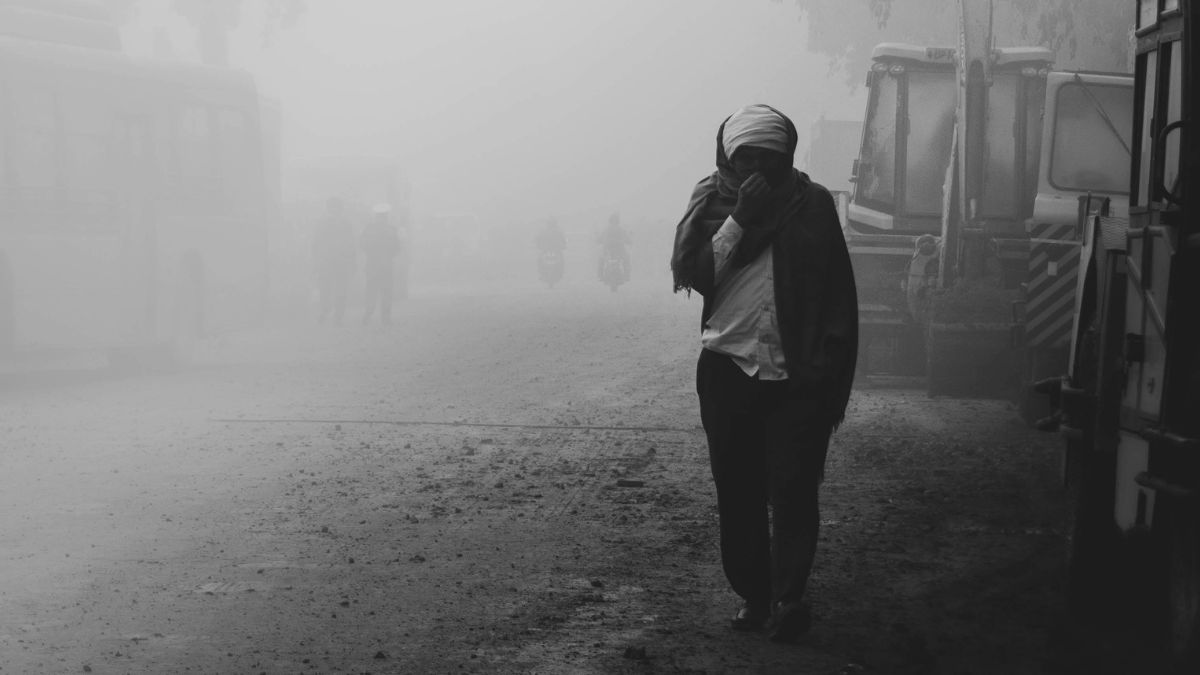
A new analysis of India’s urban air quality has revealed that weather conditions can significantly influence pollution levels, sometimes masking the real health burden faced by residents. The report, released by Climate Trends, argues that India’s clean air policies must account for seasonal and meteorological factors to effectively tackle particulate pollution across major cities.
The study analysed Central Pollution Control Board (CPCB) monitoring data from 2024–2025 across six major cities — Delhi, Patna, Kolkata, Mumbai, Chennai, and Bengaluru — and found that meteorological conditions alone can shift pollution levels by up to 40 percent even without changes in emissions.
Researchers say the findings highlight a major gap in India’s National Clean Air Programme (NCAP) and recommend that the upcoming Phase-III reforms include season-specific targets, weather-adjusted evaluation metrics, and dynamic action plans triggered by atmospheric conditions.
Delhi’s extreme winter pollution
The report highlights Delhi as continuing to experience the most severe pollution crisis in the country. The capital recorded the highest annual average PM2.5 levels among the cities analysed and experienced prolonged periods of “Severe” and “Emergency” air quality days.
A particularly alarming finding is that Delhi recorded zero clean air days during winter, despite apparent annual improvements in pollution metrics.
According to the researchers, this discrepancy arises because annual averages can hide seasonal pollution spikes that occur during unfavourable weather conditions such as low wind speeds and high humidity.
“This study shows that a 20–30% reduction in annual PM2.5 does not translate into winter air-quality compliance in stagnation-prone cities like Delhi and Patna, where over 70% of days fall under low-wind, high-humidity meteorological regimes. NCAP Phase-III must therefore adopt season-specific targets, meteorology-triggered interventions, and airshed-level management frameworks to achieve meaningful public-health gains,” Aarti Khosla, Founder and Director of Climate Trends, said in a statement.
Weather plays a decisive role
The report emphasises that air pollution is not simply an “emissions-only” problem. Instead, it is strongly shaped by how emissions interact with atmospheric conditions.
Periods of atmospheric stagnation — characterised by low wind speeds and high humidity — prevent pollutants from dispersing, allowing them to accumulate near the ground and intensify exposure levels for urban populations.
Sagnik Dey, Head of the Centre for Atmospheric Sciences at IIT Delhi, explained the scientific basis for this pattern.
“The persistence of PM2.5 exceedances is strongly associated with sub-1 m/s wind regimes and elevated relative humidity across northern cities, where stagnation episodes sustain disproportionately high exposure levels. Ventilation efficiency emerges as the dominant determinant of inter-city variability. However, current NCAP evaluation frameworks primarily assess observed concentration changes without explicitly accounting for meteorological modulation, potentially leading to distorted interpretations of policy effectiveness. Integrating meteorological regime analytics is therefore essential to ensure a scientifically robust and equitable Phase-III evaluation.”
The study also estimates that simply shifting from stagnant atmospheric conditions to well-ventilated ones could reduce PM2.5 levels by 35–40 percent, demonstrating the powerful role of weather in shaping urban air quality.
Emerging patterns across Indian cities
Beyond Delhi, the report identifies several emerging trends across India’s major urban centres.
Southern cities such as Bengaluru and Chennai, historically considered less polluted, are beginning to show signs of winter-time air quality deterioration, signalling a new vulnerability. Meanwhile, Mumbai and Chennai recorded increases in annual pollution levels in 2025, suggesting that pollution challenges are expanding beyond seasonal spikes into year-round concerns.
Patna continues to face an intensifying crisis, emerging as the second-most polluted city after Delhi, driven in part by persistent atmospheric stagnation across the eastern Indo-Gangetic Plain.
In contrast, Bengaluru stands out for maintaining relatively stable and lower pollution levels, reflecting what researchers describe as “structural air-quality resilience.”
Kolkata’s complex pollution dynamics
Kolkata presents a unique case where meteorology interacts strongly with local pollution sources.
Dr. Abhinandan Ghosh of IISER Kolkata said meteorological conditions play a key role in winter pollution episodes in the city. “As a community of atmospheric scientists, we have long cautioned against a simplistic rat race to replicate Western PM₂.₅ benchmarks, for the Indian subcontinent is endowed with its own meteorological idiosyncrasies, complex topography, and friable alluvial soils that elevate baseline particulate concentrations. The report vindicates this standpoint: in Kolkata, it is not emissions alone but the capricious tyranny of winter boundary-layer dynamics – attenuated mixing heights and enfeebled dispersion – that engenders the most deleterious pollution episodes.”
Professor Abhijit Chatterjee of the Bose Institute pointed to biomass and waste burning as major contributors to winter pollution in the city.
“Amongst several sources, at the current scenario, biomass and waste burning are the major concern in Kolkata especially in winter. The high load of PM2.5 exceeding national standards in winter, primarily due to these two sources which accumulate near the surface because of low dispersion and ventilation coefficients.”
Need for season-specific policies
The study concludes that India’s clean air strategy must move beyond a uniform annual target system and instead adopt seasonally calibrated and meteorology-aware policies.
Experts argue that incorporating weather dynamics into pollution management would help policymakers better assess the effectiveness of interventions and design more realistic mitigation strategies.
Without such reforms, the report warns, improvements in annual averages may continue to mask severe seasonal pollution episodes that pose serious health risks to millions of urban residents.
EDUNEWS & VIEWS
India Emerging as a Global Education Hub as International Student Numbers Set to Rise Rapidly: QS Report
A QS report forecasts international student enrolments in India to grow 8% annually to 2030, positioning the country as a rising global education hub while highlighting challenges in reputation, employability, and infrastructure.

India international students are expected to grow rapidly over the next decade, with a new QS report forecasting annual growth of about 8% through 2030.
India is poised to strengthen its position as a major global education destination, with international student enrolments projected to grow steadily in the coming years, according to a new report by global higher education analytics firm QS Quacquarelli Symonds.
The report, QS Global Student Flows: India 2026, forecasts that inbound student numbers will grow by around 8% annually through 2030, starting from an estimated base of 58,000 international students in 2025.
The analysis highlights a shifting landscape in global student mobility. Tightening visa regulations and rising costs in traditional study destinations such as the United States, the United Kingdom, Canada, and Australia are encouraging many international students to consider more affordable and accessible alternatives — with India increasingly emerging as a strong contender.
Regional Demand Driving Growth
South Asia remains the largest source of international students for India. Countries such as Nepal and Bangladesh together account for more than 30% of incoming students, and Nepal’s numbers alone are projected to grow at roughly 11% annually.
Demand is also rising significantly from Africa. Student flows from Sub-Saharan Africa are expected to grow at around 6% annually, driven by expanding youth populations and limited higher education capacity in many African countries. Zimbabwe stands out as a particularly fast-growing market, with projected annual growth of around 11% in students choosing India as a study destination.
Meanwhile, the Middle East and North Africa region continues to contribute steadily to India’s inbound student population, with students from the United Arab Emirates expected to account for about 5% of India’s international student cohort by 2030.
Policy Reforms Strengthening India’s Appeal
The report attributes much of India’s growing attractiveness to policy initiatives and structural reforms in the higher education sector. Programmes such as Study in India have simplified admission processes and reduced financial barriers for international applicants.
At the same time, the National Education Policy (NEP) 2020 has introduced major changes aimed at internationalisation. These include allowing foreign universities to establish campuses in India and enabling institutions to expand seats for international students. The University Grants Commission now permits universities to reserve up to 25% additional seats for overseas applicants.
India’s long-term ambition is even more ambitious. The country aims to host 500,000 international students by 2047, signalling a strong national commitment to becoming a global education hub.
Indian Students Abroad Diversifying Destinations
Even as India attracts more international students, it continues to remain a major source of global student mobility. More than 800,000 Indian students were studying abroad in 2024, making India the world’s second-largest source of international students.
However, the report suggests that the traditional “Big Four” destinations — the US, UK, Canada, and Australia — may see a slight decline in their share of Indian students, with combined enrolments expected to fall by around 0.5% annually through 2030.
Instead, Indian students are increasingly exploring new destinations such as Germany, France, and the United Arab Emirates, attracted by lower tuition costs and accessible study pathways.
Key Challenges for Indian Universities
Despite the optimistic outlook, the report identifies several challenges that India must address to fully realise its potential as an international education hub.
One major issue is institutional reputation. While Indian universities have improved their employer reputation rankings — with the median score improving by 61 places since 2017 — academic reputation indicators have shown limited progress.
“India has long been central to global student mobility — as both a major sending market and an increasingly influential destination”
Another challenge relates to graduate employability. A Mercer-Mettl report in 2025 found that only 42.6% of Indian graduates are considered employable, highlighting the need for stronger industry connections and work-integrated learning opportunities.
Infrastructure also remains a concern. Rapid expansion of international enrolments without adequate investments in housing, campus facilities, and student support services could undermine the overall student experience.
A Strategic Moment for India
Ashwin Fernandes, Chair QS India and Vice President for Strategic and International Engagement at QS, emphasised that India now stands at a critical moment in global higher education mobility.
“India has long been central to global student mobility — as both a major sending market and an increasingly influential destination. The conditions are shifting in India’s favour, from government policy and affordability to regional demographic pressure. But sustaining this momentum will require institutions to close the gap between reputation and real-world graduate outcomes.”
Scenarios for 2030
The report outlines three possible scenarios for the future of India’s higher education landscape by 2030. These include stronger regional student flows across Asia and Africa, the rise of technology-enabled hybrid learning models, and a global competition among countries to attract international talent.
How India responds to these shifts, the report concludes, will determine whether the country can convert its growing demand advantage into lasting leadership in international education.
Society
The Science Story Behind Middle Eastern Oil
How ancient oceans, microscopic life, and deep geological time turned the Middle East into the world’s energy heartland — and why that matters in the era of the Iran–Israel crisis


How ancient oceans, microscopic life, and deep geological time turned the Middle East into the world’s energy heartland — and why that matters in the era of the Iran–Israel crisis
When geopolitical tensions flare in the Middle East (West Asia), global markets tremble. Oil prices surge, shipping routes become strategic flashpoints, and diplomats rush to prevent wider conflict. The recent escalation involving Iran and Israel has once again drawn attention to the region’s central role in the global energy system.
But the real story of Middle Eastern oil began long before modern politics, long before nation-states, even long before humans existed.
It began hundreds of millions of years ago — in a vast tropical ocean that once covered much of what is now desert.
The immense oil reserves beneath the Middle East are not simply a matter of luck. They are the result of a rare convergence of geological processes that unfolded over hundreds of millions of years. Scientists often describe it as a geological perfect storm: the right organisms, the right environment, the right rocks, and the right tectonic conditions.
Together, they created one of the richest hydrocarbon provinces on Earth.
When the Middle East Was an Ocean
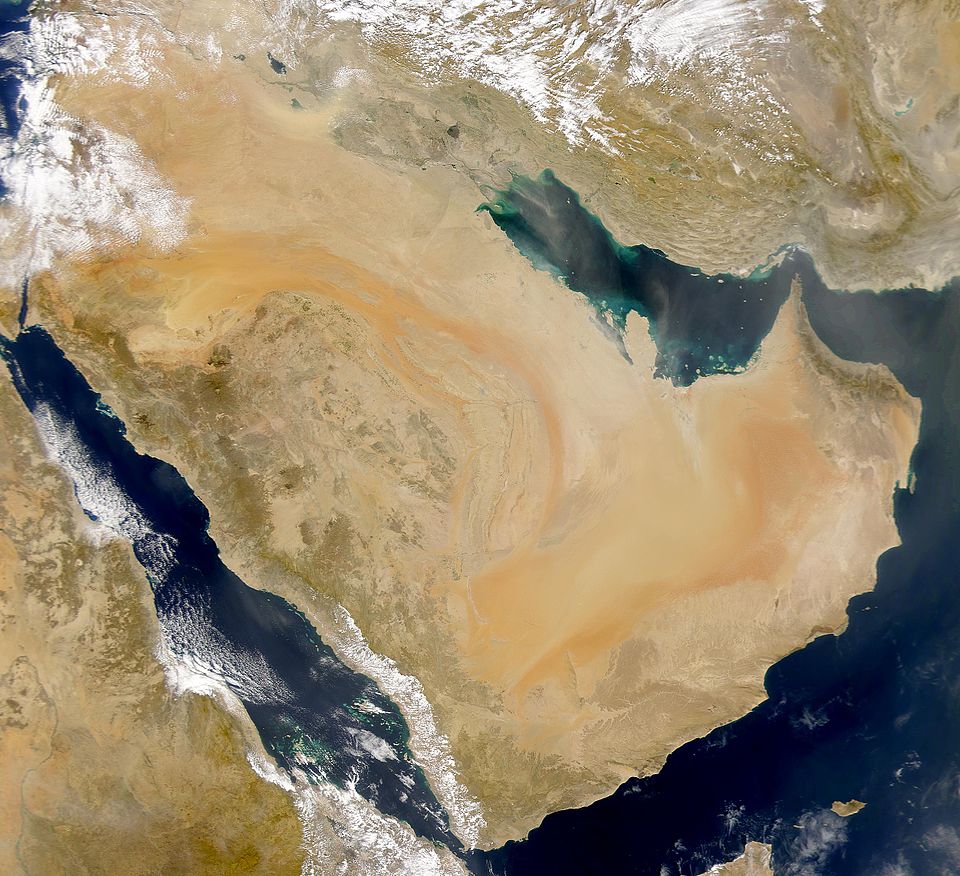
Today the Arabian Peninsula is associated with scorching deserts and arid landscapes. But during several periods in Earth’s distant past — particularly between 300 million and 50 million years ago — much of the region lay beneath warm, shallow seas.
These seas were biologically rich environments filled with microscopic organisms such as plankton, algae, and marine bacteria. When these organisms died, their remains settled on the seafloor, forming thick layers of organic material.
Normally, dead organisms would decompose and disappear. But under certain conditions — particularly when oxygen levels are low — organic material can accumulate faster than it decays.
Over millions of years, these deposits were buried under layers of sediment such as sand, clay, and limestone. As burial continued, pressure and temperature gradually increased.
Under these conditions, the organic matter slowly transformed into hydrocarbons — the molecules that make up crude oil and natural gas.
This transformation process, known as thermal maturation, typically takes tens of millions of years.
By the time the process was complete, the remains of ancient microscopic life had become the petroleum that fuels modern economies.
The Birth of Source Rocks
In petroleum geology, the first critical ingredient for oil formation is what scientists call a source rock — a rock formation rich in organic material capable of generating hydrocarbons.
The Middle East contains some of the most productive source rocks ever discovered.
One famous example is the Jurassic-age source rock systems beneath the Persian Gulf, which produced enormous volumes of petroleum over geological time. Because these source rocks formed in stable marine environments rich in organic matter, they generated hydrocarbons in extraordinary quantities.
Once oil forms inside source rocks, it does not remain there permanently. Oil and gas molecules are lighter than water and tend to migrate upward through porous rock layers.
This migration leads to the next crucial stage in oil accumulation.
The Role of Reservoir Rocks
Oil cannot be extracted directly from source rocks in most cases. Instead, it migrates into reservoir rocks — porous formations that can store hydrocarbons.
Many Middle Eastern oil fields are located in carbonate reservoirs, particularly limestone and dolomite formations. These rocks are ideal storage spaces because they contain microscopic pores and fractures that allow fluids to accumulate and flow.
The Middle East’s geological history produced vast carbonate platforms — essentially enormous underwater limestone systems built by marine organisms such as corals and shell-forming creatures.
These formations eventually became some of the most productive oil reservoirs in the world.
In places like Saudi Arabia, reservoir rocks are so permeable that oil can flow relatively easily compared with many other parts of the world. This is one reason Middle Eastern oil is often cheaper to extract than petroleum from more complex geological settings.
Nature’s Underground Traps
Even if oil forms and migrates into reservoir rocks, it can still escape unless something traps it underground.
In petroleum geology, these traps are essential. Without them, hydrocarbons would eventually leak to the surface.
The Middle East possesses an abundance of these traps. One important mechanism involves evaporite deposits — thick layers of salt and gypsum that formed when ancient seas evaporated. These rocks act as nearly impermeable seals that prevent oil from escaping.
Another type of trap forms through tectonic folding, when geological forces bend rock layers into arches or domes. Oil migrating upward becomes trapped beneath these structures.
Over millions of years, enormous volumes of petroleum accumulated in such formations. The result: giant oil fields that contain billions of barrels of crude oil.
The World’s Largest Oil Fields
Because of this combination of favourable geological factors, the Middle East hosts several of the largest oil fields ever discovered.
Among them is the famous Ghawar Field, located in eastern Saudi Arabia. Discovered in 1948, it remains the largest conventional oil field on Earth.
Stretching over roughly 280 kilometers, Ghawar has produced tens of billions of barrels of oil since operations began.
Other massive fields exist across the region in countries such as Iraq, Kuwait, and United Arab Emirates.
Together, these reserves account for roughly half of the world’s proven oil resources.
Few other regions possess such geological abundance.
Why Oil Is Easier to Extract Here
Another reason the Middle East dominates global oil production lies in the quality and accessibility of its reservoirs.
In many parts of the world — such as shale basins in North America — extracting oil requires advanced techniques like hydraulic fracturing.
But in much of the Middle East, reservoirs are large, pressurized, and geologically simple. In some cases, early wells produced oil that flowed naturally to the surface due to underground pressure.
These favorable conditions have historically made Middle Eastern oil among the least expensive to produce globally.
This economic advantage has shaped global energy markets for decades.
The Geography of Energy
Geology alone does not explain the region’s strategic importance. Geography also plays a critical role.
Much of the oil produced in the Middle East must pass through narrow maritime routes before reaching global markets.
One of the most important of these is the Strait of Hormuz, a narrow waterway connecting the Persian Gulf to the Arabian Sea.
Roughly one-fifth of the world’s oil supply travels through this corridor.
Tankers carrying petroleum from Gulf states must navigate this passage before heading toward Asia, Europe, and North America.
Because of this, the strait is widely considered one of the most strategically sensitive shipping routes on Earth.
Any disruption there can send shockwaves through global energy markets.
Oil and Modern Geopolitics
The first major oil discovery in the Middle East occurred in 1908 in Iran, marking the beginning of a new era in global energy.
Over the following decades, vast reserves were discovered across the Arabian Peninsula.
These discoveries transformed desert economies into some of the wealthiest states in the world.
They also reshaped international politics.
Oil wealth funded massive infrastructure development, modern cities, and sovereign wealth funds. At the same time, competition over resources contributed to geopolitical rivalries, international alliances, and strategic military interests.
The Middle East gradually became the focal point of global energy security.
Today, developments in the region influence oil markets worldwide.
When tensions rise — as in the current standoff involving Iran and Israel — investors and governments immediately worry about disruptions to energy supply.
A Resource Formed in Deep Time
The story of Middle Eastern oil reminds us that modern geopolitics often rests on geological foundations laid long before human history.
The hydrocarbons that power today’s global economy were created from the remains of microscopic organisms that lived hundreds of millions of years ago.
Ancient seas nurtured these organisms. Sediments buried them. Pressure and heat transformed them into petroleum.
Then geological forces trapped the oil deep underground until modern technology uncovered it.
In this sense, the oil fields of the Middle East are time capsules from Earth’s deep past.
The Future Beyond Oil
Despite the region’s enormous reserves, the world is gradually moving toward alternative energy systems.
Renewable technologies such as solar, wind, and green hydrogen are expanding rapidly. Even many oil-producing countries in the Middle East are investing heavily in energy diversification.
Yet petroleum will likely remain an important part of the global energy mix for decades.
As long as that remains true, the geological legacy of ancient oceans beneath the Middle East will continue to influence global politics.
The tensions between Iran and Israel are shaped by many factors — ideology, security concerns, and regional rivalries. But beneath all these lies another reality: the region sits atop one of the most extraordinary geological endowments on Earth.
A resource formed in deep time continues to shape the present.
And perhaps, for some time yet, the future.


Researchers Develop AI Method That Makes Computer Vision Models More Explainable

Weather, Not Just Emissions, Driving PM2.5 Pollution in Indian Cities: Study

India Emerging as a Global Education Hub as International Student Numbers Set to Rise Rapidly: QS Report

The Science Story Behind Middle Eastern Oil

Iran–Israel–US Conflict Impact on India’s Economy & Energy

EP Investigation: Hidden Epidemic, Tuberculosis Spreads Among Kerala’s Captive Elephants

How the Iran–Israel–US Conflict Ripples Through India’s Economy and Energy Future

AI in Classrooms: Threat to Learning or Catalyst for Educational Transformation?

Understanding AI: The Science, Systems, and Industries Powering a $3.6 Trillion Future

What does it mean to be genuinely ‘AI literate’?

-

 Society2 months ago
The Ten-Rupee Doctor Who Sparked a Health Revolution in Kerala’s Tribal Highlands
-
COP304 months ago
Brazil Cuts Emissions by 17% in 2024—Biggest Drop in 16 Years, Yet Paris Target Out of Reach
-
Earth4 months ago
Data Becomes the New Oil: IEA Says AI Boom Driving Global Power Demand
-
Society3 months ago
From Qubits to Folk Puppetry: India’s Biggest Quantum Science Communication Conclave Wraps Up in Ahmedabad
-
COP304 months ago
Corporate Capture: Fossil Fuel Lobbyists at COP30 Hit Record High, Outnumbering Delegates from Climate-Vulnerable Nations
-
Women In Science5 months ago
The Data Don’t Lie: Women Are Still Missing from Science — But Why?
-
Space & Physics3 months ago
Indian Physicists Win 2025 ICTP Prize for Breakthroughs in Quantum Many-Body Physics
-
Health4 months ago
Air Pollution Claimed 1.7 Million Indian Lives and 9.5% of GDP, Finds The Lancet