Technology
Chinese Humanoid Robots Beat Human Records at Beijing Games
Chinese humanoid robots have surpassed long-standing human benchmarks in sprinting and jumping at the World Humanoid Robot Games in Beijing, showcasing rapid advances in robotic speed, balance and autonomous movement.











Technology
India Builds Synthetic Biology Capacity for Medicines and Industrial Production
ESTIC 2026 brings scientists, policymakers and industry leaders together in New Delhi to discuss emerging technologies, including synthetic biology, AI and advanced manufacturing.
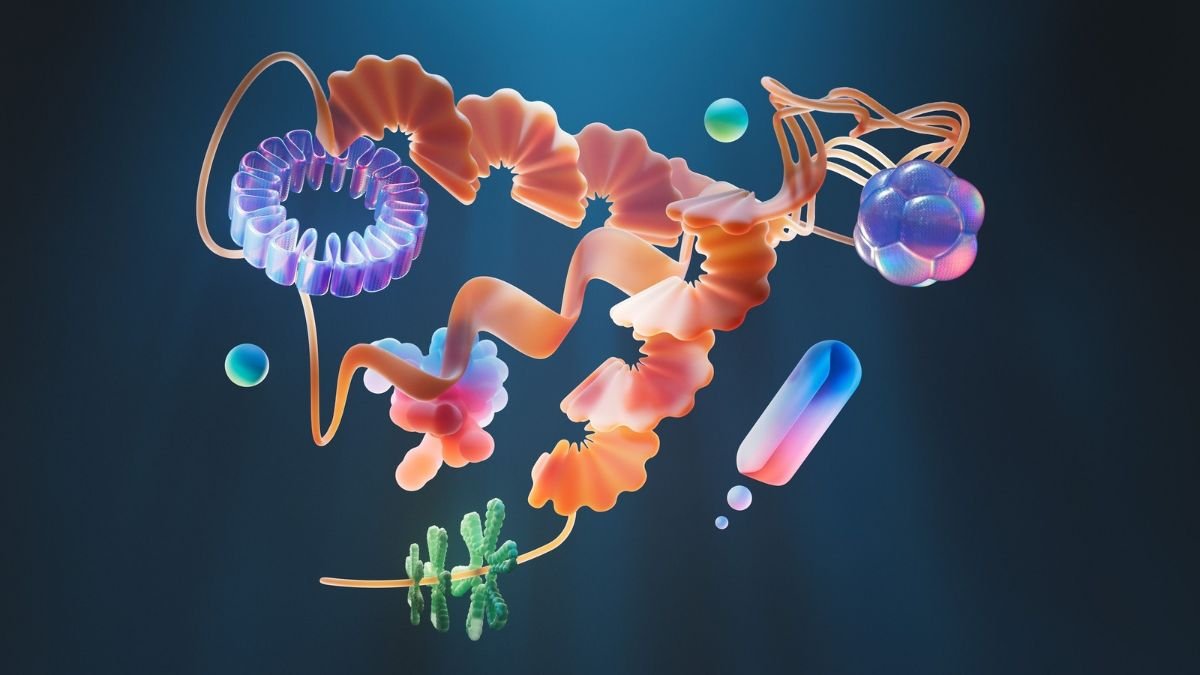
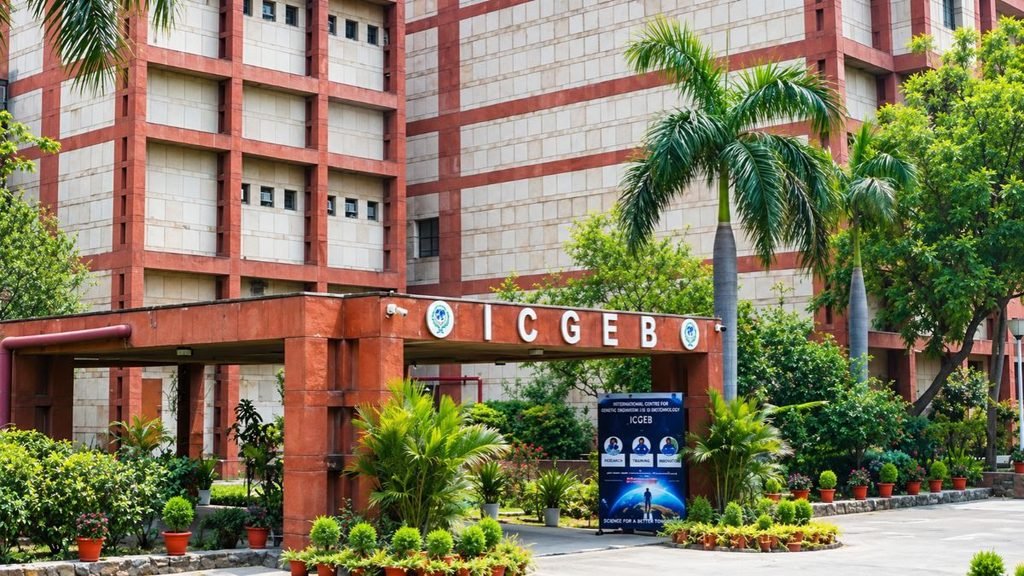
India is developing research facilities and supporting projects that use engineered microorganisms to produce useful chemicals and other biological products. These efforts are part of a wider push to expand biotechnology-based manufacturing, a subject discussed at a meeting hosted by the International Centre for Genetic Engineering and Biotechnology (ICGEB) in New Delhi on October 26. The meeting was held ahead of the Emerging Science, Technology and Innovation Conclave ESTIC 2026, which begins in New Delhi on October 27.
Synthetic biology allows scientists to modify living cells or organisms so they can perform specific tasks. Researchers can engineer bacteria or yeast to produce particular chemicals, for example. Systems biology studies how different parts of a living organism, including genes, proteins and cells, interact.
India has already begun building infrastructure for this work. The Department of Biotechnology’s BioE3 initiative includes a network of biofoundries, specialised facilities that use automated equipment and biological research methods to design, test and improve microorganisms for manufacturing.
A report published by Nature India in August 2025 described the publicly funded biofoundry at ICGEB in New Delhi, where researchers are working to engineer bacteria and yeast to produce substances such as fuels, cosmetics ingredients and speciality chemicals. The facility uses automation and artificial intelligence to test biological designs more quickly.
The Department of Biotechnology has also reported research projects involving engineered yeast for the production of squalene and linalool at CSIR-CFTRI in Mysuru. These substances have applications in areas such as cosmetics, food and fragrances. The work includes efforts to scale up production, although research and scale-up do not necessarily mean that a product is already being manufactured commercially.
ESTIC 2026: From Laboratory to Products
Developing a biological process is only one stage of making a useful product. Researchers must also establish whether it works reliably, whether production can be scaled up and whether the final product can be manufactured at a competitive cost.
This challenge was highlighted by Dr Rajesh S. Gokhale, Secretary of the Department of Biotechnology (DBT), at the ICGEB meeting. Referring to the discovery and large-scale production of penicillin, he stressed the importance of moving scientific discoveries towards practical applications through research, development and scale-up.
Prof. Gobardhan Das, Member of NITI Aayog and the chief guest, cited the development of COVID-19 vaccines as an example of fundamental biological research contributing to public health. Dr Dhananjay Kumar Tiwary, Scientist-H at the DBT and Managing Director of the Biotechnology Industry Research Assistance Council (BIRAC), discussed the potential of system and synthetic biology in healthcare, biomanufacturing and biodesign. He also highlighted the role of artificial intelligence in biological research and the opportunities offered by the BioE3 Policy.
The policy, which stands for Biotechnology for Economy, Environment and Employment, aims to strengthen biotechnology-based manufacturing and support the development of bio-based products. The research and infrastructure being developed under this effort could help expand the range of substances produced using biological processes.
ESTIC Brings Researchers and Industry Together
The ICGEB meeting preceded ESTIC 2026, scheduled for October 27–29 at Bharat Mandapam in New Delhi. Organised by the Council of Scientific and Industrial Research (CSIR), under the guidance of the Office of the Principal Scientific Adviser to the Government of India, the conclave brings together scientists, researchers, policymakers and industry representatives.
Its 12 thematic areas include system and synthetic biology, advanced manufacturing, artificial intelligence, energy technologies, semiconductors and advanced healthcare. The DBT is steering a dedicated session on system and synthetic biology.
For India, a key test will be whether investments in research facilities and engineered biological processes lead to products that can be manufactured reliably and used at scale. The biofoundry programme offers one route towards that goal, though its long-term impact will depend on research outcomes, industrial partnerships and the ability to take promising processes beyond the laboratory.
Technology
India–Poland to Pursue Joint Research in AI, Semiconductors and Quantum Technology
India and Poland have agreed to pursue collaborative research in AI, semiconductors and quantum technologies, while identifying battery recycling, rare-earth processing and higher education as areas for closer cooperation.

Technology
AI Models Could Soon Spread Across Smart Devices, Raising Cybersecurity Fears
Anthropic’s experiments highlight how AI self-replication could create new cybersecurity risks, allowing malicious systems to spread across internet-connected devices.

Artificial intelligence (AI) models could soon spread from one internet-connected device to another, potentially creating networks of compromised devices that carry out cyberattacks with limited human involvement. The warning from AI company Anthropic highlights a possible new challenge for cybersecurity as AI systems become capable of performing increasingly complex tasks.
In experiments, Anthropic found that AI models with 30 billion parameters or fewer could already perform many of the individual tasks needed to copy and spread themselves. However, the models struggled to complete the entire process reliably. The findings point to a potential threat, although they do not establish that fully self-replicating AI networks are already operating in the real world.
How AI could spread through smart devices
Many everyday devices, including smart televisions, security cameras and household appliances, connect to the internet. Internet of Things (IoT) devices present a particular concern because many connect directly to networks while receiving limited security attention from users. Weak passwords, outdated software and unpatched vulnerabilities can leave devices exposed to remote exploitation.

Once compromised, a device can become part of a botnet — a network of devices secretly controlled by attackers. Such networks have long been used to spread harmful software, send spam messages and overwhelm websites with large volumes of unwanted traffic.
AI could make these attacks easier to carry out. A malicious AI system might help identify vulnerable devices, exploit security weaknesses and use compromised devices to reach others. Anthropic’s experiments examined whether an AI agent could combine the computing power of inexpensive, internet-connected devices to run other AI models. If such a process becomes reliable, attackers could potentially use large numbers of ordinary devices to support their operations.
Cybersecurity: Why these networks are difficult to stop
A major concern is that a botnet can operate across thousands of devices in different locations. Shutting down one infected device may not stop the others from continuing to operate.
For example, if a security camera is compromised, its owner may not immediately notice anything unusual. The camera could continue recording while its computing resources are used for activities the owner never authorised. If similar weaknesses exist in other devices, attackers could build a much larger network.
AI-assisted attacks could become harder to manage if systems learn to carry out several steps automatically, reducing the need for attackers to control every action themselves. However, Anthropic’s findings do not show that AI can yet carry out this entire process consistently without assistance.
Securing AI and connected devices
The warning raises questions about how AI developers can prevent their models from being used to exploit computer systems. It also draws attention to the security of the devices people bring into their homes.
Manufacturers can reduce risks by fixing software vulnerabilities, providing regular security updates and strengthening password and access protections. Users can help by changing default passwords, installing updates and replacing devices that no longer receive security support.
AI developers, meanwhile, need to test whether their systems can be misused to automate cyberattacks. The immediate concern is not that every smart device will become a threat. It is that weaknesses already present in internet-connected devices could become easier to exploit as AI gains the ability to perform complex tasks with less human direction.


Indian-Belgian Team Develops Portable Detectors to Image Mountains and Monuments Using Cosmic Rays

India’s Clean Energy Research Funding Falls Short of Manufacturing Ambitions, Study Finds

Kashmir’s Traditional Rice Varieties Hold Genetic Clues to Climate Resilience

India Builds Synthetic Biology Capacity for Medicines and Industrial Production

India’s Green Cover Declined by 5.6 Percentage Points in 25 Years as Summer Heat Intensified: Study

Knowing When to Think for Ourselves: AI, Intuition and the Education of Discernment

After a Scorching Summer, Delhi’s Children Are Slow to Return Outdoors

Two Chemists Win Nobel Prize for Solving a Century-Old Puzzle: Why Life Picks One Hand Over the Other

Marshall Islands: Why the US Nuclear Legacy Is Back Before the UN

How Wind Turbines Could Produce More Power From the Same Wind

-

 Math3 months ago
The 2026 Fields Medals: Four Proofs, Four Decades-Old Problems Solved
-
EP Deep Dive: Data & Solutions3 months ago
After Kerala’s Deadliest Landslide, the Hardest Thing to Rebuild Was Childhood
-
EP Deep Dive: Data & Solutions4 months ago
West Asia Crisis: Can Kerala’s Returning Gulf Migrants Find a Future in the Green Economy?
-
Space & Physics5 months ago
India Semiconductor Mission: ‘It’s Not About Fabs. It’s About Building An Entire Ecosystem’
-
Interviews1 month ago
From Scams to Screens: How the National Stock Exchange Rewrote India’s Equity Story
-
Climate5 months ago
The Climate World Cup? How Climate Change Could Affect Player Performance at the 2026 World Cup
-
Society4 months ago
What Is Civilisational Diplomacy? Understanding India’s Newest Foreign Policy Tool
-
Society4 months ago
From Bell Labs to the Classroom: A Second Career in Teaching