
Health
WHO Urges Lifestyle-first Approach as 170 Million Children and Adolescents Live with Obesity
Around 170 million children and adolescents worldwide were living with obesity in 2024. The WHO recommends lifestyle interventions, mental health support and broader public health measures to address the growing burden.


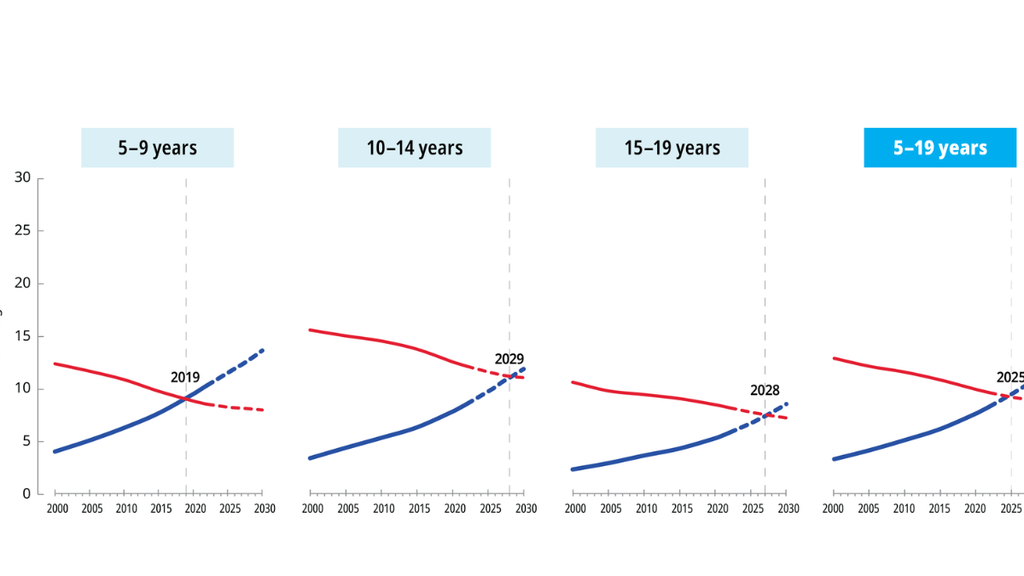
Around 170 million children and adolescents worldwide were living with obesity in 2024, including 70 million children aged five to nine and approximately 100 million adolescents aged 10 to 19, according to the World Health Organization (WHO). The prevalence of obesity among children and adolescents aged five to 19 has quadrupled since 1990, rising from 2% to 8%.
The scale of the problem extends beyond obesity alone. Around 400 million children and adolescents aged five to 19 were overweight worldwide in 2024, including those living with obesity. The prevalence of overweight, including obesity, in this age group increased from 8% in 1990 to 20% in 2024, according to WHO.
A separate analysis by the United Nations Children’s Fund (UNICEF) highlights a shift in the global burden of malnutrition. Its 2025 Child Nutrition Report found that, for the first time, the global prevalence of obesity among children and adolescents aged five to 19 had surpassed that of underweight, at 9.4% compared with 9.2%. UNICEF also reported that low- and middle-income countries accounted for more than 80% of children and adolescents living with overweight. The findings point to the growing importance of addressing unhealthy food environments alongside individual health needs.
In its first global guidelines on managing obesity in children and adolescents, WHO recommends comprehensive lifestyle interventions as the foundation of care, reserving medicines and surgery for selected cases. The guidelines emphasise that childhood obesity requires sustained medical support and broader action to create healthier environments.
WHO defines obesity as a chronic, relapsing disease characterised by excessive fat deposits that can be managed through effective treatment and care. Childhood obesity is associated with an increased risk of noncommunicable diseases, including type 2 diabetes and cardiovascular disease. Children may also experience stigma, discrimination and bullying, which can adversely affect their mental health and well-being.
Lifestyle changes and mental health at the centre of care
WHO strongly recommends dietary improvements, physical activity and other behavioural interventions as the primary approach to managing obesity in children and adolescents. Treatment should be tailored to individual needs, supported by long-term follow-up and designed to improve overall health and quality of life.
The agency does not recommend weight-loss medicines, bariatric surgery or weight-loss devices for children aged zero to nine. For adolescents aged 10 to 19, approved medicines, including glucagon-like peptide-1 (GLP-1) therapies, may be considered when supervised lifestyle interventions have failed to produce improvements. Bariatric surgery may be considered for adolescents with severe obesity under strict conditions.
“The foundation of obesity care for children and adolescents is not medicine or surgery, but access to comprehensive support that enables healthy eating, physical activity and sustainable behaviour change,” said Dr Luz María De Regil, director of WHO’s Department of Nutrition and Food Safety.
However, clinical treatment alone cannot reverse the growing burden of childhood obesity. WHO has called for policies that make nutritious food and opportunities for physical activity more accessible and affordable. These include regulatory and fiscal measures, alongside action in education, urban planning, transport and social protection.
UNICEF has similarly called for measures to improve school food environments, restrict unhealthy food marketing to children, strengthen food labelling and make nutritious foods more affordable.





Health
CCMB Scientists Identify Compounds to Disarm Deadly Fungus, Offering New Approach to Antifungal Resistance
Researchers at CSIR-CCMB, Hyderabad, have identified two compounds that prevent Candida albicans from transforming into its disease-causing form without stopping its growth. The findings could offer a new approach to antifungal treatment and help improve the effectiveness of existing medicines

Scientists at the CSIR-Centre for Cellular and Molecular Biology (CCMB), Hyderabad, have identified two compounds that can prevent a potentially deadly fungus from developing its disease-causing form, opening a possible new direction in the treatment of fungal infections.
The study, published in ACS Infectious Diseases in November 2026, examines Candida albicans, a fungus commonly found on human skin and other parts of the body. Although it usually exists harmlessly in healthy individuals, it can cause serious infections when it enters the bloodstream or internal organs, particularly in people with weakened immune systems.
Rather than killing the fungus, the researchers investigated whether its ability to cause disease could be disrupted by preventing it from changing its physical form.
Blocking the fungus’s transformation
Candida albicans can exist as rounded yeast cells or develop into elongated, branching structures known as filaments. This transition, called morphogenesis, is important to its ability to invade tissues and establish infections.
The CCMB team, led by Dr Sriram Varahan, investigated glycolysis, the metabolic pathway through which cells break down sugar to produce energy. Earlier research from the laboratory had established that this pathway also influences fungal transformation.
In the latest study, researchers screened a library of small molecules targeting glycolysis. Two compounds, PKM2-IN-6 and NPD10084, emerged as particularly effective in preventing filament formation. The fungus continued to grow but remained predominantly in its rounded form.
The researchers also identified pyruvate kinase, an enzyme involved in glycolysis, as an important target for controlling fungal morphogenesis.
The compounds additionally reduced biofilm formation in laboratory experiments. Biofilms are organised communities of microorganisms that attach to surfaces and can make infections more difficult to treat. The study found that the compounds increased the fungus’s sensitivity to existing antifungal medicines, including fluconazole and amphotericin B.
In a mouse model of systemic Candida infection, treatment with a lead compound significantly improved survival. However, the findings remain at the experimental stage and do not establish a treatment for human infections.
A substantial global health burden
The research addresses a growing concern in infectious disease management. A 2024 study published in The Lancet Infectious Diseases estimated that approximately 6.5 million people develop invasive fungal infections annually worldwide, resulting in an estimated 3.8 million deaths. Of these deaths, around 2.5 million were estimated to be directly attributable to fungal infections.

Representative image of a laboratary experiment.Image credit:Pexels
The same study estimated approximately 1.565 million cases of Candida bloodstream infections or invasive candidiasis every year, with an estimated 995,000 deaths.
The World Health Organization (WHO), in its 2022 Fungal Priority Pathogens List, identified 19 fungi posing significant public-health risks. Candida albicans was included among the priority pathogens because of its capacity to cause invasive disease and the serious consequences of infection.
The WHO has also highlighted limitations in the availability of antifungal medicines. Unlike bacterial infections, for which several antibiotic classes are available, treatment options for invasive fungal diseases remain limited. Drug resistance and difficulties in early diagnosis further complicate treatment.
Moving beyond conventional antifungal treatment
Most conventional antimicrobial medicines aim to kill or suppress pathogens. The CCMB study explores an alternative strategy: targeting the biological processes that allow a microorganism to cause disease without necessarily stopping its growth.
This approach could potentially reduce the fungus’s ability to invade tissues while making it more susceptible to existing medicines.
However, the findings require further investigation. Researchers will need to establish how the compounds work, assess their safety, determine suitable doses and examine whether the results can be reproduced in more advanced preclinical studies before human trials can be considered.
The study does not offer an immediate solution to antifungal resistance. It provides a possible starting point for developing treatments that target fungal behaviour and disease-causing mechanisms, rather than relying exclusively on eliminating the pathogen.
Health
More Than One Million STIs Acquired Daily Worldwide; India Reports Over 51,000 Syphilis-Reactive Cases
More than one million curable sexually transmitted infections are acquired every day worldwide, according to the WHO. The latest estimates highlight persistent gaps in testing, diagnosis and treatment, renewing concerns over the global burden of STIs.

More than one million curable sexually transmitted infections (STIs) are acquired every day among people aged 15–49 worldwide, with most infections remaining asymptomatic, according to the World Health Organization (WHO). The continuing burden, alongside rising syphilis cases and growing antimicrobial resistance, highlights gaps in early diagnosis, surveillance and access to treatment.
In a fact sheet updated on November 19, 2026, the WHO estimated that 374 million new infections of four curable STIs – chlamydia, gonorrhoea, syphilis and trichomoniasis – occurred globally in 2020. Of these, trichomoniasis accounted for 156 million cases, chlamydia 129 million, gonorrhoea 82 million and syphilis 7.1 million.
The estimates point to a persistent public-health challenge, particularly because many infected individuals do not experience noticeable symptoms and may unknowingly transmit infections.
Syphilis infections continue to rise
The WHO’s 2026 fact sheet also highlights an estimated eight million new syphilis infections among adults aged 15–49 in 2022, up from 7.1 million in 2020.
The increase had already raised concern in the organisation’s 2024 global progress report on HIV, viral hepatitis and STIs. Despite a global target to reduce annual adult syphilis infections tenfold by 2030, the number of new cases increased by more than one million in 2022.
The consequences extend beyond the immediate infection. In 2022, an estimated 1.1 million pregnant women had syphilis, contributing to more than 390,000 adverse birth outcomes, including stillbirths, neonatal deaths and other complications.
The WHO also estimated approximately 230,000 syphilis-related deaths in 2022. Untreated infections can cause serious cardiovascular and neurological complications, while transmission during pregnancy can result in congenital syphilis.
India’s surveillance data show a substantial treatment burden
India’s Ministry of Health and Family Welfare reported that 69.03 lakh STI and reproductive tract infection (RTI) clients received services through 1,127 Designated STI/RTI Clinics between January and November 2025, according to its Annual Report 2025–26.
During the same period, approximately 50.03 lakh syphilis screenings were conducted among clinic clients. Of these, 51,347 cases were syphilis-reactive, representing a positivity rate of approximately 1%.
The report also recorded 46.41 lakh high-risk group clients receiving STI/RTI services through targeted interventions and prison-related programmes.
These figures reflect the workload of India’s public healthcare response rather than the total prevalence of STIs in the population. However, they demonstrate the continuing demand for screening, counselling and treatment services.
The National AIDS Control Programme provides these services through designated clinics, including Suraksha Clinics located at district hospitals and medical colleges. Services include screening for HIV and syphilis, STI management, counselling and referrals for suspected treatment failures or drug-resistant infections.
Drug resistance complicates treatment
Beyond diagnosis, antimicrobial resistance is emerging as another challenge, particularly in the treatment of gonorrhoea.
In its May 2024 report, the WHO noted that nine of 87 countries conducting enhanced gonorrhoea antimicrobial resistance surveillance had reported elevated resistance to ceftriaxone in 2023. Reported resistance levels ranged from 5% to 40%.
Representative image of a blood sample.Image credit:Pexels
Ceftriaxone is an important antibiotic used to treat gonorrhoea. Increasing resistance could reduce treatment options and make infections more difficult to control.
The WHO has consequently called for stronger surveillance and updated treatment recommendations to address drug-resistant strains.
Weak surveillance threatens 2030 targets
The WHO’s July 2026 mid-term progress report on its global health sector strategies for 2022–2030 warns that the world is off track to achieve its targets for HIV, viral hepatitis and STIs. It identifies weak surveillance systems as a major obstacle to accurately understanding the STI burden.
The organisation has emphasised the need to expand testing, improve access to treatment and integrate sexual health services into primary healthcare.
The persistence of infections that are preventable and, in many cases, curable underscores the importance of confidential testing and accessible healthcare. Without stronger detection systems and timely treatment, infections that often go unnoticed will continue to undermine efforts to reduce their global burden.
Health
What is the Mysterious ‘Egoviruses’ in the Guts of 180 Million People
Scientists have discovered egoviruses, a previously unknown group of gut viruses potentially present in 180 million people worldwide. Their genetic connection to poxviruses could offer new clues about viral evolution.

Millions of people could be carrying a previously unknown group of disease-causing viruses in their digestive systems without ever knowing it. Scientists have now identified these microbes, named ‘egoviruses’, in human and animal gut samples, uncovering a surprising connection to one of the most important families of disease-causing viruses.
The discovery is drawing attention because egoviruses are closely related to poxviruses, the family that includes the viruses responsible for smallpox and mpox. Researchers estimate that these newly identified viruses could be present in around 180 million people worldwide. The findings offer a new perspective on the evolution of viruses and the largely unexplored microbial world inside the human digestive system.
Hidden Viral Population in the Human Gut
The discovery emerged from an extensive examination of genetic material collected from human and animal digestive systems. Rather than isolating individual viruses in laboratories, researchers used metagenomics, a technique that allows scientists to identify organisms by analysing genetic material in biological samples.
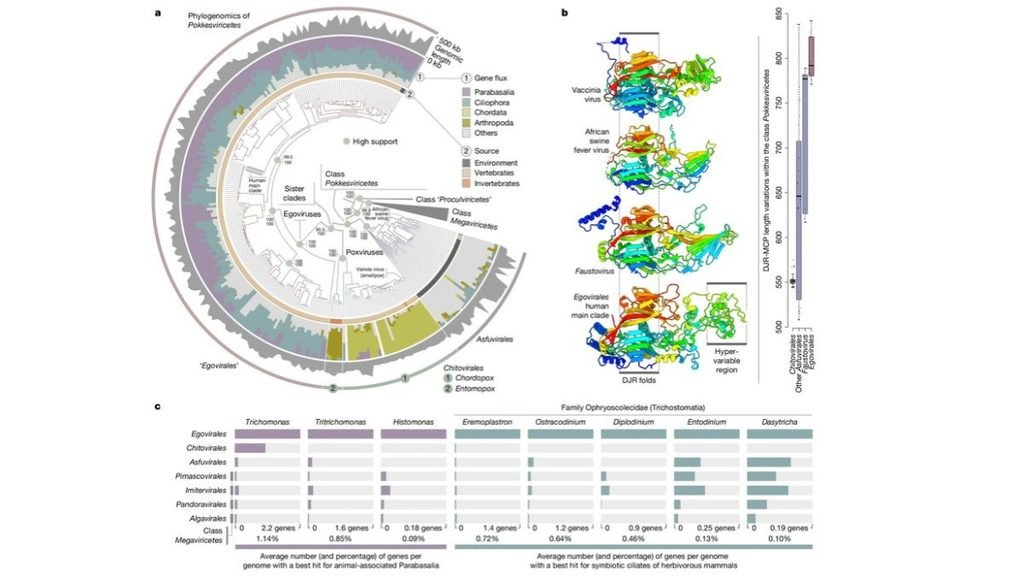
The research team, led by microbial ecologist Tom Delmont of the French National Centre for Scientific Research, identified egoviruses across samples from several countries. These included Tanzania, Nepal, Fiji, the United States and parts of Europe.
The analysis revealed six distinct groups associated with humans. One of these groups was found across multiple continents, suggesting that the viruses are not confined to a particular population or geographical region. The researchers also detected egoviruses in buffaloes, goats, chickens, deer and pigs. Their presence across different animal species points to a much wider distribution than scientists had previously recognised.
Do These Viruses Actually Infect Humans?
If egoviruses are found in human gut samples, does that mean they infect human cells? Not necessarily. The researchers suspect that these viruses may target single-celled organisms living in the digestive tract rather than human cells themselves. Genetic comparisons revealed similarities between egovirus genes and those of two groups of single-celled organisms, Parabasalia and Trichostomatia.
Some members of these groups live in animal digestive systems. Trichostomatia, for example, includes microorganisms found in the digestive tracts of ruminants, where they are involved in breaking down food. This could mean that the human gut contains viruses that interact with its microbial inhabitants rather than directly attacking human tissue. However, researchers have yet to confirm their suspected hosts through direct experiments. There is also no evidence from this study that egoviruses cause illness in humans.
Surprising Link to Smallpox and Mpox Viruses
Perhaps the most intriguing aspect of the discovery lies in the evolutionary history of egoviruses. The researchers found that these viruses are the closest known relatives of poxviruses among the groups they examined. Poxviruses are large DNA viruses that can infect humans and animals. Smallpox, eradicated in 1980, and mpox belong to this family.
The genetic relationship has led researchers to investigate whether the ancestors of poxviruses once infected single-celled organisms before evolving the ability to infect animal cells. One possibility is that an ancestral virus initially lived among microorganisms in the digestive systems of early animals. Over millions of years, evolutionary changes may have enabled some descendants to infect animal cells directly.
This remains a hypothesis, rather than a confirmed account of how poxviruses originated. Nevertheless, egoviruses offer scientists a previously unknown group of viruses through which to investigate that evolutionary transition.
What Scientists Still Need to Find Out
The discovery adds another layer to the growing understanding of the human gut, which hosts a complex community of bacteria, fungi, viruses and other microorganisms. But identifying a virus is only the beginning. Scientists still need to establish which organisms egoviruses infect, how they behave inside the gut and whether they influence the wider microbial community.
For now, the discovery of a virus group potentially carried by 180 million people raises a fascinating possibility, a large part of the human body’s viral diversity may have remained hidden simply because scientists had not yet known where to look.

Enacted Career Identity and Why a Career Is a Pattern of Doing, Not a Plan

BepiColombo Enters Mercury’s Orbit Despite Thruster Glitch, Next Mission Milestone Set for December

Stanford’s AI100 Report Warns AI Development Is Outpacing Governance as Technology Enters Mainstream

CCMB Scientists Identify Compounds to Disarm Deadly Fungus, Offering New Approach to Antifungal Resistance

Delhi’s Pollution Control Efforts Show Uneven Progress, With 52.7 Lakh Tonnes of Landfill Waste Still Uncleared

India’s Richest Agree on One Cause Above All Others: Education

Indian universities lead Asia in research output per faculty, but the country’s top six all slip in QS ranking

Why Delhi’s Geography Makes It Vulnerable to Severe Air Pollution

Europe Braces for Extremes as Commission Unveils Climate Resilience Framework

NASA recruits new astronauts for future Moon Base and Mars missions
-

 Math4 months ago
The 2026 Fields Medals: Four Proofs, Four Decades-Old Problems Solved
-
EP Deep Dive: Data & Solutions4 months ago
After Kerala’s Deadliest Landslide, the Hardest Thing to Rebuild Was Childhood
-
EP Deep Dive: Data & Solutions5 months ago
West Asia Crisis: Can Kerala’s Returning Gulf Migrants Find a Future in the Green Economy?
-
Space & Physics6 months ago
India Semiconductor Mission: ‘It’s Not About Fabs. It’s About Building An Entire Ecosystem’
-
Interviews2 months ago
From Scams to Screens: How the National Stock Exchange Rewrote India’s Equity Story
-
Climate & Environment6 months ago
The Climate World Cup? How Climate Change Could Affect Player Performance at the 2026 World Cup
-
Society4 months ago
What Is Civilisational Diplomacy? Understanding India’s Newest Foreign Policy Tool
-
Education4 days ago
India’s Richest Agree on One Cause Above All Others: Education