Technology
India’s Data Centre Boom Is Bigger Than It Looks
India’s data centre capacity is expanding rapidly, but the digital boom comes with rising demands for electricity, cooling and water.

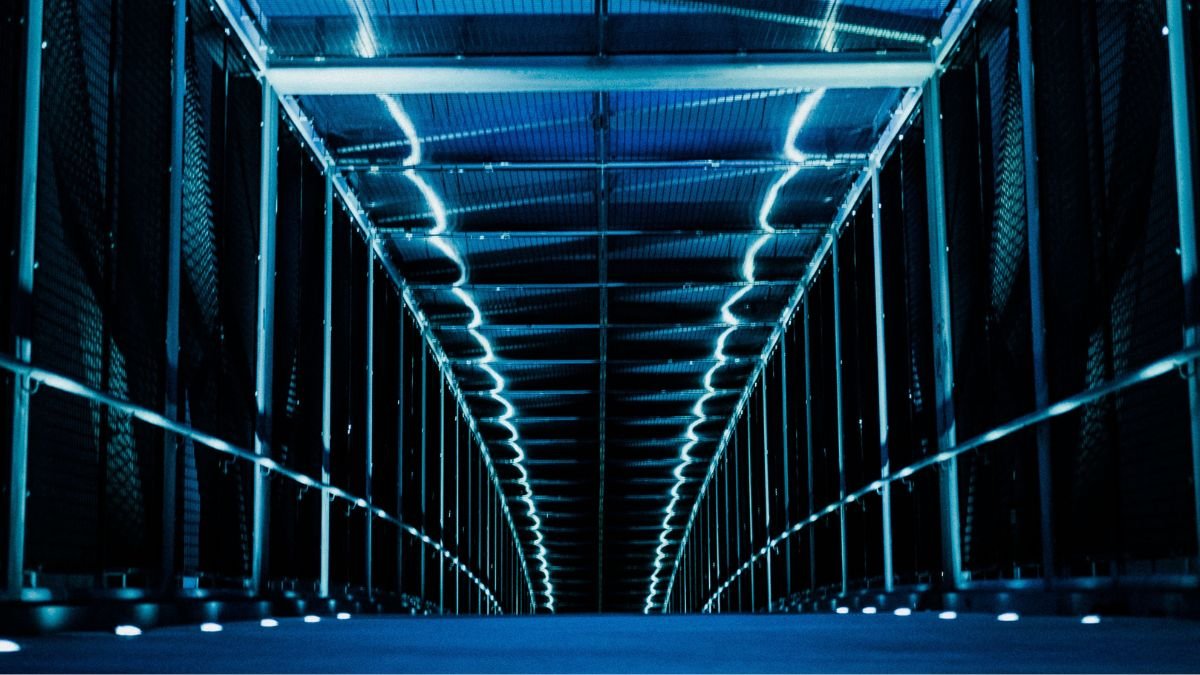
A search, a payment, a video stream or an AI query may take seconds. Behind it, thousands of machines can be running continuously, drawing power, producing heat and requiring cooling. That is the physical reality of the digital economy. And in India, it is expanding much faster than the size of the facilities themselves might suggest.
India’s installed data centre power capacity has risen from around 375 MW in 2020 to 1.57 GW in August 2026. The government expects it to reach nearly 8 GW by 2030. At the same time, the Central Electricity Authority estimates that data centres could require 17 GW of electricity by 2031–32. The numbers are moving on two different scales: capacity is growing rapidly, while the electricity demand associated with it could grow even faster.
That makes India’s data centre expansion triggers conversations about power, water and infrastructure.
Data Centres: Digital Service and Physical Footprint
The basic operation is familiar. A request from a phone or computer travels through a network to a data centre. Security systems screen it, a load balancer sends it to an available server, the application processes it and a database supplies the required information. The answer then travels back to the user.
What makes the infrastructure demanding is that the machines cannot simply be switched off when demand falls. Servers need continuous electricity. UPS systems provide immediate backup during interruptions and generators provide additional resilience during longer outages. At the same time, cooling systems have to remove the heat generated by the computing equipment.
As computing becomes more intensive, particularly with AI, this underlying infrastructure becomes increasingly important. India’s data centre expansion is therefore not happening in isolation. It is arriving alongside a much broader push into artificial intelligence, semiconductors, cloud computing and domestic IT hardware.
The government itself describes these initiatives as drivers of data-centre growth. The IndiaAI Mission has an outlay of ₹10,371.92 crore, while Semicon 2.0 has been approved with an outlay of ₹1,27,500 crore. Support for the Electronics Components Manufacturing Scheme has also increased from ₹22,000 crore to ₹40,000 crore. More computing, naturally, means more infrastructure to run it.
Electricity Requirement is Where the Scale Becomes Clearer
The government’s 17 GW projection is the figure that deserves closer attention. India’s present data-centre power capacity is 1.57 GW. The projected electricity requirement of 17 GW by 2031–32 is more than ten times that installed capacity figure. These are not directly comparable measures—installed capacity and electricity demand are different metrics—but together they show how rapidly the sector’s energy requirements are expected to expand.
The pressure is not only about producing enough electricity.
Data centres need reliable power around the clock. That makes them a different kind of electricity consumer from facilities whose operations can be shifted to periods of lower demand.

The government’s response is to connect the sector with India’s clean-energy expansion. It points to green open access, the Green Energy Corridor, solar programmes and green hydrogen, while the SHANTI Act is presented as opening a possible role for nuclear power in supplying reliable clean energy to AI and data-centre infrastructure. How much of the coming demand can actually be supplied with clean, reliable electricity?
Adding renewable capacity does not by itself guarantee uninterrupted renewable power at the precise time a server needs it. The answer will depend on transmission, storage, grid management and firm power as much as on new generation capacity.
Water Constraint
The electricity requirement is easier to quantify. The water requirement is harder to see. Cooling technology determines how much water a data centre uses. The government acknowledges this directly, noting the role of direct-to-chip liquid cooling, adiabatic cooling, immersion cooling and closed-loop systems. It also notes that groundwater extraction is subject to regulation.
But the backgrounder does not provide a national estimate of current or projected water consumption by India’s data centres. That omission becomes more significant as the sector expands.
An 8 GW data-centre industry will not have a uniform environmental footprint. Water demand will depend on the technology used, local climate and the source of water. A facility operating in a water-stressed urban region presents a very different resource question from one using recycled water in a water-abundant location. This makes the geography of the data-centre boom important. Where India builds these facilities may matter almost as much as how many it builds.
India Moving Up the Global Data-centre Ladder
The expansion is being driven by more than government policy. India’s huge digital user base, growing cloud adoption and emerging AI demand make it an increasingly attractive location for large data centre operators.
Industry estimates cited in recent reporting put India’s live data-centre capacity at around 1.7 GW, with another 1.3 GW under construction and 3.2 GW in projects that have secured land, power and approvals. Another estimate places India’s colocation capacity at about 2 GW and projects it could reach 10 GW by 2031.
The precise numbers vary depending on how capacity is defined, but the direction is consistent: India is entering the next phase of the global data-centre buildout. That is also reflected in the investment pipeline. The government says nearly $70 billion is already under investment, with another $90 billion in announced projects.
Incentives are Accelerating the Buildout
Policy is helping reduce the barriers to expansion. Data centres received infrastructure status in 2022, giving them greater access to credit. The 2026–27 Budget has also introduced a tax holiday until 2047 for eligible foreign cloud-service providers using India-based data-centre infrastructure.
For India, there are obvious strategic benefits. Domestic capacity can support cloud services, digital payments, e-governance and AI while strengthening the country’s ambitions around data sovereignty and technological self-reliance. But incentives also mean that the public policy question cannot stop at attracting investment.
If data centres receive easier financing and tax advantages while depending on public electricity networks, transmission infrastructure and increasingly scarce natural resources, the economic benefits need to be considered alongside those costs. The release does not provide that calculation.
Efficiency Can Slow the Problem, Not Necessarily Stop It
India does have a framework for improving efficiency. BIS standards cover Power Usage Effectiveness, Carbon Usage Effectiveness, Cooling Efficiency Ratio and Water Usage Effectiveness. BEE’s building codes also contain energy- and water-efficiency provisions relevant to data-centre infrastructure.
These measures matter. More efficient cooling, better server utilisation and lower power overhead can reduce the resources required for each unit of computing. But there is a basic arithmetic problem. If computing demand grows faster than efficiency improves, total resource consumption can still rise.
That is why India’s data-centre story should not be judged solely by whether individual facilities become greener. The larger question is whether the country’s overall expansion is being planned around the limits of its electricity, water and transmission systems.
Next phase: India’s Test Planning
The government describes data centres as foundational infrastructure for a digital economy increasingly shaped by AI and cloud computing. It also acknowledges that their growth requires responsible governance of energy, technology and resources.
India knows how quickly data-centre capacity is growing. It has projections for electricity demand. It is building policies to attract investment and encouraging cleaner energy.
What remains less clear is whether power availability, water availability, grid capacity and environmental limits are being considered together when new facilities are planned.
That is the bigger story behind India’s data-centre boom. The country is not merely building infrastructure for the internet. It is building the physical foundation for an economy increasingly dependent on computation. And the more India moves its economy into the cloud, the more important it becomes to account for what keeps that cloud running.









EDUNEWS & VIEWS
If AI Can Explain Everything, What Is Left for a Teacher to Teach?
AI in education is changing the teacher’s role from delivering knowledge to developing critical thinking, ethical judgment and human skills.


Technology
The AI That Helps Humans See When Self-Driving Cars Go Wrong
MIT researchers have developed an AI system that helps humans understand why self-driving cars make certain decisions. The technology could help safety drivers respond to failures, engineers investigate crashes and regulators better understand autonomous-vehicle behaviour.
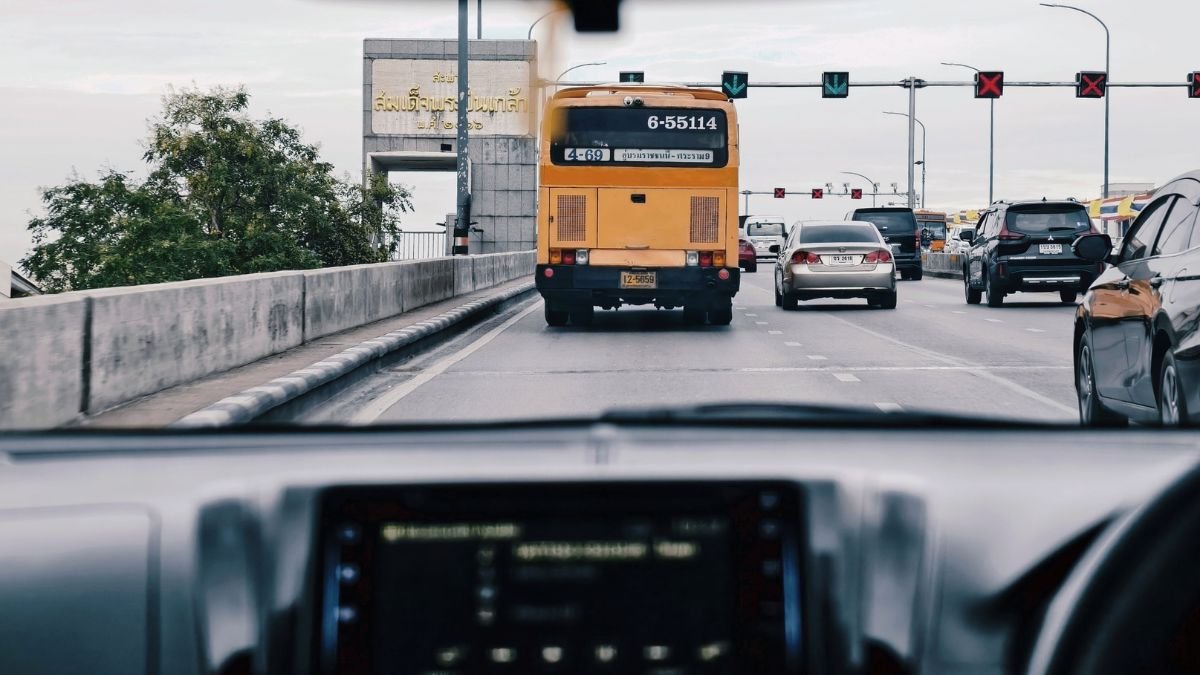
Researchers from MIT and autonomous vehicles technology company Motional have developed a system that could help humans understand what is happening inside an autonomous vehicle when it makes a decision. Called the Concept-Wrapper Network, or CW-Net, it translates parts of the vehicle’s decision-making into concepts humans can understand, such as “approaching stopped vehicle” or “close to cyclist.”
In one test, an autonomous vehicle repeatedly stopped when approaching a cyclist. The safety driver assumed the vehicle had detected the cyclist. CW-Net revealed otherwise: the system was not properly configured to detect the cyclist. The vehicle had stopped because its emergency-braking procedure was triggered when it got too close. The difference is important. If a human knows that the vehicle has failed to recognise a cyclist, they can slow down or take control sooner.
It raises a larger question for autonomous driving: when a vehicle makes a mistake, can humans understand the mistake quickly enough to respond?
When the Decision Comes from Software
Autonomous vehicles use cameras, lidar and other sensors to interpret their surroundings. Machine-learning systems then use that information to plan the vehicle’s movement. But deep-learning models can be difficult to interpret. Engineers may see what the vehicle detected and what it eventually did without having a clear view of the reasoning connecting the two.
That problem has already appeared in crash investigations. In March 2018, an Uber test vehicle operating with an automated driving system struck and killed a pedestrian in Tempe, Arizona. The US National Transportation Safety Board found that the system had detected the pedestrian but classified her at different points as an unknown object, a vehicle and a bicycle. Its predictions about her path also changed.
The investigation showed why an autonomous-vehicle crash can require a different kind of analysis. Investigators may need to determine not just what happened, but what the automated system detected, how it classified an object and what it predicted before deciding how the vehicle should move.
What Happens After a Crash?
The US National Highway Traffic Safety Administration requires specified manufacturers and operators to report certain crashes involving automated driving systems and Level 2 driver-assistance systems. For covered automated-driving-system crashes, the reporting order includes cases in which the system was engaged within 30 seconds of a crash meeting specified injury, fatality, towing or property-damage criteria.
Such reports give regulators information to identify safety concerns and investigate potential defects. But a crash report does not necessarily reveal every step in an AI system’s decision-making. NHTSA also notes that information in initial reports can be incomplete or unknown and may later be updated.
A 2024 case involving Cruise showed another side of the problem. NHTSA reached a consent order with Cruise over incomplete reporting related to crashes involving its automated-driving systems. Cruise agreed to pay a 1.5 million dollars civil penalty and submit a corrective action plan. Reuters reported that one of the cases involved a pedestrian who had first been struck by another vehicle and was then hit and dragged by a Cruise robotaxi.
The case was about reporting rather than AI interpretability. But it highlighted the importance of having reliable information when automated systems are involved in crashes.
Why Knowing “Why” Matters
Consider a vehicle that suddenly brakes. A passenger might assume that it has detected a pedestrian or another obstacle. But the same action could result from the system misunderstanding its surroundings and triggering an emergency response.
From outside, the vehicle’s behaviour looks the same. For the person supervising it, the difference can determine whether they trust the system or intervene.
CW-Net is designed to make some of the concepts influencing the vehicle’s planning visible. The researchers integrated the system into the machine-learning planner rather than generating an explanation only after the decision had been made. They say this makes the explanations causally connected to the vehicle’s behaviour.
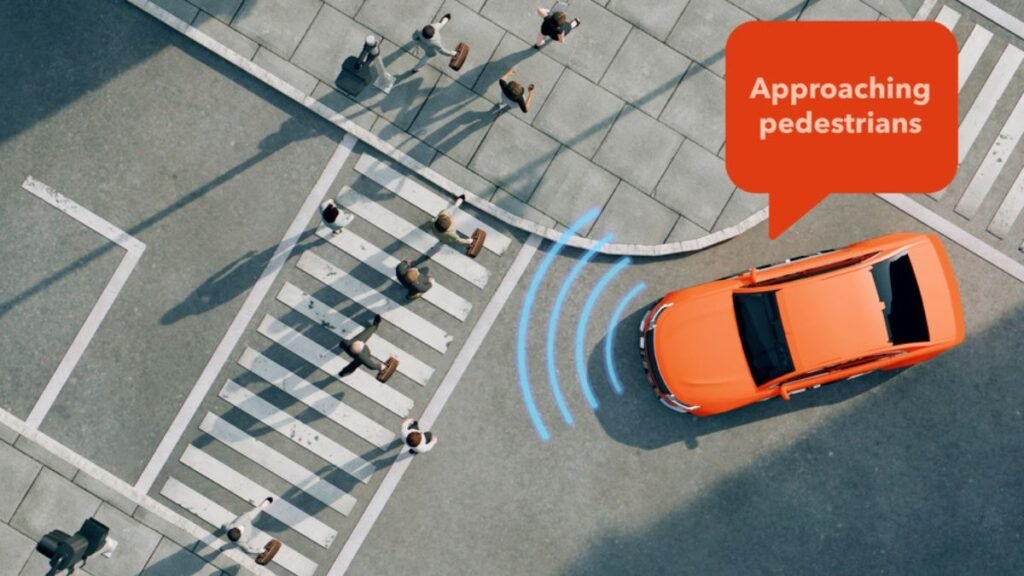
The system was trained using 130 million examples of self-driving scenes with labelled concepts. In tests with a Motional autonomous vehicle on a private track, the explanations helped safety drivers predict vehicle behaviour more accurately. A larger simulation study using real driving situations from Las Vegas produced similar results among non-expert participants.
That does not mean CW-Net prevents crashes. Its potential value is more immediate: it can give humans information that may help them recognise a failure and give engineers another way to investigate it.
India is Moving Towards More Connected Vehicles
India’s immediate road-safety challenge is still conventional road crashes. At the same time, India is introducing technologies that allow vehicles to exchange and process more information about their surroundings. In August 2026, the Ministry proposed phased implementation of vehicle-to-vehicle communication. Under the draft proposal, L, M and N category vehicles manufactured from October 1, 2028 would be required to have V2V systems conforming to AIS-230. The proposed systems would allow vehicles to exchange information including speed, position, direction and acceleration.
The government says such communication could support warnings for sudden braking, forward collisions, unsafe lane changes and approaching emergency vehicles. V2V is not autonomous driving. It does not transfer control of the vehicle to an AI. But it is part of a broader shift towards vehicles relying more heavily on sensors, software and communication systems.
Reuters also reported in June that India had removed licensing requirements affecting spectrum used by automotive radar and V2X technologies, potentially making it easier to deploy some crash-avoidance and connected-vehicle technologies. As these systems become more sophisticated, understanding their failures becomes important too.
The Indian Question
An autonomous vehicle operating in India would have to navigate roads shared by cars, buses, motorcycles, bicycles and pedestrians, often in complex and unpredictable situations. That does not mean Indian roads are inherently unsuitable for autonomous driving. It does mean that automated systems need to be tested in the environments in which they are expected to operate, including unusual situations that can challenge their perception and decision-making.
This is where technologies such as CW-Net could eventually have a role. If a vehicle responds incorrectly, an understandable record of what influenced its decision could help a safety operator recognise the problem. The same information could help engineers identify weaknesses in the system and work on correcting them. For regulators and investigators, such information could also become useful when reconstructing what happened after a crash.
The goal, however, should not be to make people trust autonomous vehicles simply because the systems can explain themselves. An explanation is useful only when it is accurate and helps a person make a better decision. A self-driving car will still have to make the right decision. But when it does not, being able to understand where the decision went wrong could help humans respond sooner—and help engineers make the next system better.
Technology
Meta’s $18 Billion Child-Safety Reckoning: Can Social Media Be Made Safer for Teens?
Meta’s 18 billion dollars child-safety settlement marks a major shift in how social media platforms are being held accountable for protecting young users, putting renewed focus on screen time, platform design and age verification.

Meta has agreed to pay up to 18 billion dollars to settle a sweeping legal challenge brought by nearly all U.S. states over allegations that Facebook and Instagram were designed to keep children and teenagers engaged despite risks to their wellbeing. Announced on August 26, the settlement ends a major federal trial in California and requires Meta to introduce significant changes to how teenagers use its platforms. Meta has not admitted wrongdoing.
More importantly, the agreement reflects a changing approach to online child safety: platforms, rather than parents alone, are increasingly being held responsible for how their products affect children.
What will Change?
Under the agreement, teenagers will receive a default two-hour daily limit across Facebook and Instagram, although parents can override it. Meta will also introduce a default Night Mode, restricting use between midnight and 6 a.m. Notifications will be muted during school hours, from 8 a.m. to 3 p.m., except for direct messages and safety-related alerts.
Teenagers will receive reminders after extended periods of use and at certain daily-use thresholds. Meta will also strengthen age-assurance measures aimed at keeping children under 13 off its platforms. The measures are expected to remain in place for 10 years, with independent oversight of Meta’s compliance.
Financially, the settlement could reach 18 billion dollars. About 12.7 billion dollars is guaranteed over 10 years, while another 5.3 billion dollars is conditional on TikTok and YouTube adopting specified safety measures and making corresponding payments.
Tackling the Screen Time
The lawsuits were not simply about teenagers spending too much time online. States accused Meta of designing features that encouraged prolonged engagement while allegedly downplaying risks to young users. They also raised concerns over the collection and use of personal information from children under 13. That puts the focus on the architecture of social media itself.
Recommendation systems, notifications, engagement metrics and endless feeds can influence how long users remain on a platform. The larger question is whether companies should be responsible when those design choices contribute to harm among young users. The settlement pushes the debate towards platform responsibility rather than individual responsibility.

Is Two Hours Enough?
A daily limit may reduce screen time, but it does not necessarily address what happens during those two hours. What content teenagers encounter, how algorithms recommend it and how platforms respond to vulnerable users remain important questions.
Meta’s advertising-driven business model also remains intact. The settlement does not fundamentally change the commercial incentives behind user engagement. But can social media be made safer simply by limiting how long children use it?
The Age-verification Dilemma
The agreement also highlights another challenge: how platforms determine who is a child. Stronger age assurance can make it harder for children to bypass restrictions. But systems involving facial analysis, identity checks or other forms of age estimation can create new privacy risks.
Protecting children online, therefore, also requires deciding how much information platforms should collect to establish a user’s age.
A Test for the Industry
Although the settlement applies to Meta’s U.S. services, its implications extend beyond the company. Meta is calling on TikTok and YouTube to adopt similar safeguards, potentially pushing child-safety measures towards an industry-wide standard.
The settlement could ultimately prove to be less about the 18 billion dollars than about who bears responsibility for children’s digital lives. For years, parents have been asked to manage screen time, adjust settings and monitor what children see online.
Meta’s settlement suggests a different expectation: if platforms are built in ways that can affect children, the platforms themselves may have to change. The next decade will show whether that shift can produce a genuinely safer social-media environment for young users.


India’s Data Centre Boom Is Bigger Than It Looks

Under Lalbagh: How a Botanical Garden Forced Bengaluru to Rethink Its Tunnel Road

August 2026 Was the Warmest Month on Record

Europe’s Cities Are Adapting to Climate Change Yet Is It Reaching Residents?

Aim for the Stars: Anjali Thomas’s Journey from a Small College in Kerala to the Frontiers of Medical Imaging

Farmers Borrowed to Build ‘Diggis’. Two Years Later, They Are Still Waiting for the Subsidy

Our Algorithm Knows What We Want Before We Do. That is the Problem.

The new skill revolution

Sophie Adenot Makes History as First Frenchwoman to Walk in Space

When Decarbonisation Becomes the Real Conversation at Tiruppur’s Knit Show

-

 Math2 months ago
The 2026 Fields Medals: Four Proofs, Four Decades-Old Problems Solved
-
Climate2 months ago
After Kerala’s Deadliest Landslide, the Hardest Thing to Rebuild Was Childhood
-
Society2 months ago
West Asia Crisis: Can Kerala’s Returning Gulf Migrants Find a Future in the Green Economy?
-
Space & Physics4 months ago
India Semiconductor Mission: ‘It’s Not About Fabs. It’s About Building An Entire Ecosystem’
-
Climate3 months ago
The Climate World Cup? How Climate Change Could Affect Player Performance at the 2026 World Cup
-
Society2 months ago
What Is Civilisational Diplomacy? Understanding India’s Newest Foreign Policy Tool
-
Society3 months ago
From Bell Labs to the Classroom: A Second Career in Teaching
-
Space & Physics3 months ago
Engineers Develop Dual-Mode Propulsion System for Next-Generation Small Satellites