Climate
Delhi’s Air Pollution: Climate Change Is Raising Risks for India’s Heritage
India’s heritage sites are facing growing environmental risks as air pollution, rising temperatures, changing rainfall and coastal exposure accelerate the deterioration of historic structures. From pollution-linked black crusts at Humayun’s Tomb to salt damage at Mahabalipuram’s Shore Temple, scientific studies show why climate and environmental monitoring are becoming increasingly important for heritage conservation.

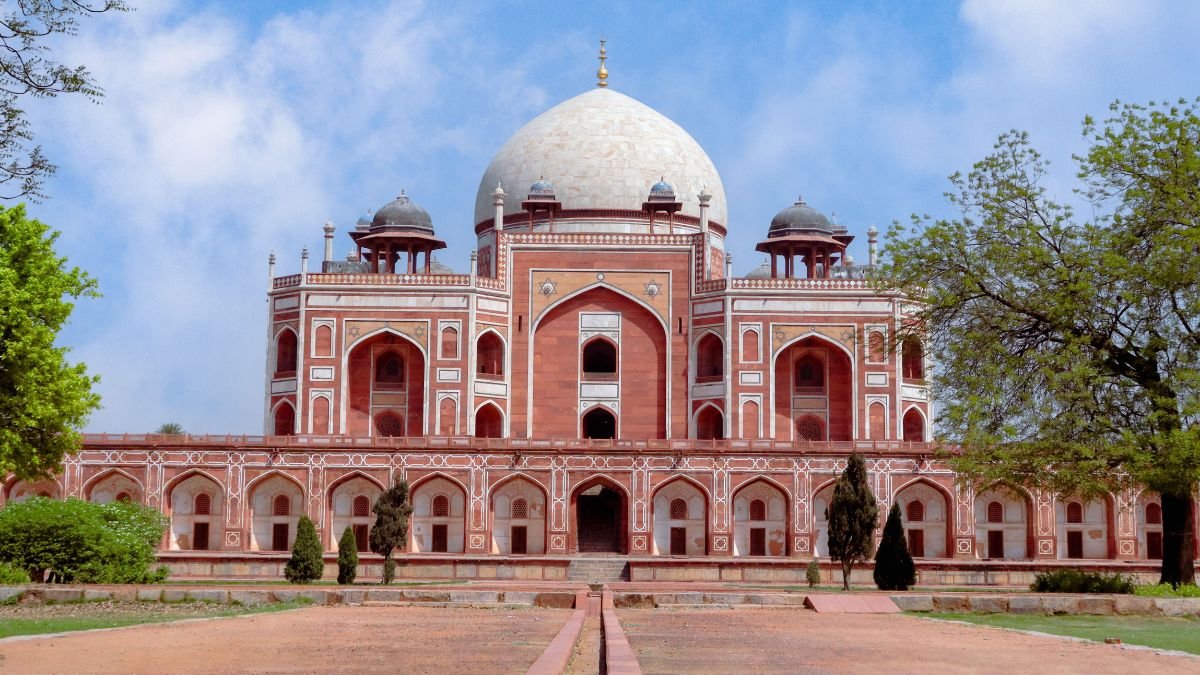
Delhi’s air pollution is damaging more than the city’s air quality. It is also contributing to the slow deterioration of its built heritage. India’s historic monuments are facing an environmental threat that extends beyond age and neglect. Air pollution, extreme weather, changing rainfall, rising temperatures and coastal hazards are creating new challenges for conserving structures built under very different environmental conditions.
A new study of Humayun’s Tomb in Delhi provides a close look at one of these risks. Researchers from IIT Roorkee and IIT Kanpur found that air pollution is contributing to the formation of black crusts on the sandstone surfaces of the UNESCO World Heritage Site. The study found that these crusts contain gypsum, carbon-rich material and traces of metals associated with urban pollution.
The finding is significant because it shows how environmental conditions around a monument can gradually alter its materials. But Humayun’s Tomb is only one example of a wider conservation challenge.
Pollution Leaves a Chemical Mark
Researchers collected five black-crust samples from rain-sheltered rooftop locations at Humayun’s Tomb under the supervision of an Archaeological Survey of India conservator. Using techniques including XRF, XRD, FTIR, SEM-EDX, CHNS and ICP-MS, the researchers found gypsum to be the dominant mineral in the crust. They concluded that external sources of calcium, including airborne particles, react with sulphur compounds to produce gypsum on the sandstone.
The composition also contained indicators consistent with pollution from vehicles, road and soil dust, construction, biomass burning and industrial activity. Crust formation was stronger at locations exposed to wind but sheltered from rain, showing that both pollution and local exposure conditions influence deterioration.
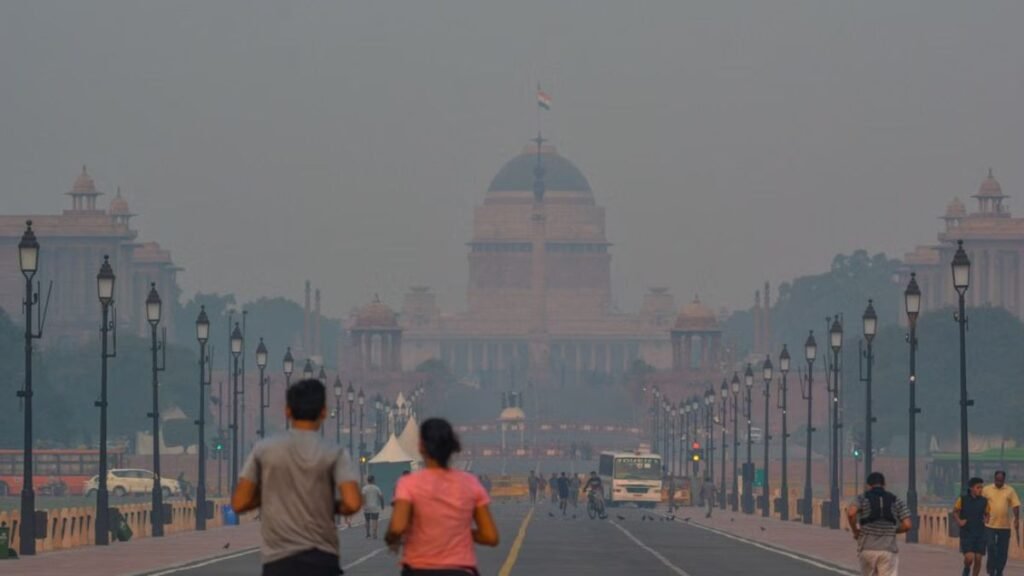
The study does not establish that the black crust itself has caused structural failure of Humayun’s Tomb. Instead, it identifies a long-term material deterioration process and recommends preventive conservation, including scientifically established cleaning methods, site-specific testing of protective coatings, air-quality monitoring and atmospheric modelling.
The Taj Mahal Shows How Pollution Affects Heritage
Humayun’s Tomb is not the only Indian monument where air pollution has been studied as a conservation concern. A 2015 study in Environmental Science & Technology measured particulate pollution around the Taj Mahal over a year and found high levels of light-absorbing particles, including black carbon, brown carbon and dust. Experiments using marble surrogate surfaces showed that these carbon-rich particles contribute to surface discoloration.
However, this finding is specific to staining and surface change. It does not imply that air pollution alone explains all forms of deterioration at the Taj Mahal. Recognising pollution as a conservation issue, the Ministry of Culture reports that the Archaeological Survey of India operates air-pollution monitoring laboratories at the Taj Mahal and Bibi ka Maqbara.
Climate Conditions Monuments Face
Climate change presents a different, but overlapping, conservation problem. UNESCO identifies storms, cyclones and tidal surges as potential threats to the World Heritage property and notes that their frequency could increase as a result of climate change.
A major review of climate-change impacts on cultural heritage found that climate change can alter the frequency and intensity of processes that already damage historic materials. These include moisture-related deterioration, salt crystallisation, biological growth and erosion. The review stresses that the effects vary according to the material, location and local climate of each heritage site.
That makes it important not to treat climate change as a single threat to India’s monuments. A stone temple on the coast faces different risks from a sandstone monument in Delhi or a heritage structure in a flood-prone region.
Mahabalipuram: Salt and Sea Exposure
The Shore Temple at Mahabalipuram illustrates the vulnerability of coastal heritage. A study by researchers from ASI and the National Museum Institute examined the deterioration of the 7th–8th-century granite monument. Extensive salt-induced deterioration, particularly on sections directly exposed to the sea. Some sculptures on the seaward side had been eroded beyond recognition.
The study linked the deterioration to marine exposure, sea spray, soluble salts, high-velocity winds and the site’s tropical, humid conditions. The researchers also found that continuous sea spray makes some conventional stone-conservation approaches difficult to maintain.
The study does not establish that climate change caused the Shore Temple’s existing deterioration. It does, however, demonstrate how vulnerable coastal heritage can be to marine and climatic conditions; risks that become increasingly important as coastal environments change.
Importance of Preventive Conservation
India has already begun incorporating environmental monitoring into heritage conservation. The Ministry of Culture said in that ASI and ISRO have installed Automated Weather Stations at several historical monuments to track temperature, rainfall and wind. ASI also carries out periodic scientific treatment and conservation work at heritage sites.
But the evidence from Humayun’s Tomb shows that monitoring pollution and climate variables must be paired with material-level studies. The challenge is identifying the environmental drivers of deterioration and intervening early, before it becomes irreversible.
For Delhi, this means reducing pollutants that settle on historic stone. Coastal monuments must contend with salt, moisture and erosion, while high-rainfall regions require stronger drainage and structural resilience.








Climate
Europe’s Potato Crisis Could Hit Your Chips
More than 3.5 million tonnes of potatoes could be lost across Europe and Britain as extreme heat and drought cut yields and push up processing prices.
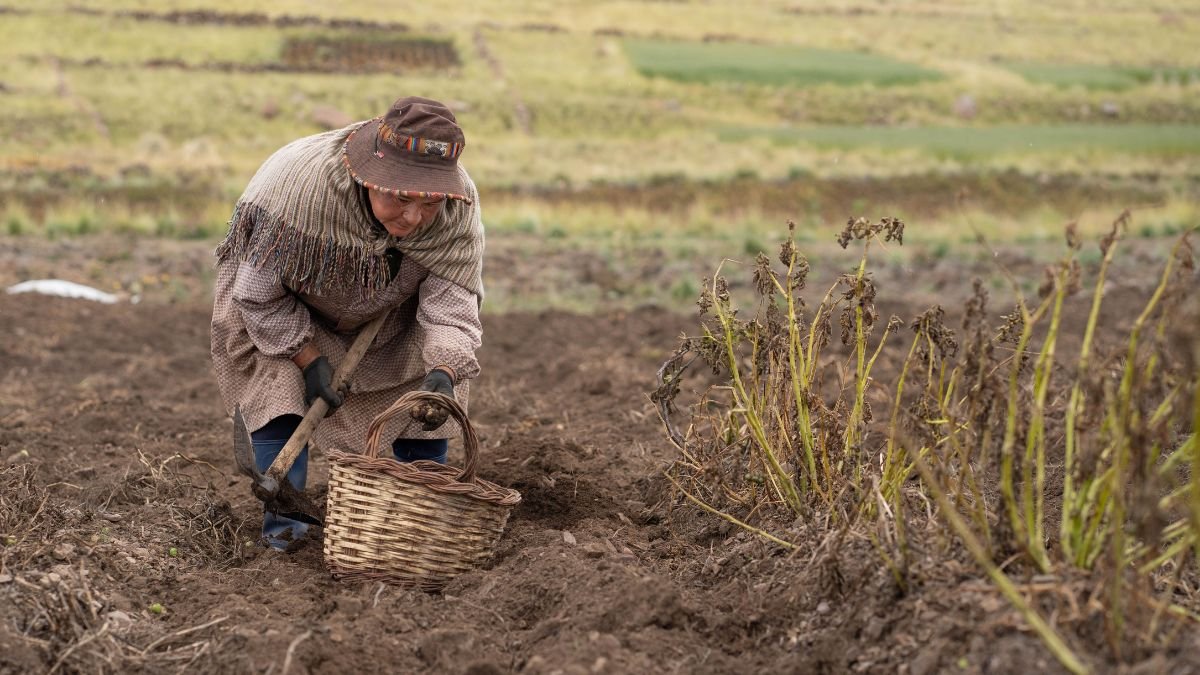
Europe’s potato harvest is heading into a difficult season after extreme heat and drought cut yields across some of the continent’s biggest potato-growing regions. Germany, France, Belgium and the Netherlands could lose around 3.1 million tonnes of potatoes compared with their five-year average, according to a new analysis by the Energy and Climate Intelligence Unit (ECIU). When Great Britain is included, the estimated weather-related loss rises to more than 3.5 million tonnes.
At current prices, the lost production across the five countries could be worth between €498 million and €818 million. The impact is already visible in the potato market, where processors are paying substantially more for supplies.
Smaller Crop Before the Drought
The weather shock came after European farmers had already reduced potato planting. A glut in 2025 pushed potato prices down, prompting growers to cut the area planted in 2026. The planted area fell by 11% in Germany, 10% in France, 15% in the Netherlands and 17% in Belgium.
Had yields remained at their five-year averages, the smaller planted area alone would have resulted in an estimated 3.6 million-tonne reduction in production. The drought added another layer of losses. ECIU estimates yields are 13% below the five-year average in France, 21% lower in Belgium, 10% lower in Germany and 7% lower in the Netherlands.
For Great Britain, where the Agriculture and Horticulture Development Board stopped publishing harvest and yield estimates in 2021, the analysis uses an estimate from World Potato Markets. It puts yields around 11% below the 2021–25 average, based on conditions similar to the 2018 drought.
Tom Lancaster, land, food and farming analyst at ECIU, said the effects of the summer’s heat and drought were becoming increasingly visible in industry yield estimates. “As one of Europe’s thirstiest crops, it was inevitable that the potato harvest would be hit hard,” he said.
Heat Shrinking the Potatoes
The problem is not only the amount harvested. Heat and water shortages are also affecting potato size. Belgium, the world’s largest exporter of frozen fries, has reported particularly severe problems with Fontane, its main frying variety.
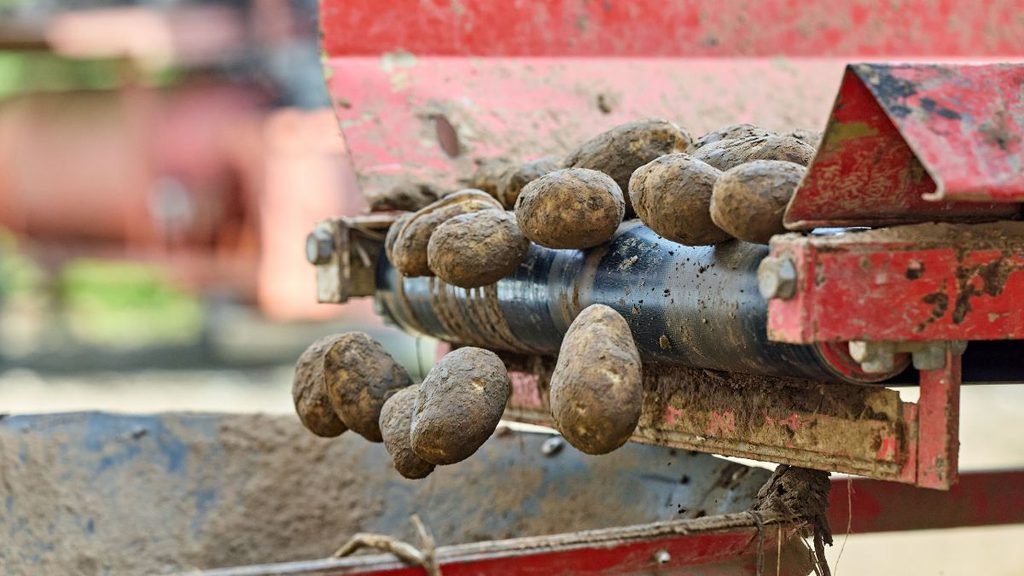
By the end of August, Fontane was yielding around 32 tonnes per hectare, 30% below the previous year. Only about half of the crop was above the 50 mm size preferred by processors. For the processing industry, that distinction matters. A potato crop can survive a dry season while still producing fewer tubers that meet the size requirements for products such as chips and frozen fries.
Recent rainfall may have improved conditions in some areas, but industry estimates suggest it came too late to reverse much of the damage.
Potato Prices are Rising
The tighter supply is showing up in processing markets. Belgian free-market potatoes have risen from zero in April to €200 or more a tonne. German processing potatoes have reached about €240 a tonne, compared with a season low of €15 in June.
In Britain, processors are paying more than £300 a tonne, up from £180 in February. These are processing-market prices rather than direct measures of what consumers will pay. But they show the pressure developing further up the supply chain as processors compete for potatoes that meet their requirements.
Farmers Caught Between Two Bad Years
For potato farmers, the weather shock has come after a difficult market year. Jean-Paul Dallene, a potato farmer in Pas-de-Calais, said he had surplus potatoes last year and was forced to sell them at a loss. This year, drought has reduced his yield by 12 tonnes per hectare. He estimates the resulting loss of income at around €4,300 per hectare, from lower yields and contract prices.
Dallene has already changed his farming practices, including adopting no-till methods to reduce the impact of water shortages. But the severity of this year’s drought and heat exceeded what he expected.
His experience highlights the economic difficulty of adapting to a more volatile climate. Farmers can change cultivation practices, but they still face weather they cannot control and markets that can swing sharply between oversupply and shortage.
Water Management Crisis
Potatoes require substantial water during tuber development. Higher temperatures can increase the crop’s water demand at the same time that drought reduces the water available.
That makes water management increasingly important. Cedric Porter, editor of World Potato Markets, said farmers would need to prepare for both extremes. “Investment in water management, whether it is conserving water when there is too much or irrigating during dry summers, will be essential to the continued success of the crop,” he said.
That means adaptation cannot depend on irrigation alone. Storing water during wetter periods, improving soil moisture retention and making more efficient use of available water could become increasingly important for potato production.
Climate Problem With Food Price Effect
The potato losses are part of a wider pattern of climate stress across Europe. World Weather Attribution found that temperatures during this summer’s European heatwave would have been virtually impossible” 50 years ago. Its assessment of the drought also found that human-caused warming had increased the likelihood and severity of the conditions.
For agriculture, the significance lies in the combination of hazards. Heat increases water demand. Drought reduces water availability. Heavy rainfall at other times can damage soils and crops or make fields difficult to work. These shifts make it harder for farmers to rely on historical growing conditions when deciding what and how much to plant.
The Biological Hangover
The immediate concern is supply. But the longer-term issue is predictability. Europe went from a potato glut and low prices in 2025 to reduced planting in 2026, followed by heat and drought that further cut yields. The result could be more than 3.5 million tonnes of weather-related production losses across five major markets.
For consumers, that pressure can eventually feed into the price of chips and other potato products. For farmers, the bigger challenge is managing a crop when both sides of the equation are becoming more uncertain: the weather that determines yields and the market that determines whether those yields are profitable.
Porter notes that Europe has experienced four droughts since 2018, alongside periods of heavy rainfall during winter and spring. The potato may be an everyday food, but its increasingly unpredictable journey from field to processor is another measure of how climate change is reshaping Europe’s food system.
Climate
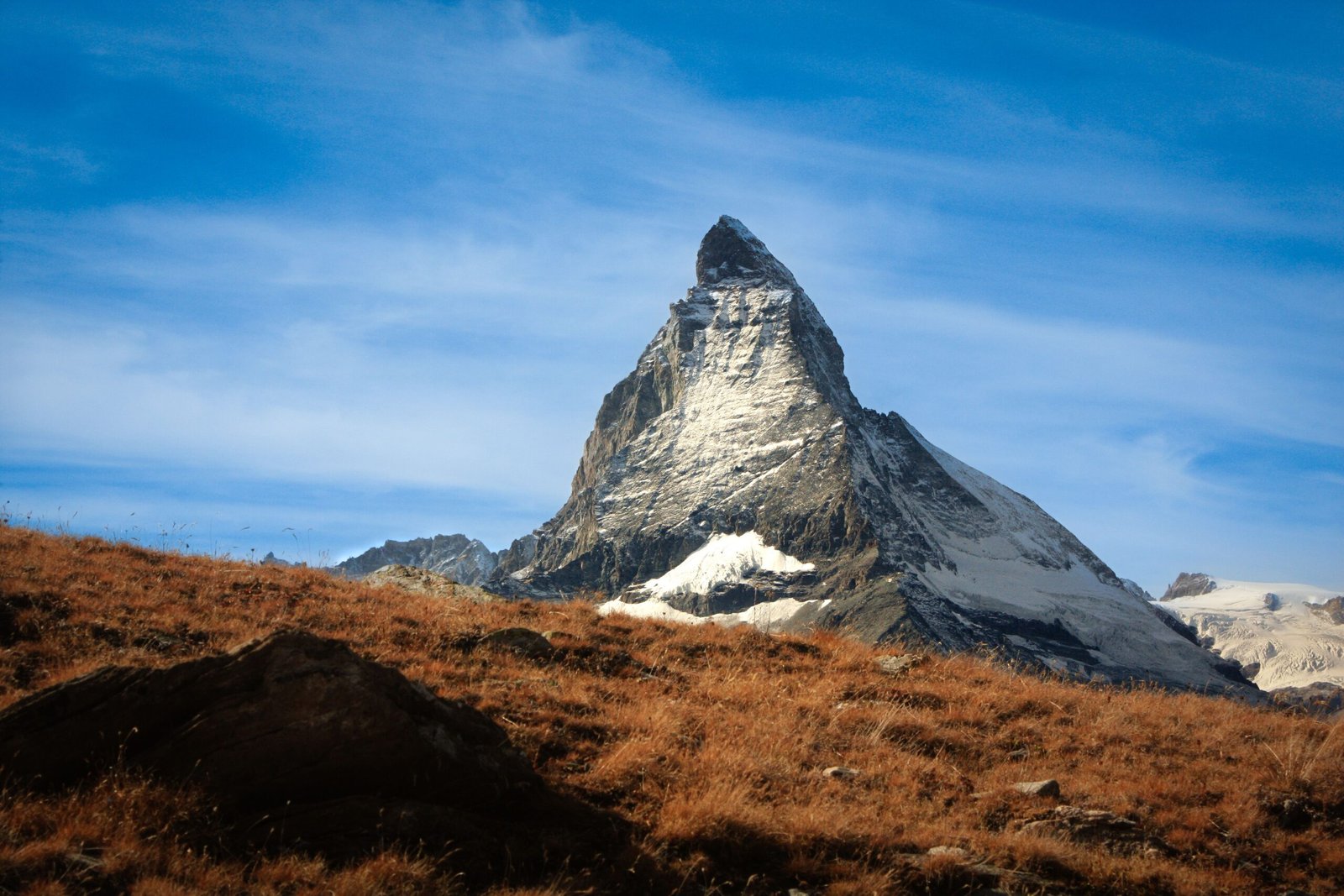
Icnoic Matterhorn Almost Snow-Free as Record Heat Accelerates Swiss Glacier Loss
The Matterhorn is almost snow-free after an exceptionally hot, dry summer, as Switzerland’s glaciers record another year of severe ice loss.
Climate
Climate Change Is Already on Your Dinner Table. Here Is How It Got There
Climate change is already affecting what food costs. From heatwaves and droughts to weaker crop yields, extreme weather is disrupting food markets and making staples such as potatoes, tomatoes and other vegetables more price-sensitive.

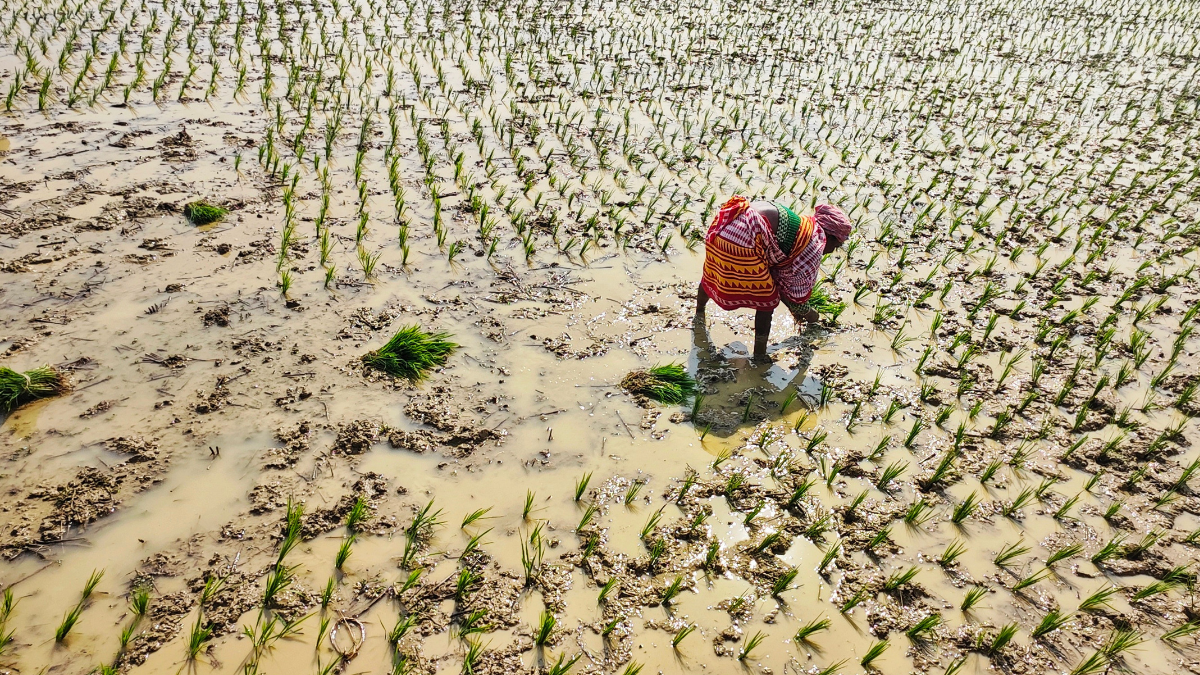
From heatwaves in the field to prices in the market, extreme weather is changing what food costs. Perishable foods such as vegetables are especially exposed, and India’s coming potato season is one to watch.
What does climate change have to do with the tomatoes in your salad or the potatoes on your plate? More than it may seem.
Climate change is not only about rising temperatures or intense rainfall. Its effects also move through farms and food markets and, eventually, into our kitchens. Heatwaves, droughts and uneven weather are disrupting the food system. People already stretched by work and the cost of living then find that food has become dearer still.
The result is a climate story that is easy to overlook because it shows up in an ordinary place: the dinner table.
A growing body of research is beginning to map the journey from climate shock to food price. A September 2026 analysis by Zero Carbon Analytics found that extreme climate events are raising agricultural risks, disrupting food systems and pushing up food prices. It also highlights the vulnerability of perishable, nutrient-dense foods, naming tomatoes in the Mediterranean among the affected commodities.
That matters because the climate-food connection is not simply about whether there will be enough calories on the planet. It is also about what those calories cost and what people can afford to eat.
The problem starts in the field
A 2021 study in the Journal of Environmental Economics and Management examined global yields of major calorie crops, using gridded agricultural data and climate-model projections. The researchers found that, without adaptation beyond what farmers have historically managed, climate change could cut global crop yields by 3–12 per cent by the middle of the century and by 11–25 per cent by the end of it, under a vigorous warming scenario. They also found that farmers’ historical adaptation has only slightly softened the effects of weather shocks across broad regions.
That does not mean every crop, country or farm will see the same decline. Impacts vary with crop type, location, irrigation and local conditions. But the research points to a larger problem: agriculture cannot be separated from a changing climate. The study covers staple calorie crops rather than vegetables, and the humble potato offers a closer example.
Why potatoes are vulnerable
Potatoes may look ordinary, but growing them depends on a narrow combination of temperature and water. The Intergovernmental Panel on Climate Change (IPCC) cites modelling that projects global potato-yield reductions of 2–6 per cent by 2055, though the impact varies considerably between regions. In some marginal growing areas the projected fall in tuber dry weight is much larger, while some high-yielding environments could see gains.
The same assessment cites modelling in which potato yields fall by about 4.6 per cent for every 1°C rise in temperature, and by about 2 per cent for every 10 per cent fall in rainfall at non-irrigated sites.
For India, this makes the coming potato season worth watching.
A 2025 study in Environmental Research Letters found that potato prices in India rose by about 81 per cent between April and June 2024, compared with the same period a year earlier, after an unusually severe heatwave in May. Onion prices rose by 89 per cent over the same period.
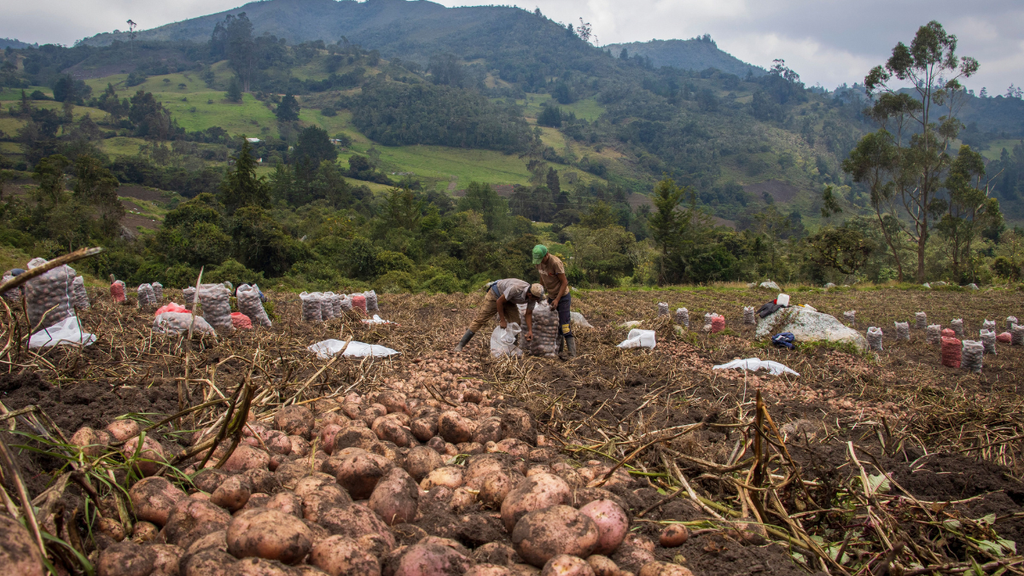
Farmers harvesting potatoes.Image credit:Pexels
This year’s southwest monsoon has been weak. India had received about 86 per cent of its normal rainfall by 29 August, according to India Meteorological Department data, and Bihar, an important potato-producing state, was running about 40 per cent below normal at the end of the month.
Analysts caution, however, that this does not amount to a confirmed national loss in potato production. The main risk is what the shortfall leaves behind: lower soil moisture, weaker groundwater recharge and higher irrigation needs before the winter crop is planted.
Nor have the shops felt it yet. Official consumer-price data for August 2026 show potato prices 13.14 per cent lower than a year earlier and tomato prices 31.09 per cent lower, although onions were 48.27 per cent dearer.
That distinction matters. Climate science can identify elevated risks; it does not mean every weather event automatically produces a specific crop loss or price rise.
How climate shocks reach the market
Tomatoes illustrate another part of the problem. Fresh vegetables are particularly exposed to climate shocks because they are perishable and have limited storage windows.
Zero Carbon Analytics counts tomatoes among the foods whose prices have been affected by recent climate extremes, and points to wider evidence that extreme weather can produce sharp price movements in nutrient-dense foods.
The Environmental Research Letters study also examined reported food-price spikes associated with extreme heat, drought and heavy rainfall. The examples are striking. South Korean cabbage was 70 per cent dearer in September 2024 than a year earlier. Vegetable prices in China rose 30 per cent between June and August 2024. In the United States, extreme heat and drought in California and Arizona contributed to an 80 per cent year-on-year rise in vegetable producer prices by November 2022.
In southern Europe, drought was associated with a 50 per cent year-on-year rise in olive-oil prices by January 2024. Global cocoa prices rose by almost 300 per cent by April 2024 compared with a year earlier, after a heatwave in Ghana and Côte d’Ivoire.
These figures should not be read as saying that climate change alone caused every increase. The researchers note that demand, transport disruptions, speculation and other socioeconomic factors can also shape the final price. But their analysis shows how extreme climate conditions can trigger food-price shocks.
From the farm to inflation
The consequences do not necessarily stop at the market. Research by economists at the European Central Bank and the Potsdam Institute for Climate Impact Research, published in Communications Earth & Environment in 2024, examined how global warming and extreme heat can feed into inflation. Under projected 2035 conditions, the study estimates that annual food inflation could rise by 0.92–3.23 percentage points a year on average globally, depending on emissions scenarios, climate models and empirical specifications.
The researchers also estimate that Europe’s extreme summer heat of 2022 raised food inflation by 0.43–0.93 percentage points, and that warming projected for 2035 would amplify the effect of similar extremes by 30–50 per cent.
When food prices rise, people on lower incomes have less room to absorb the increase. The Environmental Research Letters study notes that households may respond by spending more of their income on food, buying less food or switching to cheaper and often less nutritious options.
What ends up on the plate?
The World Food Programme (WFP) estimated on 5 August that the 2026–27 El Niño could push at least 49 million more people into acute food insecurity by the end of 2027, across the 45 countries it assessed. Those are countries already considered food insecure and where El Niño is expected to have a significant effect. The number of acutely food-insecure people in them could rise from about 225 million to 274 million.
And as the climate warms, the concern is not simply whether a tomato or potato will disappear from the plate.
It is whether climate shocks will make food production more uncertain, prices more volatile and nutritious diets harder to afford.


Hunter Valley Coal Mine Gets Approval to Run to 2045. What Does It Mean for Australia’s Climate Transition?

Buxa Begins Tiger Reintroduction With Release of Three-Year-Old Tigress

Europe’s Potato Crisis Could Hit Your Chips

Scientists Find Two Distinct Origins in the Developing Human Brain

Marshall Islands: Why the US Nuclear Legacy Is Back Before the UN

From Scams to Screens: How the National Stock Exchange Rewrote India’s Equity Story

Aim for the Stars: Anjali Thomas’s Journey from a Small College in Kerala to the Frontiers of Medical Imaging

Anxiety Freezes Career Decisions. Curiosity Unfreezes Them

The Engineer of Tomorrow Is Already Here

India’s AI Moment Rests on More Than Code

-

 Math2 months ago
The 2026 Fields Medals: Four Proofs, Four Decades-Old Problems Solved
-
Climate2 months ago
After Kerala’s Deadliest Landslide, the Hardest Thing to Rebuild Was Childhood
-
Society3 months ago
West Asia Crisis: Can Kerala’s Returning Gulf Migrants Find a Future in the Green Economy?
-
Space & Physics4 months ago
India Semiconductor Mission: ‘It’s Not About Fabs. It’s About Building An Entire Ecosystem’
-
Interviews1 week ago
From Scams to Screens: How the National Stock Exchange Rewrote India’s Equity Story
-
Climate4 months ago
The Climate World Cup? How Climate Change Could Affect Player Performance at the 2026 World Cup
-
Society3 months ago
What Is Civilisational Diplomacy? Understanding India’s Newest Foreign Policy Tool
-
Society4 months ago
From Bell Labs to the Classroom: A Second Career in Teaching