
Climate
World Bank Drops 45% Climate Finance Target Under US Pressure
World Bank climate finance target has been dropped following US pressure, raising concerns over climate adaptation funding and support for vulnerable countries.


World Bank climate finance target has been abandoned following pressure from the United States, prompting warnings that vulnerable countries could face reduced funding for climate adaptation and resilience.
The World Bank has abandoned its flagship pledge to direct 45% of annual lending toward climate-related activities, a retreat from a commitment it made at COP28 and one that campaigners say will hit the world’s most vulnerable countries hardest.
The decision followed sustained pressure from the United States, the Bank’s largest shareholder, and came despite last-minute appeals from France — the institution’s fifth-largest shareholder — to keep the target in place. The Bank says it will continue reporting on the climate finance it provides, but it is no longer bound to hit the 45% threshold.
Why the World Bank Climate Finance Target Was Dropped
The World Bank has long been the single largest source of climate finance for developing countries. Multilateral development banks collectively delivered a record $137 billion in climate finance in 2024, with the World Bank contributing the biggest share. That funding underpins the Baku-to-Belém roadmap, which assigns development banks a central role in reaching the $1.3 trillion climate finance goal agreed at COP29.
Dropping the target now, critics argue, sends the wrong signal at the wrong moment. Eleonora Cogo, Climate Finance Lead at the ECCO think tank, put it bluntly:
“The World Bank says it is following its clients’ lead, but the data says otherwise: developing countries want solar, wind and hydropower. Scrapping climate targets at the very moment they are being surpassed, under pressure that runs directly counter to what recipient countries are asking for, is not neutrality. It is a choice that leaves the most vulnerable even more exposed to climate impacts and to the fossil fuel market instability that every new global energy crisis brings back into the spotlight.”
One Plan Survives, Another Falls
Amid the fallout, the Bank did extend its Climate Change Action Plan (CCAP) — the framework aligning its operations with the Paris Agreement — just before its June 30 expiry. The plan had itself been under threat from Washington, and its survival came only after what one observer called a bruising fight among shareholders.
Jon Sward of the Bretton Woods Project described the outcome as a mixed result: “After a long and difficult negotiation among World Bank shareholders, the Bank’s Climate Change Action Plan has survived, but despite the efforts of other board members, US pressure has weakened the Bank’s climate work with the retirement of the 45% climate finance target.”
He added that the Bank still owes clarity on how a forthcoming independent review will shape the CCAP’s future — and how civil society groups, largely excluded from the negotiations, will be brought back in.

Joe Thwaites of the Natural Resources Defense Council struck a more defiant note, stressing that the Bank’s underlying obligations haven’t disappeared: “Let’s be clear: the World Bank still has a mandate to continue providing climate finance. The Climate Change Action Plan has been extended. Losing the overarching 45% climate finance target is bad, but individual World Bank Group entities still have their own climate targets, which can be a backstop against the bottom falling out.”
He called on shareholders to hold Bank leadership accountable and suggested donors redirect support to other institutions if World Bank climate finance begins to slide.
The Real Damage: Adaptation, Not Mitigation
Several analysts warned that the target’s disappearance won’t necessarily starve clean-energy projects — those are increasingly commercially viable on their own. The bigger casualty, they say, will be adaptation and resilience finance, which has always depended more heavily on concessional, subsidized capital.
Labanya Prakash Jena, Director of the Climate and Sustainability Initiative in India, explained:”There will be a limited impact on capital flows to bankable renewables/mitigation projects, since these are commercially attractive. The real risk is to climate adaptation and resilience financing — urban heat resilience, flood defences, climate-vulnerable agriculture — which relied on subsidised capital and development assistance, precisely because it’s harder to make commercially attractive.”
Jena noted that India, as the World Bank Group’s largest borrower, has diversified funding sources that will cushion the blow to mitigation projects — but adaptation finance will still take a disproportionate hit.
Suranjali Tandon, Associate Professor at NIPFP, connected the decision to a broader geopolitical shift: “Dropping the climate finance target reflects the shifting priorities globally. Not surprisingly, among the representatives that declined to endorse the continued work on climate change are large fossil fuel producers. Abandoning the target means the flow of finance, which so far used a broader co-benefits approach, may decline especially where the outcomes in climate change projects become less immediately discernible.”
A Push for Alternatives
For some, the episode is less a crisis than a call to action. Dhruba Purkayastha, Senior Advisor for Climate and Environment at Dalberg, framed the World Bank’s messaging with skepticism — while pointing toward a possible workaround: “While the removal of climate finance target is being positioned as shifting from ‘inputs to outcomes,’ it surely further erodes the concept of climate action as global public good, and weakens global sustainable development multilateralism. Therefore, there is need to step up on regional green development banks, funds, financial institutions such as maybe an Asia Green Finance Institution or a suprasovereign Asian Green Fund.”
What Happens Next
The World Bank’s decision arrives just months after the G11 group of developing nations formally urged the institution to extend its climate plan — a request partially honored, even as the numerical target that once anchored the Bank’s climate ambitions disappears. With the CCAP’s extension length still unannounced and an independent review pending, the coming months will determine whether individual entity-level targets and voluntary reporting can hold the line — or whether, as campaigners fear, climate finance quietly starts to shrink just as the world needs it most.








Climate
The Himalayas Are Under Pressure From Above, Below and Within
The Himalayas are changing in ways that are becoming harder to ignore. As glaciers retreat and permafrost warms, avalanches, landslides and other hazards are becoming more difficult to predict, while growing settlements are putting more people in harm’s way. The recent disaster in Nepal is a reminder that the region needs better warning systems, safer planning and stronger cooperation before the next disaster strikes.

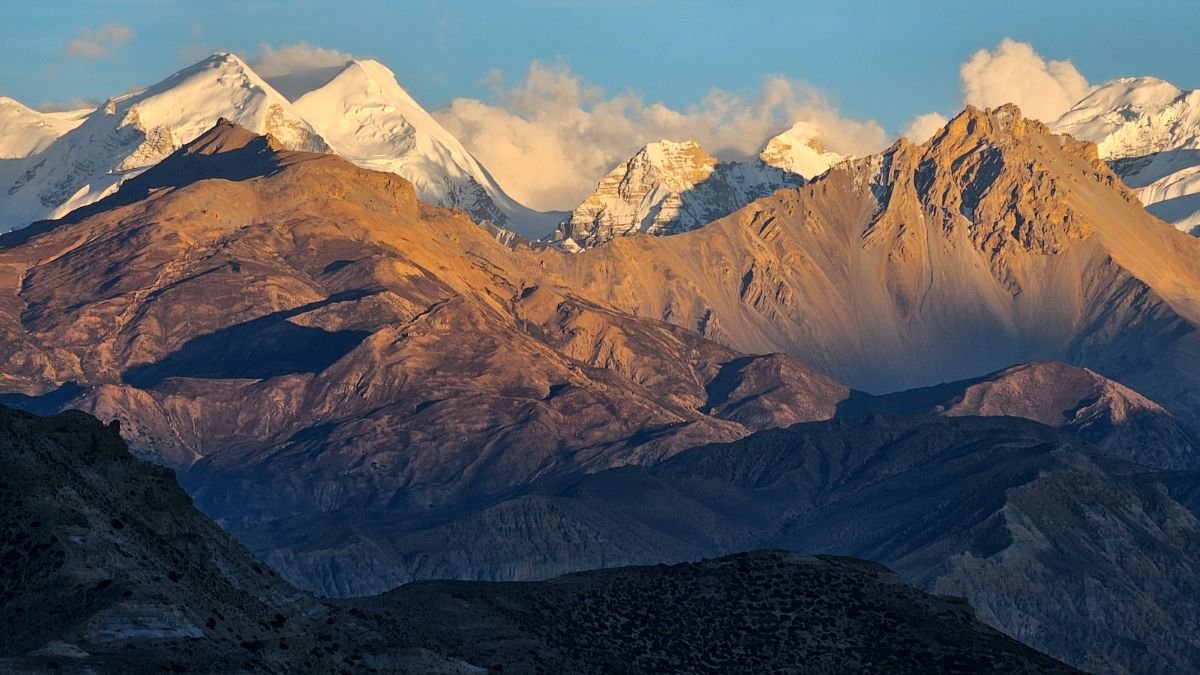
The Himalayas are often described as a region increasingly vulnerable to climate change. But the risks facing the world’s youngest major mountain range are more complicated than warming alone. Glaciers are retreating, permafrost is degrading, avalanches remain a persistent threat and settlements are expanding into unstable mountain terrain. At the same time, the geological forces that created the Himalayas have never stopped.
The recent disaster in Nepal has brought these overlapping risks into sharp focus. Speaking during a discussion on the Nepal floods, Hridayesh Joshi, visiting writer at Carbon Copy, described the event as comparable in scale to the 2013 Kedarnath disaster. He pointed to a succession of disasters across the Himalayas, including Kedarnath, Chamoli, Joshimath and Dharali, as evidence of a growing pattern of extreme events.
But the danger is not coming from a single source.
A Mountain Range That is Still Moving
The Himalayas are not a static landscape. They exist along one of the world’s most active continental collision zones, where the Indian Plate continues to converge with the Eurasian Plate at roughly 40–50 mm a year. The Indian Plate is being pushed beneath the Eurasian Plate, generating enormous stresses in the Earth’s crust and making the region highly earthquake-prone.
The same collision that continues to shape and raise the Himalayas is also responsible for much of their seismic instability. The crust is compressed, folded and fractured as the two plates continue to push against each other.
This geological pressure does not mean that every Himalayan landslide or flood is caused by tectonic movement. But it creates a fundamentally unstable mountain environment in which earthquakes, rock failures and other processes can interact.
The Himalayas are also geologically young. In the Nepal disaster discussed by cryosphere specialist Dr Farooq Azam of ICIMOD, the underlying geology was an important part of the story. Much of the affected area contains sedimentary rock formations that are vulnerable to weathering. That creates a landscape where climate-driven changes can amplify existing geological weaknesses.
The Ice Changing The Terrain
Glacier retreat is altering that terrain further. As glaciers recede, they expose rock surfaces that absorb more heat. They can also leave behind loose debris. At elevations of around 5,000–6,000 metres, permafrost—the frozen ground beneath the surface—can also begin to warm and degrade as temperatures rise.
Azam said the Nepal disaster appeared to involve a combination of climatic and geological processes rather than a single trigger. This matters because a warming mountain does not simply lose ice. It can change the stability of the material holding the mountain together.
ICIMOD reported in March 2026 that ice-loss rates across the Hindu Kush Himalaya have doubled since 2000. The region’s glaciers have lost up to 27 metres of ice thickness since 1975. The consequences can extend well beyond the glacier itself. In the Everest region, for example, a 2024 glacial lake outburst flood was triggered after a rock avalanche struck a glacial lake, generating a displacement wave and releasing about 156,000 cubic metres of water. Nepal has experienced more than 90 GLOFs since the early 1920s.
Avalanches are an older warning
Avalanches add another layer to the Himalayan risk. A regional assessment of snow and ice avalanches identified 681 avalanche events between 1972 and 2022, resulting in more than 3,100 deaths across eight countries in High Mountain Asia. India accounted for 952 recorded deaths and Nepal for 508.
The numbers also reveal why simply counting floods does not capture the region’s vulnerability. Avalanches can affect communities, roads, infrastructure and people living far below the high-altitude slopes.
The research found that most recorded avalanches occurred between January and March. It also noted that only 21% of recorded events had a reported impact, meaning the available database does not represent every avalanche that occurs in the region. Avalanches therefore need to be considered alongside landslides, GLOFs and flash floods rather than treated as an isolated winter hazard.
People are moving into the hazard zone
Natural hazards become disasters when people and infrastructure are exposed to them. Joshi pointed to a dramatic increase in population in parts of the Himalayan region. According to the figures he cited, the population in the area has increased by nearly 600% over the past five decades, while the area under habitation is projected to expand substantially by 2030.
Azam similarly highlighted the absence of a comprehensive land-use policy across the Himalayas. In countries such as Nepal and Bhutan, settlements are often concentrated in gorges, where communities can be particularly exposed to sudden floods, landslides and rockfalls.
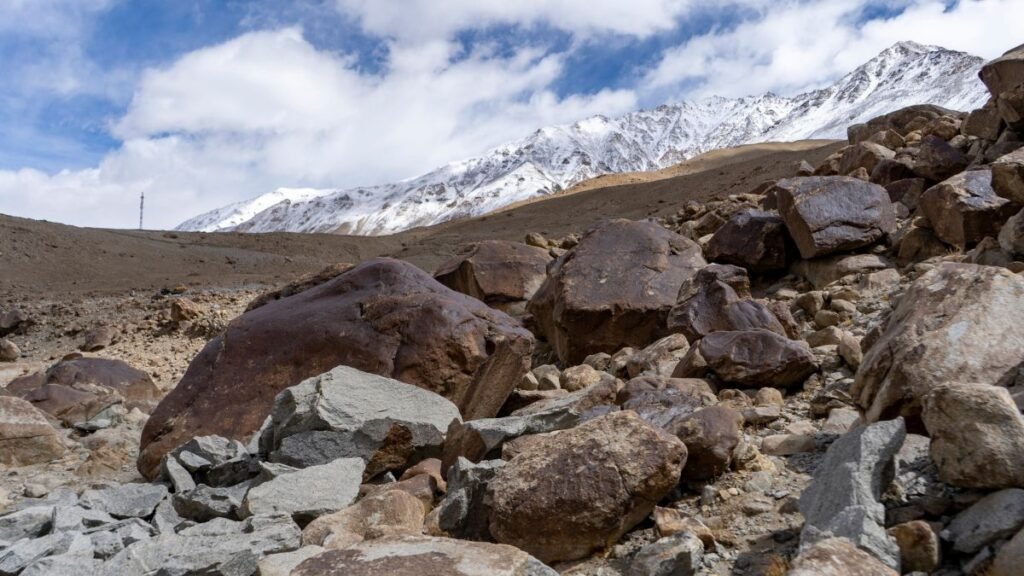
This creates a dangerous overlap: climate change is altering the physical environment while development is increasing the number of people and assets exposed to it. Hydropower is a particularly important example. The 2021 Chamoli disaster damaged hydropower infrastructure, while more recent Himalayan disasters have again exposed the vulnerability of power projects and other infrastructure to cascading hazards.
The warning system has a blind spot
One of the biggest problems is that there is no single early-warning system capable of detecting every Himalayan hazard. Azam noted that existing systems are largely designed to detect glacial lake outburst floods. But the Nepal event did not originate from a conventional glacial lake. The critical movement occurred beneath the rocky surface, making it much harder to identify in advance.
The solution, he argues, requires a different level of monitoring: high-resolution imagery, systems capable of detecting ground movement, machine-learning models and more weather stations across the mountains.
That is a formidable challenge. Monitoring the Himalayas continuously is difficult because of their enormous size, extreme elevations and limited accessibility. But the alternative is increasingly expensive.
Climate risk is becoming an economic risk
The consequences are no longer limited to vulnerable mountain communities. Ulka Kelkar of WRI India pointed out that businesses and critical infrastructure are also increasingly exposed to climate-related losses. Hydropower projects in India, for example, have already been affected by Himalayan disasters.
Kelkar also argues that insurance cannot be treated as the only financial response. As climate-related disasters become more frequent and geographically widespread, insurers themselves face growing exposure. She proposes regional catastrophe funds that could combine government compensation, international finance, insurance and reinsurance mechanisms.
The same logic applies to adaptation. Private capital is unlikely to finance enough adaptation on its own because many adaptation measures benefit entire communities rather than generating easily recoverable financial returns. Kelkar argues that climate resilience therefore needs to be integrated into government budgets across sectors.
The Himalayas need a regional response
The Himalayas do not follow national borders, but disaster management largely does. Rivers, glaciers, weather systems and mountain ranges connect India, Nepal, Bhutan, China and Pakistan. Yet data-sharing between countries remains inconsistent. Kelkar noted that some existing arrangements operate only during the flood season, even as changing climate patterns create risks throughout the year. Geopolitical tensions can further disrupt these channels.
That makes regional cooperation as important as local preparedness.
The challenge facing the Himalayas is therefore not simply that climate change is producing more extreme weather. It is that warming is interacting with a young, tectonically active and geologically fragile mountain system, while people and infrastructure are moving deeper into that system.
The Himalayas are moving from below. Ice is changing from above. Rock and frozen ground are becoming less stable. Avalanches and landslides can turn those changes into sudden disasters. The question is no longer whether the Himalayas are hazardous. It is whether the systems built around them can adapt quickly enough.
Climate
560 Million Children, One Overheating Planet
New research finds that up to 560 million children under ten are already living through at least one extra month of dangerous heat every year because of human-induced climate change — nearly triple the exposure faced by people in their sixties. South Asia, Southeast Asia and West Africa carry the heaviest load. EdPublica breaks down the numbers.

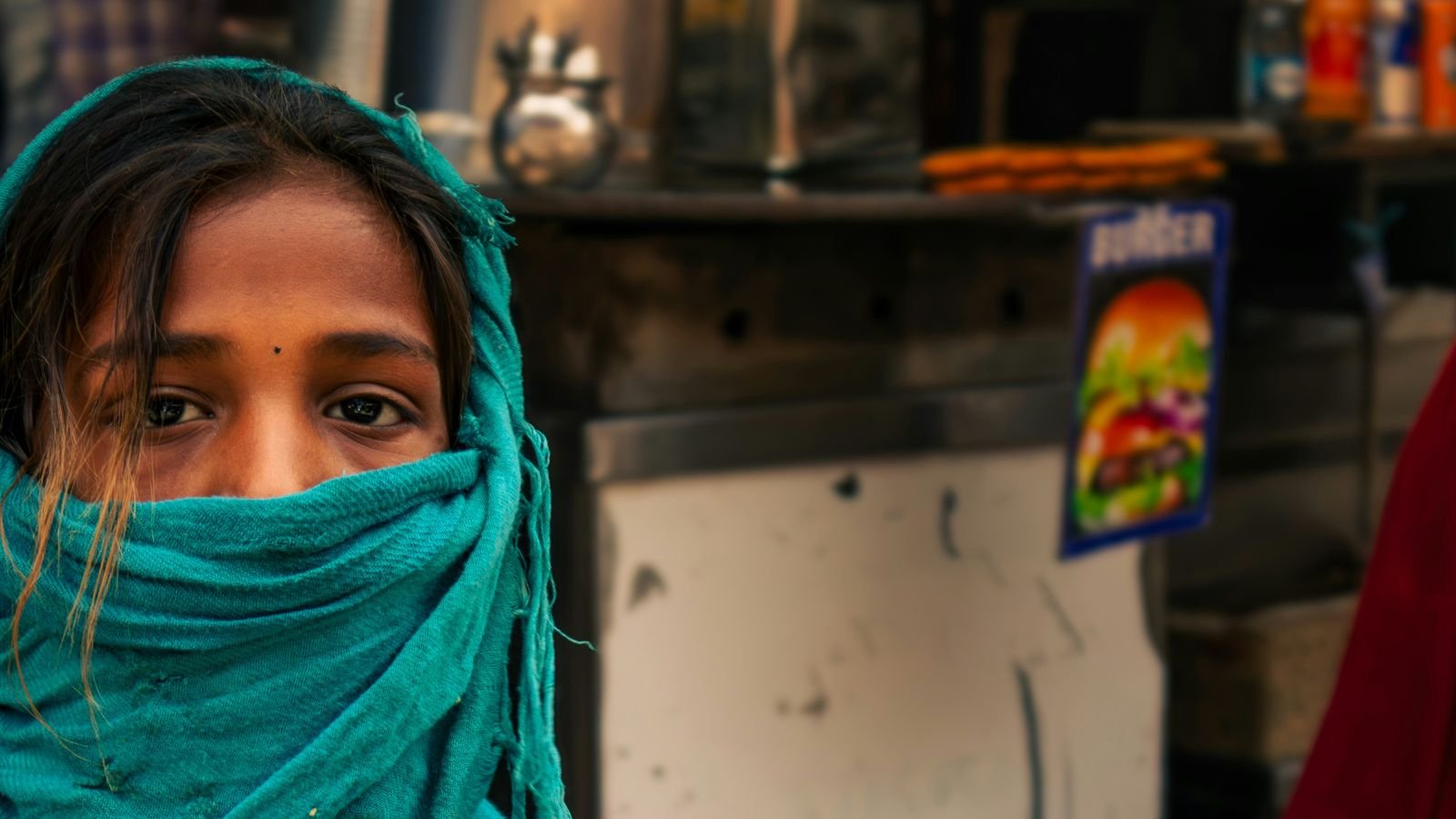
Children and heat stress are becoming an increasingly serious climate risk, with 560 million children under 10 already exposed to at least one additional month of dangerous heat each year because of human-induced climate change.
In Chennai, Divya watches the clock more than the calendar. Her son is two. Most evenings she decides against the playground — the heat, the risk of dehydration, sunburn on skin that has barely had two summers to toughen up — and he stays indoors instead, missing the other children who might have become his friends. “I’m really worried that he won’t be able to experience the childhood that I did,” she says. It is not a single bad week she is describing. It is most of the year, most years, and she is far from alone in making that calculation.
Children and heat stress: The numbers behind a warming childhood
New research now puts a number on what parents like Divya have been working out for themselves. A study published in Science Advances by an international team led by the VUB’s Department of Water and Climate — with collaborators from ETH Zurich, Oxford, the University of Waikato and the Potsdam Institute — is the first to quantify, age group by age group, how much of the world’s heat exposure can be pinned specifically on human-induced climate change rather than natural variability. The answer, for children aged 0–9, is stark: 560 million of them (43 per cent of all children in that age bracket worldwide) are already exposed to at least one additional month of dangerous heat stress a year that would not exist in a world without fossil-fuel emissions. That is nearly three times the 190 million people aged 60–69 (30 per cent) facing the same additional burden.
What “heat stress” actually means here
The study doesn’t count ordinary hot days. It uses wet-bulb globe temperature (WBGT) — a measure that folds in humidity, sunlight and wind, not just the thermometer reading — and defines a “heat stress day” as one where shaded WBGT crosses 28°C, the threshold at which health guidance recommends reduced activity or structured rest. An “additional” heat stress day is one that attribution science shows would not have occurred in a pre-industrial climate.
This distinction matters because humid heat is far more dangerous than dry heat: once humidity climbs high enough, sweat stops evaporating, and the body’s main cooling mechanism simply fails. A companion explainer accompanying the study notes that the same 30°C can feel pleasant at 30 per cent humidity and be suffocating — even lethal over time — at 85 per cent. Extreme heat already kills roughly half a million people a year, making it the deadliest form of extreme weather, and researchers estimate that nine in ten of those deaths go uncounted in official records.
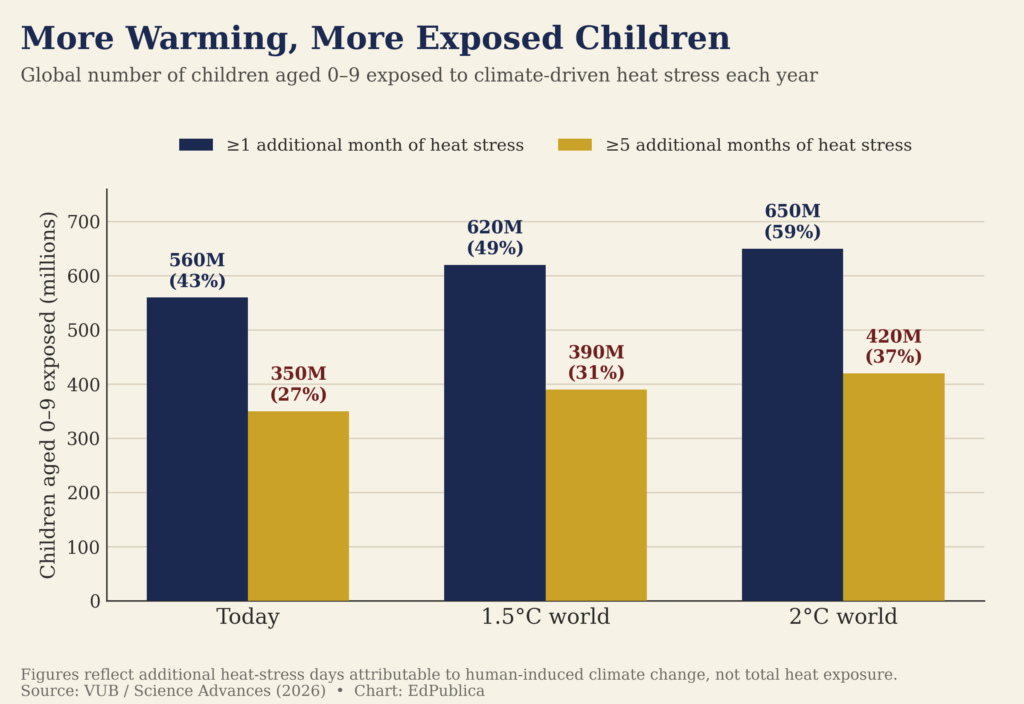
How the numbers were built: researchers combined 2023 population data with climate models and attribution science — the branch of climate research that isolates how much of an observed trend is due to human-caused warming rather than natural variability — comparing today’s climate against a modelled pre-industrial one with today’s population overlaid. The 1.5°C and 2°C projections assume a “middle-of-the-road” path for both future emissions and demographic change.
The scale, by the numbers
- 560 million children aged 0–9 (43%) face at least one additional month of climate-driven heat stress today.
- 350 million (27%) face at least five months of total heat stress a year — nearly triple the 120 million adults aged 60–69 (18%) who do.
- Climate change has nearly tripled the number of children enduring five-plus months of dangerous heat, from 120 million in a hypothetical world without warming to 350 million today.
- Under 1.5°C of global warming — a threshold current policy trajectories are likely to overshoot — exposure rises to 620 million children (49%).
- Under 2°C, it rises further to 650 million children (59%), with 420 million (37%) facing five-plus months a year.
Children are hit hardest not because of where they happen to live, but because of demographics colliding with geography: the tropical and lower-income regions where climate-driven humid heat is intensifying fastest also happen to have the youngest populations. As global warming continues, the proportion of children exposed keeps climbing even in countries where ageing populations mean the absolute number of children eventually falls.
South Asia carries the heaviest load
Three regions post the highest absolute numbers of exposed children: South Asia, Southeast Asia and West Africa. South Asia alone accounts for the largest single share.
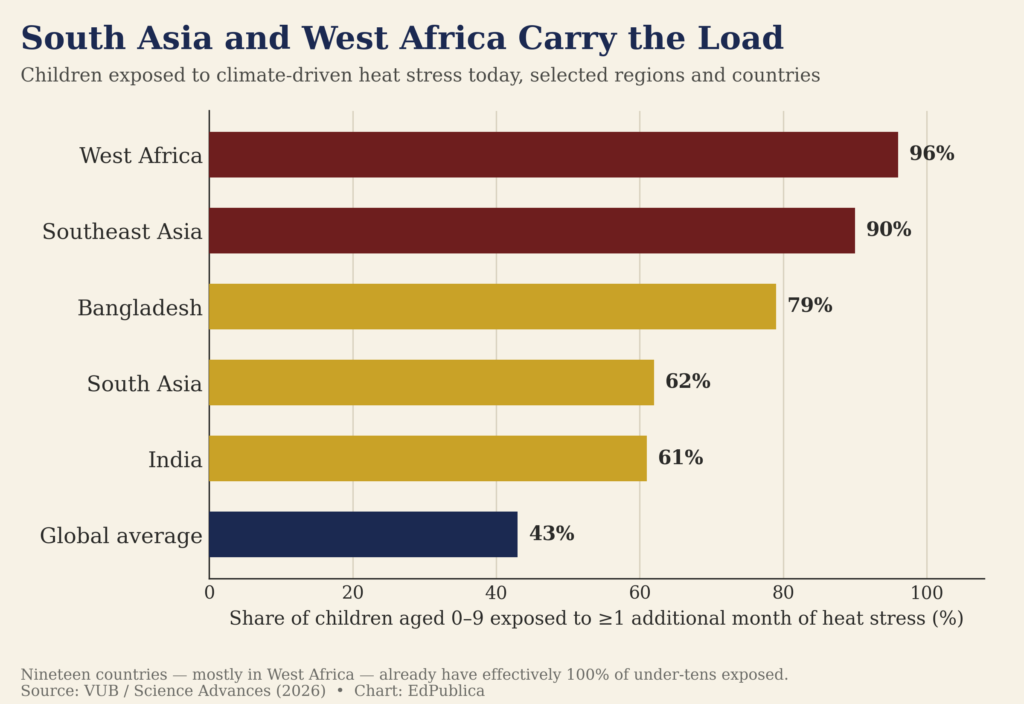
- South Asia (SAS): 167.4 million children (62%) are exposed to at least one additional month of heat stress today. Climate change has doubled the number enduring five-plus months — from 80 million to 156.6 million children, or 58 per cent of the region’s under-tens. At 2°C, that climbs to 93 per cent facing at least a month, and 73 per cent facing five months or more.
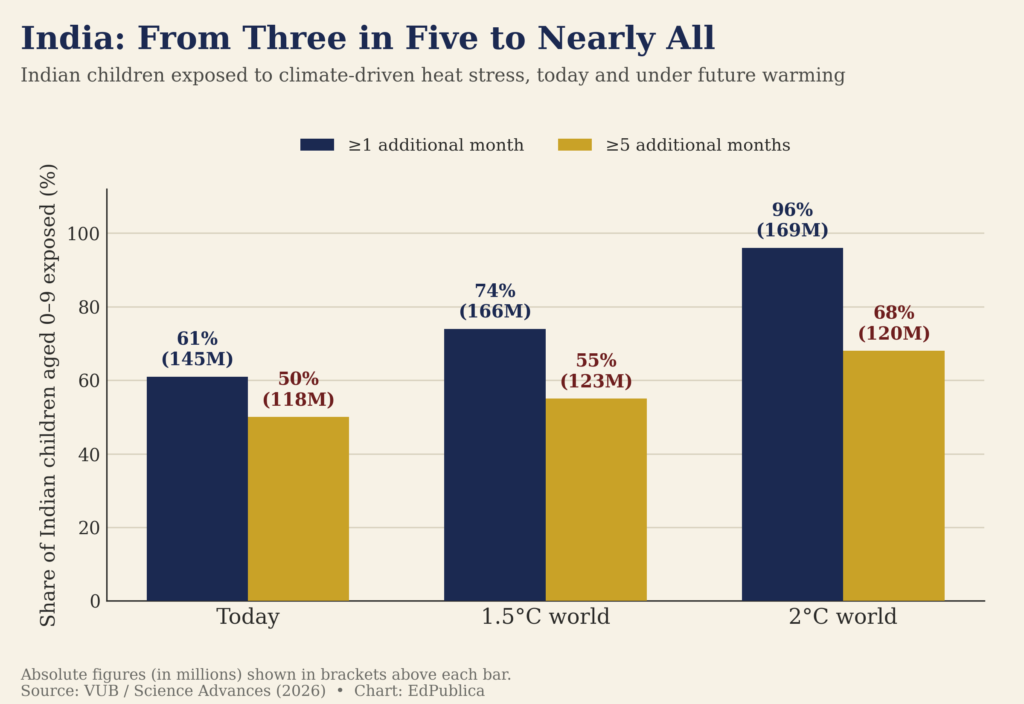
- India: 145 million children (61%) are exposed today, with the five-month-plus group doubling from 59 million to 118 million (50%). At 2°C, 96 per cent of Indian children aged 0–9 — 169 million — would face at least a month of added heat stress annually, and 120 million (68%) would face five months or more.
- Bangladesh: 79 per cent of children already exposed; the five-month-plus group has nearly tripled to 26 million (91% of the country’s under-tens).
- Southeast Asia (SEA): 90 per cent of children exposed today; the five-month-plus figure has nearly quadrupled to 72.6 million (72%).
- West Africa (WAF): 96 per cent of children exposed today across the region; nineteen countries — including Benin, Burkina Faso, Cambodia, Côte d’Ivoire, Ghana, Mali, Niger, Senegal and Sierra Leone — already have effectively 100 per cent of their under-ten population facing at least one additional month of heat stress a year.
The India figures carry particular weight: three in five Indian children under ten are already losing at least a month a year to dangerous heat that would not exist without fossil-fuel emissions, and that share could approach universal — 96 per cent — within a couple of decades of continued warming.
Voices behind the data
Bhavreen Kandhari, founder of the Delhi-based parents’ collective Warrior Moms, described watching “childhood shrink” in the capital’s summers, telling researchers that mothers now check temperature readings the way they once checked air-quality indices before letting children outside. She noted that India has recently classified heatwaves as a notified natural calamity — an overdue acknowledgement, she said, of what families have lived through for years.
In Chennai, dermatologist and mother Vaaruni Ravishankar said the heat has pushed her toddler’s outdoor time later and later into the evening, edging out the unstructured outdoor play that paediatric development research consistently favours.
And from Bangladesh, 17-year-old child campaigner Imtiaz described nights that stay warm long after sunset, meaning children “wake up still tired” before another exhausting day of heat begins — a pattern he said drains energy, concentration and, ultimately, education.
Rosa Pietroiusti, the study’s lead author and a PhD researcher at VUB, said children in developing countries face disproportionate climate exposure “despite contributing the least to historical greenhouse gas emissions,” while poverty, poor housing and stretched health systems leave many with few ways to protect themselves. Senior author Professor Wim Thiery called for both drastic emissions cuts in line with the Paris Agreement and a sharp increase in climate finance and adaptation support — heat action plans, resilient housing, stronger public health systems — for the countries carrying the heaviest exposure.
An echo of Wayanad
This is a different hazard from the one EdPublica‘s Vaishnavi VS covered last month in After Kerala’s Deadliest Landslide, the Hardest Thing to Rebuild Was Childhood — a landslide rather than a heatwave, a single catastrophic event rather than a slow accumulation of hot months. That reporting followed GVHSS Vellarmala, the Wayanad school where 33 students died and 97 more were directly affected when the Chooralmala–Mundakkai landslide killed 298 people in July 2024, and traced how teachers with no trauma training improvised their way to a full recovery — mapping each surviving child’s interests, bringing in outside experts, and eventually getting seven grief-stricken students back into their SSLC exam hall for a 100 per cent pass rate.
The story also cited a UNICEF finding that puts heat squarely back in this frame: at least 242 million students across 85 countries had their schooling disrupted by climate extremes in 2024 alone, with heatwaves alone affecting an estimated 171 million students worldwide and South Asia the worst-hit region at 128 million. Landslide or heatwave, sudden or slow-accumulating, the two stories describe the same underlying vulnerability — children’s education and wellbeing absorbing the cost of a warming climate, and recovery systems that are, more often than not, being built on the fly rather than in advance.
Back in Chennai, none of this is abstract to Divya. She isn’t tracking wet-bulb globe temperatures or reading climate-attribution papers; she is deciding, most evenings, whether it is safe enough to let her son go outside. Multiply her calculation by 560 million children, in cities and villages from Dhaka to Dakar, and the shape of the number stops being statistical. It is a generation quietly being kept indoors, evening by evening, by a hazard their parents did not create and cannot switch off.
Featured image: Indian girl covering her face with her clothing during the harsh Indian summers. Image credit: Anurag Jamwal/UnSplash
Climate
India Is Facing More Climate Disasters. Who Pays When They Happen?
India insures only about 5% of its disaster-related losses, leaving most of the financial burden with households, businesses and governments. Globally, natural catastrophes caused around 100 billion dollars in economic losses in the first half of 2026, of which 42% was insured, according to Swiss Re.

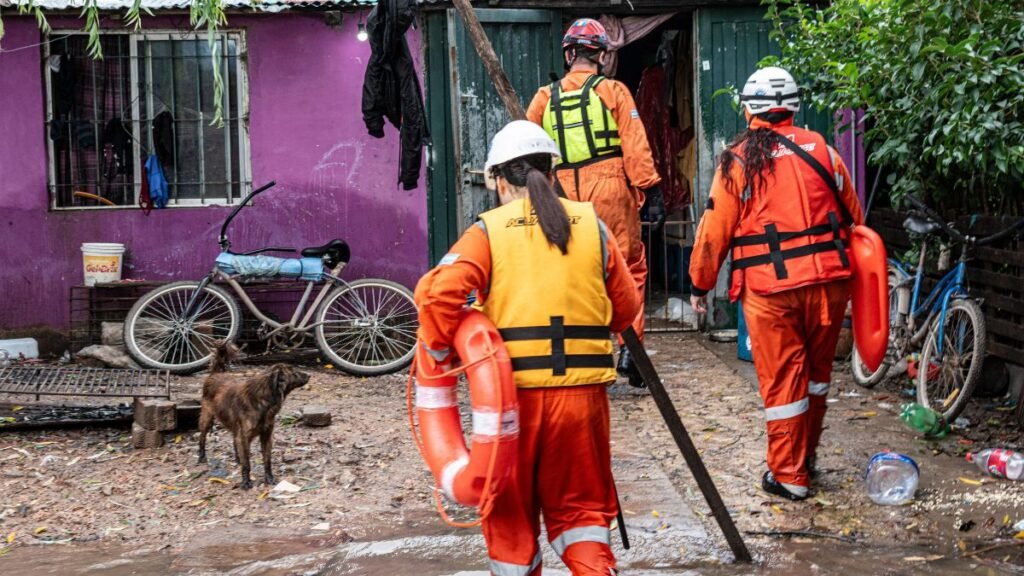
A flood can destroy a house in a few hours. Paying for that loss can take years. For an insured homeowner, part of the cost may come from an insurer. A farmer with crop insurance may recover some agricultural losses. But much of India’s disaster damage has no equivalent financial protection. Estimates cited by Reuters put the share of disaster-related losses covered by insurance in India at only around 5%.
The contrast with the global picture is significant. The Swiss Re Institute estimated that natural catastrophes caused about $100 billion in economic losses worldwide in the first half of 2026. Around 42 billion dollars, or 42%, was insured. For India, the much smaller share means that most of the financial burden remains with households, businesses and governments.
Where Does the Money Come From?
India already has a system for financing disaster response. The State Disaster Response Fund (SDRF) is the main source of immediate relief for states. The National Disaster Response Fund (NDRF) can provide additional assistance after severe disasters. But relief and insurance do different jobs.
Government assistance can help a family whose house has been damaged, but it does not necessarily cover the full cost of rebuilding. A state can spend public money repairing a damaged road or bridge, but that does not recover the economic activity lost while it was unusable.
For families, the difference may have to be met through savings or borrowing. For farmers, losing a crop can affect the next season as well. Small businesses may lose income while they repair or replace damaged assets. Some losses may never be recovered. That is the significance of the insurance gap. It shows how little of the financial risk has been transferred away from those directly exposed to disasters.
India Does Insure Some Disaster Risks
The country already has a substantial agricultural insurance system. The Pradhan Mantri Fasal Bima Yojana (PMFBY) covers crops against several risks, including drought, floods, cyclones, inundation and hailstorms. But crop insurance covers the crop, not necessarily everything else a farmer owns.
A flood can destroy a crop, house, livestock, machinery and shop at the same time. Only some of these losses may have insurance protection. The wider gap is therefore not simply about whether people have insurance. It is about how much of the assets and economic activity exposed to disasters are financially protected.
A Faster Way to Pay
One approach being explored is parametric insurance. Traditional insurance generally requires the actual damage to be assessed before a claim is settled. Parametric insurance uses a predefined trigger — such as a particular level of rainfall, wind speed or temperature. Once the trigger is reached, a predetermined payment is made. The advantage is speed. A payout does not have to wait for every individual loss to be assessed.
India has already experimented with such models. Nagaland has used parametric disaster insurance, while other pilots have examined risks such as floods and extreme heat. A nationwide climate-linked insurance programme has also been discussed, although India does not yet have a comprehensive national disaster-insurance scheme.
Parametric insurance also has a weakness: the trigger may not perfectly match an individual’s actual loss. A household could suffer serious damage without crossing the policy threshold, or receive a payout that does not correspond exactly to its losses. The design of the trigger therefore matters.
Kerala is Trying Another Approach
Kerala is among the states looking more closely at disaster-risk financing. The Kerala State Disaster Management Authority has been developing a Disaster Risk Financing and Insurance (DRFI) framework, including work on parametric and indemnity insurance.
In February 2026, the state gave in-principle approval for a comprehensive group insurance scheme for Below Poverty Line families, combining the two approaches. The idea is to arrange part of the financial protection before a disaster occurs rather than relying entirely on relief after it. That distinction becomes important for a state that has experienced repeated floods and landslides.
Insurance Cannot Undo a Disaster
Insurance is only one part of the equation. Reducing exposure through safer construction, better drainage, land-use planning, early-warning systems and stronger infrastructure remains essential. But prevention and insurance address different parts of the problem.
Prevention can reduce the size of the loss. Insurance can determine who carries the remaining financial risk. This matters because the uninsured portion does not disappear. It moves elsewhere — into government relief and reconstruction budgets, household savings, loans, business losses and delayed recovery.
For India, the challenge is therefore not simply to sell more insurance policies. It is to decide which disaster risks should be borne by households and businesses, which should be pooled through insurance, and which require government backing. As disaster losses become more financially significant, that decision will increasingly affect how quickly families recover, how much governments have to spend after each event, and how much of the cost is ultimately borne by people who had the least capacity to absorb it.
The most revealing number after a disaster may therefore not be the amount of damage alone. It may be how much of that damage was actually insured.


India’s New Satellite Will Be Tested During Disasters

The Himalayas Are Under Pressure From Above, Below and Within

Lise Meitner: a Physicist Who Never Lost Her Humanity

560 Million Children, One Overheating Planet

If AI Can Explain Everything, What Is Left for a Teacher to Teach?

Astronomers Discover a ‘Black Hole Star’, a New Kind of Object in the Early Universe

From Bell Labs to the Classroom: Finding Purpose After Retirement

From Soil to Profit: How Organic Turmeric Changed the Fortunes of a Tribal Farming Family

Farmers Borrowed to Build ‘Diggis’. Two Years Later, They Are Still Waiting for the Subsidy

Our Algorithm Knows What We Want Before We Do. That is the Problem.

-

 Math1 month ago
The 2026 Fields Medals: Four Proofs, Four Decades-Old Problems Solved
-
Climate1 month ago
After Kerala’s Deadliest Landslide, the Hardest Thing to Rebuild Was Childhood
-
Society2 months ago
West Asia Crisis: Can Kerala’s Returning Gulf Migrants Find a Future in the Green Economy?
-
Space & Physics3 months ago
India Semiconductor Mission: ‘It’s Not About Fabs. It’s About Building An Entire Ecosystem’
-
Climate3 months ago
The Climate World Cup? How Climate Change Could Affect Player Performance at the 2026 World Cup
-
Society2 months ago
What Is Civilisational Diplomacy? Understanding India’s Newest Foreign Policy Tool
-
Society3 months ago
From Bell Labs to the Classroom: A Second Career in Teaching
-
Space & Physics3 months ago
Engineers Develop Dual-Mode Propulsion System for Next-Generation Small Satellites