
Science
Immortal Jellyfish; Is life without death achievable for humans?
To overcome death, start living again from the beginning. If the life secret of immortal Jellyfish, which has made the concepts of immortality and rebirth almost a reality, can’t human beings one day put dust in the eyes of death?


The secret of immortality has been floating in the ocean all this time, in the form of a jellyfish, while we sifted heaven and science to the ends of the earth for the art of defeating death. Turritopsis dohrnii, also known as the immortal jellyfish, survives death at some point in their lives. Imagine the butterfly turning back into a moth. Or a chicken turning into an egg again. Otherwise, an old man will age and become a fetus again. Although none of these things are happening, this jellyfish will revert to infancy when faced with death. Then will live once more. To know how it is, you need to know the life cycle of the jellyfish.
Turritopsis dohrnii, a member of the Hydrozoa family, prefers warm oceanic habitats. At the same time, they are also found in areas with cold water. They are believed to have originated in the Caribbean and Mediterranean seas. But in recent decades, they have spread to oceans around the world.
Maria Pia Miglietta, a professor of biology at the University of Notre Dame, describes this global spread of jellyfish as a ‘silent invasion’. They have come all over the world clinging to the bottoms of cargo ships. Due to their exceptional ability to survive, in the future there will be no situation in which only immortal jellyfish will exist in the oceans.
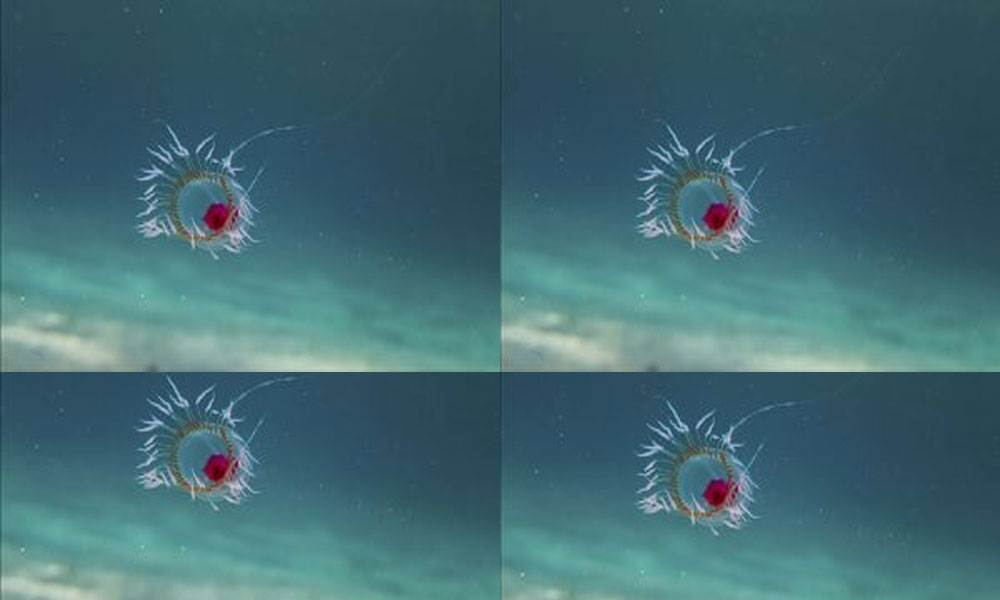
Their food is small insects in the sea and fish eggs. Turritopsis dohrnii is a very small creature, measuring only 4.5 mm in length and width. There are two stages in their life cycle. The hydroid stage, which grows and colonises through polyps, and the floating medusa stage. In general, everyone is more familiar with the jellyfish’s medusa stage form. A parachute-shaped figure with a balloon-like umbrella on top and fringes hanging down from it.
A jellyfish begins life as a larva called a planula. It is a very small cigar shaped one. They twist and float in the water to find a suitable place to cling to. If it sticks to one place, then the larva turns into a polyp. The polyp has the ability to clone itself. Thus, a colony of polyps is formed by self-replication. They can colonise the entire bottom of a canoe in days. If the conditions are right, the polyps will bloom and the baby jellyfish will emerge. This is where the medusa stage of the jellyfish life cycle begins.
Normally, the medusa of Hydrozoa species produces eggs and spores after they are fully grown. Fertilized ovules become planula. The planula again sticks somewhere and forms a hydroid colony. Polyps form from it and they produce more medusae. This is the typical life cycle of a jellyfish. After reproduction, the medusa will die.
Defeating death
The beginning of a jellyfish’s life is quite ordinary, but the end is quite extraordinary. When the medusa of the immortal jellyfish dies, it sinks to the ocean floor and begins to decompose. But then the miracle happens. From that the cells will be regenerated and thus they will come back to life. Not as new medusa or larvae. As polyps. New jellyfish will hatch from those polyps. This time, jellyfish skip the larval stage and start life as polyps.
Let the miracle of rebirth be there. What is the benefit of this to the jellyfish and why does it do this, these questions are more relevant here. Immortal jellyfish bring out this unique survival strategy and rebirth when faced with danger due to old age, illness, lack of food, or otherwise. Once this process begins, the umbels and fringes on the top of the jellyfish begin to die. It reverts to the polyp state and clings to any surface and comes back to life as a new jellyfish. Jellyfish can repeat this over and over again.
In 1988, Christian Sommer, a German student of marine biology, discovered this immortality of jellyfish completely by accident
How long can this jellyfish live? The answer is how long. These jellyfish were probably still in the oceans when the dinosaurs went extinct 66 million years ago. Biologically, a single immortal jellyfish can live for a long time without dying. Technically they can. But it has not been proved. Because the study of these jellyfish started after 1980s. So, we only have decades of knowledge about them. Moreover, if eaten by other creatures such as fishes, sea turtles, and other jellyfish, their lives will certainly end there.
Who discovered it?
In 1988, Christian Sommer, a German student of marine biology, discovered this immortality of jellyfish completely by accident. Sommer and another student, Giorgio Bavestrello, collected some hydrozoa, which they thought were turritopsis nutricula. Sommer kept the medusa in the lab and watched them until they emerged. Later he forgot about it. But a few days later, Sommer examined the jar in which they were stored and noticed something unusual. These jellyfish exhibit some unusual behaviours. Sommer couldn’t even imagine why that might be. In fact, it seemed to Sommer that they refused to die. A rare phenomenon that occurs backwards in life. They are getting younger and have reached their infancy. There it begins a new life cycle.
But even after a quarter of a century since Christian Sommer made that great discovery, we still haven’t been able to find the secret of the immortal jellyfish’s reincarnation
At the time, Sommer did not realize the significance or magnitude of his discovery. It was only after a century that the name immortal Jellyfish was given to this species. Sommer’s discovery was taken up by biologists. They learned more about this species. Several experimental observations were made. And, in 1996, they published their study under the name ‘Reversing the Life Cycle’. In the study, they explained how this category of jellyfish reverts to the initial polyp stage at some point in their growth. Thus, they escape death and attain immortality, a research paper on the topic says. The discovery challenged the world view that once born there is death.
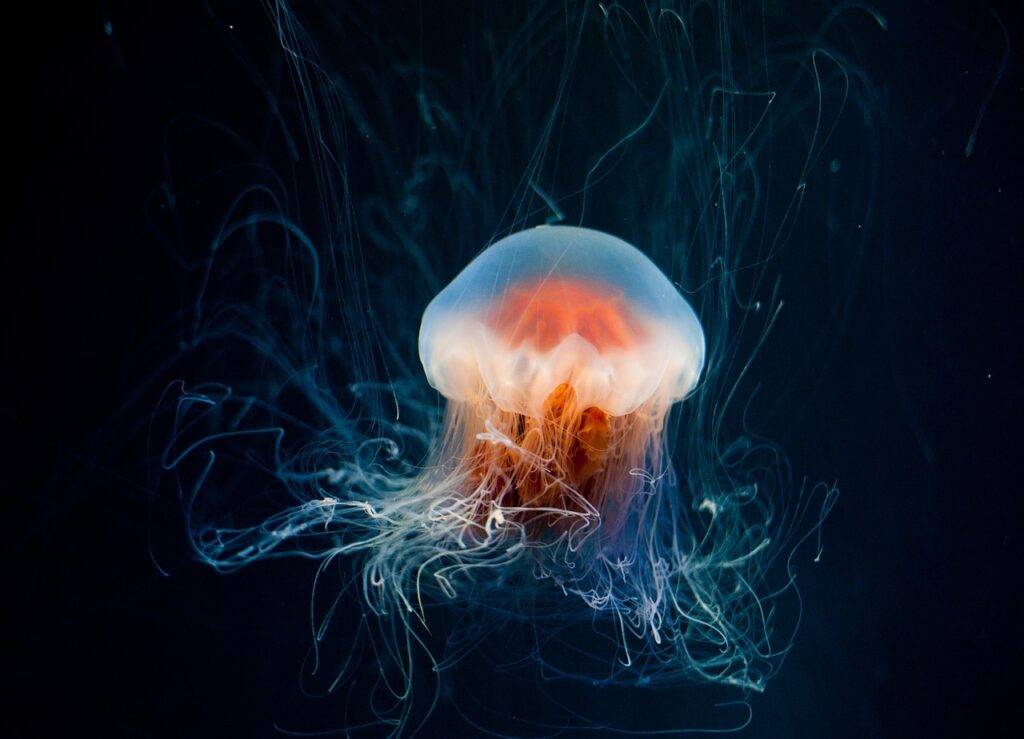
Can that secret make man immortal?
To overcome death, start living again from the beginning. If the life secret of immortal Jellyfish, which has made the concepts of immortality and rebirth almost a reality, can’t human beings one day put dust in the eyes of death? Should be. Damaged cells in the body can be repaired and regenerated. It can be very crucial in treating and curing deadly diseases like cancer. But even after a quarter of a century since Christian Sommer made that great discovery, we still haven’t been able to find the secret of the immortal jellyfish’s reincarnation.
Immortal jellyfish and some other members of this genus put life into reverse gear when faced with environmental stressors or physical shocks. During this time, a process called cellular transdifferentiation takes place in the organism. It is an unusual phenomenon in which one type of cell changes into another (for example, a skin cell becomes a nerve cell). When this happens, cells produced by cell division change in shape, characteristics, and functions, and they become like sperm cells. In jellyfish, all cells of the medusa stage become cells of the polyp stage. Then the body structure itself changes completely. As seen in the movies. This process is called ontogeny reversal and inverted metamorphosis. An abnormal deviation in the normal life cycle. Each cell contains the information needed to build an organism as a whole. But only a part of this information is used by the jellyfish for ‘rebirth’. Understanding the molecular mechanism in jellyfish that causes ontogeny reversal, instructing all cells to return to infancy, could be the first step towards the ever-greater human goal of ‘immortality’.








Science
Pune to Host India International Science Festival 2026, With Focus on Students, Startups and Public Engagement
From 3D cell models and space technology exhibitions to student–scientist interactions, the India International Science Festival 2026 will bring science closer to the public in Pune.
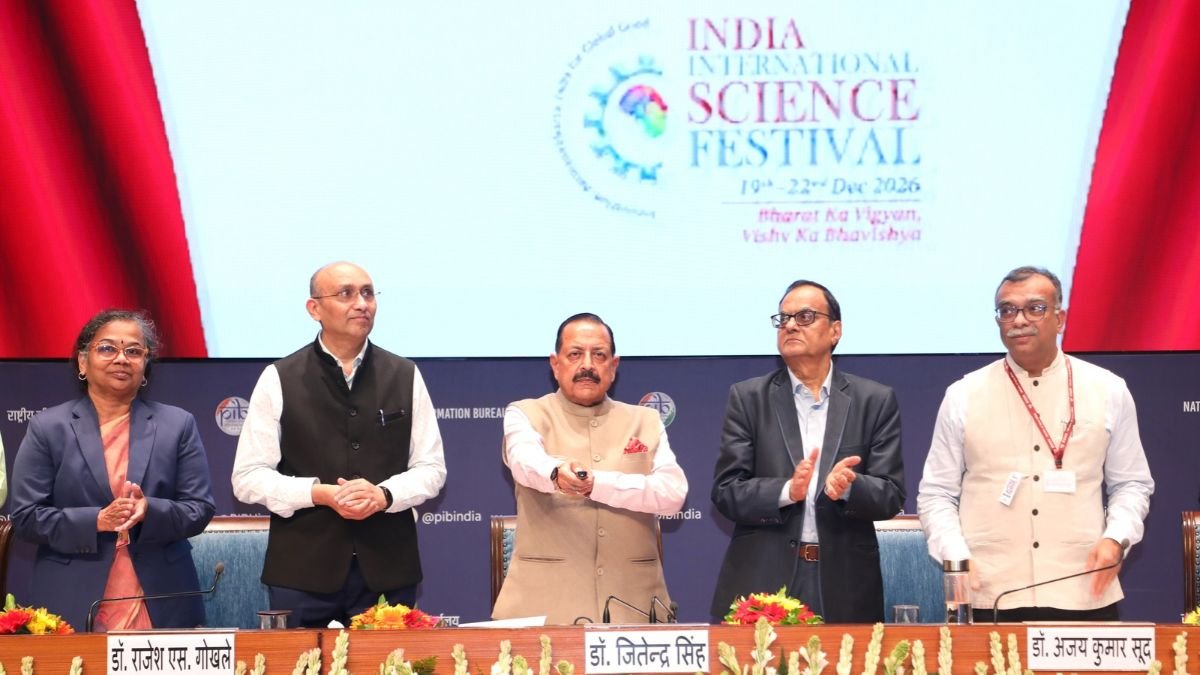
Science often reaches the public through discoveries, research papers and laboratory breakthroughs. But what happens when people get to experience it themselves? The 12th edition of the India International Science Festival (IISF) aims to bring science closer to the public, particularly students, teachers, women and aspiring entrepreneurs. Scheduled to take place in Pune from December 19 to 22, the festival will bring together researchers, academic institutions, industry representatives and young innovators under the theme India’s Science, World’s Future.
Union Minister of State for Science and Technology Dr Jitendra Singh launched the curtain-raiser for the festival in New Delhi on November 18, unveiling its official website and brochure. He called for taking science beyond laboratories and making it accessible to young people and emerging startups.
The festival will be organised across five research and academic campuses in Pune: the BRIC–National Centre for Cell Science (NCCS), CSIR–National Chemical Laboratory (NCL), Indian Institute of Science Education and Research (IISER) Pune, Indian Institute of Tropical Meteorology (IITM) and COEP Technological University.
According to the Department of Biotechnology, the event will feature 26 programmes across 17 working laboratory venues, with participation from seven Union ministries and departments and 16 national institutions.
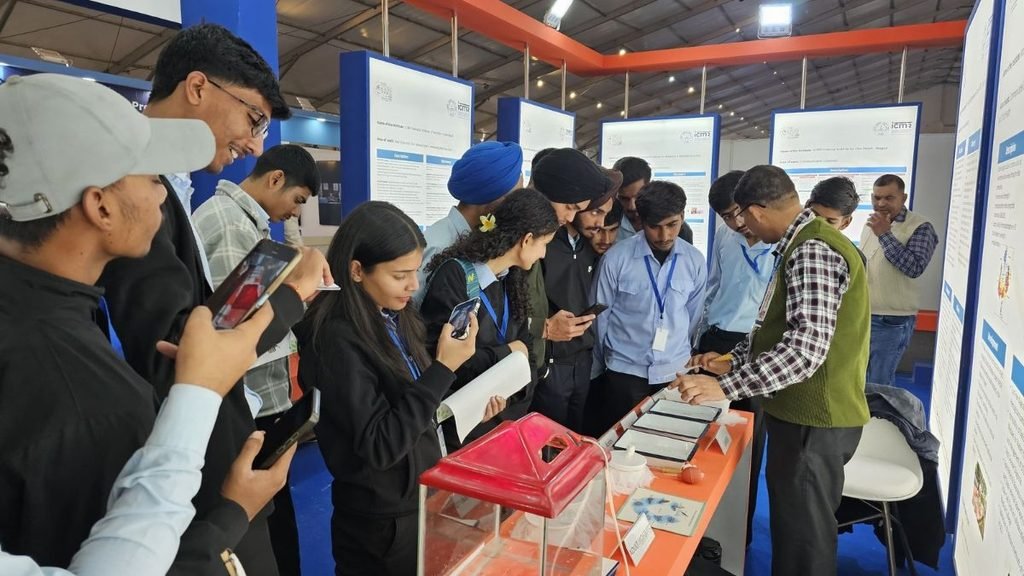
From Gene Editing to Space Technology: India International Science Festival
For visitors, the festival promises an opportunity to encounter scientific concepts that often remain confined to classrooms and research publications. The programme will introduce participants to subjects such as gene editing, antibody development, insulin production and next-generation energy sources. One of its attractions will be an immersive, large-scale, three-dimensional walk-through model of a cell, designed to help visitors understand the structure and functioning of one of the fundamental units of life.
A public Science–Technology–Defence–Space Expo will showcase India’s scientific and technological missions, including Chandrayaan-3, Gaganyaan, INS Vikrant and Mission Shakti. Developments in quantum technology, semiconductors and deep-ocean exploration will also feature in the exhibition. The festival will also host a special lecture by Sir Tim Hunt, the 2001 Nobel Prize winner.
Dedicated Programs For Students and Teachers
A significant part of IISF 2026 will focus on introducing young people to scientific research and helping them interact with those working in the field. The New Nalanda Science and Technology Village will bring together 1,800 students and 200 teachers. Another programme will facilitate interactions between 1,200 students and scientists, giving participants an opportunity to learn about research careers and scientific developments directly from researchers.
Teachers will also have a dedicated space through The Gurukula, a workshop designed for educators. An eight-zone Science Safari will offer another avenue for exploring different areas of science. These initiatives are intended to make scientific learning more interactive and help students discover their interests beyond conventional classroom instruction.
Connecting Research With Entrepreneurship
The festival will also explore how scientific discoveries can move from laboratories into products, services and businesses. A Global Summit on Biomanufacturing, aligned with India’s BioE3 Policy, will bring together stakeholders working in the sector. A Clinicians–Academia Conclave will create opportunities for discussions between medical professionals and academic researchers.
For startups and aspiring entrepreneurs, the festival will include business-to-business meetings and hackathons. These platforms are expected to encourage collaboration between researchers, industry representatives and innovators. The organisers also plan to identify promising student innovations for mentoring and incubation, potentially helping young people take their ideas towards practical applications.
Nationwide Build-up Ahead of the Festival
The Pune event will be preceded by curtain-raiser programmes across 13 cities, organised in collaboration with Vijnana Bharati (VIBHA). The outreach is intended to connect students, women, farmers and entrepreneurs with working laboratories and scientific institutions.
Since its inception in 2015, IISF has sought to bring together different sections of society through science. Department of Biotechnology Secretary Dr Rajesh S. Gokhale described the festival as a platform connecting society, government and markets, with societal needs guiding research and innovation translating discoveries into public benefits.
The 2026 edition will also include a Science Diplomacy Conclave, a Global Science and Technology Alliance spanning three continents, and a gathering of 150 non-governmental organisations under the National Social Organisations and Institutions Meet. Other programmes include Nari Shakti, Vigyanika and SHIV-DURG, which will highlight different dimensions of science, society and engineering heritage.
The organisers expect the festival to produce several policy and institutional outcomes, including a National Roadmap for Biomanufacturing, a statement on science diplomacy and declarations emerging from the Vision Sansad and the National Social Organisations and Institutions Meet. With its mix of laboratory visits, exhibitions, student–scientist interactions and entrepreneurship programmes, IISF 2026 seeks to create more opportunities for people to engage with science. Its broader challenge will be to sustain that curiosity beyond the four-day event and strengthen the connections between scientific institutions and the communities they serve.
Space & Physics
As India’s Space Economy Opens Up, Can Private Investment Deliver Public Value?
India’s space-sector reforms have opened opportunities for private companies, but can investment and start-up growth translate into a competitive and sustainable space economy? Lessons from the US, Europe, Japan and China reveal the challenges ahead.
India’s decision to open its space sector to private enterprises marks a significant change in how the country approaches space research, manufacturing and commercialisation. Since the reforms announced in June 2020, private companies have gained opportunities to develop launch vehicles, manufacture satellites and provide space-based services. However, the expansion of commercial participation raises a more fundamental question: whether India can turn this policy opening into a competitive and sustainable space economy while ensuring that public investment continues to serve public interests?
Government data estimates India’s space economy at approximately 9 billion dollars as of August 2026, up from 8.4 billion dollars in 2023. It reports that the number of registered space start-ups increased from 1 in 2014 to approximately 440 in August 2026. Cumulative investment in Indian space start-ups reportedly reached 618.5 million dollars by March 2026.
These figures indicate growing entrepreneurial interest. The establishment of the Indian National Space Promotion and Authorisation Centre (IN-SPACe), the commercialisation mandate of NewSpace India Limited (NSIL), the Indian Space Policy 2023 and the liberalisation of foreign direct investment rules have created new institutional pathways for private participation.
Yet, the number of registered start-ups does not establish how many companies have commercially viable products, recurring customers or sustainable revenue. Similarly, investment raised is not equivalent to industrial capacity. Rocket development, satellite manufacturing and launch infrastructure require substantial capital, long development periods and dependable demand.
A May 2026 assessment by Carnegie India, A Review of India’s 2023 Space Policy and Entrepreneurship Ecosystem, points to the sector’s early-stage challenges. It records a decline in Indian space-technology funding from 130.2 million dollars in 2023 to 59.1 million dollars in 2024, despite an increase in the number of funding deals. This suggests that the availability of capital and investor confidence cannot be assumed to grow continuously.
Learning From the American Model
The United States offers an important example of how government procurement can support private-sector innovation. Through NASA’s Commercial Crew Programme, the government shifted from developing and operating every transportation system itself towards purchasing transportation services from private companies.
In 2014, NASA awarded fixed-price contracts worth 2.6 billion dollars to SpaceX and 4.2 billion dollars to Boeing to develop spacecraft capable of carrying astronauts to the International Space Station. SpaceX’s Crew Dragon received human-rating certification in 2020 and has since completed operational crewed missions. Boeing’s Starliner, however, encountered technical difficulties, delays and additional costs.
A June 2026 assessment by NASA’s Office of Inspector General found that the programme’s contract value had increased from the original 6.8 billion dollars to more than 8 billion dollars, excluding additional resources invested by NASA and the companies. The report also identified shortcomings in NASA’s oversight and delays in Boeing’s certification.
The experience demonstrates both the opportunities and risks of public-private partnerships. Government procurement can provide companies with the dependable demand necessary to develop expensive technologies. However, private participation does not automatically guarantee lower costs, timely delivery or technical reliability.
For India, the lesson is to develop transparent, performance-based procurement systems in which private companies compete to supply launch and satellite services. Government support should be linked to technical milestones, safety standards and actual delivery rather than announcements and projected capabilities.
Japan and Europe: Funding Innovation and Creating Demand
Japan has adopted a longer-term approach to supporting private space enterprises. Its Space Strategy Fund, administered through the Japan Aerospace Exploration Agency (JAXA), aims to mobilise approximately one trillion yen over ten years. The programme supports companies, universities and research institutions working on transportation, satellite technologies and space exploration.
The model recognises that space technology cannot always be developed within conventional venture-capital timelines. Companies need sustained financial support to move from research and prototypes to manufacturing and commercial operations.
India has introduced a 500-crore rupees Technology Adoption Fund and approved a 1,000-crore rupees venture capital fund under IN-SPACe. These are important initiatives, but their effectiveness will depend on funding continuity, transparent selection and the ability to support companies beyond their initial development stages.
Europe offers another useful example. Through the European Space Agency’s European Launcher Challenge, the agency is supporting privately developed launch services. It has earmarked more than 900 million euros for the programme. Selected companies are expected to demonstrate orbital launch capabilities by 2027, with further support linked to operational launches and capacity improvements.
The programme also illustrates that commercialisation involves failures and uncertainty. One of its initially shortlisted participants, Orbital Express Launch, entered administration in February 2026 and withdrew from the challenge.
Rather than guaranteeing commercial success, the European approach attempts to develop competing launch providers through staged technical requirements and public support. India could similarly encourage multiple companies to develop competing technologies while ensuring that public contracts are awarded on demonstrated performance.
China’s approach: Private Companies With Public Infrastructure
China’s commercial space policy offers a different model. Its National Space Administration issued an Action Plan for the High-Quality and Safe Development of Commercial Spaceflight for 2025–2027. The plan proposes opening state-funded research and testing facilities to commercial companies, supporting the commercialisation of publicly funded technologies, expanding government procurement and improving access to tracking, telemetry and testing infrastructure.
It also proposes stronger provisions for space-debris monitoring, satellite data security, insurance and end-of-life disposal. The relevance for India is the recognition that financial assistance alone cannot create an industrial ecosystem. Access to testing facilities, research infrastructure, technical expertise and institutional customers can be equally important.
India’s IN-SPACe already has a mandate to facilitate access to ISRO facilities, subject to safety and operational requirements. The next challenge is ensuring that access is transparent, predictable and available to smaller enterprises as well as established companies.
Where is the Wider Economic Value?
One limitation of the current discussion on India’s space economy is its emphasis on launch vehicles, satellite manufacturing and start-up numbers. The economic value of space technology also lies in its applications on Earth.
Satellite-based services can support agricultural monitoring, weather forecasting, disaster management, fisheries, groundwater assessment, urban planning and environmental monitoring. For instance, satellite imagery can help authorities identify changes in land use, monitor flood-affected areas and assess vegetation conditions.
A May 2026 Carnegie India assessment highlights the need to develop India’s downstream space applications alongside manufacturing and launch capabilities. This is particularly important because the benefits of space technology extend beyond the companies that build satellites. Government departments could become regular customers for commercially developed satellite-data services. Such procurement would create a domestic market for Indian enterprises while improving the availability of information for public decision-making.
Without this demand, India could expand its capacity to manufacture and launch satellites without developing an equally strong ecosystem for processing, analysing and applying the resulting data.
Environmental and Regulatory Cost of Expansion
Commercial expansion also brings responsibilities that cannot be separated from economic growth. Increasing satellite deployments contribute to orbital congestion and raise the risks of collisions and space debris. The OECD’s The Space Economy at a Glance 2026 reports that more than 14,000 active operational satellites were in orbit by the end of 2025. US organisations operated approximately 76% of these satellites. The report also identifies increasing concentration in large commercial satellite constellations, particularly in low Earth orbit.
This raises concerns about access to orbital resources, spectrum coordination and the influence of a small number of operators over essential space infrastructure. India needs effective requirements for collision avoidance, satellite disposal at the end of operational life, debris mitigation and transparent reporting of environmental risks. It must also consider the implications of commercial control over satellite data, communications and other strategically important services.
The institutional framework requires scrutiny as well. IN-SPACe has responsibilities that include promoting private participation and authorising and supervising space activities. As the industry grows, transparent authorisation procedures, independent technical scrutiny and clear accountability become increasingly important.
Building an Economy, Not Just an Industry
The government projects that India’s space economy could reach 44 billion dollars by 2033 and 100 billion dollars by 2040. These figures represent policy ambitions, not guaranteed outcomes. Achieving them will require more than increasing the number of start-ups, satellites and launches. International experience offers a common lesson: commercial space sectors depend on sustained public procurement, long-term financing, access to research infrastructure, reliable regulation and a market for downstream applications. They also require safeguards against market concentration and environmental damage.
India’s reforms have created opportunities for private enterprises to participate in a sector built over decades through public investment and scientific research. The next phase must establish whether those opportunities can translate into viable businesses, technological independence and wider public benefits.
Space & Physics
NASA recruits new astronauts for future Moon Base and Mars missions
NASA has opened applications for its next astronaut class as the agency prepares for Artemis missions, a planned lunar base and future human missions to Mars.
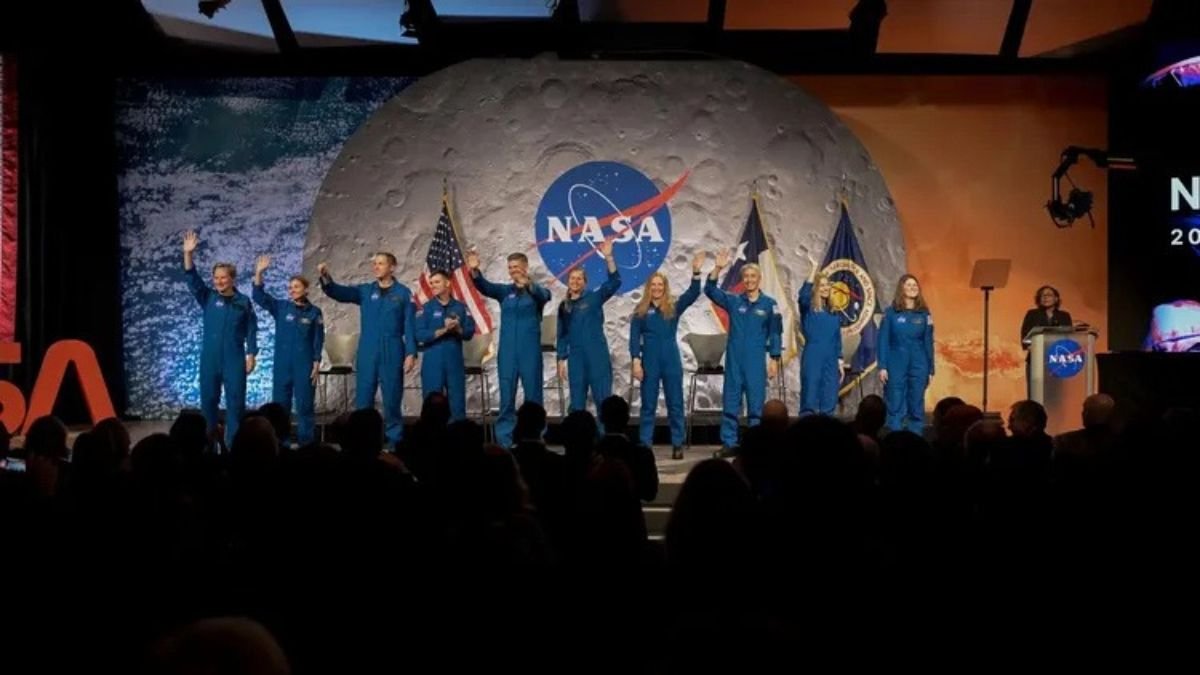
NASA is recruiting a new generation of astronauts to support its plans for a Moon Base, future Artemis missions and eventual human journeys to Mars. The selected candidates will train for missions that could help establish a sustained human presence on the lunar surface. NASA has opened applications for its next class of astronauts as it moves closer to its ambition of making the Moon a base for longer-term exploration. The recruitment comes as the US space agency works towards establishing the infrastructure needed to support human activities on the lunar surface and prepare for future crewed missions to Mars.
The recruitment drive is aimed at selecting candidates who could participate in future Artemis missions, work at a planned lunar base and help develop the technologies and operational capabilities needed for human missions to Mars. According to NASA, applications will remain open until December 3, 2026, at 11:59 pm Eastern Standard Time (December 4, 10:29 am IST). The agency expects to announce its final selection in late 2027.
The recruitment comes as NASA moves beyond its earlier approach of sending astronauts to the Moon for relatively short missions. Its longer-term ambition involves developing the infrastructure required for humans to live and work on the lunar surface for extended periods.
What is NASA’s Moon Base project?
NASA’s proposed Moon Base is part of its broader effort to establish a sustained human presence beyond Earth. The plan involves developing the facilities, transportation systems, power infrastructure and robotic equipment needed to support longer stays on the lunar surface.
The lunar south pole is a major focus of these plans. Scientists believe that permanently shadowed regions near the poles contain deposits of water ice. These resources could potentially be processed to provide drinking water, oxygen and hydrogen for rocket fuel, reducing the need to transport every essential supply from Earth.
A lunar base could also provide opportunities to study the Moon’s geology, investigate its resources and test technologies required for operating in extreme environments. The infrastructure and experience gained from these operations could prove important when NASA eventually attempts to send humans to Mars.
How will the Artemis Program Contribute?
NASA’s astronaut recruitment is closely linked to its Artemis programme. The programme aims to return humans to the lunar surface and develop the capabilities needed for longer-duration exploration. Through Artemis, NASA plans to study the lunar environment, particularly the south pole, while testing spacecraft, spacesuits and other technologies required for future exploration.
The programme is also intended to build on the experience gained from earlier human spaceflight missions and establish a foundation for journeys to Mars. Unlike the Apollo missions of the 1960s and 1970s, which focused on reaching the Moon and returning to Earth, Artemis is designed around a longer-term exploration strategy. The astronauts selected through the latest recruitment drive will train for increasingly complex missions, including operations on the lunar surface.
Who Can Apply to Become a NASA Astronaut?
The recruitment is open only to US citizens. Applicants must have a master’s degree in a science, technology, engineering or mathematics (STEM) discipline, including engineering, biological sciences, physical sciences or computer science. NASA also accepts certain equivalent qualifications, including doctoral-level research experience, specified medical degrees and recognised test pilot school programmes.
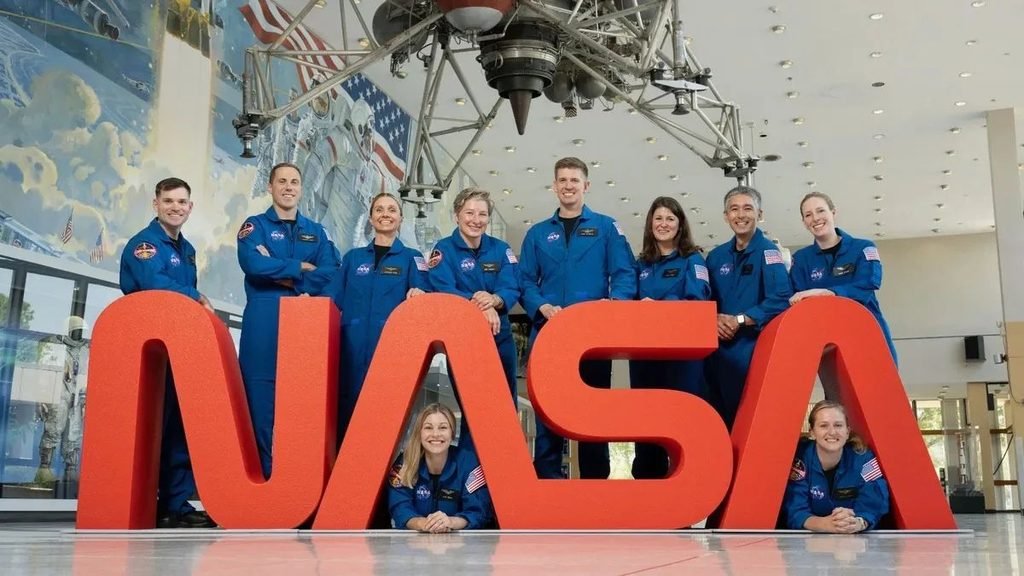
Candidates must have at least three years of relevant professional experience after completing their qualifying degree. Pilots can meet the experience requirement through specified flight hours in high-performance aircraft. Academic qualifications alone will not determine selection. Applicants must also pass NASA’s long-duration astronaut flight physical and demonstrate leadership, teamwork and communication skills.
The selected candidates will undergo nearly two years of astronaut training at NASA’s Johnson Space Center in Houston, Texas. Their preparation will include spacewalking, lunar geology, spacecraft operations and other technical skills required for space missions. NASA’s previous recruitment drive, which opened in 2024, received more than 8,000 applications. The agency selected 10 astronaut candidates in 2025.
Preparing for Human Missions
The latest recruitment reflects NASA’s effort to build the workforce and technical expertise required for its long-term exploration plans. Operating on the Moon presents challenges that go beyond reaching its surface. Astronauts will have to work in extreme temperatures, manage limited resources, deal with lunar dust and maintain equipment in an environment without Earth’s protective atmosphere.
These challenges also have implications for future Mars exploration, where astronauts would have to operate much farther from Earth, with limited opportunities for resupply and emergency assistance. The experience gained through sustained lunar exploration could help NASA understand how humans respond to extended stays beyond Earth and develop systems to support future interplanetary missions. The next generation of astronauts could therefore play a role in shaping how humans explore and eventually work beyond the Earth-Moon system.

The Science of Selling: How Sudheer Babu Decodes Buyer Psychology in ‘The Revenue Multiplier’

What Declining Freshwater Storage Means For India?

Pune to Host India International Science Festival 2026, With Focus on Students, Startups and Public Engagement

What Can Himalayan Marmot Droppings Tell Us About Climate Change?

$71 Billion Carbon Market, but Only $1.6 Billion in Government Deals: COP31 Exposes Gap Between Carbon Credit Supply and Demand

Indian universities lead Asia in research output per faculty, but the country’s top six all slip in QS ranking

Why Delhi’s Geography Makes It Vulnerable to Severe Air Pollution

India’s Richest Agree on One Cause Above All Others: Education

Europe Braces for Extremes as Commission Unveils Climate Resilience Framework

NASA recruits new astronauts for future Moon Base and Mars missions
-

 Math4 months ago
The 2026 Fields Medals: Four Proofs, Four Decades-Old Problems Solved
-
EP Deep Dive: Data & Solutions4 months ago
After Kerala’s Deadliest Landslide, the Hardest Thing to Rebuild Was Childhood
-
EP Deep Dive: Data & Solutions5 months ago
West Asia Crisis: Can Kerala’s Returning Gulf Migrants Find a Future in the Green Economy?
-
Space & Physics6 months ago
India Semiconductor Mission: ‘It’s Not About Fabs. It’s About Building An Entire Ecosystem’
-
Interviews2 months ago
From Scams to Screens: How the National Stock Exchange Rewrote India’s Equity Story
-
Climate & Environment6 months ago
The Climate World Cup? How Climate Change Could Affect Player Performance at the 2026 World Cup
-
Society4 months ago
What Is Civilisational Diplomacy? Understanding India’s Newest Foreign Policy Tool
-
Society5 months ago
From Bell Labs to the Classroom: A Second Career in Teaching