Sustainable Energy
MIT Study Weighs Cost and Reliability in U.S. Grid Expansion Plans
A new study finds that policy choices on expanding the U.S. electricity grid could either make the system cheaper and cleaner or more reliable against extreme weather—highlighting key tradeoffs that lawmakers will soon face.

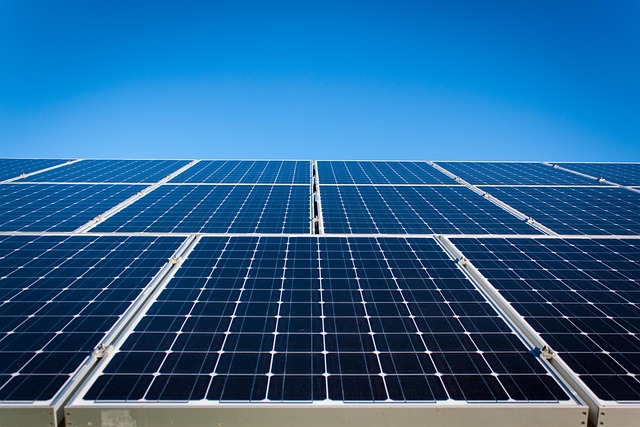
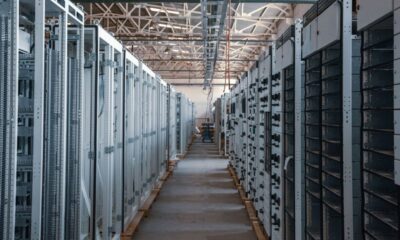
As rising energy demands push the U.S. toward a massive power grid expansion, a new MIT study is offering insight into how different policy approaches could shape the nation’s energy future—balancing cost, emissions, and reliability in complex ways.
The research, conducted by a team from the MIT Climate Policy Center, analyzed federal legislation aimed at strengthening the national grid, including the BIG WIRES Act, which would require each transmission region to share at least 30 percent of its peak load capacity with others by 2035. The findings appear in Nature Energy under the title “Implications of Policy-Driven Transmission Expansion on Costs, Emissions and Reliability in the United States.”
The team modeled two main scenarios for nationwide grid expansion. One approach focused on building more infrastructure in regions with strong renewable energy potential, such as the Midwest’s untapped wind resources. The second, described as a “prescriptive” approach, envisioned a more evenly distributed grid buildout with stronger national interconnections.
Each strategy, the study found, offers distinct advantages. A regionally focused expansion would cost about 1.13 percent less and cut carbon emissions by 3.65 percent compared to the prescriptive model. However, the nationally interconnected grid could dramatically improve reliability—reducing power outages caused by extreme weather by 39 percent in some cases.
“There’s a tradeoff between the two things that are most on policymakers’ minds: cost and reliability,” said Christopher Knittel, an economist at the MIT Sloan School of Management and co-author of the paper. “The prescriptive approach ends up being better in the face of extreme weather and outages.”
To conduct their analysis, the researchers used MIT’s GenX energy generation model to simulate how legislative proposals, like the BIG WIRES Act, would influence future grid configurations. Results suggest that stronger national interconnections would help prevent crises such as the devastating Texas power outages in 2021 by ensuring electricity can flow across state lines during periods of peak stress.
“The U.S. grid is aging and it needs an upgrade,” said Juan Ramon L. Senga, a postdoctoral researcher at MIT’s Center for Energy and Environmental Policy Research and lead author of the study. “Implementing these kinds of policies is an important step to improve the grid, lower costs, lower emissions, and improve reliability. Some progress is better than none.”
Still, cost considerations remain significant. As Senga noted, an “optimized” grid that concentrates infrastructure near high-potential renewable zones may be cheaper—but only modestly so. “It’s not that much cheaper,” he said. “It’s single percentage points.”
The study also highlights the environmental dimension. As Knittel explained, building more connections near low-cost renewable resources tends to reduce emissions naturally. “Emissions fall when you let the optimizing action take place,” he said.
Ultimately, the team suggests a hybrid pathway may be the most practical—combining national interconnectivity mandates with regional buildouts around renewable hotspots. “You can find a balance between these factors,” Senga noted, “where you still have an increase in reliability while also getting cost and emission reductions.”
The research underscores the growing collaboration between academic experts and policymakers. “Working with legislation as the basis for academic studies can be productive for everyone,” Knittel added. “Scholars get to test their models in real-world scenarios, and lawmakers get evidence-based assessments of how their proposals might perform.”
The study’s authors include Senga; Audun Botterud, principal research scientist in MIT’s Laboratory for Information and Decision Systems; John E. Parsons, deputy director for research at MIT’s Center for Energy and Environmental Policy Research; Drew Story, managing director at MIT’s Policy Lab; and Knittel, the George P. Shultz Professor at MIT Sloa












Sustainable Energy
Iran–Israel–US Conflict Impact on India’s Economy & Energy
Iran–Israel–US conflict impact on India threatens oil imports, Strait of Hormuz trade routes, inflation, and the country’s clean energy transition goals.

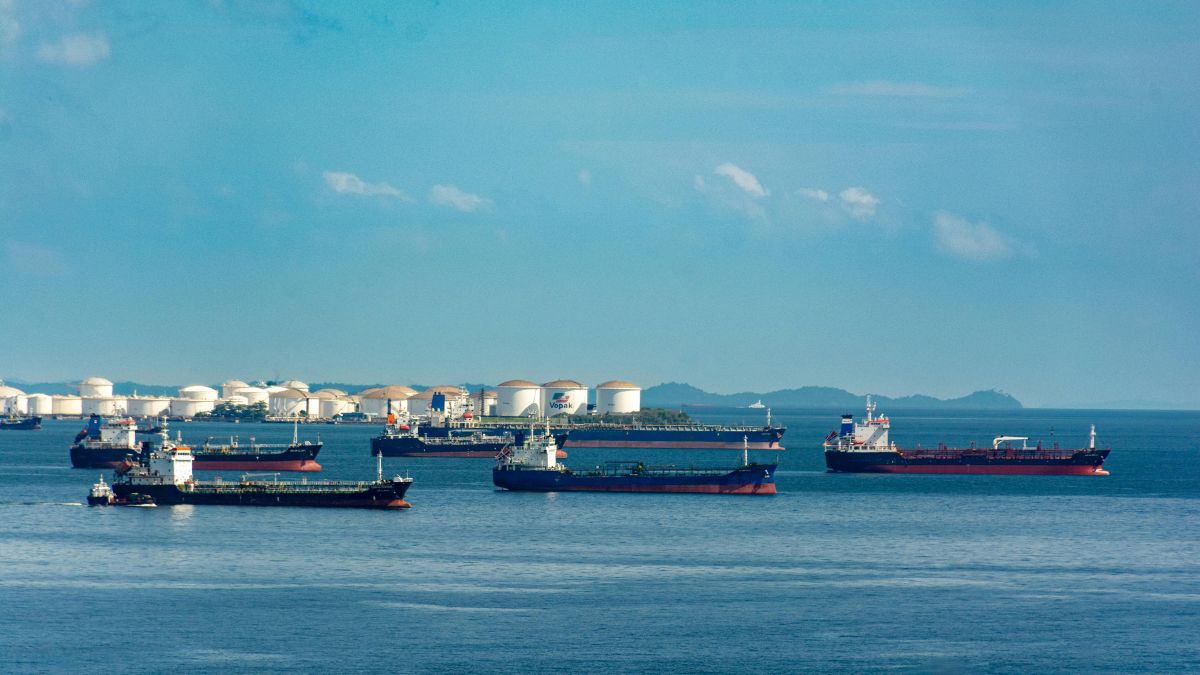
Iran–Israel–US conflict impact on India could raise crude prices, disrupt trade, widen the current account deficit, and pressure energy security.
The tremors began far from India’s shores. US and Israeli strikes on Iran, followed by retaliatory actions, have redrawn fault lines across West Asia. But in New Delhi, in oil refineries along the western coast, and in rice mandis across Haryana and Punjab, the aftershocks are already being felt.
“US and Israel attacks on Iran, and subsequent counter attacks have exposed a new wave of geopolitical risks,” notes a policy briefing from Climate Trends, reviewed by EdPublica. For India — bound to Israel by strategic ties and to Iran by history and geography — the moment is fraught with complexity.
At the heart of the unfolding crisis lies a narrow maritime artery: the Strait of Hormuz.
The Strait of Hormuz: India’s Energy Lifeline
Nearly a quarter of the world’s crude oil flows through the Strait of Hormuz — a chokepoint linking West Asian producers to global markets. For South Asia, the dependency is sharper. Around 40% of the total crude oil consumption of India, China, Japan and South Korea transits this passage.
India imports nearly 90% of its crude oil. Of its daily imports, 2.5–2.7 million barrels per day — largely from Kuwait, Saudi Arabia, Iraq and the UAE — pass through these contested waters.
The risks are no longer theoretical. According to reports, Iran has been relaying warnings over VHF radio to ships, cautioning that passage may not be guaranteed. Insurance pricing for shipping has risen by 50% overnight. Freight rates are climbing. The Director General of Shipping has issued a circular advising stakeholders not to deploy Indian crews in Iran.

If Iran’s 3.3 million barrels per day production is disrupted, oil prices could rise 9–15%, pushing crude from a base of $70 per barrel to roughly $76–81.
For India, the impact would be “more price driven and not volume driven”. Yet price shocks ripple quickly — widening the current account deficit, weakening the rupee and feeding domestic inflation.
The Iran–Israel–US conflict impact on India is unfolding most sharply through energy markets. With nearly 90% of its crude oil imported and a significant share transiting the Strait of Hormuz, even a modest rise in global oil prices can widen the current account deficit, pressure the rupee, and fuel domestic inflation. The risk is less about immediate shortages and more about sustained price volatility that filters into transport, logistics and food costs.
Vivek Y. Kelkar, researcher working at the intersection of geo-economics and sustainability, warns: “Much depends on how long the conflict endures and whether risks to the Persian Gulf and the Strait of Hormuz persist… For India, the impact would be indirect but significant. With nearly 90 percent import dependence, every $10 per barrel rise increases the annual import bill by about $13–14 billion, widening the current account deficit, pressuring the rupee and adding to inflation.”
He adds that China — which buys roughly 90% of Iran’s crude exports — could pivot more aggressively toward Russian, Iraqi, Saudi and West African grades if Iranian volumes shrink. “If Beijing pivots toward the same Russian or Atlantic Basin supplies that India relies on for diversification, India’s energy security could become more expensive and more contested. The likely outcome is not deep scarcity, but tighter global balances, higher prices and diminished negotiating leverage for Indian refiners.”
From Oil Tanks to Rice Fields
The consequences extend well beyond petrol pumps.
In the weeks before the conflict escalated, Iranian importers had placed large orders for basmati rice, pushing local prices up by about Rs 10 per kg. Iran accounts for roughly 25% of India’s basmati exports; Iraq another 20%. Together, that’s over 2 million tonnes valued at more than $2 billion annually.
Beyond oil, the Iran–Israel–US conflict impact on India extends to trade and exports. Iran and Iraq together account for a substantial share of India’s basmati rice exports, while tea shipments and broader West Asian trade flows face uncertainty amid rising insurance premiums and shipping disruptions. Any prolonged instability could compress margins for exporters and complicate payment mechanisms across the region.
Uncertainty now looms over these trade flows. Tea exports too may take a hit — nearly Rs 7 billion worth was exported to Iran in 2024–25.
More broadly, Middle Eastern countries including Iran, Bahrain, Kuwait, Qatar and the UAE account for bilateral trade worth about $117.32 billion, with the UAE alone contributing nearly $100 billion. Any regional escalation directly threatens these ties.
The UAE Factor: A Stable Hub Under Strain
Dubai has long been viewed as West Asia’s insulated commercial gateway — a financial and logistics hub even when politics elsewhere burned. But the conflict “fundamentally alters Dubai’s longstanding reputation as a politically insulated financial and trade hub”. India and the UAE have been expanding cooperation in renewables, green hydrogen and critical minerals. The India–UAE Comprehensive Economic Partnership Agreement (CEPA), signed in 2022, marked India’s first such accord in the MENA region. Escalation now risks slowing joint ventures and technology exchanges just as clean transition investments were gathering pace.
“India’s policy of strategic autonomy has so far helped it navigate the choppy waters of geopolitics but the balancing act has become increasingly tough. The conflict in west Asia and its repercussions raise the risks to its supply chains, test energy security and increase insurance costs and fuel inflation if energy prices remain elevated, as is expected if the Strait of Hormuz is blocked… Yet, despite the rising risks India’s economy and markets are relatively better placed to ride this geopolitical storm,” Archana Chaudhary, Associate Director at Climate Trends, notes.
A Clean Energy Imperative, Not Just a Climate Goal
The crisis may also sharpen India’s clean energy calculus. Elevated oil costs increase dollar demand, typically putting downward pressure on the rupee. Costlier fuel filters into transportation, logistics and eventually food prices. Renewable energy supply chains — including critical minerals — could also be disrupted, as significant shipping traffic flows through Hormuz
Yet analysts see opportunity in the turbulence. “The recent strikes only reinforce the validity of India’s long-standing principle of strategic autonomy. In an increasingly volatile West Asian landscape, the wisdom of accelerating our clean energy ambitions becomes even more apparent for energy security. Reducing dependence on imported conventional energy sources, i.e. oil and gas, through rapid deployment of clean technologies is no longer just a climate imperative but a strategic necessity… In this fractured geopolitical order, India must deepen the momentum toward clean energy transition and technological self-reliance to insulate its growth trajectory from external shocks,” Aarti Khosla, Director, Climate Trends, argues.
Vaibhav Chaturvedi, Senior Fellow at CEEW, echoes the urgency: “The US-Iran war doesn’t bode well for the global energy economy. In the short run, we can expect an increase in oil prices. In the medium term, if the war drags, there would be a negative impact on the global economy. The event will undoubtedly create headwinds for India’s economy. India will do well to leverage its relationships to access cheaper oil in this scenario. This is a moment to bring investments to ramp up plans to scale up electrification of the power and transport sector faster as the ultimate solution to energy security.”
Strategically, the Iran–Israel–US conflict impact on India reinforces the urgency of diversifying energy sources and accelerating clean transition goals. As geopolitical tensions expose the vulnerabilities of fossil fuel dependence, electrification, renewable expansion and domestic energy resilience are no longer only climate priorities — they are economic safeguards against recurring global shocks.
Duttatreya Das, Energy Analyst–Asia at Ember, calls this a turning point: “The past few months have been challenging for India’s crude supplies—first the shift away from discounted Russian Urals to avoid U.S. tariffs, and now the potential volume impact from disruptions in West Asia. While these disruptions may be short-term, India cannot simply afford to remain hostage to geopolitical volatility… Moments like these offer an opportunity to recalibrate its mobility policy, through electrification and a faster expansion of ethanol blending in the near term.”
A Moment of Strategic Testing
In South Block, a Cabinet meeting chaired by the Prime Minister signals the seriousness of the moment. OPEC has indicated it may adjust production to maintain market stability. India’s long-held doctrine of strategic autonomy — balancing relationships across rival blocs — is now under stress. After US pressure restricted purchases of Russian oil, India diversified more toward Gulf suppliers, inadvertently deepening its exposure to Hormuz-linked risks. Though it imports from over 40 countries, geography and geopolitics cannot be entirely diversified away.
The immediate reality is uncertainty: higher freight, rising insurance, volatile crude, jittery exporters.
The longer-term question is whether this crisis accelerates a structural pivot. In the shadows of tankers and warships, India’s energy transition debate is no longer abstract. It is entangled with inflation, trade, currency stability and food security.
As oil flows through a narrow strait watched by rival navies, India’s policymakers face a widening strategic horizon — where climate ambition, economic resilience and geopolitical balancing are no longer separate conversations, but one.
Sustainable Energy
India’s EV Investment Story: Rs 2.23 Lakh Crore Deployed, But 82% of Capital Needs Still Unmet
India’s charger-to-EV ratio continues to lag far behind global benchmarks—a structural weakness that could slow consumer adoption.

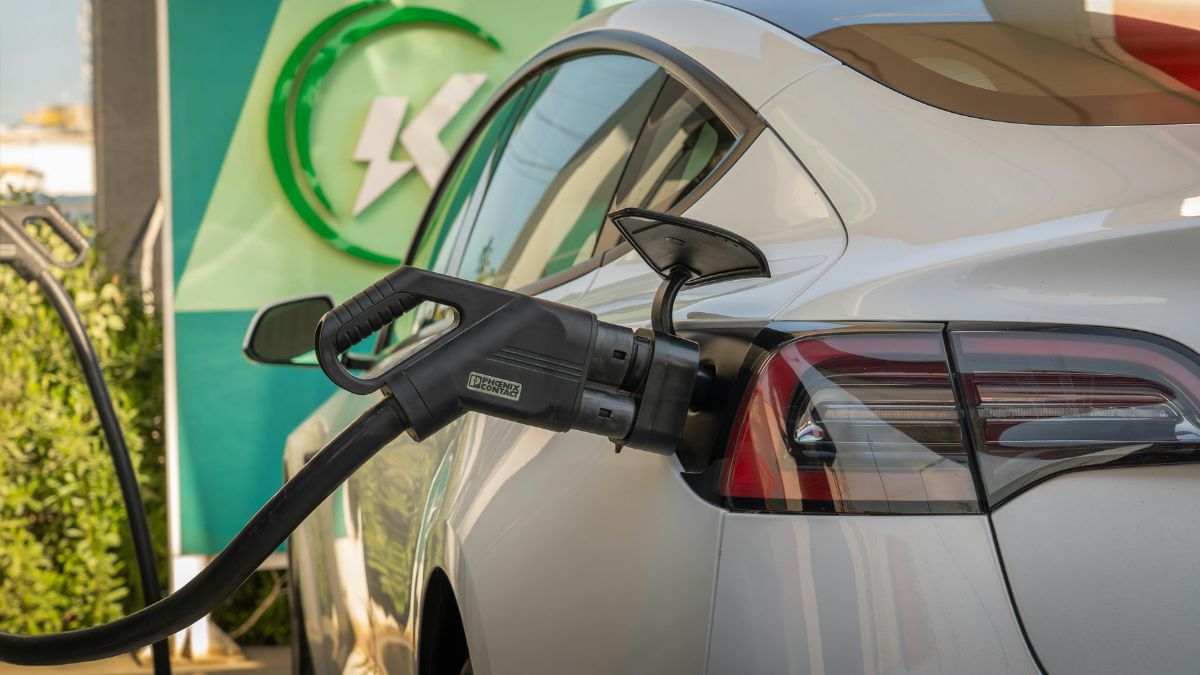
India’s electric mobility transition has entered a decisive yet challenging phase. A new analysis from the Institute for Energy Economics and Financial Analysis (IEEFA) reveals a complex narrative: while the country’s EV sector has attracted an impressive Rs 2.23 lakh crore in investments between 2020 and 2025, this represents just 18% of what India must mobilise by 2030 to meet its ambitious clean transport goals.
Unfolding against the backdrop of India’s expanding climate commitments and rising consumer interest in EVs, the report offers a data-rich look into where capital is flowing, where it is missing, and what structural challenges remain hidden beneath headline growth.
A Five-Year Surge in Capital—But Not Enough
Between 2020 and 2025, the EV ecosystem—spanning manufacturing facilities, public subsidies, and charging networks—absorbed Rs 2,23,119 crore in funding. This includes:
- Manufacturing investments supported primarily through internal accruals
- Government subsidies, especially through FAME (Faster Adoption and Manufacturing of Hybrid and Electric Vehicles)
- Charging infrastructure, which remains under-capitalised
Despite this influx, India’s 2030 targets—30% of private cars, 70% of commercial vehicles, 40% of buses, and 80% of two- and three-wheelers going electric—require a total of Rs12.5 lakh crore in investments. That leaves Rs 10.26 lakh crore still unmet.
“While Rs 2.23 lakh crore is a significant capital mobilisation in just five years, it represents only about 18% of the Rs12,50,000 crore required by 2030,” says co-author Subham Shrivastava. “Mobilising the remaining INR10,26,881 crore (USD117.82 billion) by 2030 will require systemic financing reforms.”
The Anatomy of EV Capital
A closer look at the numbers reveals how India’s EV push has been financed so far.
Internal reserves dominate
Manufacturers contributed the bulk of realised investment through their own internal accruals—Rs1,59,701 crore. Debt followed at Rs36,738 crore, while equity accounted for Rs 6,455 crore. But these aggregates obscure important differences across vehicle types.
The three-wheeler segment, driven by a fragmented OEM landscape and low capital-intensity operations, leaned heavily on internal funding and limited debt. Meanwhile, two- and four-wheeler categories showed more diverse capital structures due to the presence of established players and higher investment requirements.
“From 2020–2025, electric three-wheelers attracted the largest share (~78%) of investments among vehicle segments, due to the segment’s maturity and commercial-scale operations alongside its fragmented OEM base,” explains co-author Saurabh Trivedi. “However, recent investment announcements in 2024 and 2025 reveal a pivot towards electric four-wheelers, driven by rising demand for electric cars.”
Charging Infrastructure: A Massive Funding Gap
Perhaps the most critical bottleneck in India’s EV story is the underdeveloped charging ecosystem.
From 2020 to 2025, investments in public charging constituted just 9.6% of the ₹20,600 crore estimated need for 2030. While the country expanded its public chargers from 5,151 to 39,485 over five years, utilisation rates remain low and profitability uncertain.
“Investment in EV charging faces challenges due to limited investor interest, as public EV charging remains an unproven business model, with many charging stations reporting low utilisation rates and high initial costs,” notes co-author Charith Konda.
India’s charger-to-EV ratio continues to lag far behind global benchmarks—a structural weakness that could slow consumer adoption.
The Silent Brake on India’s EV Growth
Beyond infrastructure, the economics of financing EVs present another hurdle.
Commercial EV borrowers currently face interest rates of 15–33%, levels that wipe out the total cost-of-ownership advantage EVs typically offer.
“The binding constraint is not a lack of capital in the system—it is how EV risk is priced,” Shrivastava says. “When lenders remain uncertain about battery performance, residual values, and cash-flow stability, that uncertainty gets reflected in higher interest rates.”
High financing costs disincentivise fleet operators and businesses from transitioning to EVs. As a result, manufacturing capacity cannot scale at the pace needed, creating a demand-supply mismatch.
A New Model for Mobilising Capital
To unlock the remaining ₹10.3 lakh crore needed over the next five years, IEEFA proposes a shift away from subsidy-led growth toward structural risk-sharing.
The solution: a coordinated integrated EV financing platform that consolidates:
- Partial credit guarantees
- Residual value protection for batteries
- Battery-as-a-service (BaaS) arrangements
- Co-lending structures
This platform would be anchored by development finance institutions with relevant expertise—SIDBI for MSMEs and small commercial fleets, and IIFCL for large commercial deployments.
“Manufacturers need predictable demand signals to scale capacity, but demand depends heavily on affordable credit,” Trivedi adds. “An integrated platform that shares risks appropriately across lenders, OEMs, and public institutions can reduce financing costs and unlock commercial-scale deployment.”
The idea is that as EV adoption grows and asset performance data becomes more robust, lenders will recalibrate risk premiums downward. Over time, underwriting practices could standardise, securitisation markets may emerge, and capital could recycle more efficiently.
A Self-Reinforcing Investment Loop
The report outlines a possible virtuous cycle:
- Lower financing costs stimulate EV adoption
- Higher sales volumes create better performance data
- Improved visibility reduces risk perception
- Lower risk draws in more capital
- Manufacturers scale up, benefiting from economies of scale
- Reduced costs further accelerate adoption
This dynamic, according to IEEFA, is essential for unlocking a mature and self-sustaining EV ecosystem.
A Race Between Ambition and Capital
India’s electric transport ambitions are clear and achievable—but only if the investment framework evolves as rapidly as consumer interest and technological capability.
The core message from the data is unmistakable: India is moving in the right direction, but far too slowly. Recognising this, the authors warn that the next five years will determine the trajectory of India’s EV revolution. The country must transition from policy-driven electrification to a financially self-sustaining ecosystem capable of attracting large volumes of private capital at scale.
The question is no longer about policy commitment but about the cost, structure, and flow of capital in an evolving, high-potential sector.
Sustainable Energy
Can ammonia power a low-carbon future? New MIT study maps global costs and emissions
Under what conditions can ammonia truly become a low-carbon energy solution? MIT researchers attempt to resolve this

Ammonia, long known as the backbone of global fertiliser production, is increasingly being examined as a potential pillar of the clean energy transition. Energy-dense, carbon-free at the point of use, and already traded globally at scale, ammonia is emerging as a candidate fuel and a carrier of hydrogen. But its climate promise comes with a contradiction: today’s dominant method of producing ammonia carries a heavy carbon footprint.
A new study by researchers from the MIT Energy Initiative (MITEI) attempts to resolve this tension by answering a foundational question for policymakers and industry alike: under what conditions can ammonia truly become a low-carbon energy solution?
A global view of ammonia’s future
In a paper published in Energy and Environmental Science, the researchers present the largest harmonised dataset to date on the economic and environmental impacts of global ammonia supply chains. The analysis spans 63 countries and evaluates multiple production pathways, trade routes, and energy inputs, offering a comprehensive view of how ammonia could be produced, shipped, and used in a decarbonising world.
“This is the most comprehensive work on the global ammonia landscape,” says senior author Guiyan Zang, a research scientist at MITEI. “We developed many of these frameworks at MIT to be able to make better cost-benefit analyses. Hydrogen and ammonia are the only two types of fuel with no carbon at scale. If we want to use fuel to generate power and heat, but not release carbon, hydrogen and ammonia are the only options, and ammonia is easier to transport and lower-cost.”
Why data matters
Until now, assessments of ammonia’s climate potential have been fragmented. Individual studies often focused on single regions, isolated technologies, or only cost or emissions, making global comparisons difficult.
“Before this, there were no harmonized datasets quantifying the impacts of this transition,” says lead author Woojae Shin, a postdoctoral researcher at MITEI. “Everyone is talking about ammonia as a super important hydrogen carrier in the future, and also ammonia can be directly used in power generation or fertilizer and other industrial uses. But we needed this dataset. It’s filling a major knowledge gap.”
To build the database, the team synthesised results from dozens of prior studies and applied common frameworks to calculate full lifecycle emissions and costs. These calculations included feedstock extraction, production, storage, shipping, and import processing, alongside country-specific factors such as electricity prices, natural gas costs, financing conditions, and energy mix.
Comparing production pathways
Today, most ammonia is produced using the Haber–Bosch process powered by fossil fuels, commonly referred to as “grey ammonia.” In 2020, this process accounted for about 1.8 percent of global greenhouse gas emissions. While economically attractive, it is also the most carbon-intensive option.
The study finds that conventional grey ammonia produced via steam methane reforming (SMR) remains the cheapest option in the U.S. context, at around 48 cents per kilogram. However, it also carries the highest emissions, at 2.46 kilograms of CO₂ equivalent per kilogram of ammonia.
Cleaner alternatives offer substantial emissions reductions at higher cost. Pairing SMR with carbon capture and storage cuts emissions by about 61 percent, with a 29 percent cost increase. A full global shift to ammonia produced with conventional methods plus carbon capture could reduce global greenhouse gas emissions by nearly 71 percent, while raising costs by 23.2 percent.
More advanced “blue ammonia” pathways, such as auto-thermal reforming (ATR) with carbon capture, deliver deeper emissions cuts at relatively modest cost increases. One ATR configuration achieved emissions of 0.75 kilograms of CO₂ equivalent per kilogram of ammonia, at roughly 10 percent higher cost than conventional SMR.
At the far end of the spectrum, “green ammonia” produced using renewable electricity can reduce emissions by as much as 99.7 percent, but at a significantly higher cost—around 46 percent more than today’s baseline. Ammonia produced using nuclear electricity showed near-zero emissions in the analysis.
Geography matters
The study also reveals that the viability of low-carbon ammonia depends heavily on geography. Countries with abundant, low-cost natural gas are better positioned to produce blue ammonia competitively, while regions with cheap renewable electricity are more favourable for green ammonia.
China emerged as a potential future supplier of green ammonia to multiple regions, while parts of the Middle East showed strong competitiveness in low-carbon ammonia production. In contrast, ammonia produced using carbon-intensive grid electricity was often both more expensive and more polluting than conventional methods.
From research to policy
Interest in low-carbon ammonia is no longer theoretical. Countries such as Japan and South Korea have incorporated ammonia into national energy strategies, including pilot projects using ammonia for power generation and financial incentives tied to verified emissions reductions.
“Ammonia researchers, producers, as well as government officials require this data to understand the impact of different technologies and global supply corridors,” Shin says.
Zang adds that the dataset is designed not just as an academic exercise, but as a decision-making tool. “We collaborate with companies, and they need to know the full costs and lifecycle emissions associated with different options. Governments can also use this to compare options and set future policies. Any country producing ammonia needs to know which countries they can deliver to economically.”
As global demand for low-carbon fuels accelerates toward mid-century, the study suggests that ammonia’s role will depend less on ambition alone, and more on informed choices—grounded in data—about how and where it is produced.


Iran–Israel–US Conflict Impact on India’s Economy & Energy

How the Iran–Israel–US Conflict Ripples Through India’s Economy and Energy Future

India’s EV Investment Story: Rs 2.23 Lakh Crore Deployed, But 82% of Capital Needs Still Unmet

AI in Classrooms: Threat to Learning or Catalyst for Educational Transformation?

More Shade for the Rich: Study Exposes Global Urban Heat Inequality

A Green Turn with Gaps: India’s Budget Backs Clean Tech but Skips Climate Adaptation

Researchers crack greener way to mine lithium, cobalt and nickel from dead batteries

From Classrooms to Corridors: How India’s Budget Repositions Education

Science Is Talking – Why Aren’t We Hearing?

EP Investigation: Hidden Epidemic, Tuberculosis Spreads Among Kerala’s Captive Elephants

-

 Society2 months ago
The Ten-Rupee Doctor Who Sparked a Health Revolution in Kerala’s Tribal Highlands
-
COP304 months ago
Brazil Cuts Emissions by 17% in 2024—Biggest Drop in 16 Years, Yet Paris Target Out of Reach
-
Earth4 months ago
Data Becomes the New Oil: IEA Says AI Boom Driving Global Power Demand
-
Society2 months ago
From Qubits to Folk Puppetry: India’s Biggest Quantum Science Communication Conclave Wraps Up in Ahmedabad
-
COP304 months ago
Corporate Capture: Fossil Fuel Lobbyists at COP30 Hit Record High, Outnumbering Delegates from Climate-Vulnerable Nations
-
Space & Physics3 months ago
Indian Physicists Win 2025 ICTP Prize for Breakthroughs in Quantum Many-Body Physics
-
Women In Science5 months ago
The Data Don’t Lie: Women Are Still Missing from Science — But Why?
-
Health4 months ago
Air Pollution Claimed 1.7 Million Indian Lives and 9.5% of GDP, Finds The Lancet