
Society
NASA to launch Jupiter moon mission with a time capsule
NASA’s planned orbiter exploring Jupiter’s moon, Europa, will carry a metal plate representing messages from earth.


NASA’s Europa Clipper mission will see a satellite orbit Europa, one of Jupiter’s moons that planetary scientists strongly believe hides a sea of salt water underneath its surface.
The mission has a planned launch date on October 10th later this year. The probe will tentatively arrive at Europa sometime in April 2030.
It will check for the underground ocean and even search for possible signs of life.
Recently, NASA announced that Europa Clipper will be dispatched to Europa with a triangular metal plate, functioning as a time capsule.
“The plate combines the best humanity has to offer across the universe – science, technology, education, art, and math,” said Lori Glaze, who heads NASA’s Planetary Science Division.
There’s no objective science goal by carrying the time capsule, unless aliens find them (if they exist). However, it serves a symbolic purpose, beaconing humanity’s existence – and leaving a footprint in outer space.
Although it does capture the spirit of the Golden Record, dispatched with the Voyager missions in the 1970s – which carried sounds and images depicting diversity of life on earth. In fact, it’s a longstanding tradition for space exploration missions to carry a bit of humanity with it – as seen in payloads in the recent Odyssey mission and the Perseverance Martian rover.
So what does it contain?
Names from Earth
A silicon microchip has engravings of about 2.6 million names, spanning every nation. These names were submitted in an online campaign, ‘Messages in a Bottle’.
Each line of text is said to be smaller than one-thousandth the width of a human hair (or approximately 75 nanometers).
The symbolization here is to proudly showcase humanity’s shared outlook to space, across borders.
In Praise of Mystery: A Poem for Europa

One face of the triangular metal plate to be dispatched aboard the Europa Clipper. Credit: NASA / JPL-Caltech
The plate aboard Europa Clipper will see a poem composed by the US Poet Laureate, Ada Limón, specifically for the mission, called, ‘In Praise of Mystery: A Poem for Europa’.
It speaks to humanity’s ability to appreciate nature’s beauty – and see a twin in Europa too, which could bear vast seas of its own.
Drake Equation
Along with Limón’s poem, was the eponymous Drake equation.
In 1961, Frank Drake, an American astrophysicist working as part of the Search for Extraterrestrial Intelligence (SETI) collaboration produced an estimate for the possible number of extraterrestrial civilizations in the universe.
Although the equation isn’t accurate, it was merely published by Drake with the hope it would pique scientific – and thus serious, human interest to investigate intelligent alien life.
Sounds of Water

The other side of the triangular metal plate, with the audio frequency waveforms. Credit: NASA / JPL-Caltech
The other side of the metal plate has audio frequency waveforms pronouncing ‘water’ in over 103 languages. This includes the American Sign Language at the center of a graphic shaped like a water puddle pattern.
“The message of connection through water, essential for all forms of life as we know it, perfectly illustrates Earth’s tie to this mysterious ocean world we are setting out to explore,” said Glaze.
Signals from space
There’s an artwork showing a waveform of radio wave signals.
The significance of the radio waves is in its use as a communication tool – tentative to be used by aliens as well, and thus share our existence with each other.
Architect of the Europa Clipper

Robert Greeley. Credit: Susan Selkirk / Wikimedia
Last, but not the least, there’s the smiling portrait of Robert Greeley, a planetary geologist known as a trailblazer in his field.
His research involved studying Europa for more than a decade until his death in 2011. NASA appreciated his effort in helping lay the foundations for Europa Clipper.











Society
India’s Power Future: 70% Non-Fossil Capacity by 2035-36, But Grid Challenges Loom
India targets 1121 GW power capacity by 2036 with 70% non-fossil share, but grid, storage and utilisation challenges remain, says CEA report.

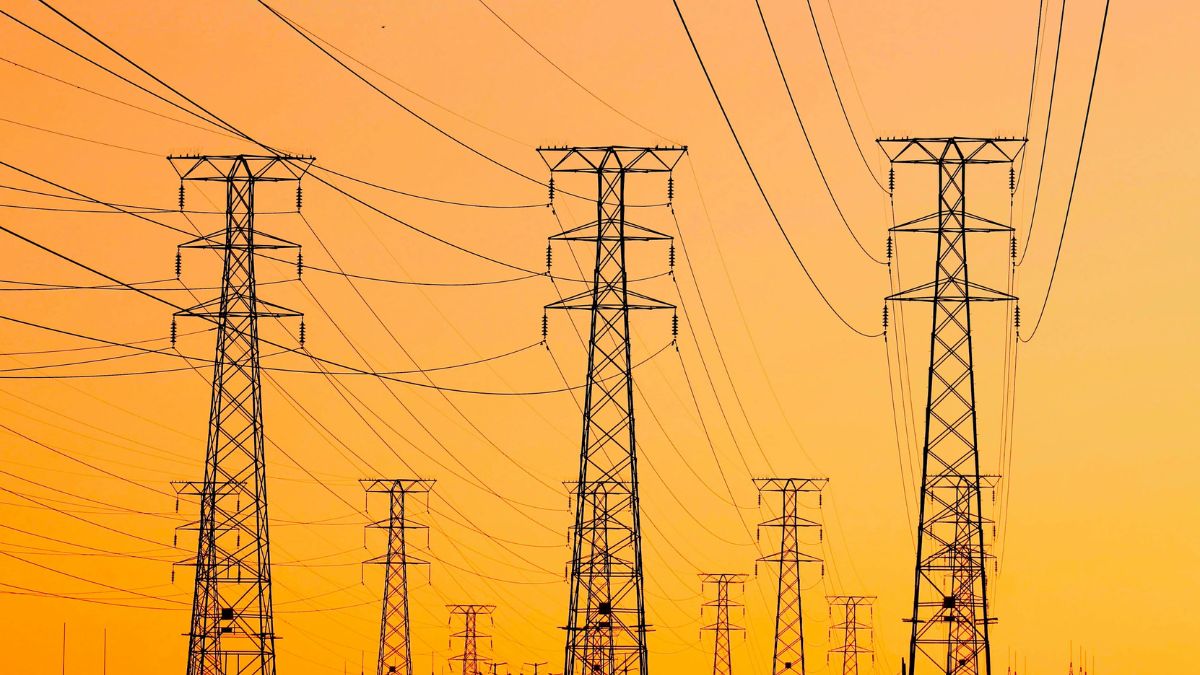
India’s non-fossil power capacity is set to reach 70% by 2035-36, driven by rapid solar expansion, but grid constraints, storage gaps and utilisation challenges could shape the energy transition.
India is preparing for one of the most dramatic transformations in its energy sector, with the Central Electricity Authority outlining a future where clean energy dominates installed capacity but fossil fuels continue to underpin supply reliability.
The National Generation Adequacy Plan (2026-27 to 2035-36) presents the most detailed roadmap yet of how India’s electricity system will evolve over the next decade. It projects that India’s installed power capacity will reach 1,121 GW by 2035-36, with 70% (786 GW) coming from non-fossil sources, signalling a structural shift in the country’s energy mix.
At the same time, the report highlights a more complex reality: capacity expansion alone will not define the transition—utilisation, storage, and grid readiness will.
India Power Capacity 2035-36 to Cross 1,100 GW
India’s electricity system is expected to nearly double in scale over the next decade.
According to the report, net electricity generation is projected to rise from around 1,725 billion units today to 3,450 billion units by 2035-36, reflecting the country’s rapid economic growth and electrification push.
Solar energy is set to emerge as the dominant force in India’s power mix. Installed solar capacity alone is expected to exceed 500 GW, accounting for nearly 45% of total capacity, making it the single largest contributor to India’s energy basket.
The detailed breakdown of projected capacity includes:
- 315 GW coal
- 509 GW solar
- 155 GW wind
- 78 GW large hydro
- 20 GW gas
- 22 GW nuclear
These figures underline a system where renewables dominate capacity, but conventional sources remain critical to stability.
India Power Capacity 2035-36 vs Actual Generation Gap
One of the most important insights from the report is the divergence between installed capacity and actual electricity generation.
Despite renewables making up 70% of capacity, coal is expected to remain the backbone of electricity supply. The report projects coal will still account for 51% of total electricity generation (1,819 BU), while solar will contribute around 27% (984 BU).
This gap reflects the intermittent nature of renewable energy and the continued need for firm, dispatchable power.
As the report notes, “the source of firm power at present is predominantly coal-based generation.”
This highlights a key transition challenge: while India can rapidly build renewable capacity, replacing coal’s role in ensuring round-the-clock supply will require deeper systemic changes.
India Power Capacity 2035-36 Faces Grid Bottlenecks
While India’s renewable expansion has been rapid, the system’s ability to absorb this capacity remains constrained.
A major concern flagged in the analysis is the issue of stranded renewable capacity—power that is generated but cannot be transmitted due to grid limitations.
Vibhuti Garg, Director South Asia at the Institute for Energy Economics and Financial Analysis, said: “It is encouraging to see the national generation adequacy plan taking shape. India has made remarkable progress in expanding renewable energy capacity, with clean sources now accounting for more than 50% of installed capacity.
However, the real test lies not in capacity addition, but in how effectively this generation is utilised. Currently, over 37 GW of renewable energy capacity remains stranded—highlighting gaps in planning, integration, and grid readiness.
This underscores the urgent need to shift focus from merely adding capacity to ensuring efficient evacuation and utilisation. Strengthening transmission infrastructure and aligning it with demand centres is critical. As supply and demand increasingly diverge geographically, coordinated planning becomes essential.”
The report also notes that renewable energy generation is becoming more geographically dispersed, increasing the need for robust transmission networks to connect generation hubs with consumption centres.
India Power Capacity 2035-36 Needs Massive Storage Push
Energy storage emerges as the single most critical enabler of India’s clean energy transition.
The plan estimates that India will require 174 GW / 888 GWh of energy storage capacity by 2035-36, including battery storage and pumped hydro.
However, the current pipeline is far from sufficient:
- Only 10.6 GW of battery storage is under construction
- Additional capacity remains in tendering or early planning stages
This gap between projected need and current deployment highlights a major financing and policy challenge.
The report also emphasises that solar-plus-storage systems are emerging as an alternative, particularly for meeting peak demand during non-solar hours, but are yet to fully replace coal-based baseload generation.
India Power Capacity 2035-36 and Energy Security
The timing of the plan is significant, coming amid global energy market disruptions and geopolitical tensions.
Vibhuti Garg noted:“At a time when India remains exposed to global fuel supply disruptions due to geopolitical tensions, accelerating renewable energy integration is not just a climate imperative—it is an economic and energy security necessity.”
The report positions renewable energy not just as a climate solution, but as a strategic tool for reducing dependence on imported fuels.
EVs and Data Centres as New Demand Drivers
The plan also identifies electric vehicles and data centres as emerging sources of electricity demand.
These loads are expected to be geographically concentrated, requiring careful coordination between energy supply and demand planning.
Vibhuti Garg added: “This challenge will intensify with the rise of new demand drivers such as electric vehicles and data centres. These loads are often geographically concentrated, making it even more important to strategically plan clean energy supply in tandem with demand clusters.”
India’s power sector is entering a defining decade.
The National Generation Adequacy Plan makes it clear that the country is on track to build one of the world’s largest clean energy systems. But it also underscores that capacity alone is not enough.
The real transition will depend on:
- Grid infrastructure
- Energy storage deployment
- Demand-side planning
- Policy alignment with emerging technologies
As the report emphasises, the goal is not just to expand capacity, but to ensure a reliable, resilient, and cost-effective power system capable of meeting India’s rapidly growing electricity demand.
Society
EVs avoided oil equal to 70% of Iran’s exports in 2025
Electric vehicles avoided oil equal to 70% of Iran’s exports in 2025, reshaping global energy security amid Middle East tensions.

When tensions rise around Iran, the world braces for oil shocks. Markets react, governments worry, and the Strait of Hormuz once again becomes the centre of global attention.
But in 2025, something quietly shifted beneath this familiar cycle of crisis.
Electric vehicles avoided oil consumption equivalent to nearly 70% of Iran’s exports.
According to analysis by Ember, the global EV fleet reduced oil demand by 1.7 million barrels per day, approaching the 2.4 million barrels per day exported by Iran through the Strait of Hormuz.
This is not just a milestone for clean energy. It marks the beginning of a structural change in how the world responds to geopolitical risk.
The world’s oil vulnerability is still profound
Despite rapid technological progress, the global economy remains deeply exposed to oil shocks.
Nearly 79% of the world’s population lives in oil-importing countries, making them vulnerable to disruptions in supply and price volatility.
The costs are enormous. For every $10 increase in oil prices, global import bills rise by around $160 billion annually.
At the heart of this vulnerability lies the Middle East—and specifically the Strait of Hormuz. This narrow passage carries around one-fifth of global oil exports, while the wider Gulf region accounts for 29% of global oil supply.
The concentration of supply through such a fragile corridor makes the global economy acutely sensitive to regional instability.
“This is Asia’s Ukraine moment,” said Daan Walter, principal at Ember. “Oil is the Achilles’ heel of the global economy… Asia’s oil vulnerability has been exposed by the current crisis.”
Even oil producers cannot escape the shock
One of the most counterintuitive realities of today’s energy system is that producing oil domestically does not shield economies from global price spikes.
Oil is traded in global markets. When supply is disrupted, prices rise everywhere.
In Texas, one of the world’s largest oil-producing regions, gasoline prices increased by more than 25% following recent geopolitical tensions—in some cases exceeding rises seen in oil-importing countries.
This reflects a fundamental truth: oil dependency is a global vulnerability, not a local one.
The true cost of fossil fuel dependence
The financial burden of this dependency is immense.
Net importing countries spent approximately $1.7 trillion on fossil fuel imports in 2024, with many economies losing significant portions of GDP to energy imports.
For developing economies, the impact is even more severe. Rising prices can strain public finances, disrupt industries, and increase the cost of living.
The report highlights a stark dynamic: when supply tightens, wealthier countries can outbid poorer ones, effectively pushing them out of the market.
Energy insecurity, in this sense, is not just an economic issue—it is a question of global inequality.
EVs are emerging as a geopolitical force
Against this backdrop, the rise of electric vehicles is beginning to alter the equation.
The fact that EVs avoided oil demand equivalent to 70% of Iran’s exports is not just symbolic—it is strategic.
It shows that demand-side transformation can counterbalance supply-side risk.
“Electric vehicles are increasingly cost-competitive with gasoline cars,” Walter said. “Oil volatility means EVs are a common-sense choice for countries wishing to insulate themselves from future shocks.”
The economic benefits are already visible:
- China saves over $28 billion annually in avoided oil imports
- Europe saves around $8 billion
- India saves about $0.6 billion
These savings highlight a critical shift: energy security is moving from controlling supply to reducing dependence.
A broader shift: the rise of “electrotech”
Electric vehicles are only one part of a wider transformation described in the report as “electrotech”—a combination of EVs, solar, wind, batteries, and heat pumps.
Together, these technologies can electrify more than three-quarters of global energy demand and significantly reduce fossil fuel imports.
If deployed at scale, they could cut import dependence by up to 70%, fundamentally reshaping global energy systems.
Unlike fossil fuels, which require continuous imports, these technologies provide long-term stability. Once installed, they operate without fuel costs, price volatility, or geopolitical exposure.
As the report puts it, this is the difference between “renting energy” and “owning it.”
The Strait of Hormuz: from chokepoint to turning point
The current crisis highlights the strategic importance of the Strait of Hormuz—but it may also accelerate its decline as a central pillar of global energy security.
Asia, which imports around 40% of its oil through the strait, is particularly exposed.
But unlike previous crises, countries now have viable alternatives.
Renewable energy costs have fallen sharply. EV adoption is accelerating across both developed and emerging markets. And electrification technologies are scaling faster than expected.
The report suggests this could become a defining moment—similar to how Europe’s response to the Ukraine crisis reshaped its energy strategy.
Peak oil may arrive sooner than expected
The implications extend beyond immediate crisis management.
The International Energy Agency had projected global oil demand would peak around 2029. But recent developments suggest that peak may arrive sooner.
Electrification is not only reducing demand—it is changing expectations about the future of energy.
The report notes that demand growth forecasts have already been revised downward, with the possibility that global oil demand could plateau—or even decline—earlier than anticipated.
Crises, historically, have accelerated structural transitions. This may be another such moment.
A structural shift beneath the headlines
Geopolitical tensions may dominate headlines, but the deeper story lies beneath.
The fossil fuel system—dependent on continuous trade through vulnerable chokepoints—is becoming increasingly fragile. At the same time, the technologies needed to replace it are becoming cheaper, faster, and more accessible.
The fact that EVs alone have already offset oil demand equivalent to most of Iran’s exports signals a profound shift.
It suggests that the balance of power in global energy is beginning to move—from regions that supply oil to technologies that reduce the need for it.
The Strait of Hormuz may remain a critical artery for now. But its grip on the global economy is loosening.
And for the first time in decades, the world has a credible path to reduce its dependence on it.
Society
Hormuz Crisis Exposes Global Fertiliser Dependency Risks
Hormuz disruption highlights risks of fertiliser dependency as experts warn of food security threats and call for agroecology shift.
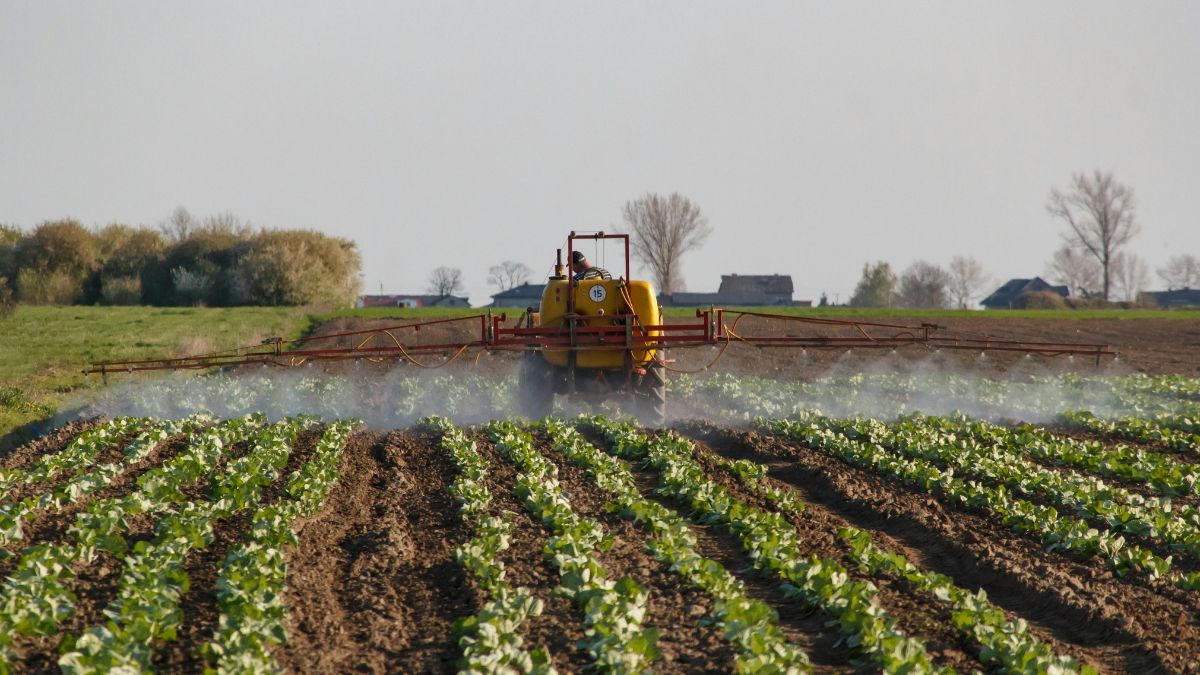
Fertiliser dependency has come under sharp global scrutiny as tensions around the Strait of Hormuz highlight how geopolitical disruptions can ripple through food systems, raising concerns over food security and farm resilience.
The Strait of Hormuz, a critical chokepoint for global energy supplies, plays a central role in fertiliser production due to its link to fossil fuel exports. Any disruption threatens to push up fertiliser costs—directly impacting agricultural production worldwide, according to an analysis by Zero Carbon Analytics (ZCA).
How Fertiliser Dependency Shapes Global Food Systems
Experts warn that modern agriculture’s heavy reliance on fossil fuel-based fertilisers has created a fragile system vulnerable to geopolitical shocks.
“This vulnerability is a choice, and one that we all pay for,” says Raj Patel, economist and food systems expert at the University of Texas. “Nearly 90 percent of the $540 billion in annual agricultural support goes to the same chemical-intensive production that depends on them. We didn’t stumble into this dependency. We funded it.”
The reliance is deeply embedded in global subsidies and production models, making rapid transitions difficult but increasingly necessary.
Farmers Face Rising Costs Amid Hormuz Tensions
Farmers across Asia are already feeling the pressure of rising fertiliser prices as geopolitical tensions escalate.
“With fertiliser prices rising—and the planting season soon to begin—Asia’s farmers are once again being forced to choose between rising costs and falling yields,” says Shamika Mone, President of the Inter-Continental Network of Organic Farmer Organisations.
She adds that consumers are also likely to face further food price hikes, underlining the broader socio-economic impact.
A Fragile System Under Stress
The current crisis is being described as more than just a supply issue—it is a structural problem in global agriculture.
“What we are seeing is not just a fertiliser and commodity crisis, it is a stress test to a fragile food system that is not designed to be resilient,” says Belén Citoler of the World Rural Forum.
The disruption has exposed how interconnected energy markets and food systems have become, with shocks in one quickly cascading into the other.
Agroecology and Organic Farming as Alternatives
Across continents, experts and farmers are calling for a shift toward more resilient agricultural practices that reduce fertiliser dependency.
“The conflict in Iran highlights the vulnerability of an agriculture system that is overly reliant on fossil fuel fertilisers,” says Oliver Oliveros of the Agroecology Coalition.
He points to growing efforts by countries such as Brazil, Kenya, and Vietnam to support agroecological practices that use natural fertilisers and nitrogen-fixing plants.
Farmers themselves are also adapting.
“Geopolitical conflicts… show how vulnerable our agricultural system has become,” says German farmer Olivier Jung, who has been experimenting with crop diversity and reduced external inputs to build resilience.
Similarly, Brazilian farmer Thales Bevilacqua Mendonça warns that global supply chains are increasingly unstable, urging a shift toward ecological farming practices.
Policy Shift Seen as Key to Reducing Fertiliser Dependency
Experts argue that reducing fertiliser dependency will require systemic policy changes, particularly in how agricultural subsidies are allocated.
“To speed up the transition, we need to redirect billions in agriculture subsidies… and invest in approaches that safeguard farmers and consumers from energy price volatility and climate shocks,” Oliveros adds.
Organic farming advocates also stress that proven alternatives already exist.
“If we really want to take food security seriously, policymakers must support the most resilient models… organic farming must become a pillar,” says French farmer Olivier Chaloche.
A Turning Point for Global Food Security?
The Strait of Hormuz disruption may prove to be a wake-up call for governments worldwide.
As fertiliser dependency becomes increasingly tied to geopolitical instability, the push toward agroecology, organic farming, and resilient food systems is gaining urgency.
The question now is whether policymakers will act fast enough to transform a system many experts say is no longer sustainable.


Magnetic Fields Found to Shape Star Formation Near Milky Way Disc

Researchers Use AI to Enable Robots to ‘See’ Through Walls

India’s Power Future: 70% Non-Fossil Capacity by 2035-36, But Grid Challenges Loom

EVs avoided oil equal to 70% of Iran’s exports in 2025

Climate change heat impact affected over 2.5 billion people

How the Iran–Israel–US Conflict Ripples Through India’s Economy and Energy Future

AI in Classrooms: Threat to Learning or Catalyst for Educational Transformation?

Weather, Not Just Emissions, Driving PM2.5 Pollution in Indian Cities: Study

More Shade for the Rich: Study Exposes Global Urban Heat Inequality
Climate change heat impact affected over 2.5 billion people

-

 Society2 months ago
The Ten-Rupee Doctor Who Sparked a Health Revolution in Kerala’s Tribal Highlands
-
COP305 months ago
Brazil Cuts Emissions by 17% in 2024—Biggest Drop in 16 Years, Yet Paris Target Out of Reach
-
Society3 months ago
From Qubits to Folk Puppetry: India’s Biggest Quantum Science Communication Conclave Wraps Up in Ahmedabad
-
Earth4 months ago
Data Becomes the New Oil: IEA Says AI Boom Driving Global Power Demand
-
Women In Science5 months ago
The Data Don’t Lie: Women Are Still Missing from Science — But Why?
-
COP304 months ago
Corporate Capture: Fossil Fuel Lobbyists at COP30 Hit Record High, Outnumbering Delegates from Climate-Vulnerable Nations
-
Space & Physics3 months ago
Indian Physicists Win 2025 ICTP Prize for Breakthroughs in Quantum Many-Body Physics
-
Health5 months ago
Air Pollution Claimed 1.7 Million Indian Lives and 9.5% of GDP, Finds The Lancet