
Society
Environmental Challenges Take Centre Stage in an Increasingly Fractured World
“From conflicts to climate change, we are facing interconnected crises that demand coordinated, collective action,” said Mark Elsner, Head of the Global Risks Initiative at the World Economic Forum


The World Economic Forum’s 20th edition of its Global Risks Report, released today, provides a sobering look at the future of our planet. With escalating geopolitical, societal, technological, and environmental crises converging, the report reveals a global landscape that is increasingly divided and fragile. While economic risks have taken a backseat this year, they remain closely intertwined with other challenges, especially those related to the environment.
Environmental Risks: Dominating the Long-Term Outlook
Environmental concerns have taken centre stage in this year’s report, with extreme weather events, biodiversity loss, and ecosystem collapse topping the list of risks expected to pose the greatest threats in the coming decade. The World Economic Forum’s experts surveyed noted that these environmental challenges are expected to not only increase in frequency but also in intensity.
“From conflicts to climate change, we are facing interconnected crises that demand coordinated, collective action,” said Mark Elsner, Head of the Global Risks Initiative at the World Economic Forum. This interconnectedness underscores the urgency of addressing environmental risks not just as isolated threats, but as part of a broader system of global instability.
Extreme weather events, already a top concern for both short-term and long-term risks, are becoming more prevalent, with devastating impacts on communities, economies, and ecosystems around the world. As climate patterns shift and the intensity of storms, floods, and droughts escalates, the pressure on vulnerable populations will intensify.
Beyond extreme weather, the report also highlights the increasingly dire consequences of biodiversity loss, the collapse of ecosystems, and the depletion of natural resources. These environmental degradations are not only harmful to wildlife but threaten to disrupt entire food and water systems, destabilizing nations and exacerbating existing societal tensions.
Pollution, another environmental risk, is perceived as a significant challenge, with its presence in both the short-term and long-term risk categories signaling a growing recognition of its damaging effects on human health and the planet’s ecosystems. Air, water, and land pollution, stemming from industrial processes and unchecked waste, continue to pose long-lasting threats to environmental and public health.
A Fractured Global Landscape
The report also paints a stark picture of geopolitical and societal divisions, signaling a period of intense global instability. Over half of the respondents predict instability within the next two years, fueled by rising geopolitical tensions, societal polarization, and erosion of trust in governing institutions. This instability is further exacerbated by the growing challenges posed by environmental risks.
Mirek Dušek, Managing Director at the World Economic Forum, stressed the impact of these divisions: “Rising geopolitical tensions and a fracturing of trust are driving the global risk landscape.” He added that this breakdown in global cooperation presents an urgent need for collaboration and resilience to prevent further vulnerabilities from compounding.
Environmental risks, intertwined with geopolitical and technological challenges, could trigger a cascade of negative effects, particularly as nations grapple with resource shortages and the growing costs of climate-related disasters. This “fractured” global order, marked by competition among powers, risks undermining efforts to tackle these pressing environmental threats.
The Need for Global Cooperation
The 2025 report presents an alarming vision for the future, with nearly two-thirds of experts predicting a turbulent global landscape by 2035. Many worry that the mechanisms for international collaboration will come under increasing strain as nations struggle to address escalating environmental and societal risks.
However, amid these challenges, the report offers a message of hope: the need for coordinated action. “The consequences of inaction could be felt for generations to come,” warns Elsner. In this context, leaders have an urgent responsibility to prioritize global cooperation. Effective dialogue, trust-building, and the strengthening of international relationships are crucial for fostering resilience in the face of mounting environmental threats.
While the current geopolitical landscape might be fractured, the report makes it clear that turning inward and focusing solely on national interests is not a viable solution. The complexity and interconnectedness of global risks require renewed efforts to collaborate and address the environmental challenges head-on. Only through global cooperation can the world hope to mitigate the adverse effects of climate change, protect vital ecosystems, and ensure a sustainable and inclusive future for all.
A Decisive Decade
As we move deeper into the 2020s, the stakes are higher than ever. The coming decade will be a critical period for decision-making. Will leaders rise to the challenge of navigating a fractured global order, or will the world be consumed by escalating risks? The answer lies in the collective ability to foster cooperation, prioritize environmental sustainability, and rebuild trust among nations.
The Global Risks Report serves as a powerful reminder that environmental risks are not isolated challenges; they are deeply interconnected with societal, geopolitical, and economic instability. How the world responds to these pressing issues in the coming years will determine the stability and resilience of future generations.








Society
How China Is Redrawing the Global Map of Critical Minerals
China’s $120bn critical minerals investment is reshaping global supply chains and strengthening its dominance in the clean energy economy.


China’s $120 billion investment surge into critical minerals is not just about securing resources—it is about shaping the architecture of the global clean energy economy. As supply chains realign, the balance of industrial power is shifting in ways that could define the next century
The global energy transition is often framed as a technological race—who will build the best batteries, the most efficient solar panels, or the most advanced electric vehicles. But beneath this narrative lies a more fundamental contest: control over the raw materials that make these technologies possible.
Lithium, cobalt, nickel, rare earths—these are not just commodities. They are the building blocks of the new industrial economy.
Over the past few years, China has moved decisively to secure them.
A recent analysis by Climate Energy Finance (CEF) estimates that China has committed more than $120 billion in outbound investment into critical minerals and metals since 2023, spanning multiple continents and resource categories.
What this report documents is not merely investment flows, but the architecture of a new global green industrial order,” says Tim Buckley, report lead author and Director at CEF.
This is not a scattered set of deals. It is a coordinated strategy—one that is rapidly reshaping the global resource landscape.
Beyond Extraction: Building a System
Historically, global resource investment followed a familiar pattern: capital flowed from developed economies into resource-rich regions, extracting raw materials for export with limited local value creation.
China’s current approach marks a significant departure.
Instead of focusing solely on extraction, Chinese firms are increasingly investing in processing, infrastructure, and industrial ecosystems within host countries—building ports, railways, clean energy systems, and enabling manufacturing capacity.
As Associate Professor of the Australia–China Relations Institute at the University of Technology, Marina Yue Zhang notes, the strategy has moved “well beyond simple resource extraction towards a more integrated model linking resource acquisition with processing, infrastructure, manufacturing, and long-term industrial partnerships.”
The result is a vertically integrated system that connects resource acquisition, refining, and industrial production into a single coordinated framework.
China already dominates many parts of this chain—accounting for roughly 90% of global rare earth refining, over 70% of cobalt processing, and around 60% of lithium processing.
The Logic of Vertical Integration
At the heart of China’s strategy is a simple economic insight: control the entire value chain, and you control the market.
By investing simultaneously in mines, processing facilities, and downstream manufacturing, China reduces its dependence on external suppliers while increasing global reliance on its capabilities.
Buckley underscores the scale and intent of this approach: China has built “a vertically integrated green supply chain spanning every continent, combining state-directed capital with private enterprise execution at a speed and scale no competitor country comes close to matching.”
For competitors, replicating this model is not just a matter of capital—it requires alignment between policy, industry, and long-term planning.
A New Partnership Model in the Global South
One of the most significant shifts in China’s strategy is how it engages with resource-rich nations.
Earlier models of foreign investment were often criticised as extractive. Today, Chinese firms are increasingly offering in-country processing, infrastructure investment, skilled employment, and technology transfer in exchange for long-term resource access.
As CEF analyst Matt Pollard explains, these are “not just mining deals, but blueprints for green industrialisation,” offering pathways for emerging economies to build domestic industries.
For many countries in the Global South, this represents a significant opportunity—but also a strategic choice.
A Multipolar Shift
China’s resource strategy is unfolding in a rapidly changing geopolitical landscape.
As Western economies adopt more protectionist measures and retreat from multilateral engagement, China has expanded its global investment footprint—particularly across emerging markets.
Buckley argues that this divergence is accelerating China’s momentum: its trajectory is “one of adaptation and acceleration, not retreat,” even amid rising geopolitical tensions.
The result is a shift toward a more multipolar global economy, where influence is distributed across multiple centres rather than concentrated in traditional Western powers.
Supply Chain Risks and Strategic Vulnerabilities
China’s growing dominance also raises concerns.
The concentration of extraction and processing capacity creates risks for global supply chains, energy security, and industrial competitiveness.
Countries dependent on these supply chains face potential vulnerabilities—from geopolitical disruptions to market imbalances.
Efforts to diversify supply are emerging, including strategic collaborations such as Japan’s partnership with Australia’s Lynas Rare Earths to secure long-term supply.
But scaling such alternatives remains a complex and time-intensive challenge.
The Limits of Protectionism
In response to China’s rise, some governments have turned to tariffs, trade barriers, and restrictive policies.
While these measures may offer short-term protection, they do little to address the underlying structural gap.
The challenge is not simply one of market access—it is one of capability.
Without investment in processing, infrastructure, and industrial capacity, alternative supply chains remain incomplete. Protectionism, in this context, risks isolating economies rather than strengthening them.
More effective responses are likely to involve strategic partnerships and targeted investments, similar to emerging collaborations in rare earth supply chains.
Implications for India and Emerging Economies
For countries like India, the evolving resource landscape presents both opportunity and urgency.
India has ambitions to become a major player in clean energy manufacturing and supply chain diversification. It has a large domestic market, growing industrial capacity, and a strong talent base.
But it faces significant gaps.
Processing capabilities remain limited. Access to critical minerals is constrained. And integration across the value chain is still developing.
To compete effectively, India will need to move beyond isolated initiatives and adopt a more coordinated approach—linking resource access, industrial policy, and global partnerships.
More broadly, resource-rich nations face a strategic choice. They can remain suppliers of raw materials, or they can leverage current demand to build domestic industries and capture greater value.
China’s model offers one pathway. Whether others can develop alternatives will shape the future of the global economy.
The New Resource Order
The transition to a low-carbon economy is not just an environmental imperative—it is an industrial transformation.
At its core lies a simple reality: technologies may evolve, but they are built on physical resources. Control those resources, and you shape the trajectory of the transition.
China’s $120 billion investment surge is a reflection of this understanding. It is not merely securing supply—it is constructing a system.
The implications are profound.
As the world moves toward net zero, the question is no longer just who will innovate, but who will control the inputs that make innovation possible.
In that contest, the contours of a new resource order are already emerging—and China is at its centre.
Society
India’s Power Future: 70% Non-Fossil Capacity by 2035-36, But Grid Challenges Loom
India targets 1121 GW power capacity by 2036 with 70% non-fossil share, but grid, storage and utilisation challenges remain, says CEA report.

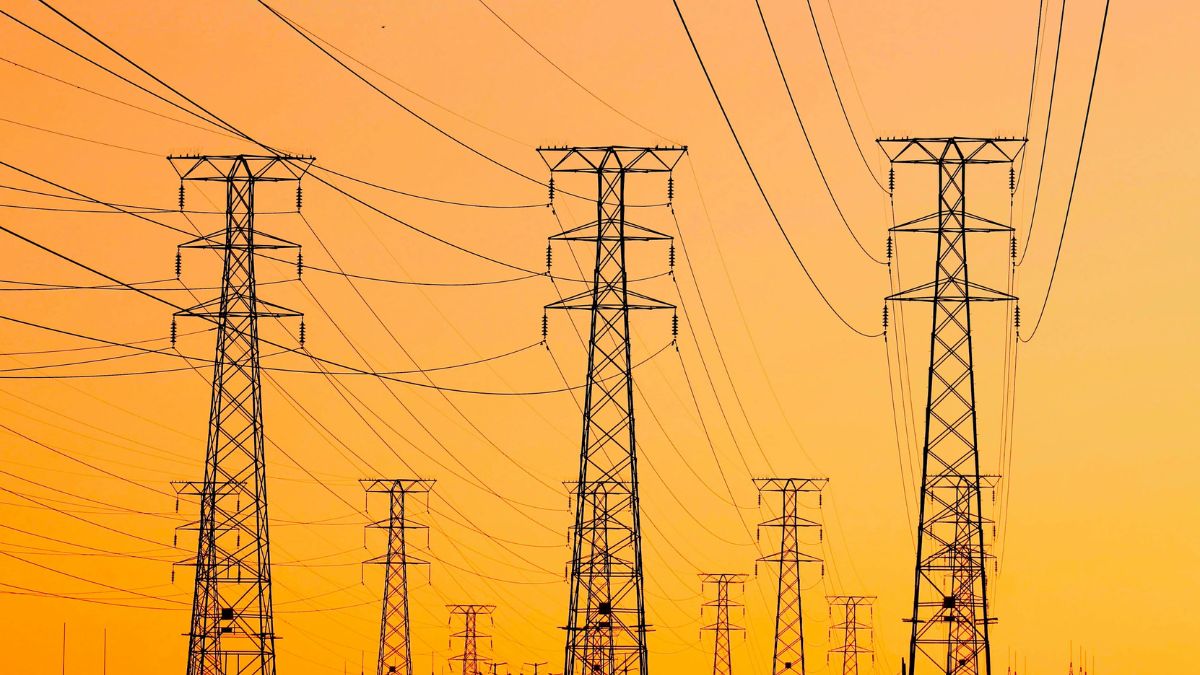
India’s non-fossil power capacity is set to reach 70% by 2035-36, driven by rapid solar expansion, but grid constraints, storage gaps and utilisation challenges could shape the energy transition.
India is preparing for one of the most dramatic transformations in its energy sector, with the Central Electricity Authority outlining a future where clean energy dominates installed capacity but fossil fuels continue to underpin supply reliability.
The National Generation Adequacy Plan (2026-27 to 2035-36) presents the most detailed roadmap yet of how India’s electricity system will evolve over the next decade. It projects that India’s installed power capacity will reach 1,121 GW by 2035-36, with 70% (786 GW) coming from non-fossil sources, signalling a structural shift in the country’s energy mix.
At the same time, the report highlights a more complex reality: capacity expansion alone will not define the transition—utilisation, storage, and grid readiness will.
India Power Capacity 2035-36 to Cross 1,100 GW
India’s electricity system is expected to nearly double in scale over the next decade.
According to the report, net electricity generation is projected to rise from around 1,725 billion units today to 3,450 billion units by 2035-36, reflecting the country’s rapid economic growth and electrification push.
Solar energy is set to emerge as the dominant force in India’s power mix. Installed solar capacity alone is expected to exceed 500 GW, accounting for nearly 45% of total capacity, making it the single largest contributor to India’s energy basket.
The detailed breakdown of projected capacity includes:
- 315 GW coal
- 509 GW solar
- 155 GW wind
- 78 GW large hydro
- 20 GW gas
- 22 GW nuclear
These figures underline a system where renewables dominate capacity, but conventional sources remain critical to stability.
India Power Capacity 2035-36 vs Actual Generation Gap
One of the most important insights from the report is the divergence between installed capacity and actual electricity generation.
Despite renewables making up 70% of capacity, coal is expected to remain the backbone of electricity supply. The report projects coal will still account for 51% of total electricity generation (1,819 BU), while solar will contribute around 27% (984 BU).
This gap reflects the intermittent nature of renewable energy and the continued need for firm, dispatchable power.
As the report notes, “the source of firm power at present is predominantly coal-based generation.”
This highlights a key transition challenge: while India can rapidly build renewable capacity, replacing coal’s role in ensuring round-the-clock supply will require deeper systemic changes.
India Power Capacity 2035-36 Faces Grid Bottlenecks
While India’s renewable expansion has been rapid, the system’s ability to absorb this capacity remains constrained.
A major concern flagged in the analysis is the issue of stranded renewable capacity—power that is generated but cannot be transmitted due to grid limitations.
Vibhuti Garg, Director South Asia at the Institute for Energy Economics and Financial Analysis, said: “It is encouraging to see the national generation adequacy plan taking shape. India has made remarkable progress in expanding renewable energy capacity, with clean sources now accounting for more than 50% of installed capacity.
However, the real test lies not in capacity addition, but in how effectively this generation is utilised. Currently, over 37 GW of renewable energy capacity remains stranded—highlighting gaps in planning, integration, and grid readiness.
This underscores the urgent need to shift focus from merely adding capacity to ensuring efficient evacuation and utilisation. Strengthening transmission infrastructure and aligning it with demand centres is critical. As supply and demand increasingly diverge geographically, coordinated planning becomes essential.”
The report also notes that renewable energy generation is becoming more geographically dispersed, increasing the need for robust transmission networks to connect generation hubs with consumption centres.
India Power Capacity 2035-36 Needs Massive Storage Push
Energy storage emerges as the single most critical enabler of India’s clean energy transition.
The plan estimates that India will require 174 GW / 888 GWh of energy storage capacity by 2035-36, including battery storage and pumped hydro.
However, the current pipeline is far from sufficient:
- Only 10.6 GW of battery storage is under construction
- Additional capacity remains in tendering or early planning stages
This gap between projected need and current deployment highlights a major financing and policy challenge.
The report also emphasises that solar-plus-storage systems are emerging as an alternative, particularly for meeting peak demand during non-solar hours, but are yet to fully replace coal-based baseload generation.
India Power Capacity 2035-36 and Energy Security
The timing of the plan is significant, coming amid global energy market disruptions and geopolitical tensions.
Vibhuti Garg noted:“At a time when India remains exposed to global fuel supply disruptions due to geopolitical tensions, accelerating renewable energy integration is not just a climate imperative—it is an economic and energy security necessity.”
The report positions renewable energy not just as a climate solution, but as a strategic tool for reducing dependence on imported fuels.
EVs and Data Centres as New Demand Drivers
The plan also identifies electric vehicles and data centres as emerging sources of electricity demand.
These loads are expected to be geographically concentrated, requiring careful coordination between energy supply and demand planning.
Vibhuti Garg added: “This challenge will intensify with the rise of new demand drivers such as electric vehicles and data centres. These loads are often geographically concentrated, making it even more important to strategically plan clean energy supply in tandem with demand clusters.”
India’s power sector is entering a defining decade.
The National Generation Adequacy Plan makes it clear that the country is on track to build one of the world’s largest clean energy systems. But it also underscores that capacity alone is not enough.
The real transition will depend on:
- Grid infrastructure
- Energy storage deployment
- Demand-side planning
- Policy alignment with emerging technologies
As the report emphasises, the goal is not just to expand capacity, but to ensure a reliable, resilient, and cost-effective power system capable of meeting India’s rapidly growing electricity demand.
Society
EVs avoided oil equal to 70% of Iran’s exports in 2025
Electric vehicles avoided oil equal to 70% of Iran’s exports in 2025, reshaping global energy security amid Middle East tensions.

When tensions rise around Iran, the world braces for oil shocks. Markets react, governments worry, and the Strait of Hormuz once again becomes the centre of global attention.
But in 2025, something quietly shifted beneath this familiar cycle of crisis.
Electric vehicles avoided oil consumption equivalent to nearly 70% of Iran’s exports.
According to analysis by Ember, the global EV fleet reduced oil demand by 1.7 million barrels per day, approaching the 2.4 million barrels per day exported by Iran through the Strait of Hormuz.
This is not just a milestone for clean energy. It marks the beginning of a structural change in how the world responds to geopolitical risk.
The world’s oil vulnerability is still profound
Despite rapid technological progress, the global economy remains deeply exposed to oil shocks.
Nearly 79% of the world’s population lives in oil-importing countries, making them vulnerable to disruptions in supply and price volatility.
The costs are enormous. For every $10 increase in oil prices, global import bills rise by around $160 billion annually.
At the heart of this vulnerability lies the Middle East—and specifically the Strait of Hormuz. This narrow passage carries around one-fifth of global oil exports, while the wider Gulf region accounts for 29% of global oil supply.
The concentration of supply through such a fragile corridor makes the global economy acutely sensitive to regional instability.
“This is Asia’s Ukraine moment,” said Daan Walter, principal at Ember. “Oil is the Achilles’ heel of the global economy… Asia’s oil vulnerability has been exposed by the current crisis.”
Even oil producers cannot escape the shock
One of the most counterintuitive realities of today’s energy system is that producing oil domestically does not shield economies from global price spikes.
Oil is traded in global markets. When supply is disrupted, prices rise everywhere.
In Texas, one of the world’s largest oil-producing regions, gasoline prices increased by more than 25% following recent geopolitical tensions—in some cases exceeding rises seen in oil-importing countries.
This reflects a fundamental truth: oil dependency is a global vulnerability, not a local one.
The true cost of fossil fuel dependence
The financial burden of this dependency is immense.
Net importing countries spent approximately $1.7 trillion on fossil fuel imports in 2024, with many economies losing significant portions of GDP to energy imports.
For developing economies, the impact is even more severe. Rising prices can strain public finances, disrupt industries, and increase the cost of living.
The report highlights a stark dynamic: when supply tightens, wealthier countries can outbid poorer ones, effectively pushing them out of the market.
Energy insecurity, in this sense, is not just an economic issue—it is a question of global inequality.
EVs are emerging as a geopolitical force
Against this backdrop, the rise of electric vehicles is beginning to alter the equation.
The fact that EVs avoided oil demand equivalent to 70% of Iran’s exports is not just symbolic—it is strategic.
It shows that demand-side transformation can counterbalance supply-side risk.
“Electric vehicles are increasingly cost-competitive with gasoline cars,” Walter said. “Oil volatility means EVs are a common-sense choice for countries wishing to insulate themselves from future shocks.”
The economic benefits are already visible:
- China saves over $28 billion annually in avoided oil imports
- Europe saves around $8 billion
- India saves about $0.6 billion
These savings highlight a critical shift: energy security is moving from controlling supply to reducing dependence.
A broader shift: the rise of “electrotech”
Electric vehicles are only one part of a wider transformation described in the report as “electrotech”—a combination of EVs, solar, wind, batteries, and heat pumps.
Together, these technologies can electrify more than three-quarters of global energy demand and significantly reduce fossil fuel imports.
If deployed at scale, they could cut import dependence by up to 70%, fundamentally reshaping global energy systems.
Unlike fossil fuels, which require continuous imports, these technologies provide long-term stability. Once installed, they operate without fuel costs, price volatility, or geopolitical exposure.
As the report puts it, this is the difference between “renting energy” and “owning it.”
The Strait of Hormuz: from chokepoint to turning point
The current crisis highlights the strategic importance of the Strait of Hormuz—but it may also accelerate its decline as a central pillar of global energy security.
Asia, which imports around 40% of its oil through the strait, is particularly exposed.
But unlike previous crises, countries now have viable alternatives.
Renewable energy costs have fallen sharply. EV adoption is accelerating across both developed and emerging markets. And electrification technologies are scaling faster than expected.
The report suggests this could become a defining moment—similar to how Europe’s response to the Ukraine crisis reshaped its energy strategy.
Peak oil may arrive sooner than expected
The implications extend beyond immediate crisis management.
The International Energy Agency had projected global oil demand would peak around 2029. But recent developments suggest that peak may arrive sooner.
Electrification is not only reducing demand—it is changing expectations about the future of energy.
The report notes that demand growth forecasts have already been revised downward, with the possibility that global oil demand could plateau—or even decline—earlier than anticipated.
Crises, historically, have accelerated structural transitions. This may be another such moment.
A structural shift beneath the headlines
Geopolitical tensions may dominate headlines, but the deeper story lies beneath.
The fossil fuel system—dependent on continuous trade through vulnerable chokepoints—is becoming increasingly fragile. At the same time, the technologies needed to replace it are becoming cheaper, faster, and more accessible.
The fact that EVs alone have already offset oil demand equivalent to most of Iran’s exports signals a profound shift.
It suggests that the balance of power in global energy is beginning to move—from regions that supply oil to technologies that reduce the need for it.
The Strait of Hormuz may remain a critical artery for now. But its grip on the global economy is loosening.
And for the first time in decades, the world has a credible path to reduce its dependence on it.


Study Finds Warming Could Slightly Boost Atmosphere’s Methane-Cleaning Capacity

How China Is Redrawing the Global Map of Critical Minerals

Magnetic Fields Found to Shape Star Formation Near Milky Way Disc

Researchers Use AI to Enable Robots to ‘See’ Through Walls

India’s Power Future: 70% Non-Fossil Capacity by 2035-36, But Grid Challenges Loom

How the Iran–Israel–US Conflict Ripples Through India’s Economy and Energy Future

AI in Classrooms: Threat to Learning or Catalyst for Educational Transformation?

Climate change heat impact affected over 2.5 billion people

Weather, Not Just Emissions, Driving PM2.5 Pollution in Indian Cities: Study

Study Reveals How Ocean Bacteria Drive Plastic Biodegradation

-

 Society3 months ago
The Ten-Rupee Doctor Who Sparked a Health Revolution in Kerala’s Tribal Highlands
-
COP305 months ago
Brazil Cuts Emissions by 17% in 2024—Biggest Drop in 16 Years, Yet Paris Target Out of Reach
-
Society3 months ago
From Qubits to Folk Puppetry: India’s Biggest Quantum Science Communication Conclave Wraps Up in Ahmedabad
-
Women In Science5 months ago
The Data Don’t Lie: Women Are Still Missing from Science — But Why?
-
Earth4 months ago
Data Becomes the New Oil: IEA Says AI Boom Driving Global Power Demand
-
COP304 months ago
Corporate Capture: Fossil Fuel Lobbyists at COP30 Hit Record High, Outnumbering Delegates from Climate-Vulnerable Nations
-
Space & Physics3 months ago
Indian Physicists Win 2025 ICTP Prize for Breakthroughs in Quantum Many-Body Physics
-
Health5 months ago
Air Pollution Claimed 1.7 Million Indian Lives and 9.5% of GDP, Finds The Lancet