
Blog
Greener Forests, Weaker Carbon Sinks? Study Finds Declining Productivity in Northeast India
A 24-year satellite-based study finds that Northeast India’s forests are experiencing declining carbon productivity despite relatively stable canopy cover, highlighting how rising atmospheric dryness could weaken their capacity to absorb and retain carbon.


Forests in Northeast India are showing signs of a weakening capacity to accumulate carbon despite maintaining relatively stable canopy cover, according to a study published in Ecological Indicators in October 2026. The research suggests that increasing vegetation greenness does not necessarily indicate stronger carbon sinks, highlighting the need to assess forest health beyond satellite measurements of green cover.
Titled Are Greener Forests Stronger Carbon Sinks? Rising Vapour Pressure Deficit Instigates Greening-Productivity Decoupling in a Tropical Biodiversity Hotspot in India, the study examined forest carbon dynamics across Northeast India using 24 years of satellite-derived data from 2001 to 2024.
Researchers analysed three indicators: Leaf Area Index (LAI), Gross Primary Productivity (GPP) and Net Primary Productivity (NPP). These measurements helped assess changes in forest canopy structure, photosynthetic activity and the amount of carbon retained in plant biomass after accounting for plant respiration.
The analysis found that while canopy structure remained relatively stable and gross primary productivity increased modestly by 1.76 grams of carbon per square metre annually, net primary productivity declined by 0.83 grams of carbon per square metre annually across much of the region.
The researchers identified a divergence between canopy greenness and carbon productivity across approximately 40% of forested areas. A separate divergence between photosynthetic activity and net productivity was observed across around 30% of the region.
These findings indicate that forests can maintain their green appearance without achieving corresponding gains in carbon accumulation.
Atmospheric dryness emerges as a major factor
The study identified rising Vapour Pressure Deficit (VPD) as a primary driver of declining forest productivity. VPD measures the difference between the amount of moisture the atmosphere can hold and the moisture it actually contains. Higher VPD indicates greater atmospheric demand for water, increasing stress on vegetation.
Under such conditions, plants may close their stomata, the small pores on their leaves, to reduce water loss. This also restricts the intake of carbon dioxide required for photosynthesis, potentially reducing the amount of carbon absorbed by vegetation.
The researchers also identified a major shift in forest carbon functioning beginning around 2012. Their analysis suggests that the relationship between canopy structure, photosynthesis and net carbon accumulation has weakened over time.
The findings are particularly significant for Northeast India, which the study identifies as a climatically sensitive biodiversity hotspot containing approximately one-third of India’s forest carbon.
Earlier research points to similar concerns
The findings build on earlier research published in Scientific Reports in December 2023, which examined vegetation productivity across India between 2001 and 2019.
That study found that India’s Leaf Area Index increased by 6.75% in consistently forested areas, while Net Primary Productivity declined by 6.19%. Northeast India, the Western Ghats and parts of Peninsular India emerged as important regions experiencing declining productivity.
The 2023 research associated these changes with rising temperatures, which can reduce photosynthesis and increase plant respiration beyond certain temperature thresholds.
Another study examining a semi-deciduous forest in Kaziranga, published in Agricultural and Forest Meteorology in 2022, demonstrated how carbon exchange varies with seasonal and climatic conditions. It found that the forest functioned as a carbon sink during the pre-monsoon season but as a carbon source during winter in the observed study period.

Image of a dense forest alongside a flowing river.Image credit:Pexels
Together, these studies highlight the importance of examining forest productivity, atmospheric conditions and seasonal carbon exchange rather than relying solely on changes in green cover.
The latest research does not suggest that Northeast India’s forests are structurally collapsing. Instead, it points to a less visible change in their ecological functioning, with implications for forest carbon accounting and climate-resilient forest management.
The findings underline the need for monitoring systems that combine satellite observations with measurements of atmospheric stress and carbon productivity to better understand how tropical forests respond to a warming climate.






Blog
India’s Semiconductor Push Is About More Than Making Chips
India’s semiconductor push is expanding beyond fabrication, with new projects in chip design, packaging, testing, research and workforce development.


Semiconductors have become an important part of India’s industrial policy as the country seeks to expand its electronics manufacturing base and develop domestic capacity for chip design, fabrication, packaging and testing. The effort will be in focus at SEMICON India 2026, which opens at Yashobhoomi in New Delhi on September 17. The three-day event is expected to bring together chipmakers, technology companies, policymakers and investors. Its theme, “Silicon to Systems: Building the Ecosystem”, reflects the wider scope of India’s semiconductor programme.
The semiconductor industry gained wider attention during the COVID-19 pandemic, when shortages disrupted production at automobile factories. The episode highlighted the dependence of several industries on global chip supply chains.
India’s current push is aimed at building a stronger presence in this supply chain, while supporting the electronics manufacturing sector that has expanded considerably over the past decade.
Electronics Came First
India’s semiconductor plans have followed a rapid expansion in electronics manufacturing. Electronics production increased from about ₹1.9 lakh crore in 2014–15 to ₹13.11 lakh crore in 2025–26, according to the government. Electronics exports rose from around ₹38,000 crore to ₹4.24 lakh crore during the same period.
Mobile phone manufacturing has been a major part of this growth. Production increased from ₹18,000 crore to ₹6.27 lakh crore, while mobile phone exports rose from about ₹1,500 crore to ₹2.59 lakh crore. The government says India now manufactures 99.2% of the mobile phones used domestically.
Semiconductor manufacturing is a different stage of the electronics value chain. It requires specialised facilities and equipment, along with expertise in chip design, fabrication, packaging and testing. The government’s semiconductor programme is therefore not limited to setting up fabrication plants.
Broader Semiconductor Programme
The Semicon India programme was launched in 2021 with an outlay of ₹76,000 crore. It covers chip design and fabrication as well as packaging, testing, equipment, materials and talent development. In July 2026, the government approved Semicon 2.0 with an outlay of ₹1,27,500 crore. The programme has six focus areas: chip design, semiconductor equipment and materials, fabrication facilities, advanced packaging, research and development, and talent development.
So far, 12 semiconductor projects have been approved across six states, involving investment commitments of more than ₹1.64 lakh crore. The projects cover silicon and compound semiconductor fabs, display fabrication and advanced packaging. Three facilities have already started commercial production, according to the government.
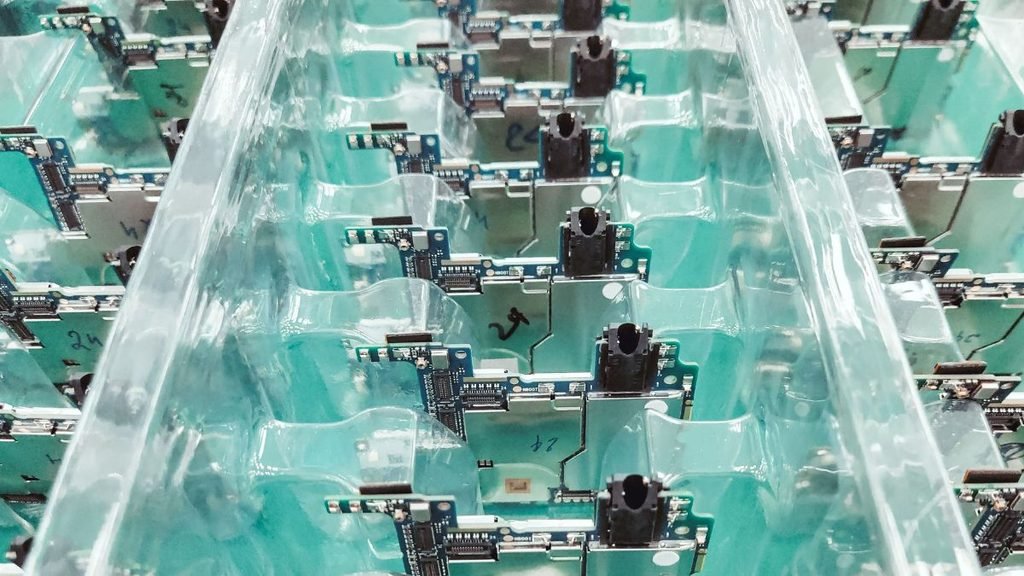
The spread of projects across different stages of the supply chain is significant because a semiconductor industry involves considerably more than fabrication. A chip has to be designed before it can be manufactured. Once fabricated, it needs to be packaged and tested. The production process also relies on specialised equipment and materials.
Expanding Chip Design
India is also investing in the skills and infrastructure needed for semiconductor design. The government has set a target of creating a pool of 85,000 skilled semiconductor engineers within this decade. Through the Chips to Startup programme, Electronic Design Automation tools have been deployed across 320 academic institutions, with more than 68,000 students trained so far.
By April 2026, 75 institutions had taped out 211 chips. Seven of these had been fabricated at different technology nodes, including nodes down to 12 nanometres. The ChipIN Centre at C-DAC provides access to chip-design tools, fabrication services and specialised training. According to the government, more than one lakh engineers from over 500 organisations have accessed these facilities.
The programme also includes support for smaller companies. Twenty-four semiconductor design projects have been approved for financial support, while 105 startups and MSMEs have received EDA tool support under the Design Linked Incentive scheme.
What Happens After Fabrication plant
Fabs tend to attract the most attention because they are among the most expensive and technically demanding parts of semiconductor manufacturing. But they are only one component of the wider industry.
Packaging and testing, for instance, are essential before manufactured chips can be incorporated into electronic products. Equipment and material suppliers are needed to support fabrication. Research and design capabilities are required to develop new chips.
India’s approved projects cover some of these areas, including advanced packaging and compound semiconductor manufacturing. The government has also included equipment, materials, research and development and talent development in Semicon 2.0, alongside fabrication and design.
A Place in the Global Supply Chain
The semiconductor push is also taking place as countries reassess their dependence on global supply chains. The disruption during the pandemic showed how shortages could affect industries far removed from chip manufacturing. India has subsequently sought a role in wider efforts around semiconductor supply chains.
In 2026, India joined the Pax Silica coalition along with the United States and other partner countries. The coalition focuses on the silicon supply chain, including critical minerals, fabrication, advanced AI systems and related infrastructure.
For India, developing semiconductor capacity could complement its growing electronics manufacturing sector and give domestic companies greater access to parts of the chip value chain.
What India Needs to Build
The scale of the current programme is considerable, but semiconductor manufacturing is a long-term industrial undertaking. India has approved 12 projects and begun commercial production at three facilities. It is also expanding support for chip design and training thousands of students and engineers.
The next stage will involve building connections between these different parts of the industry. Fabrication facilities need suppliers and trained workers. Chip designers need access to manufacturing and testing. Packaging and testing facilities need a steady flow of chips and customers. SEMICON India 2026 comes as these different efforts are being brought together under a broader semiconductor strategy. The event itself is only a snapshot of that effort. The more important question is how these investments, companies, institutions and skills develop once the event is over.
For India, the semiconductor programme is ultimately an attempt to move further into the electronics value chain—building on the manufacturing capacity created over the past decade while developing capabilities that have so far largely been concentrated elsewhere.
Blog
At IIMA, a $12 Million AI School Signals the Future of Management Education
India’s Premier Management Institute IIMA to Set Up School of Artificial Intelligence with $12 Million (₹100-Crore) Endowment, Positioning AI at the Core of Management Education

Blog
India’s Youngest Entrepreneurs at 36: The New Architects of India Inc.
At just 36 years of age, these entrepreneurs are already leading companies that are reshaping mobility, energy, e-commerce, aerospace, health, and digital infrastructure.




Indian universities lead Asia in research output per faculty, but the country’s top six all slip in QS ranking

Greener Forests, Weaker Carbon Sinks? Study Finds Declining Productivity in Northeast India

Climate Change Contributed to 10,600 Excess Preterm Births in Asia During April 2024 Heatwave

Neuropixels Probes Allow Scientists to Record Hundreds of Brain Cells at Once, Opening New Possibilities for Neuroscience

Overshooting 1.5°C Could Trigger Irreversible Damage to Earth’s Ice Systems, Warns UN-Backed Report

Knowing When to Think for Ourselves: AI, Intuition and the Education of Discernment

After a Scorching Summer, Delhi’s Children Are Slow to Return Outdoors

Two Chemists Win Nobel Prize for Solving a Century-Old Puzzle: Why Life Picks One Hand Over the Other

Climate Change, Overfishing and the Uncertain Future of Bangladesh’s Hilsa Fishermen

Europe Braces for Extremes as Commission Unveils Climate Resilience Framework

-

 Math3 months ago
The 2026 Fields Medals: Four Proofs, Four Decades-Old Problems Solved
-
EP Deep Dive: Data & Solutions3 months ago
After Kerala’s Deadliest Landslide, the Hardest Thing to Rebuild Was Childhood
-
EP Deep Dive: Data & Solutions4 months ago
West Asia Crisis: Can Kerala’s Returning Gulf Migrants Find a Future in the Green Economy?
-
Space & Physics5 months ago
India Semiconductor Mission: ‘It’s Not About Fabs. It’s About Building An Entire Ecosystem’
-
Interviews1 month ago
From Scams to Screens: How the National Stock Exchange Rewrote India’s Equity Story
-
Climate5 months ago
The Climate World Cup? How Climate Change Could Affect Player Performance at the 2026 World Cup
-
Society4 months ago
What Is Civilisational Diplomacy? Understanding India’s Newest Foreign Policy Tool
-
Society5 months ago
From Bell Labs to the Classroom: A Second Career in Teaching